

Europe has thousands of ferry routes, but some crossings are much more than a way to get from A to B. On the best ferry rides, the journey is the highlight: fjords close in around the ship, old harbour cities appear from the sea, islands slide past the deck and the holiday starts long before you reach the port.
This is our updated FerryGoGo selection of the most beautiful ferry routes in Europe. It is not a ranking of the longest crossings, the cheapest tickets or the biggest ships. We have chosen routes where the scenery from the ferry itself is the reason to go: dramatic coastlines, island approaches, old port towns, fjords, cliffs and memorable arrivals.
Good to know before you plan: ferry schedules can be seasonal, and weather can affect both the sailing and the view. Some of the routes below run daily or year-round, while others are mainly summer routes. Always check the current timetable before you book, especially if you are travelling with a car, campervan, dog or a fixed onward connection.
| Route | Best for | Quick note |
|---|---|---|
| Split to Dubrovnik | Dalmatian islands and coastal towns | Best in clear weather, ideally on deck |
| Gudvangen to Kaupanger | Norwegian fjords | Summer route through Nærøyfjord and Sognefjord scenery |
| Stockholm to Helsinki | Baltic archipelagos | Classic overnight ferry with superb departure and arrival views |
| Venice to Burano | Lagoon views and colourful houses | A short waterbus trip rather than a big ferry crossing |
| St Malo to Jersey | Walled towns and island arrival views | A short but memorable Channel Islands crossing |
Did we miss your favourite ferry ride?
Scenic ferry routes are personal. Some travellers prefer wild open seas, others remember a short harbour crossing because of the light, the cliffs or the moment a city appeared from the water.
Tell us your favourite route in Europe in the comments below. We are especially interested in routes with great views from the public deck, strong island-hopping potential or a memorable arrival into port.
- Which route would you add?
- Which side of the ferry had the best view?
- Was it best in the morning, afternoon or at sunset?
1. Split to Dubrovnik, Croatia
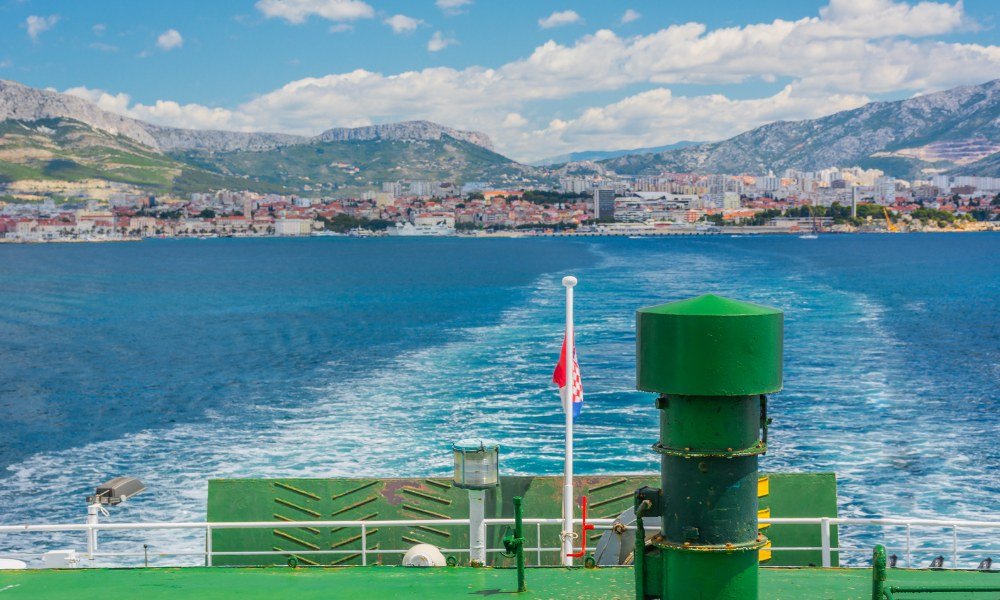
Leaving Split harbour by ferry
If we had to choose one Mediterranean ferry route that feels like a complete travel experience, it would be Split to Dubrovnik. Croatia has many beautiful ferry crossings, but this one gives you a long look at the Dalmatian Coast, with islands, old towns and mountains all competing for your attention.
The route normally works best as a passenger ferry or catamaran journey rather than a car ferry trip. You leave Split, one of Croatia’s great ferry hubs, and sail south along the Adriatic, often passing or calling at islands such as Brač, Hvar, Korčula or Mljet, depending on the operator and season.
For more Croatian route planning, start with our main Croatia ferry guide. If you are building a wider island-hopping trip, our guide to Hvar and Brač is also a useful next read.
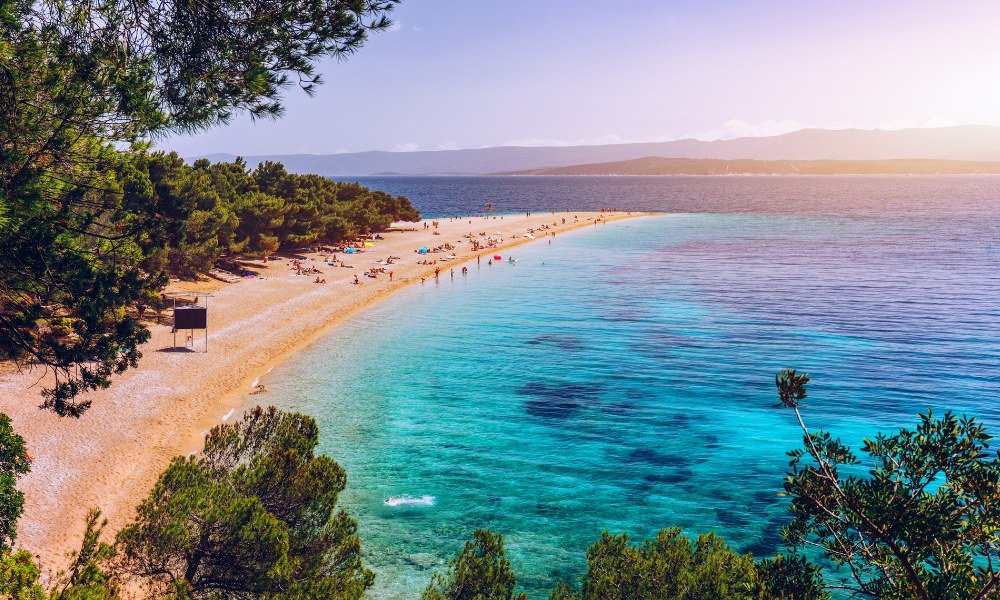
Island of Brač, seen from the ferry
The arrival into Dubrovnik is the perfect ending. The coastline becomes more dramatic, the hills rise behind the city and Dubrovnik’s old stone architecture makes far more sense when you first approach it from the sea.
FerryGoGo tip: this is a route where the exact sailing matters. In summer there are more options, but they can also sell out. Check whether your sailing is direct or island-hopping, and arrive early enough to get a good place on deck.
2. Gudvangen to Kaupanger, Norway
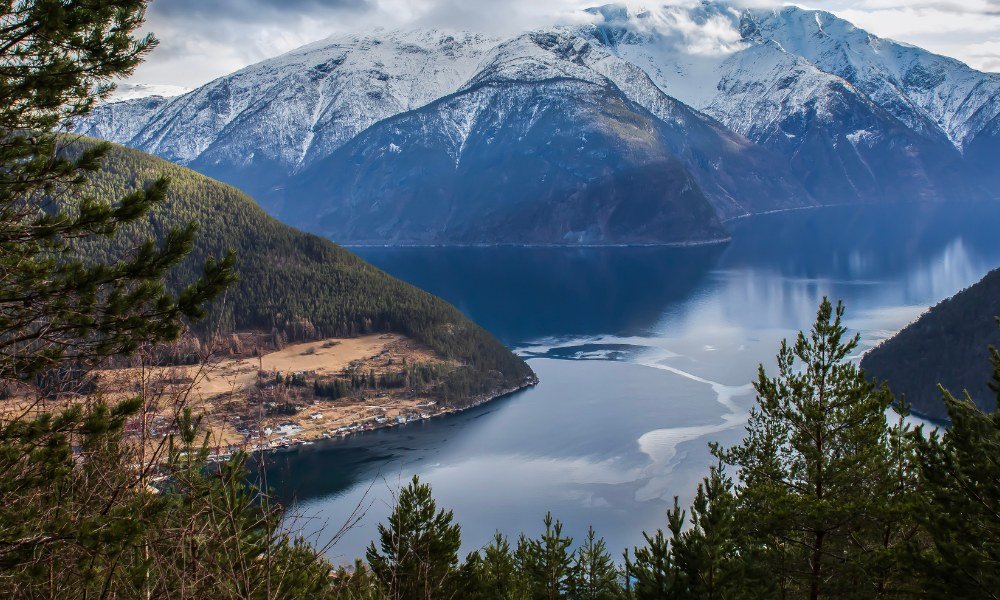
Kaupanger fjord ferry scenery
For pure scenery, the Gudvangen to Kaupanger car ferry is hard to beat. This is not a major international crossing and it is not useful for every itinerary, but as a ferry ride it is spectacular.
The route sails through some of western Norway’s finest fjord scenery, including the narrow Nærøyfjord area and the wider Sognefjord landscape. Waterfalls, steep green mountainsides, tiny villages and deep water make the crossing feel more like a fjord cruise than a transport link.
The sailing takes about 2.5 hours and is generally a summer route, so do not treat it like a normal year-round commuter ferry. It can also have limited vehicle space, which makes early booking sensible if you are travelling with a car or campervan.
If you are planning from the UK, combine this with our guides to ferries to Scandinavia and how to reach Norway by ferry from Scotland or northern England via the continent.
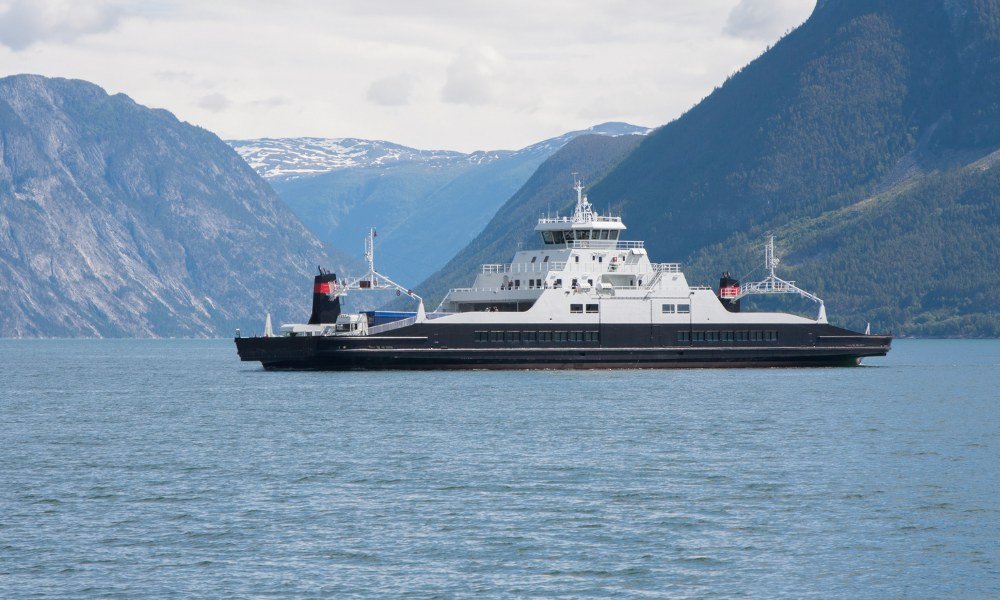
3. Stockholm to Helsinki, Sweden to Finland
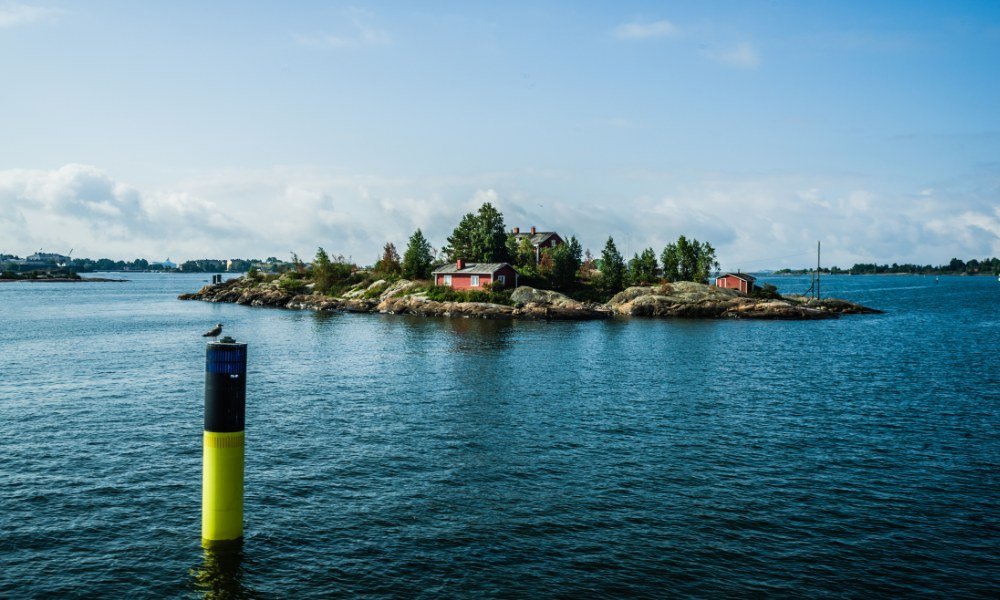
Stockholm archipelago seen from the ferry
The overnight ferry between Stockholm and Helsinki is one of Europe’s classic cruise-ferry experiences. It is not the fastest way to travel between the Swedish and Finnish capitals, but it is often the most memorable.
The best part starts almost immediately. Leaving Stockholm, the ferry threads its way through the Stockholm archipelago, passing wooded islands, waterside houses, smaller boats and long stretches of Nordic scenery before heading into more open Baltic waters.
Later, many sailings pass via or near the Åland Islands, another superb archipelago area between Sweden and Finland. The route then gives you a second scenic reward the next morning as the ferry approaches Helsinki.
For route planning, see our guides to ferries to Stockholm, ferries between Sweden and Finland and ferries to Finland.
Best moment: do not disappear into your cabin too early. The first hours after leaving Stockholm are often the most beautiful part of the crossing.
4. Venice to Burano, Italy
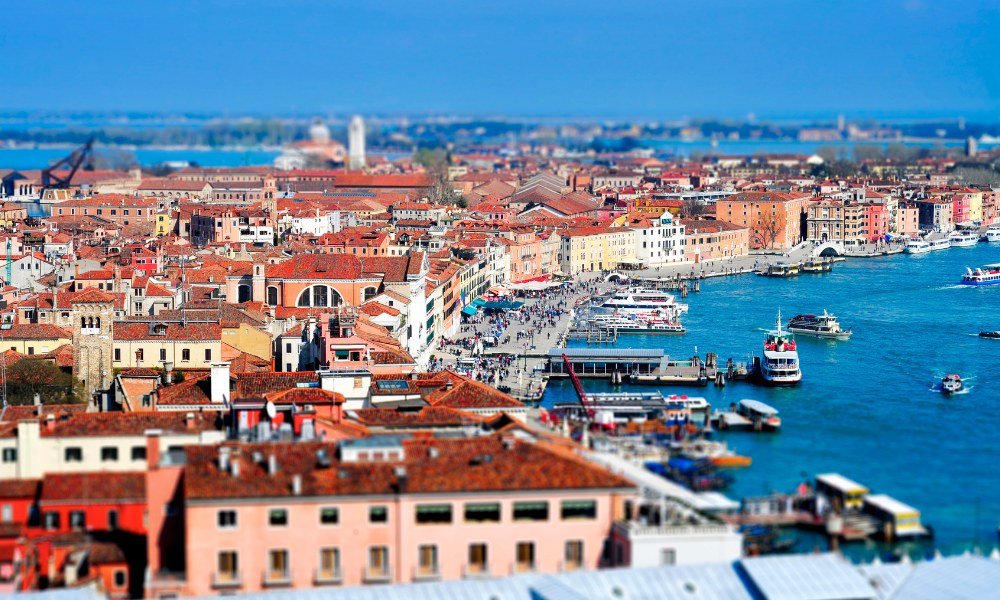
Vaporetti and boats near Venice
This is the shortest and most local route in the list, but it deserves its place. The trip from Venice to Burano is not a big sea crossing; it is a ride through the Venetian lagoon by vaporetto, the local waterbus network.
That is exactly what makes it special. Venice is a city where the water is not just scenery but part of daily life. As you leave the busier parts of Venice and head towards the lagoon islands, the view changes from palaces and canals to open water, low islands and working boats.
Burano is the obvious reward: rows of brightly coloured houses, narrow canals and a much smaller-island feel than central Venice. The approach by boat is the right way to arrive.
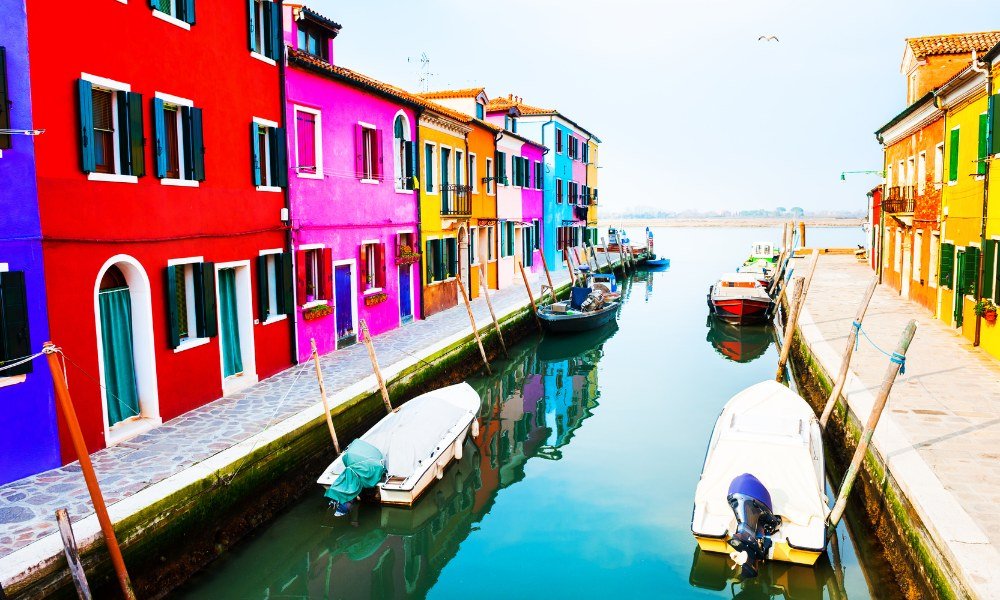
Colourful houses on Burano
If you are planning more Italian ferry travel, our main Italy ferry guide is a good starting point, especially if you are combining Venice with routes to Croatia, Greece, Sardinia, Corsica or Elba.
5. St Malo to Jersey, France to the Channel Islands
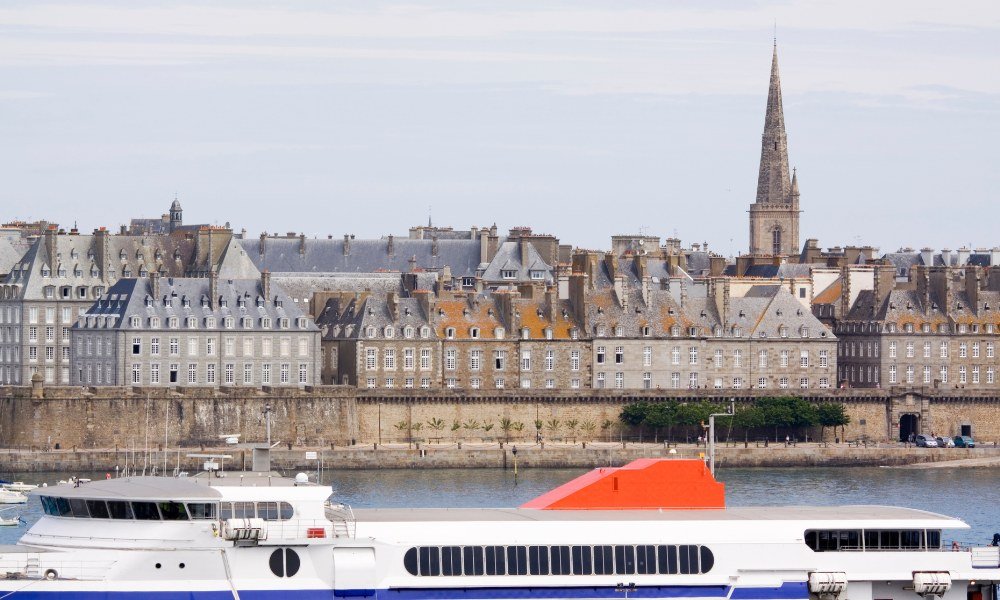
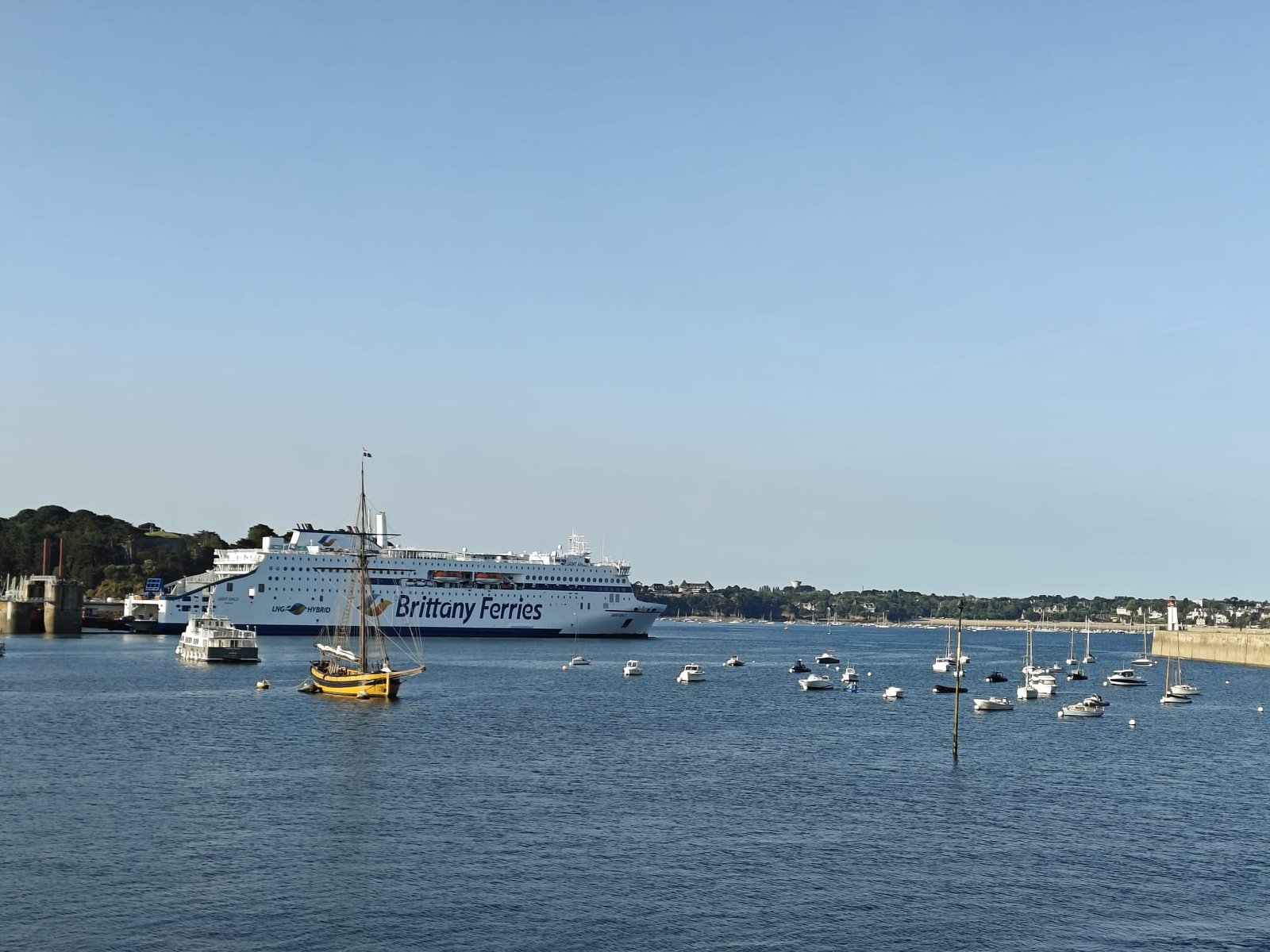
View of St Malo from the ferry
The St Malo to Jersey crossing is short, but it has two excellent ingredients: a beautiful French departure port and a strong island arrival.
St Malo is one of the best ferry ports in France to see from the water. The old walled town, the harbour and the surrounding coastline give the first part of the journey more character than many longer crossings. On the other side, the approach to St Helier shows Jersey as an island of forts, bays, harbour walls and coastal history.
This route is also useful. It links Brittany with Jersey and can work for a day trip, a short break or part of a longer Channel Islands itinerary. For more planning, see our guides to ferries to Jersey and ferries to the Channel Islands.
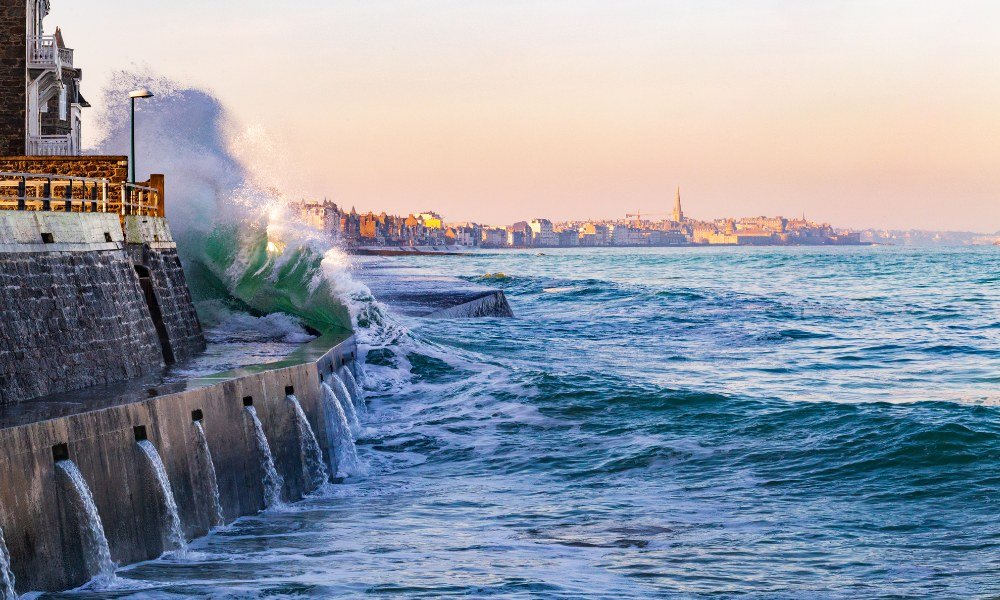
St Malo seen from the ferry
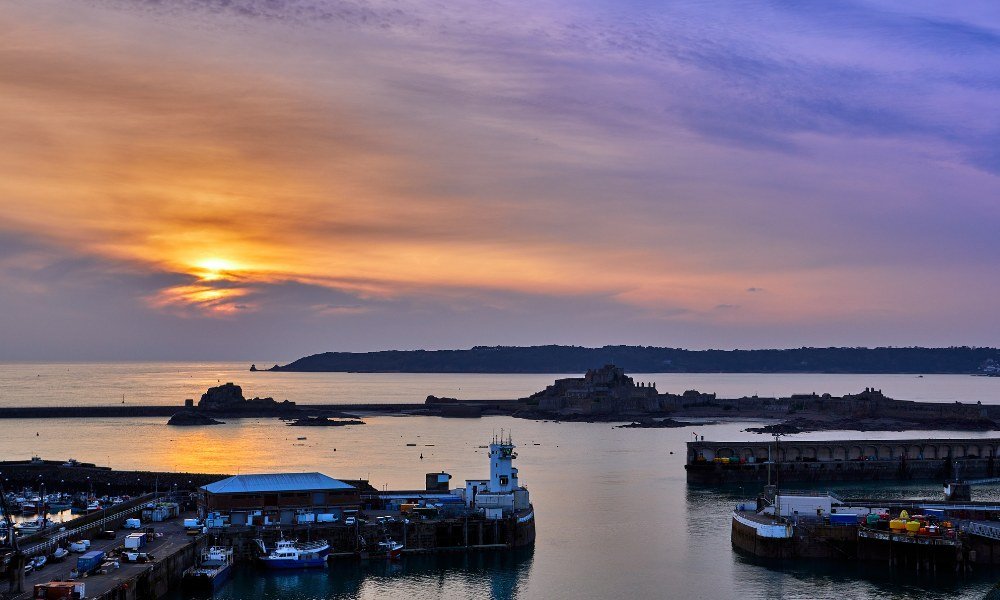
Port of St Helier at sunset
Route note: Channel Islands ferry operators and timetables have changed in recent years, so check the current St Malo–Jersey schedule before planning a tight connection.
6. Ancona to Split, Italy to Croatia
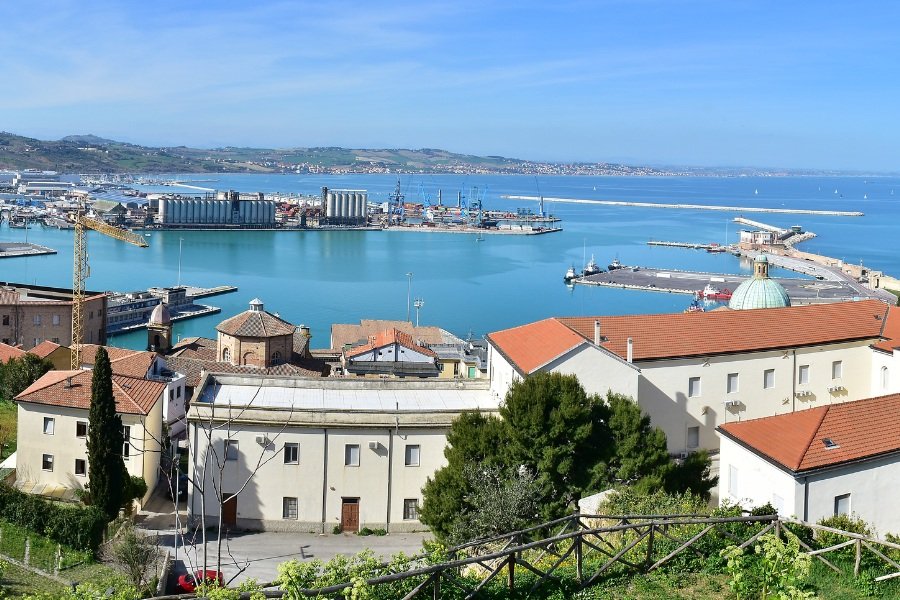
Ancona harbour in Italy
The Ancona to Split ferry is one of the best ways to turn a practical Adriatic crossing into part of the holiday. It links Italy’s east coast with one of Croatia’s most important ferry hubs, making it useful for travellers heading towards Split, Hvar, Brač, Korčula, Dubrovnik or the wider Dalmatian coast.
Leaving Ancona, the Italian coastline slowly drops behind you. The crossing itself is mostly open Adriatic water, so it is not scenic in the same constantly-changing way as the Croatian island ferries. The payoff comes with the arrival into Split, where the mountains, port and old city create a proper sea-arrival moment.
If you are planning Italy–Croatia travel, see our full guide to ferries from Italy to Croatia.
7. Athens to Mykonos, Greece
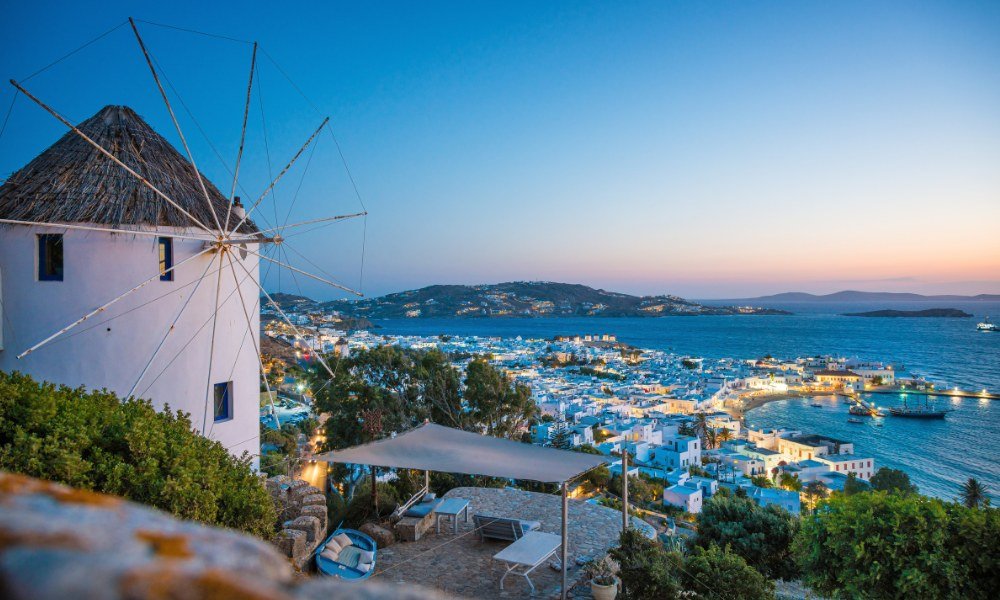
Mykonos harbour with a ferry in the background
Greek island ferries are a category of their own. The route from Athens to Mykonos is one of the most recognisable, especially for travellers who want a first taste of the Cyclades without committing to a very long crossing.
Depending on the ferry type, the route can be a fast hop or a slower, more relaxed journey through the Aegean. The scenery is simple but powerful: blue water, dry island landscapes, white villages and the feeling that almost every island on the horizon has a ferry connection of its own.
Mykonos is also a useful stepping stone. From here, it is easy to continue by ferry to other Cyclades islands such as Naxos, Paros or Santorini. For more ideas, see our main Greece ferry guide and our article about less obvious Cyclades islands.
What about Santorini?
Santorini is probably the most famous ferry arrival in Greece. Seeing the cliffs from below gives you a very different impression from the usual photos taken from the villages above.
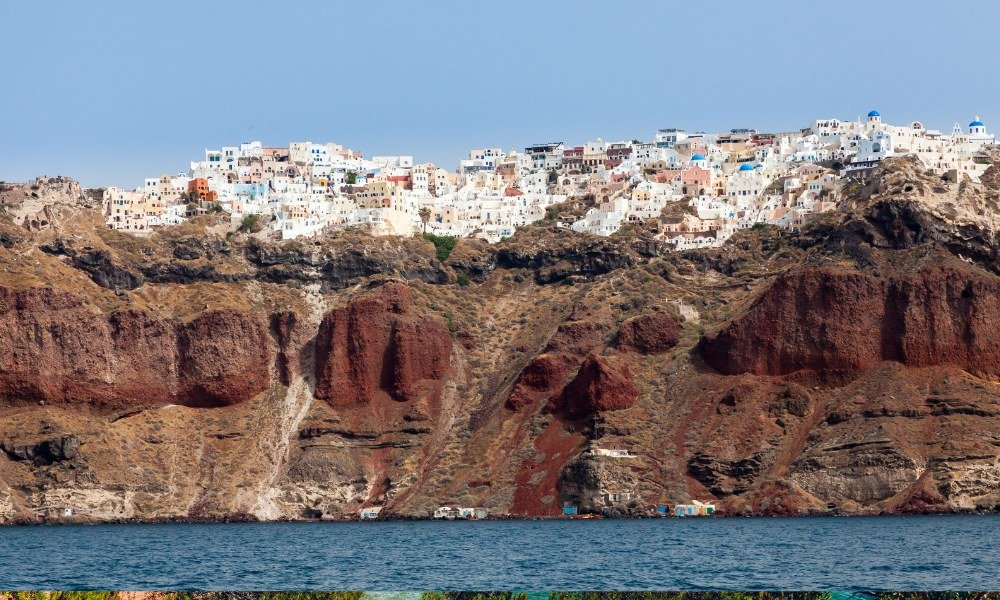
Santorini seen from the sea
If your goal is the most dramatic arrival, Athens to Santorini or Mykonos to Santorini could easily replace Athens to Mykonos in this list. We kept Mykonos here because it is a strong first island route and gives good onward options.
8. Oban to Craignure, Scotland
This is one of the most obvious missing routes from the old version of this article. The ferry from Oban to Craignure on the Isle of Mull may be short, but it is one of the most scenic and useful crossings in Scotland.
You leave from Oban, one of Scotland’s great west-coast ferry towns, and sail across to Mull with views of islands, hills, sea lochs and the wider Hebridean landscape. It is not a long crossing, but it immediately gives you the feeling of leaving the mainland behind.
Mull is also a gateway island. From there, many travellers continue towards Tobermory, Iona, Staffa, wildlife trips or other Hebridean routes. For route options, see our guides to ferries to Mull, ferries to the Hebrides and ferries to Scotland.
Why we added it: the old list was strong on the Mediterranean, but Scotland deserves a place. Oban to Mull is scenic, practical and easy to understand for UK travellers.
9. Aran Islands and the Cliffs of Moher, Ireland
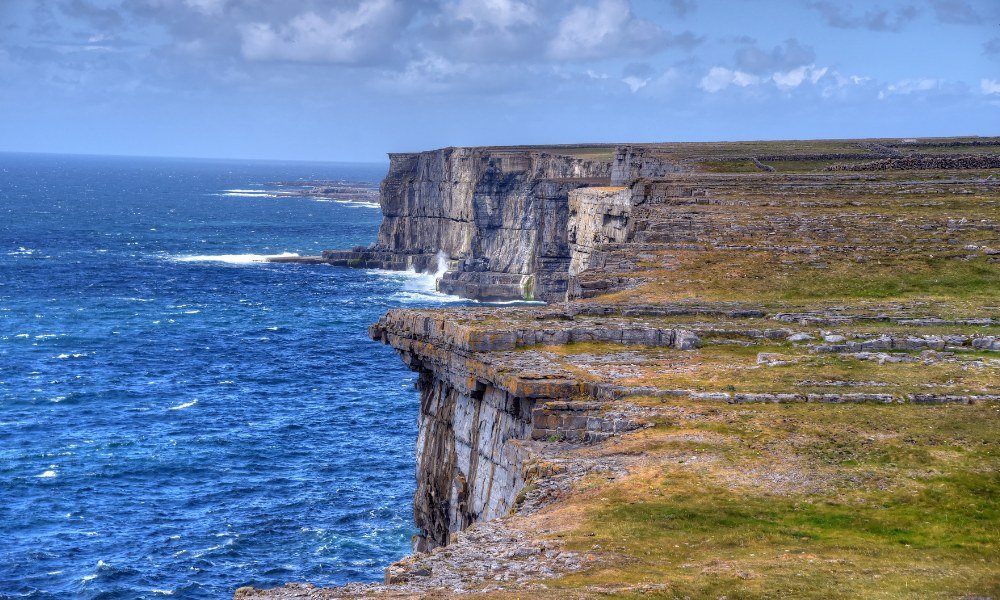
Cliffs on the Aran Islands
The Aran Islands are not just a destination; they are one of Ireland’s best ferry experiences. You can reach the islands from Rossaveel, Galway City in season, or Doolin, depending on the time of year and the island you want to visit.
The most scenic version is the one that combines the Aran Islands with views of the Cliffs of Moher. On some Galway City sailings, the return journey from Inis Mór includes a cruise along the cliffs before heading back to Galway. From Doolin, you can also combine Aran Islands ferries with dedicated Cliffs of Moher boat trips.
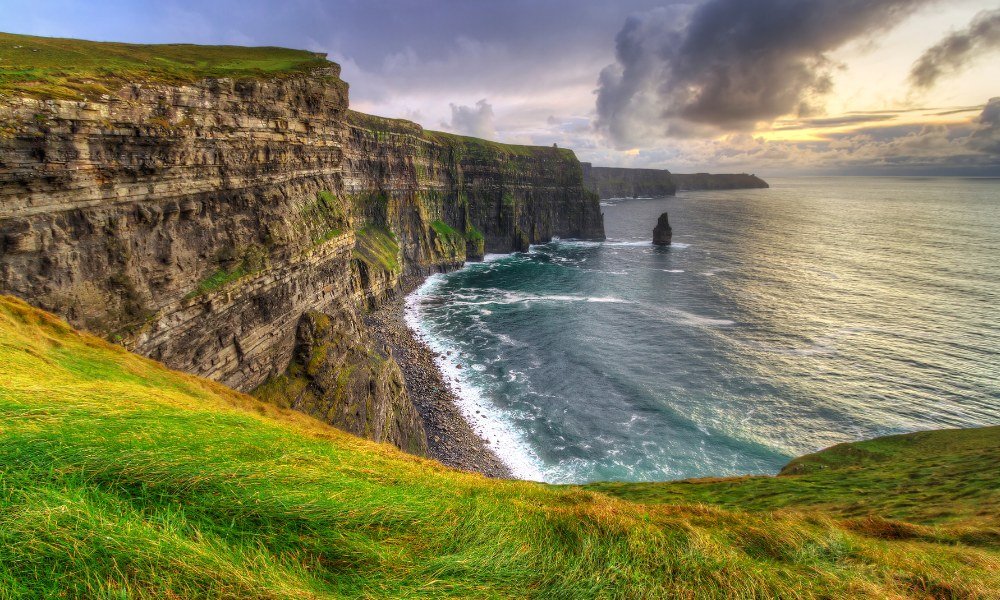
The Cliffs of Moher seen from the water
Expect Atlantic weather, not Mediterranean calm. But when visibility is good, this is one of the most memorable ferry views in western Europe: cliffs, seabirds, dark water and the sense that you are seeing Ireland from the right angle.
For wider route planning, see our Ireland ferry guide.
10. Barcelona to Mallorca, Spain
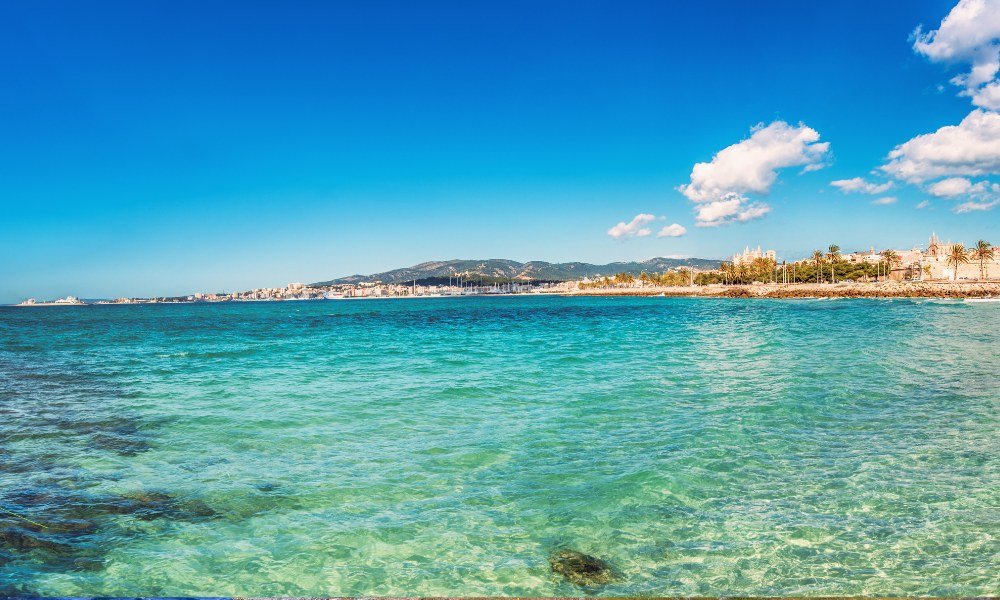
Blue water around Mallorca seen from the ferry
The ferry from Barcelona to Mallorca is not scenic every minute of the way. Much of the crossing is open sea. But it belongs in this list because the route gives you a proper island-arrival experience and a slower, more relaxed alternative to flying.
Depending on your sailing, you may arrive in Palma or Alcúdia. Palma gives you the classic harbour-city approach, while Alcúdia can be more practical for northern Mallorca. Either way, the ferry makes the Balearics feel like islands rather than just another short-haul airport destination.
For more planning, see our guides to the Balearic Islands by ferry, ferries to Mallorca and the Barcelona to Mallorca ferry.
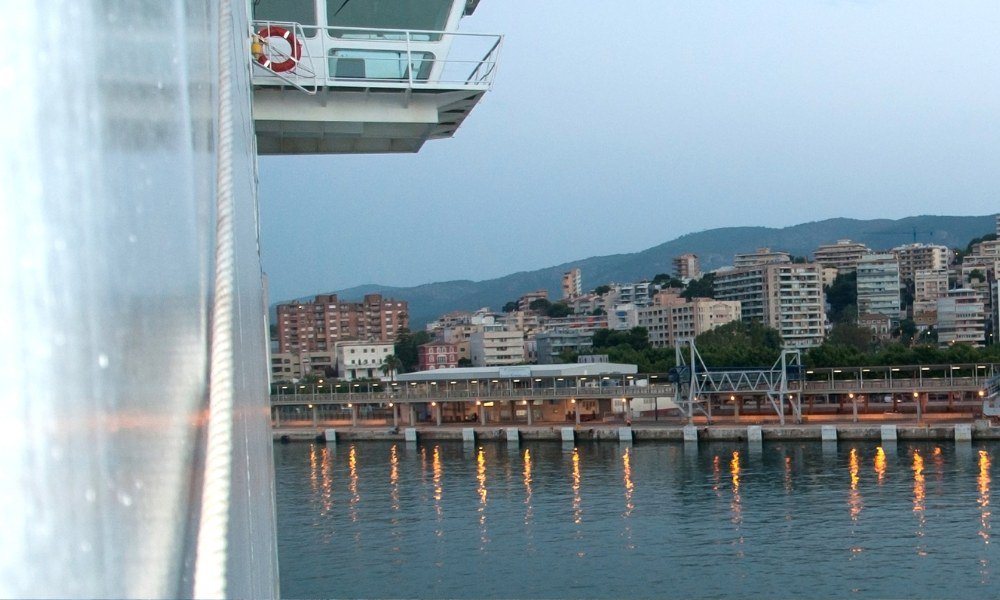
Ferry arrival in Mallorca from Barcelona
11. Santa Teresa Gallura to Bonifacio, Sardinia to Corsica
The short crossing from Santa Teresa Gallura in Sardinia to Bonifacio in Corsica is another route that should be in any serious list of scenic European ferry rides.
It is not long, but it packs a lot into the journey: turquoise water, the Strait of Bonifacio, white limestone cliffs and the approach to Bonifacio, one of the most dramatic harbour towns in the Mediterranean.
This is also one of the best routes for island-hoppers. You can use it to combine Sardinia and Corsica in one trip, or even as a day trip if the timetable works. For more options, see our guides to ferries to Sardinia, ferries to Corsica and ferries from Sardinia to Corsica.
Why we added it: it is short, easy to overlook and genuinely scenic. The arrival into Bonifacio is the main event.
12. Algeciras to Tangier Med, Spain to Morocco
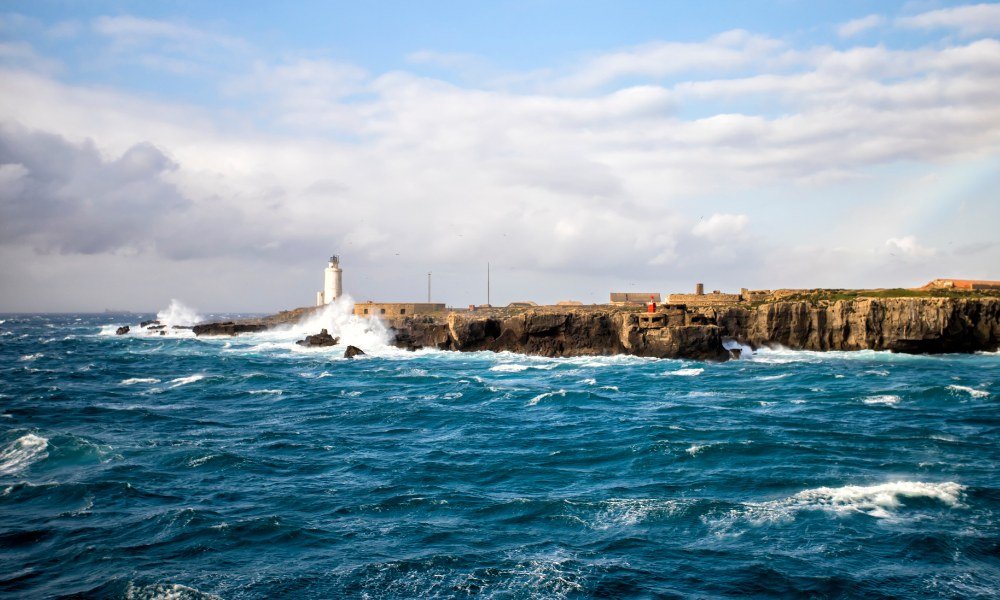
Strait of Gibraltar near Algeciras
There are not many places where a ferry takes you from Europe to Africa in a single short crossing. That alone makes the Strait of Gibraltar routes special.
For many travellers, Algeciras to Tangier Med is the practical choice, especially with a car. You leave southern Spain, pass near the Rock of Gibraltar and cross one of the world’s most famous stretches of water. The route is busy and functional, but the geography is unforgettable.
One important note: Algeciras usually connects with Tangier Med, the large ferry port east of Tangier city. If you want to arrive closer to Tangier itself, also compare the Tarifa to Tangier Ville route. For all route options, see our guide to ferries from Spain to Morocco and our main Morocco ferry guide.
Other scenic ferry routes we considered
A top 12 will always leave out some excellent crossings. These routes narrowly missed the main list, but they are worth considering if they fit your trip:
- Scrabster to Stromness, Scotland to Orkney: a superb northern route with views towards Hoy and the Orkney coastline. See our guide to ferries to Orkney.
- Hirtshals to Tórshavn and Seyðisfjörður: the Smyril Line route to the Faroe Islands and Iceland is one of Europe’s great long-distance ferry adventures. See our Faroe Islands ferry guide.
- Portsmouth to St Malo: not as constantly scenic as some island routes, but a strong option for UK travellers heading to Brittany. Start with our Portsmouth to France ferry guide.
- Piombino to Elba: short, frequent and beautiful on a clear day. See our guide to ferries to Elba.
- Helsinki to Tallinn: more practical than wild, but a great city-to-city ferry and a very easy Baltic trip. See our Helsinki to Tallinn ferry guide.
- Puttgarden to Rødby: a short working ferry rather than a scenic classic, but a surprisingly satisfying part of a road trip to Denmark or Sweden. Read our Denmark and Sweden ferry adventure.
When should you book these ferry rides?
For the most scenic routes, summer is usually the easiest season: more sailings, longer daylight and a better chance of calm weather. That is especially true for Croatia, Greece, the Balearics, Norway’s tourist ferries and some Irish or Scottish island routes.
But summer also means fuller ships. If you are travelling in July or August, book early, especially if you need:
- space for a car, campervan or motorhome;
- a cabin on an overnight ferry;
- pet-friendly accommodation;
- a specific departure time;
- a same-day connection with another ferry, train or hotel check-in.
If you want to compare practical routes rather than only scenic ones, start with our full FerryGoGo route index or use our ferry ticket comparison guide.
How we chose these routes
We gave priority to ferry rides where the view from the ferry matters. That means a short local crossing can rank above a much longer international ferry if the scenery is better. We also tried to balance Europe properly: the Mediterranean, the Nordics, the British Isles, the Atlantic coast and the Baltic all deserve a place.
We did not include every famous ferry route. Some are extremely useful but not especially scenic for most of the crossing. Others are beautiful but hard to plan, seasonal, or closer to a cruise than a normal ferry journey.
Disclaimer: this guide is based on scenic value, route usefulness and FerryGoGo editorial judgement. Ferry routes, operators, prices and timetables can change, and weather can strongly affect the experience. Always check the latest sailing information before you travel.
Which ferry route should we add next?
Have you taken a ferry ride in Europe that deserves a place here? Tell us in the comments. We may use reader suggestions when we next update this guide.
Useful details to include:
- the route and country;
- the ferry company, if you remember it;
- the best side of the ship for views;
- the time of year you travelled;
- whether it works for foot passengers, cars or both.







Barcelona to Mallorca looks amazing, however is it quite a long trip?
Hi Shona,
You can get there in 5 hours! It’s a nice trip though, few hours more or less don’t matter that much in the weather you have there in summer! =)
best, Jochem
[…] route ideas beyond the obvious big-name islands, FerryGogo’s scenic European crossings can help you compare the character of Greek routes with northern […]