✓ Plan and book your perfect crossing – simple, fast, and reliable | Explore Ferrygogo worldwide 🌐

LeShuttle review: our car train experience between Folkestone and Calais

Driving into the LeShuttle car train between Calais and Folkestone

The car train between England and France is the fastest way to cross the Channel with your own vehicle. LeShuttle takes you through the Channel Tunnel between Folkestone and Calais in about 35 minutes. But what is it actually like to use?

We tested it ourselves. In 2024, Jelle from the FerryGoGo team travelled through the Channel Tunnel with LeShuttle as part of our wider Dover-Calais crossing test. We also tried P&O Ferries, Irish Ferries and DFDS on the ferry route, so we could compare the tunnel with the regular short-sea crossings properly.

This review is based on that trip. Prices may have changed since 2024, and LeShuttle fares can move quickly depending on date, time, ticket type and vehicle. The experience itself, including check-in, border control, waiting, boarding and the train journey, is still useful if you are deciding between LeShuttle and the ferry.

Want the full head-to-head comparison? Read our test of every main way to cross the Channel between Dover and Calais.

In short: LeShuttle is fast, smooth and very practical. For speed and convenience, the Channel Tunnel wins. In our test, though, LeShuttle was clearly more expensive than the ferries. Choose the tunnel if you want to get from England to France, or from France to England, as quickly and efficiently as possible. Choose the ferry if you want a proper break from driving, sea views, more space to walk around and often a lower fare.

LeShuttle car train in short

Route Folkestone to Calais, or Calais to Folkestone
Name LeShuttle, formerly Eurotunnel Le Shuttle
Crossing time about 35 minutes in the tunnel
Our 2024 test fare about £150 for a single journey, booked 9 days ahead
Vehicle access cars, campervans, motorhomes, motorcycles and other vehicle types
UK terminal Folkestone, close to Dover and Kent
French terminal Calais, close to the A16 and northern France
Biggest advantage speed and convenience
Biggest drawback usually more expensive than the ferry
2026 check before booking LeShuttle is simple to use, but a few details are worth checking before you book. Aim to arrive at least 1 hour before departure. Check your vehicle height carefully, especially with a roof box, bikes, trailer, campervan or caravan, as taller vehicles and roof accessories can affect where you are placed on the train and may affect the fare. Travelling with a dog? Check the latest pet rules before you go, especially tapeworm treatment when travelling to the UK. And if your plans may change, compare the ticket types carefully, because flexibility and refund conditions differ by fare.

Our quick verdict: LeShuttle or ferry?

If we only look at speed, LeShuttle wins. The train journey through the tunnel takes around 35 minutes, and the whole process felt efficient. On our trip, arriving early also worked in our favour: we were offered an earlier train, which made the crossing feel even smoother.

If we look at value and travel experience, the ferry still has a strong case. In our test, the Dover-Calais ferries were around £60 to £70 cheaper than LeShuttle. The ferry also gives you something the tunnel does not: a proper pause in the journey. You park the car, walk around, get food, look out over the Channel and arrive feeling a bit more reset.

Our choice? If we were in a hurry, travelling with a pet, or just wanted the fastest and easiest option, we would choose LeShuttle. For a normal holiday drive where price matters, we would always compare it with the ferries first.

What is LeShuttle?

LeShuttle is the car train through the Channel Tunnel. You drive your own vehicle onto the train at Folkestone or Calais, stay with or near your vehicle during the journey, and drive off at the other side.

It is not the same as taking a passenger train. You do not board as a foot passenger with luggage. Your car, campervan, motorcycle or van goes into a shuttle wagon with you. For drivers, this makes LeShuttle the fastest way to cross the Channel between England and France.

The actual tunnel crossing is short, but the total journey is more than just 35 minutes. You still need to allow time for check-in, border control, waiting lanes and boarding. Even so, our experience was that LeShuttle felt quicker and more direct than the ferry. For the broader route guide, including tickets, terminal information and how the Channel Tunnel works, see our Eurotunnel and LeShuttle guide.

What did we pay for LeShuttle?

For our single journey with LeShuttle, the 2024 test fare works out at roughly £150. We booked 9 days before departure. This is a rounded UK equivalent of what we paid at the time, not a live fare, but the comparison is still useful: on our test date, LeShuttle was clearly more expensive than the Dover-Calais ferries.

Crossing Our 2024 test fare
LeShuttle car train about £150
P&O Ferries Dover-Calais about £80
Irish Ferries Dover-Calais about £83
DFDS Dover-Calais about £85

In our case, the tunnel cost roughly £60 to £70 more than the ferry. For that extra money, you mainly get speed and convenience. You do not need to find a seat on board, walk around a ship or wait for disembarkation in the same way. You drive on, cross quickly, and drive off.

But if price is the main factor, the ferry is hard to ignore. You can compare the current ferry options on our Dover-Calais ferry page.

When would we choose LeShuttle?

  • Choose LeShuttle if speed, convenience, pets or a tight schedule matter most.
  • Do not choose it automatically if price is your biggest factor.
  • Consider the ferry if you want a proper pause from driving, a meal, fresh air and sea views.
  • Compare Dover-Dunkirk too if you are driving towards Belgium, the Netherlands or northern France.
  • Look beyond Dover if your final destination is western France, Brittany, Normandy or southwest France.

For a wider route choice, see our guide to all ferry crossings from the UK to France. If Dover itself is the part you would rather avoid, our guide to Dover alternatives from Portsmouth, Plymouth and other western ports is also worth reading.

Before departure: passenger details and check-in

After booking, you are not completely finished. In our confirmation, we were told to provide valid passenger information before travel. This is the kind of detail you do not want to leave until the last minute, especially if you are travelling as a family or with more than one vehicle.

You should also plan to arrive in good time. LeShuttle is fast once you are on the train, but the terminal process still includes check-in, border control, waiting lanes and boarding. In busy holiday periods, we would rather be early than tight on time.

The ferry also has check-in deadlines, of course. The difference is that LeShuttle feels more like a drive-through border process: check in, follow the lanes, pass controls, wait for your train and then drive into the wagon.

Driving to the Channel Tunnel terminal

Most UK travellers will use the Folkestone terminal when heading to France. Our test was in the other direction, from Calais to Folkestone, because we were comparing several crossings in a short period. The basic idea is the same in both directions: arrive at the terminal, check in, pass controls, wait in the correct lane and drive onto the train.

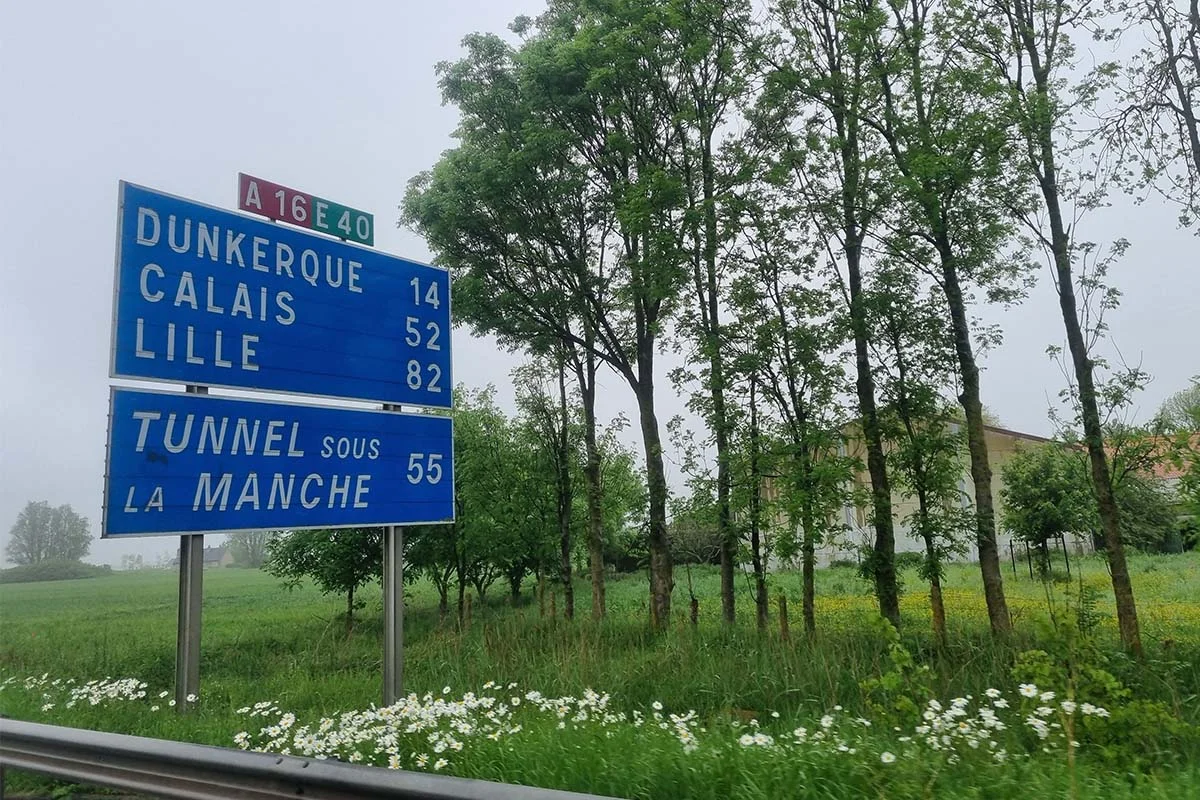
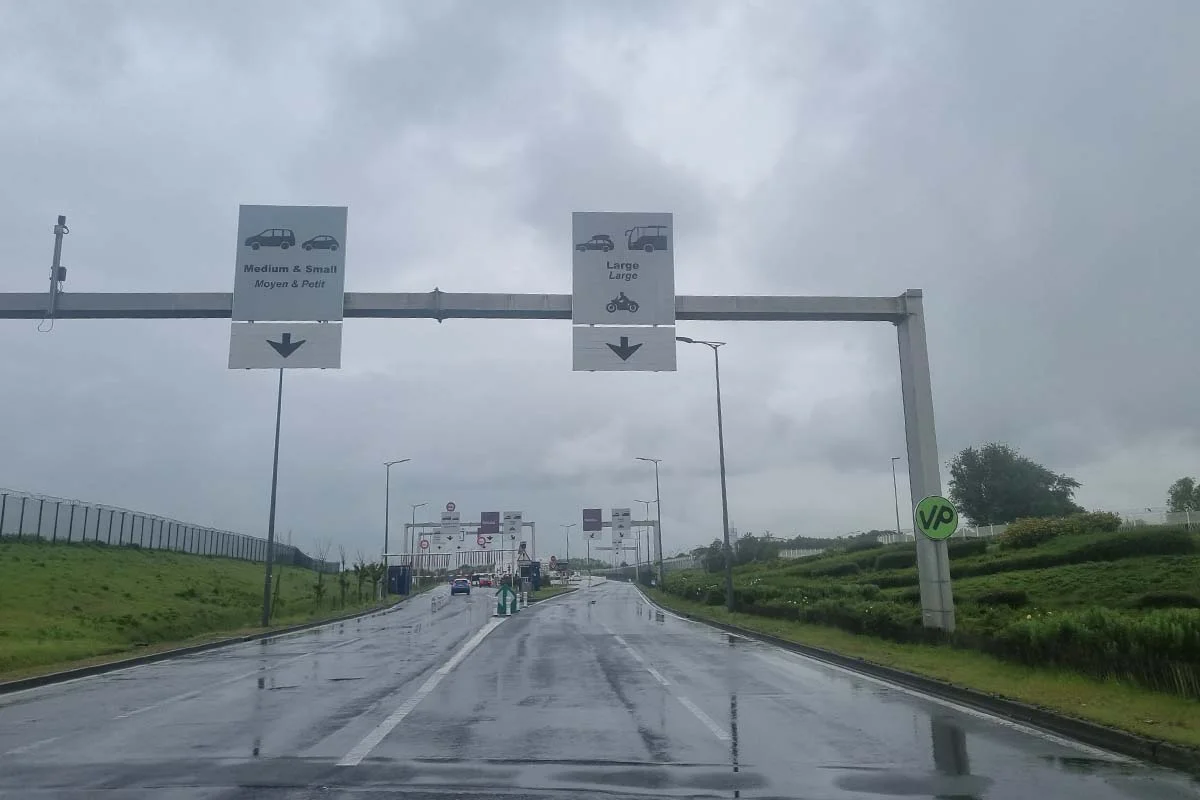
At Calais, the tunnel is clearly signed as Tunnel sous la Manche. The route into the terminal was easy to follow, even if you have not used the Channel Tunnel before.

Signs for the Channel Tunnel and LeShuttle near Calais

Checking in with LeShuttle

Check-in was straightforward. Because Jelle arrived early, he was offered the option to take an earlier train. Instead of waiting for the booked 13:48 departure, there was the possibility to leave one or two trains earlier.

That was one of the best parts of the experience. With a ferry, arriving early can simply mean waiting longer at the port. With LeShuttle, if there is space, it may mean you get away sooner.

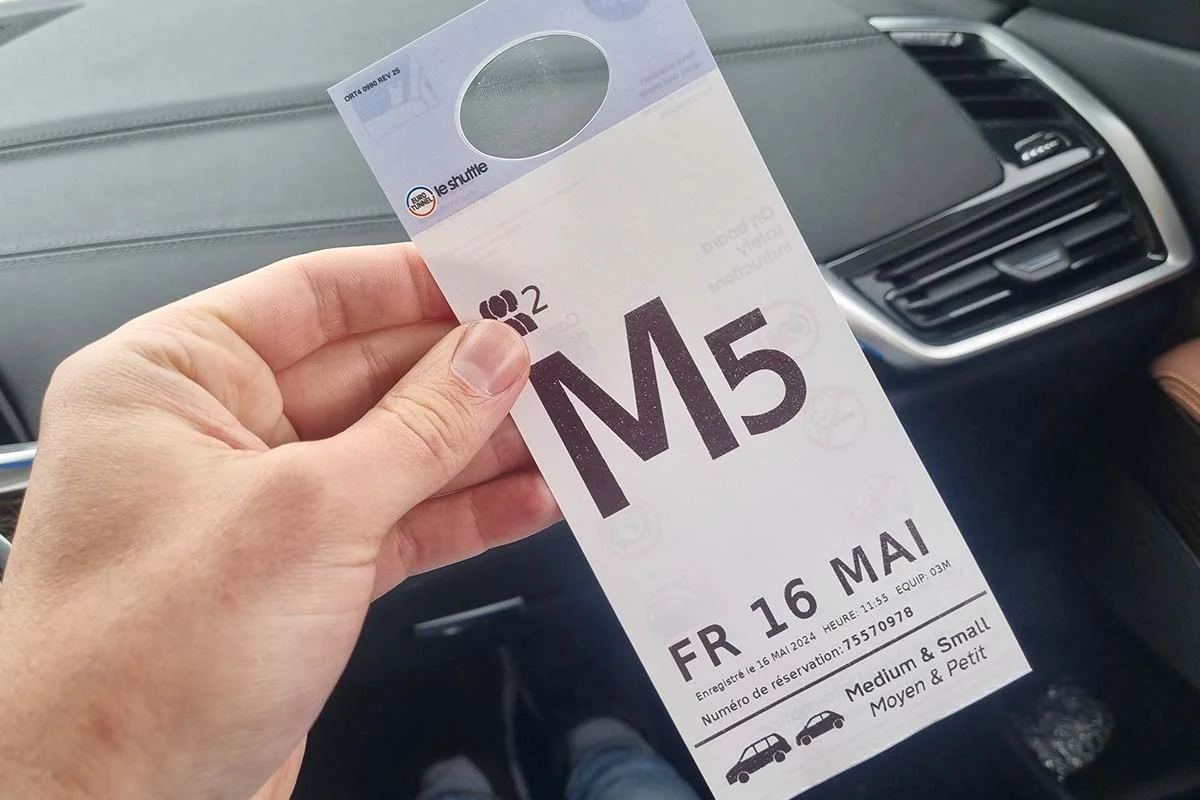
After check-in, you receive a hanger with your train number and vehicle category. In our case, this showed M5. You place it visibly in the car and then follow the signs for the correct lane and waiting area.

The terminal: practical rather than relaxing

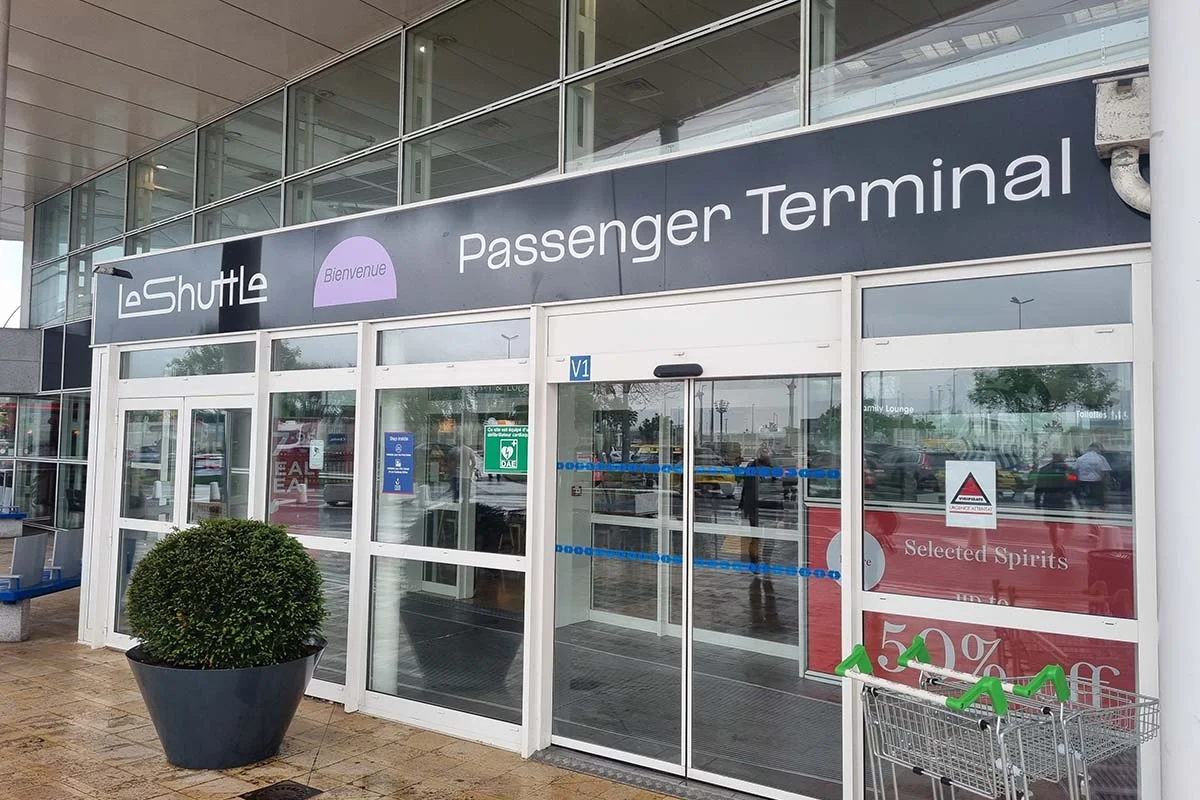
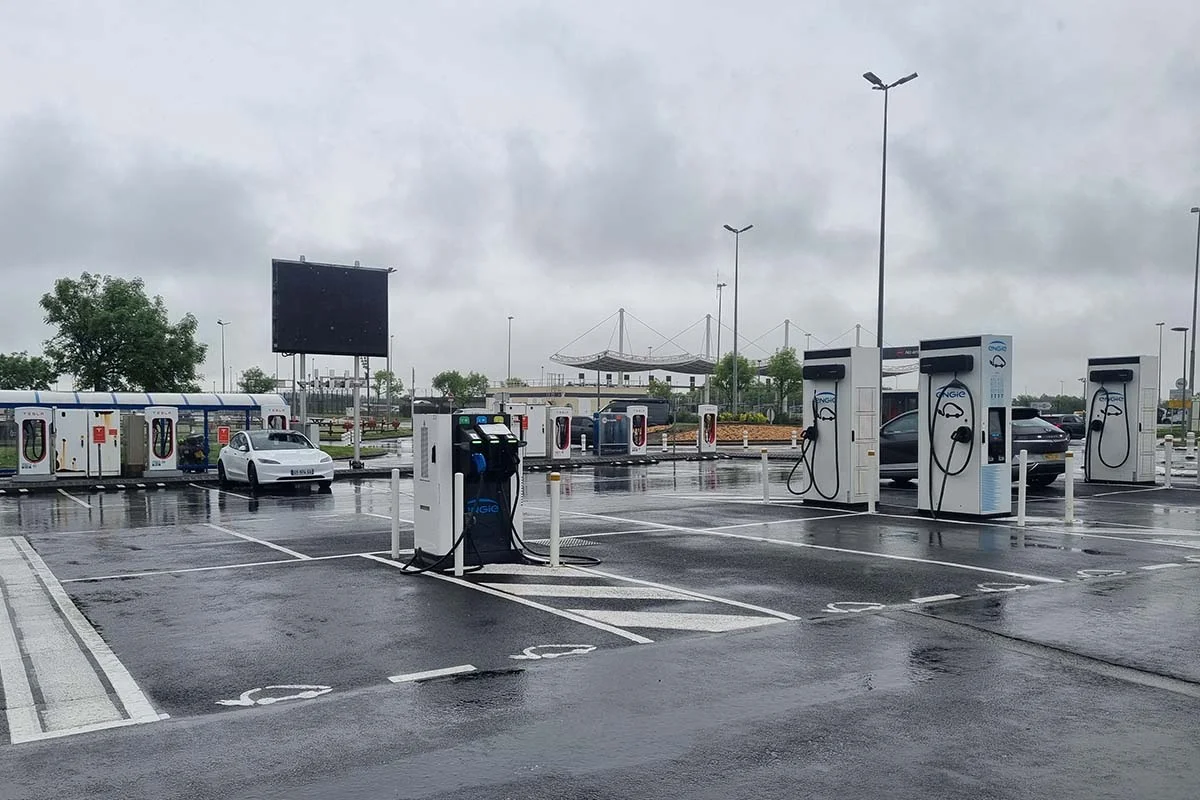
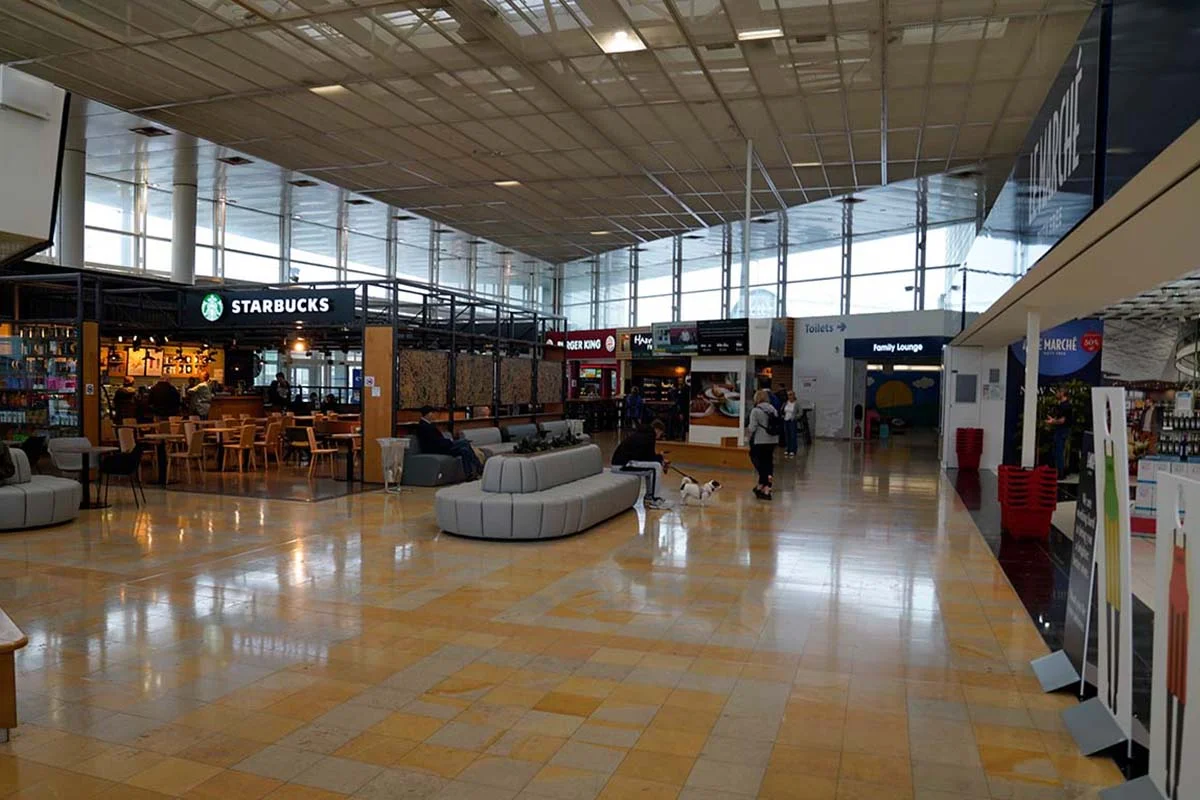
If you have time before your train, you can stop at the terminal building. There are toilets, shops, food and drink options, and charging points for electric cars.

It is useful, but it does not feel like the ferry. On a ferry, the crossing itself becomes part of the break: you get out of the car, walk around, go outside and watch the sea. At LeShuttle, everything is more functional. That is not a criticism. It is exactly why many people choose it. But it is a different kind of travel experience.

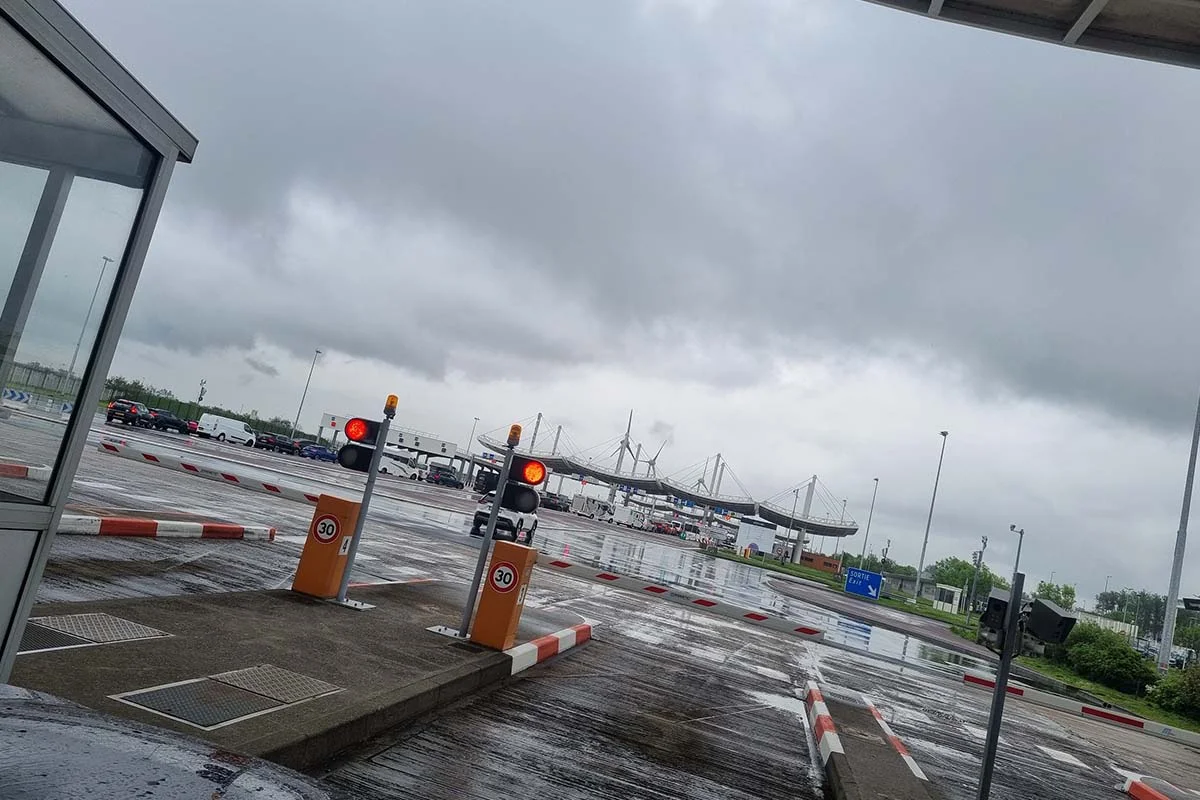
French and British border control

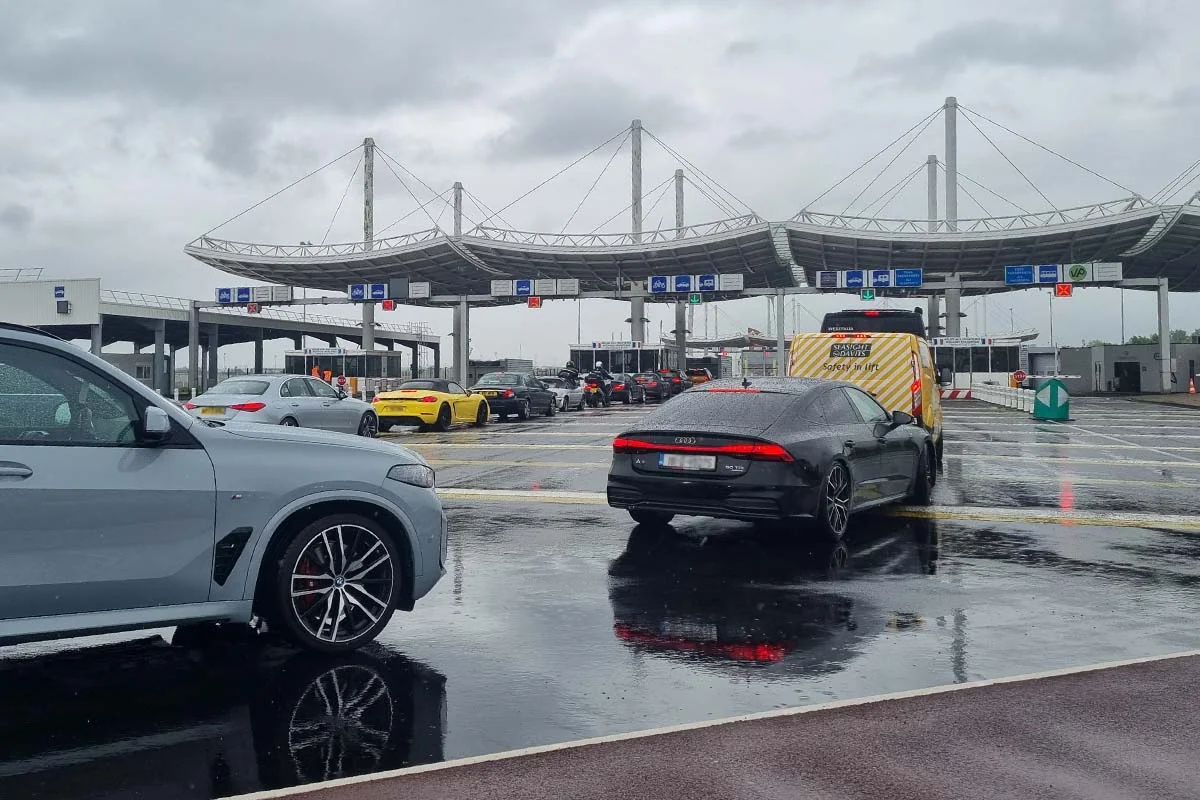
Border control at the LeShuttle terminal in Calais

At Calais, you pass both French and British controls before boarding. This is convenient because once you arrive in Folkestone, you can drive straight out and continue your journey. But it also means that any queues happen before departure.

There was a slightly funny moment during our test. Because we were crossing the Channel several times in a short period to test the ferries and the tunnel, we had to explain what we were doing. Apparently, it is not very common to go back and forth between France and England several times in two days. After a quick boot check and a friendly conversation, we were allowed to continue.

Waiting for the train

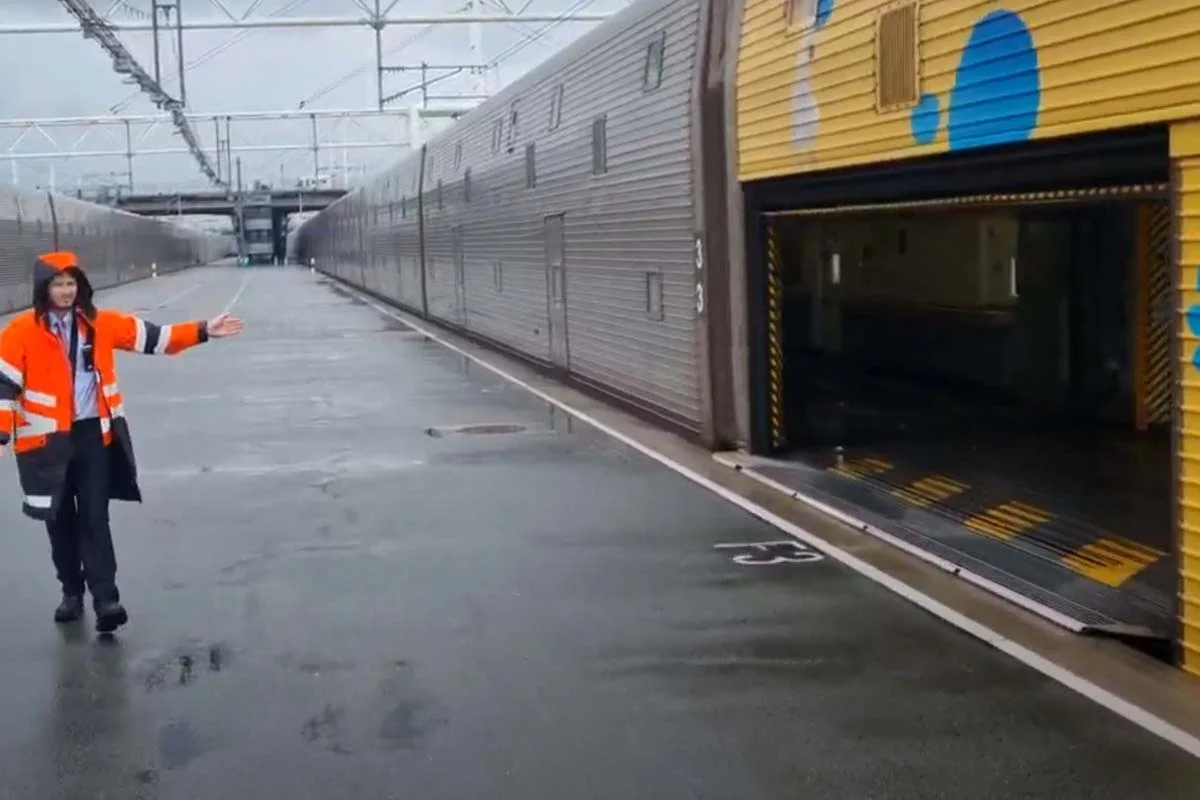
After border control, you drive to the correct waiting area. The vehicle categories matter because not every vehicle uses the same type of wagon. Smaller cars may use a double-deck section, while larger vehicles use a single-deck part of the train.

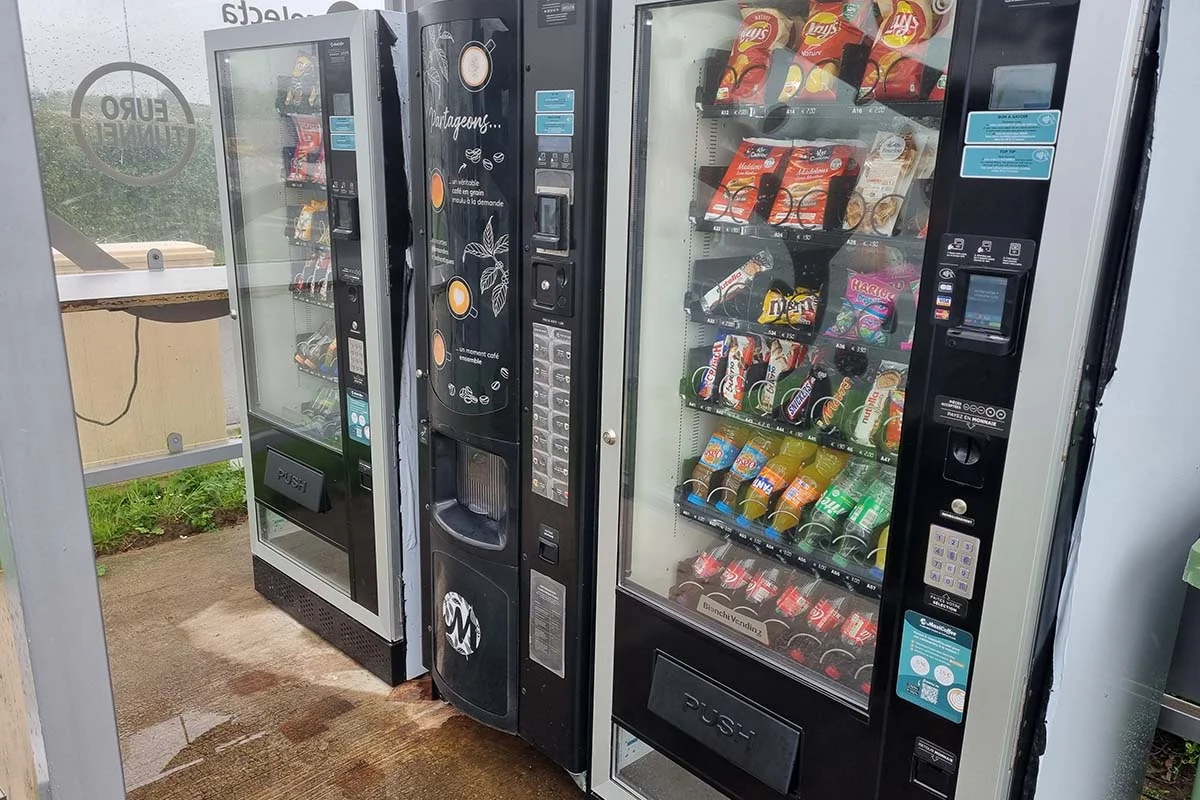
Then you wait until your lane is called. There are toilets nearby, as well as machines for coffee, drinks and snacks. Again, it is practical and clearly organised rather than atmospheric.

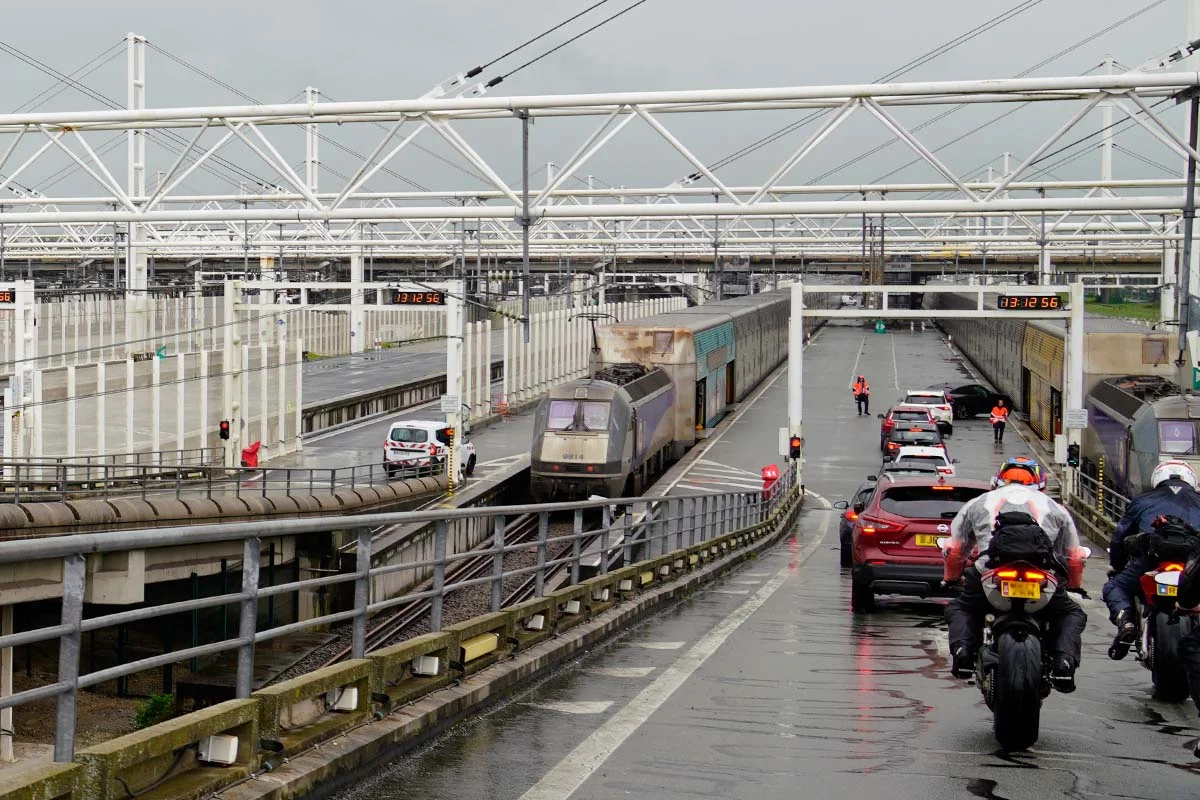
Driving onto the LeShuttle train

Driving onto the LeShuttle train

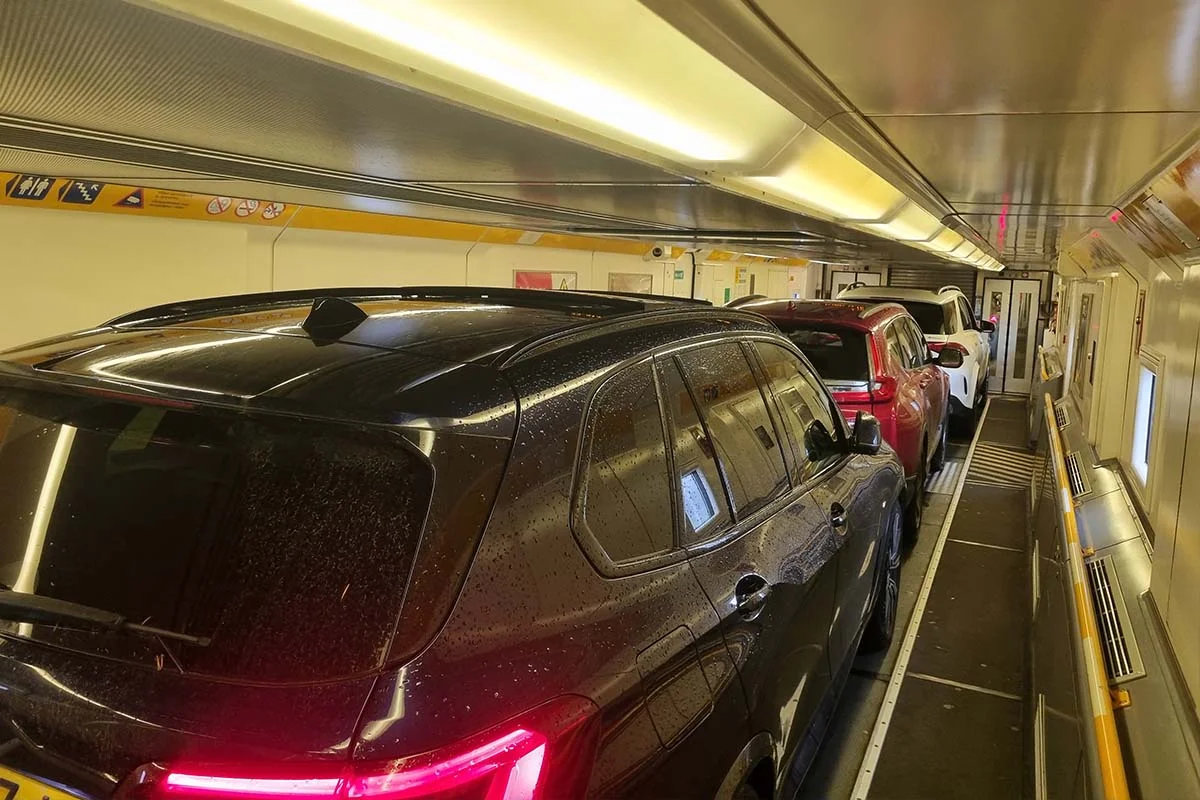
Driving into the train was easier than expected. The entrance felt wide enough, and you simply drive slowly through the wagons until staff guide you into position. Once parked, you switch off the engine, apply the handbrake and stay in or near your vehicle.

If you have never used the car train before, this may sound a little odd. In practice, it felt calm and controlled. It is different from driving onto a ferry, but not difficult.

Inside the Channel Tunnel car train

During the journey, you can get out of the car to stretch your legs. There are also toilets on the train. Apart from that, there is not much to do, and most people simply stay in their cars.

The journey itself passed quickly. That is the main difference with the ferry. On the ferry, the crossing feels like a break. On LeShuttle, the journey feels like it continues, just underground.

Before long, the doors opened and we drove off in Folkestone. If you are travelling from France to England, this is the point where the next part of the journey starts immediately: left-hand traffic, UK roads and your onward drive into Kent, London or the rest of the country.

LeShuttle with a dog or pet

For travellers with a dog, LeShuttle can be very practical. The crossing is short, and you stay with your own vehicle. That can feel calmer than using a ferry, especially if your dog does not like busy passenger decks, kennels or being separated from the car.

You still need to check the current pet travel rules before booking. Requirements can include microchip details, rabies vaccination, tapeworm treatment and the correct travel documents, depending on your direction of travel and destination. Do not rely on memory here. Check the latest rules before departure.

One practical point: if you are travelling to the UK with a dog, the tapeworm treatment window matters. It is one of those small details that can cause a big problem at the terminal if it has not been done correctly.

LeShuttle with children: easier or less of a break?

With children, LeShuttle has one very obvious advantage: it is quick. You do not need to gather coats, bags, snacks and tablets and move everyone onto a passenger deck. You stay with the car, cross quickly and continue driving.

The ferry has the opposite advantage. Children can move around, look outside, eat something and get a real break from the car. On a long road trip, that can be more valuable than the shorter crossing time.

So this depends on your family. If your children travel well in the car and you want the quickest option, LeShuttle is excellent. If everyone needs a reset, the ferry may be the better choice.

LeShuttle or Dover-Calais ferry?

The real question is not just tunnel or ferry. It is what kind of crossing fits your trip. If you want the fastest way across the Channel and do not mind paying more, LeShuttle is very attractive. If you want better value and a proper break from driving, the ferry remains a strong option.

LeShuttle car train Dover-Calais ferry
Crossing time about 35 minutes about 90 minutes
Price in our test about £150 about £80 to £85
Travel feel fast and efficient more of a travel break
Do you stay with the car? Yes No, you go to the passenger decks
Good with pets? Very practical, because you stay close to the car Depends on the operator and facilities
Best choice if speed and convenience matter most price, space and a break matter more

If you mainly want to compare the ferries, use our Dover-Calais ferry guide. That route has the most choice, with P&O Ferries, DFDS and Irish Ferries all operating between Dover and Calais.

Do not forget Dover-Dunkirk

If you are driving to Belgium, the Netherlands, northern France or Germany, Dover-Dunkirk is also worth checking. It takes longer than Dover-Calais, but Dunkirk can be more convenient for onward driving east or north.

That is why we would not compare only LeShuttle and Dover-Calais. For many road trips, the best choice is the one that makes the full journey easier, not just the shortest crossing on paper.

Who is LeShuttle best for?

We would especially recommend LeShuttle if you value speed, simplicity and predictability. It is a strong option for drivers with a full car, families who want to keep moving, people travelling with pets, or anyone who simply does not want to take a ferry.

It is also useful if you get seasick, dislike ferry terminals or want to avoid spending time on board a ship. You stay with your car and follow the process from lane to train to exit.

But if you are travelling on a smaller budget, or if you actually like the idea of stopping for a proper break, the ferry is still very appealing. On a longer drive, that 90-minute pause on the Channel can be a good thing rather than a drawback.

FerryGoGo tip

Do not judge the tunnel and ferry only by crossing time. Add the full journey: drive to the terminal, check-in, border control, waiting, boarding, crossing, arrival and onward route. That is where the best choice often becomes clearer.

Read our full Dover-Calais crossing test See alternatives to Dover for France trips

Do not forget before departure

  • Check your booking details and provide any required passenger information in time.
  • Make sure passports, vehicle documents and pet documents are valid for your trip.
  • Allow extra time in peak holiday periods.
  • Check your vehicle category carefully, especially with a roof box, bike rack, campervan, caravan or trailer.
  • Compare the tunnel with Dover-Calais and Dover-Dunkirk before booking.
  • Choose the right ticket type if your plans may change.
  • Look at western ferry routes if your final destination is Normandy, Brittany or western France.

Our conclusion: did LeShuttle live up to expectations?

Yes. LeShuttle was fast, efficient and easy to use. The process was clear, boarding was straightforward, and the tunnel journey was over before it really felt like the crossing had started. Being offered an earlier train made the experience even better.

But we would not automatically choose it every time. In our 2024 test, LeShuttle was significantly more expensive than the Dover-Calais ferries. That extra cost can be worth it if you want the fastest and most convenient crossing, but it is not always the best-value choice.

Our honest verdict: LeShuttle is the best choice if speed and convenience come first. The ferry is often the better choice if you want a lower fare, more space and a proper break from driving.

Still undecided? Start with our full comparison of LeShuttle, P&O Ferries, DFDS and Irish Ferries on the Dover-Calais corridor.

Frequently asked questions about the car train between England and France

How long does LeShuttle take?

The train journey through the Channel Tunnel takes about 35 minutes. For the total journey, you also need to allow time for check-in, border control, waiting lanes and boarding.

Where does the car train leave from?

LeShuttle runs between Folkestone in Kent and Calais in northern France. Folkestone is close to Dover, while Calais is well placed for northern France, Belgium and onward driving into Europe.

Do you stay in the car on LeShuttle?

You stay with or near your vehicle during the journey. You can get out to stretch your legs, and there are toilets on the train, but most people remain in their cars.

Is LeShuttle cheaper than the ferry?

Not in our test. LeShuttle worked out at about £150, while the Dover-Calais ferries we tested were roughly £80 to £85. Prices change by date, time, direction, vehicle type and availability, so always compare live fares.

Is LeShuttle better than the ferry?

It depends on your trip. LeShuttle is faster and very efficient. The ferry is often cheaper and gives you a proper break from driving. For speed, we would choose the tunnel. For value and travel feel, we would still compare the ferry carefully.

Should I also compare Dover-Dunkirk?

Yes, especially if you are driving towards Belgium, the Netherlands or northern France. Dover-Dunkirk takes longer than Dover-Calais, but the arrival point can work better for some road trips.

What should I check before booking LeShuttle?

Check your arrival time, vehicle height, roof boxes or bike racks, pet rules and ticket flexibility before booking. These details can affect your fare, your boarding lane or the documents you need at the terminal.

Follow FerryGoGo on Google

Get our latest ferry guides, route updates and travel tips in your Google feed. Add FerryGoGo as a preferred source in Google, and follow us in Discover when Google shows the option.

Written by

Ferry travel writer

Meet Jelle, the creative mind behind FerryGoGo, all the way from the Netherlands. His journey started when he was planning a big trip around the world. But there was a problem – he couldn't easily find information about …

France & Spain deals
We will be happy to hear your thoughts

Leave a reply

Ferrygogo UK
Logo