FerryGoGo » Best ferry routes from the UK
Which UK ferry crossing is right for you?
Most people already know the country they want to reach. The harder question is usually which ferry crossing makes the whole journey easier – not just the sea crossing itself.
Should you drive to Dover, or would Portsmouth, Plymouth, Harwich, Hull, Newcastle or Holyhead make more sense for where you live? Is the shortest crossing always the best one? And what changes when you travel with children, a dog, a campervan, a caravan, or without a car at all?
This page is a practical UK ferry route guide built on routes we have actually taken. The FerryGoGo team has sailed Dover to Calais, Portsmouth to Cherbourg, Saint-Malo to Portsmouth, Harwich to Hook of Holland (Rail & Sail, Captain's Class), Hull to Rotterdam, Newcastle to IJmuiden and Holyhead to Dublin. Where we have a first-hand review, we link to it below.
Start with your destination country, check your UK starting point, and factor in how you are travelling. The best ferry is not always the fastest one – it is the crossing that fits your whole trip.
Updated May 2026. All route information is based on current operator timetables and first-hand crossings by the FerryGoGo team.
If you only want the quick version, start here. These are the ferry routes we would check first for the most common UK trips.
| If you are going to… | Start with this route | But consider this if… |
|---|---|---|
| Northern France, Belgium or a fast Channel crossing | Dover to Calais | Newhaven to Dieppe or Dover to Dunkirk can feel calmer or suit your onward drive better. |
| Normandy | Portsmouth to Caen | Portsmouth to Cherbourg or Newhaven to Dieppe may work better depending on your exact destination. |
| Brittany or western France | Portsmouth to Saint-Malo or Plymouth to Roscoff | Dover is often too far east unless price or frequency matters most. |
| The Netherlands from London or East Anglia | Harwich to Hook of Holland | Hull to Rotterdam can be better if you start further north. |
| The Netherlands from the Midlands or North | Hull to Rotterdam | Newcastle to IJmuiden is stronger from Scotland or North East England. |
| Amsterdam or northern Europe from Scotland or the North East | Newcastle to Amsterdam/IJmuiden | Hull to Rotterdam can still be useful if you are closer to Yorkshire. |
| Dublin or eastern Ireland | Holyhead to Dublin | Rosslare routes are better for south-east Ireland. |
| South-east Ireland | Fishguard or Pembroke to Rosslare | Holyhead to Dublin is better if Dublin or the east coast is your target. |
| Northern Ireland | Cairnryan to Belfast or Larne | Liverpool to Belfast can work better from the North West or Midlands. |
| Spain or Portugal by car | Portsmouth or Plymouth to Santander/Bilbao | A shorter ferry to France plus a long drive can be cheaper, but less relaxing. |
| Norway, Sweden or Denmark | Ferry to the Netherlands, then drive onward | Your best UK departure port depends heavily on where you live. |
Your destination is the most important factor when choosing a ferry. Once you know which country, or even which region, you are heading to, the short list of routes becomes much clearer. Below we cover the main destinations UK ferry travellers choose.
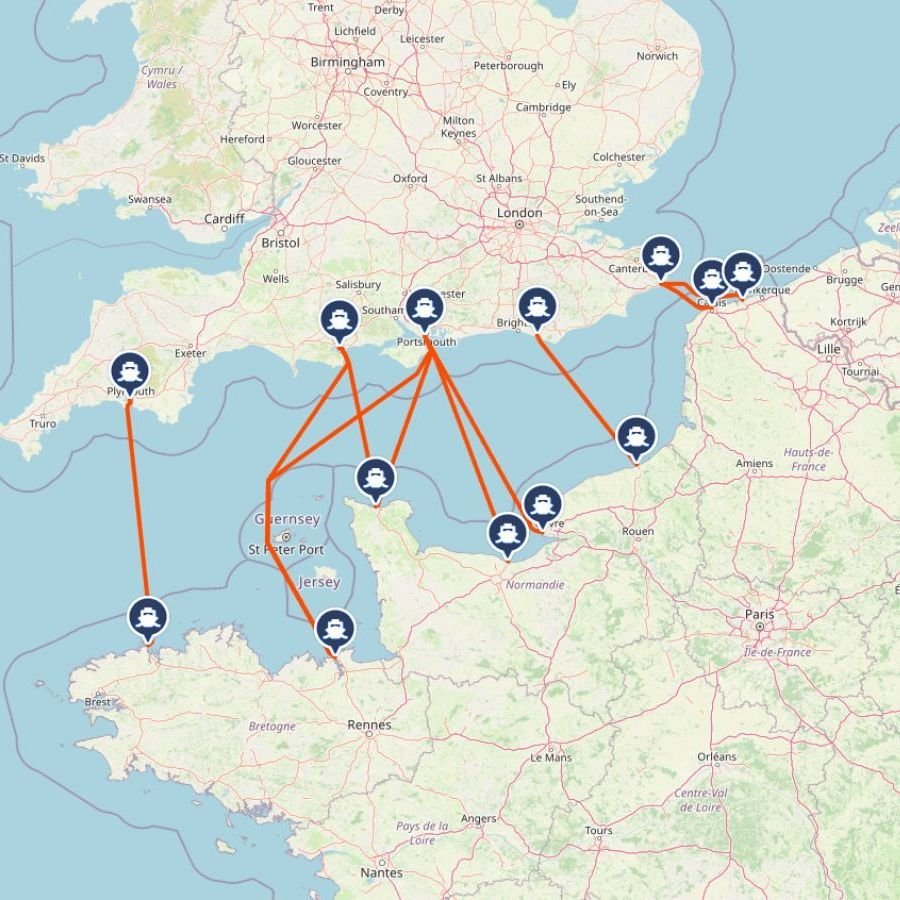
For northern France, Belgium and quick Channel crossings, Dover to Calais is still the obvious route. It is short, frequent and especially useful from London, Kent and the South East.
But Dover is not automatically the best ferry to France. If your holiday starts in Normandy, Brittany or western France, routes from Portsmouth, Poole, Plymouth or Newhaven can make the whole journey feel easier. You spend longer at sea, but you often save tiring motorway miles after arrival.
We have tested this ourselves. On our Saint-Malo to Portsmouth crossing in August 2025, the overnight sailing meant we woke up in Portsmouth already rested, no post-arrival motorway slog through Normandy. On our Portsmouth to Cherbourg trip on the Santona, the extra sea time genuinely felt like the start of the holiday rather than dead travel time. Dover to Calais is faster on paper; these western routes often feel better in practice.
The Netherlands is one of the clearest examples of why route choice matters. There are three main UK to Netherlands ferry routes, and they serve very different parts of the UK.
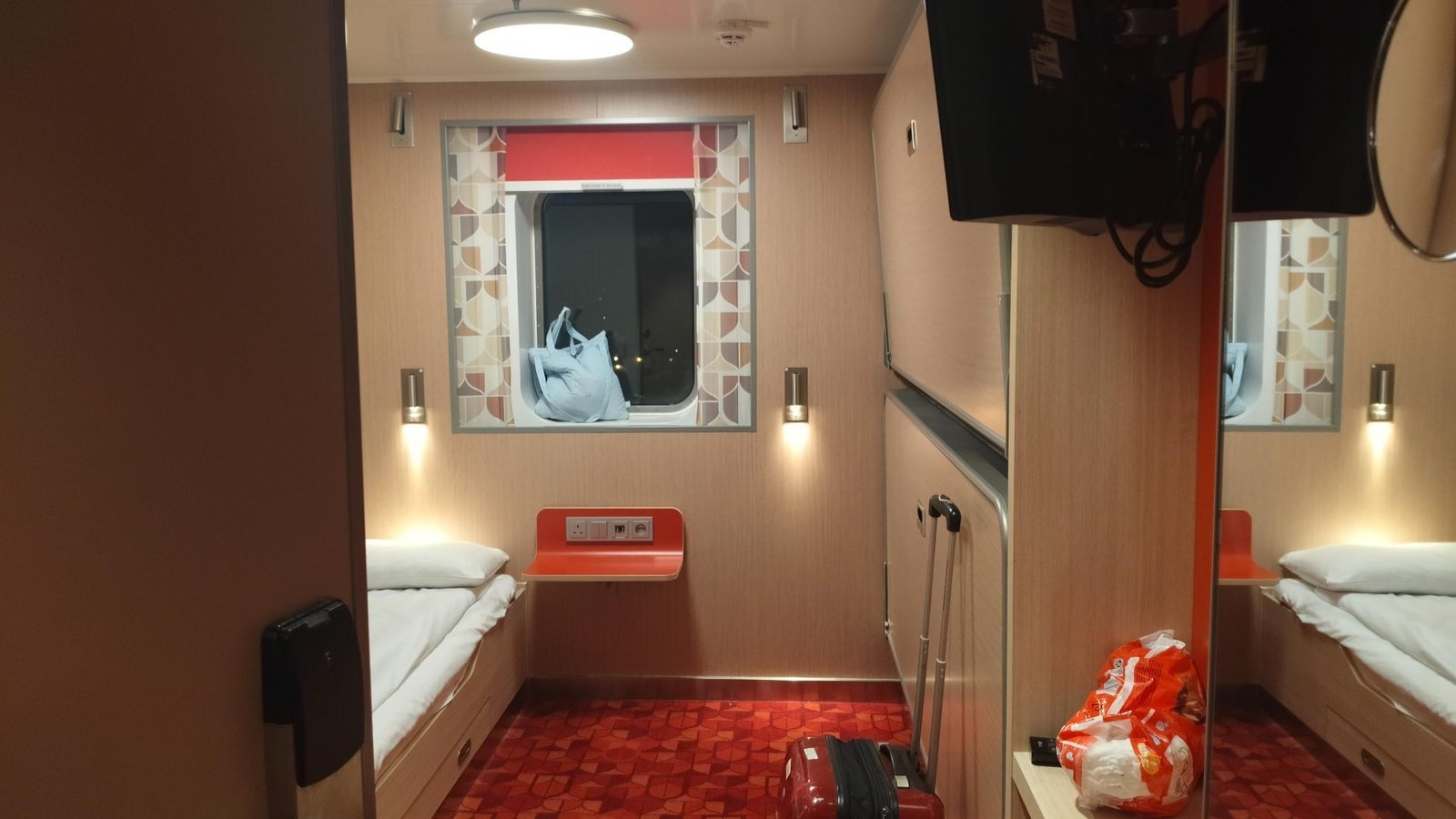
We have sailed all three. Our most recent was the Harwich to Hook of Holland overnight Rail & Sail in Captain's Class: train from London to Harwich, then the overnight crossing to Hook of Holland. Travelling back from Asia with kids after a long-haul flight, the cabin and the space on board made the last leg feel genuinely comfortable rather than just functional. The rail connection on both sides is one of the things that makes this route stand out.
| Route | Best for | Our take |
|---|---|---|
| Harwich to Hook of Holland | London, East Anglia, foot passengers, Rail & Sail | The most practical option without a car and a very strong route from the South East. Read our review → |
| Hull to Rotterdam | Midlands, Yorkshire, North of England | Classic overnight ferry with good cabin facilities. Strong choice from the Midlands and North. Read our review → |
| Newcastle to IJmuiden (Amsterdam) | Scotland, North East England | Often overlooked but genuinely useful from Scotland and the North East. Read our review → |
For Ireland, there is no single default route. Holyhead to Dublin is usually the first crossing to check for Dublin and eastern Ireland, but Rosslare, Belfast and Larne routes can be much better depending on your final destination.
On our Holyhead to Dublin trip, we tried the fast Dublin Swift catamaran and returned on a regular Stena Line ferry. The fast ferry is efficient and fun, but the larger regular ferry may suit some travellers better if they prefer a steadier crossing or more space on board.
Useful next reads: compare ferries from the UK to Ireland and read our Holyhead to Dublin ferry experience.

The ferry from the UK to Spain is not about getting there as fast as possible. It is about skipping airports, taking your own car, motorhome or campervan, and avoiding a very long drive through France.
If you are heading to northern Spain, the Basque Country, Asturias, Galicia or Portugal, the long ferry from Portsmouth or Plymouth to Santander or Bilbao can make a lot of sense. You spend longer at sea, but you arrive much further south and can start the road trip fresher.
On these longer crossings, a cabin is not a luxury extra. It is part of the transport plan. You sleep, shower, eat and arrive ready to drive.
Useful next reads: compare ferries from the UK to Spain and read our Spain and Portugal without the plane road-trip guide.
For Norway, Sweden and Denmark, the important thing to know is simple: there is no easy regular direct passenger ferry from the UK that solves the whole journey in one step.
Most UK travellers build a route combination. First take a ferry to the Netherlands or, sometimes, France. Then drive onward through Germany and Denmark, using Scandinavian ferries where they actually help.
Useful next reads: UK to Norway by ferry, UK to Sweden by ferry and UK to Denmark by ferry.
Your starting point in the UK can change the right answer completely. A route that is ideal from Kent may be a poor choice from Manchester. A route that looks long on the map may actually save you hours of stressful driving.
| Starting point | Routes to check first | Why |
|---|---|---|
| London, Kent and the South East | Dover to Calais, Dover to Dunkirk, Newhaven to Dieppe, Harwich to Hook of Holland | Excellent access to short Channel crossings and the best foot-passenger Netherlands route. |
| South Coast (Hampshire, Dorset, Devon) | Portsmouth, Poole, Plymouth routes | Best starting points for Normandy, Brittany, Spain and western France. |
| East Anglia and the East Midlands | Harwich to Hook of Holland, Hull to Rotterdam | Harwich is the most convenient Netherlands route; Hull suits the northern Midlands. |
| Midlands (Birmingham, Leicester, Nottingham) | Hull to Rotterdam, Holyhead to Dublin, Dover or Portsmouth routes | Choice depends on whether you head east, west or south. |
| North of England (Yorkshire, Manchester, Liverpool) | Hull to Rotterdam, Newcastle to IJmuiden, Liverpool to Belfast, Cairnryan routes | Hull and Newcastle give good direct options to the Netherlands. |
| Scotland and North East England | Newcastle to IJmuiden, Cairnryan to Belfast or Larne | Newcastle is often closer than driving south to Hull or Harwich. |
| Wales | Holyhead to Dublin, Fishguard or Pembroke to Rosslare | Strong options for Ireland; consider Portsmouth or Plymouth for France if heading south first. |
The way you travel often determines the best ferry more than the destination does. A solo foot passenger, a family with young children, a dog owner, and a campervan driver each need quite different things from a crossing. Here is how to think through the main travel types.
With children, the best ferry is often not the shortest ferry. It is the one that gives you space, toilets, food, fresh air, a cabin or a play area, and a better onward drive after arrival.
Our own family crossings support this. On our Harwich to Hook of Holland Rail & Sail, the Stena Hollandica's Happy World kids' area made the overnight crossing genuinely enjoyable with children, the kids had space to move, and the cabin meant everyone arrived rested. On our Saint-Malo to Portsmouth crossing, the extra space and onboard facilities meant the journey felt like part of the holiday rather than dead travel time.
Without a car, you need to think about the whole chain: train to the port, ferry boarding, arrival port and onward public transport. A short ferry can still be awkward if the ports are difficult to reach.
The standout UK-Europe ferry route without a car is Harwich to Hook of Holland. It works because the rail connection is logical on both sides. Holyhead to Dublin can also work well with proper onward planning, and Newcastle to Amsterdam/IJmuiden can be useful as a mini-cruise style city break.
With a campervan, motorhome or caravan, the smartest route is often the one that reduces stressful driving and lands you closer to the road trip you actually want.
For Normandy and Brittany, do not automatically drive to Dover. Portsmouth, Poole and Plymouth routes can be much more logical. For Spain and Portugal, the long ferry to Santander or Bilbao is one of the strongest no-fly road-trip options from the UK.
Travelling with a dog adds a specific set of questions to any ferry booking. The right crossing depends not just on the route but on which operator, which ship and what pet facilities are available on that sailing.
In general, shorter crossings mean less time your dog spends waiting. But longer overnight crossings with proper pet-friendly cabin or kennel facilities can actually be more comfortable than a short daytime crossing on a hot car deck. Our full dog ferry guide covers documents, Pet Lounges, kennels and what to check before booking for every main UK route.
Always verify the pet policy directly with the operator when booking. Rules on where dogs can stay: car deck, kennel, Pet Lounge or cabin: vary by route, operator and ship, and can change seasonally.
Overnight ferries are often underrated. They can replace a hotel night, reduce the next day’s driving and make the journey feel less rushed.
| Route | Best for | Why it works |
|---|---|---|
| Harwich to Hook of Holland | London, East Anglia, families, foot passengers | Train plus ferry plus cabin can make a smooth Netherlands journey. |
| Hull to Rotterdam | Midlands, Yorkshire, North of England | A classic night ferry with cabins, food and onboard facilities. |
| Newcastle to IJmuiden | Scotland and North East England | Good for Amsterdam, the Netherlands and northern Europe. |
| Portsmouth to Caen, Cherbourg or Saint-Malo | Normandy, Brittany, western France | More time at sea, but often less tiring road travel. |
| Portsmouth or Plymouth to Spain | Spain, Portugal, long road trips | The ferry becomes part of the holiday, not just a crossing. |
| Liverpool to Belfast | North West England to Northern Ireland | Useful if the overnight timing fits your travel plan. |
Useful next read: Brittany Ferries cabins, tickets and upgrades.

Still comparing? This is how we would narrow it down for the most common UK ferry travel scenarios.
| Scenario | Route we would check first | Also compare |
|---|---|---|
| Fast trip to northern France or Belgium | Dover to Calais | Dover to Dunkirk, Channel Tunnel |
| Calmer route to Normandy | Portsmouth to Caen | Portsmouth to Cherbourg, Newhaven to Dieppe |
| Family trip to Brittany | Portsmouth to Saint-Malo | Plymouth to Roscoff |
| London to the Netherlands without a car | Harwich to Hook of Holland (Rail & Sail) | Newcastle to IJmuiden for a mini-cruise feel |
| Midlands or North to the Netherlands | Hull to Rotterdam | Newcastle to IJmuiden if you are further north |
| Scotland or North East to the Netherlands | Newcastle to IJmuiden | Hull to Rotterdam if timing suits better |
| Road trip to Spain or Portugal | Portsmouth to Santander | Portsmouth to Bilbao, Plymouth to Santander |
| Dublin or eastern Ireland | Holyhead to Dublin | Fishguard to Rosslare for south-east Ireland |
| Northern Ireland | Cairnryan to Belfast | Cairnryan to Larne, Liverpool to Belfast |
| Overnight crossing with a cabin | Harwich to Hook of Holland | Hull to Rotterdam, Newcastle to IJmuiden, Portsmouth to Saint-Malo |
| Travelling with a dog | Dover to Calais (shortest time at sea) | Any route – check operator pet policy before booking |
| Campervan or caravan to France | Portsmouth to Caen | Portsmouth to Saint-Malo, Plymouth to Roscoff |
| Campervan or caravan to Spain or Portugal | Portsmouth to Santander | Plymouth to Santander, Portsmouth to Bilbao |
At FerryGoGo, we look beyond crossing time when recommending a route. The shortest ferry is sometimes the right choice, but not always. A route can be faster on paper and still feel worse in practice if it adds a long drive to the port, an awkward arrival time or a stressful departure experience.
Our recommendations are based on routes we have personally sailed. First-hand reviews published so far:
When making recommendations we weigh up the full travel day – port drive, check-in, sailing time, onboard comfort, arrival port and onward journey, as well as price, frequency and how the route works for different travel types (families, dogs, campervans, foot passengers). See all our first-hand ferry reviews at first-hand ferry reviews →
If you want the simplest answer: choose Dover to Calais for speed and short breaks, Portsmouth to Caen for Normandy, Portsmouth to Saint-Malo or Plymouth to Roscoff for Brittany, Harwich to Hook of Holland from London and East Anglia, Hull to Rotterdam from the Midlands and North, Newcastle to IJmuiden from Scotland and the North East, Holyhead to Dublin for Dublin and eastern Ireland, and Portsmouth or Plymouth to Santander or Bilbao for a no-fly road trip to Spain or Portugal.
But the more useful answer is this: choose the ferry that fits your whole trip. Where are you starting in the UK? Where do you actually want to arrive in Europe? How much driving do you want to avoid? Are you travelling with children, a dog, a campervan, a caravan or without a car?
The best UK ferry route is rarely just the shortest line on the map. It is the crossing that makes the journey easier from your front door to your destination.
Use the route chooser above to narrow down your options, or go deeper into the destination guides below.
There is no single best route: it depends on your destination, starting point and travel style. Dover to Calais is usually best for speed to northern France and Belgium. Portsmouth to Caen is a strong all-rounder for Normandy. Harwich to Hook of Holland is excellent from London and East Anglia. Hull to Rotterdam works well from the Midlands and North. Portsmouth or Plymouth to Santander or Bilbao is best for no-fly road trips to Spain or Portugal.
No. Dover is the best choice for short crossings to northern France and Belgium, but routes from Portsmouth, Poole, Plymouth and Newhaven can be much better if you are heading to Normandy, Brittany or western France. The longer sea crossing can reduce the total driving time significantly. We found this on our own Saint-Malo to Portsmouth crossing: waking up in Portsmouth already rested was noticeably better than a shorter crossing followed by a long motorway drive.
It depends on where you are based. Harwich to Hook of Holland is one of the most practical overnight routes, the Rail & Sail option from London makes it a smooth chain of train, cabin and sea crossing. We took the Captain's Class cabin on the Stena Hollandica and found it genuinely comfortable, especially travelling with children. Hull to Rotterdam is a strong overnight option from the Midlands and North, and Newcastle to IJmuiden suits Scotland and the North East well. For France, Portsmouth to Saint-Malo is the standout overnight option. Read our Harwich overnight review →
Harwich to Hook of Holland is one of the best foot-passenger UK ferry routes because the rail connection works well on both sides; train from London Liverpool Street to Harwich, ferry to Hook of Holland, train to Amsterdam or beyond. Holyhead to Dublin and Newcastle to IJmuiden are also strong options, depending on your plans.
With children, the best route is often the one that gives more space and less driving, rather than the shortest crossing. Dover to Calais is fast, but Portsmouth to Caen, Portsmouth to Saint-Malo, Harwich to Hook of Holland and longer overnight routes with cabin options can feel more relaxed for family travel. On the Stena Hollandica (Harwich to Hook of Holland), the Happy World kids' area made the overnight crossing genuinely enjoyable with children.
The best ferry route with a dog depends on the operator, ship and pet facilities on that crossing. Short crossings like Dover to Calais reduce time at sea, but longer overnight routes with pet-friendly cabin or Pet Lounge options can offer more comfort. Always check the pet policy for your specific sailing before booking: rules on where dogs can be during the crossing vary by route, operator and ship. See our full guide: travelling with a dog on a UK ferry.
For France, western routes from Portsmouth, Poole and Plymouth are often more convenient with a campervan or caravan because they reduce post-arrival driving. For Spain and Portugal, the ferry from Portsmouth or Plymouth to Santander or Bilbao is the main option and can replace a very long drive through France and northern Spain.
There is no direct ferry from the UK to Belgium currently operating. The practical choice is Dover to Calais or Dover to Dunkirk and then driving east: Belgium is less than an hour from both arrival ports. Alternatively, the Channel Tunnel is a fast option from Kent.
There is no direct ferry from the UK to Portugal. The closest option is Portsmouth or Plymouth to Santander or Bilbao in northern Spain, then driving south into Portugal. From Santander, Porto is roughly 3.5 hours by road and Lisbon around 5.5 hours. This route works very well for a campervan or road trip and avoids both flying and a very long drive through France.
There is no direct regular ferry from the UK to Scandinavia at the moment. The most practical route is to take a ferry from the UK to the Netherlands: Harwich to Hook of Holland, Hull to Rotterdam or Newcastle to IJmuiden: and then drive through Germany and Denmark into Sweden or Norway.
Ferry prices vary a lot depending on the route, operator, time of year and how far in advance you book. Dover to Calais and Newhaven to Dieppe are often among the more affordable short crossings, but longer routes can offer better value overall when you factor in the driving costs and time saved. Use the FerryGoGo comparison tool to check live prices across routes.
Ferrygogo helps UK travellers compare ferry routes, check travel details and book crossings with confidence. Our guides, maps, and route overviews provide a clear picture of all available options, allowing you to choose the crossing that best fits your plans.
Ferrygogo Company | Advertise with us | About | Disclaimer | Privacy & Cookies | Contact