What started as a quick trip to Copenhagen became a proper FerryGoGo route test. We wanted to try the main ways of crossing between Germany, Denmark and Sweden: the Puttgarden–Rødby ferry, the Øresund Bridge, the Helsingør–Helsingborg ferry and, on the way back, Gedser–Rostock.
These are the routes many drivers use when heading towards Copenhagen, southern Sweden, Gothenburg or even Norway. On paper they look simple: one short ferry here, one bridge there. In practice, the best choice depends on your timing, ticket flexibility, vehicle, route and whether you would rather keep driving or break up the journey with a short crossing.
So this is not just a Copenhagen trip report. It is our first-hand look at the Denmark–Sweden route choices: where the ferry works well, where the bridge is quicker, and what we would pay more attention to next time.
What we learned from this Denmark–Sweden route test
- Puttgarden–Rødby works best as a driving shortcut. The crossing is short, but it breaks up the route and gets you quickly into Denmark.
- The Øresund Bridge is the most direct option for Malmö and southern Sweden. It keeps the journey simple if you want to drive straight through from Copenhagen.
- Helsingør–Helsingborg is the more flexible ferry alternative. It can make sense if you are heading further north in Sweden or want another short break from the road.
- Ticket flexibility matters. Arriving earlier than planned in Helsingborg taught us that the right ticket type can save both time and money.
- Combi tickets are worth checking. In this region, the best route is often not ferry or bridge, but the right combination of both.
Driving from the Netherlands to Puttgarden
Early on Monday morning, Bram and Robbert left from the FerryGoGo office in Zeist and drove towards northern Germany. The roads were quiet, with very few delays and, unusually for Germany, hardly any roadworks. No real Staugefahr this time.
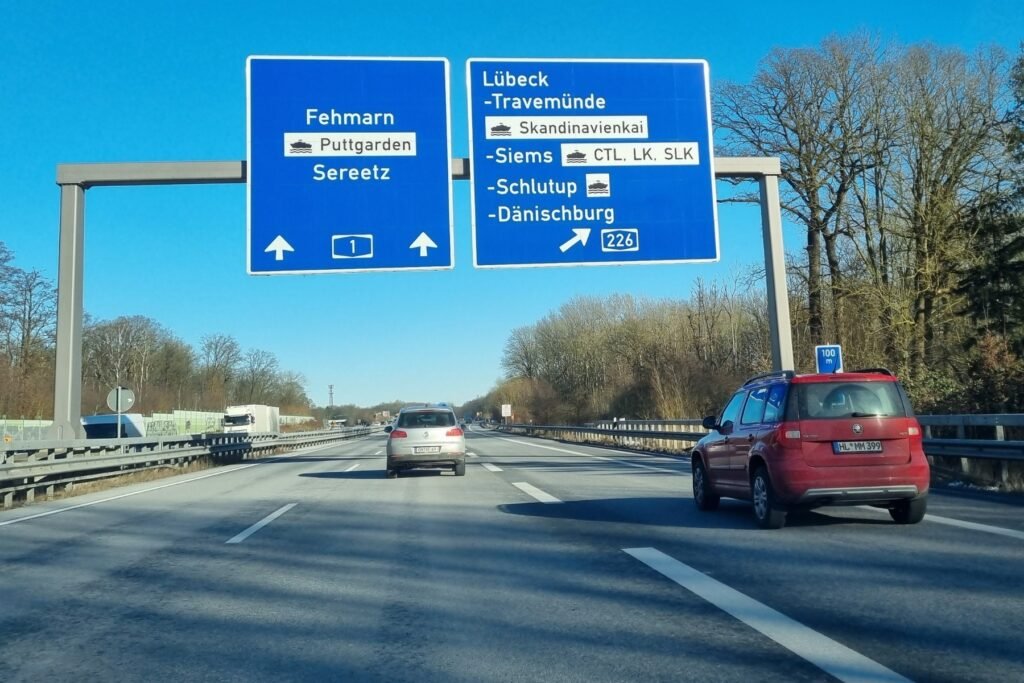
After roughly 6.5 hours on the road, we arrived in Puttgarden. From here, we would take the first ferry of the trip: the Scandlines crossing to Rødby in Denmark.
The first thing that caught our attention in Puttgarden was not the ferry terminal, but the enormous bordershop nearby. It is not a normal supermarket. It is a huge multi-floor shop aimed mainly at Danish travellers stocking up on cheaper drinks and other goods in Germany.
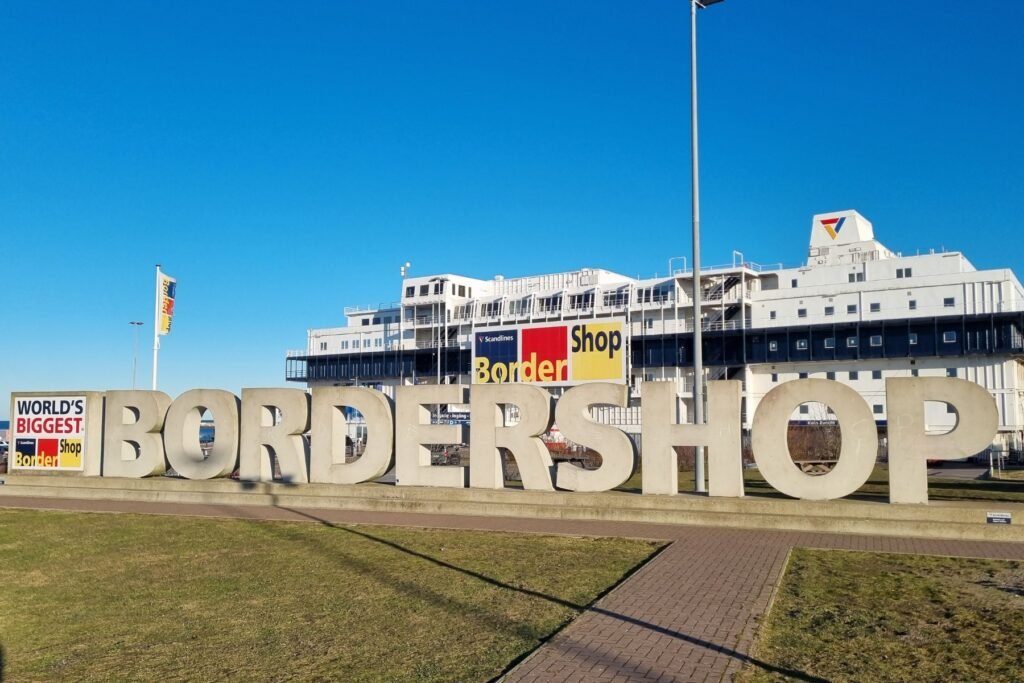
The rows of shopping carts and large parking areas tell you enough: this is a serious stop for many travellers before crossing to Denmark.
Puttgarden–Rødby with Scandlines
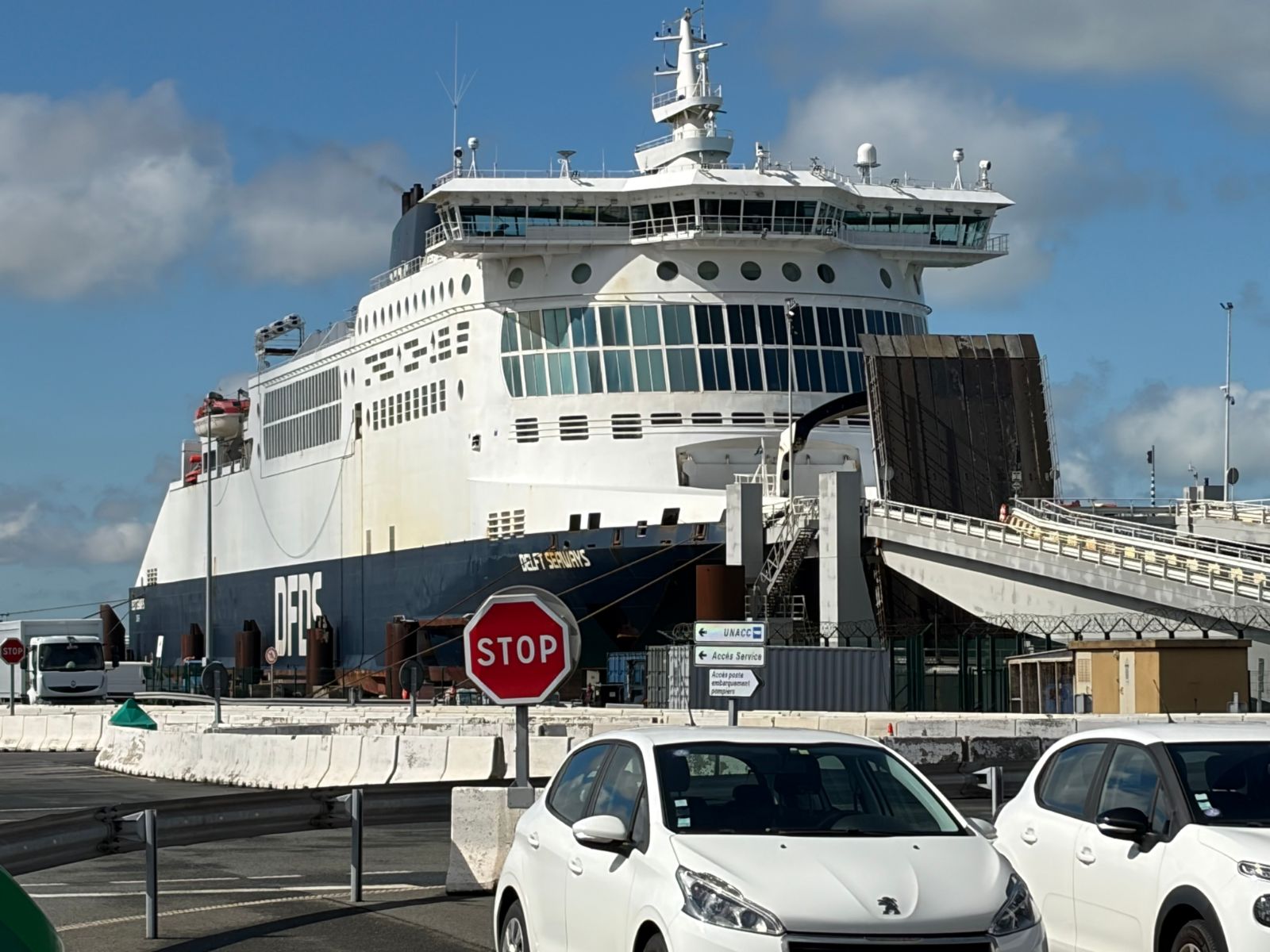
Checking in at Puttgarden was straightforward. After a short wait, we drove onto the Scandlines ferry for the Puttgarden–Rødby route. This is not a long crossing, but that is exactly the point: it works as a practical break in the drive rather than a full ferry experience.
On board, the ferry was clean and functional, with a restaurant and a small shop. As we boarded, the sun was setting, so we headed outside, grabbed two cold beers and took in the view from deck. Not a bad way to turn a driving day into the start of a ferry adventure.
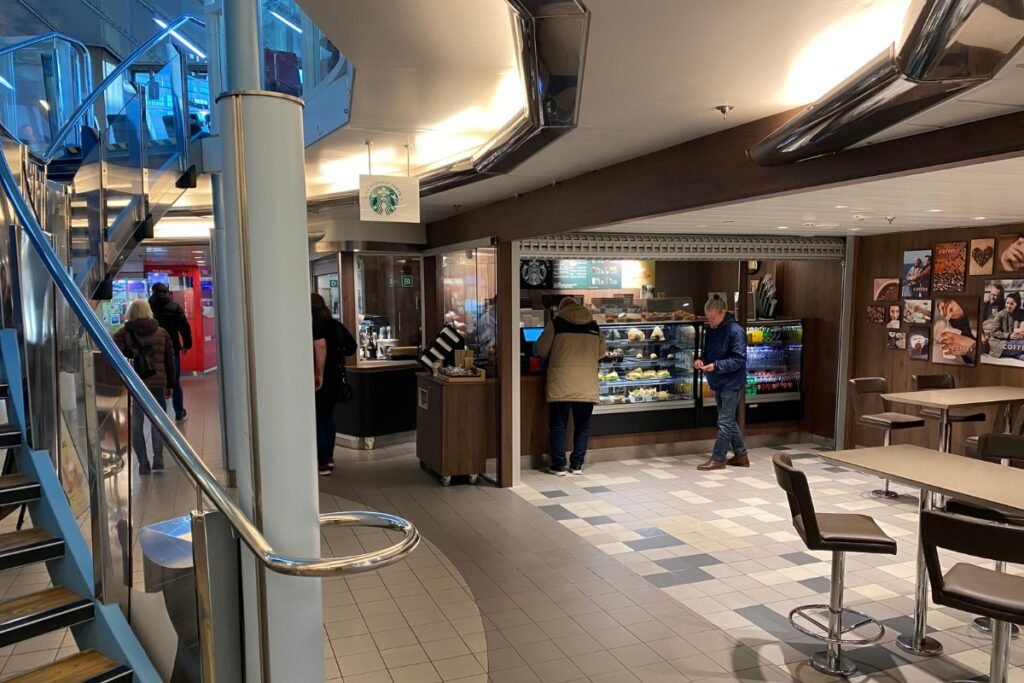
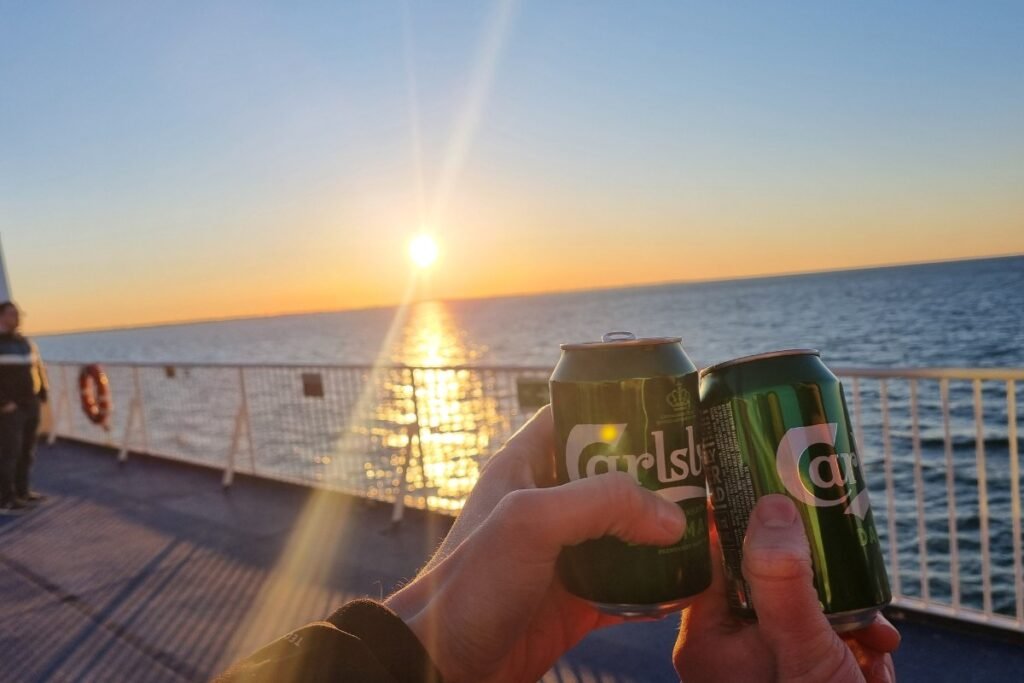
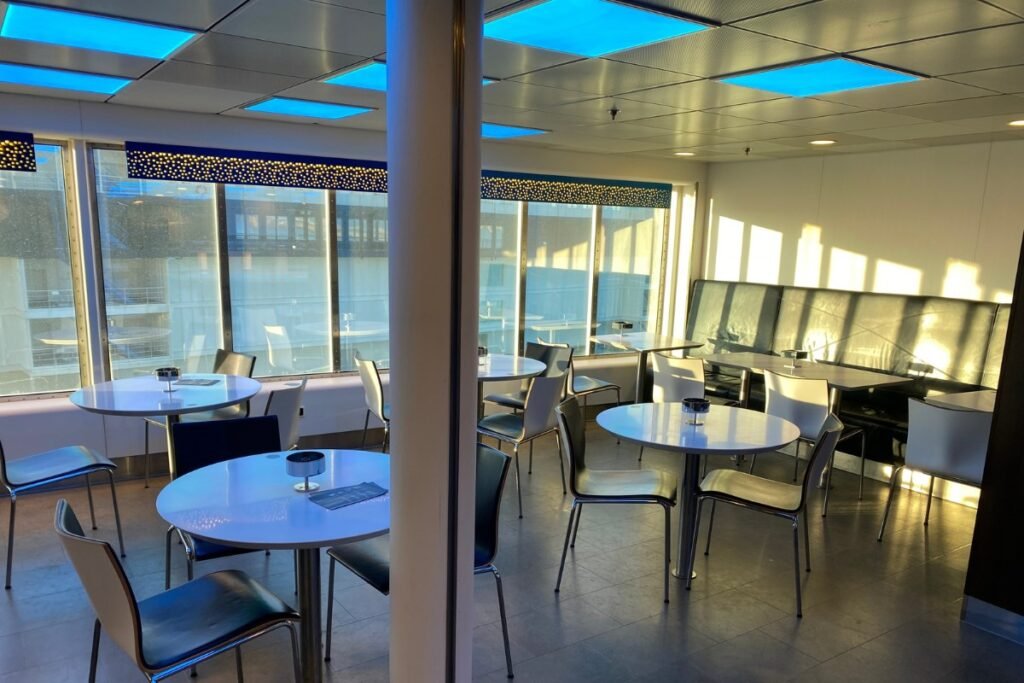
For us, this crossing was also useful because it gave us fresh first-hand input for our Puttgarden–Rødby route guide. The route is easy to describe as a line on a map, but it makes more sense once you experience how smoothly it fits into the wider drive towards Copenhagen and Sweden.
From Rødby to Copenhagen
After around 45 minutes on board, we arrived in Rødby. From there, it was about an hour and a half by car to Copenhagen. That is one of the strengths of this route: once you leave the ferry, you are quickly back on the Danish road network and heading towards the capital.
We checked into our hotel in Copenhagen and went for dinner nearby. The ferry part of the day had been short, but it changed the rhythm of the journey. Instead of one very long drive, the route felt broken into manageable sections: drive, ferry, drive, arrive.
From Denmark to Sweden via the Øresund Bridge
The next morning, after breakfast, we took the Øresund Bridge from Denmark to Sweden. We had bought our ticket in advance, which is usually the most sensible way to handle this crossing if you already know your route.
As we drove onto the bridge, we quickly realised that the sunlight was working against us for photos and footage. So, in true FerryGoGo fashion, we decided to drive back and try again from a better angle. Not the most efficient move, but it gave us a better view of one of northern Europe’s most impressive road connections.
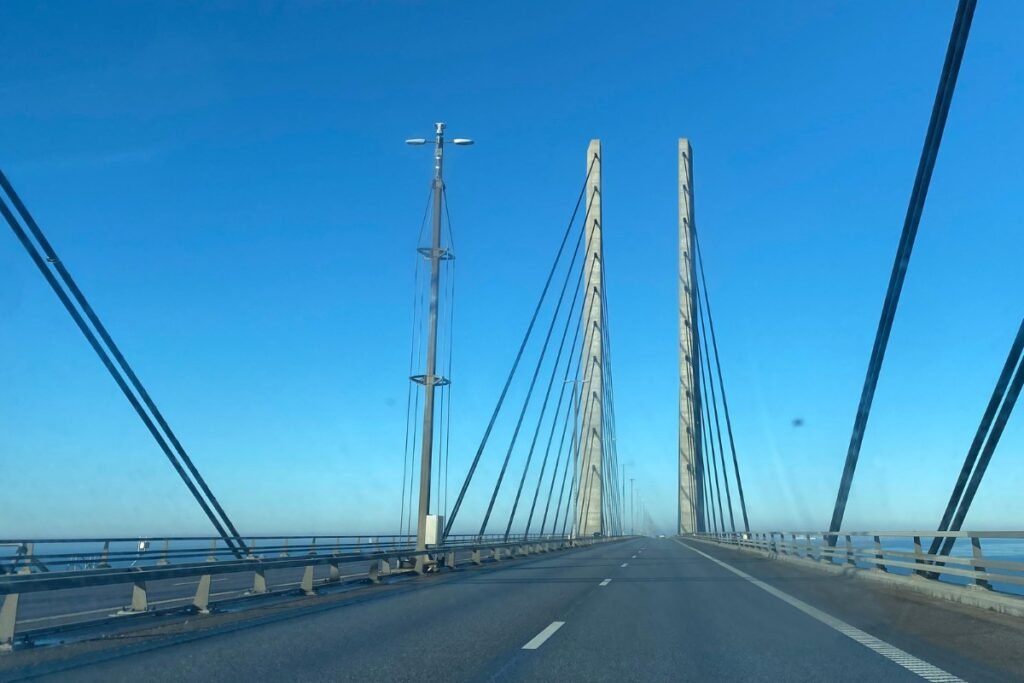
The Øresund Bridge is the most direct choice if you are heading from Copenhagen towards Malmö or southern Sweden. It keeps the journey simple: no waiting for a ferry, no boarding, no short crossing. But it is not always the route we would automatically choose. If you are heading further north, the Helsingør–Helsingborg ferry can be a better fit.
Helsingborg to Helsingør by ferry
After crossing into Sweden, we continued towards Helsingborg. This was the next route we wanted to test: the short ferry between Helsingør and Helsingborg.
We had already bought a ticket with Öresundslinjen, the operator on this crossing, but we arrived much earlier than planned. That gave us one of the most useful lessons of the trip: ticket flexibility really matters on this route.
Some tickets give you a wider arrival window, which is helpful if your drive goes quicker or slower than expected. We did not have that flexibility, so we had to choose between waiting a few hours or buying a new ticket. Because we needed to be back in Copenhagen later that day, we bought a new one.

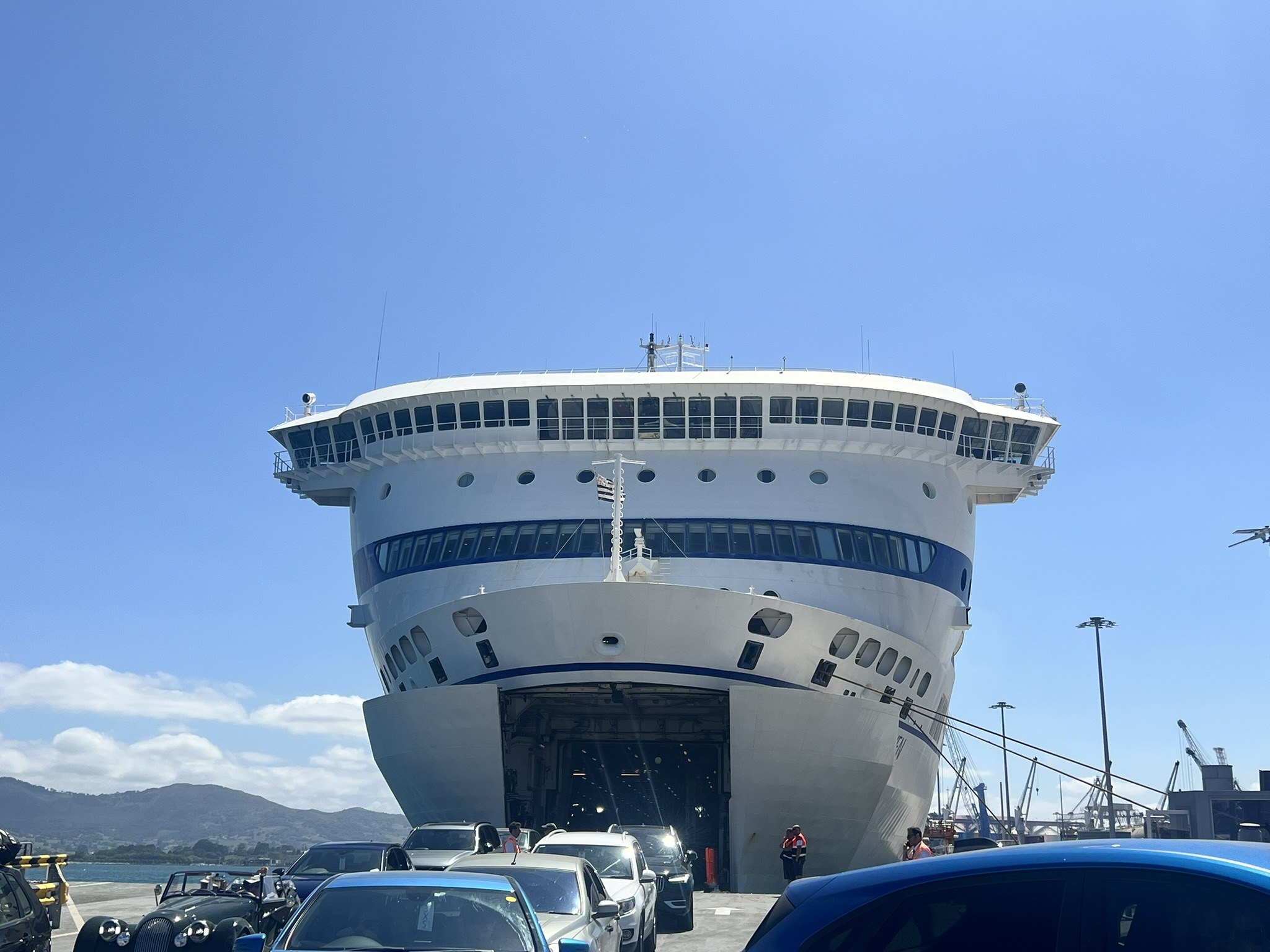
After a short wait, we drove onto the ferry. The ship was relatively small, but it had a restaurant and a supermarket on board. About 10 minutes into the trip, an announcement was made that we had crossed the border from Sweden to Denmark. That meant alcohol was now cheaper in the onboard supermarket, which was a very local reminder of how these short crossings work in practice.
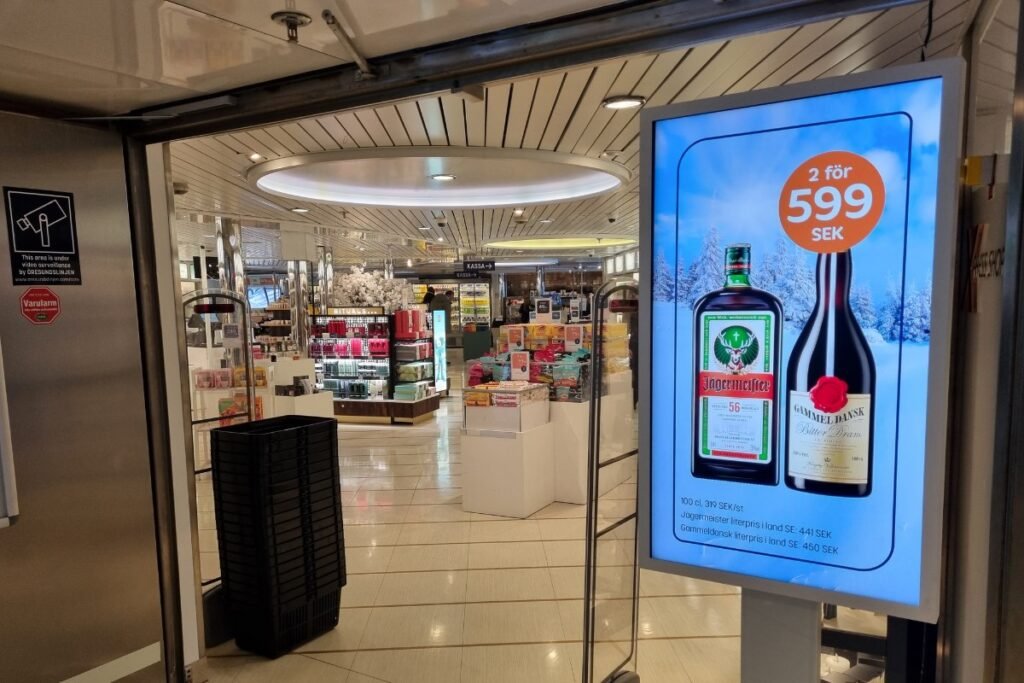
The crossing itself was very short and efficient. After about 20 minutes, we were in Denmark again. It was just enough time to get out of the car, stand on deck and take in the views. Arriving in Helsingør is also a nice moment, because Kronborg Castle, often linked with Hamlet, is clearly visible from the ferry.
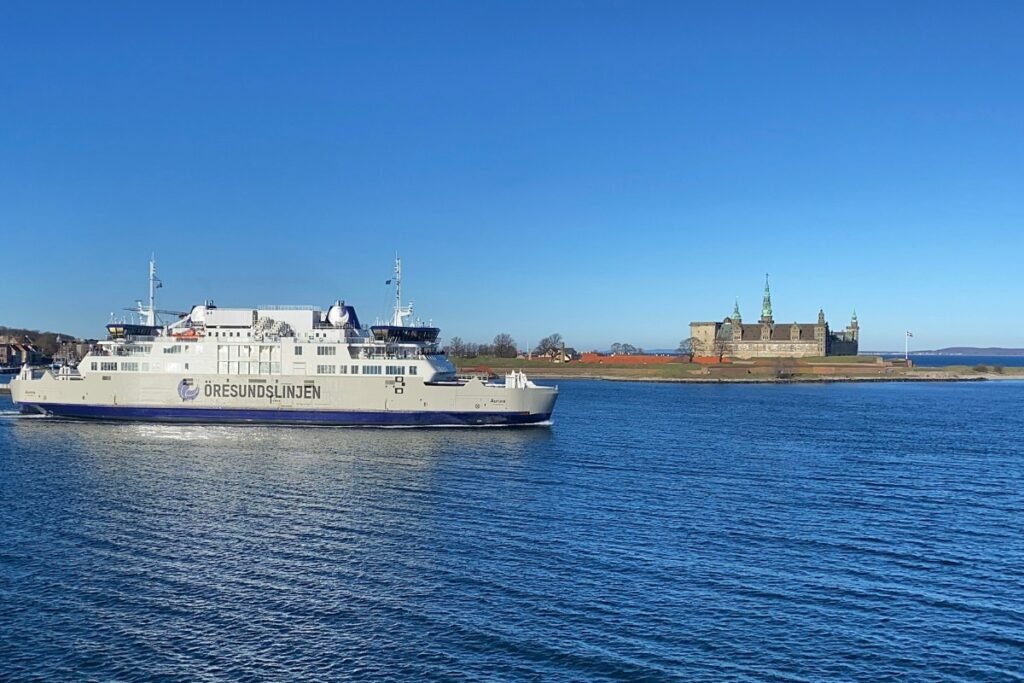
For drivers, this short ferry is less about the onboard facilities and more about route fit. If Malmö is your target, the Øresund Bridge is usually the more direct option. If you are aiming for Helsingborg, Gothenburg or the west coast of Sweden, the Helsingør–Helsingborg ferry deserves a proper look.
A short stop in Copenhagen
After the crossing, we drove back to Copenhagen. About 45 minutes later, we were back at the hotel and had time for a walk through the city. It was sunny but cold, which turned out to be good sightseeing weather.
We kept it simple and visited a few of Copenhagen’s best-known spots, including the Little Mermaid, Tivoli and Nyhavn. The city was clean, easy to walk around and a good reminder that this route can work well as both a practical road trip and a short city break.
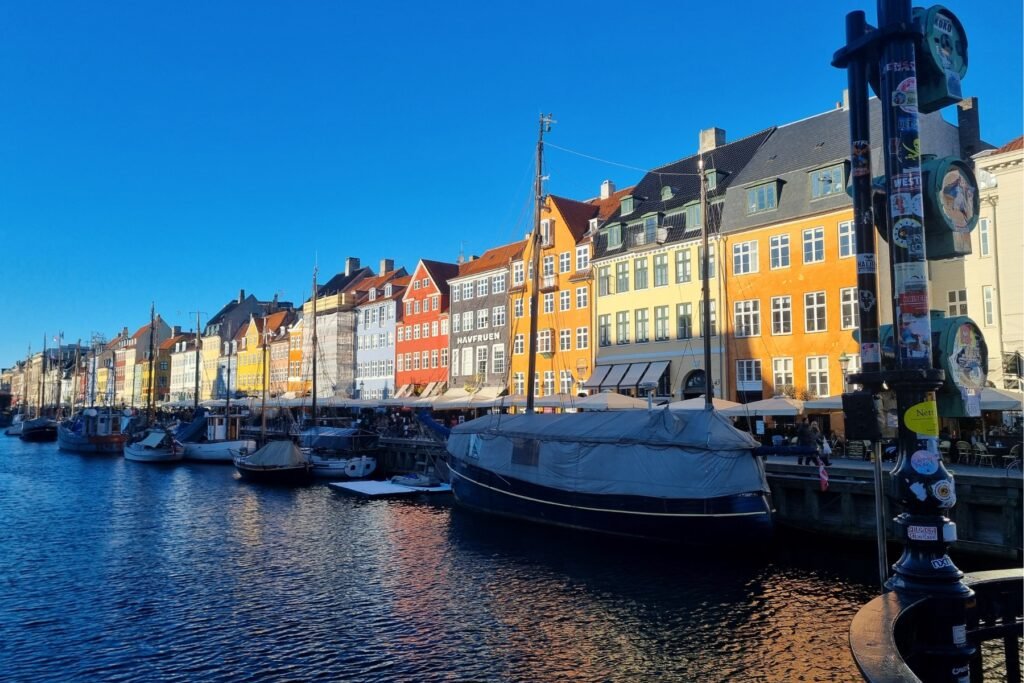
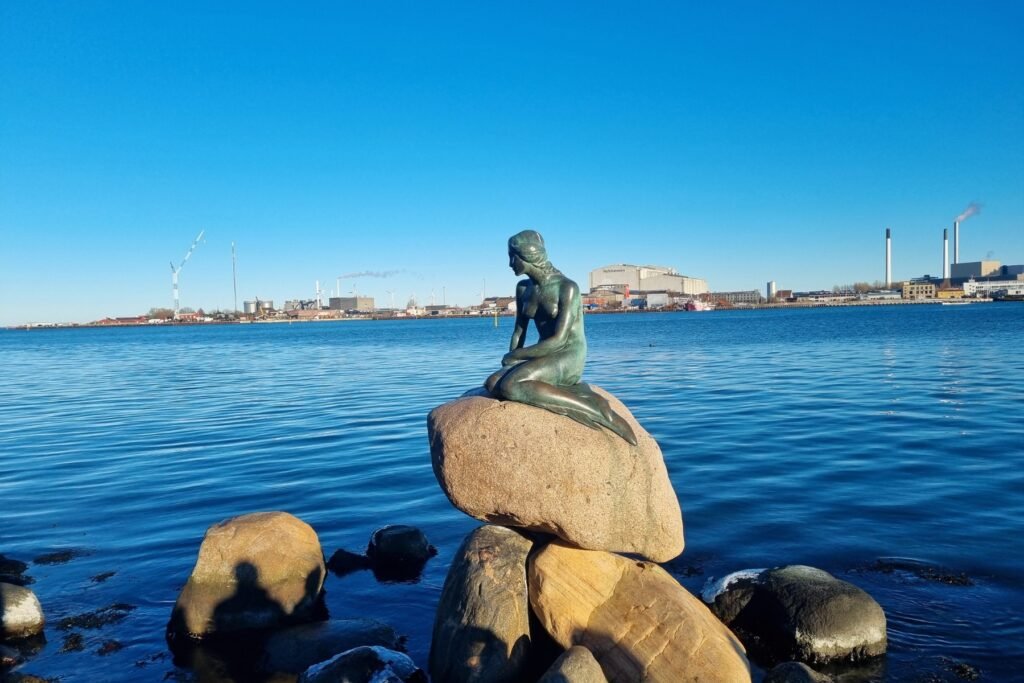

Later that afternoon, the hotel offered a complimentary wine tasting between 5:00 and 6:00 PM, which was a welcome chance to warm up. We then ordered another beer and suddenly understood the popularity of the Puttgarden bordershop even better: two draught Carlsbergs cost us €18.
Returning by the Gedser–Rostock ferry
The next day, it was time to head home. Instead of returning via Puttgarden–Rødby, we drove to Gedser and took the Gedser–Rostock ferry. That gave us another Scandlines route to compare and a different way back into Germany.
Gedser is a small harbour town. There is not a huge amount to do if you arrive early, so we bought some snacks, walked around the village and spent some time around the Scandlines terminal before check-in.
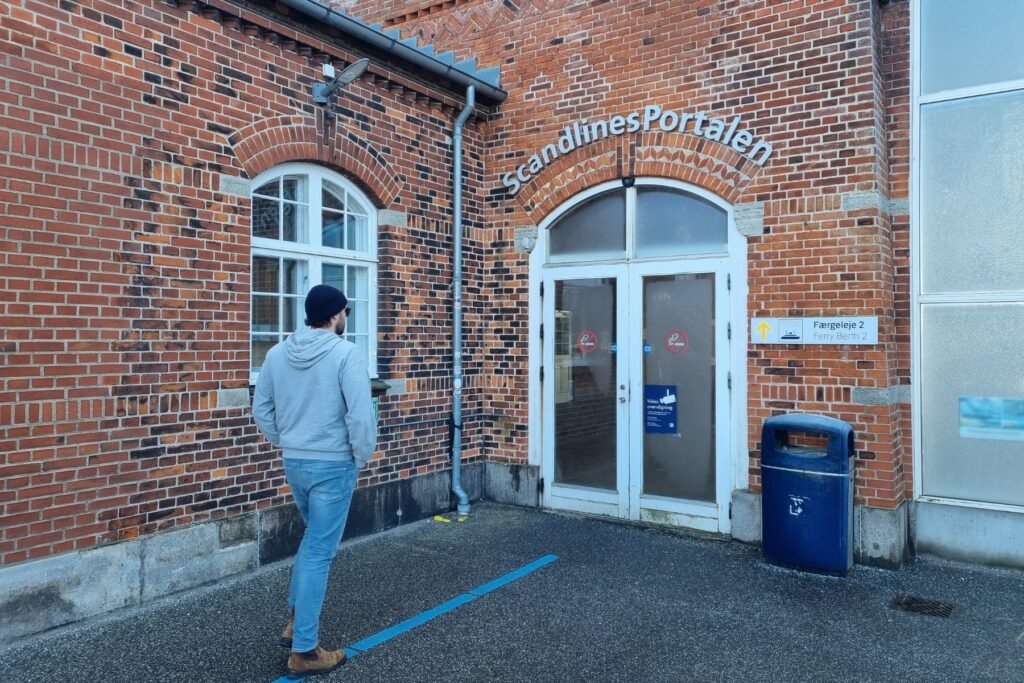
On board with Scandlines
After check-in, we drove onto the Scandlines ferry. Compared with the shorter Puttgarden–Rødby hop, this crossing gives you more time on board. The ferry had the kind of facilities you would expect on a longer regional crossing:
- A restaurant
- Cafés
- A Starbucks outlet
- A children’s play area
- Several seating areas
There was also an all-inclusive buffet area, where passengers with the right ticket could sit during the crossing and have food and drinks included. For a longer crossing such as Gedser–Rostock, that kind of upgrade can be worth comparing, especially if you are travelling with children or want a calmer place to sit.
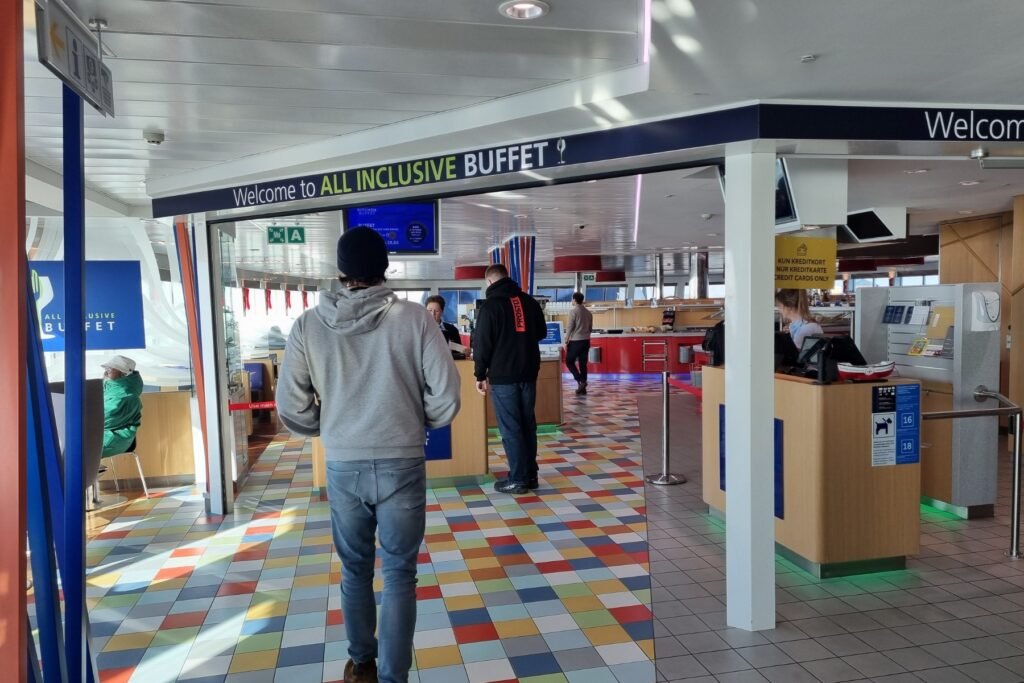
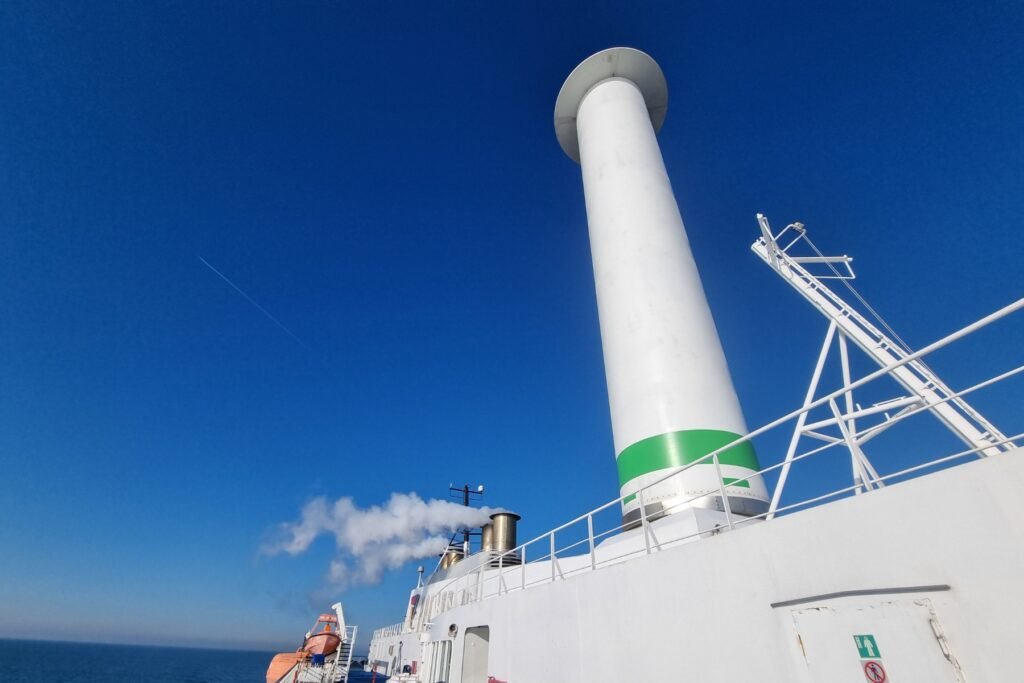
We travelled on the Scandlines ferry Berlin. One of the most interesting things on board was the rotor sail, which helps the ship use wind power. You can see it clearly from deck, and it is an impressive piece of engineering to watch during the crossing.
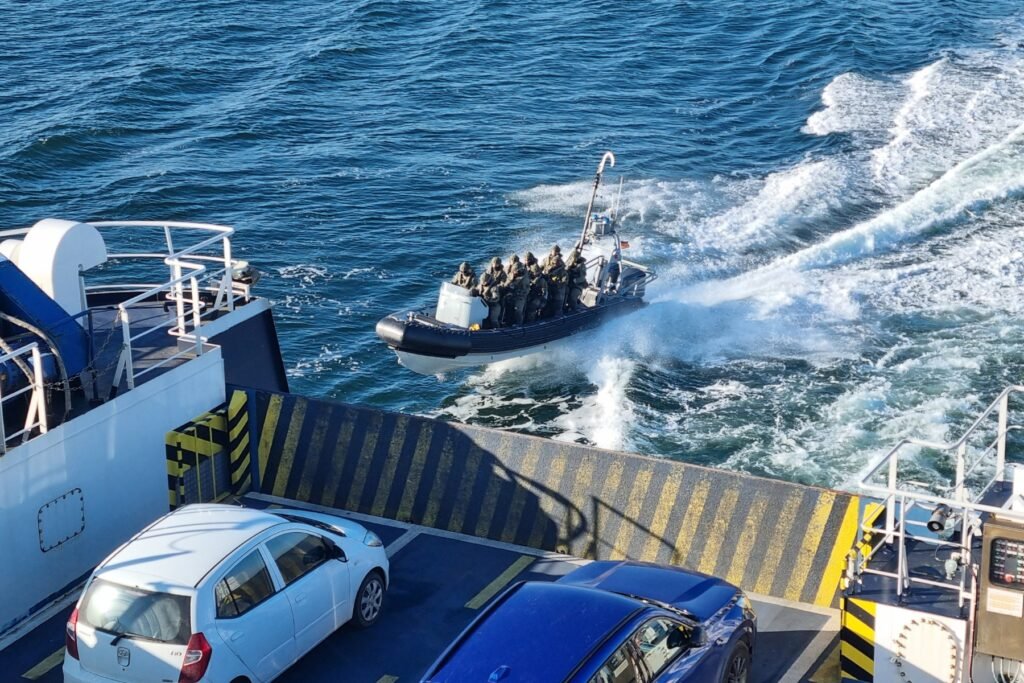
During our sailing, there was also a police training exercise on board. It was not something we expected to see, but it did make the crossing memorable. These are the kind of details that rarely appear in a timetable, but stay with you afterwards.
Driving from Rostock back to the Netherlands
The Gedser–Rostock crossing took around two hours on our sailing, a little longer than usual because of headwinds. Once we arrived in Rostock, we still had a long drive back to the Netherlands. After roughly seven hours on the road, we arrived home tired, but with a useful set of notes, photos and route comparisons.
That is exactly why we do these trips. A route map tells you where the ferry goes. Travelling it yourself tells you how the whole journey feels: the waiting, the boarding, the ticket choices, the breaks from driving and the small practical decisions that make a route easier or more awkward.
Our verdict: ferry, bridge or both?
If you are driving from Germany towards Copenhagen or Sweden, Puttgarden–Rødby is one of the most useful ferry shortcuts in northern Europe. It is not a long crossing or a ferry you choose for a full onboard experience. You choose it because it makes the route feel easier: less continuous driving, a clear break in the journey and a direct way into Denmark.
For southern Sweden and Malmö, the Øresund Bridge is hard to beat for speed and simplicity. You stay on the road, cross directly from Copenhagen and continue straight into Sweden. But if you are heading towards Helsingborg, Gothenburg or further north, the Helsingør–Helsingborg ferry becomes more interesting. It gives you another short break and can fit better with your onward route.
The main lesson from our trip is that this region is not about one perfect route. It is about choosing the right combination. Puttgarden–Rødby plus the Øresund Bridge is logical if you want the most direct route via Copenhagen and Malmö. Puttgarden–Rødby plus Helsingør–Helsingborg can be a better fit if you are heading further north or prefer another ferry break.
Would we use this route again? Yes, especially for a road trip to Copenhagen or southern Sweden. Next time, we would pay even more attention to ticket flexibility, combi-ticket options and the exact arrival window at Helsingør–Helsingborg.
When Puttgarden–Rødby makes sense
- You are driving from Germany to Copenhagen. The ferry cuts across to Denmark and gives you a useful break before the final stretch.
- You are continuing to Sweden. From Denmark, you can choose between the Øresund Bridge and the Helsingør–Helsingborg ferry depending on your final destination.
- You prefer a route with short breaks. Instead of one long drive, the ferry creates a natural pause in the journey.
- You are travelling with children, a camper or a caravan. A short ferry stop can make the drive feel more manageable, but make sure you book the right vehicle length.
- You want flexibility. Combi tickets and arrival-window rules can matter, especially if your driving time is hard to predict.
Get our latest ferry guides, route updates and travel tips in your Google feed. Add FerryGoGo as a preferred source in Google, and follow us in Discover when Google shows the option.