





Ferries from France to the UK
FerryGoGo » United-Kingdom » Ferry to the UK from France
Popular ferry crossings from France to England and the wider UK
Ferries from France to the UK
Already in France, or planning the return leg after a holiday? This guide looks at the ferry routes from the French side: Calais and Dunkirk to Dover, Dieppe to Newhaven, and the Normandy and Brittany routes to Portsmouth, Poole and Plymouth.
The best crossing is not always the shortest one. From northern France, Calais and Dunkirk are the obvious choices. From Normandy, Brittany or western France, a longer sailing can save a long drive back to Calais and may leave you better placed once you arrive in the UK.
Quick route choice
- Fastest route to England: Calais to Dover, with several operators and frequent sailings.
- Good Calais alternative: Dunkirk to Dover, especially if you are driving from Belgium, the Netherlands or northern France.
- Useful from Paris or Normandy: Dieppe to Newhaven, Caen to Portsmouth, Cherbourg to Portsmouth or Le Havre to Portsmouth.
- Best from Brittany and western France: Saint-Malo, Roscoff or Cherbourg routes can reduce driving and make the return trip feel less rushed.
- Without a car: check foot-passenger rules carefully. They vary by route and operator.
Travelling the other way? Use our ferry guide from the UK to France.
Tip from our own crossings: flexibility can be worth paying for on these routes. On one of our Portsmouth-France trips, car trouble meant we had to switch our sailing from Caen to Cherbourg. That kind of thing is exactly why the return leg deserves its own planning, especially if you still have a long drive through France before boarding.
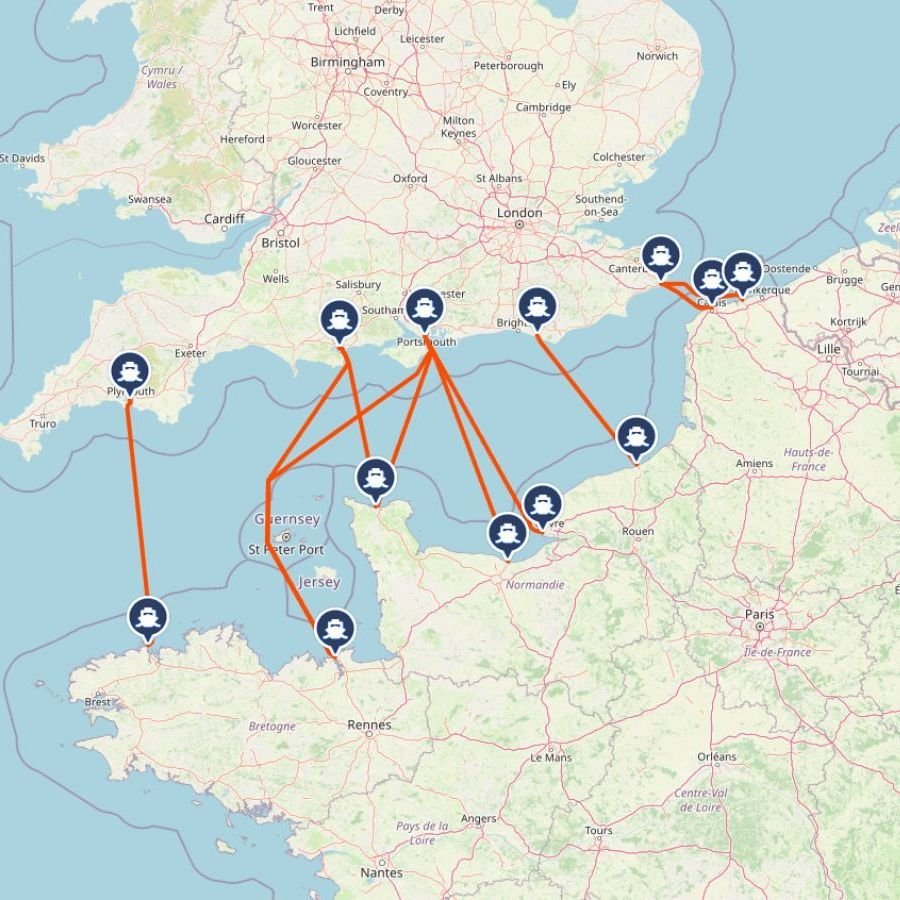
Map: ferries from France to the UK
France to UK ferry routes
The ferry map shows the main crossings from France to England. Most routes fall into three clear groups:
- Short Channel crossings: Calais to Dover and Dunkirk to Dover.
- Normandy crossings: Dieppe to Newhaven, Caen to Portsmouth, Cherbourg to Portsmouth or Poole, and Le Havre to Portsmouth.
- Brittany crossings: Saint-Malo to Portsmouth or Poole, and Roscoff to Plymouth.
If you are returning from a holiday in western France, do not only compare the sailing time. A longer ferry from Brittany or Normandy can be easier than driving all the way back to Calais.
Portsmouth-Saint Malo
Portsmouth-Cherbourg
Plymouth-Saint Malo
Which France to UK ferry route should you choose?
There is no single best ferry from France to the UK. The right route depends on where you are in France, where you need to be in the UK, whether you are travelling with a car, and whether you prefer a short hop or a more comfortable longer crossing.
Best route by situation
- To London, Kent or the South East: Calais-Dover is usually the fastest and most frequent option. Dunkirk-Dover is a useful alternative if you are coming from Belgium, the Netherlands or northern France.
- To Brighton, Sussex or the south coast: Dieppe-Newhaven can be a very logical crossing, especially from Normandy or the Paris side of France.
- To Hampshire, the Midlands or western London: Caen-Portsmouth, Cherbourg-Portsmouth and Le Havre-Portsmouth can work better than arriving in Dover.
- To Devon, Cornwall or the South West: Roscoff-Plymouth can save a lot of driving if you are starting in Brittany or western France.
- For a calmer return journey: consider an overnight or longer western crossing, especially after a camping holiday or a long drive through France.
For most travellers, the decision comes down to this: shortest crossing versus least driving. Dover is fast, but Portsmouth, Newhaven, Poole or Plymouth may put you much closer to where you actually need to be in the UK.
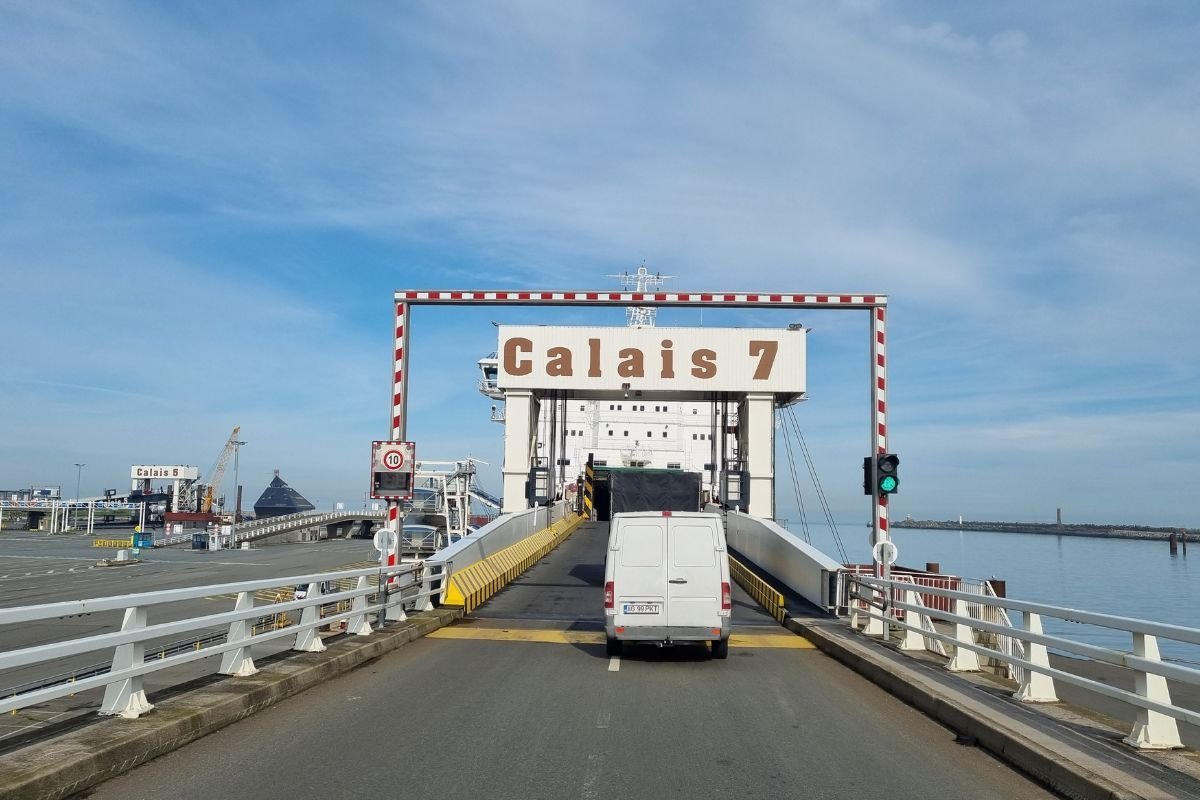
Calais and Dunkirk to Dover: the shortest way back to England
The Channel crossings to Dover are the classic routes from France to the UK. They are short, frequent and practical if you are travelling from northern France, Belgium or the Netherlands.
Main short-sea routes
-
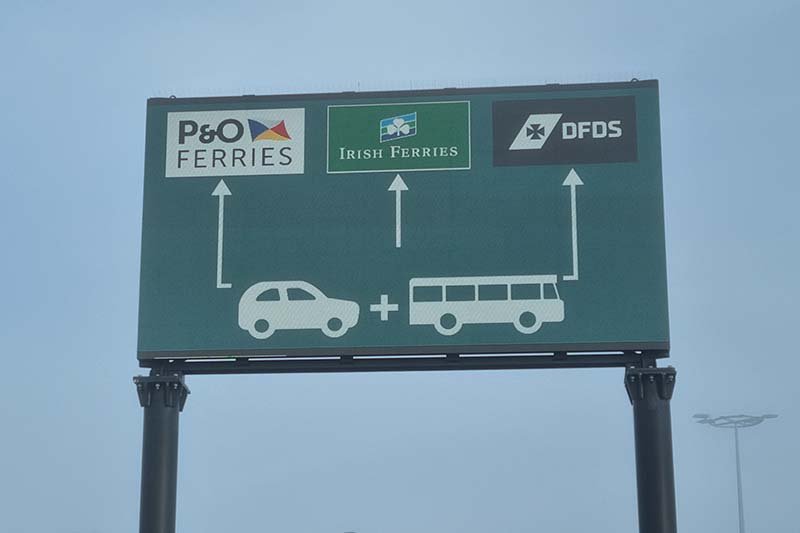
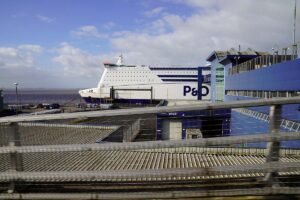
- Operated by P&O Ferries, Irish Ferries and DFDS.
- Usually around 1 hour and 30 minutes.
- The most frequent France to UK ferry corridor.
-
Dunkirk to Dover
- Operated by DFDS.
- Usually around 2 hours.
- Often a good choice if you want to avoid driving into Calais or you are coming from Belgium or the Netherlands.
When to choose Dover
Choose Dover if speed and frequency matter most, or if you are heading towards Kent, London, the M20, the M25 or the wider South East. If you are starting further west in France, compare the extra driving time carefully before defaulting to Calais.
Ferries from Normandy and Brittany to the UK
If you are returning from Normandy, Brittany or western France, the longer crossings can make more sense than driving back to Calais. They are less frequent than the Dover routes, but they can save road miles and make the journey feel calmer.
From Normandy
- Caen to Portsmouth: one of the best all-round choices for Normandy, with day and overnight options depending on the season.
- Cherbourg to Portsmouth or Poole: useful from the Cotentin Peninsula and western Normandy.
- Le Havre to Portsmouth: a practical option from eastern Normandy and the Seine valley.
- Dieppe to Newhaven: a strong alternative if you are heading towards Sussex, Brighton or the south coast.
From Brittany and western France
- Saint-Malo to Portsmouth or Poole: useful for northern Brittany and often a more relaxed way to return to southern England.
- Roscoff to Plymouth: especially handy if you are travelling to Devon, Cornwall or the South West.
These routes are especially worth checking if you are travelling with children, a campervan, a pet, or lots of luggage. The sailing is longer, but the overall journey can be easier.
Portsmouth-Cherbourg
Portsmouth-Saint Malo
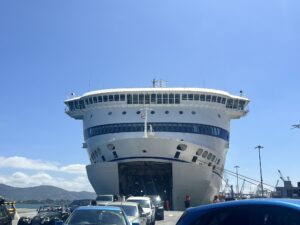
Plymouth-Roscoff
France to UK ferry crossings: our travel reports and guides
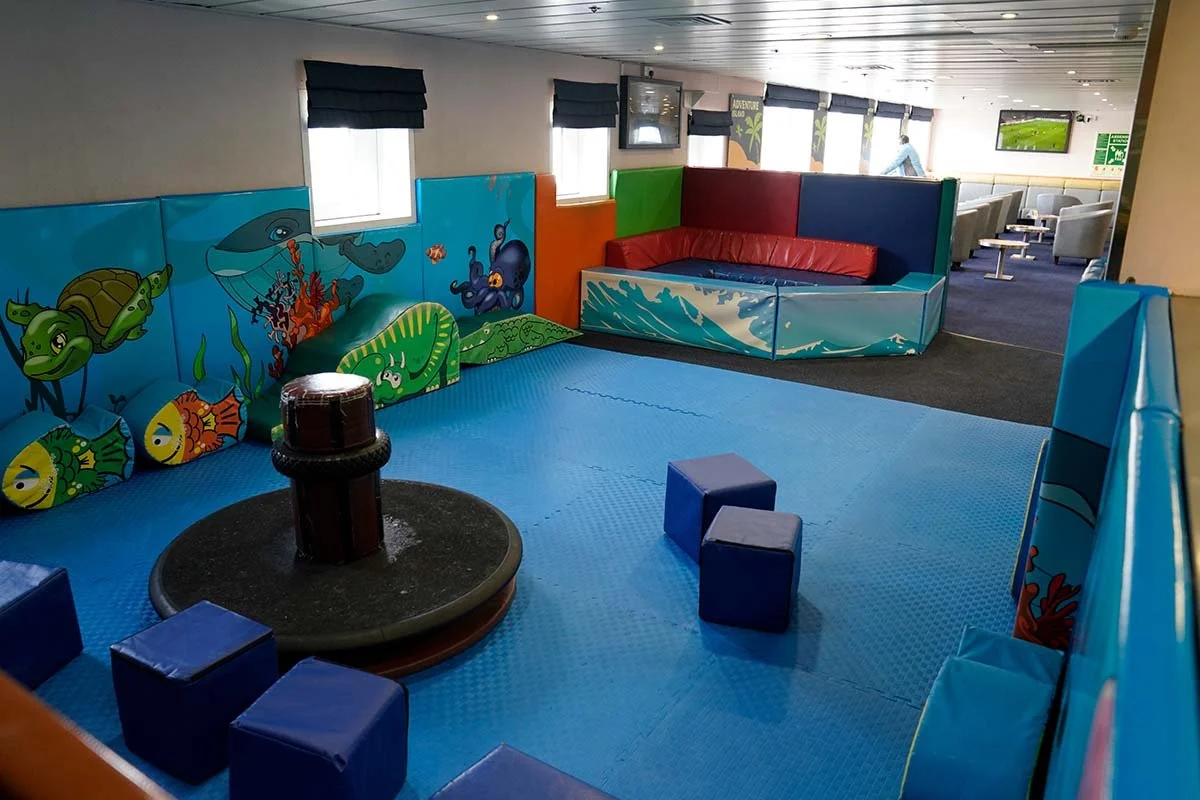
We have tried many of the ferries between the UK and France ourselves, including several crossings that also work well on the return leg from France to the UK. These travel reports give you a real feel for boarding, cabins, restaurants, lounges, pet areas and what the ships are like before you book.
Some of the reviews below describe the UK-to-France direction, but the on-board experience, ship layout and practical tips are still useful when travelling back from France to the UK.
Portsmouth to Cherbourg by Ferry: Sailing on the Santona with Brittany Ferries
By ferry from Saint-Malo to Portsmouth: our experience and a visual impression
We tried every way to cross the Channel from Dover to Calais
On-board impressions and route maps
Prices and availability for France to UK ferries
Before you board in France
When travelling from France to the UK by ferry, there are a few practical things to check before you drive to the port.
- Passport and entry rules: most visitors need a valid passport to enter the UK, and some travellers may also need a UK Electronic Travel Authorisation. Check the official rules before travelling.
- Arrive early: allow time for check-in, passport control and vehicle queues, especially around school holidays and busy weekends.
- Driving after arrival: remember that you will drive on the left-hand side of the road in the UK. Take extra care at the first roundabouts and junctions after leaving the port.
- Foot passengers: not every route or sailing accepts foot passengers. Check this before booking, especially on western routes and late-night sailings.
- Download entertainment in advance: Wi-Fi can be limited or expensive on board, and roaming at sea can be costly.
- Travelling with children: longer routes can be easier if you book a cabin or choose a sailing time that fits your normal routine. We also have tips for travelling with kids by ferry.
- Worried about seasickness? Choose a seat or cabin near the middle of the ship where movement is usually less noticeable. You can also read our guide to the best seats on a ferry to avoid seasickness.
Luggage and pets
With a car, you can usually bring a generous amount of luggage, but check your operator's conditions if you are carrying unusual items, bikes, roof boxes or a trailer.
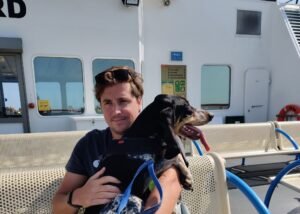
Pets are allowed on many France to UK ferry routes, but the rules are stricter when entering Great Britain. Check that your chosen route accepts pets and make sure your pet has the right documents, microchip and vaccinations. Dogs entering Great Britain usually also need tapeworm treatment within the required time window. You can find more practical ferry-company information in our travelling with a dog on ferries guide.


I am looking to book a ferry from Caen to Portsmouth for two adult foot passengers June 25
Need help thx
Hi Donna,
We somehow missed your reply – did you figure out already or can we assist?
Best regards
Hi I'm wanting to travel with my dog from France to UK.
I will land in Paris airport first , my family live in Brighton next to Newhaven but also near enough to Dover which is the quickest and easiest route please
Hi Abi,
Dieppe – Newhaven is then probably the most straightforward, other good options are Le Havre – Portsmouth or Caen – Portsmouth, at least these crossings are a comfortable experience. You can also of course first travel to Calais, but this seems like a detour, although the crossing itself to Dover is maybe a bit shorter.
More information about Dover – Calais can be found here, or check out this page for Caen – Portsmouth information.
Oh and you might want to check out the specific rules for bringing a dog from France to the UK by ferry, just to be sure. Have a good trip, and let us know if you have any other questions!