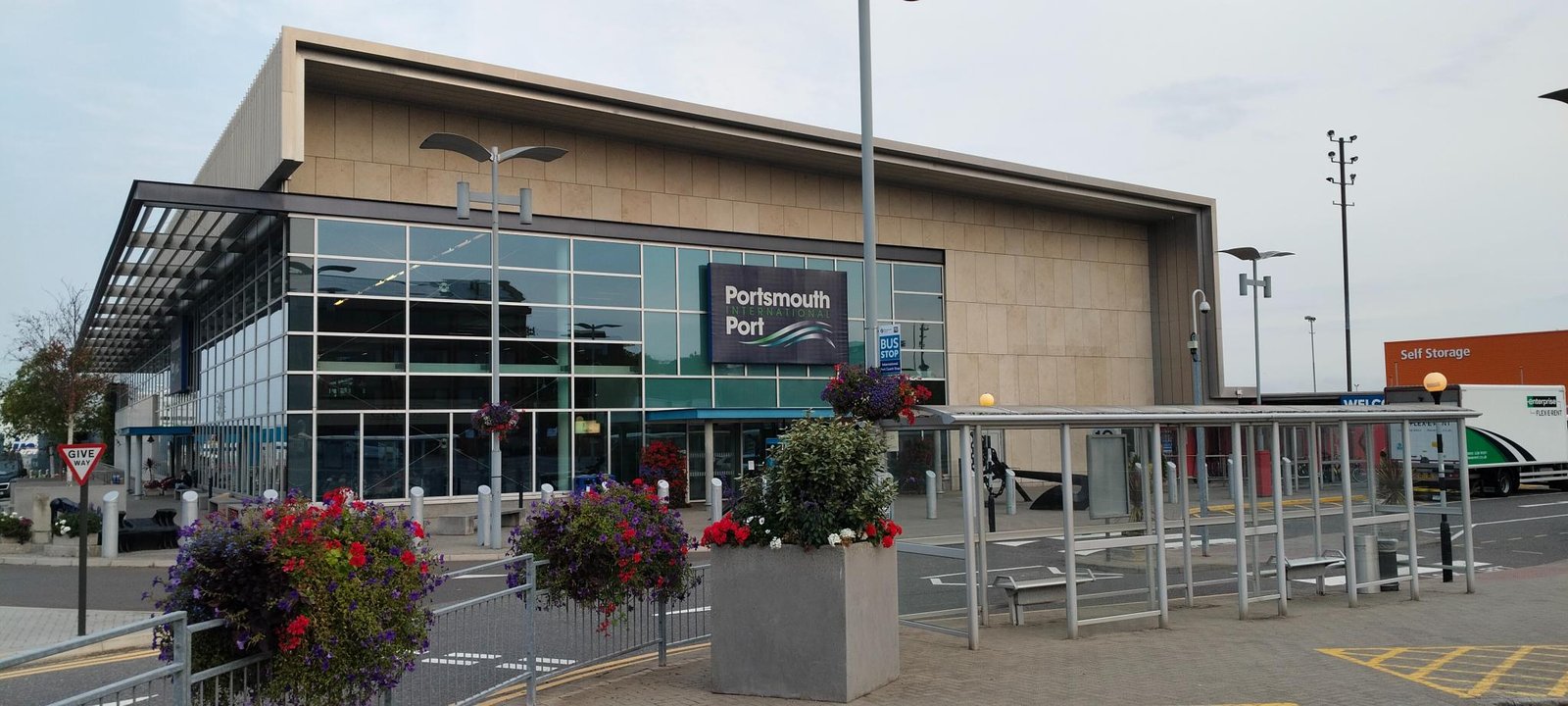
Spain and Portugal without flying: when the ferry makes sense
Flying is quicker for plenty of trips. But if you are planning a proper road trip through northern Spain, taking your own car, travelling with children or continuing into Portugal, the direct ferry from the UK can be a much better fit.
The main advantage is not simply avoiding the airport. You replace a large part of the drive through France with time on board, take your own vehicle and luggage with you, and arrive in northern Spain ready to start the road trip.
We like to think of an overnight sailing as night zero rather than a lost travel day: get on board, eat, walk around, settle into the cabin and sleep while the ship keeps moving south.
Why this works for us
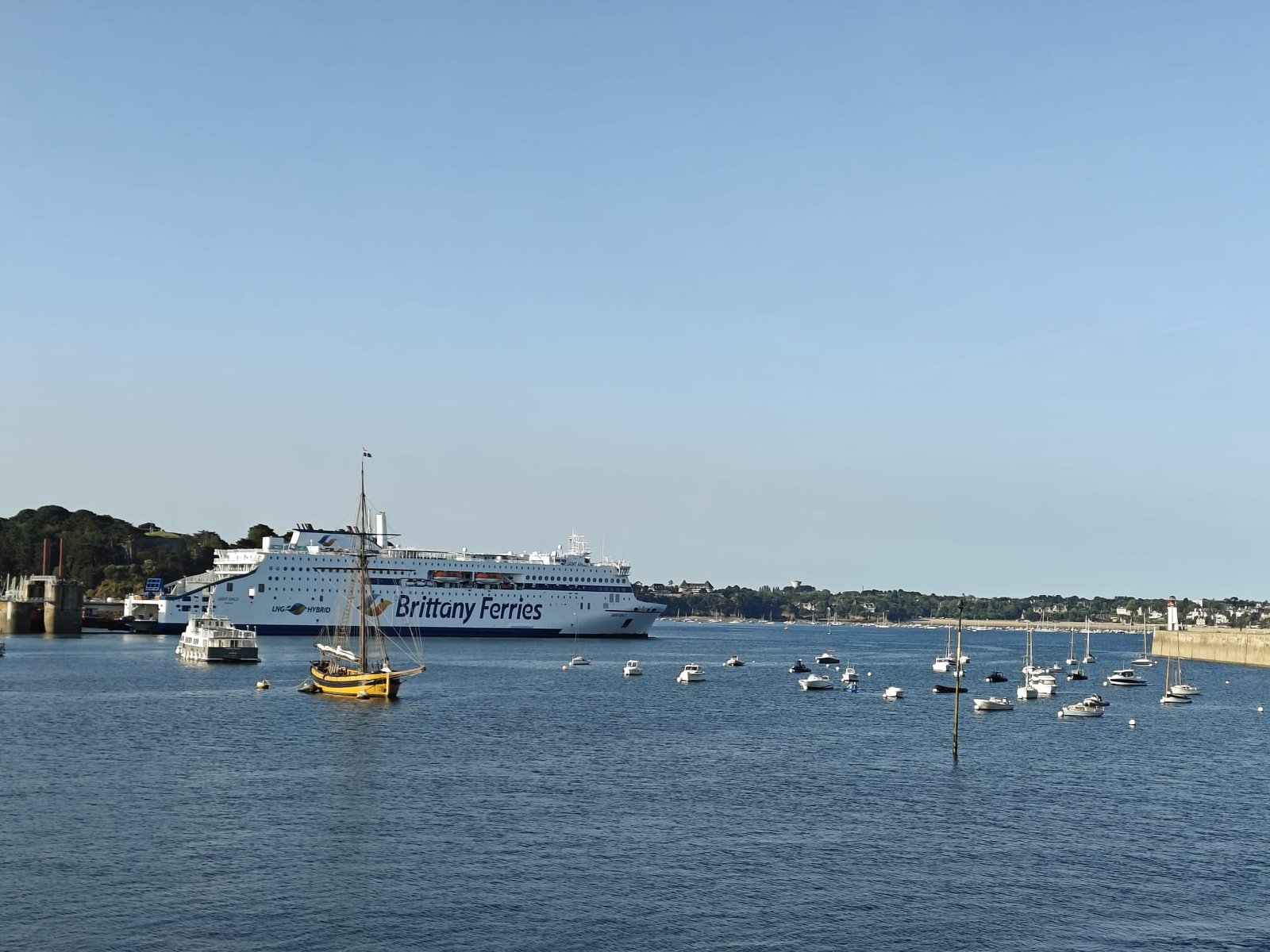
With children, the biggest difference is often not speed but rhythm. On a ferry they can move around, eat when it suits, wind down in the cabin and go to bed properly. We have done this on Brittany Ferries ourselves, and we have now also completed one of the direct UK-Spain crossings. The full Spain crossing report follows shortly.
If Portugal is the actual destination rather than an optional extension, start with our separate guide to the ferry to Portugal from the UK. There is no direct UK-Portugal passenger ferry, so that page compares the practical routes via northern Spain and France.
Quick route links
- Ferries to Spain from the UK – Portsmouth and Plymouth to Santander and Bilbao.
- UK to Portugal by ferry – Spain versus France if Portugal is the main goal.
- Atlantic coast road trip – France, northern Spain and Porto as one longer loop.
- Brittany Ferries cabins and upgrades – what is worth paying extra for on a long crossing.
Ferry or fly: which trip are you actually planning?
We would not choose the ferry simply because it sounds nicer. It makes most sense when having your own vehicle and turning the journey into part of the trip actually solves a problem.
| Ferry makes sense if… | Flying may make more sense if… |
|---|---|
| You are doing a multi-stop road trip through Spain or Portugal. | You are taking a three- or four-night city break. |
| You want your own car, bikes, surfboards, camping kit or a lot of family luggage. | You do not need a car at the destination. |
| An overnight cabin can replace a large chunk of daytime driving. | Reaching the destination as quickly as possible is the priority. |
| You are travelling with children or a dog and value space and flexibility. | You are travelling light and are comfortable with airport logistics. |
For a wider comparison using our own family experience, see family ferry vs flying: from cabin to cockpit.
Why the direct Spain ferry changes a road trip
Brittany Ferries currently sails directly from Portsmouth and Plymouth to Santander and Bilbao in northern Spain. That is what makes this different from taking a short ferry to France: instead of starting a very long drive south near the Channel, you step off the ship much closer to the part of Spain you probably came to see.
For us, the useful comparison is not ‘ferry versus two-hour flight’. It is the whole journey: drive to the airport, parking, baggage, flight, transfers and hire car versus driving onto the ferry with your own things, sleeping on board and starting the road trip immediately after arrival.
That does not automatically make the ferry cheaper or faster. It can simply make the journey work better.
Brittany Ferries currently operates Plymouth-Santander, Portsmouth-Santander and Portsmouth-Bilbao. Compare the routes first, then choose the cabin and sailing time that suit the road trip. Check Brittany Ferries sailings.
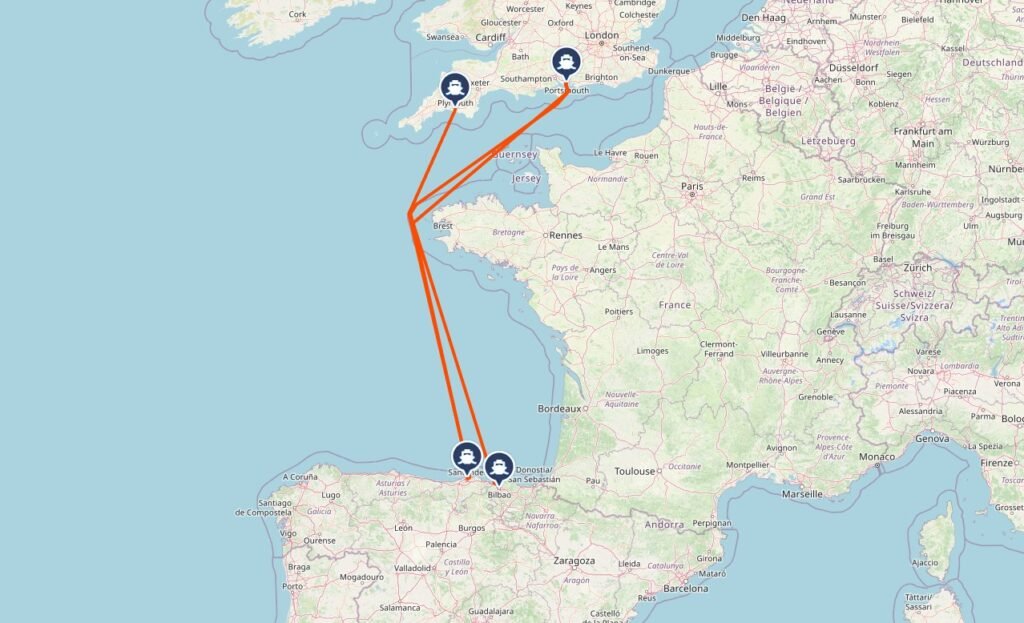
Santander or Bilbao: where should you start?
For most road trips, the difference between Santander and Bilbao is smaller than it first appears. Both put you in northern Spain. The better port depends on where you are heading next and which sailing works best from the UK.
Santander: good for Cantabria, Asturias and Portugal
Santander is the more obvious choice if you want to head west. Cantabria starts immediately, Asturias is further along the coast and Portugal is also slightly more direct from here than from Bilbao.
- Good for: Cantabria, Picos de Europa, Asturias and onward travel towards Portugal.
- First night: staying near Santander can be smarter than immediately starting another long drive after disembarking.
- From Plymouth: this is the shortest direct UK-Spain sea route.
Bilbao: good for the Basque Country and San Sebastián
Bilbao is the natural gateway if the Basque Country is high on your list. Bilbao itself deserves time, and San Sebastián is an easy next stop rather than something that needs a major detour.
- Good for: Bilbao, San Sebastián, Basque coastal drives and trips that continue east or west afterwards.
- First night: a hotel with straightforward parking can make arrival day much easier than immediately driving into a packed itinerary.
- Portugal: still perfectly workable, although Santander has a small geographical advantage.
See the complete route comparison in our ferry to Spain from the UK guide.
Map: northern Spain and Atlantic road-trip ideas
The map includes useful bases and stops across northern Spain, western France and Portugal. It is more useful as a road-trip planning tool than as a list of places you somehow need to fit into one holiday.
Cabin or reserved seat on the overnight ferry?
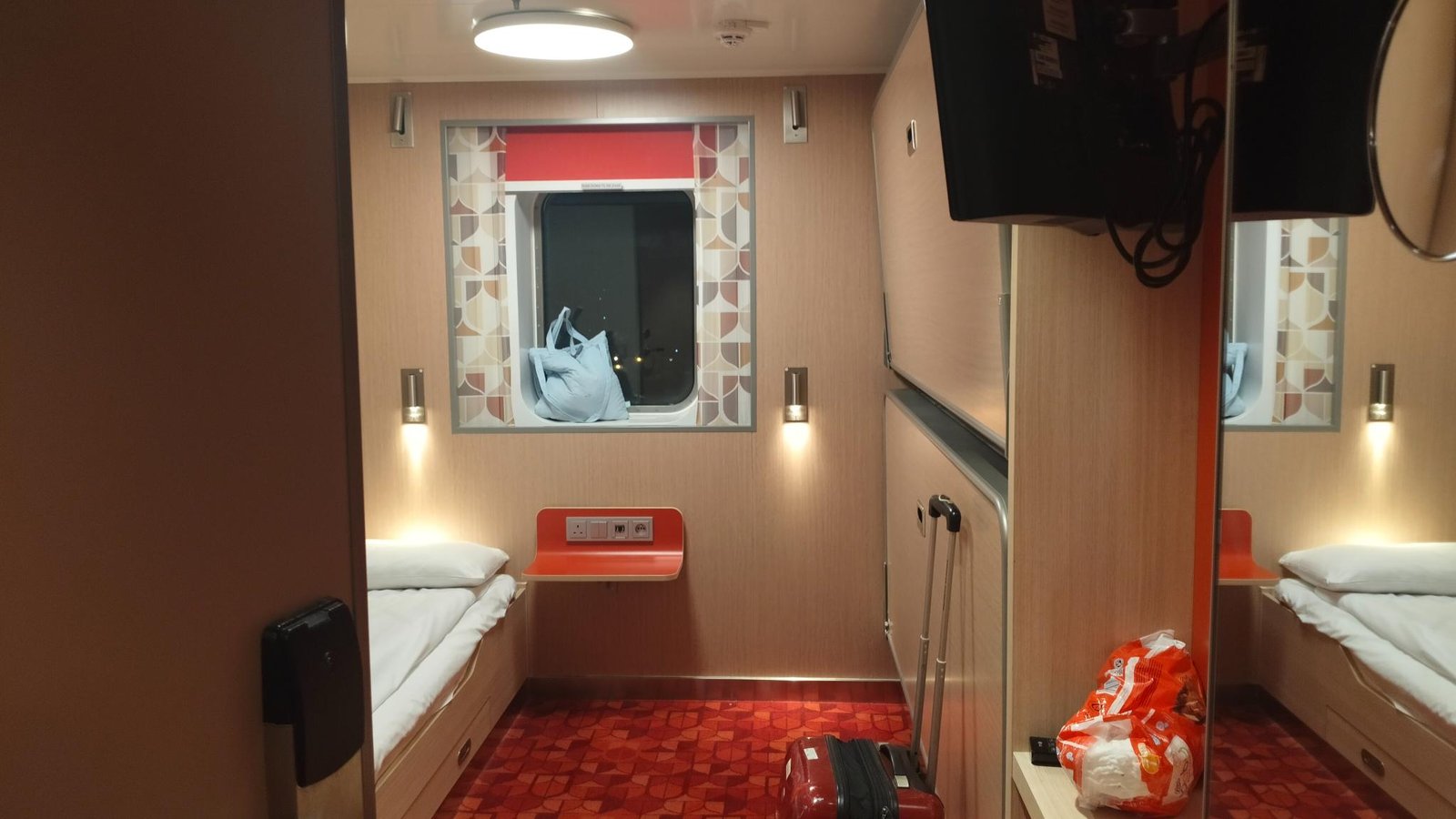
On the long Spain routes, this is one of the decisions that can genuinely change the trip. Brittany Ferries offers cabins as well as reserved seating, with different cabin levels depending on the ship. Some Club cabin types also include access to the C-Club Lounge on Spain sailings.
| Option | Best for | What you gain | What to consider |
|---|---|---|---|
| Cabin | Overnight crossings, families and anyone driving after arrival. | Privacy, proper beds, your own bathroom and somewhere to leave your overnight things. | Costs more, and the better cabin types can sell out first. |
| Reserved seat | Travellers trying to keep the crossing cost down. | A dedicated place to sit or sleep without paying for a cabin. | You lose the privacy, shower and proper bed that make an overnight crossing feel much easier. |
With children, we would usually prioritise the cabin if the budget allows. It is not about luxury. It gives you somewhere to put everyone in pyjamas, deal with a tired child, have a shower and close the door.
Our Brittany Ferries cabins, tickets and upgrades guide goes into much more detail.
What do you actually do on a long ferry crossing?
Not very much, and that is part of the appeal.
Our usual rhythm is to find the cabin first, have a look around the ship, let the children burn off some energy, eat, spend a little time outside if the weather is decent and then stop trying to turn the crossing into an itinerary of its own.
- Find the cabin early: it immediately gives everyone a base.
- Walk the ship once: locate restaurants, outside decks and children’s areas before everyone is tired.
- Get some fresh air: the sea view is still one of the reasons we prefer a ferry to spending another day in the car.
- Use the onboard facilities: depending on the ship, that can include restaurants, bars, play areas and cinemas.
- Then slow down: a film, book, drink or early night is often enough.
We have sailed on Santoña ourselves and photographed the cabins, cinema and other onboard areas. Our earlier trip was on Portsmouth-Cherbourg rather than one of the Spain routes, so we use that experience for the ship itself rather than pretending it was a UK-Spain route test. See our first-hand trip on Santoña.
The Flexi ticket lesson we learnt the hard way
Flexible tickets can look like an easy saving to skip when everything is going to plan. We became rather more enthusiastic about them after our clutch started failing on the way to a Brittany Ferries crossing.
Instead of the entire trip depending on reaching one fixed sailing, the Flexi conditions gave us room to change the plan. On a road trip where you may have hundreds of miles between home, hotels and ferry ports, that flexibility can be worth more than the upgrade costs.
You can read the full story in our Saint-Malo-Portsmouth first-hand report. It is one of those travel lessons we would rather not have learnt, but now genuinely use when choosing tickets.
Why the ferry works well with children
The ferry does not magically make travelling with young children easy. What it does give you is more room to recover when things stop going to plan.
- You can move around: a short walk around the ship can reset the mood in a way that is impossible with a seatbelt sign on.
- The cabin becomes a base: naps, pyjamas, changing clothes and quiet time all become easier.
- Food is less rigid: you are not trying to make one small airport snack survive an entire travel day.
- You wake up somewhere useful: on the Spain routes, the following day’s road trip starts in northern Spain rather than near Calais.
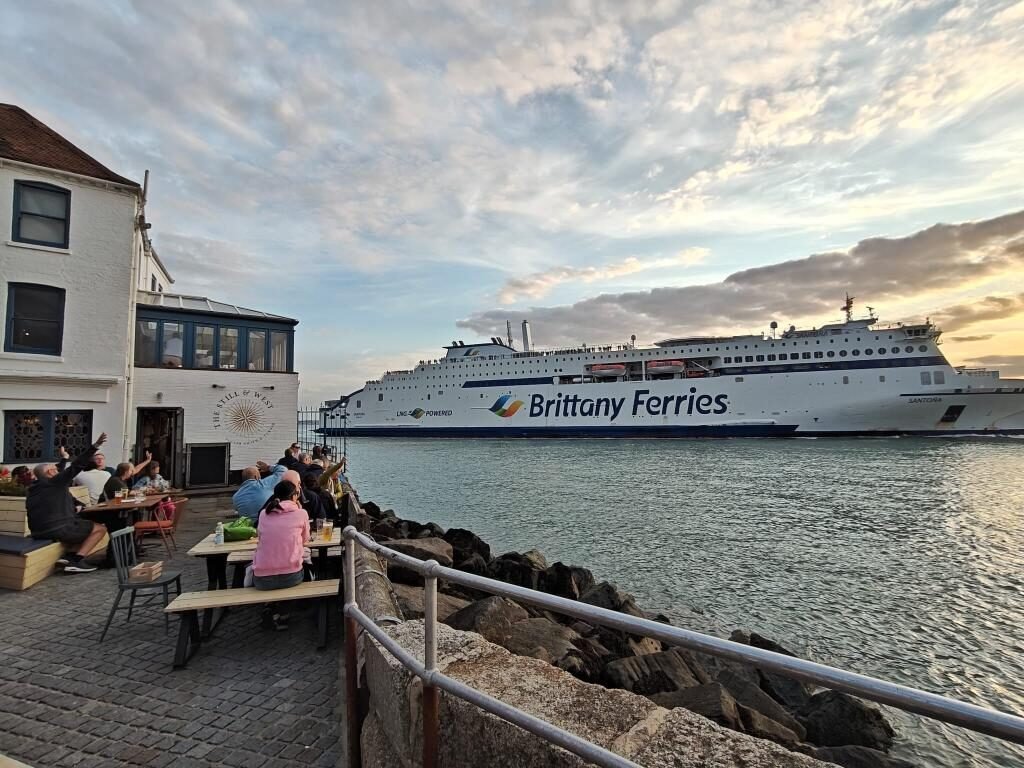
For more of the small things we have learnt travelling by ferry as a family, see our practical guide to ferry travel with children.
Pack one small onboard bag
This is one of the simplest tips on the page and one of the most useful. Once the ship has sailed, you normally cannot simply go back to the vehicle deck whenever you remember something in the boot.
We learnt on our Hull-Rotterdam trip how useful it is to decide what you need before leaving the car. For a Spain crossing, the same rule matters even more because you may be away from the vehicle overnight.
- Passports and travel documents
- Phone chargers and a power bank
- Medication
- Pyjamas and toothbrushes
- Children’s comfort items
- A change of clothes
- A warm layer for the outside deck
- Anything you will want before breakfast
It sounds obvious. It is also exactly the sort of obvious thing you remember five minutes after walking away from the car.
Are the cabin and longer ferry worth the money?
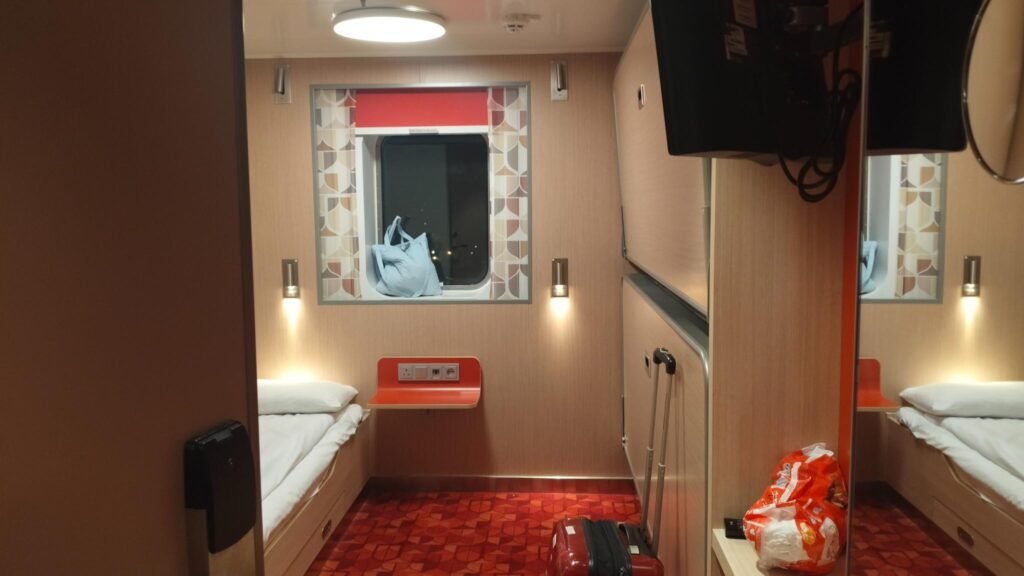
Sometimes. The direct ferry to Spain can look expensive next to a short Channel crossing or a cheap flight, especially once you add a cabin. That is why we would compare the whole journey rather than trying to prove that one mode is always cheaper.
For a road trip, the Spain ferry can replace a large amount of fuel and toll-road driving through France, as well as one or more hotel nights on the way south. Against flying, taking your own car can remove airport parking, checked luggage, transfers and car hire.
That does not mean the ferry wins every calculation. It means the comparison is more interesting than the headline ticket price suggests.
For current price context, see our 2026 ferry fare research. Fares change with date, vehicle, cabin and demand, so use the research as context rather than as a live quote.
Where would we go after the ferry?
1. Basque Country
If you arrive in Bilbao, this is the obvious starting point. Bilbao, San Sebastián and the smaller coastal towns work well without long driving days, and the food alone gives you a good excuse to slow the trip down.
See our route idea for getting to San Sebastián by ferry and car.
2. Cantabria and Asturias
If you arrive in Santander, heading west is the natural move. Cantabria, the Picos de Europa and Asturias give you beaches, mountains and a much greener side of Spain than many first-time visitors expect.
3. Porto and northern Portugal
Portugal becomes surprisingly logical once you are already in northern Spain. Porto is still a substantial drive, but it is completely different from trying to reach Portugal from Calais.
We know Porto ourselves and would give it at least three nights rather than treating it as a quick tick at the end of the itinerary. If Portugal is becoming the main destination, use our UK to Portugal ferry route guide to decide whether Santander, Bilbao or the France route makes most sense.
Three easy plane-free route ideas
Northern Spain – around 10 days
Sail to Santander or Bilbao, choose two or three bases and resist moving every night. A simple version could be Bilbao or Santander – San Sebastián – Cantabria or Asturias – ferry home.
Northern Spain and Portugal – around two weeks
Sail to Santander, spend a few nights around Cantabria or Asturias and continue to Porto. Give Portugal enough time to justify the extra driving, then return north to Santander or Bilbao for the ferry home.
France out, Spain back – two weeks or more
Take a ferry to western France, work south along the Atlantic coast and finish around the Basque Country or Cantabria before sailing home from Spain. This is the best option if the journey through France is part of the holiday rather than something you are trying to get through.
Our Atlantic coast road-trip guide through France, Spain and Portugal has the full set of bases and stops.
Plan the ferry first, then build the road trip
For this kind of journey, we would check the ferry before booking the rest of the accommodation. Spain sailings are much less frequent than Dover-Calais, and cabin availability can shape the dates as much as the route itself.
- Compare the three UK-Spain routes.
- If Portugal is the goal, compare Spain versus France for UK-Portugal travel.
- Choose the cabin or reserved seating you actually want.
- Then build the road trip around the sailing dates.
Quick questions
Is the ferry slower than flying?
At sea, obviously yes. Door to door, the gap depends on the trip. For a city break, flying is normally much quicker. For a road trip where you need a car anyway, the overnight ferry replaces driving and lets you sleep while moving towards the destination.
Is a cabin worth booking?
On an overnight UK-Spain crossing, we usually think so if the budget allows. A proper bed, shower and private space make a much bigger difference on a long crossing than they do on a short ferry to France.
Can I travel to Portugal by ferry from the UK?
Yes, but not directly. The most practical option is usually a direct ferry from the UK to Santander or Bilbao followed by the drive into Portugal. The alternative is a shorter ferry to France followed by a much longer road journey south. See our full UK-Portugal ferry comparison.
Get our latest ferry guides, route updates and travel tips in your Google feed. Add FerryGoGo as a preferred source in Google, and follow us in Discover when Google shows the option.