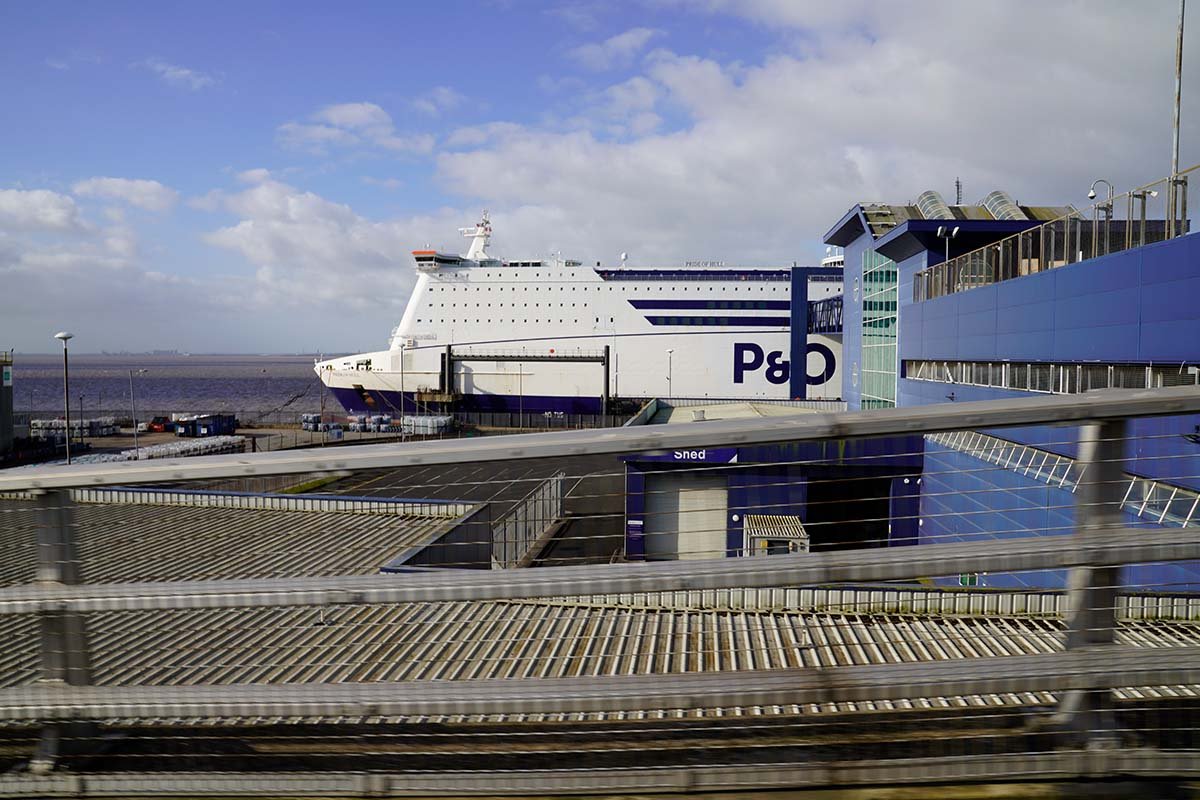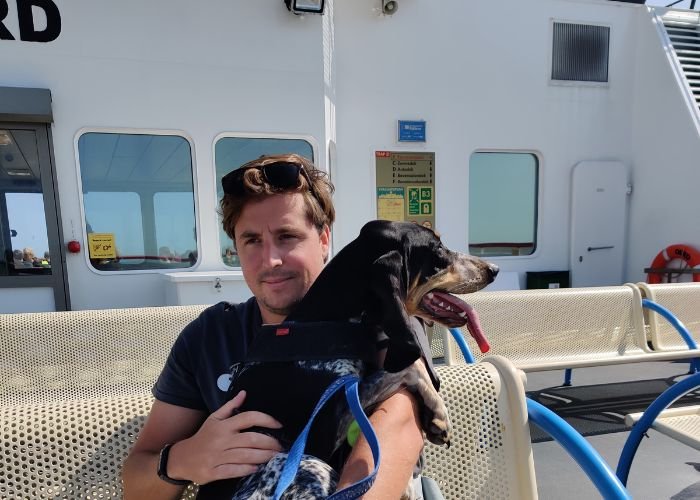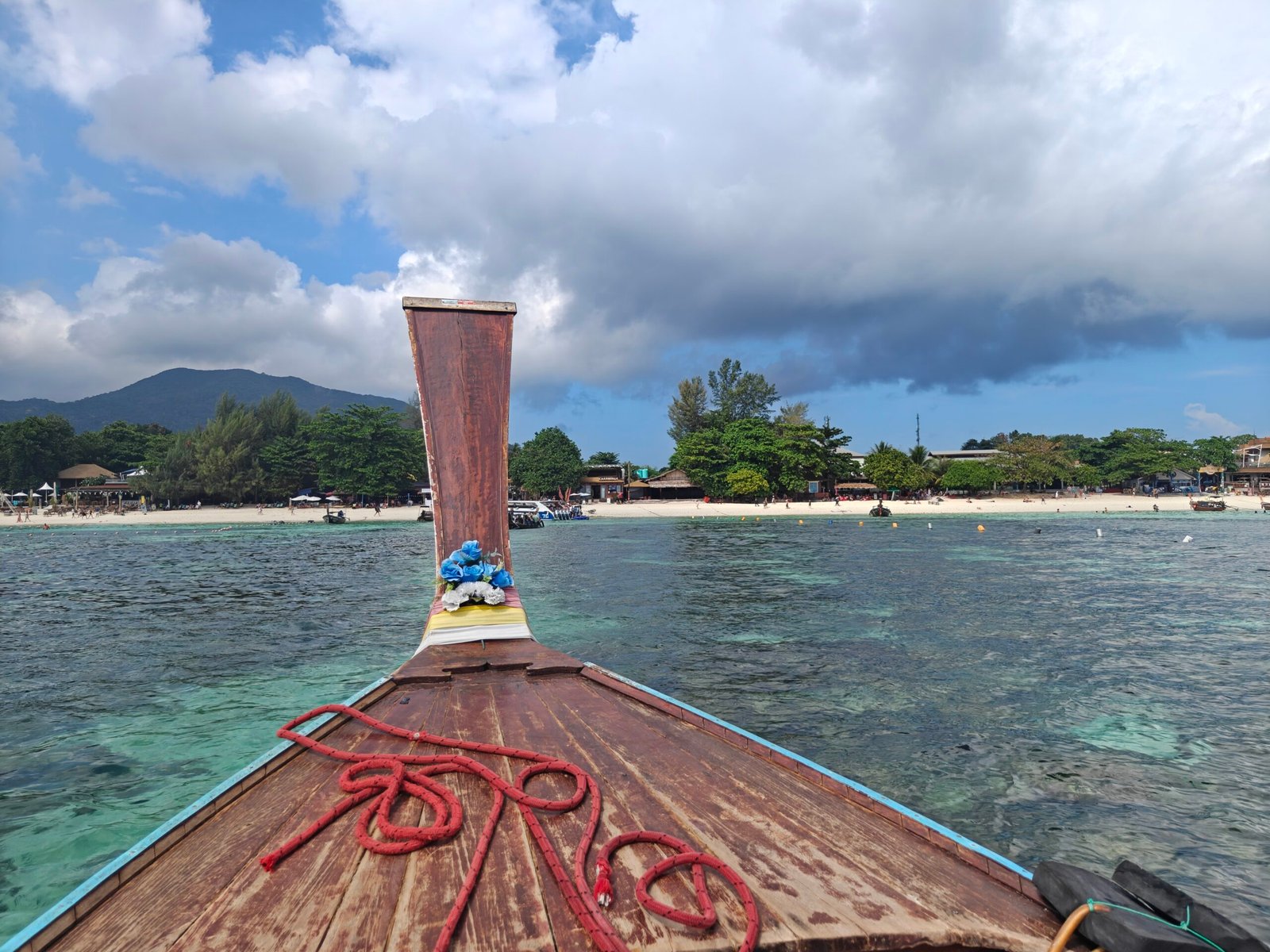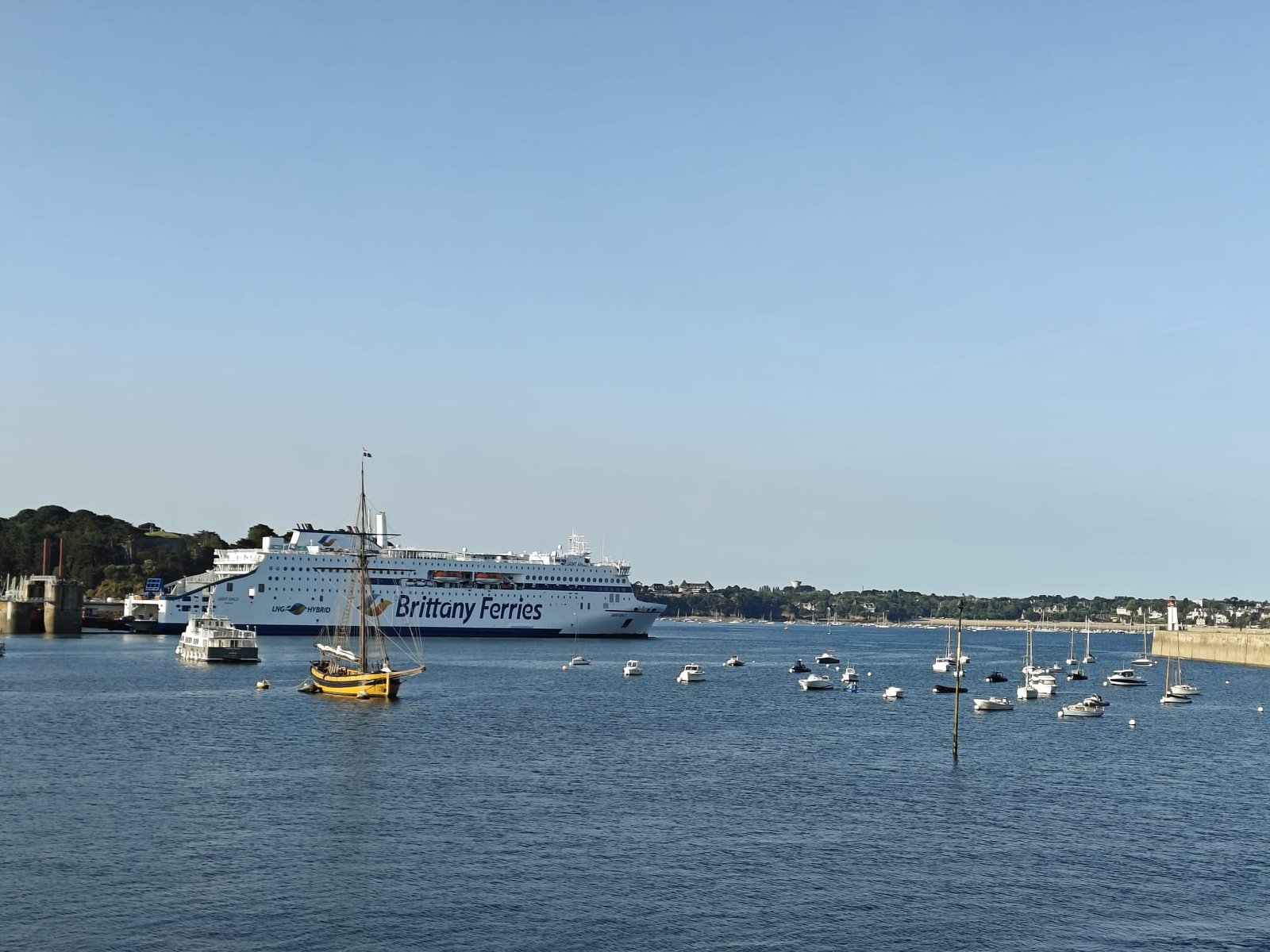
A ferry trip can be a real adventure for children, but the biggest advantage is much simpler: they are not stuck in a seat for the whole journey. They can walk around, look out from the deck, eat at a proper table and, on overnight crossings, sleep in a real bed. That changes the feel of the trip completely, especially for families who have already done a long drive, train ride or flight before boarding.
Why a ferry is so much easier with kids
On a plane or in a car seat, children are strapped in for hours. On a ferry, they are not. That single difference changes the whole journey. By day, they can walk around, play, eat at a proper table and burn off energy instead of fidgeting in a seat. By night, they can sleep in a real bed in a cabin, which means you arrive rested rather than frazzled. Either way, the crossing stops being something to survive and starts feeling like the first part of the holiday.
We have done this a lot, including a calmer overnight leg home with the kids after a long-haul flight, and the overnight ferry consistently feels freer and less frantic than staying in plane-or-train mode. You can read how that worked out in our overnight Rail & Sail experience from London to Hook of Holland. If you are weighing it up against flying, our family ferry versus flying comparison goes through it properly.
Which ferry crossings work best with children?
For families, the best ferry is not always the fastest one. A short Channel crossing can be easy if you just need a break from the car, but a longer overnight crossing can be much more relaxing when it saves you a hotel night or a long day of driving. With younger children, we would usually prioritise space, cabin availability and sensible arrival times over shaving an hour off the sailing.
- Short crossings: good as a quick break, but facilities are usually limited and the crossing can be over before children have settled.
- Day crossings: useful if children need space to move, eat and look around, especially after a long drive to the port.
- Overnight crossings: often the best option for families if a cabin means everyone can sleep and arrive with more energy.
Don’t count on the onboard entertainment alone

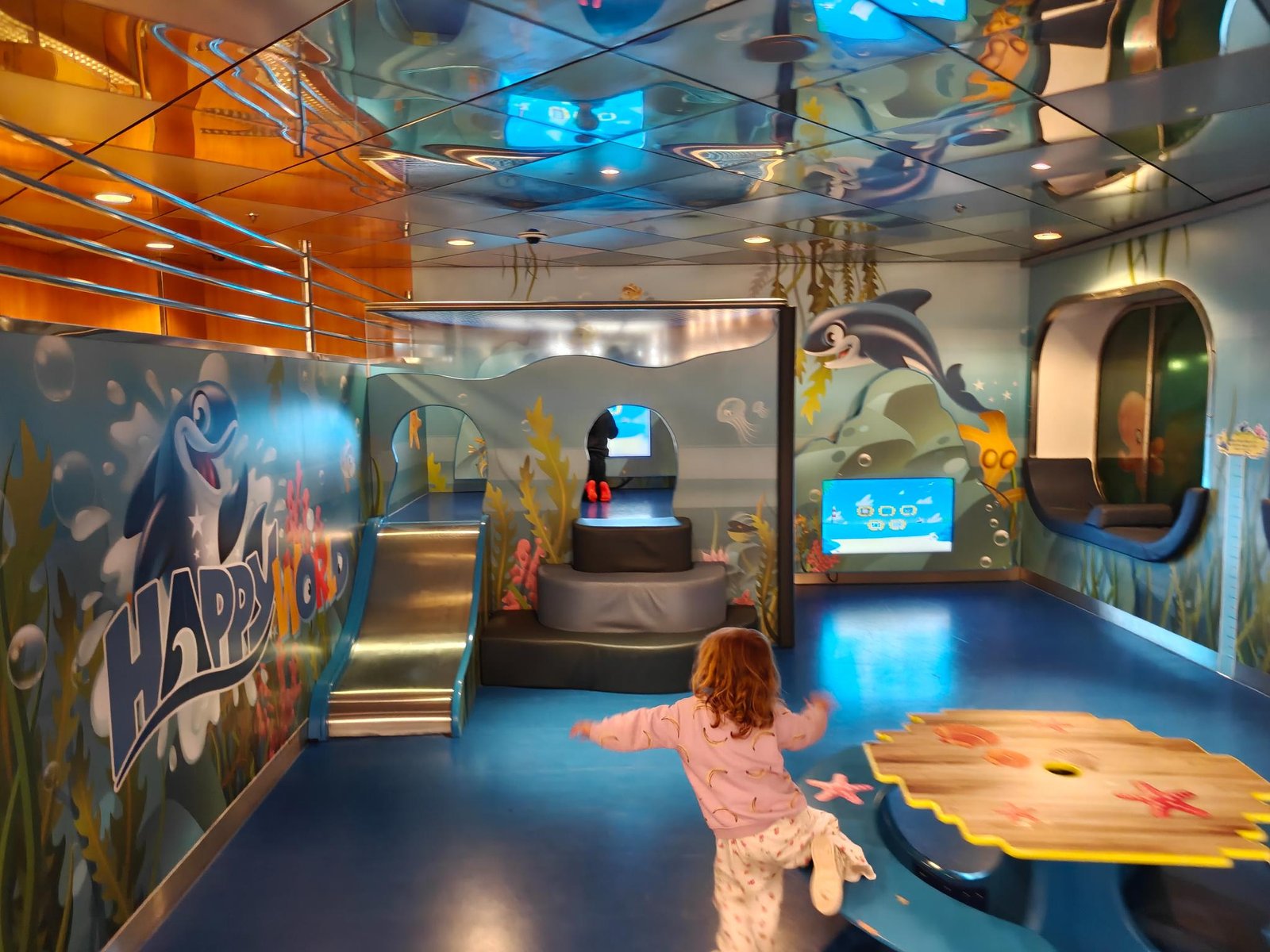
What is on offer varies a lot by ferry. On shorter crossings there may only be a play area for younger children, while longer crossings can add an arcade, games consoles, a cinema, or even a swimming pool. It sounds promising, but in our experience the reality is often more modest: play areas can be small, consoles may be occupied or out of order, and the arcade usually costs money.
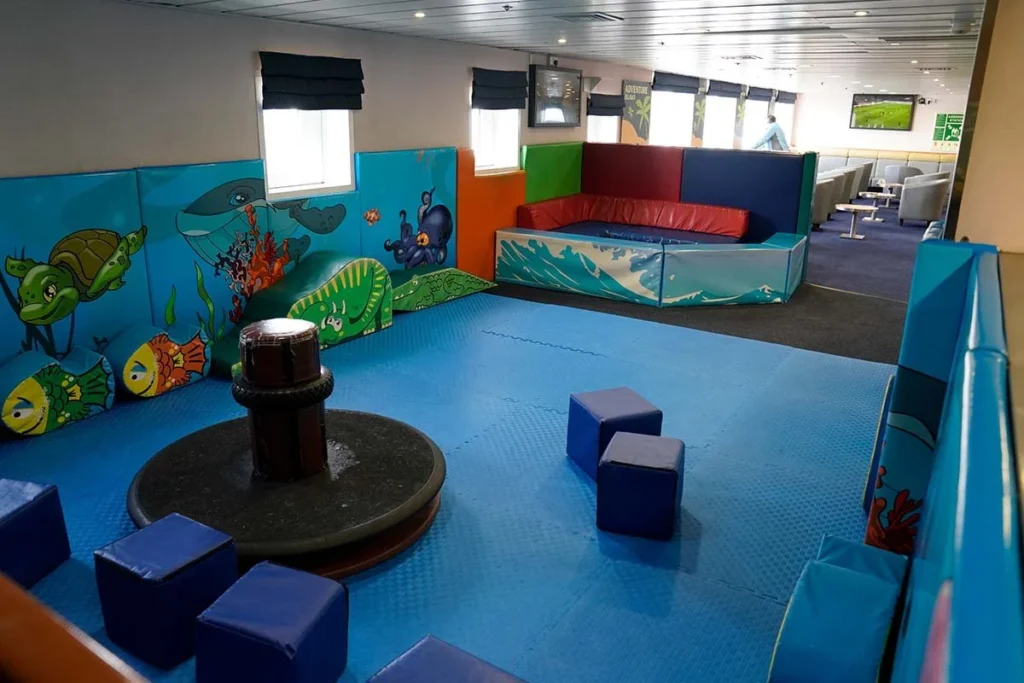
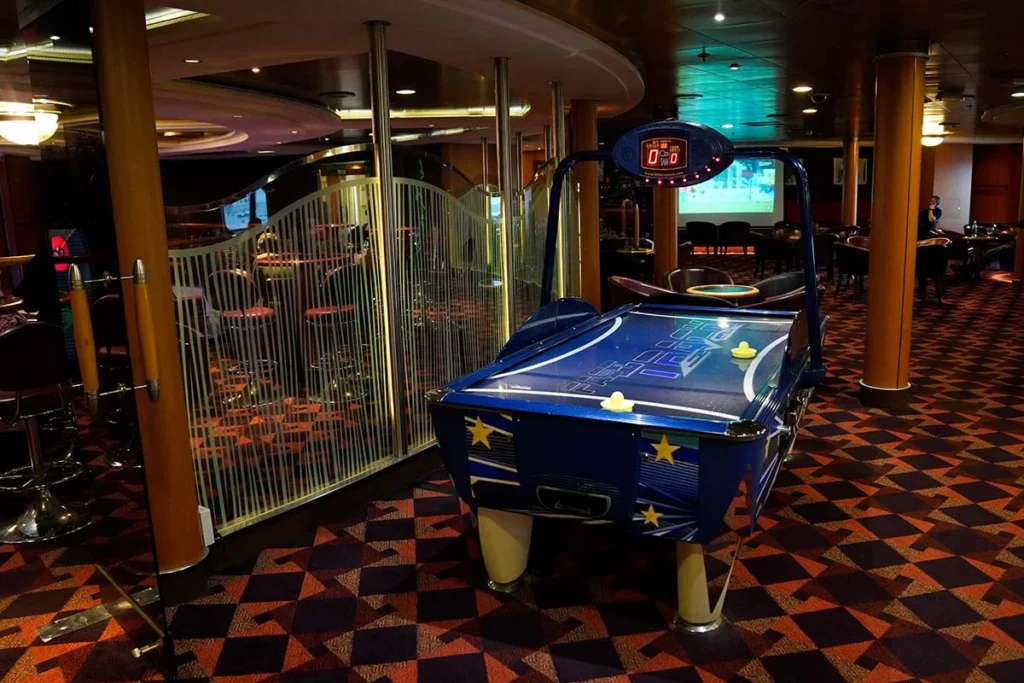
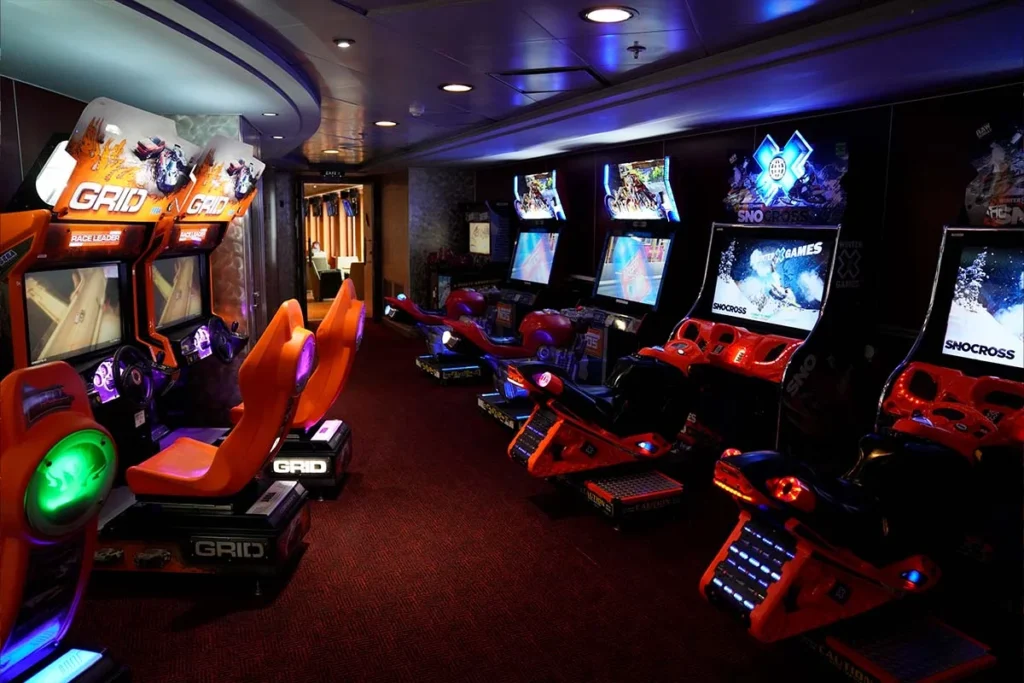
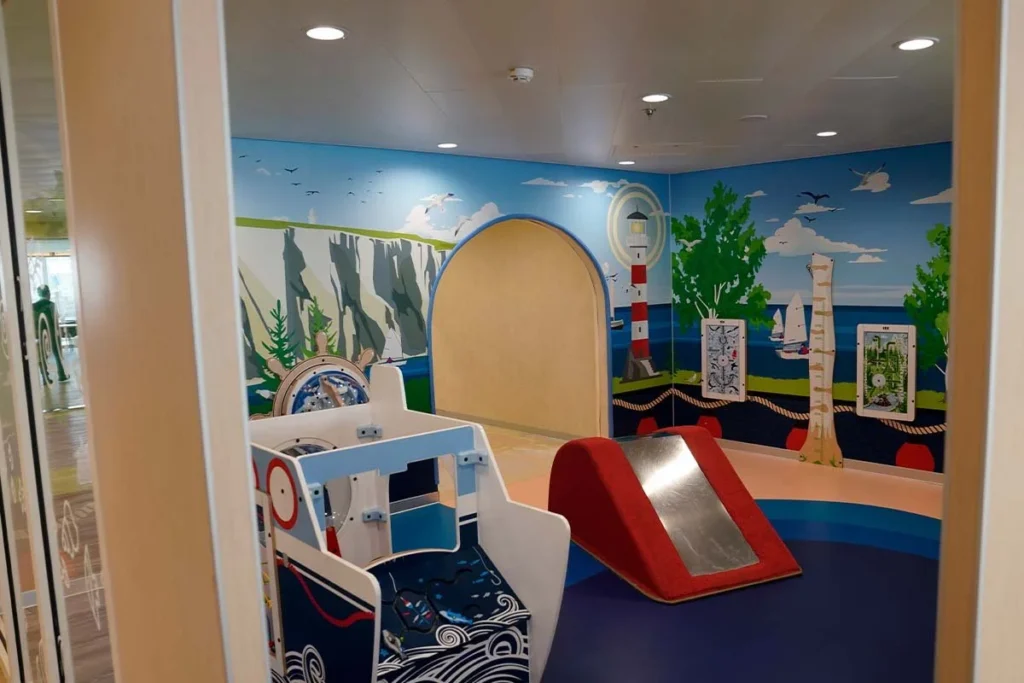
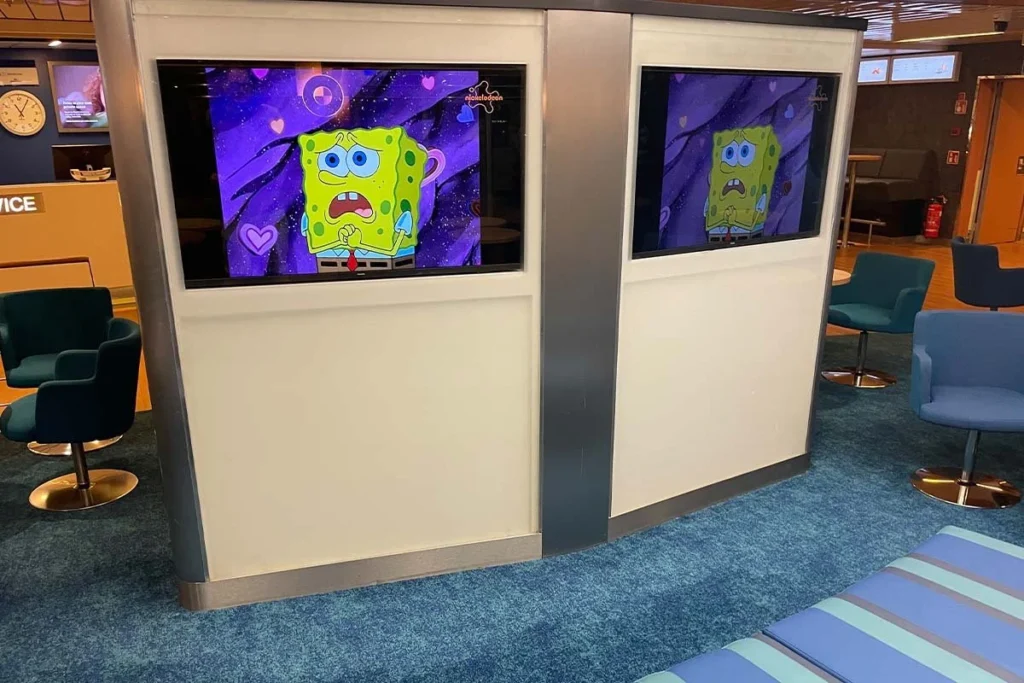
So treat the entertainment as a bonus, not a plan. Bring a few things of your own, such as a colouring book or a tablet with films downloaded in advance, since Wi-Fi at sea is often limited or expensive. A board game is a great shout too, because it keeps the whole family busy, parents included. On the bigger overnight ships the facilities go further. On the Santoña, for example, there is a cinema and plenty of room for kids to roam, which we wrote about in our first-hand review of sailing on the Santoña.
Not keen on pizza or chips? Bring your own food

Onboard menus lean towards the food most children will happily eat: pizza, burgers, chips and chicken nuggets. If you would rather avoid that, check in advance whether healthy child-friendly meals are available, and if not, bring your own. It is usually healthier and often a good deal cheaper. Most ships also have a buffet restaurant with some lighter options, but the choice depends heavily on the route, ship and time of day.
Pack warm clothes for time on deck
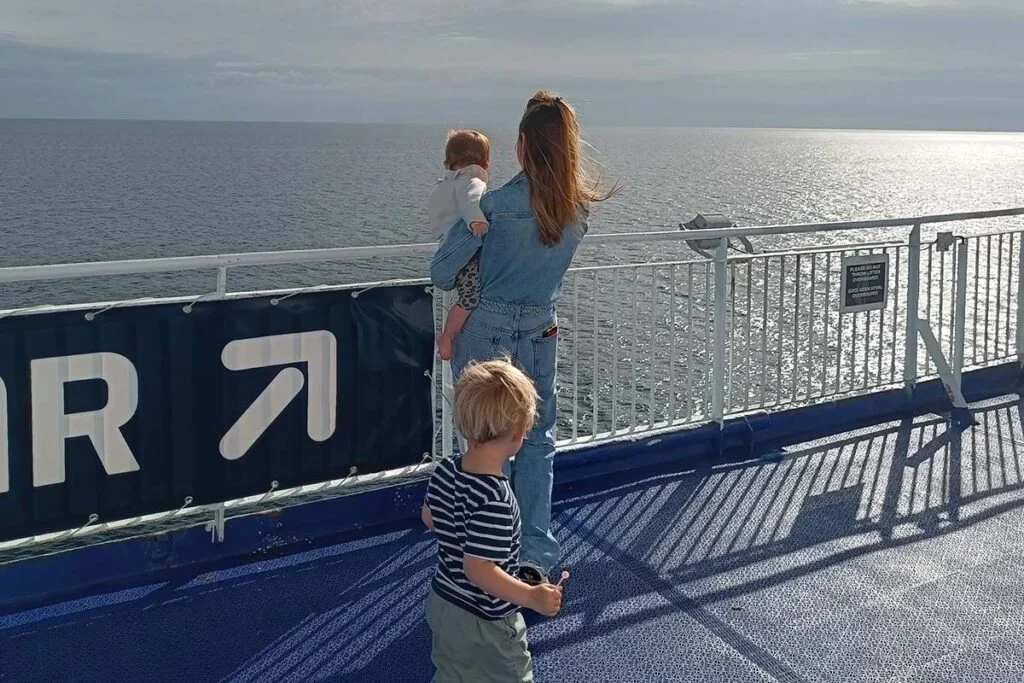
Fancy some fresh air on deck as a family? Pack extra layers. It can be windy and chilly out at sea, and warm clothes mean children can stay outside longer. That is often one of the nicest parts of the crossing: watching the wake, spotting the coastline, or simply getting a proper break from the indoor spaces. If anyone is prone to it, a bit of deck time and fresh air may also help with motion, and we have more on that in our tips to avoid seasickness.
Choose a cabin for longer and overnight crossings
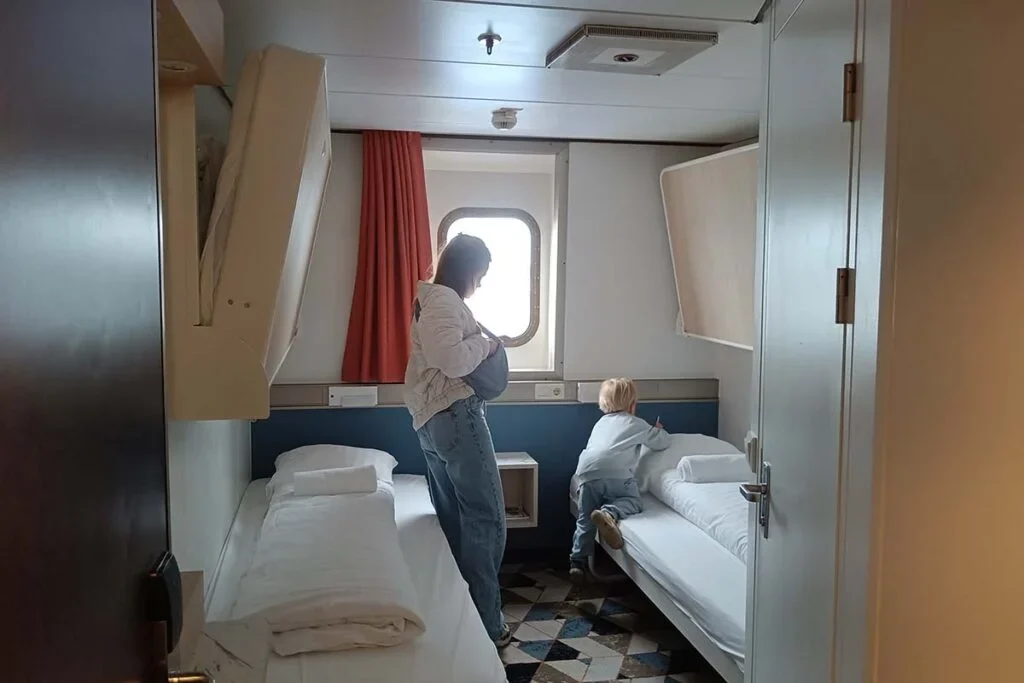
On longer crossings you can usually choose between reclining seats and a cabin, and with young children the cabin is often the upgrade that makes the whole trip work. It gives you a quiet place to rest, nap or sleep, and a base to retreat to when things get busy. You can book one on some daytime sailings too, not just overnight ones, and the beds are often bunks, which kids tend to love. We go into what an overnight cabin is actually like in our onboard experience of the Hull to Rotterdam ferry.
Bed rails, travel cots and babies
Taking a night crossing with young children? You can usually ask at reception on board for a bed rail to stop little ones rolling out during the night. For the very smallest, a travel cot or pop-up sleeping tent can work well and often fits in the aisle or on the bed, depending on the cabin layout. A baby carrier can also be handy if a baby is struggling to settle and you want to walk around without unpacking half the cabin.
Take everything you need out of the car first

The car deck is usually closed once you have set sail, so pack a small bag with everything the children will need for the crossing before you leave the car: snacks, a change of clothes, bedtime bits, medicines, chargers and any comfort item. It is one of those small ferry details that can make a big difference. Forget it, and the thing you need most will almost certainly be sitting in a locked car deck.
Have a great crossing
The photos on this page are from ferry crossings we have personally taken. We have built up a fair bit of experience travelling with children on ferries, but every family has its own tricks. Got a good one of your own? Drop it in the comments below. Every parent sailing with kids will thank you for it. Have a great crossing!
Get our latest ferry guides, route updates and travel tips in your Google feed. Add FerryGoGo as a preferred source in Google, and follow us in Discover when Google shows the option.