Dover is still the fastest and most frequent ferry gateway from England to France, but it is also the route most exposed to peak-day queues. On busy holiday weekends, the problem is rarely just the ferry crossing itself. It is the whole chain: motorway traffic into Kent, check-in, French border control, passport checks, EES processing, coaches, caravans, weather and thousands of cars trying to move through the same small corridor.
That does not mean you should always avoid Dover. For Calais, northern France, Belgium, the Netherlands or Germany, Dover can still be the most logical choice. But if you are heading for Normandy, Brittany, the Loire, western France or the Atlantic coast, it is worth asking a different question: is Dover actually the best route for your whole journey?
Last checked by FerryGoGo: 7 July 2026. Border rules, EES procedures, port advice and ferry operations can change quickly. Always check your operator and the Port of Dover before travelling.
Why Dover queues still happen
Dover has a lot going for it. The crossing to Calais is short, there are frequent sailings, and the port is well placed for London, Kent and the South East. Dover-Calais and Dover-Dunkirk are also strong routes for northern France, Belgium, the Netherlands and onward drives into Germany.
The same strengths also create the pinch point. Dover is popular because it is fast and frequent, so it attracts a huge volume of cars, coaches, caravans, campervans and freight. When one part of the system slows down, queues can build quickly.
- Peak holiday traffic: school holidays, bank holidays and Friday/Saturday getaway windows can overload the approach roads and border process.
- French border checks in Dover: for the short-sea routes, French border control happens before you leave the UK.
- EES registration: non-EU travellers may need biometric registration when entering the Schengen area, and this can add time on first registration or during busy periods.
- Coach and group travel: coaches can slow the process because many passengers need to be checked together.
- Late or early arrivals: arriving too late creates stress, but arriving too early can also add pressure if the port asks passengers not to turn up before their slot.
- Weather or operational disruption: delays, cancellations or late-running ferries can push more vehicles into the same windows.
So the real issue is not ‘Dover is bad’. It is that Dover has less slack on the busiest days. When it works, it is quick. When it does not, the delay is often felt before you even reach the ferry.
EES and ETIAS: what ferry passengers need to know
EES and ETIAS are not the same thing. EES is the EU Entry/Exit System. It records non-EU travellers at Schengen external borders using passport and biometric data. ETIAS is a separate travel authorisation for visa-exempt travellers, including UK passport holders, expected later in 2026.
For ferry passengers, the practical points are simple:
- EES is a border process, not a visa. You do not apply for EES in advance and there is no EES fee.
- British travellers may need fingerprints and a photo recorded when entering the Schengen area, especially on first registration.
- For Dover, LeShuttle and Eurostar, checks are handled before leaving the UK, because French border checks take place on the UK side.
- ETIAS is not open yet. Do not pay any website claiming to offer early ETIAS applications.
- ETIAS is expected from Autumn 2026, but the exact launch date should be checked on official sources before travel.
The most important FerryGoGo advice: do not panic about EES, but do build in extra border time on peak travel days. And do not confuse EES with ETIAS. EES is handled at the border. ETIAS will be an online authorisation later, once it is officially launched.
For the full traveller-focused explanation, see our guide: Do UK travellers need a visa for Europe by ferry? EES and ETIAS explained. For documents, pets, passports and car-deck preparation, use our UK to Europe by ferry passport and border checklist.
Should you avoid Dover?
Sometimes yes. Sometimes no. Dover is the right choice for many trips, but it should not be the automatic choice for every ferry journey to France.
| Your trip | Dover verdict | Better alternatives to compare |
|---|---|---|
| London, Kent or South East England to Calais or northern France | Dover often still makes sense | Dover-Dunkirk, LeShuttle |
| Belgium, Netherlands or western Germany | Dover-Dunkirk can be very useful | LeShuttle, Harwich-Hook of Holland depending on route |
| Normandy, Bayeux, Caen or the D-Day beaches | Dover may add unnecessary driving | Portsmouth-Caen, Newhaven-Dieppe, Portsmouth-Le Havre |
| Cherbourg, Cotentin, western Normandy or Brittany | Dover is often the wrong side of France | Portsmouth-Cherbourg, Poole-Cherbourg, Portsmouth-Saint-Malo |
| Brittany or western France | Usually worth avoiding Dover | Portsmouth-Saint-Malo, Plymouth-Roscoff, Poole-Cherbourg |
| Travelling with kids, dog, campervan or caravan on a peak weekend | Dover can work, but queues are more stressful | Portsmouth, Poole, Plymouth or Newhaven depending on destination |





For the full route overview, start with our ferries to France from the UK guide. It compares the main routes from Dover, Portsmouth, Newhaven, Poole and Plymouth.
Best ferry alternatives to Dover
The best Dover alternative depends on where you are starting in the UK and where you are going in France. The mistake is to compare only the crossing time. A longer ferry can still save time, fuel and stress if it reduces your drive on either side.
Newhaven-Dieppe: the shortest non-Dover France alternative
Newhaven-Dieppe is the route to check if you want to avoid Dover but still keep the ferry relatively simple. It is especially useful from East Sussex and parts of the South East, and it lands in Normandy rather than the Calais corridor.
The crossing is longer than Dover-Calais, but for some Normandy trips it can be a better-shaped journey. It also avoids the concentrated Dover-Calais traffic pattern, which is the main reason many travellers look at this route during busy holiday periods.
Compare Newhaven-Dieppe with all UK-France ferry routes.
Portsmouth-Caen: the best Normandy all-rounder
Portsmouth-Caen is often the strongest alternative if you are heading for Normandy, Bayeux, the D-Day beaches, Caen itself or onward routes into western France. It replaces some road miles with time on board, and the arrival point is much more useful for many holiday itineraries than Calais.
This is the route we would check first for a proper Normandy trip, especially if the alternative is driving to Dover, queuing through the Short Straits corridor and then driving back west across northern France.
Compare Portsmouth to France ferry routes.
Portsmouth-Cherbourg: useful for western Normandy and flexible trips
Portsmouth-Cherbourg is a practical route for the Cotentin peninsula, western Normandy, Brittany and longer road trips into western France. We sailed this route ourselves with Brittany Ferries on Santoña, after our plans changed and flexibility suddenly mattered more than the original itinerary.
The lesson from that trip is relevant here: when there is disruption, car trouble, weather pressure or peak-season congestion, the best ferry route is not always the one you first planned. A flexible ticket can be worth paying for if your route or timing might change.
Read our Portsmouth-Cherbourg experience on Santoña.
Portsmouth-Le Havre: useful for eastern Normandy, Honfleur and Paris
Portsmouth-Le Havre can work well if you are heading for Honfleur, Étretat, Rouen, the Seine valley or even Paris. It is not the classic Brittany holiday route, but it can be a smart way to avoid Dover while landing in a useful part of Normandy.
Check sailing days carefully. Western and Normandy routes usually have fewer sailings than Dover, so they require more planning. That is the trade-off: less Short Straits pressure, but less frequency.
Portsmouth-Saint-Malo: best when Brittany is the destination
Portsmouth-Saint-Malo is not just a Dover alternative. For Brittany, it can be the better route full stop. The crossing is longer, but Saint-Malo is one of the best ferry arrivals in France, especially if your trip includes Brittany, Cancale, Dinard, northern Brittany beaches or Mont-Saint-Michel.
We have travelled the Saint-Malo-Portsmouth route ourselves, and this is one of those crossings where the port and the onboard time can feel like part of the trip rather than a transport chore.
Read our Saint-Malo-Portsmouth ferry experience.
Poole-Cherbourg: useful from Dorset and the central south coast
Poole-Cherbourg is worth checking if Poole is easier for you than Portsmouth or Dover. It can be a good fit from Dorset, Wiltshire, Somerset and parts of the South West, especially if you are heading towards the Cotentin, western Normandy or Brittany.
This route is less frequent than Dover, so it is not a turn-up-and-go alternative. But for the right starting point, it can avoid a long drive across the south of England before you even reach the ferry.
Plymouth-Roscoff: best for western Brittany and the South West
Plymouth-Roscoff is the route to check if your trip starts in Devon, Cornwall, Wales or the west of England, or if your French destination is western Brittany. It is not a Dover substitute for northern France, but it can be much more logical for Finistère, the Breton coast and slower road trips down the Atlantic side of France.
For many western-France holidays, this is exactly the kind of route people forget because Dover feels like the default. It should not be. Use the map and compare the full travel day.
Dover alternatives are not always faster, but they can be easier
This is the key point. Dover-Calais is usually the shortest classic ferry crossing, but the shortest crossing is not always the easiest journey.
A longer ferry from Portsmouth, Poole, Plymouth or Newhaven can make sense because it changes the shape of the day:
- You may avoid the busiest Dover approach roads.
- You may land closer to your final destination in France.
- You may reduce motorway driving after arrival.
- You may be able to rest, eat or sleep on board.
- You may avoid turning a holiday into a long chain of queues and driving.
That is especially relevant for families, campers, caravans, dog owners and anyone travelling during school holidays. A calm route with a longer crossing can be better than a short crossing surrounded by a difficult travel day.
What if you have already booked Dover?
If you already have a Dover ferry booked, the first step is not to panic or immediately rebook. Check the operator, check the port, and look at your destination. Dover still handles a huge number of crossings successfully.
Before leaving home, do these checks:
- Check your ferry operator: P&O Ferries, DFDS or Irish Ferries will usually have the most relevant sailing and check-in advice.
- Check the Port of Dover: follow official port travel advice, especially around arrival times and EES processing.
- Do not arrive too early if the port advises against it: arriving many hours before your sailing can add pressure rather than solve it.
- Have passports and documents ready: keep passports, booking confirmation, pet documents and vehicle papers easy to reach.
- Pack for waiting: water, snacks, medication, chargers and entertainment for children should be inside the car, not buried in the boot.
- Check your ticket flexibility: know whether you can move to another sailing or route if needed.
- Allow for border time, not just sailing time: the crossing may be short, but the total port process can be the bigger variable.
Also check whether your destination really needs Dover. If you are driving to Brittany, western Normandy or the Atlantic coast, a rebooked western route may be worth considering, especially before peak dates. If you are heading to Calais, Belgium or the Netherlands, Dover-Dunkirk or LeShuttle may be more realistic alternatives than a long detour to Portsmouth.
Dover-Calais, Dover-Dunkirk or LeShuttle?
If you still want to use the Short Straits corridor, you have three main choices: Dover-Calais, Dover-Dunkirk and LeShuttle from Folkestone to Calais.
| Option | Best for | Main drawback |
|---|---|---|
| Dover-Calais ferry | Fastest classic ferry, frequent sailings, Calais and northern France | Uses the Dover pinch point and can be busy on peak days |
| Dover-Dunkirk ferry | Belgium, Netherlands, northern France and onward routes towards Germany | Still departs from Dover, so it does not avoid the port itself |
| LeShuttle | Fastest vehicle crossing and no ferry crossing at sea | Can be more expensive, and still uses the Short Straits border corridor |
We tested the main Dover-Calais ferry operators and LeShuttle ourselves. The practical verdict was not simply ‘one is best’. LeShuttle is excellent when speed matters most, while the ferry can be better if you want a break from driving, more space and sea air.
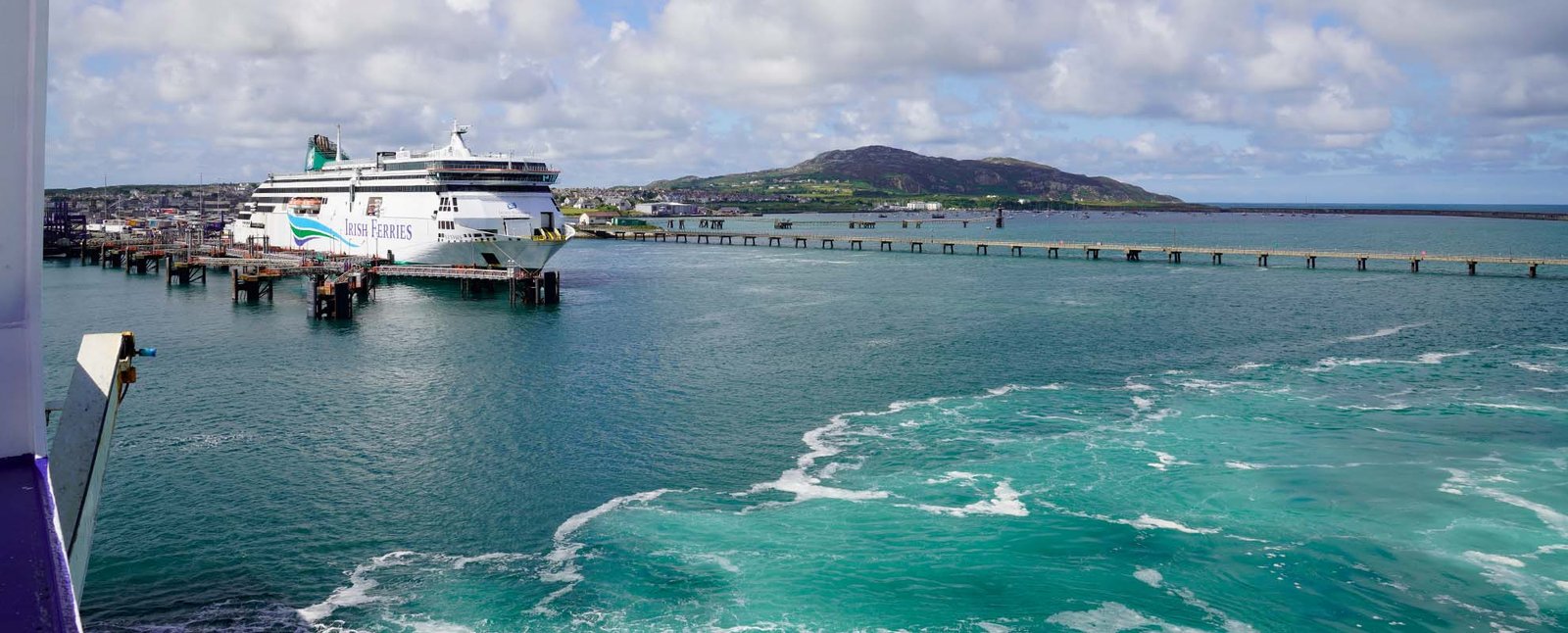
Read our Dover-Calais crossing test with P&O Ferries, DFDS, Irish Ferries and LeShuttle.
What to pack in case of Dover delays
Even with good planning, peak-day queues can still happen. If you are travelling through Dover, pack as if you may spend longer in the car than planned.
- Water for everyone in the vehicle.
- Snacks or a simple meal, especially with children.
- Medication you may need during the journey.
- Phone chargers and a power bank.
- Entertainment for children that does not depend fully on internet signal.
- Pet water, food and waste bags if travelling with a dog.
- Booking confirmation, passports and border documents within easy reach.
- A small overnight or car-deck bag if your ferry crossing is long enough that you will not have access to the vehicle.
The last point matters more on longer ferries than on Dover-Calais. On many crossings, once you leave the car deck, you cannot simply return to the vehicle during the sailing. Pack what you need before boarding.
When Dover is still the right choice
This page is not anti-Dover. Dover is still a very strong route when it matches your trip.
- Choose Dover-Calais if you want the shortest classic ferry and are heading to Calais, northern France or the A26/A16 corridors.
- Choose Dover-Dunkirk if you are heading towards Belgium, the Netherlands or northern France and the arrival point works better than Calais.
- Choose LeShuttle if speed matters more than sea views, onboard space or ferry pricing.
- Choose Newhaven, Portsmouth, Poole or Plymouth if your destination is further west and you want to reduce the driving day.
The best route is not the one with the shortest crossing. It is the one that gives you the most sensible total journey.
FerryGoGo verdict
Dover is fast, frequent and often the right answer. But it is also the UK-France ferry route where peak travel pressure is most visible. If you are travelling on a school-holiday weekend, with children, a dog, a caravan or a long drive still ahead in France, it is worth comparing alternatives before you commit.
Our advice is simple: use Dover when it fits the whole journey, not just because it is the shortest crossing. For northern France, Belgium, the Netherlands and Germany, Dover can still be hard to beat. For Normandy, Brittany and western France, start by comparing Newhaven, Portsmouth, Poole and Plymouth. A longer ferry can be the calmer and smarter route.
Sources checked
For current border and EES/ETIAS information, we checked the Port of Dover EES travel advice, GOV.UK guidance on the EU Entry/Exit System and the European Commission’s EES information. Always check your ferry operator and official border sources again before travelling, especially around school holidays and bank holidays.
Get our latest ferry guides, route updates and travel tips in your Google feed. Add FerryGoGo as a preferred source in Google, and follow us in Discover when Google shows the option.