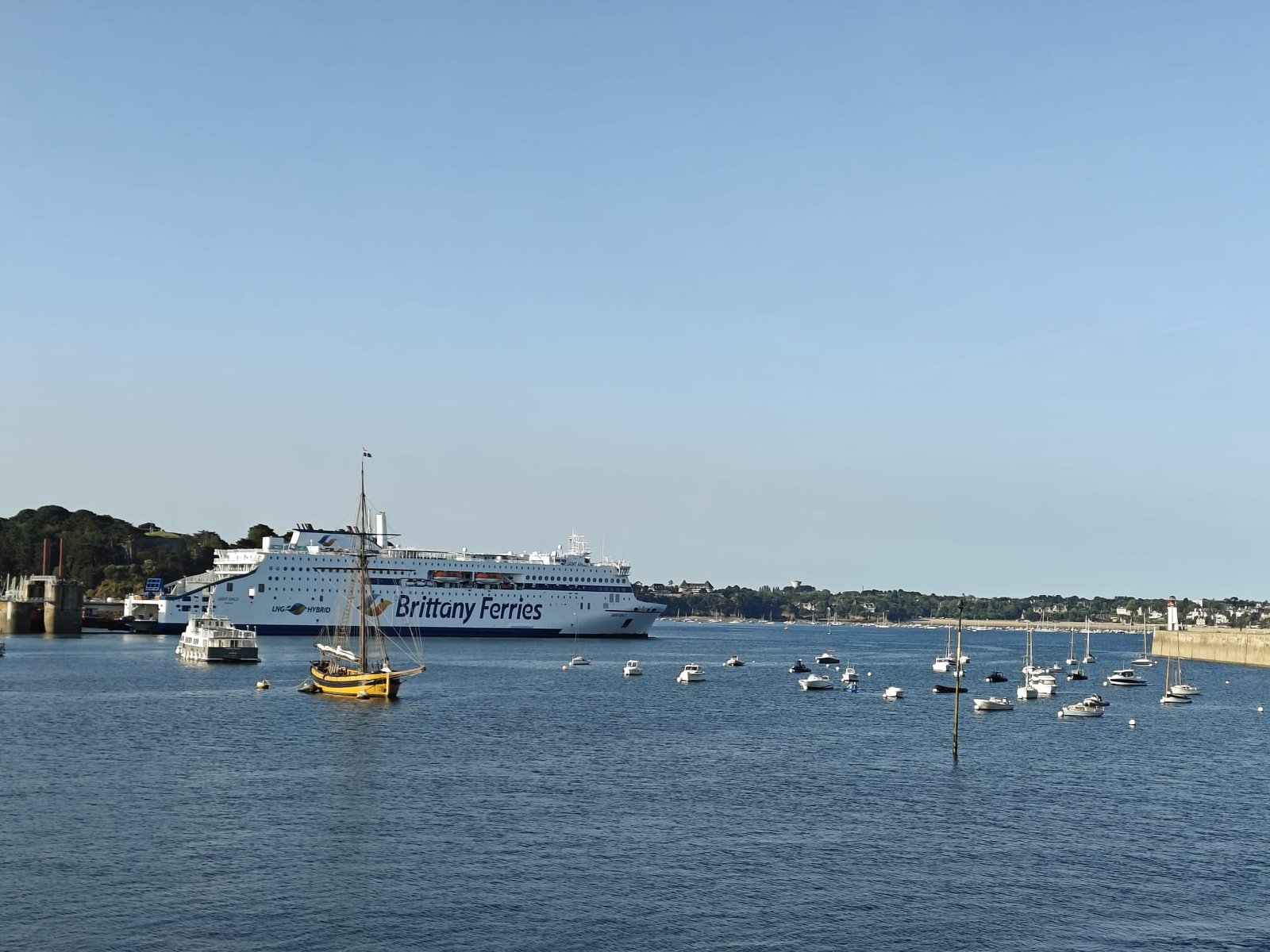
The best place to sit on a ferry if you get seasick is usually low down, near the middle of the ship. This is where movement is generally less noticeable than at the front, back or high upper decks. If you can also see the horizon from your seat, even better.
That does not mean you can remove the risk completely. Weather, vessel type, speed, route and your own sensitivity all matter. But seat choice is one of the easiest things you can control before the ferry leaves port.
Best place to sit on a ferry for seasickness
On most ferries, the most comfortable place for seasickness is:
- Near the middle of the ship: movement is usually less dramatic here than at the bow or stern.
- Lower down: lower decks often feel less exaggerated than high decks in rougher seas.
- Facing forward if possible: this can feel more natural than sitting sideways or facing backwards.
- With a view outside: looking towards the horizon can help your brain match what your eyes see with what your body feels.
- Away from strong smells: food, fuel, toilets or other passengers feeling unwell can make nausea worse.
If there is reserved seating, try to choose a central seat rather than one right at the front. If seats are not reserved, board calmly and head for a central indoor lounge or a sheltered outside area where you can get fresh air.

Why the middle of the ferry helps
Seasickness happens when your brain receives mixed signals. Your inner ear senses the ship moving, but your eyes may not see the same movement clearly, especially if you are inside without a view. That mismatch can lead to nausea, dizziness, sweating, tiredness or a general feeling of being unwell.
The middle of the ferry is usually closer to the ship’s centre of movement. The bow and stern can feel more lively, especially when the ship pitches in waves. Higher decks can also make the motion feel bigger because you are further from the centre of the vessel.
This is why a low, central seat is often the safest choice if you know you are prone to motion sickness.
Should you sit inside or outside?
Both can work, depending on the ferry and the weather.
Inside is often better if you can find a calm, central seat with a view outside. It is warmer, more sheltered and easier to stay still. Try not to sit in a windowless area if you already feel unwell.
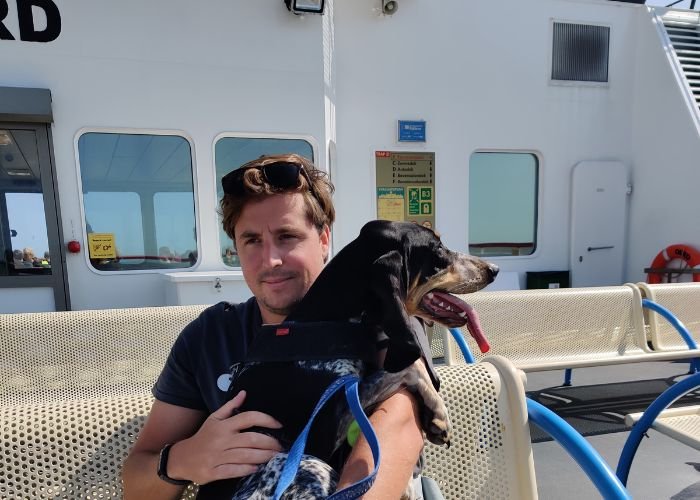
Outside can help if you need fresh air. A sheltered deck area near the middle of the ship can feel better than a warm indoor lounge, especially if there are strong food smells inside. Just avoid standing at the very front or back of the vessel in rougher weather, and always follow crew instructions if outside decks are closed.
Looking at the horizon can help
Looking at the horizon is one of the classic seasickness tips because it gives your eyes a fixed point. This can help your brain make sense of the movement your inner ear is feeling.
You do not need to stare intensely at the horizon for the whole crossing. In practice, it is better to sit still, keep your head as steady as possible and glance out towards a stable point when you start to feel uncomfortable.
Try not to look down at the waves for too long. Watching the water move past the ship can make some people feel worse.
Places to avoid if you get seasick
If you are sensitive to ferry movement, these are the places we would normally avoid first:
- The bow: the front of the ship often feels more up-and-down movement.
- The stern: the rear can also feel more movement, vibration or engine noise.
- High upper decks: the view can be great, but the motion may feel stronger.
- Windowless indoor areas: these can make the mismatch between your eyes and inner ear worse.
- Areas with strong smells: food, diesel, toilets or heavy perfume can trigger nausea.
- Near someone who is already seasick: seeing, hearing or smelling someone being unwell can make it harder to stay settled yourself.
Conventional ferry or catamaran?
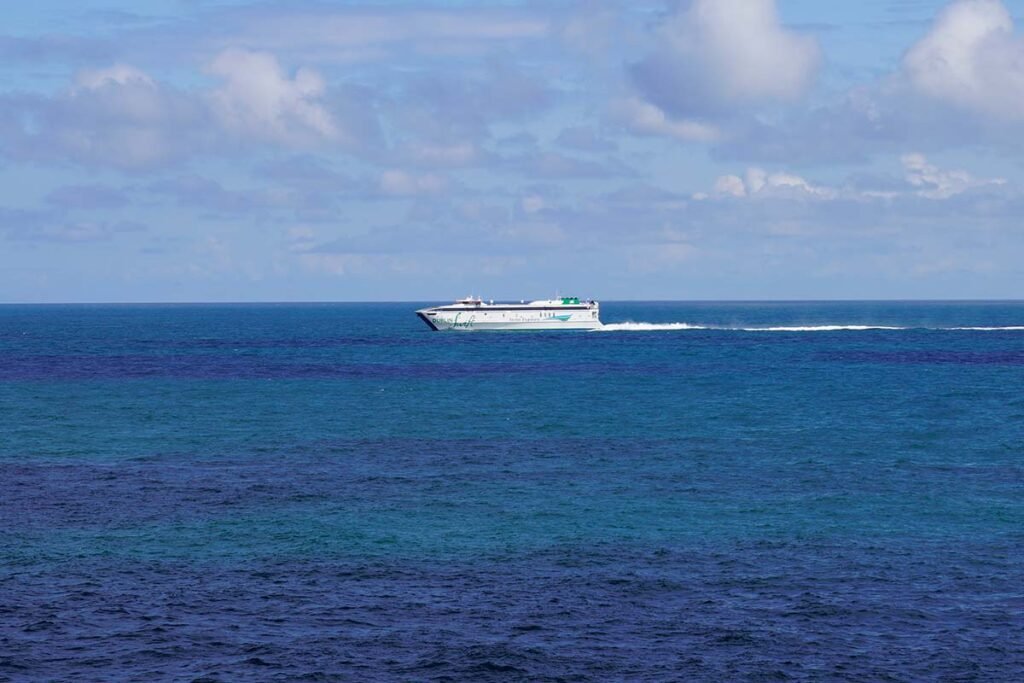
If you can choose between a larger conventional ferry and a smaller fast ferry or catamaran, the conventional ferry is often the safer choice for seasickness. Larger ferries usually sit deeper in the water and tend to move in a slower, heavier way.
Fast ferries and catamarans can be excellent on calm days, and they may shorten the time you are at sea. But in choppier conditions, they can feel more lively, with quicker and jerkier movement. That is the kind of motion that some passengers find harder to handle.
This does not mean you should never book a catamaran. It just means you should think beyond sailing time. If you know you get seasick easily, a slightly longer crossing on a larger ferry may feel better than a shorter but bumpier fast crossing.
Best seat by ferry type
| Ferry type | Best choice if you get seasick | What to avoid |
|---|---|---|
| Large conventional ferry | Lower or mid-level passenger deck, close to the middle of the ship | Front, rear and high decks in rough weather |
| Fast ferry or catamaran | Central seat, facing forward, with a view outside if possible | Seats right at the front, sideways-facing seats and looking down at the waves |
| Overnight ferry | Cabin or seat close to the middle of the ship, ideally not too high up | Leaving cabin choice until late if you know you are sensitive to motion |
| Short car ferry | Stay still, get fresh air where possible and avoid screens | Standing at the bow or scrolling on your phone for the whole crossing |
What to do if you start feeling seasick
If you start to feel seasick during the crossing, act early. It is usually easier to manage mild symptoms than to recover once you feel very nauseous.
- Move to the middle of the ferry if you are sitting near the front or back.
- Look towards the horizon or another stable point outside.
- Get fresh air if the outside deck is open and safe.
- Keep your head still and try not to move around too much.
- Avoid reading or scrolling on your phone.
- Sip water rather than drinking a lot at once.
- Eat lightly if you need something, but avoid heavy or greasy food.
- Tell the crew if you feel seriously unwell or need help.
For children, distraction can help. Talking, music or simple games that do not involve reading or screens can be better than letting them focus on feeling sick.
What not to do on board
Some things make seasickness more likely or harder to manage. We would avoid these if you are already worried about the crossing:
- Reading a book for long periods.
- Scrolling on your phone or watching videos.
- Looking down at the moving water.
- Eating a large, heavy meal just before sailing.
- Drinking alcohol before or during a rough crossing.
- Sitting in a warm, crowded, windowless lounge.
- Staying next to someone who is already being sick if you can move elsewhere.
Should you take seasickness tablets before a ferry?
If you know you are prone to seasickness, it is worth speaking to a pharmacist or doctor before you travel. Some motion sickness medicines work best when taken before the journey starts, not once you already feel sick.
This is especially important for children, pregnancy, glaucoma, urinary problems, existing medical conditions or if you take other medicines. Some motion sickness treatments can cause drowsiness or other side effects, so do not assume every tablet or patch is suitable for everyone.
FerryGoGo is not a medical site, so treat this as practical travel guidance rather than personal medical advice. If seasickness is severe, frequent or unusual for you, ask a healthcare professional before travelling.
Is a cabin better if you get seasick?
On longer or overnight ferries, a cabin can help because you can lie down, close your eyes and keep away from busy public areas. If you are sensitive to motion, a cabin close to the middle of the ship is usually preferable to one right at the front or back.
The catch is that cabin location is not always something you can choose precisely. On busy routes, cabin availability can be limited. If you know seasickness is a real issue for you, it is worth booking early and checking whether the operator allows any cabin preference.
Does rough weather always mean seasickness?
No. Some people feel fine in rougher seas, while others feel unwell in mild movement. But weather does matter. A calm sea can make even a smaller ferry feel easy, while wind and swell can make a normally comfortable crossing feel more active.
If you are very prone to seasickness, check the forecast before you travel and think carefully about fast ferries, exposed crossings and routes where the vessel size is smaller. Ferry operators may also delay, change or cancel sailings in poor conditions, especially on routes using smaller vessels.
Quick checklist before your ferry crossing
- Choose a seat near the middle of the ferry.
- Sit lower down if possible.
- Face forward where you can.
- Try to sit where you can see the horizon.
- Get fresh air when the deck is open and safe.
- Do not read or scroll if you start to feel unwell.
- Eat lightly before sailing.
- Avoid alcohol before and during the crossing if you are prone to seasickness.
- Ask a pharmacist about motion sickness medicine before you travel if you often feel unwell.
- For longer crossings, consider a cabin in a more central part of the ship.
FerryGoGo verdict
The best ferry seat for seasickness is usually low down and near the middle of the ship, ideally with a view outside. If you can get fresh air and avoid screens, heavy food and strong smells, you give yourself a better chance of a comfortable crossing.
For route choice, think beyond speed. A fast ferry may look attractive because it gets you there sooner, but a larger conventional ferry can feel calmer in choppier seas. For longer crossings, a well-chosen cabin can also make the journey easier, especially if you can lie down and sleep through the movement.
Most importantly: plan before you board. Once you already feel sick, it is harder to fix. Choose the right seat early, keep your eyes away from screens, and ask a pharmacist in advance if you know seasickness is a recurring problem for you.
Sources checked
For the health-related guidance in this article, we checked public advice from the NHS on motion sickness and the CDC travellers’ health guidance on motion sickness. Always ask a pharmacist or doctor for personal medical advice, especially for children, pregnancy, existing conditions or medication use.
Get our latest ferry guides, route updates and travel tips in your Google feed. Add FerryGoGo as a preferred source in Google, and follow us in Discover when Google shows the option.