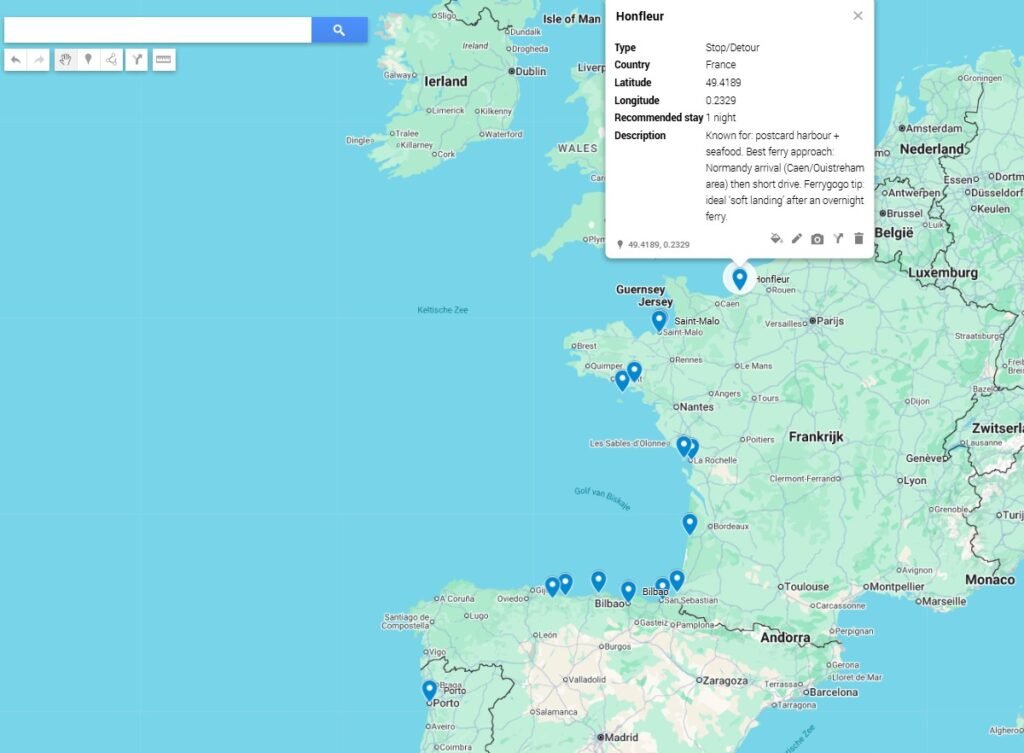
Atlantic coast road trips by ferry and car: France, Spain and Portugal
An Atlantic coast road trip works particularly well by ferry because you do not have to start and finish at the same port. Sail into France and return from northern Spain, or do it the other way around. That turns the ferry into part of the route rather than something you simply have to get through.
It is also one of those trips where having your own car genuinely adds something. You can pack properly, stop when somewhere looks interesting and spend two or three nights in the places you like rather than designing the whole holiday around airports and car hire.
We have travelled through a good part of this corridor ourselves, including Saint-Malo, Honfleur, La Rochelle, Biarritz, San Sebastián, Porto and Lisbon. We have also travelled several of the ferry routes that feed into it, and recently completed one of the direct UK-Spain crossings ourselves. Where a place is based on our own experience we say so; the rest is route planning and research rather than pretending we have slept in every town on the Atlantic coast.
Our road-trip rule
One night is a stop. Two nights is a proper visit. Three nights is when you start to relax. We have learnt this the hard way on family road trips. It is very easy to build an itinerary that looks brilliant on Google Maps and feels like constant packing once you are actually doing it.
Below are 15 bases and worthwhile stops, followed by three routes you can adapt. One of them continues all the way to Porto. If Portugal is the main destination rather than an extension to a wider road trip, start with our separate guide to the ferry to Portugal from the UK. There is no direct UK-Portugal ferry, so that guide compares the two realistic approaches via northern Spain and France.
7-9 days: keep it to Brittany and the French Atlantic coast.
10-14 days: France south, Basque Country and northern Spain, then ferry home from Spain.
14-18 days: add Asturias and Porto, but give Porto at least three nights.
With children: favour two- or three-night bases over changing accommodation every day.
For food: Honfleur, La Rochelle, the Basque coast, San Sebastián and Galicia stand out.
For beaches and surf: Biarritz, the Basque coast, Cantabria and Asturias.
Start with the ferry route
The ferry you choose changes the shape of the road trip. A short Channel crossing gives you more France. Sailing directly to Santander or Bilbao skips a large amount of motorway and gets you straight to the northern Spanish section.
- Ferries to France from the UK – compare Dover, Newhaven, Portsmouth, Poole and Plymouth corridors.
- Ferries to Spain from the UK – Portsmouth and Plymouth to Santander and Bilbao.
- UK to Portugal by ferry – how the Spain and France options compare if Portugal itself is the goal.
Brittany Ferries currently operates the main western France and direct UK-Spain routes used in these itineraries. The exact sailing days and vessels change, so choose your ferry first and then build the road trip around the dates rather than designing a perfect itinerary and discovering afterwards that the sailing does not fit.
When would we go?
Late spring and early summer are our favourite type of conditions for this sort of trip: long days without every coastal resort being at its busiest. July and August make more sense if beaches are the priority, but popular ferry dates and accommodation need earlier planning. Early autumn can work particularly well in northern Spain and Portugal if you are not tied to school holidays.
Choose your ferry strategy
We would think about the ferry before choosing all 15 stops. There are three sensible ways to build the trip.
| Plan | How it works | Best if… |
|---|---|---|
| France out, Spain back | Sail to Normandy or Brittany, follow the Atlantic coast south and return from Bilbao or Santander. | You want France to be a major part of the holiday and prefer to finish with northern Spain. |
| Spain out, France back | Take the long ferry to northern Spain, explore the Spanish coast first and gradually work north through France. | Northern Spain is the main attraction and you want the ship to remove a large chunk of the outbound drive. |
| France, Spain and Portugal | Continue west from northern Spain to Porto before looping back to Santander or Bilbao. | You have at least two weeks and Portugal is worth several nights rather than a token one-night stop. |
15 ferry-friendly Atlantic coast bases and stops
We use two simple labels throughout the list. A base is somewhere we would stay for two to four nights and explore from. A stop or detour is somewhere worth breaking the journey for, but not necessarily somewhere that needs several days.
Many of the stops line up naturally with the Brittany Ferries network between the UK, western France and northern Spain. That makes an open-jaw trip particularly easy: you can sail into one part of the route and home from another instead of retracing your drive. Check Brittany Ferries sailings. For wider price context rather than a single live fare, see our 2026 ferry fare research.
France
1. Honfleur – stop or detour
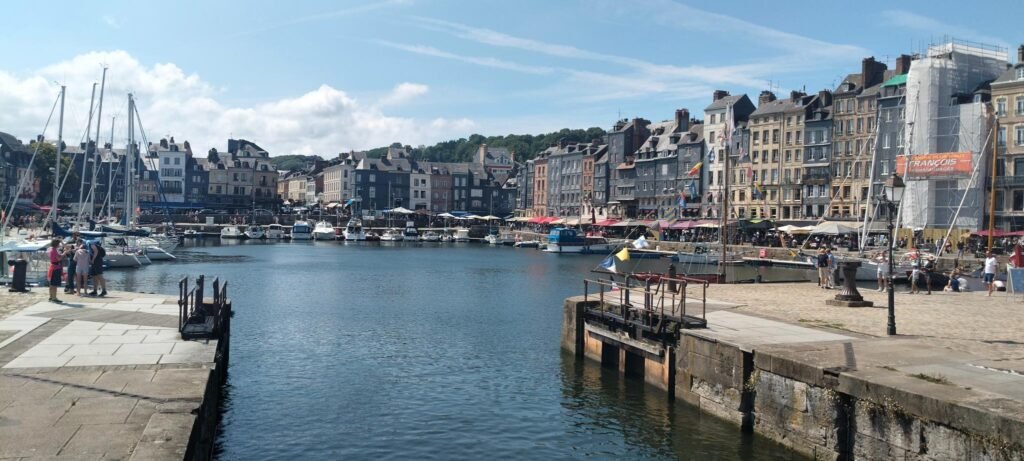
Honfleur is one of our favourite ways to start a France road trip. It is small enough not to feel like another travel day, but pretty enough to feel immediately different from home. We have stopped here ourselves and would happily do the same again after arriving in Normandy.
If you come off an overnight ferry, resist the temptation to immediately drive five or six hours south. Honfleur works because you can have lunch, walk around the harbour and start the long driving the following morning instead.
Known for: harbour, seafood and compact historic streets.
Ferry logic: especially easy after Portsmouth-Caen.
Stay: one night is enough for most road trips.
Works well for: couples, families and anyone arriving tired from an overnight sailing.
2. Saint-Malo – base
Saint-Malo is technically on the Channel rather than the open Atlantic, but as a ferry-roadtrip starting point it is too useful to leave out. The walled town, beaches and huge tidal range mean the holiday starts almost as soon as you leave the port.
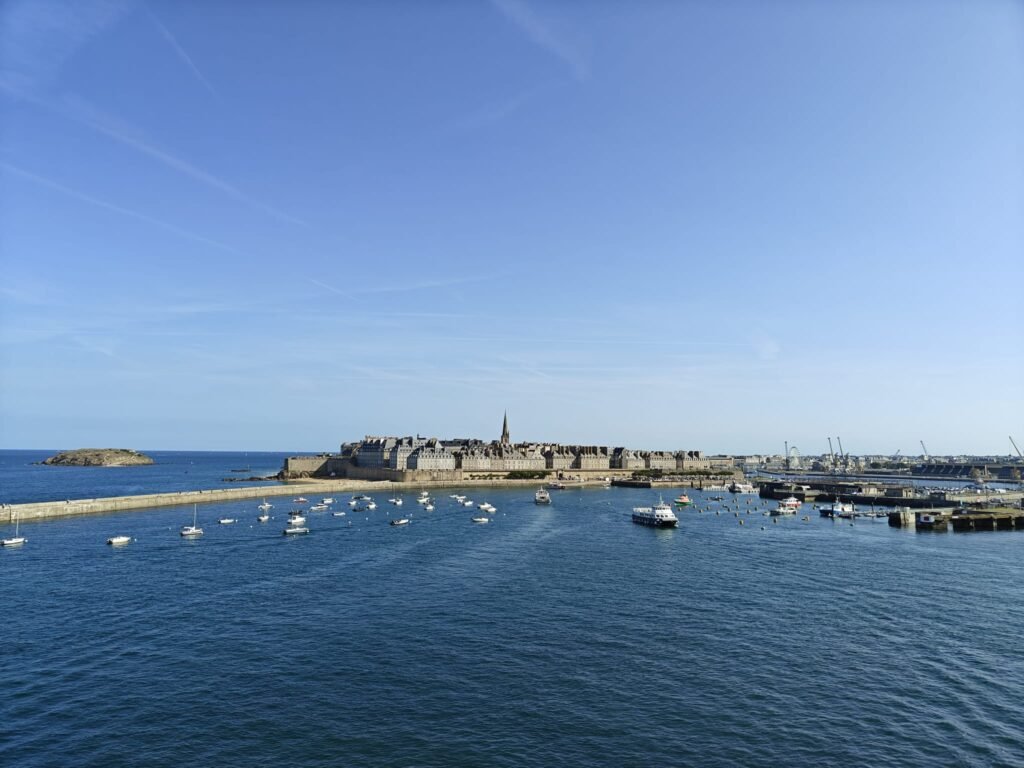
We know this one first-hand too. On our Saint-Malo-Portsmouth trip the journey became considerably more memorable than planned when our car broke down, which is also why we now pay more attention to flexible tickets and breakdown cover on longer road trips.
Known for: ramparts, beaches and dramatic tides.
Ferry logic: direct Portsmouth-Saint-Malo ferry.
Stay: two nights works better than rushing through.
First-hand: read our Saint-Malo-Portsmouth ferry experience.
3. Dinard and the Emerald Coast – stop or detour
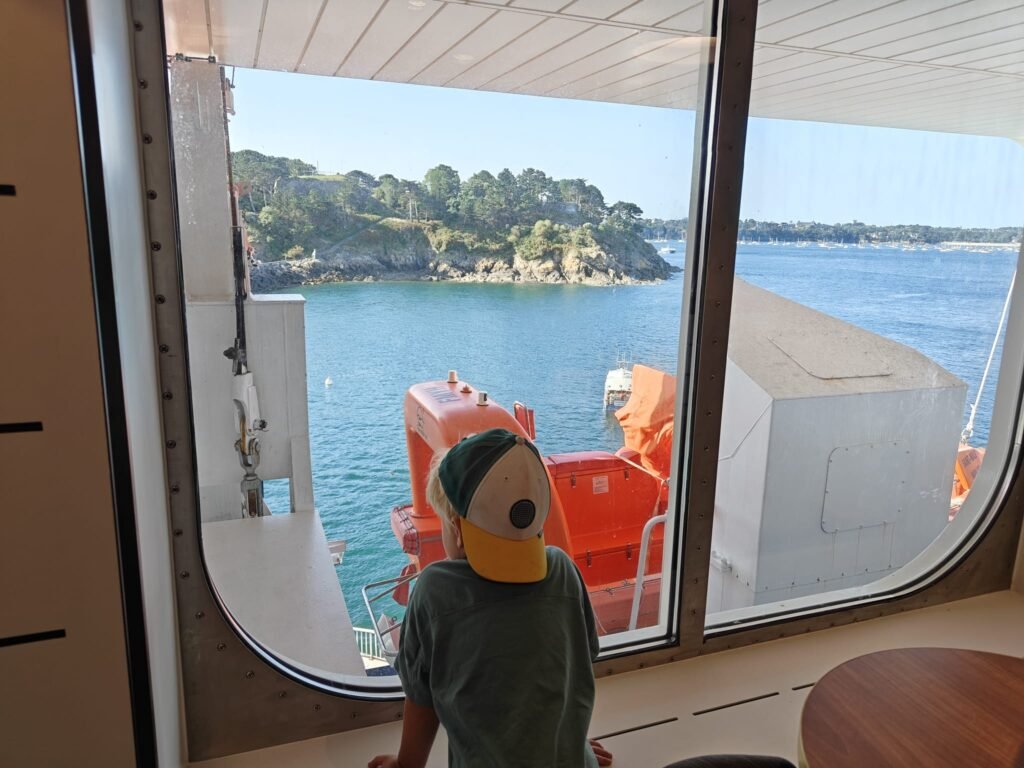
Dinard is an easy addition rather than a separate road-trip mission. Stay in Saint-Malo and cross over for the beaches, villas and coastal walking, or spend one quieter night here before continuing west and south.
Known for: coastal paths, coves and Belle Époque seaside architecture.
Ferry logic: combine with Saint-Malo.
Stay: half a day to one night.
Works well for: walkers, couples and slower itineraries.
4. Quiberon and Carnac – base
This is where Brittany starts to feel much more Atlantic. Quiberon gives you beaches and a rugged peninsula, while Carnac adds something completely different with its prehistoric standing stones.
Known for: beaches, peninsula scenery and Carnac’s standing stones.
Ferry logic: natural continuation south from Saint-Malo or the Normandy ports.
Stay: around two nights.
Works well for: families, beach days and road trips that need a slower section.
5. Vannes and the Gulf of Morbihan – base
Vannes itself is worth seeing, but the reason to stop for longer is the Gulf of Morbihan. After several driving days, this is a good place to deliberately leave the car parked and spend a day around the water or islands.
Known for: historic Vannes, small islands and sheltered coastal scenery.
Ferry logic: easy continuation through southern Brittany.
Stay: two to three nights.
Works well for: families and anyone who needs a break from packing every morning.
6. La Rochelle – base
La Rochelle is one of the places on this list we know ourselves and would readily recommend as a proper base. It has enough going on for a couple of days without feeling like a city-break detour from the road trip: historic harbour, restaurants, sea air and easy access to the islands.
Known for: harbour towers, walkable centre and food.
Ferry logic: very natural halfway base on a western France run.
Stay: two nights, or three if you include an island.
Works well for: couples, families and mixed groups.
If Île de Ré feels too busy or expensive for your dates, Île d’Oléron is another worthwhile coastal alternative.
7. Île de Ré – base
Île de Ré works because you can change the pace completely. Park the car, hire bikes and spend a couple of days travelling between beaches and villages without adding another long driving leg.
Known for: cycling, beaches and villages.
Ferry logic: combine with La Rochelle.
Stay: two or three nights, or visit for a full day.
Works well for: families, couples and active-but-relaxed days.
8. Arcachon and Dune du Pilat – stop or detour
The Dune du Pilat is one of those stops that earns its place despite breaking the driving rhythm. It is memorable enough to justify a detour, while Arcachon gives you oysters, beach and somewhere sensible to sleep before continuing towards the Basque coast.
Known for: Dune du Pilat, oysters and Atlantic beaches.
Ferry logic: a natural stop between La Rochelle and Biarritz.
Stay: one night, two if you want a beach day.
Works well for: families and anyone who wants one big scenery stop.
9. Biarritz and the French Basque coast – base
Biarritz is another place we have done ourselves. It has enough surf-town energy to feel relaxed, but also very good food, hotels and coastal walks. More importantly for this route, it sits exactly where France begins to turn into the Spanish section of the trip.
We would stay at least two nights rather than use Biarritz purely as a border stop. Saint-Jean-de-Luz and Bayonne are both easy additions without changing hotel again.
Known for: surf, coastal views and Basque food.
Ferry logic: end of the France chapter or easy drive after arriving in Bilbao.
Stay: two to three nights.
Works well for: couples, friends, surfers and food-focused trips.
Northern Spain
10. Bilbao – stop or detour
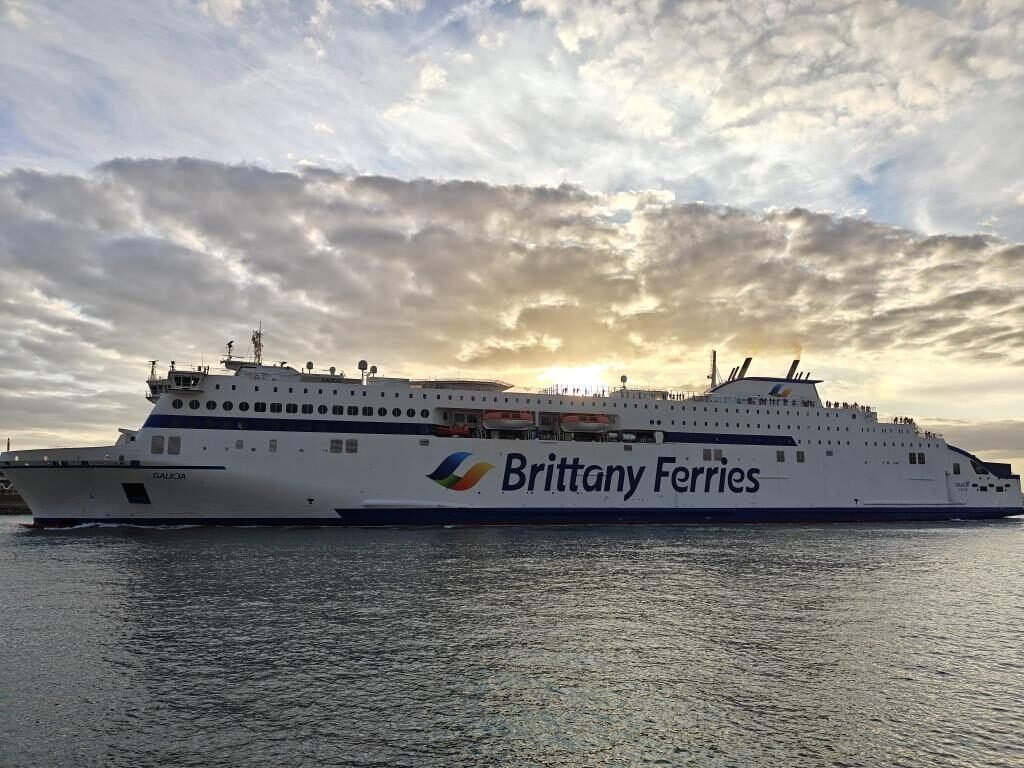
Bilbao is easy to treat purely as a ferry port, but that undersells it. If your sailing arrives late or leaves early, one night in or around the city is a sensible buffer rather than trying to squeeze another long drive around the ferry timetable.
Known for: food, architecture and an easy city stop.
Ferry logic: direct UK-Bilbao sailings are part of the UK-Spain ferry network.
Stay: one night for logistics, two if Bilbao itself is part of the trip.
11. San Sebastián – base
San Sebastián is one of the easiest recommendations on this list, and another place we know first-hand. The city is compact enough to explore on foot, the beach sits right in the middle of it and the pintxos scene gives you a good reason not to drive anywhere for a day.
Known for: pintxos, La Concha and a genuinely walkable centre.
Ferry logic: especially easy after Bilbao.
Stay: at least two nights.
Works well for: food trips, couples and families who want a city without a complicated city break.
12. Santander – base or ferry buffer
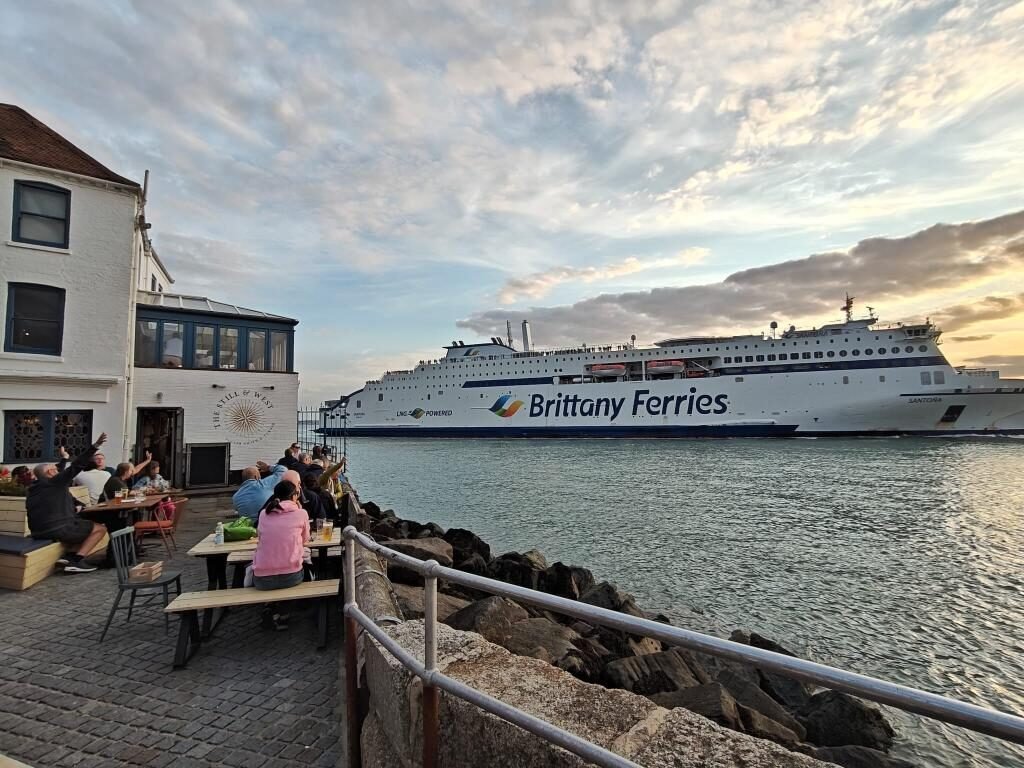
Santander is useful in two ways. It is a direct ferry gateway from the UK and it is a calm place to spend the first or last night of the Spanish part of the trip. Beaches and promenades make it much nicer than simply waiting around for check-in.
We have now also completed one of the UK-Spain ferry crossings ourselves. The dedicated first-hand report will follow shortly, so we will add the specific sailing experience once that is live.
Known for: beaches, bay and relaxed city feel.
Ferry logic: one of the two main northern Spain ferry gateways from the UK.
Stay: one or two nights.
Works well for: families and anyone heading west towards Asturias or Portugal.
13. Asturias coast – base
Asturias is where the north coast becomes much greener and less obviously resort-like. Rather than changing hotel every evening, choose a base around Llanes or Ribadesella and explore beaches, villages and viewpoints from there.
Known for: cliffs, small beaches and very green scenery.
Ferry logic: continue west from Santander.
Stay: two to four nights.
Works well for: nature, families and travellers who prefer quiet coastline to cities.
14. Picos de Europa – stop or detour
The Picos are not on the coast at all, but they are close enough that leaving them off this itinerary would be a shame. A mountain day breaks up a long run of beaches and cities and gives you a completely different side of northern Spain.
Known for: mountain scenery and walking.
Ferry logic: easiest as a detour from Cantabria or Asturias.
Stay: a full day or one to two nights.
Works well for: walkers and anyone wanting one inland section.
Portugal
15. Porto – base
If you take this road trip into Portugal, Porto is the stop we would prioritise. We have been ourselves and it works particularly well after a long coastal trip because the centre is compact enough that you can finally park the car and stop thinking about tomorrow’s drive.
Three nights is the minimum we would aim for after coming this far. Porto is not really worth adding to a two-week road trip if you arrive in the evening and leave again the following morning just so you can say Portugal was included.
If Portugal is becoming a major part of the trip rather than an extension, compare the journey separately in our guide to the ferry from the UK to Portugal via Spain or France. For a straight Portugal journey, taking the ferry to northern Spain usually makes more sense than following this entire French Atlantic loop.
Known for: Ribeira, Douro views, food and port wine.
Ferry logic: continue west and south from Santander, Bilbao or Asturias.
Stay: three nights minimum; four works even better.
Works well for: couples, food trips and anyone who wants a city as the reward at the end of the road journey.
We like Lisbon too, but for this particular Atlantic route Porto is much easier to justify. If you continue further south, Nazaré can break up the drive while keeping the trip firmly on the Atlantic.
Three Atlantic road trips we would actually use
These are deliberately built around two- and three-night bases. They are starting points rather than schedules you need to follow to the hour.
Road trip 1: France out, northern Spain back – 12 to 16 days
This is probably the most balanced first trip. You get Brittany and the French Atlantic coast without having to drive all the way back north afterwards.
Example route: Normandy and Honfleur – Saint-Malo and Dinard – Morbihan – La Rochelle and Île de Ré – Arcachon – Biarritz – San Sebastián – Santander or Asturias – ferry home from Santander or Bilbao.
The important bit is not squeezing every name into the trip. On a 12-day holiday we would remove two or three stops rather than turn all of them into one-night stays.
Who we would choose this for: first-time Atlantic roadtrippers, families and anyone who wants a good mix of France and Spain without retracing the whole route.
Road trip 2: Spain out, France back – 10 to 16 days
This is the version we would pick when northern Spain is the main reason for going. Take the long ferry out, start around Santander or Bilbao and let the road trip become gradually more French as you head home.
Example route: Bilbao or Santander – San Sebastián – Asturias – Biarritz – Arcachon – La Rochelle – Morbihan or Saint-Malo – ferry home from western France.
The advantage is psychological as much as geographical: the longest ferry is at the beginning, when you are fresh and excited about the trip, and the drive home is broken into coastal bases rather than one enormous push north.
Who we would choose this for: travellers who care more about northern Spain than France and want the direct Spain ferry to replace motorway miles.
Road trip 3: France, Spain and Porto – 14 to 18 days
This is the big version. It works, but only if you resist turning Porto into a box-ticking detour.
Example route: Saint-Malo or Normandy – La Rochelle – Arcachon – Biarritz – San Sebastián – Asturias – Porto for three to five nights – return north to Santander or Bilbao for the ferry home.
Once Porto is the main goal, however, the route calculation changes. You do not have to drive the entire French Atlantic coast first. A direct ferry to Spain gets you much closer. Our UK-Portugal ferry route comparison explains when we would choose Santander or Bilbao instead of driving through France.
Who we would choose this for: a longer annual road trip where the journey itself matters as much as arriving in Portugal.
Easy extensions if you have extra time
Galicia – two to four extra days
If northern Spain is the part of the trip you end up enjoying most, Galicia is the obvious extension after Asturias. The coastline is wilder, the seafood is excellent and it feels noticeably different from the better-known Basque and Cantabrian sections.
Beyond Porto – one to three extra days
Nazaré is the obvious Atlantic stop if you continue south. Aveiro and Costa Nova are an easier addition if you mainly want to break up the driving without turning this into a full Portugal itinerary.
A slower Brittany start – one or two extra days
If you have extra time, spending it at the beginning rather than adding another distant destination is often the better choice. An extra night around Saint-Malo, Dinard or Morbihan does more for the pace of the holiday than another tick on the map.
First-hand where we can be, researched where we cannot
We have not stayed everywhere on this coast and do not want to write as though we have. We have personally visited Porto, Lisbon, Saint-Malo, Honfleur, La Rochelle, Biarritz and San Sebastián, and we have travelled several of the ferry crossings that make these loops possible. We have also recently added a direct UK-Spain crossing to that list, with the full report following.
The other recommendations are based on route planning, research and whether they genuinely make sense within the driving pattern of the trip. That distinction matters to us. A town can look wonderful in isolation and still be a bad recommendation if getting there turns a relaxed road trip into another four-hour detour.
Get our latest ferry guides, route updates and travel tips in your Google feed. Add FerryGoGo as a preferred source in Google, and follow us in Discover when Google shows the option.