Ferries to France from the UK
There are additional routes available, but these are among the most popular
Popular

Dover Calais P&O
Jan Willem van Tilburg
February 4, 2022
France, United Kingdom
1h 30 mins. 26 miles Up to 35 times per day
From: £80.00
View Prices ↗

Portsmouth-Caen
Jan Willem van Tilburg
February 17, 2022
France, United Kingdom
5h 45 mins. 112 miles Up to 3 times per day
From: £126.00
View Prices ↗
Ferry crossings from England to France
With 10 ferry routes connecting southern England to France, you can travel to the regions of Hauts-de-France, Normandy, and Brittany from ports such as Dover, Portsmouth, and Plymouth. All ferries from the UK to France allow you to bring your car, caravan, or camper, making them an excellent option for road trips and flexible travel.
Our route map and booking engine make it simple to compare options, including faster crossings, budget-friendly fares, and night ferries for added convenience. On all the ferries to France from the UK you can bring your car.
In addition, we’re happy to share ferry travel experiences and provide tips for travelling to France by ferry.
Ferry route map UK to France
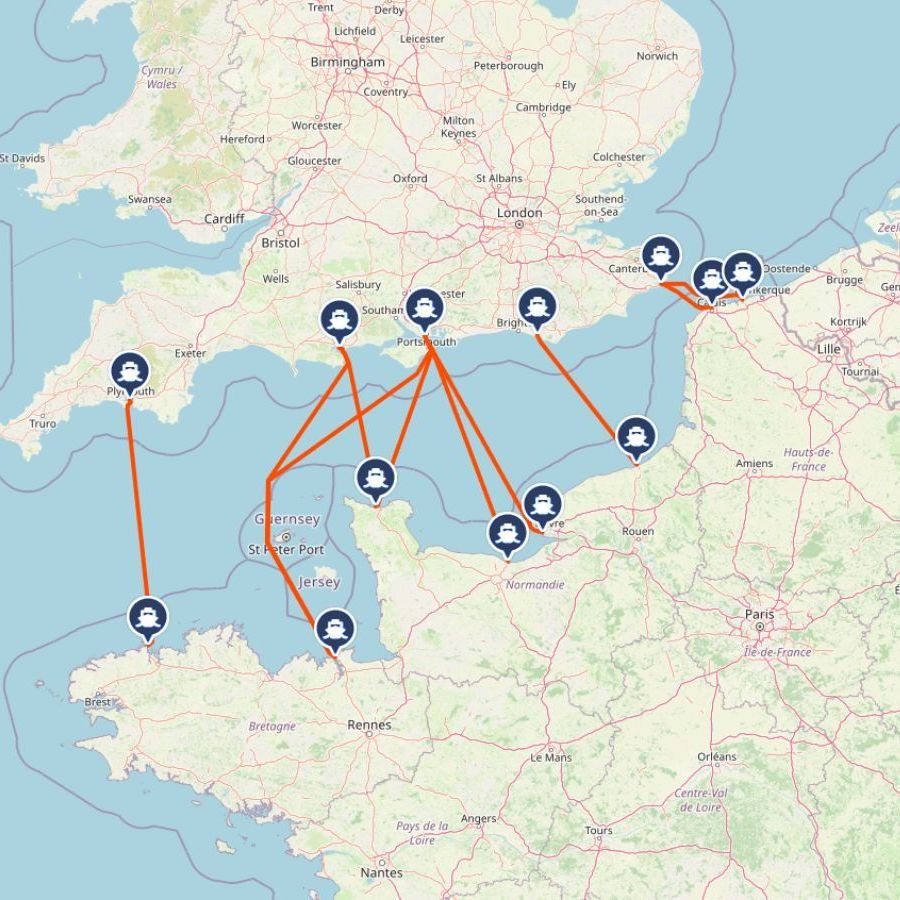
On our interactive map, you can find all ferry crossings to France. Click on the ferry ports for detailed route information.
Popular
Dover Calais P&O
Jan Willem van Tilburg
February 4, 2022
France, United Kingdom
1h 30 mins. 26 miles Up to 35 times per day
From: £80.00
View Prices ↗
Portsmouth-Caen
Jan Willem van Tilburg
February 17, 2022
France, United Kingdom
5h 45 mins. 112 miles Up to 3 times per day
From: £126.00
View Prices ↗
Plymouth-Roscoff
Jan Willem van Tilburg
July 20, 2022
France, United Kingdom
11 Hours, 5h 30 mins. 112 miles Up to 8 times per week
From: £146.00
View Prices ↗
In short: 🇬🇧 UK to France by ferry
- Main departure ports: Dover, Portsmouth, Newhaven, Plymouth and Poole.
- Popular destinations: Calais, Dieppe, Cherbourg, Caen, Le Havre, Roscoff and St Malo.
- Travelling with a car or camper? Dover-Calais and Dover-Dunkirk offer the fastest and most frequent crossings, while the longer routes from Portsmouth and Plymouth are ideal for holidays in western France.
- Foot passengers: You can also travel as a foot passenger on routes such as Newhaven-Dieppe or Portsmouth-Caen.
- Crossing times: From 90 minutes (Dover-Calais) to overnight sailings of 8-11 hours on the western routes.
- Tip: For a more relaxed start to your trip, choose an overnight crossing with a cabin – you’ll arrive rested and ready to explore France, or drive along.
About the crossings
The most popular route to France is the Dover to Calais crossing, as it offers the shortest journey. However, this isn’t the ideal choice for everyone. Some may prefer a longer ferry trip to arrive further south. Also, an overnight crossing can be a comfortable option. You can sleep on board and wake up refreshed the next morning. This way, you’re ready to continue your journey to your destination in France or beyond. Brittany Ferries offers several night crossings focusing on routes to Normandy and Brittany.
Since there are many routes and even more providers to choose from, we’ll first highlight the key perks of some options before diving into the specific details of individual crossings.
- Ferries from Dover to Hauts-de-France are the shortest and most affordable.
- Ferries to Normandy ports (Cherbourg, Caen, Le Havre, and Dieppe) offer longer crossings but take you further south in France.
- Arrival ports Le Havre and Dieppe are close to Paris.
- Cherbourg and Caen are convenient for journeys to southern France.
- Ferries to Brittany are typically overnight crossings.
Below, you’ll find the ferry services listed by region:
The Strait of Dover Ferries between France and the UK
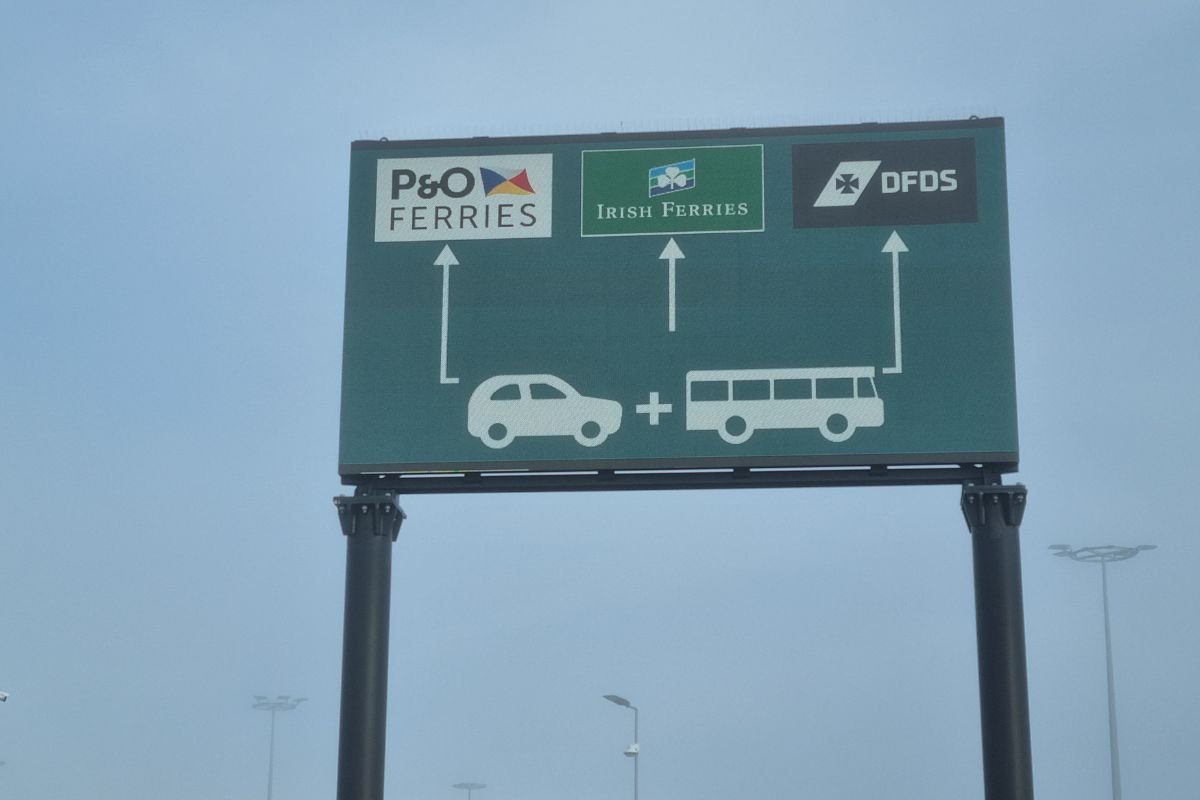
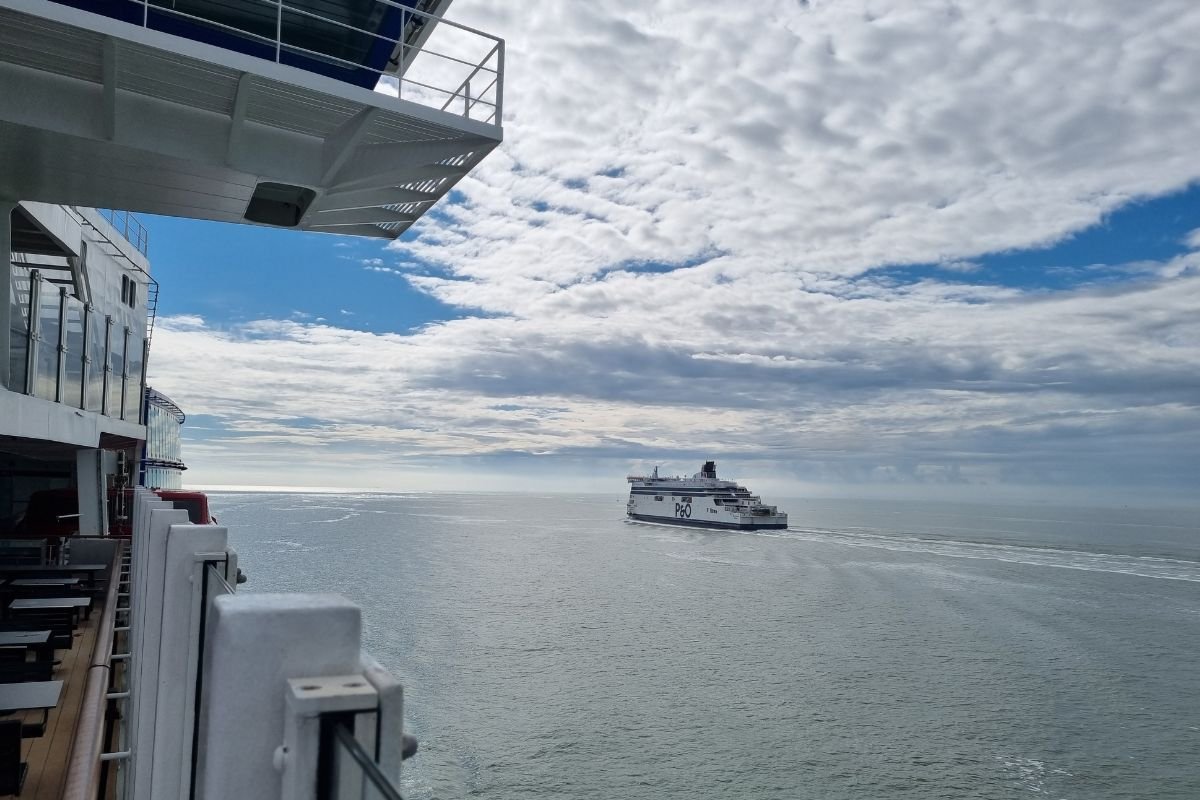
The ferries from Dover operate frequently and are quite similar in terms of price and speed. We’ve tested them all, and thanks to their new ships, we found that P&O provided the best overall quality and comfort experience.
Strait of Dover crossings, in short:
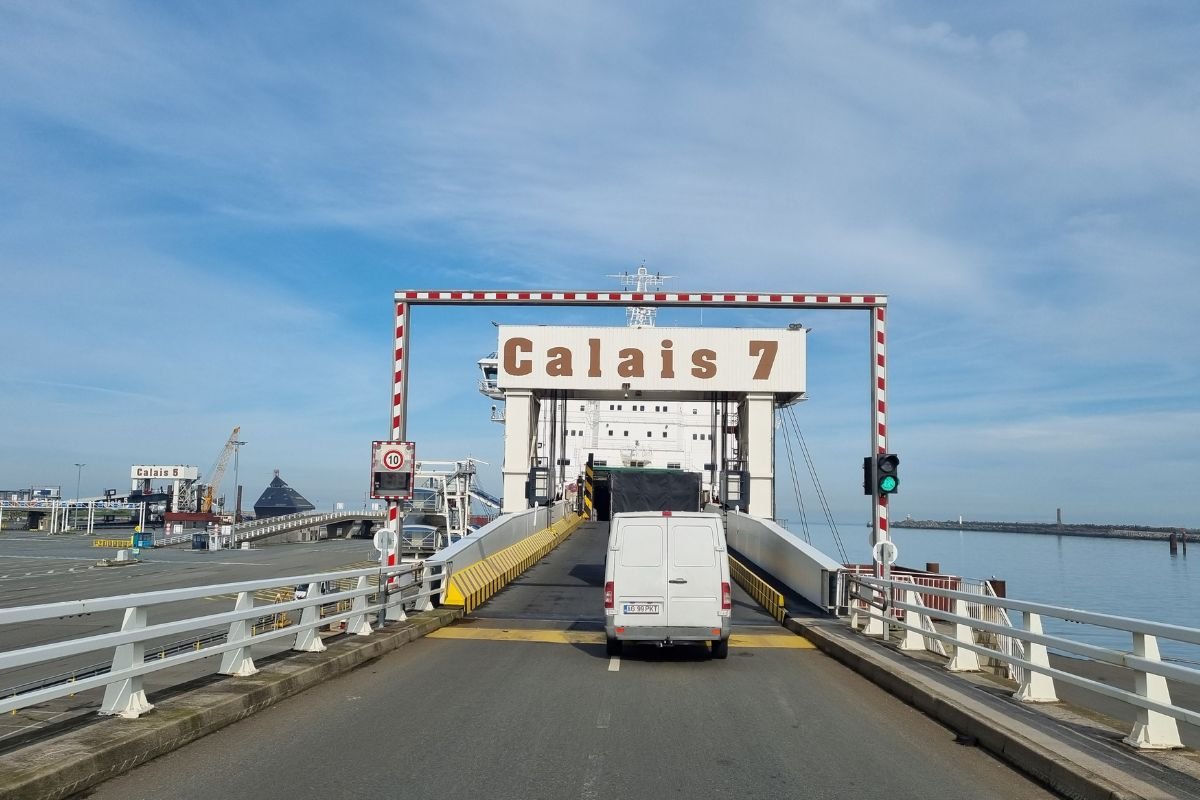
- Dover to Calais: 3 companies – over 30 sailings daily – 90-minute crossing.
- Dover to Dunkirk: 1 ferry company – up to 8 sailings daily – 120-minute crossing
Popular
Dover Calais P&O
Jan Willem van Tilburg
February 4, 2022
France, United Kingdom
1h 30 mins. 26 miles Up to 35 times per day
From: £80.00
View Prices ↗

Dover-Dunkirk
Jan Willem van Tilburg
February 16, 2022
France
2 Hours 47 miles Up to 8 times per day
From: £81.00
View Prices ↗
Dover Calais
Jan Willem van Tilburg
August 16, 2024
France, United Kingdom
1h 30 mins. 26 miles Up to 35 times per day
From: £80.00
View Prices ↗
-
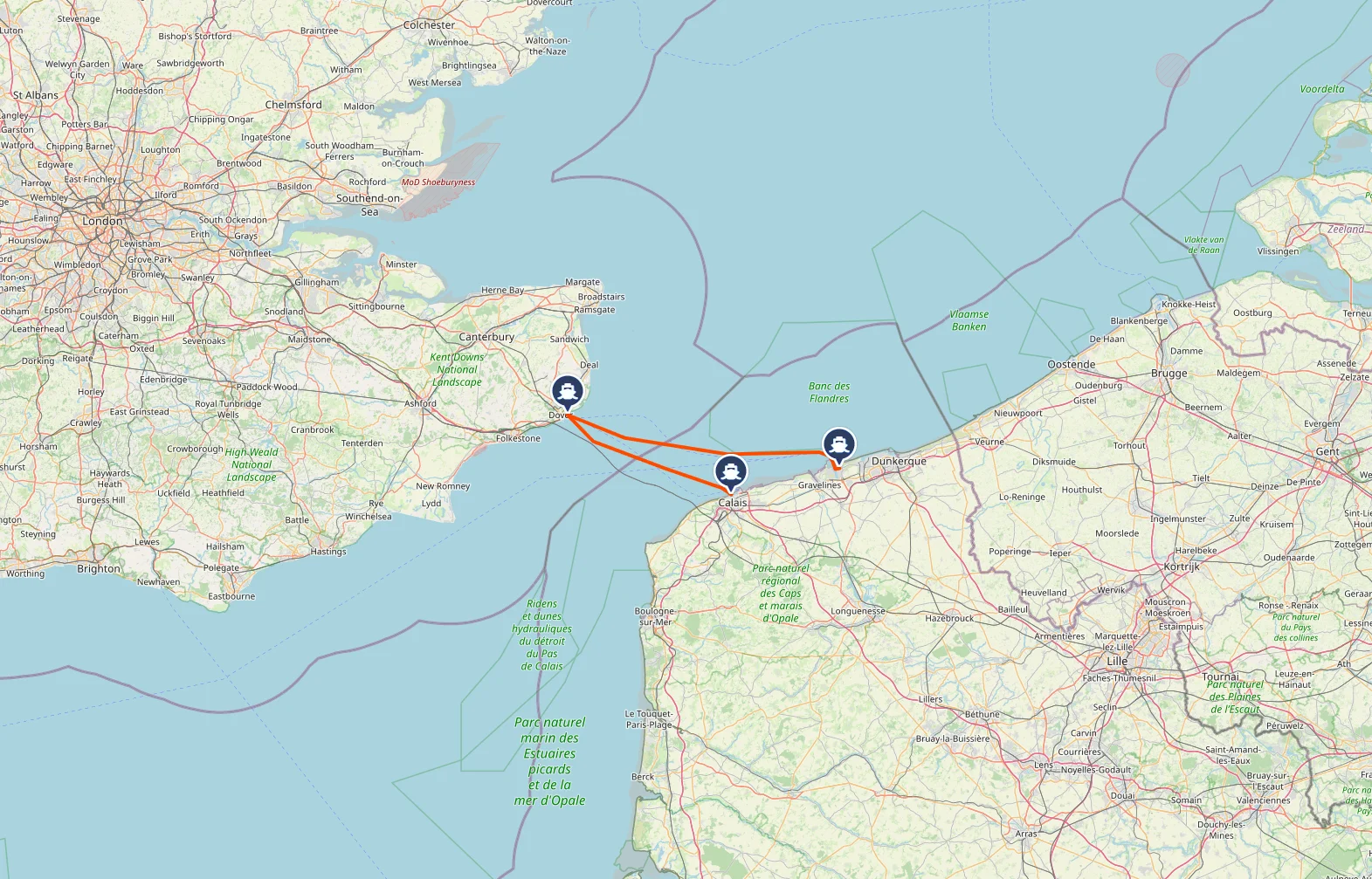
- On this map you can see all the crossings from the UK / England to France – From Dover, Portsmouth, Newhaven, Poole & Plymouth to France.

-
- Both Dover-Dunkirk and Dover-Calais ferry routes are shown on the map
England to Normandy ferries
The ferry services to Normandy arrive in Dieppe, Le Havre, Caen, or Cherbourg. While the journey is longer than the Dover-Calais or Dover-Dunkrik route, it’s shorter than the crossings to Brittany. Normandy provides a convenient entry point into northern France, making it an excellent choice for further travel within the region or beyond.
Brittany Ferries crossings in short:
- Portsmouth – Caen: Brittany Ferries’ most popular crossing – day or night options – is approximately a 6-hour crossing. 3 daily sailings.
- Portsmouth – Le Havre: daily sailing – 6 hours – day crossing.
- Portsmouth to Cherbourg: Day and night crossings are available. This is also an ideal route for travelling to the south of France.
- Looking for all the crossings from Portsmouth to France?
Portsmouth-Caen
Jan Willem van Tilburg
February 17, 2022
France, United Kingdom
5h 45 mins. 112 miles Up to 3 times per day
From: £126.00
View Prices ↗
Portsmouth-Cherbourg
Jan Willem van Tilburg
February 17, 2022
France, United Kingdom
6 Hours, 8 hours 84 miles Up to 3 times per week Night crossing available
From: £99.00
View Prices ↗

Newhaven-Dieppe
Jan Willem van Tilburg
June 7, 2022
France, United Kingdom
4 Hours 78 miles Up to 4 Times p/day Night crossing available
From: £75.00
View Prices ↗
Poole-Cherbourg
Jan Willem van Tilburg
July 20, 2022
Channel Islands, France, United Kingdom
4h 30 mins. 77 miles Up to 1 time per day
From: £121.00
View Prices ↗
England to Brittany ferries
The crossings to Brittany are relatively long crossings on cruise ferry ships, offering a comfortable option for several types of travellers:
- Those from Cornwall and Devon heading to France
- Travellers specifically visiting Brittany
- People who prefer a longer overnight crossing can continue their journey in France well-rested the next day.
- These routes are ideal for exploring France and beyond with the flexibility of your own vehicle/car.
Plymouth-Roscoff
Jan Willem van Tilburg
July 20, 2022
France, United Kingdom
11 Hours, 5h 30 mins. 112 miles Up to 8 times per week Night crossing available
From: £146.00
View Prices ↗

Poole-Saint Malo
Jan Willem van Tilburg
July 20, 2022
Channel Islands, France, United Kingdom
12 Hours, 6h 20 mins 143 miles Up to 4 times per week
From: £184.00
View Prices ↗
Portsmouth-Saint Malo
Jan Willem van Tilburg
February 17, 2022
France, United Kingdom
11 Hours 156 miles Once per day Night crossing available
From: £165.00
View Prices ↗
By now we’ve tried most of the ferry crossings between the UK and France ourselves. In our travel reports, you can get a real feel for what these sailings are like and how everything works – from boarding to the restaurants on board and the cabins. Below you can find some of the most-read before-boarding guides.
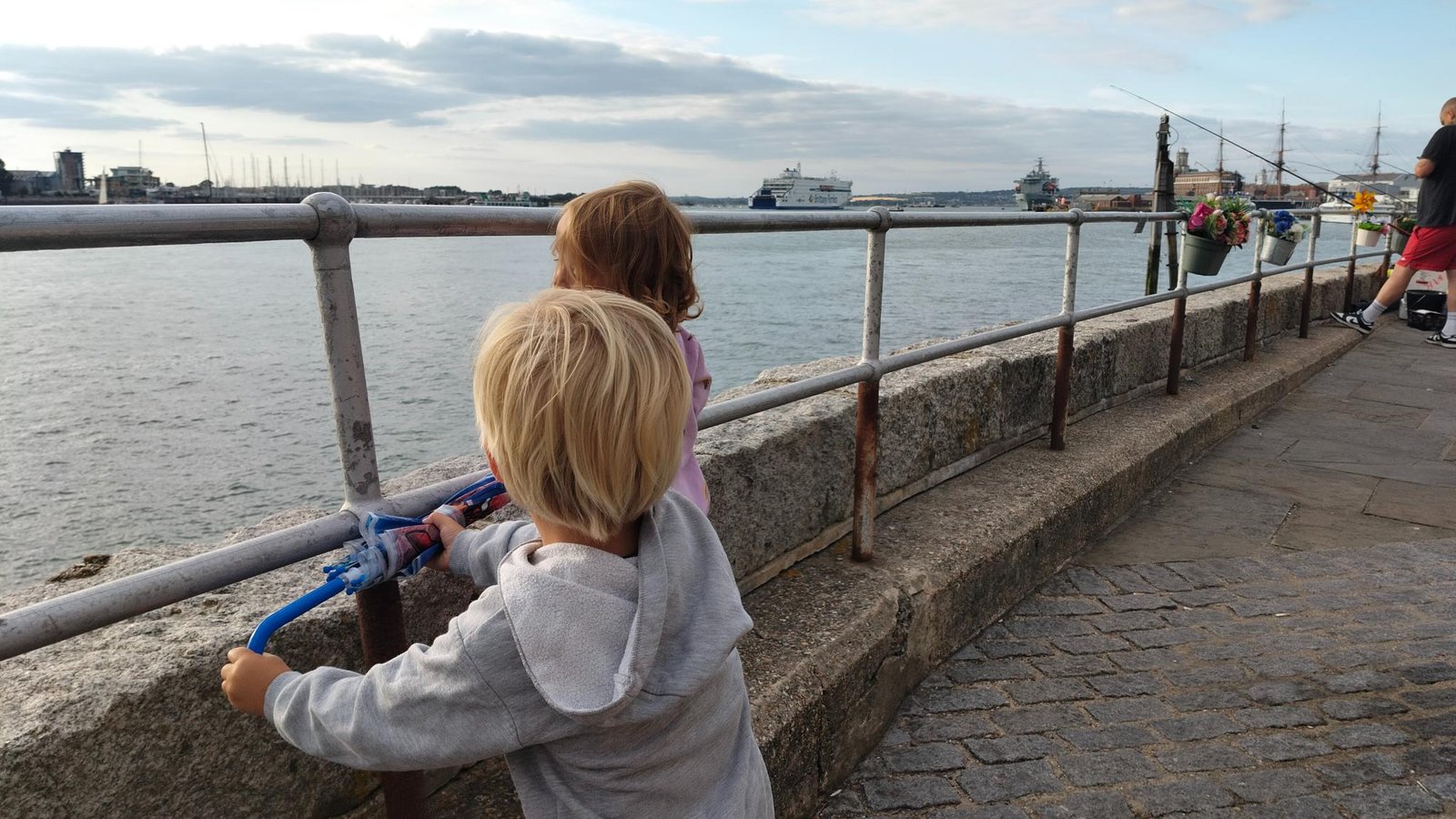
Portsmouth to Cherbourg by Ferry: Sailing on the Santona with Brittany Ferries
Ferry spotting in Portsmouth Port
Planning a trip from the UK to France? The Portsmouth – Cherbourg ferry is a great choice, a comfortable crossing and an overnight one. You sleep while you sail, so the hours pass quickly and it feels like free …
Read our guide
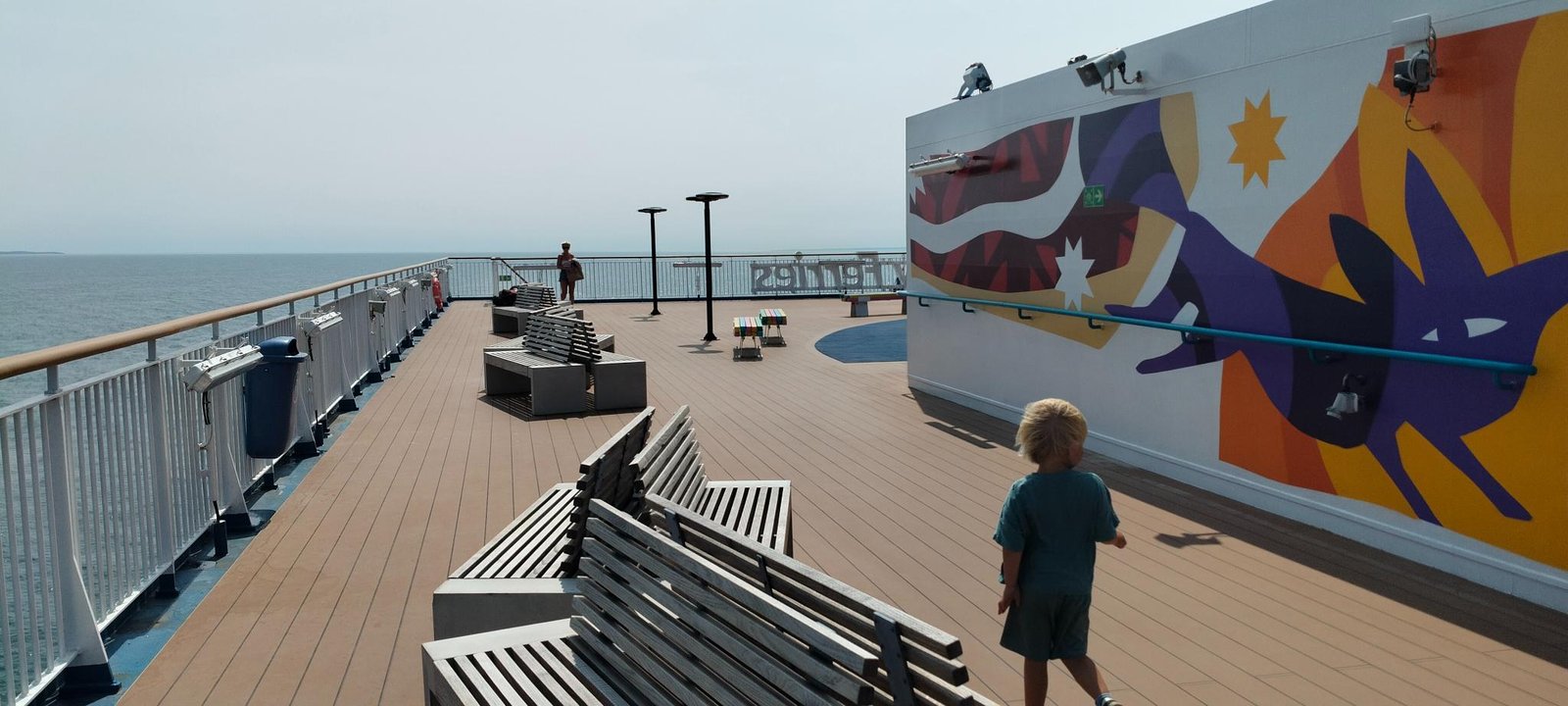
By ferry from Saint-Malo to Portsmouth: our experience and a visual impression
View on Saint Malo from the ferry to Portsmouth
Thinking about taking the ferry from the UK to France or vice versa? The Saint-Malo – Portsmouth route has it all: a comfortable crossing from a must-visit French coastal town, with easy onward …
Read our guide
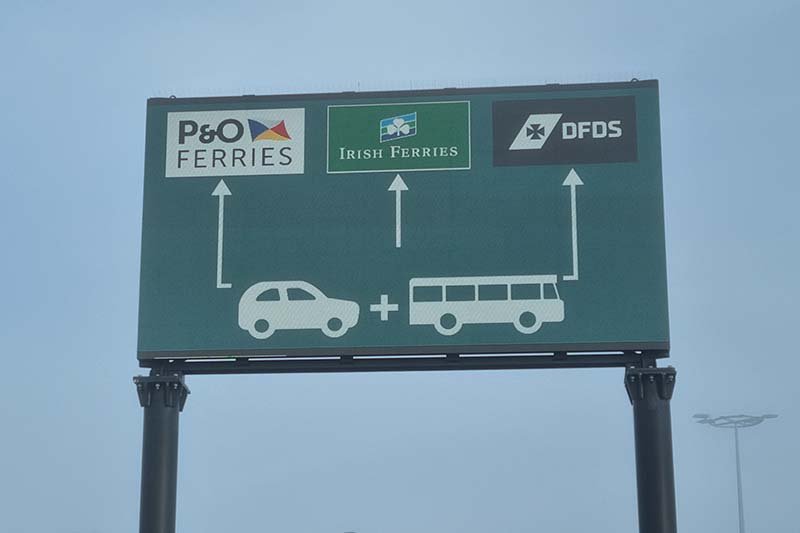
We tried every way to cross the Channel from Dover to Calais
We tested every Dover to Calais crossing back to back: P&O Ferries, DFDS, Irish Ferries and LeShuttle / Eurotunnel. Two of us, Jelle and Rob, crossed the Channel four times in two days so we could compare the operators properly: price, …
Read our guide
On board the ferries and route maps
-
- On this map you can see all the crossings from the UK / England to France – From Dover, Portsmouth, Newhaven, Poole & Plymouth to France.
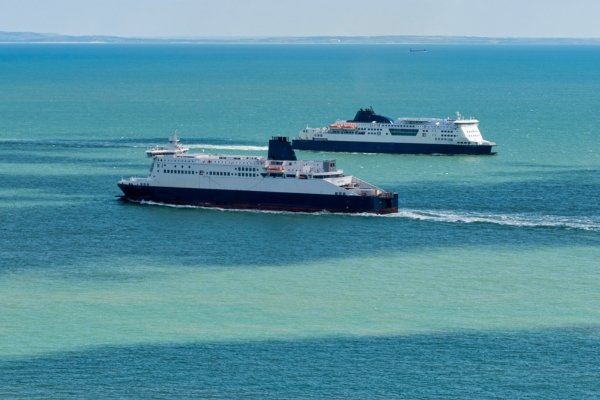
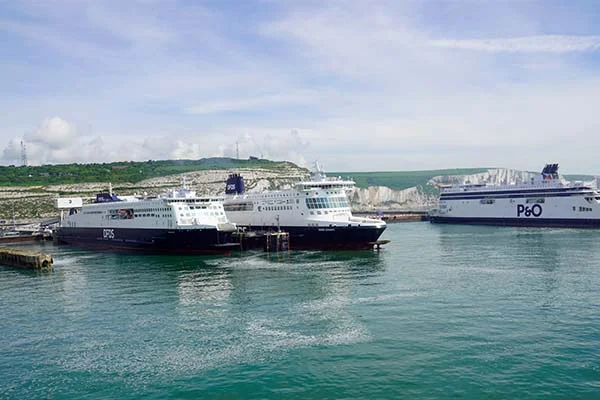
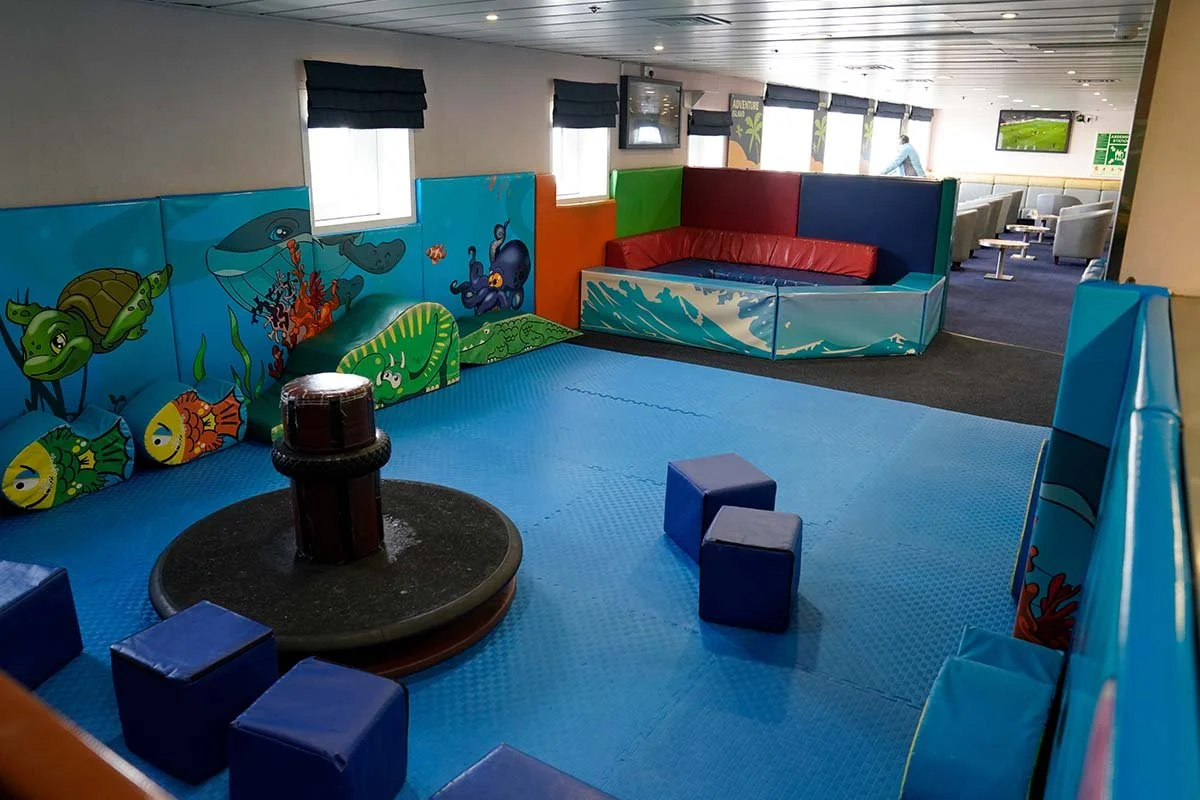
Prices and availability for the crossings to France
UK to France crossings
| Crossing | Sailing time | Distance | Sailings | From price | Operated by: |
|---|---|---|---|---|---|
| Dover ↔ Calais | 1h 30m | 26 miles | Up to 35 times per day | £80.00 | P&O, Irish Ferries, DFDS |
| Dover ↔ Dunkirk | 2 hours | 47 miles | Up to 8 times per day | £81.00 | DFDS |
| Portsmouth ↔ Caen | 5h 45m | 112 miles | Up to 3 times per day | £126.00 | Brittany Ferries |
| Portsmouth ↔ Le Havre | 5h 30m | 106 miles | Up to 5 times per week | £77.00 | Brittany Ferries |
| Portsmouth ↔ Cherbourg | 6–8 hours | 84 miles | Up to 3 times per week | £99.00 | Brittany Ferries |
| Poole ↔ Cherbourg | 4h 30m | 77 miles | Up to 1 time per day | £121.00 | Brittany Ferries |
| Newhaven ↔ Dieppe | 4 hours | 78 miles | Up to 4 times per day | £75.00 | DFDS |
| Plymouth ↔ Roscoff | 5h 30m / 11 hours (overnight) | 112 miles | Up to 8 times per week | £146.00 | Brittany Ferries |
| Poole ↔ Saint-Malo | 6h 20m / 12 hours (overnight) | 143 miles | Up to 4 times per week | £184.00 | Condor Ferries |
| Portsmouth ↔ Saint-Malo | 11 hours | 156 miles | Once per day | £165.00 | Brittany Ferries |
Additional Information
When travelling on crossings between France and the UK, there are a few important things to keep in mind:
- Bring your passport: Since Brexit, a driver’s licence or ID card is no longer sufficient for travel.
- Download entertainment in advance: On longer night crossings, it’s a good idea to download series or movies beforehand, as Wi-Fi on board can be expensive, and roaming in international waters is costly.
- Foot passengers: Not all ferries accept foot passengers, so check ahead of time.
- Travelling with young kids on a night ferry? We’ve got some helpful tips for travelling with kids here.
- Remember to drive on the right-hand side of the road after disembarking. It can be a bit confusing for the first 10 minutes, but you’ll adjust quickly.
- Worried about getting seasick? In this article, you’ll find some tips to help prevent it.
Luggage & Pets
On most ferries, there are no restrictions on the amount of luggage you can reasonably bring. Pets are allowed, but additional fees apply, and they must stay in designated kennels on board. For some destinations, pets need to meet specific requirements, such as certain vaccinations and a pet passport. You can find country-specific regulations and company policies in this post.
Travelling through France
Most people make the ferry crossing with their car, but it’s important to note that while the roads in France are generally good, many are toll roads. The costs aren’t high individually, but they can add up significantly on a long drive to the South. Google Maps has a function that allows you to avoid toll roads, which can help save some money!
If you’re not travelling by car, you can opt to explore France by train. The country is well-known for its efficient TGV connections. Many stations are easily accessible from some of the ports of arrival, or you could consider taking the Eurostar through the Channel Tunnel. Once in Paris, you can either switch to other connections or explore the city.
Get our latest ferry guides, route updates and travel tips in your Google feed. Add FerryGoGo as a preferred source in Google, and follow us in Discover when Google shows the option.