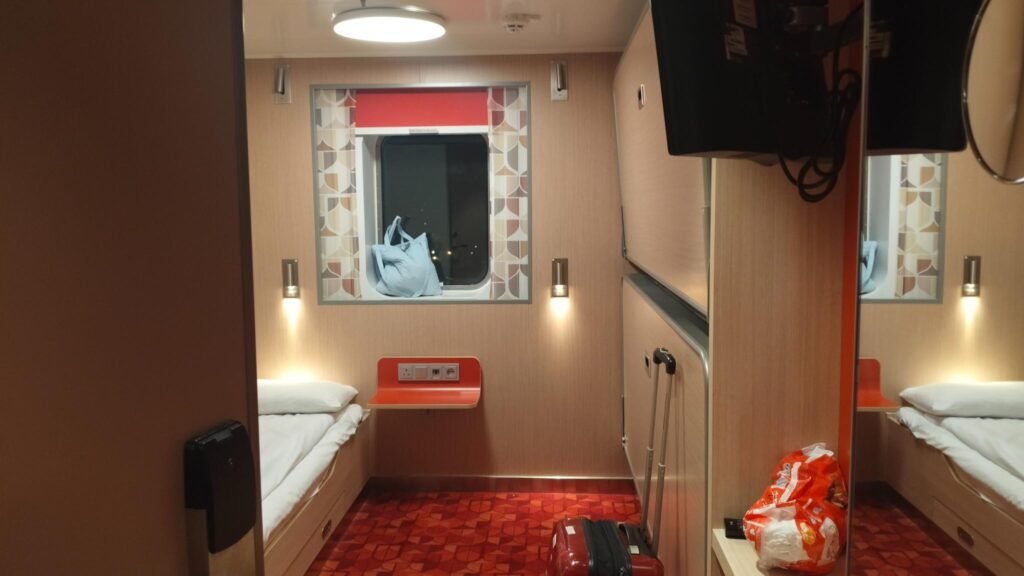
In a nutshell: free seating is normally enough on a straightforward daytime crossing. Check the price of a day cabin if you are travelling with young children or want privacy. For an overnight sailing, we would treat a cabin as the sensible default. Choose Economy only when your plans are genuinely fixed, Standard for a little more breathing room, and Flexi when a missed sailing or changed date would create a much bigger problem.
Which Brittany Ferries cabin should you book, and are the upgrades actually worth it? The honest answer depends less on how luxurious you want the journey to feel and more on the crossing itself. A quiet corner may be enough for a few hours by day. On an overnight sailing, the difference between a seat and a private cabin can be the difference between arriving rested and starting your holiday already tired.
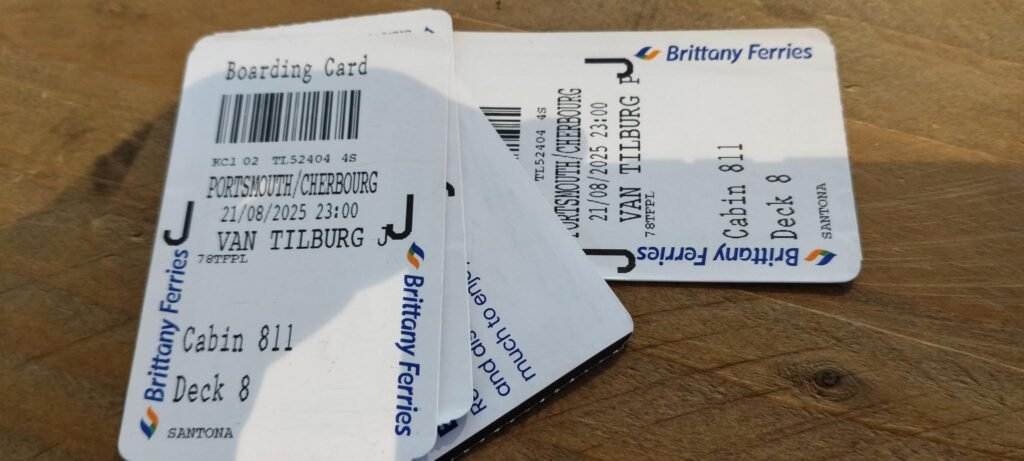
In August 2025, we travelled with Brittany Ferries twice during the same family trip: first from Saint-Malo to Portsmouth during the day, then from Portsmouth to Cherbourg overnight on Santoña. The two journeys felt completely different. We did not book a cabin for the daytime crossing and regretted it once the children needed a nap. On the overnight crossing, our outside cabin was the part of the booking that made the journey work.
We have not sailed every Brittany Ferries route mentioned in this guide. Our observations about the cabin, family travel and the onboard experience come from those two crossings. The wider route and accommodation comparisons use current ship and booking information, checked in September 2026.
What we learned is simple: it is rarely about booking the fanciest option. It is about paying for the part you will actually use, whether that is sleep, privacy, a calmer place for the children or flexibility when the journey does not go to plan.
- Portsmouth to Cherbourg on Santoña: our overnight experience
- Saint-Malo to Portsmouth: our daytime experience and photos
- See all our first-hand ferry reviews
Our quick verdict: what should you book?
| Your crossing | Our sensible default | Upgrade we would consider |
|---|---|---|
| Short daytime sailing | Free seating | Reserved lounge seating if the ship is likely to be busy or you need a reliable place to work |
| Day crossing with babies or young children | Check free seating first | A discounted day cabin for naps, privacy and your own bathroom |
| Overnight to France | Inside Standard cabin | Outside cabin if the price difference is sensible and you value daylight |
| Long or multi-night sailing to Spain | A private cabin that gives everyone a proper berth | Club or Commodore if you will genuinely use the extra space and inclusions |
| Travelling with a dog | Book around the available pet accommodation | Pet-friendly cabin before kennels, if offered and suitable for your dog |
| Long drive to the port or several fixed bookings | Compare Standard and Flexi | Flexi when disruption would cost much more than the fare difference |
Our three rules: check a day cabin when children still nap, book a cabin for a proper overnight journey, and consider Flexi when one delay could affect hotels, holiday accommodation or your return route.
What we would book on the main Brittany Ferries routes
The route matters because a four-hour daytime sailing calls for a different setup from a night at sea or a multi-night journey to Spain. Use this as a decision guide, not a promise that the same ship, timetable or cabin will operate on every date.
| Route | Crossing style | Sensible default | When we would upgrade |
|---|---|---|---|
| Portsmouth-Cherbourg | Day or overnight, depending on the sailing | Free seating by day, Standard cabin overnight | Day cabin with young children, or an outside cabin for the overnight arrival |
| Portsmouth-Caen | Day and overnight options | Free seating by day, Standard cabin overnight | Outside cabin for daylight, or Flexi if the sailing is central to a tightly planned Normandy trip |
| Portsmouth-Saint-Malo | Longer crossing, commonly overnight from Portsmouth | Cabin for an overnight sailing | Day cabin on a daytime return if children need to sleep or you want a private base |
| Plymouth-Roscoff | Day or overnight, depending on the date | Free seating by day, cabin overnight | Lounge on a busy day sailing or a day cabin if the price is attractive |
| Portsmouth-Santander | Long overnight or multi-night journey | Private cabin with a berth for each traveller | Club or Commodore when the comfort difference justifies the extra cost |
| Plymouth-Santander | Long overnight journey | Private cabin | Outside cabin for daylight, or a higher category when the sailing is part of the holiday |
| Portsmouth-Bilbao | Long or multi-night journey | Private cabin | Extra space, a better bed or useful inclusions matter more here than on a short Channel crossing |
Ship assignments, sailing times and cabin availability vary by date. Check the vessel and accommodation shown for your departure before booking.
For the wider journey, compare all ferries from the UK to France, the Brittany Ferries routes from Portsmouth or the longer ferries from the UK to Spain. The best onboard setup cannot rescue a route that leaves you with the wrong arrival port or an exhausting onward drive.
Day crossing or overnight: seat, lounge or cabin?
Free seating
For many daytime crossings, free seating is perfectly adequate. You can move between the lounges, restaurants and outside decks instead of paying for one fixed space. It makes most sense for couples, solo travellers and families whose children are old enough not to need a nap.
The downside is that you do not own the space. On a busy sailing, finding several seats together can become harder, particularly around meal times or when everyone comes inside because of the weather.
Reserved seat or lounge access
A reserved seat or lounge can be a useful middle ground. You get a known place to sit and usually a calmer environment without paying for a private cabin. We would consider it when travelling alone, working on board or sailing at a busy time. Check the exact inclusions, because lounge products differ by ship.
Day cabin
A day cabin can look excessive when you first see it in the booking process. With young children, it can be one of the most useful upgrades. You are not paying to sit in the cabin for the whole crossing. You are paying for the option to put a child down for a nap, change clothes, take a shower, use your own bathroom or step away from a busy public area for half an hour.
We did not book one on our daytime Saint-Malo to Portsmouth crossing. In hindsight, we should at least have checked the price more carefully. Once one of the children needed to sleep, having our own small base would have been far more valuable than it seemed during booking.
Overnight cabin
For a proper overnight sailing, a cabin is our default. Reclining seats may cost less, but a door, a shower and a bed change the rhythm of the journey. On our Portsmouth to Cherbourg crossing, we could board, eat, settle the children and sleep. By around 22:00 to 23:00 the public areas had become noticeably quieter because most passengers had gone to their cabins.
The cabin turned the overnight sailing into useful travel time. We arrived ready to drive rather than needing to recover from the crossing first.
Brittany Ferries cabin types compared
Cabin names and inclusions vary considerably by ship. Standard, Club and Commodore are common categories, while options such as Standard Plus, Club Plus, Deluxe, couchettes, pet-friendly cabins and lounge seats appear only on certain vessels. Use the descriptions below to understand the comfort level, then treat the booking screen for your sailing as the final reference.
Inside Standard cabin
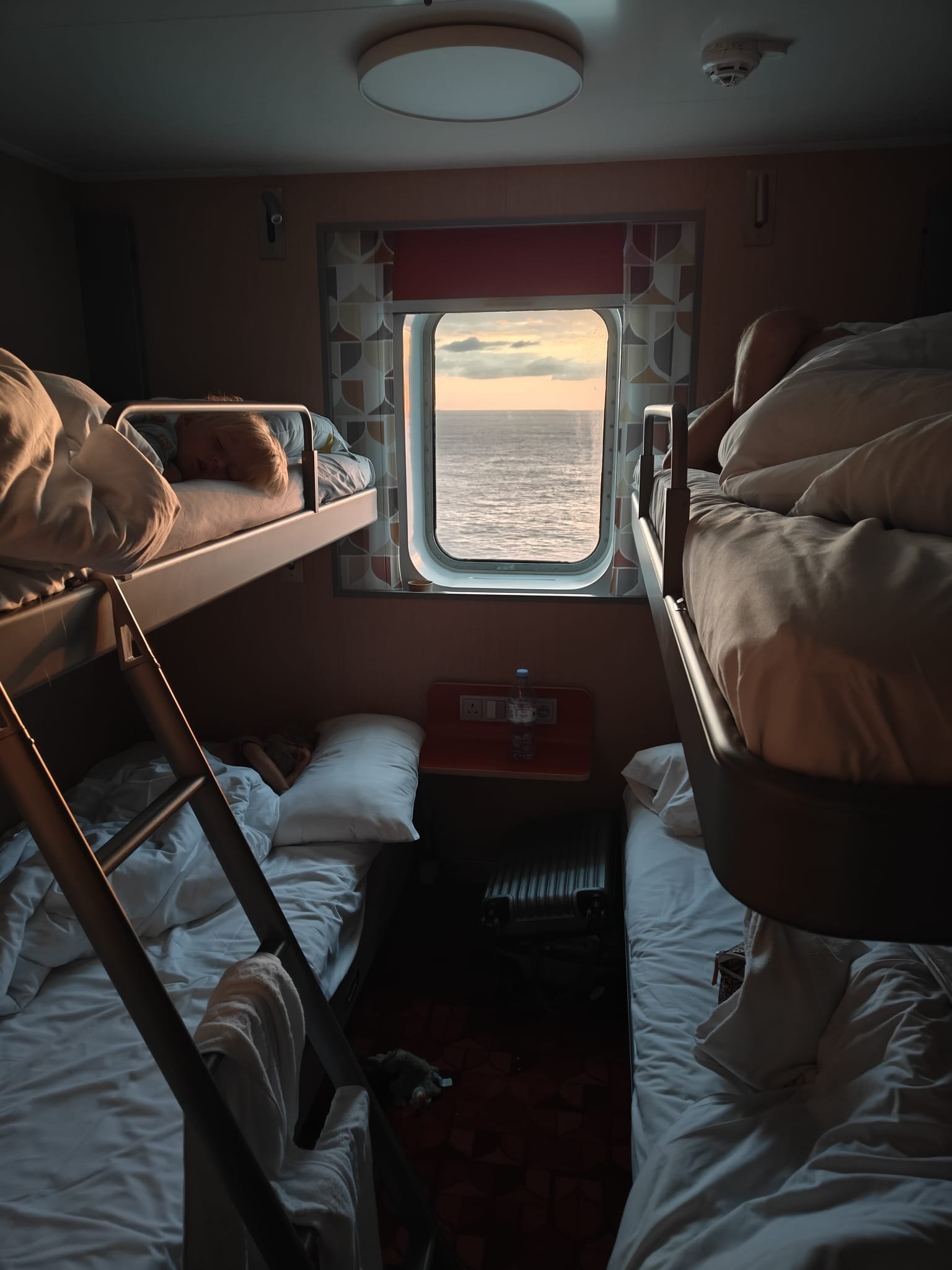
An inside Standard cabin is usually the lowest-cost way to get a private room, proper berths and an en-suite shower and toilet. It is the practical choice when the main purpose of the cabin is sleep.
- Best for: overnight travellers who want a bed without paying for a view.
- Main advantage: usually the best-value private option.
- Trade-off: no natural light, and a four-berth layout can feel compact once everyone and their overnight bags are inside.
Outside Standard cabin
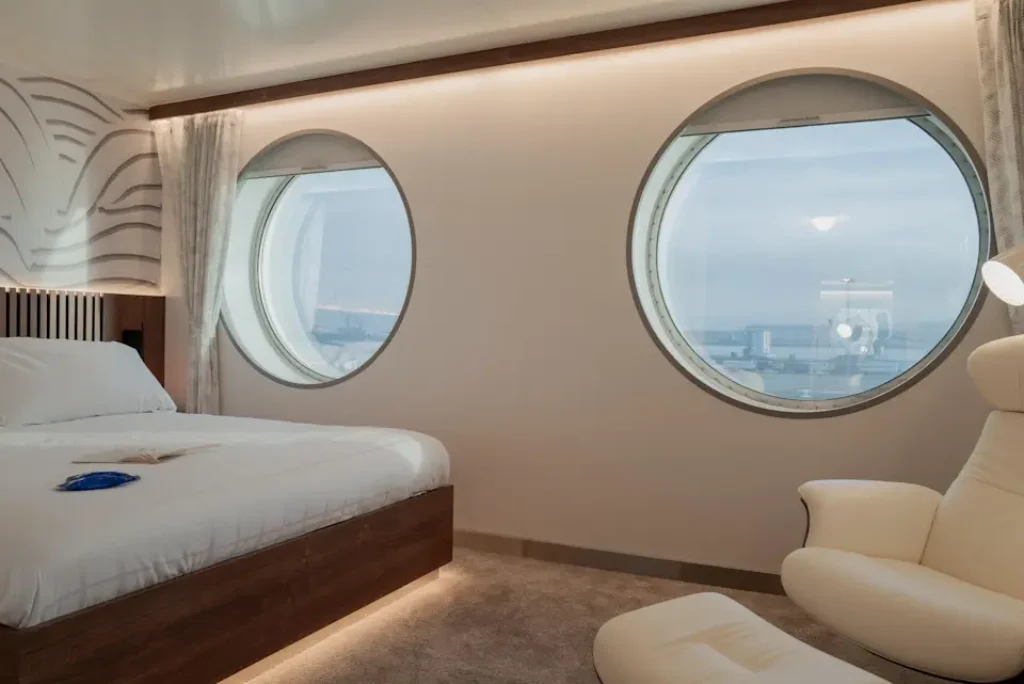
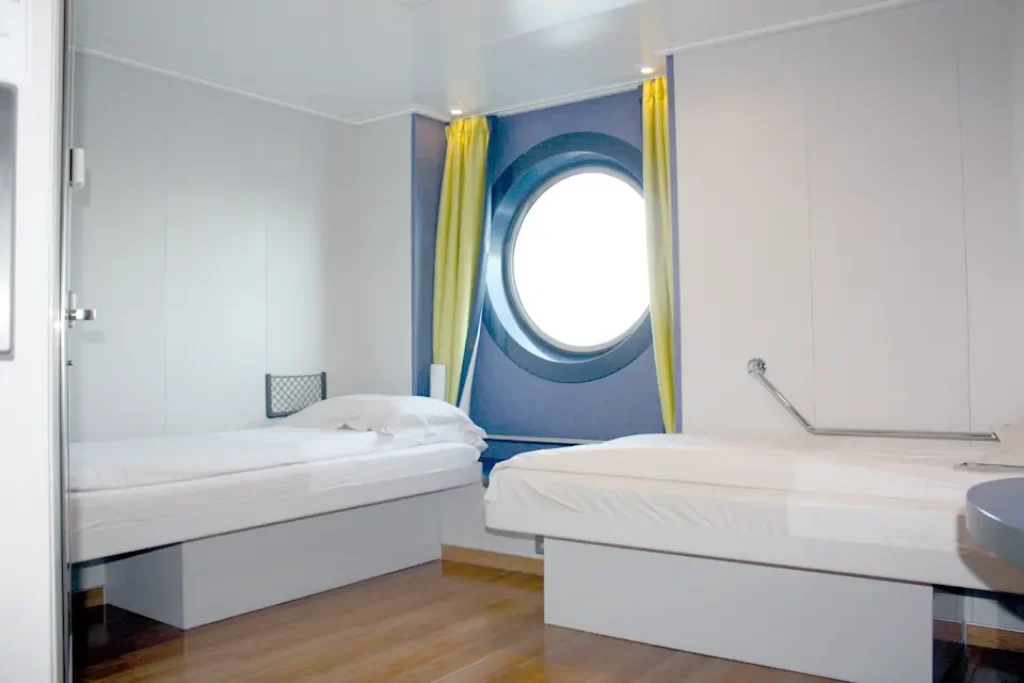
An outside cabin adds a window or sea view. The room may not be dramatically larger, so the value is mainly daylight and a more pleasant wake-up. If you will only enter the cabin to sleep in darkness, an inside cabin may be enough. If you are travelling as a family or expect to spend time there before bed, the window can make the room feel less enclosed.
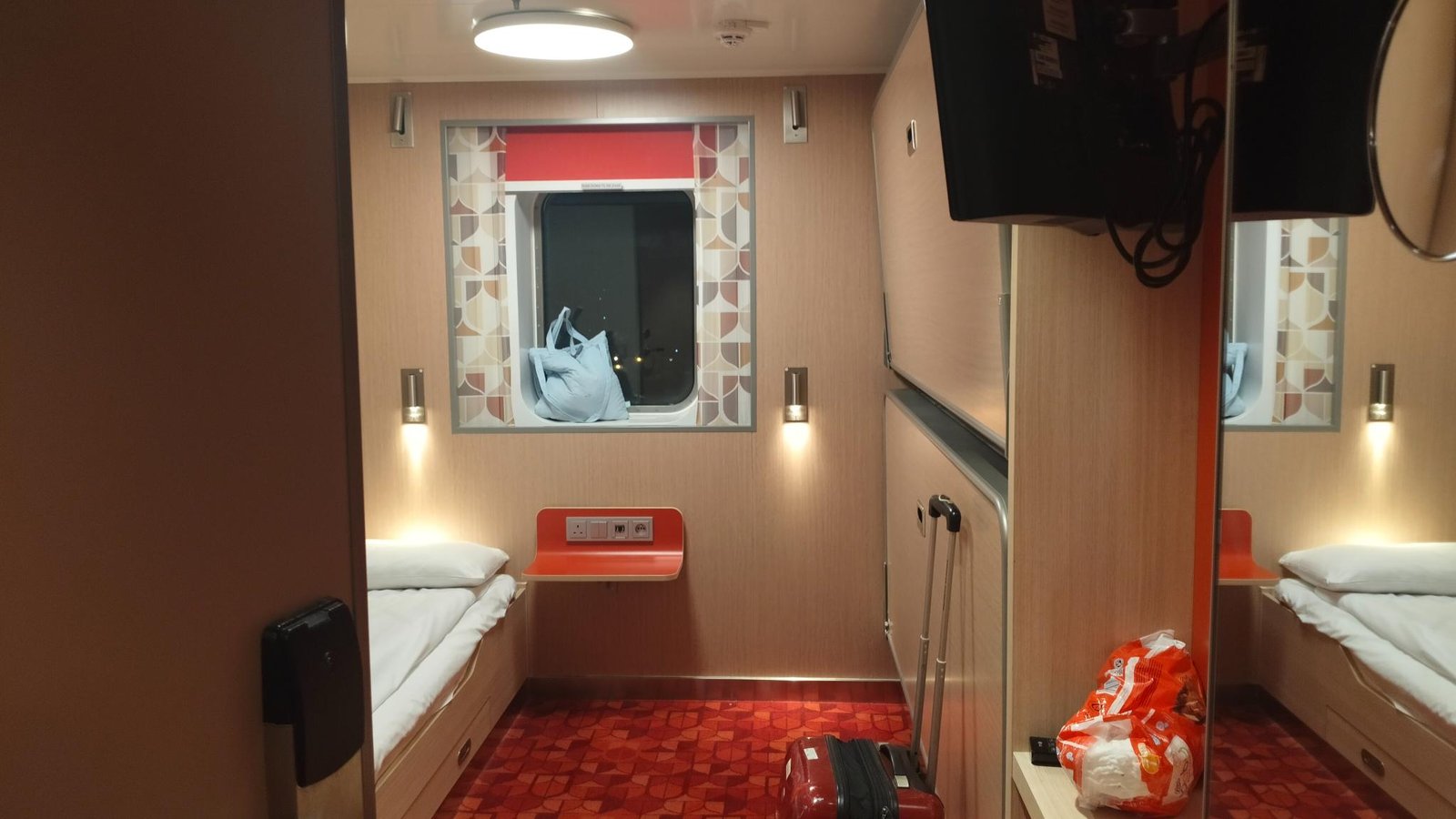
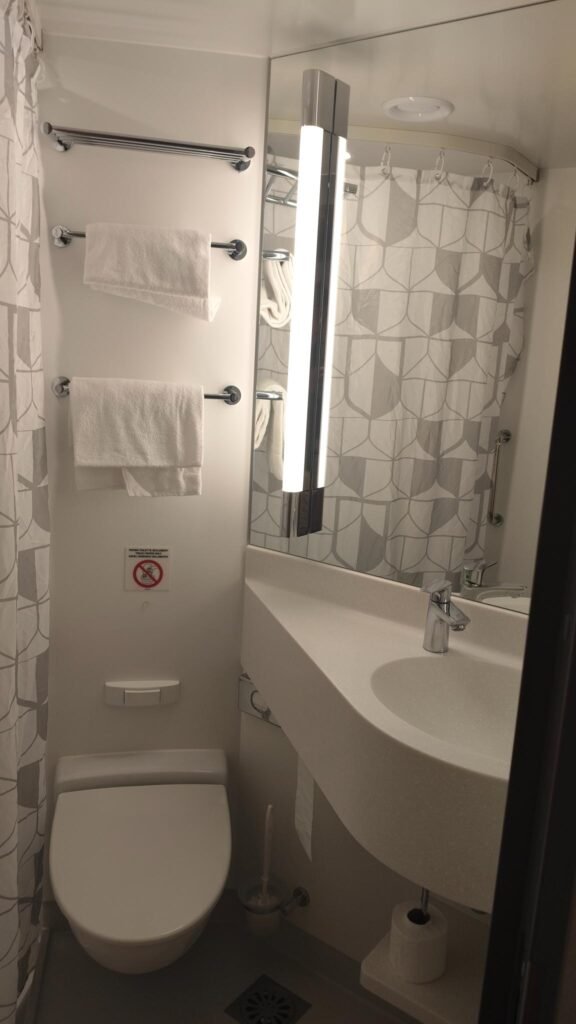
This is what we booked on Santoña. Our outside Standard cabin had enough room for our family, proper berths, an en-suite bathroom and a window. It was not a hotel room, nor did it need to be. It gave us exactly what we needed for that journey, and the daylight made the early arrival much nicer.
Standard Plus and other middle categories
Some ships offer Standard Plus, Club Plus or another category between Standard and the premium cabins. This can be the sweet spot when the extra price buys something you will notice, such as more room, a different bed layout or useful extras. Do not upgrade for the name alone. Compare the floor space, beds and inclusions shown for your actual sailing.
Club cabin
Club cabins generally offer a more comfortable or hotel-like finish than Standard, although the exact room and inclusions vary. They become more appealing on longer crossings, when you are likely to spend time in the cabin before sleeping, or when better beds and extra space matter to you.
On a short overnight crossing, we would first ask whether the Club supplement would improve our sleep. If the answer is no, we would keep the Standard cabin and spend the difference elsewhere.
Commodore and premium cabins
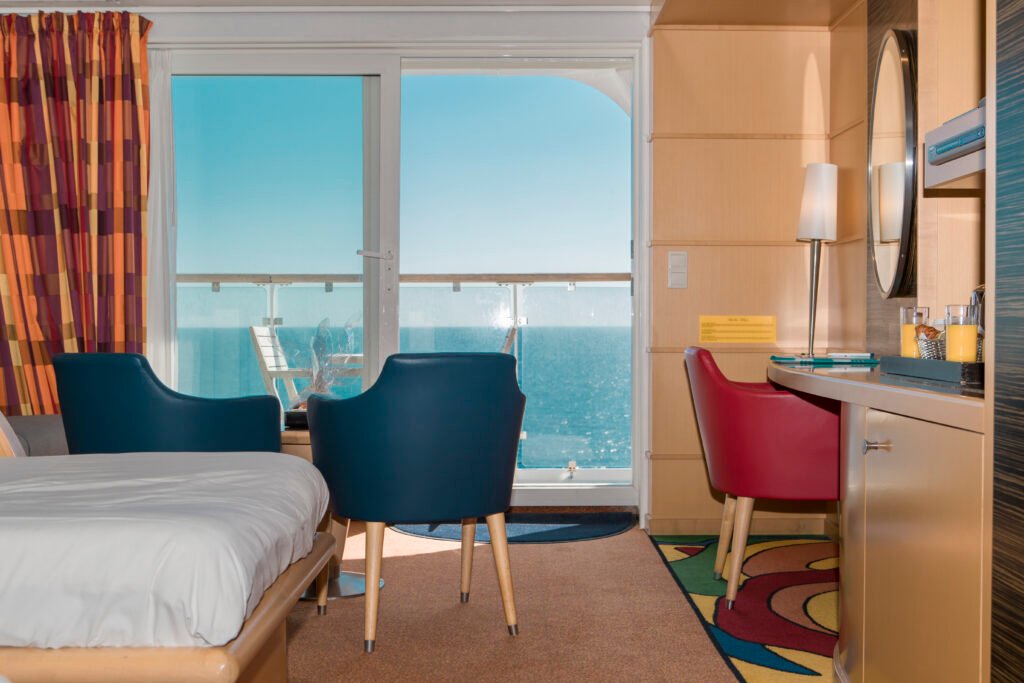
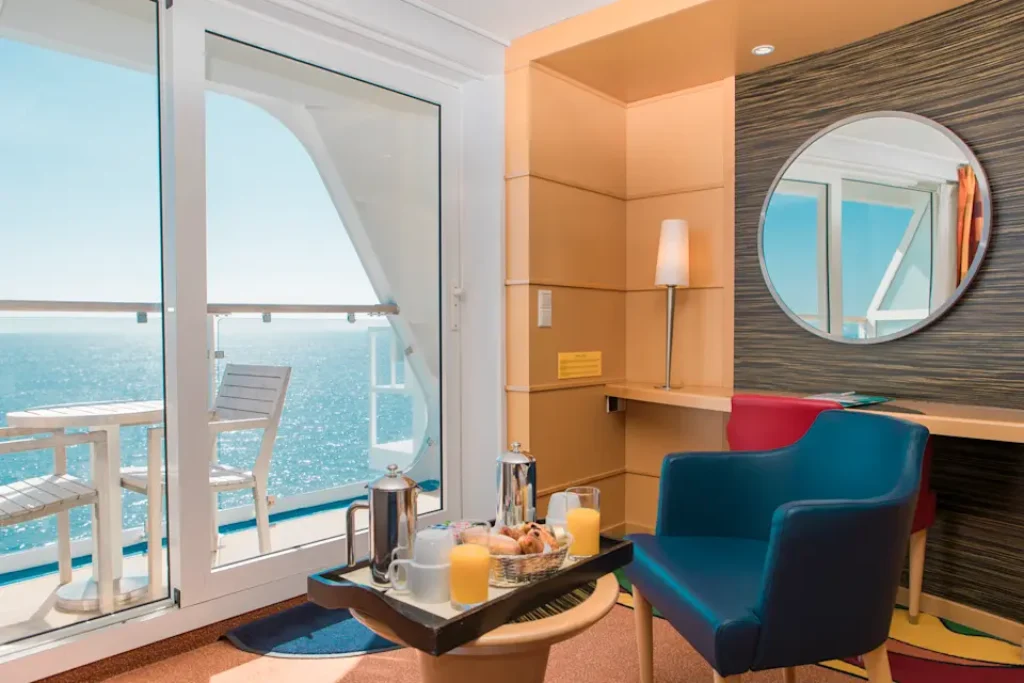
Commodore and other premium cabins sit at the top end of the range. Depending on the ship, the difference may include more space, a better bed, lounge access, breakfast or other service touches. They make most sense on longer sailings to Spain, for a special journey or when the ship is intended to be part of the holiday.
They are a treat rather than a requirement. A premium cabin is poor value if everyone goes straight to sleep and leaves at dawn. On a long sailing with time to relax, the same upgrade can feel far more worthwhile.
Accessible cabins
Accessible cabins have adapted layouts and en-suite facilities, but the precise design and position vary by ship. Availability is limited. Book early, enter the correct assistance requirements and contact Brittany Ferries if the distance from the lift, bathroom layout or other detail is important to your journey.
Pet-friendly cabins and kennels
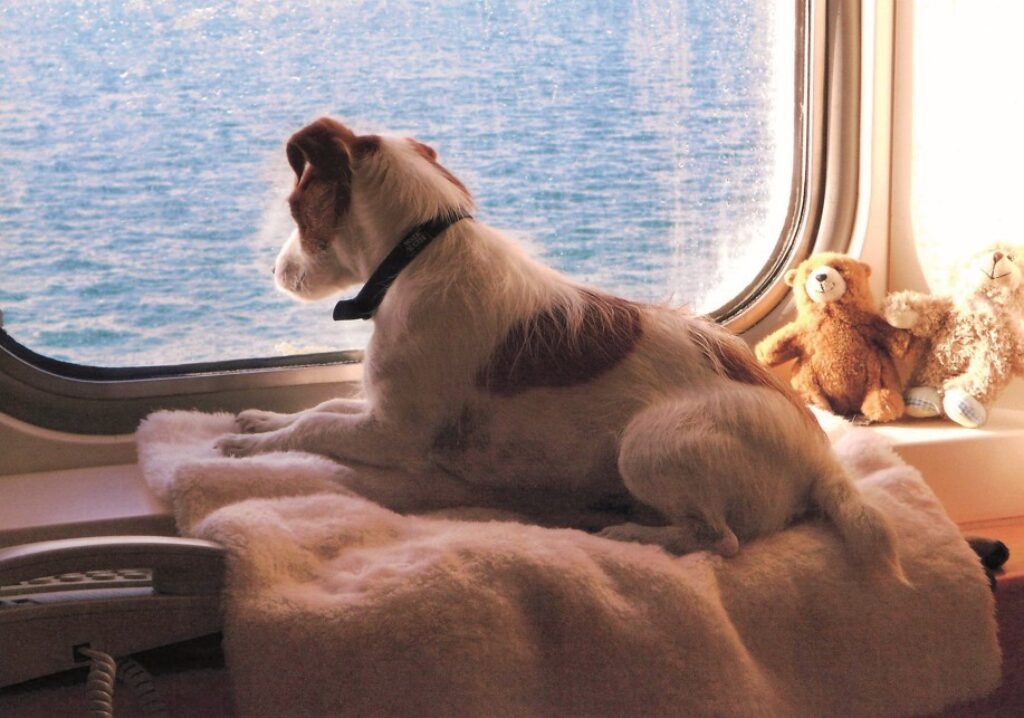
Depending on the ship and route, pets may travel in a pet-friendly cabin, kennel or another designated arrangement. A pet-friendly cabin is often the calmest option because your dog stays with you, but these cabins are limited and can sell out before the ordinary cabin categories.
Choose the route around the pet accommodation first, especially during school holidays. Do not assume that because a pet cabin exists on one Brittany Ferries ship, it will also be available on another. Our wider guide explains the paperwork and practical differences when travelling with a dog on a ferry.
Check the ship, not only the route
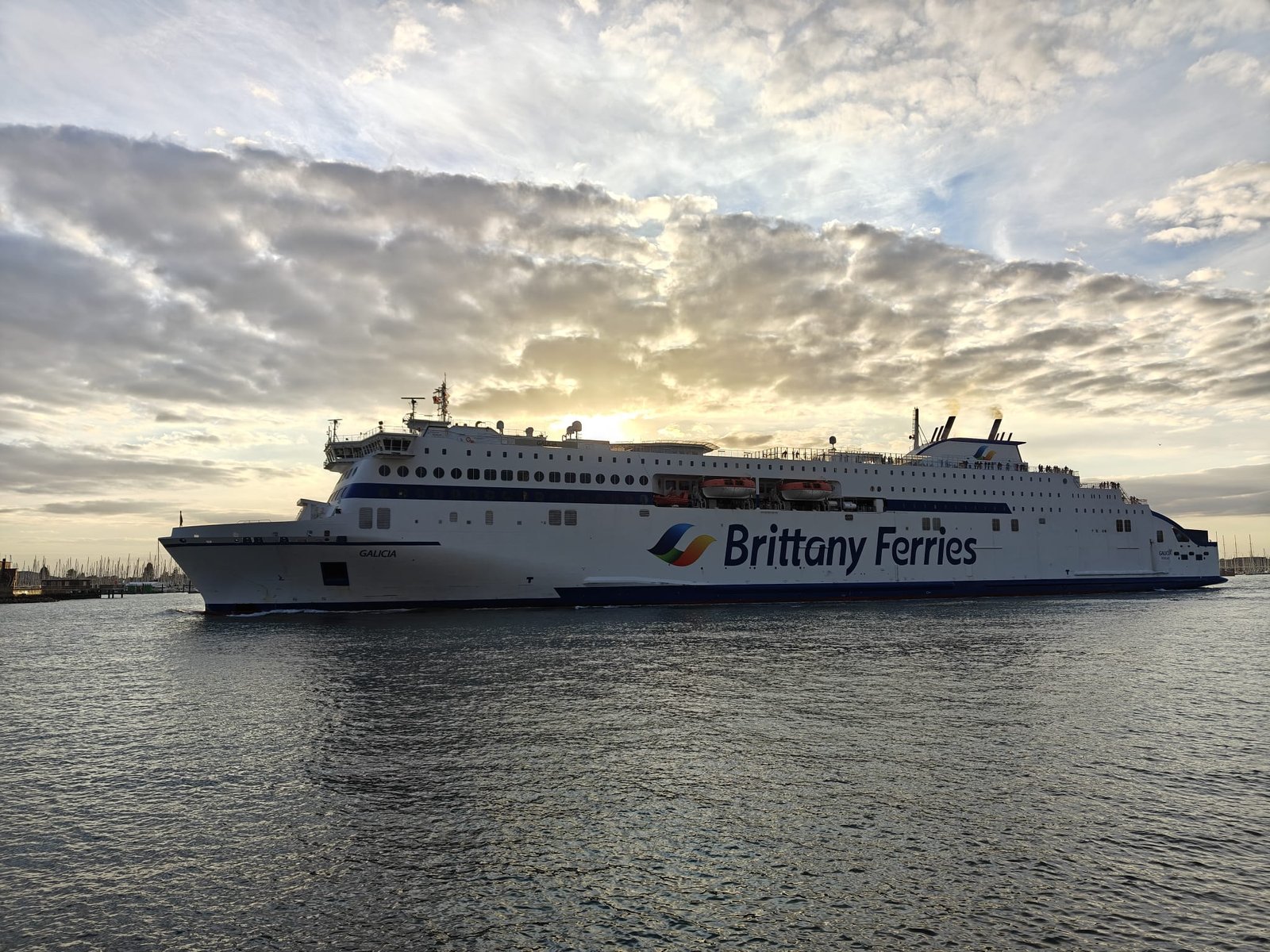
The same route can use different vessels, and two ships operated by Brittany Ferries can have quite different accommodation. Newer vessels such as Saint-Malo and Guillaume de Normandie have modern cabin concepts and a broad choice, while ships such as Galicia, Salamanca and Santoña are designed with longer journeys in mind. Traditional Channel ferries may place more emphasis on practical cabins and reclining seats.
Our advice is to note the vessel shown in the booking flow, then inspect that ship’s accommodation rather than relying on a generic description of the route. Ship assignments can change, particularly around maintenance and seasonal timetable changes.
Economy, Standard or Flexi: which fare should you choose?
The cabin and the ticket type solve different problems. A cabin protects your sleep and comfort. A flexible fare protects your plans. Brittany Ferries normally presents Economy, Standard and Flexi options, but conditions and prices can change. Always read the rules shown for your booking before paying.
| Fare | Best for | Our view |
|---|---|---|
| Economy | Travellers with firm dates who mainly want the lowest fare | Only choose it when you understand the amendment and cancellation restrictions and are comfortable accepting them |
| Standard | Most straightforward holidays with reasonably stable plans | The natural middle choice when you want more flexibility than Economy but do not need the full Flexi conditions |
| Flexi | Long drives to port, family trips, road trips and journeys linked to hotels or other fixed bookings | Worth comparing when disruption would cost much more than the fare difference |
Always check the current amendment, cancellation and payment conditions shown for your booking.
Flexi currently includes benefits such as no amendment fee until shortly before the outward sailing, but fare rules, deposits and cancellation deductions matter too. Read the current conditions at checkout rather than treating the word “Flexi” as unlimited freedom.
Our real Flexi moment: a broken clutch in Portsmouth
Flexible tickets can feel like an unnecessary extra right up to the moment something goes wrong. On our Saint-Malo to Portsmouth journey, the clutch failed as we were disembarking. The car could not leave the ship under its own power and had to be pushed off, while the Brittany Ferries team helped us manage the situation safely.
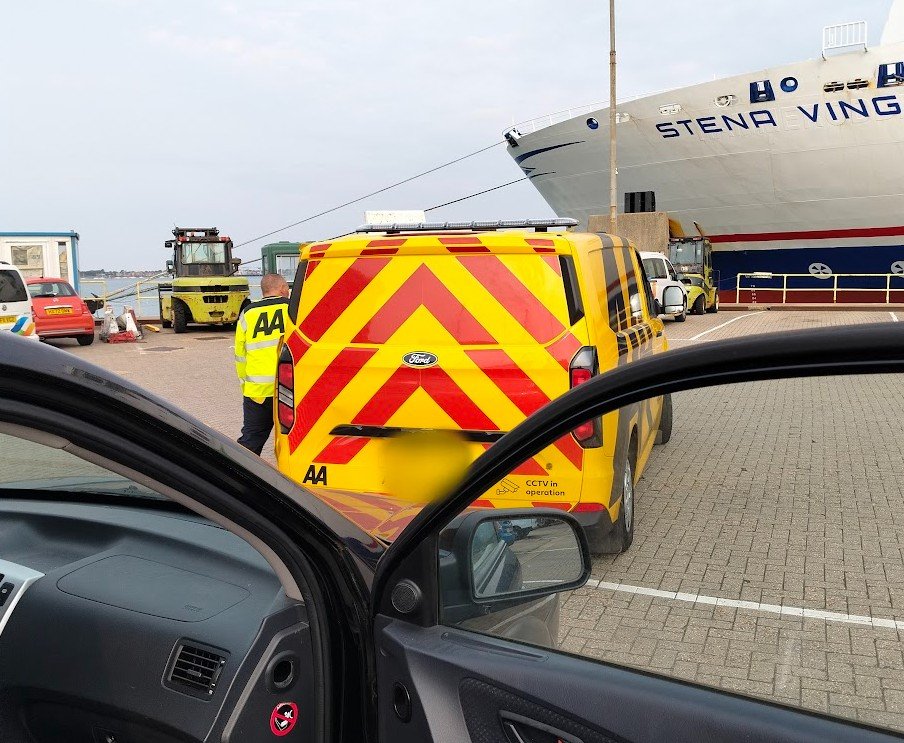
The car remained in Portsmouth while we arranged assistance and a repair. Mr Clutch managed to get us back on the road within a few days, which genuinely saved the trip. We had originally planned to return from Portsmouth to Caen, but the delay and a full sailing meant switching to the overnight Portsmouth to Cherbourg crossing instead.
That is the kind of moment when flexibility stops being an abstract booking benefit. It gave us room to change the route without turning an already stressful situation into an even more expensive one. We also appreciated the calm, practical help from the Brittany Ferries team in Portsmouth. You remember that kind of support on a family journey.
Read our review of Mr Clutch Portsmouth on Google Maps.
The takeaway: if one unexpected problem could force you to rearrange hotels, holiday accommodation or another sailing, Flexi is not simply paying more. It is buying room to breathe. If your dates are genuinely fixed and the consequences of changing are small, Economy or Standard may still be the better-value choice.
Which upgrades are actually worth paying for?
- Discounted day cabin: our first choice for families with children who nap, or anyone who wants privacy and an en-suite bathroom.
- Outside rather than inside: worthwhile when the price difference is modest and daylight matters to you. Less important if you are boarding late and leaving early.
- Lounge access: useful on busy daytime sailings, for solo travellers or when you want a reliable place to work. It is less useful if you expect to spend most of the crossing exploring the ship.
- Club or Commodore: more compelling on long Spain crossings than on a short night to France. Look at the actual bed, space and inclusions rather than upgrading for the label.
- Pre-booked food: can simplify a family or overnight sailing when you already know you will eat on board. Compare the package with what you would actually order, because it is not automatically cheaper for every traveller.
Food and drink: when pre-booking makes sense
On a longer crossing, food becomes part of the journey rather than a quick snack. Pre-booking can remove the “what are we doing for dinner?” discussion after boarding and may offer reasonable value when the package matches your plans. It is particularly convenient for families and overnight passengers who want a simple dinner and breakfast rhythm.
We would not pre-book purely because the option appears during checkout. First check which restaurants operate on your ship, what the package includes and whether the sailing times mean you will actually want the meal.
Families, five-person bookings and dogs
Travelling as a family of five
Many cabins have two or four berths, so a family of five needs to check the actual combinations offered on the assigned ship. Search with the full party from the start. The booking system should then show the eligible cabin arrangements rather than leaving you to guess.
- One larger family cabin: the simplest solution where a suitable five or six-person category is offered, but availability is limited.
- Two cabins: normally the most comfortable overnight setup. If you need adjacent or connecting cabins, confirm this rather than assuming it.
- One four-berth cabin on a day sailing: the fifth traveller can use the public areas, but nobody should sleep in or occupy a cabin beyond its permitted capacity.
Do not plan to put young children in a separate cabin without checking Brittany Ferries’ age, supervision and cabin allocation rules. If the booking system does not show a workable arrangement, call the operator before choosing a different sailing.
Travelling with a baby or toddler
Check whether a cot can be added to the specific cabin and how much floor space remains once it is in place. A baby carrier was one of the most useful things we took on board. It made settling a tired child easier and saved carrying a sleeping toddler through the corridors at the end of the evening.
Travelling with a dog
If a pet-friendly cabin is offered, it is often the calmest arrangement for both dog and owner. If those cabins are sold out, compare kennels and other permitted options carefully. Pet rules, exercise areas and access during the crossing vary by ship, so this is one category where availability can decide the route before price does.
Practical onboard tips we would keep
- Pack a separate onboard bag: take medication, passports, chargers, sleepwear, toiletries, snacks and everything the children may need. Access to the vehicle deck is normally restricted during the crossing.
- Add a warm layer: air-conditioned lounges and outside decks can both feel chilly, even in summer.
- Download before sailing: save maps, booking confirmations, films, podcasts and children’s programmes while you still have normal mobile data. Maritime roaming can be expensive and onboard Wi-Fi availability and performance vary by ship.
- Photograph where you parked: note the deck, stairwell colour and nearest door before leaving the car. After a night crossing, rows of vehicles can look remarkably similar.
- Keep the boarding card handy: it may also be your cabin key and can be needed elsewhere on board.
- Bring earplugs if you sleep lightly: ship noise, corridor doors and an early arrival announcement are easier to accept when you planned for them.
- Think about motion before choosing: if you are prone to seasickness, cabin position can matter as much as cabin grade. See our guide to the best places to sit or sleep on a ferry when you feel seasick.
- Check documents separately: a driving licence is not a substitute for the travel document required for an international crossing. Use our UK to Europe ferry document and packing checklist before departure.
Brittany Ferries states that its cabins are en-suite and air-conditioned, with bed linen, towels and toiletries provided. The precise layout and extras still vary, so check the description of your cabin rather than packing based on a photograph from another ship.
Final booking checklist
- Choose the route and arrival port before spending time comparing premium cabins.
- Check whether the sailing is daytime, overnight or multi-night.
- Confirm which ship is scheduled and inspect its actual accommodation.
- Make sure every overnight traveller has a permitted berth.
- With young children, compare the price of a day cabin before paying for a lounge.
- For pets or accessible travel, search availability before choosing the cheapest date.
- Compare Economy, Standard and Flexi conditions, not only the headline fare.
- Check what food, lounge access or premium cabin extras really include.
- Pack an onboard bag as if you will not return to the car.
- Recheck the timetable and assigned ship shortly before departure.
Quick answers before you book
Is a cabin compulsory on Brittany Ferries?
Not on every sailing. Free or reserved seating may be available, particularly by day. On an overnight journey, a cabin may be included in or required by the booking conditions on some routes and dates. Even when it is optional, we would normally book one if arriving rested matters.
Is an inside or outside cabin better?
An inside cabin is normally the better-value sleep option. An outside cabin adds daylight and feels less enclosed. We enjoyed having the window on Santoña, particularly in the morning, but we would still choose inside if the supplement were high and the crossing involved little waking time in the cabin.
Can a family of five share one cabin?
Only when the assigned ship offers a cabin approved for that number of passengers. Otherwise you may need two cabins. Search with the full party and confirm adjacency if that matters. Never exceed the listed cabin capacity.
Can you return to the car during the crossing?
Normally not. Vehicle deck access is restricted during most crossings for safety reasons unless the crew explicitly announces otherwise. Take everything you may need before leaving the car.
What is the best-value upgrade?
For our family, it would be a reasonably priced day cabin when the children need to nap. On an overnight sailing, we would spend the budget on securing a proper cabin first, then consider an outside or higher category only if the extra space, bed or inclusions would meaningfully improve the journey.
Comparing a different overnight route? We also inspected the cabin categories on Stena Britannica and later travelled overnight in Captain’s Class on Stena Hollandica. See our separate guide to Stena Line cabins, tickets and upgrades between Harwich and Hook of Holland.
Get our latest ferry guides, route updates and travel tips in your Google feed. Add FerryGoGo as a preferred source in Google, and follow us in Discover when Google shows the option.