

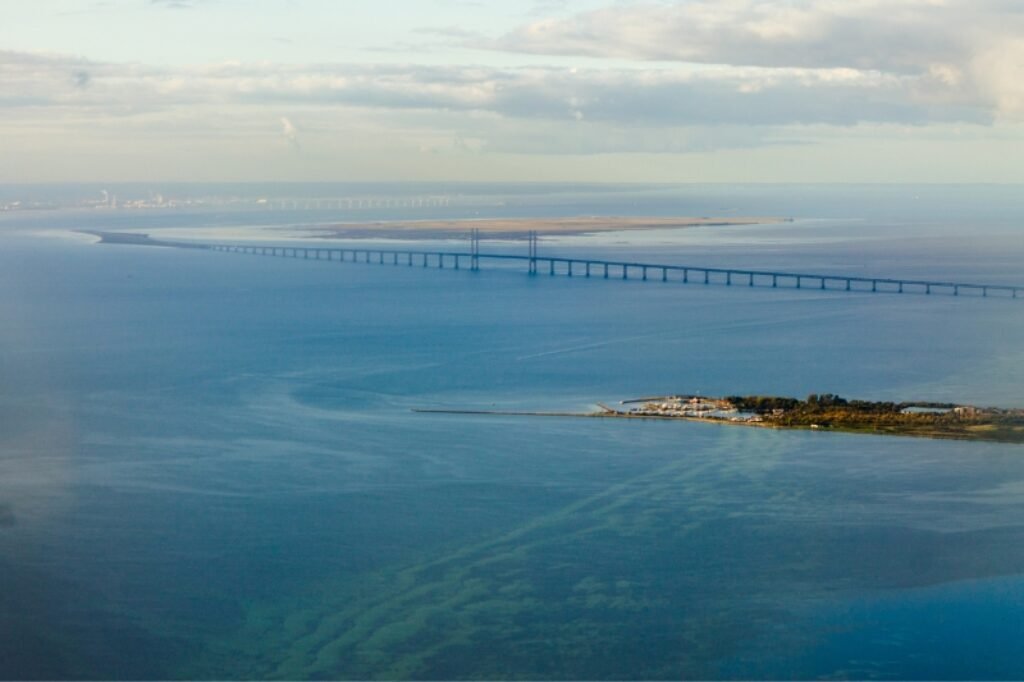
Driving from Denmark to Sweden? Around Copenhagen and Zealand, there are two obvious ways across the Øresund: drive over the Øresund Bridge between Copenhagen and Malmö, or take the Helsingør-Helsingborg ferry further north.
We have used both crossings ourselves. Our main conclusion is simple: the bridge is usually the better choice for Malmö and southern Sweden, while the ferry becomes much more interesting if you are already in northern Zealand, heading towards Helsingborg or continuing north along Sweden’s west coast.
Price matters too, but do not compare the toll and ferry fare in isolation. A cheaper crossing is not really cheaper if reaching it adds a sizeable detour to your journey.
Prices checked August 2026: we show approximate GBP equivalents for UK readers, followed by the operator’s original currency. Exchange rates change, and bridge and ferry fares can also vary by vehicle size, ticket type, season and availability. Always check the live price before booking.
Øresund Bridge or ferry? The quick comparison
| Option | Current price example | Crossing time | Best for | Our verdict |
|---|---|---|---|---|
| Øresund Bridge Copenhagen-Malmö |
About £53 online (465 DKK) or £60 at the regular toll price (520 DKK) for a passenger car up to 6 metres. With ØresundGO: about £21 (182 DKK) per crossing, plus the annual fee. | Roughly 10 minutes by car once you are on the crossing. | Copenhagen, Malmö, Lund and southern Sweden. | The simplest choice if the bridge is already on your natural route. |
| Helsingør-Helsingborg ferry | Lowprice car tickets from about £23 (299 SEK). Availability and prices vary. | Around 20 minutes sailing, plus check-in and boarding. | Northern Zealand, Helsingborg and destinations further north. | A very useful alternative when it saves driving south towards Copenhagen and Malmö. |
| Puttgarden-Rødby + Øresund Bridge | Scandlines Standard combination ticket from about £87 (€101.25) one-way. | One ferry plus the drive across Denmark and the bridge. | Germany to Copenhagen, Malmö and southern Sweden. | The cleanest combined route if Malmö is your destination. |
| Puttgarden-Rødby + Helsingør-Helsingborg | Scandlines Standard combination ticket from about £86 (€99.75) one-way. Separate tickets can sometimes work out cheaper. | Two short ferry crossings with the drive across Denmark between them. | Germany to Helsingborg and western Sweden, or travellers who prefer two ferry breaks. | Do not dismiss it because it has two ferries – geographically it can be the better route. |
Our short answer: choose the Øresund Bridge if you are travelling through Copenhagen towards Malmö. Choose Helsingør-Helsingborg if your journey already takes you through northern Zealand or you are continuing towards Helsingborg and further north. Coming from Germany via Puttgarden-Rødby? Compare the complete route rather than the second crossing alone.
Why we liked the Helsingør-Helsingborg ferry
On paper, stopping for another ferry when there is a bridge nearby can look unnecessary. Having travelled the route ourselves, we found that a little too simplistic.
The Helsingør-Helsingborg crossing takes around 20 minutes. That is obviously longer than simply driving over a bridge, especially once you add check-in and boarding. But it also gives you something the bridge does not: a proper break from the car.
You park, get out, stretch your legs and arrive in Sweden from a completely different angle. On a long road trip that break was more useful than the raw crossing time suggests. With children, or after several hours of motorway driving, we would give that some weight.
More importantly, the ferry can simply be the better route. If you are already around Helsingør or heading towards Helsingborg and further up Sweden’s west coast, driving south towards Copenhagen and Malmö just to use the bridge can add unnecessary kilometres.
When we would take the Øresund Bridge instead
If we were driving from Copenhagen to Malmö, we would take the bridge. There is very little reason to drive north to Helsingør first just to put the car on a ferry.
The Øresund Bridge also makes sense for Lund, Ystad and much of southern Sweden. There is no timetable to plan around and no ferry check-in: you simply reach the toll area, cross and continue into Sweden.
The main drawback for a one-off holiday journey is the toll. A passenger car up to 6 metres currently costs about £53 online (465 DKK), or around £60 at the regular toll price (520 DKK). By comparison, the cheapest Helsingør-Helsingborg ferry tickets start at around £23.
There is also ØresundGO. This currently reduces a standard car crossing to around £21 (182 DKK), but the agreement itself costs roughly £42 per year (370 DKK). It can therefore become interesting surprisingly quickly, particularly if you use the bridge in both directions. For a single crossing, compare the maths before signing up.
Coming from Germany via Puttgarden-Rødby?
This is where the comparison becomes particularly useful. Many people driving to Sweden from Germany first take the Puttgarden-Rødby ferry. From Rødby you continue across Zealand and eventually have to decide how to enter Sweden.
You effectively have two main routes:
- Puttgarden-Rødby – Copenhagen – Øresund Bridge – Malmö
- Puttgarden-Rødby – Helsingør – Helsingør-Helsingborg ferry
Scandlines sells combination tickets for both. At the time of our August 2026 check, a Standard Puttgarden-Rødby + Øresund Bridge ticket started at around £87 (€101.25) one-way, while Puttgarden-Rødby + Helsingør-Helsingborg started at around £86 (€99.75).
That tiny difference is not enough to choose a route on its own. Your destination in Sweden matters much more.
For Malmö and southern Sweden, we would normally choose the bridge combination. For Helsingborg and destinations further up the west coast, the two-ferry route deserves serious consideration.
You can also buy the crossings separately. ØRESUNDSLINJEN currently advertises Lowprice Helsingør-Helsingborg car tickets from around £23 (299 SEK), so separate tickets can sometimes beat the combination price. The trade-off is convenience and flexibility: the Scandlines combination ticket puts both crossings into one booking.
What about campers, motorhomes and caravans?
This comparison changes if your vehicle is longer than a normal passenger car. Both crossings price by vehicle category and dimensions, so the headline car fare is not particularly useful for a larger camper or a car with a caravan.
On the Øresund Bridge, a motorhome between 6 and 10 metres currently costs around £107 online (930 DKK), compared with about £53 for a standard passenger car up to 6 metres. Cars with trailers are also placed in higher price categories.
The ferry likewise distinguishes between cars, motorhomes, trailers and vehicle combinations. Enter the correct dimensions when comparing fares – especially the total length if you are towing.
If you are also travelling via Puttgarden-Rødby, we would compare three totals:
- Scandlines + bridge: Puttgarden-Rødby and Øresund Bridge as a combination ticket.
- Two-ferry combination: Puttgarden-Rødby and Helsingør-Helsingborg on one Scandlines booking.
- Separate ferry tickets: Puttgarden-Rødby with Scandlines and Helsingør-Helsingborg separately with ØRESUNDSLINJEN.
For a camper or caravan, a small difference in route price can easily be outweighed by extra fuel and kilometres. We would therefore choose the route first and use price as the final comparison, rather than the other way around.
Which would we choose?
Copenhagen to Malmö? The Øresund Bridge. It is the logical route and there is little benefit in driving north simply to catch the ferry.
Northern Zealand to Helsingborg or further north? Helsingør-Helsingborg. We enjoyed the short ferry break ourselves, and geographically it can be the better route too.
Driving all the way from Germany? We would decide by the destination in Sweden. For Malmö, take Puttgarden-Rødby and continue over the bridge. For Helsingborg and destinations further north, compare the Helsingør-Helsingborg route properly rather than automatically following signs towards Copenhagen and Malmö.
Route map: bridge and ferry options
The two crossings sit surprisingly close together geographically, but lead you into different parts of Sweden. Use the map together with your onward destination rather than simply comparing the crossing itself.
Bridge vs ferry in short
- Fastest for Copenhagen-Malmö: Øresund Bridge.
- Often cheaper for a one-off car crossing: Helsingør-Helsingborg, particularly when a Lowprice ticket is available.
- Best for Helsingborg and further north: compare the ferry before automatically choosing the bridge.
- Best for Malmö and southern Sweden: usually the bridge.
- Coming via Puttgarden-Rødby: Scandlines sells combination tickets for both routes, but separate tickets can sometimes be cheaper.
- Camper or caravan: compare using your actual vehicle length. Standard car prices can be misleading.
Other ways from Denmark to Sweden
If you are travelling through northern Jutland, neither the Øresund Bridge nor Helsingør-Helsingborg may be the best route. The Frederikshavn-Gothenburg ferry can put you directly onto Sweden’s west coast and remove a considerable amount of driving.
The former Grenaa-Halmstad ferry is no longer an alternative: Stena Line discontinued the route after 30 April 2026.
For the complete route picture, see our updated guide to ferries from Denmark to Sweden. If you are starting in Britain, our UK to Sweden route comparison looks at the entire journey from the first UK ferry onwards.
Practical questions
Is Helsingør-Helsingborg cheaper than the Øresund Bridge?
It can be. ØRESUNDSLINJEN currently advertises Lowprice car tickets from around £23 (299 SEK), while a passenger car up to 6 metres costs about £53 (465 DKK) with an online Øresund Bridge ticket. Ferry prices vary with season and availability, however, and the cheapest crossing is not necessarily the cheapest complete route.
How long does Helsingør-Helsingborg take?
The ferry crossing takes around 20 minutes. Add some time for check-in, loading and disembarkation. The bridge is quicker overall if both options are equally convenient for your route.
Can I book Germany to Sweden on one ticket?
Yes. Scandlines sells combination tickets linking Puttgarden-Rødby with either the Øresund Bridge or Helsingør-Helsingborg. They are convenient because both crossings sit in one booking, although booking the ferries separately can sometimes be cheaper.
Which would we choose with children?
If the routes were otherwise comparable, we would give the ferry extra points with children because everyone can get out of the car for a short while. We experienced that ourselves as a useful break. But if Malmö is the destination and the bridge is directly on your route, we would still take the bridge rather than creating a detour purely for the ferry.
Get our latest ferry guides, route updates and travel tips in your Google feed. Add FerryGoGo as a preferred source in Google, and follow us in Discover when Google shows the option.






Good afternoon
My chamber choir is giving concerts in Svendborg and Copenhagen this summer and my wife and I are also taking a short holiday while we are there.
Our itinerary includes various bridges and ferries and we wondered if there was a combined ticket to cover all the crossings.
We will be in our 7 metre-long motorhome.
The details of our crossing dates and times are as follows –
Friday 17th July Great Belt Bridge east from Nyborg to Halsskov c. 10:30
Monday 20th July Ferry east from Helsingor to Helsingborg c. 10:00
Monday 20th July Oresund Bridge west from Malmo to Copenhagen c. 17:00
Tuesday 21st July Ferry south from Rodby to Puttgarden c. 11:00
I hope you can help us!
With thanks and best wishes from England
Hi Gary,
Good question. With Scandlines, you can buy a combi ticket for either the Helsingør–Helsingborg and Rødby–Puttgarden combination, and/or the Øresund Bridge (Malmö) with Rødby–Puttgarden. So, in practice, I believe you can cover three crossings with Scandlines alone. You can find a bit more information here:
https://ferrygogo.co.uk/discount/scandlines/scandlines-combi-tickets-germany-sweden/
Hope that helps. And if you or the rest of the choir have any other questions, just let me know.
Have a great trip!