If rising fuel costs make you hesitant about booking a summer ferry to France or Spain, Brittany Ferries has given travellers a clear reassurance: it will not add a fuel surcharge to holidaymaker tickets this summer.
That makes Brittany Ferries one of the more predictable ferry options to book at the moment, especially if you are planning a summer holiday with your car, children, pets or a cabin. While some ferry operators and travel companies are adding fuel-related surcharges, Brittany Ferries has publicly said that holidaymakers will not face an extra fuel surcharge because of the current fuel crisis.
For travellers comparing ferries from the UK to France or direct ferries from the UK to Spain, that is useful news. You still need to check the final fare, ticket type and cabin availability, but Brittany Ferries has removed one major uncertainty from the booking decision.
Quick answer
Yes, Brittany Ferries currently looks like one of the safer ferry options to book for summer holidays to France and Spain. The company has said it will not add a fuel surcharge to holidaymaker tickets this summer, while some competitors have introduced extra fuel-related charges. You should still compare the final booking price, but Brittany Ferries has removed one major worry from the decision.
Brittany Ferries: no fuel surcharge for summer holidaymakers
Brittany Ferries CEO Christophe Mathieu has said that the company will not add a fuel surcharge to holidaymakers’ tickets in response to the current fuel crisis. He also said passengers can be confident that Brittany Ferries will get them to their destination and that the company does not expect to run out of fuel.
The reason Brittany Ferries can make this promise is that it bought or hedged much of its fuel in advance. In simple terms, that means the company fixed a large part of its fuel costs before prices rose sharply. That does not mean ferry travel is immune to every possible disruption, but it does mean Brittany Ferries is not reacting by adding an extra passenger fuel surcharge this summer.
For travellers, the practical message is simple: if you book a Brittany Ferries crossing for your summer holiday, the company has said it will not add a fuel surcharge to your holidaymaker ticket because of the current fuel crisis.
Read Brittany Ferries’ CEO message
Why this makes Brittany Ferries feel safer to book right now
The word ‘safe’ here is about booking confidence. It does not mean that no ferry can ever be delayed, weather-affected or changed. It means Brittany Ferries has removed one of the big current worries for passengers: the risk of an extra fuel surcharge being added to summer holiday tickets.
That is especially important on longer ferry routes. A UK to Spain crossing or an overnight ferry to western France is not usually an impulse purchase. You may be booking a cabin, taking your own car, planning hotels around the sailing, arranging pet travel or using the ferry as the start of a wider road trip.
In that situation, predictability matters. If you know that Brittany Ferries is not adding a passenger fuel surcharge this summer, it becomes easier to plan the total cost of the trip.
A clear contrast with some competitors
The Brittany Ferries promise stands out because some competitors have introduced fuel-related charges. Reports in the UK press say P&O Ferries has added fuel surcharges to tickets, with charges varying by route.
That does not mean every ferry operator is doing the same thing, nor does it mean every surcharge is identical. Some charges are linked to fuel, some to environmental rules, and some price movements are simply normal fare changes caused by demand, seasonality or cabin availability.
But from a traveller’s point of view, the difference is important: Brittany Ferries has made a public no-fuel-surcharge promise for holidaymakers this summer, while some other operators have added extra fuel-related costs.
Fuel surcharge, ETS charge or normal fare change?
It is worth separating three things that are often mixed together:
- Fuel surcharge: an extra charge added because fuel has become more expensive than expected.
- Environmental or ETS charge: a regulatory cost linked to emissions rules.
- Normal fare change: prices moving due to inflation, demand, sailing date, cabin availability, or ticket type.
Brittany Ferries’ promise is specifically about not adding a passenger fuel surcharge in response to the current fuel crisis. Ferry prices can still vary by route, date, cabin, vehicle size and ticket flexibility. So you should still compare the full final price before paying.
The key difference is that Brittany Ferries has taken one major uncertainty off the table for summer holidaymakers.
Good timing: Brittany Ferries still has offers live
The timing is also useful because Brittany Ferries is not only saying ‘no fuel surcharge’. It also still has offers live for France and Spain, including short breaks, day trips, longer stays, and mini-cruise-style trips.
That makes the current situation more interesting than a simple ‘travel is getting more expensive’ story. If you are flexible with your route or travel date, Brittany Ferries may still be worth checking for deals, especially from Portsmouth, Poole or Plymouth to France and Spain.
Check current Brittany Ferries sailings and offers
Best Brittany Ferries routes to check for summer holidays
Brittany Ferries is strongest if you are heading to western France, Normandy, Brittany, the Atlantic coast or northern Spain. These routes can also be a good alternative if you want to avoid the busiest Dover corridor.
| Holiday plan | Routes to check | Why it works |
|---|---|---|
| Normandy or western France | Portsmouth–Caen, Poole–Cherbourg, Portsmouth–Cherbourg | Good for families, road trips and avoiding extra driving from Calais |
| Brittany and the west coast of France | Portsmouth–St Malo, Plymouth–Roscoff | You arrive much closer to Brittany, the Atlantic coast and western France |
| Northern Spain | Portsmouth–Santander, Portsmouth–Bilbao, Plymouth–Santander | A practical way to take your own car to Spain without driving all the way through France |
| Spain or Portugal road trip | UK–Spain ferry, then continue by car | Useful if you want to avoid flying and keep your own vehicle for the full holiday |
For a wider route comparison, see our guides to ferries from the UK to France and ferries from the UK to Spain.
Our Brittany Ferries experience: why the full travel day matters
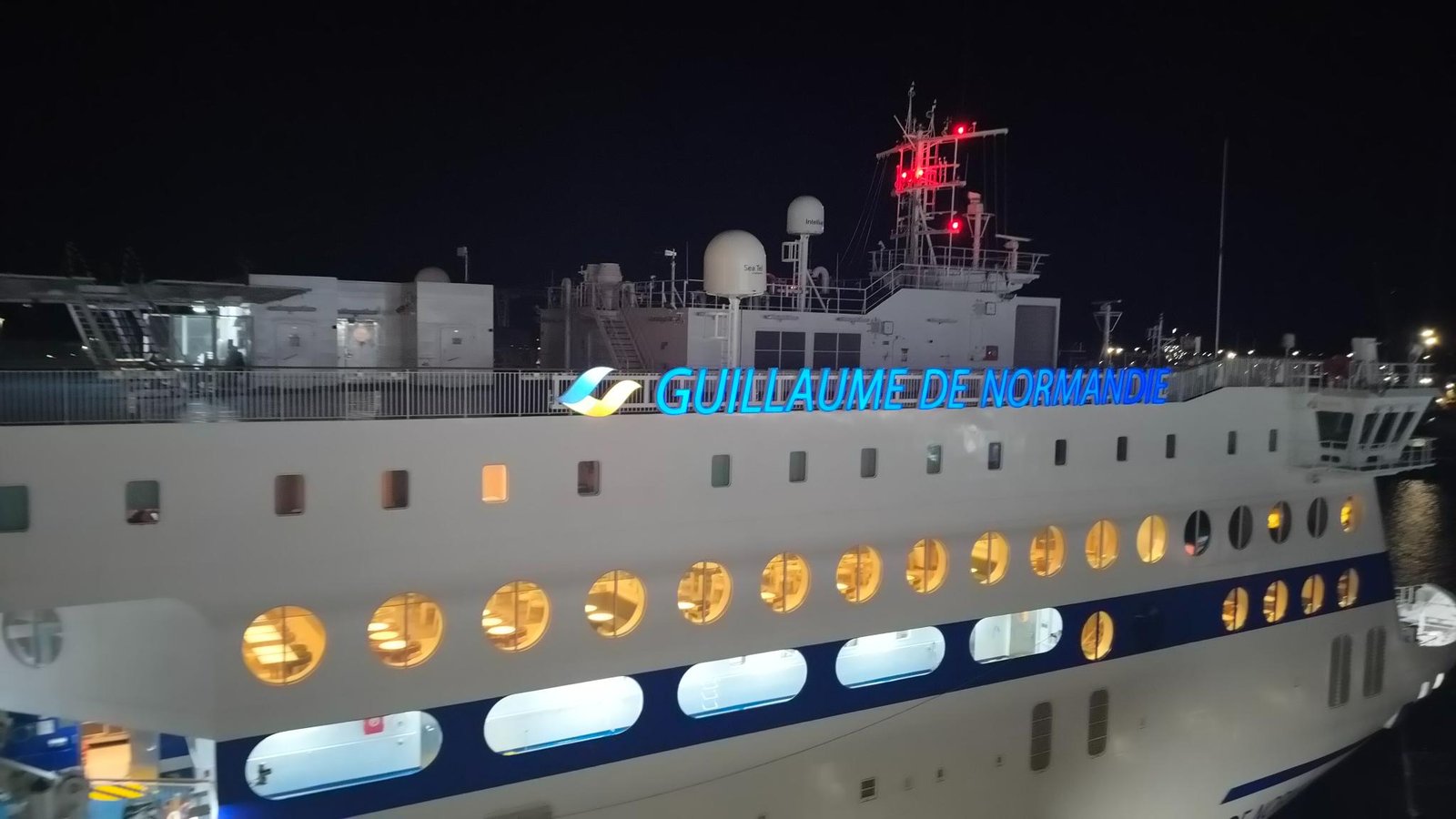
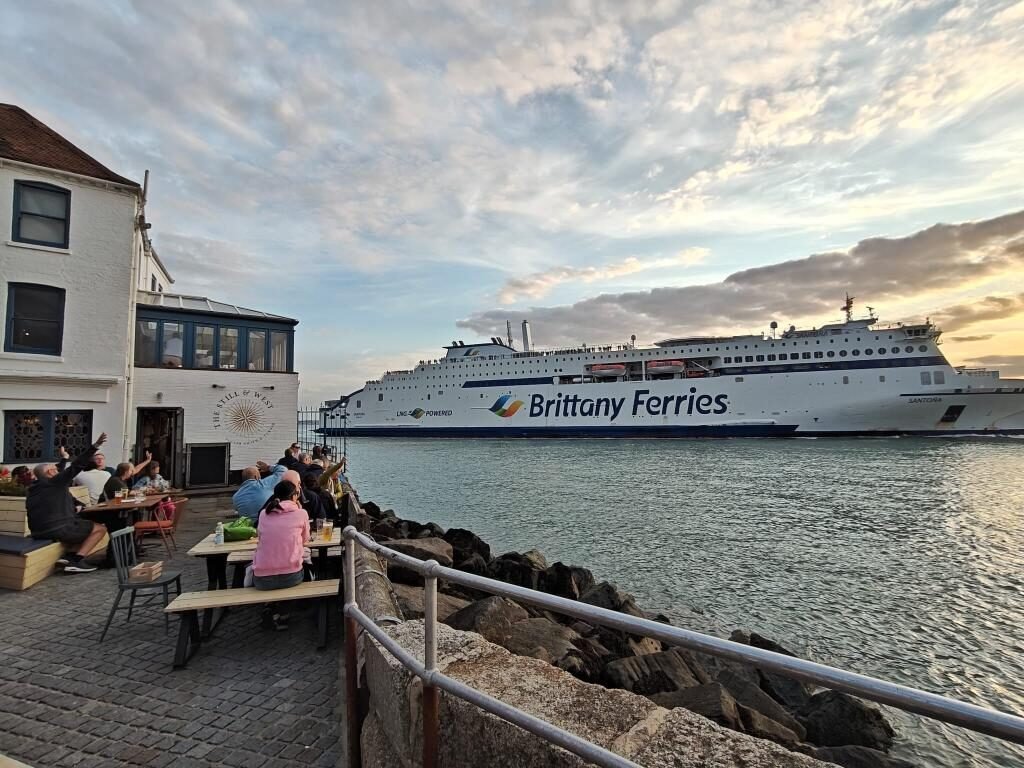
We have sailed with Brittany Ferries ourselves several times, including Saint-Malo to Portsmouth and Portsmouth to Cherbourg on the Santoña. Those crossings are useful context here, because the value of a Brittany Ferries route is not only the ticket price.
On these longer routes, the ferry can change the rhythm of the holiday. You board with your own car, have space to walk around, can eat onboard, book a cabin if it makes sense, and arrive closer to the part of France or Spain where you actually want to be.
That is why the no-surcharge promise matters. If you are already choosing the ferry for comfort and a more relaxed travel day, price confidence makes the decision easier.
Still unsure? Flexi tickets can add another layer of confidence
The no-fuel-surcharge promise deals with one specific concern: extra fuel-related costs being added to holidaymaker tickets this summer. But some travellers may still be hesitant for other reasons, such as changing travel plans, car trouble, family logistics or uncertainty around dates.
That is where ticket flexibility can matter. Brittany Ferries’ Flexi tickets usually cost more than the cheapest Economy tickets, but they can be useful if your plans are not completely fixed. We experienced this ourselves on a Brittany Ferries trip where flexibility mattered because of car trouble before departure.
So the practical advice is simple: if you are confident about your dates, compare the cheapest suitable fare. If your plans may change, it can be worth checking whether a Flexi ticket gives you more peace of mind.
Our guide to Brittany Ferries cabins, tickets and upgrades explains when a cabin, lounge or Flexi ticket is worth considering.
A strong option if you want to avoid Dover
The surcharge story also makes it worth looking again at western routes. If you live in southern England, Wales, the Midlands or the West Country, it may not always make sense to drive to Dover first and then continue across northern France.
Routes from Portsmouth, Poole and Plymouth can put you much closer to Normandy, Brittany, the Loire, the Atlantic coast or northern Spain. They are not always the cheapest crossing on paper, but they can be the better travel day when you include road miles, fuel, tolls, hotel stops and comfort.
For more on that route logic, read our guide to skipping Dover and using western ferry routes via Portsmouth, Poole and Plymouth.
Ferry to Spain: where the no-surcharge promise matters even more
The no-fuel-surcharge message is especially relevant for UK to Spain ferries. These are long crossings, and they are usually a bigger part of the holiday budget than a short Channel hop.
If you are sailing to Santander or Bilbao, you are often using the ferry to avoid a very long drive through France. You may also be replacing one or two hotel nights, airport parking, flights, luggage charges and car hire. In that kind of comparison, knowing that Brittany Ferries is not adding a fuel surcharge gives you more confidence in the total cost.
For road-trip planning, our guide to travelling to Spain and Portugal without the plane is a useful next read.
Our take: Brittany Ferries is a safer summer booking choice right now
At FerryGoGo, we would not frame this as a scare story. Fuel costs are a real issue for transport companies, and ferry operators have to deal with volatile energy markets, environmental rules and seasonal demand.
But for passengers, Brittany Ferries’ position is genuinely useful. The company has publicly said it will not add a fuel surcharge to holidaymakers’ tickets this summer. It has also said it does not expect fuel shortages to affect its ability to operate sailings.
That makes Brittany Ferries a safer and more predictable option to book at the moment, especially for summer holidays to France and Spain. You still need to check sailing times, cabins, ticket conditions and the final price, but the fuel-surcharge worry is much smaller here than with some competitors.
In short: if rising fuel costs make you unsure about booking a ferry holiday, Brittany Ferries is one of the first operators we would check for UK to France and Spain crossings.
Before you book: quick checklist
- Check the final price: compare the full booking total, not just the headline fare.
- Look for surcharges: check whether fuel, ETS or environmental charges are included.
- Compare routes properly: a longer ferry can save road miles, tolls and hotel costs.
- Think about cabins: on overnight or long crossings, a cabin can change the whole travel day.
- Consider ticket flexibility: a Flexi ticket can be useful if your plans are not completely fixed.
- Book early for peak dates: summer cabins and vehicle spaces can sell out quickly.
- Check Brittany Ferries offers: France and Spain deals may still be available if your dates are flexible.
Check current Brittany Ferries sailings and offers
Get our latest ferry guides, route updates and travel tips in your Google feed. Add FerryGoGo as a preferred source in Google, and follow us in Discover when Google shows the option.