
Greece Ferries
FerryGoGo » Greece
Select your destination or departure port to get insights in the various Greek crossings




Ferries to Greece and Greek island ferries
From headline islands like Santorini and Mykonos to longer crossings from Italy to western Greece with your own car or camper, Greece is one of Europe’s great ferry destinations. Ferries are not just a way to get around here. In many parts of Greece, they are the most logical way to travel.
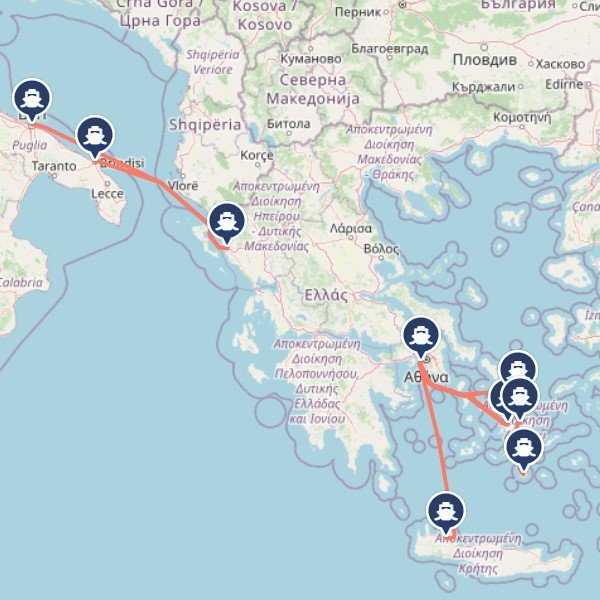
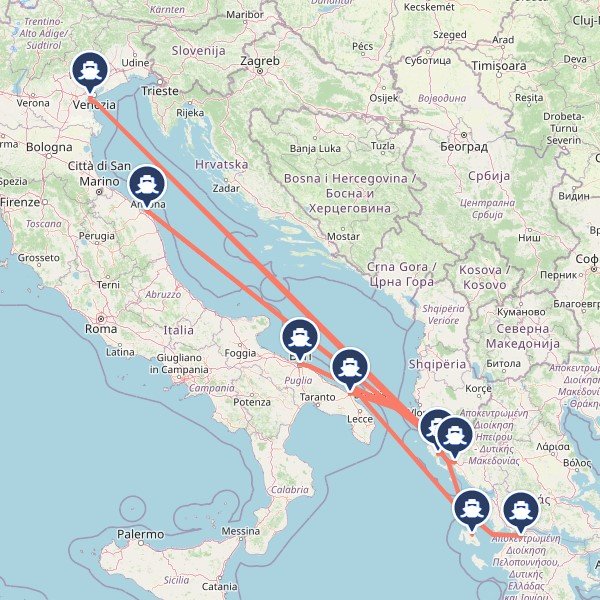
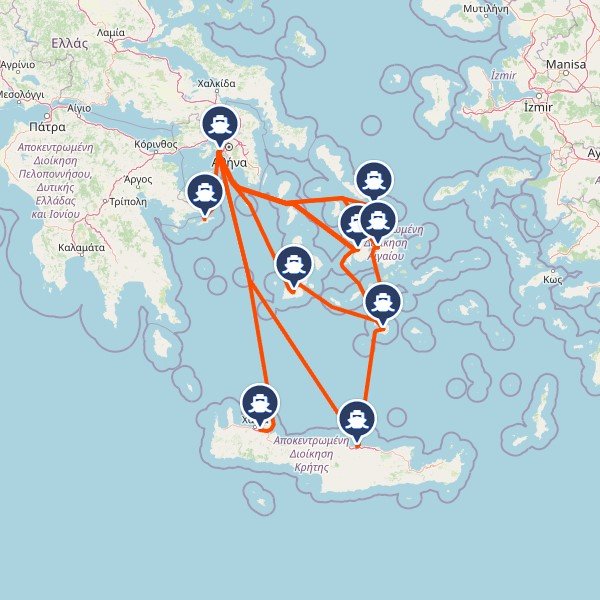
Use the route map first to get a feel for the main ferry corridors. Some routes are short island hops, others are long domestic crossings, and the international routes from Italy can feel more like the start of a proper road trip than a simple transfer.
Whether you are planning an Italy to Greece ferry, comparing island routes in the Cyclades, or looking for a quieter Aegean itinerary away from the obvious islands, this guide will help you choose the right route.
Maps: ferries to and within Greece
Above: Map with ferries within Greece
Below: Ferries to Greece, from Italy and Albania.


Which Greece ferry route fits your trip?
Greece has so many ferry routes that the best starting point is not the operator, but the type of trip you are planning. A short island hop, an overnight ferry from Italy and a fast catamaran between Cyclades islands are very different journeys.
- Travelling with a car or camper from Europe? Start with the Italy to Greece ferry routes. These are usually the most practical way to arrive in Greece with your own vehicle.
- Planning a classic island-hopping trip? Look at the Cyclades first, especially routes around Paros, Naxos, Mykonos and Santorini.
- Want a short ferry trip from Athens? The Saronic Islands, such as Aegina, Hydra and Poros, are easier than trying to reach the far Cyclades on a short break.
- Heading for Corfu or the Ionian Islands? Check both Greek domestic routes and international options from Italy or Albania. For Corfu specifically, see our guide to the ferry from Italy to Corfu.
- Combining Greece with Turkey? Focus on islands such as Rhodes, Kos, Chios and Samos, where short seasonal international ferries can make sense.
In short: choose the ferry route around your final destination and travel style, not just around the shortest sailing time.
About the Greek ferry crossings
How to reach Greece by ferry
Yes, you can travel to Greece by ferry, not just within Greece itself. The ferry network is easiest to understand if you split it into three types: international ferries to Greece, domestic island ferries, and short cross-border routes to nearby countries.
The main international ferry routes to Greece run from:
- Italy – with longer Adriatic crossings from ports such as Ancona, Bari, Brindisi and Venice towards western Greece. See our full Italy to Greece ferry guide.
- Albania – especially the short crossings between Albania and Corfu. See our Albania ferry routes.
- Turkey – with short seasonal crossings such as Kos–Bodrum, Chios–Çeşme and Rhodes–Marmaris.
The Italy routes are especially useful if you are travelling with your own car, motorhome or campervan, as many of these ferries take vehicles. They usually arrive in ports such as Igoumenitsa, Patras or Corfu, which makes them a practical way to enter Greece from mainland Europe.
Within Greece, the route choice is different. You are often choosing between a slower conventional ferry, a faster passenger catamaran, or a car ferry. That matters if you are travelling with luggage, children, a rental car or a camper.
You can find many of the main ferry routes to and within Greece in the booking module on this page.
Most Popular Ferry Routes in Greece
Here are some of the most-used and most-loved ferry connections across Greece — whether you’re heading to the islands or arriving from Italy.
| Route | Travel Time | Operators | From Price | Type |
|---|---|---|---|---|
| Athens (Piraeus) ⇄ Santorini | 4.5 to 8 hrs | Blue Star Ferries, Seajets | £60+ | Domestic |
| Athens (Piraeus) ⇄ Mykonos | 2.5 to 5 hrs | Seajets, Fast Ferries, Minoan Lines | £68+ | Domestic |
| Athens (Piraeus) ⇄ Naxos | 3.5 to 6 hrs | Blue Star Ferries, Seajets | £102+ | Domestic |
| Mykonos ⇄ Santorini | 2 to 3.5 hrs | Seajets, Golden Star Ferries | £90+ | Domestic |
| Athens (Piraeus) ⇄ Milos | 3.5 to 6 hrs | Blue Star Ferries | £70+ | Domestic |
| Venice ⇄ Patras | 32–33 hrs | Anek Lines | £155+ | International |
| Ancona ⇄ Patras | 20 hrs | Anek Lines | £145+ | International |
| Venice ⇄ Igoumenitsa | 26 hrs | Anek Lines | £140+ | International |
| Bari ⇄ Corfu | 8–10 hrs | Ventouris Ferries | £60+ | International |
| Bari ⇄ Igoumenitsa | 8–9 hrs | Ventouris, Anek Lines | £68+ | International |
Major ferry ports in Greece
If you are planning a ferry trip in Greece, the port matters almost as much as the island. Athens alone has several ferry ports, and choosing the wrong one can mean a long transfer before you even board.
- Piraeus – Athens’ main ferry port and the biggest hub for longer routes to the Cyclades, Dodecanese, Crete and other Aegean islands.
- Rafina – a smaller port north-east of Athens, useful for islands such as Andros, Tinos and Mykonos. It can also be convenient if you are coming from Athens Airport.
- Lavrio – less obvious than Piraeus or Rafina, but useful for some Cyclades routes, including Kea and Kythnos.
- Heraklion – Crete’s main ferry port, with links to Athens and seasonal island routes towards Santorini and the Cyclades.
- Patras – western Greece’s key international ferry port, especially for longer Italy–Greece crossings.
- Igoumenitsa – a practical north-western mainland port for Italy routes and onward travel towards Corfu, Epirus and northern Greece.
- Corfu – an important Ionian island port, with domestic Greek links and international ferry connections from Italy and Albania.
- Naxos, Mykonos and Santorini – major Cyclades island ports, useful both as destinations and as stepping stones for island hopping.
- Rhodes and Kos – important Dodecanese ports, especially if you want to combine Greece with Turkey’s Aegean coast.
Tip: always check the exact port name on your ticket. ‘Athens ferry’ can mean Piraeus, Rafina or Lavrio, and they are not interchangeable on the day of travel.
Coming from Italy?
If you are travelling to Greece with a car, camper or motorhome, the ferry from Italy is often the most relaxed route into the country. Instead of driving all the way through the Balkans or flying and renting locally, you can sail across the Adriatic and arrive in western Greece with your own vehicle.
We cover these routes in detail in our Italy to Greece ferry guide, but the main options usually include:
- Ancona–Igoumenitsa / Patras – a strong balance between driving distance in Italy and sailing time.
- Bari–Igoumenitsa / Patras – often a practical southern Italy option, especially if you are already heading down the Adriatic coast.
- Brindisi–Igoumenitsa / Corfu – one of the shortest Italy–Greece ferry corridors.
- Venice–Greece routes – useful for some northern Italy itineraries, but generally a longer crossing and more seasonal in feel.
If Corfu is your first Greek stop, also see our specific guide to the ferry from Italy to Corfu.
These routes are not just about getting from A to B. On the longer crossings, a cabin can save a hotel night and make the journey feel much less tiring, especially when travelling with children or a camper.

Fast ferry or slower car ferry?
In Greece, the fastest ferry is not always the best ferry. Many routes have a mix of high-speed catamarans, passenger ferries and larger conventional ferries. The right choice depends on whether you value speed, comfort, price, luggage space or the option to bring a vehicle.
Fast ferries and catamarans
- Best for: foot passengers, short island-hopping trips and routes where saving time matters.
- Good to know: many fast ferries are passenger-only, with limited outdoor space and a more airline-like feel.
- Watch out for: luggage handling, rougher seas, higher prices and seasonal timetables.
Conventional ferries and car ferries
- Best for: cars, campers, motorbikes, families, slower travel and longer crossings.
- Good to know: these ferries are often more relaxed, with more space to move around and usually a more stable crossing.
- Watch out for: longer sailing times and busy vehicle decks in peak season.
If you are island hopping on foot, a fast ferry can save a lot of time. If you are travelling with a car, camper, children or lots of luggage, the slower ferry can be the more comfortable choice.
Island hopping in Greece
With more than 200 inhabited islands and a huge number of ferry connections, Greece is one of the best places in Europe for island hopping. In many areas, the ferry is simply part of how you move from one island to the next.
The trick is not to collect as many islands as possible, but to choose an island group that makes sense for your travel style.
- The Cyclades – Naxos, Paros, Mykonos, Santorini, Milos and smaller islands. Best for classic whitewashed villages, beach hopping and busy summer ferry routes.
- The Dodecanese – Rhodes, Kos, Symi and nearby islands. Good if you want to combine Greece with Turkey or explore the south-eastern Aegean.
- The Ionian Islands – Corfu, Kefalonia and Zakynthos. Useful if you are arriving from Italy or travelling along western Greece.
- The Sporades – Skiathos, Skopelos and Alonissos. A greener island-hopping area with a different feel from the Cyclades.
- The Saronic Islands – Hydra, Aegina and Poros. Best for shorter ferry trips from Athens, especially if you do not want a long crossing.
Good first island-hopping routes
- Athens → Paros → Naxos → Santorini – a classic Cyclades route with frequent connections in season.
- Rafina → Andros → Tinos → Mykonos – useful if you want a northern Cyclades route and a less obvious start than Piraeus.
- Athens → Aegina → Hydra → Poros – easier for a shorter trip from Athens.
- Rhodes → Symi → Kos → Bodrum – a good Greece and Turkey combination, where seasonal ferry schedules allow.
If you want quieter Cyclades ideas beyond Santorini and Mykonos, our article on 5 secret pearls of the Cyclades islands is a useful next read.
Tip: use the map and booking module to check whether your island combination actually works by ferry. Some islands look close on the map but connect only on certain days, in one direction, or in the summer season.
On board, ferries and route maps

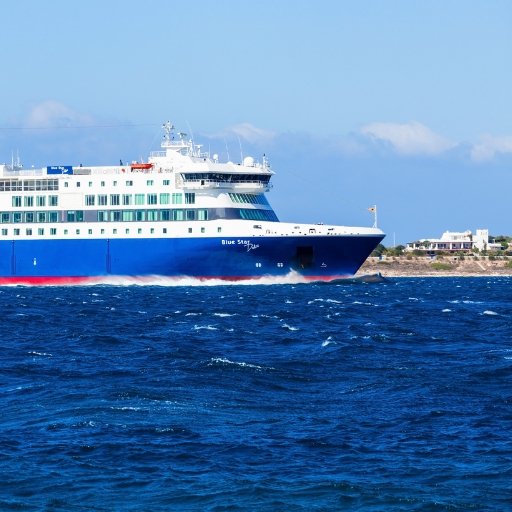

-
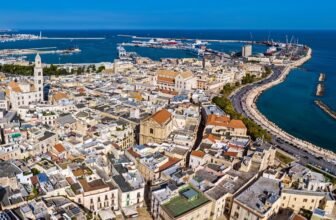
- Bari is of course a good place to match your Greece trip with as Bari is a nice place to stay and leave from.

Combining Greece and Turkey by ferry
In many cases, Greece and Turkey are easy to combine by ferry. These are short international crossings, not domestic Greek island ferries, so you need to think about passports, entry rules and seasonal schedules.
Popular routes include Kos–Bodrum, Chios–Çeşme and Rhodes–Marmaris. They are especially useful if you want to add a Turkish coastal stop to a Greek island itinerary, or if you are travelling the other way and want to enter the Greek islands from Turkey.
Notes and travel tips
- Most crossings are seasonal: many Greece–Turkey routes mainly operate in the warmer months, often with more options in summer.
- Bring your passport: this is an international border crossing, so domestic Greek ferry rules do not apply.
- Check visa and entry rules: depending on your nationality, you may need a visa or other entry permission for Turkey or for Greece/Schengen.
- Operators vary by route: these crossings are often run by smaller regional ferry companies rather than the larger domestic Greek operators.
- Do not plan the connection too tightly: allow time for border checks, port procedures and possible seasonal timetable changes.
These routes can be a brilliant addition to an Aegean trip, but they should be planned as international travel rather than as a casual island hop.
| Route | Greek_Port | Turkish_Port | Duration | Notes |
|---|---|---|---|---|
| Chios ⇄ Çeşme | Chios | Çeşme | 30–40 mins | One of the shortest and busiest routes |
| Kos ⇄ Bodrum | Kos | Bodrum | 45 mins | Frequent sailings, popular for day trips |
| Rhodes ⇄ Marmaris | Rhodes | Marmaris | 1 hour | Popular among tourists in Dodecanese |
| Samos (Vathy/Pythagorio) ⇄ Kuşadası | Samos (Vathy or Pythagorio) | Kuşadası | 1 hour | Easy access to Ephesus, a top Turkish attraction |
| Lesbos (Mytilene) ⇄ Ayvalık | Mytilene (Lesbos) | Ayvalık | 1.5 hours | Connects Northern Aegean to Turkish mainland |
| Kastellorizo ⇄ Kaş | Kastellorizo | Kaş | 20–30 mins | Very scenic route, small ferries |
| Symi ⇄ Datça | Symi | Datça | 1–1.5 hours | Lesser-known route with a charming coastal town |
| Kalymnos ⇄ Bodrum | Kalymnos | Bodrum | 1 hour | Less frequent, but good for island connections |
| Samos ⇄ Seferihisar (Teos Marina) | Samos (Karlovasi) | Seferihisar | 1.5 hours | Newer and less crowded route |
Prices and availability for the crossings to and within Greece
What is the sailing schedule and the best alternative?
To check the sailing schedule and timetable for this crossing, and to find the best alternative, simply fill in the booking module for ferries to Greece! This tool will provide up-to-date options, times, and routes to suit your travel needs.









Practical ferry tips for Greece
- Book early in peak season: in July and August, the most popular routes, cabins, vehicle spaces and departure times can sell out quickly.
- Check whether your ferry takes cars: many high-speed catamarans are passenger-only. If you have a car, camper or motorbike, make sure you are booking a vehicle ferry.
- Double-check your departure port: Athens has several ferry ports, including Piraeus, Rafina and Lavrio. They serve different routes and are not close enough to swap at the last minute.
- Do not rule out slower ferries: conventional ferries are often cheaper, more stable at sea and more relaxed if you want deck space, food and time outside.
- Travel light if you are on foot: boarding can be busy, and not every ferry setup is ideal with heavy luggage or multiple bags.
- Keep essentials with you: water, snacks, sun protection, medication, documents and chargers are worth keeping in a small day bag.
- Check the season carefully: some routes run year-round, but many catamarans, island-hopping links and international services are seasonal.
- Build in slack: ferry travel in Greece is usually straightforward, but weather, port queues and summer crowds can make tight same-day connections stressful.
- Look beyond the biggest operators: for island-to-island routes, smaller regional companies can sometimes offer the most useful connection.
In short: use Piraeus for the widest Athens ferry network, Rafina and Lavrio for specific Cyclades routes, Patras and Igoumenitsa for Italy crossings, and the island ports themselves when building a proper island-hopping route.
Useful Greece ferry guides
Planning a more specific route? These guides go deeper than this Greece ferry overview:
- Ferry from Italy to Greece – the main guide for car, camper and motorhome travellers arriving by sea.
- Ferry from Italy to Corfu – useful if Corfu or the Ionian Islands are your first Greek stop.
- Albania ferry routes – relevant for short crossings between Albania and Corfu.
- 5 secret pearls of the Cyclades islands – good inspiration if you want to look beyond Santorini and Mykonos.
Useful for travellers to Greece

Tips for ferry travellers








Is it possible to ferry from Santorini to Thirasia? Is this a regular ferry? Why don’t you have this one listed?