Atlantic Coast road trips by ferry + car: France, Spain (and Portugal)
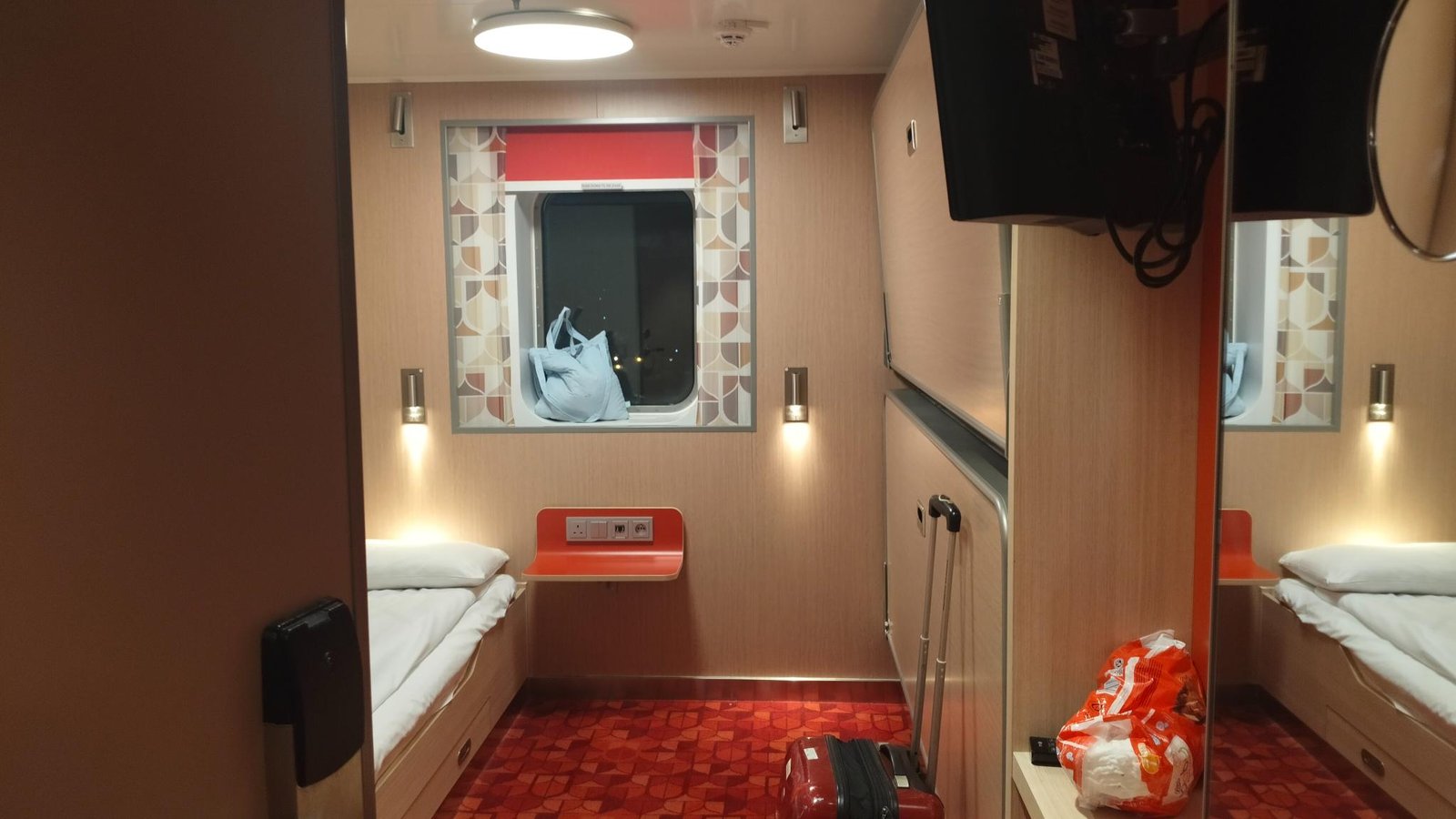
Want an Atlantic coast road trip with less hassle and more holiday? Do it the Ferrygogo way: ferry + car. You skip airport chaos, keep your luggage (and snacks), and arrive already in road trip mode.
The clever bit: you don’t have to sail the same route twice. These trips work brilliantly as a one-way loop: out via France and back via Spain (or vice versa). It’s smarter, it’s more varied, and it keeps the driving interesting.
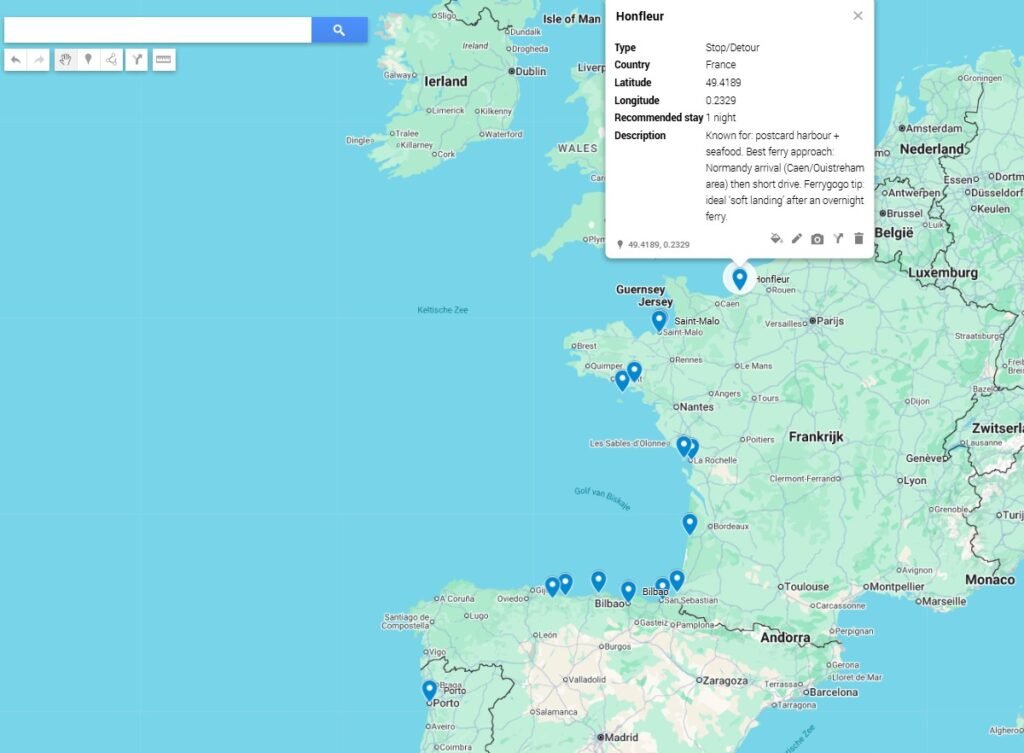
Below you’ll find 15 ferry-friendly Atlantic coast bases & stops (clearly labelled), plus 3 ready-made road trips: including one that combines France + Spain + Porto.
– Best 7–9 days: Brittany + La Rochelle: maximum atmosphere, minimal faff.
– Best 10–14 days: France down + Basque Country + Northern Spain back (Roadtrip 1) – the classic Atlantic loop.
– Best 14–18 days: France + Spain + Porto (Roadtrip 3) – the ‘big trip' version we’d happily do again.
– Best for families: base stays in Saint-Malo / Morbihan / La Rochelle / Santander.
– Best for foodies: Honfleur, the Basque coast, San Sebastián, and Galicia (if you have the time).
– Best for surfers & beach days: Biarritz + Basque coast + Cantabria/Asturias.
Ferrygogo pace rule (seriously useful):
1 night = a stop. 2 nights = a proper visit. 3 nights = you’ll actually relax.
Quick route guides – see the ferry maps & options
- Ferries to France from the UK (ports, routes, tips)
- Ferries to Spain from the UK (Bilbao, Santander, and beyond)
- Ferries from Ireland to France (Dublin/Rosslare ↔ France)
- Ferries from Ireland to Spain (Rosslare ↔ Northern Spain)
- Ferries to Portugal from UK
Best time to go (quick planning tip)
Late spring to early summer is the sweet spot for most Atlantic routes: long days, fewer crowds, and comfortable driving. Peak summer is brilliant for beach time (but book ferries earlier). Early autumn often delivers excellent value and lovely weather, especially in Northern Spain and Portugal.
Choose your ferry strategy
- Option A: Out via France, back via Spain: best for those who want a Brittany/Atlantic France run and a proper Northern Spain chapter.
- Option B: Out via Spain, back via France: best if Northern Spain is your main event, then you can drift back up the French Atlantic at a gentler pace.
- Option C: The ‘All three countries' loop: France + Spain + Porto (Portugal) in one trip, without turning it into a marathon.
15 ferry-friendly Atlantic coast bases & stops
One of the reasons these Atlantic coast bases & stops work so well for a road trip is that many of them line up nicely with the Brittany Ferries route network (UK & Ireland ↔ France & Northern Spain).
In short: you can often sail straight to the “right side of the map”, then drive the coast at your own pace.
And the nice surprise? Brittany Ferries pricing is often very reasonable once you compare like-for-like — especially when you factor in luggage, flexibility and the fact that an overnight sailing can save you a hotel night. If you like numbers, have a peek at our Cost of a Ferry Crossing research for a quick reality check.
To keep this genuinely helpful (and not just a wishlist), we label each entry as either a Base or a Stop/detour:
- Base = stay 2–4 nights and enjoy day trips without constantly repacking.
- A stop or detour is perfect for a one-night (or a half-day ‘wow' break) on a driving day.
France
1) Honfleur (Normandy): Stop/detour (the perfect ‘soft landing' harbour town)
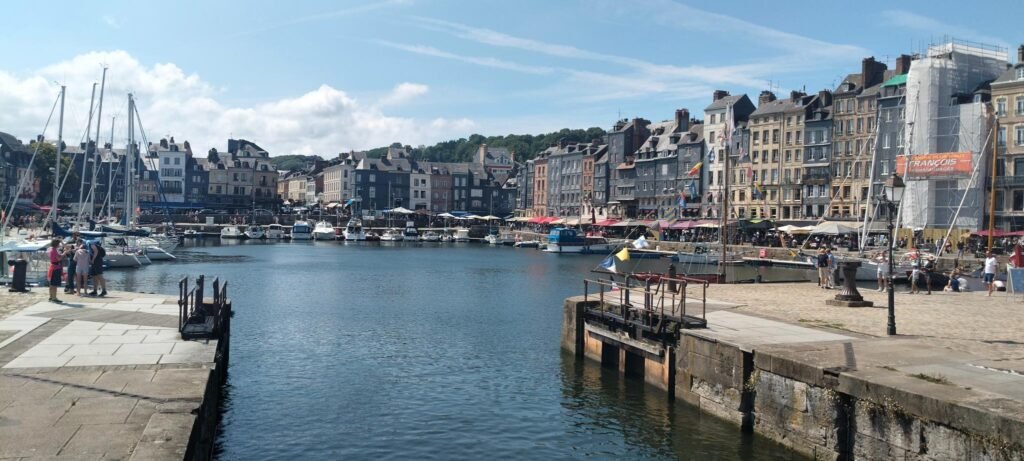
Honfleur is small, pretty, and ridiculously good for seafood. If you’re arriving in Normandy (especially if you’re considering the Caen/Ouistreham route), it’s the ideal first stop to ease into holiday mode without a long drive on day one. If you’re coming off an overnight sailing, this is precisely the kind of stop that prevents day one from becoming “drive, drive, drive”. Land, eat seafood, stroll the harbour, sleep well: then start the real road trip tomorrow.
- Known for: postcard harbour, seafood, weekend charm
- Best ferry approach: arrive in Normandy → short drive (see Portsmouth–Caen)
- How long to stay: 1 night (2 if you want it properly relaxed)
- Suits: couples, foodies, anyone doing an overnight sailing
2) Saint-Malo (Brittany): Base (ramparts, sea air, instant atmosphere)
Walled old town, big tides, beaches on your doorstep: Saint-Malo delivers that ‘we’re really on holiday' feeling within minutes. It’s a brilliant first base if you’re heading down the Atlantic afterwards. (Not strictly Atlantic itself, but a perfect ferry-friendly launch pad for the coast-to-coast route south.)
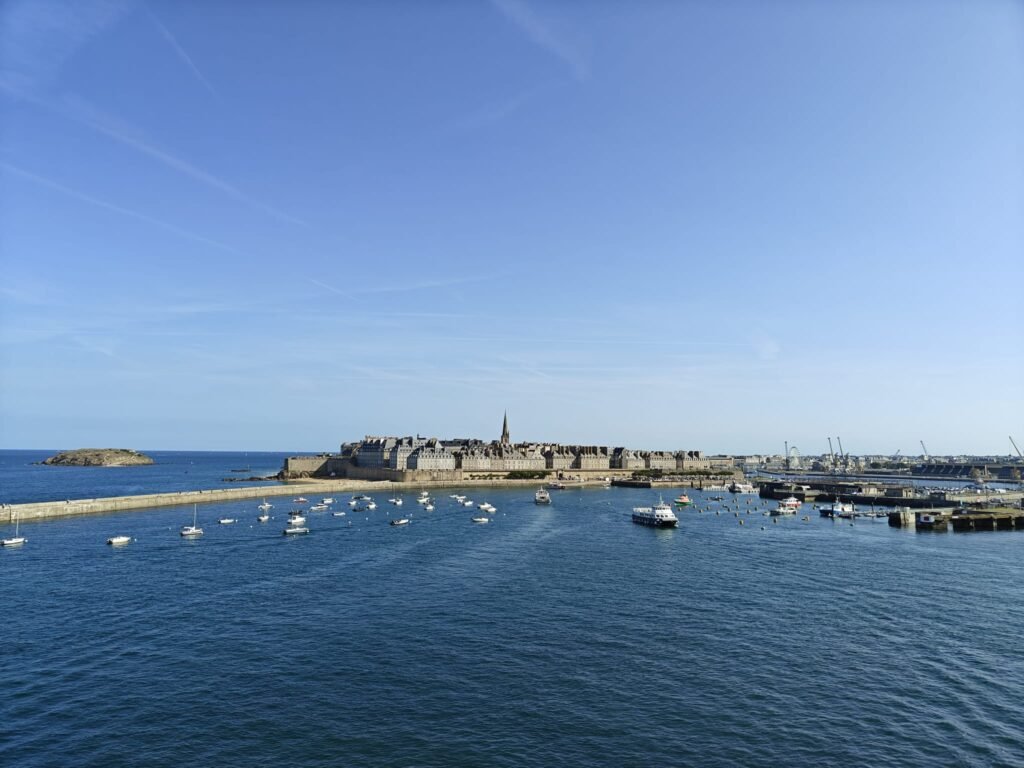
- Known for: historic ramparts, beaches, dramatic tides
- Best ferry approach: direct into Brittany if you can (see Portsmouth–Saint-Malo) or check our experience with this ferry – including a car breakdown.
- How long to stay: 1–2 nights (2 if you want day trips)
- Suits: families, first-timers to Brittany, short breaks
3) Dinard & the Emerald Coast – Stop/detour (cliff walks and classic seaside style)
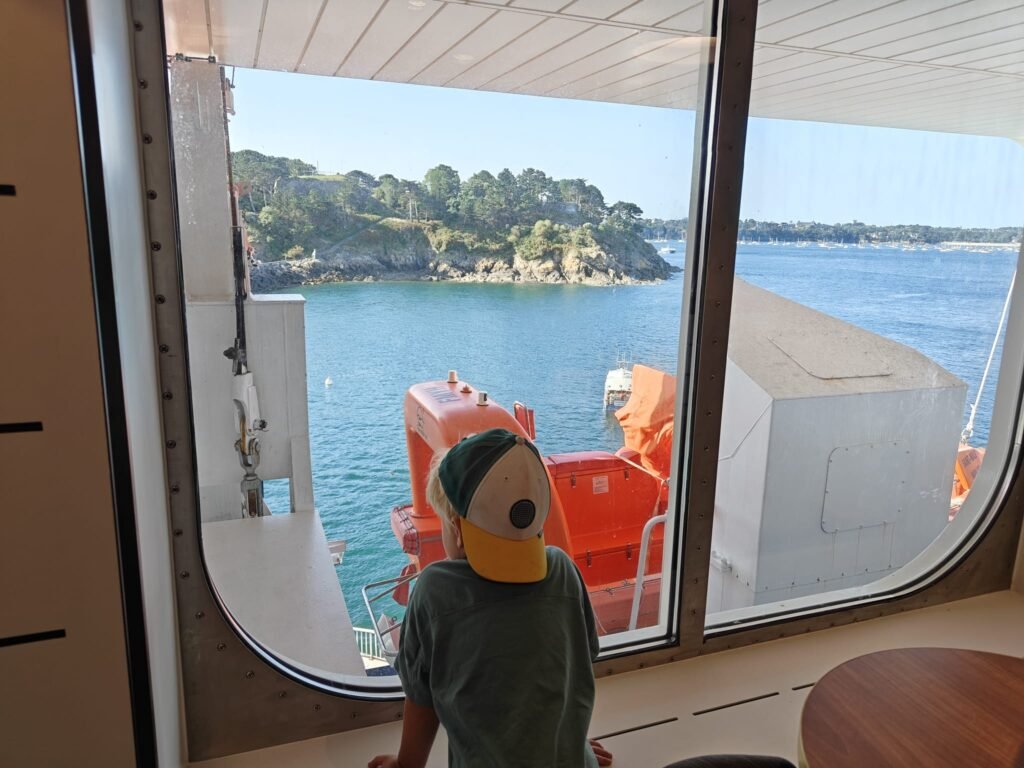
Dinard is the elegant neighbour to Saint-Malo: calmer, stylish, and perfect for coastal walks with coves and viewpoints. It’s an easy add-on that makes your Brittany feel richer without extra driving.
- Known for: coastal paths, coves, Belle-Époque seaside vibe
- Best ferry approach: combine with Saint-Malo (same base works well)
- How long to stay: half day, or 1 night if you want it slow
- Suits: couples, walkers, slow travellers
4) Quiberon & Carnac – Base (beach days with a prehistoric twist)
Quiberon offers Atlantic shores and long beaches; Carnac adds the famous standing stones. It’s a great “sunny Brittany” chapter as you drift south.
- Known for: beaches, rugged peninsula, Carnac stones
- Best ferry approach: Brittany/Normandy arrival → drive south
- How long to stay: 2 nights
- Suits: families, beach lovers, history without a museum
5) Vannes & the Gulf of Morbihan – Base (islands, harbours, slow-travel bliss)
Vannes is charming, but the real magic lies in the Gulf: calm waters dotted with small islands. It’s the sort of place where a ‘no-driving day' suddenly feels like the best idea you’ve had all trip.
- Known for: medieval old town, island day trips, gentle coastal scenery
- Best ferry approach: Brittany/Normandy arrival → drive south
- How long to stay: 2–3 nights
- Suits: couples, families, anyone who wants a calmer chapter
6) La Rochelle – Base (the Atlantic city break that still feels like a beach holiday)
La Rochelle is easy to love: harbour towers, café terraces, and that relaxed coastal rhythm. We’ve been here ourselves, and it’s a brilliant mid-route base when you want great food and coastal air without a big “city mission”.
- Known for: historic harbour, walkable centre, great dining
- Best ferry approach: ideal mid-route on a France-south run
- How long to stay: 2 nights (3 if you add island time)
- Suits: foodies, couples, mixed groups, short city breaks
Optional nearby add-on (France): if you want a quieter island alternative to Île de Ré, look at Île d’Oléron (similar holiday vibe, often a touch less “busy”).
7) Île de Ré – Base (bike paths, beaches, and smugly pretty villages)
Île de Ré is pure ‘holiday mode': white houses, salty air, and cycling that makes you feel instantly virtuous. It pairs perfectly with La Rochelle – either as a base switch or as a full day out.
- Known for: cycling, beaches, pretty villages
- Best ferry approach: combine with La Rochelle
- How long to stay: 2–3 nights (or 1 full day)
- Suits: families, couples, active relaxers
8) Arcachon & the Dune du Pilat – Stop / detour (the ‘wow' stop on the French Atlantic)
The Dune du Pilat is the headline here: huge sand, huge views, and the kind of place everyone in the car will actually remember. Arcachon adds oysters and pine forests – ideal as a one-night stop as you head towards the Basque coast.
- Known for: Dune du Pilat, oysters, pine forests
- Best ferry approach: perfect between La Rochelle and the Basque coast
- How long to stay: 1 night (2 if you want beach time too)
- Suits: families, photographers, roadtrippers who love a ‘big moment.'
9) Biarritz (French Basque Coast) – Base (surf, glamour and dramatic viewpoints)
Biarritz is stylish, yet never stiff: a hub for surf culture, coastal walks, excellent food, and easy day trips. We’ve done Biarritz ourselves – and it really earns its reputation. It’s the perfect “bridge base” between France and Spain. Plan one slow coastal day and one food-focused day, and you’re golden.
- Known for: surfing, viewpoints, Basque food
- Best ferry approach: great at the end of a France-South run, or after arriving in Northern Spain (see Portsmouth–Bilbao)
- How long to stay: 2–3 nights
- Suits: couples, friends, surfers, ‘nice hotel + great dinner' travellers
Optional nearby add-ons (Basque France): For an extra dose of Basque flavour without the added driving, consider adding a half-day in Saint-Jean-de-Luz (compact, charming, and quintessentially ‘holiday') or Bayonne (great food and a more authentic Basque feel).
Spain (Northern Atlantic coast)
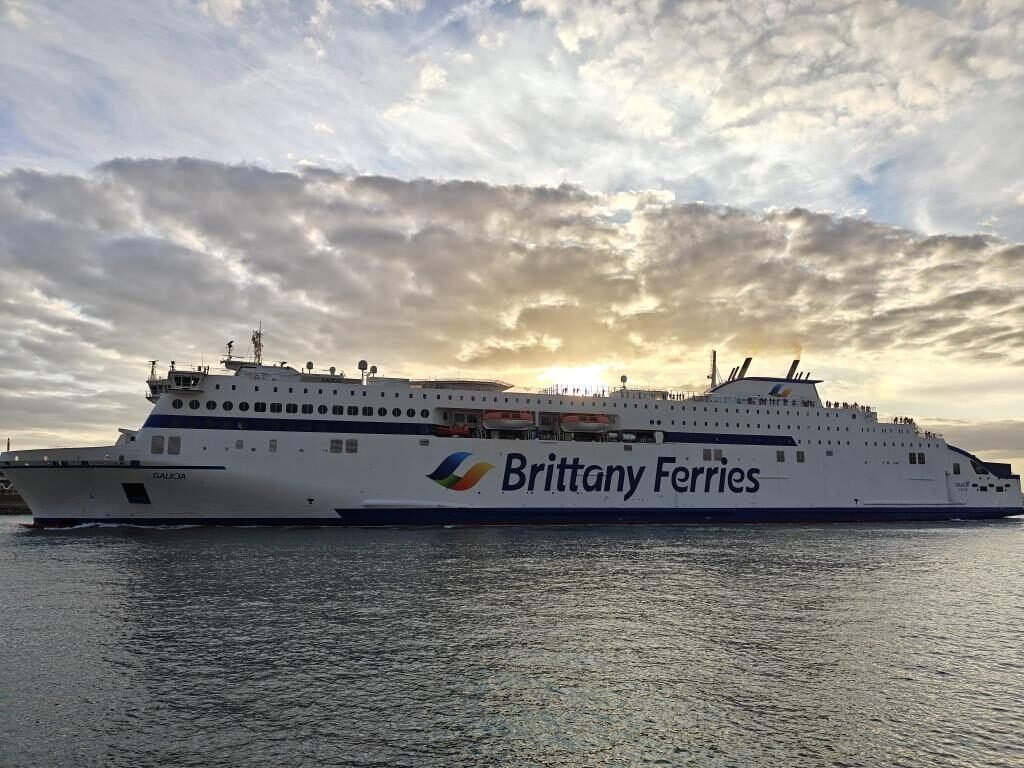
10) Bilbao – Stop / detour (the easiest ferry gateway into Spain)
Bilbao is often the practical stop at the start or end of your loop – but it’s genuinely fun. Treat it as a buffer night: arrive, reset, eat well, and start the road trip chapter properly the next morning.
- Known for: city culture, food, easy logistics
- Best ferry approach: UK → Bilbao
- How long to stay: 1 night (2 if you want a slower pace)
- Suits: city + roadtrip combos, anyone who likes an easy reset day
11) San Sebastián (Donostia) – Base (pintxos heaven with a beach in the middle)
San Sebastián is that rare place that works for almost everyone: it’s beautiful, delicious, walkable, and feels like a proper mini break within your road trip. Give it at least two nights, and you’ll see why people rave about it.
- Known for: pintxos, elegant bay, easy beach-city vibe
- Best ferry approach: most straightforward via Bilbao arrival
- How long to stay: 2 nights
- Suits: foodies, couples, friends (and surprisingly good with kids too)
12) Santander – Base (relaxed seaside city, perfect for a slow reset)
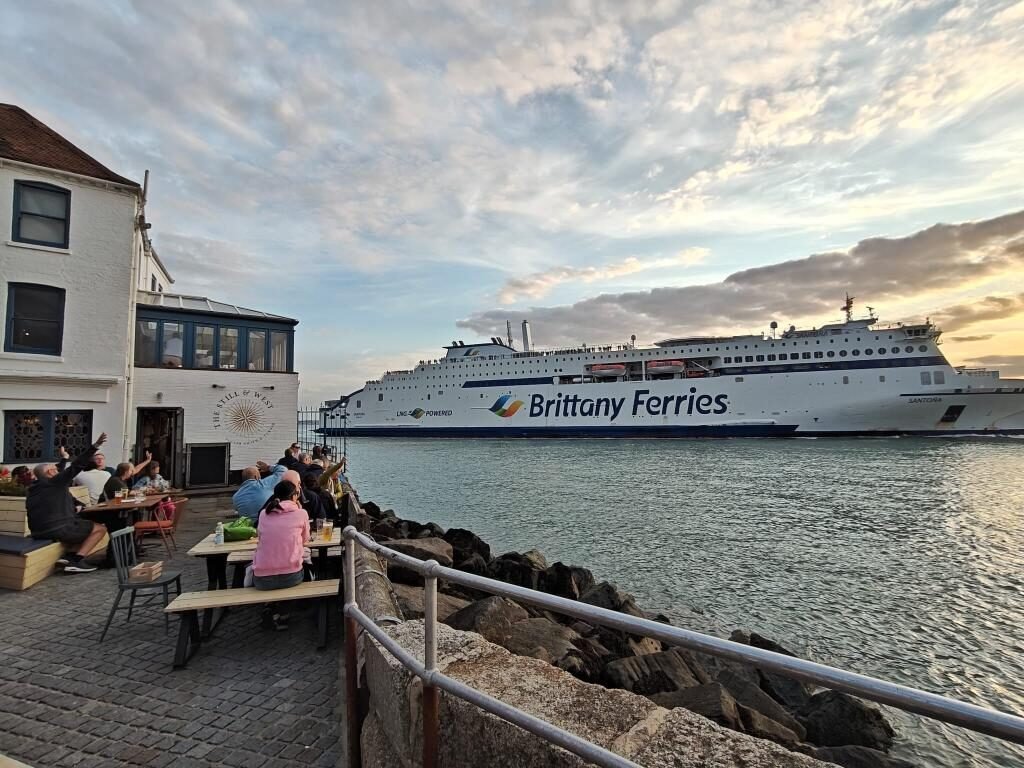
Santander is a calmer chapter: beaches, promenades, and a “space to breathe” feel. It’s also a very practical place to route through if you’re aiming for green Asturias next.
- Known for: bayside promenades, beaches, low-stress rhythm
- Best ferry approach: direct into Northern Spain or as a drive stop after Bilbao
- How long to stay: 1–2 nights
- Suits: families, slow travellers, anyone doing longer drives
13) Asturias Coast (Llanes / Ribadesella base) – Base (Green Spain cliff-and-cove magic)
Asturias is one of the most rewarding surprises on the Atlantic coast: greener, cooler, and full of little beaches and viewpoints. The easiest win is to choose one base (Llanes/Ribadesella works brilliantly) and do day trips – rather than hopping hotels every night.
- Known for: cliffs, small beaches, lush landscapes
- Best ferry approach: drive west from Santander along the coast
- How long to stay: 2–4 nights
- Suits: nature lovers, families, proper roadtrippers
14) Picos de Europa – Stop / detour (mountain day trip from the coast)
Not strictly a coast, but too good to ignore: dramatic peaks close enough to do as a big day trip from the northern coast. If you want one adventurous chapter in your itinerary, this is it.
- Known for: mountain viewpoints, hikes, big scenery
- Best ferry approach: easiest from Santander / Asturias bases
- How long to stay: 1 big day trip, or 2 nights
- Suits: walkers, photographers, “one big adventure day” travellers
Portugal
15) Porto: Base (the Atlantic finale you’ll want to repeat)
Porto is the kind of city that makes you slow down without trying: river views, brilliant food, and that warm, lived-in feel that’s perfect after a road trip. If you’re adding Portugal, Porto is the cleanest ‘big win' on the Atlantic side.
- Known for: Ribeira, Douro views, wine cellars, city-break vibe
- Best ferry approach: add it after Northern Spain (best with a relaxed driving day or a stopover): ferry to Portugal from UK
- How long to stay: 3 nights minimum (4–5 is ideal)
- Suits: couples, foodies, friends, city-break lovers
Quick honest note: Lisbon is a fantastic city break too (we love it): but if you’re choosing just one Portugal stop for an Atlantic-style loop, Porto is the smoother fit. It’s compact, atmospheric, and it feels like a reward at the end of a road trip.
Optional Portugal bonus: if you’re continuing south, add Nazaré for pure Atlantic drama and beach atmosphere (great as a “break up the drive” stop).
3 road trips you can copy (and map)
These itineraries are designed around base stays (2–3 nights) rather than constant packing. Swap the order if you’re sailing from a different port: the flow still works.
Roadtrip 1 (updated): Out via France, back via Spain: with more Spanish days (12–16 days)
Driving sanity check: we’ve built this around real-world days, not fantasy ones. You’ll still have two longer driving days (France heading south, then the final run back to the Spanish port), but we place those longer hops after 2-night bases, so it still feels like a holiday.
- Day 1–2: Arrive Normandy → Honfleur (1 night)
- Day 2–4: Saint-Malo + Dinard (2 nights)
- Day 4–6: Vannes / Gulf of Morbihan (2 nights)
- Day 6–8: La Rochelle + Île de Ré (2 nights)
- Day 8–9: Arcachon + Dune du Pilat (1 night)
- Day 9–12: Biarritz (3 nights) – add Saint-Jean-de-Luz or Bayonne as easy half-day add-ons
- Day 12–14: San Sebastián (2 nights) – one day pintxos & wandering, one day beach + viewpoints
- Day 14–16: Santander or Asturias coast (2 nights) – choose city-easy or nature-rich
- Final day: drive to Bilbao or Santander → ferry back (see Spain to UK ferry guide)
Best for: families (base stays), foodies (Honfleur + Basque + San Sebastián), and first-time roadtrippers who want a clean, no-nonsense loop.
Roadtrip 2: Out via Spain, back via France (10–16 days)
Driving sanity check: easiest pacing if you treat Bilbao or Santander as a “buffer night” on arrival, then do 2–3-night bases before you start drifting up France.
- Day 1–2: Ferry into Bilbao or Santander (see UK → Spain ferry routes)
- Day 2–4: San Sebastián (2 nights)
- Day 4–6: Santander (1–2 nights)
- Day 6–9: Asturias coast (3 nights) + optional Picos day
- Day 9–11: Biarritz (2 nights)
- Day 11–12: Arcachon (1 night)
- Day 12–14: La Rochelle + Île de Ré (2 nights)
- Day 14–16: Saint-Malo (1–2 nights) → ferry back (see UK → France ferry routes)
Best for: travellers who want Northern Spain as the main event, then a softer “France finish” with plenty of easy stopovers.
Roadtrip 3: The ‘All three countries' Atlantic loop (12–18 days)
Driving sanity check: this one stays enjoyable if you keep Porto as your ‘reward base' at the end (3–5 nights), rather than squeezing it in as a quick stop.
- Honfleur (1 night) → Saint-Malo (2 nights)
- La Rochelle + Île de Ré (2–3 nights)
- Arcachon (1 night) → Biarritz (2 nights)
- San Sebastián (2 nights)
- Asturias coast (2–3 nights)
- Porto (3–5 nights)
- Return north towards Bilbao and ferry home
Best for: couples and friends planning a “proper once-a-year trip” – lots of variety, but still realistic driving days.
Optional extensions (easy add-ons if you have extra days)
If you’ve got 2–5 extra days, these add-ons fit naturally into the same Atlantic logic – without breaking the flow.
Spain: add a proper Atlantic Galicia chapter (2–4 days)
If you want Spain to feel even more Atlantic, Galicia is the obvious upgrade: wilder coastline, great seafood, and a slightly “end of the world” vibe. It’s a brilliant extension after Asturias, before you loop back to Bilbao/Santander for the ferry.
- Best for: seafood lovers, photographers, travellers who’ve “done the classics” already
- How to use it: add 2 nights as a base, then return towards Bilbao/Santander
Portugal: beyond Porto (1–3 days)
Porto is the star, but if you want one more Atlantic hit, add a coastal stop before heading back north.
- Nazaré: Atlantic drama + beach atmosphere (easy, iconic stop)
- Aveiro / Costa Nova: colourful seaside vibe and a lighter day between drives
- Best for: anyone who wants ‘just one more coast stop' without committing to a full Portugal tour
France: slow the Brittany start (1–2 days)
If you prefer fewer long driving days, simply add one extra night in Brittany (Saint-Malo/Dinard or Morbihan). It’s the easiest way to make the whole trip feel more like a holiday and less like a mission.
We haven’t been everywhere (yet) – but we do our homework.
We love first-hand scouting, but we’ll also be honest: you can’t personally overnight in every coastal town along the Atlantic (not yet, anyway). Some tips in this guide are research-led, based on route planning, traveller feedback, and local recommendations. That said, a good chunk of this list is genuinely tried-and-tested by us – including Porto, Lisbon, Saint-Malo, San Sebastián, Honfleur (close to Caen), La Rochelle, and Biarritz. And even where we haven’t stayed overnight ourselves, we don’t publish a route we wouldn’t happily recommend to friends.
Our promise: when we recommend a route, it’s not just “nice on paper” — it’s been sanity-checked for real-world ferry timings, realistic drives, and the kind of stops that make a road trip feel like a holiday.
Also easy from Ireland (France & Spain sailings)
One last handy tip: these Atlantic loops aren’t just for the UK. They’re also very accessible from Ireland, thanks to direct sailings to France and northern Spain. Same logic, same routes: you’re simply starting from a different side of the sea.
- Start France-first: see Ireland → France ferry routes
- Start Spain-first: see Ireland → Spain ferry routes
Ferrygogo tip: the same one-way logic applies from Ireland: go out via France and come back via Spain (or vice versa) for the neatest loop – and the least boring driving.




Jan Willem van Tilburg is co-founder of FerryGoGo and focuses on ferry market research, editorial strategy and practical travel content. His work covers ferry fares, route comparisons and first-hand travel guides based on real crossings. Jan Willem has sailed routes including Saint-Malo to Portsmouth, Portsmouth to Cherbourg, Newcastle to Amsterdam and Harwich to Hook of Holland himself, helping keep FerryGoGo’s guides grounded in real traveller experience.