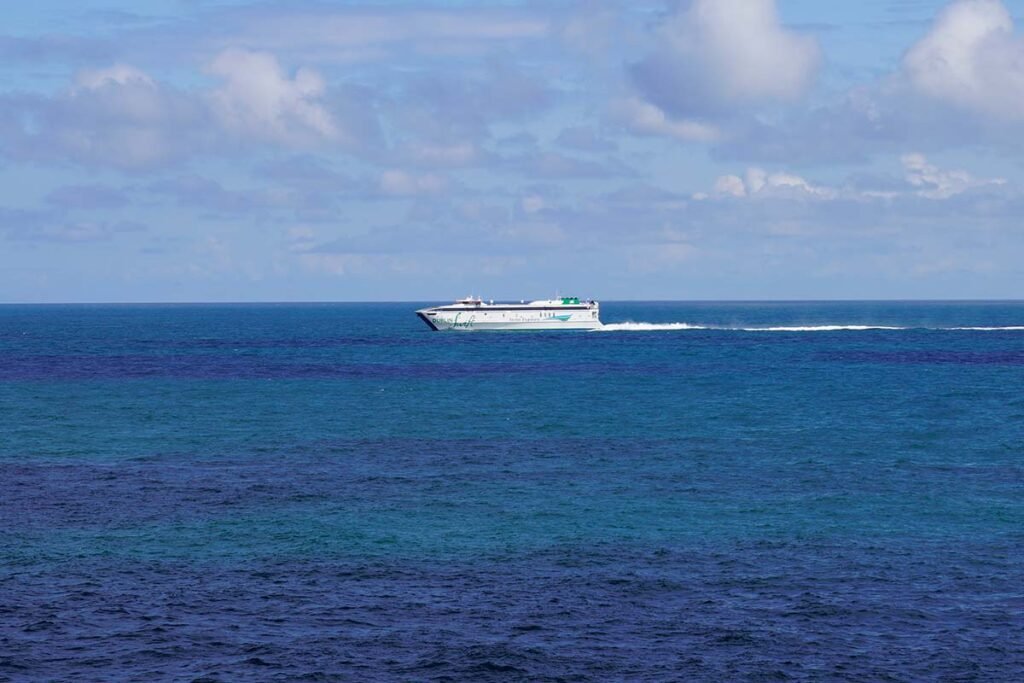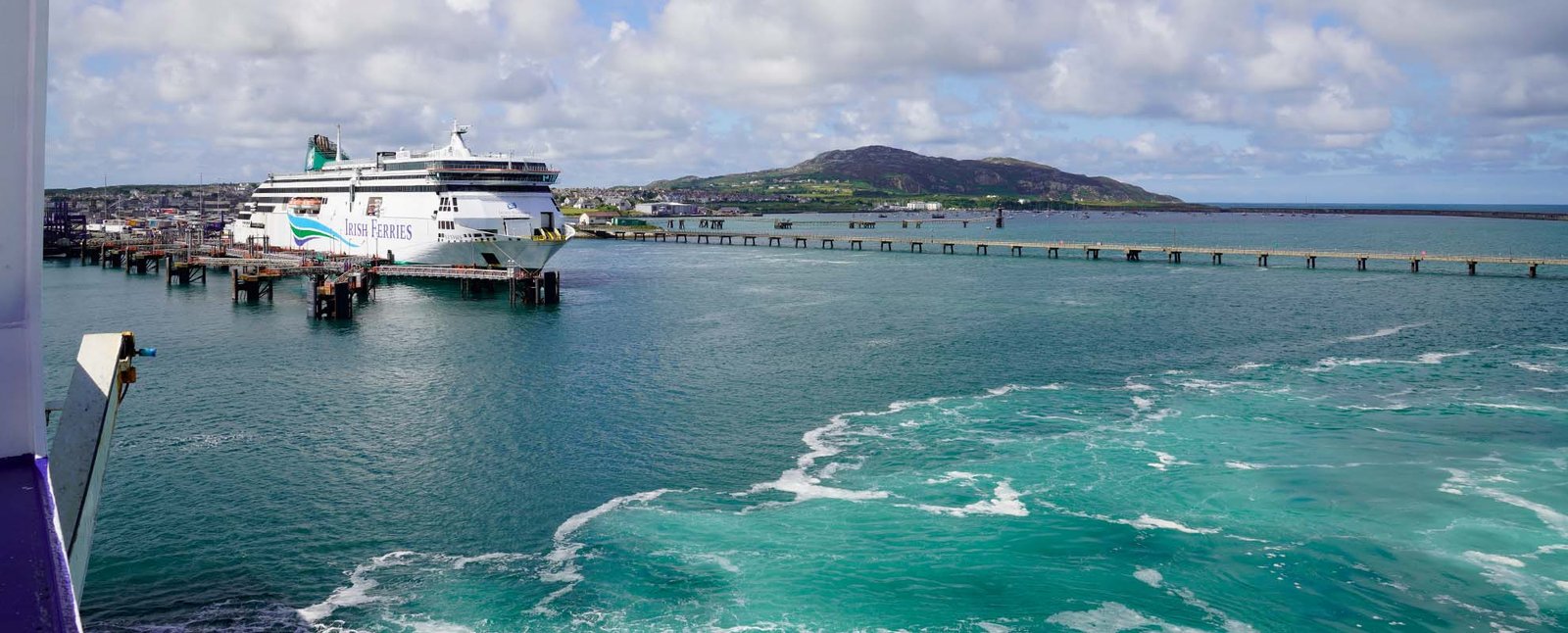




Fast ferry from about 2h15 – conventional ferries usually take around 3h15 to 3h30 – Irish Ferries and Stena Line
Holyhead to Dublin ferry: fast ferry or conventional ship?
The Holyhead-Dublin ferry is the main direct route between Wales and Dublin. It is usually the first crossing to compare if you are travelling from North Wales, northern England or the Midlands to Dublin, central Ireland or the east coast.
Irish Ferries and Stena Line both operate the route. Irish Ferries offers the fast Dublin Swift on selected sailings as well as larger conventional ferries. Stena Line uses larger conventional ships. That means the decision is not only about price and departure time: you can also choose between the shortest possible crossing and a steadier ship with more space.
| Your priority | Start by comparing | Why? |
|---|---|---|
| Fastest crossing | Dublin Swift | The fast ferry takes approximately 2 hours and 15 minutes when operating on its scheduled service. |
| More space and a steadier feel | A conventional Irish Ferries or Stena Line sailing | The larger ships take longer but provide more room, more facilities and generally feel steadier in unsettled conditions. |
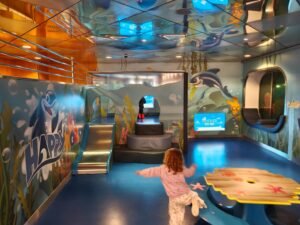
| Travelling with children | A larger ferry or Club Class on Dublin Swift | Larger ships give children more space. On our fast-ferry crossing, the quieter Club Class lounge made the journey noticeably easier. |
| South Wales or southern Ireland | Fishguard or Pembroke to Rosslare | Rosslare may save driving if your journey starts or ends well south of the Holyhead-Dublin corridor. |
Tested by FerryGoGo
We sailed from Holyhead to Dublin on the fast Dublin Swift with Irish Ferries and returned on the larger Stena Estrid with Stena Line. This allowed us to compare the fast ferry and a conventional Irish Sea ship on the same route.
The fast ferry saved time and felt clean and efficient. The larger ferry gave us more room to move around and felt calmer at sea. Our conclusion is simple: the quickest advertised crossing is not automatically the best sailing for every traveller.
Map of the Holyhead-Dublin ferry route
The map shows the direct route from Holyhead on Anglesey to Dublin Port. The alternative corridors to Rosslare are included for context. They are most relevant when South Wales, South West England or southern Ireland fits your journey better than Dublin.
For the complete route network, use our guide to all ferries from the UK to Ireland.
Irish Ferries or Stena Line from Holyhead to Dublin?
Both operators provide large conventional ferries, but only Irish Ferries operates the fast Dublin Swift. Ship allocation can change, so check the vessel shown for your specific departure before booking.
| Option | Typical crossing | Best for | Our assessment |
|---|---|---|---|
| Dublin Swift Irish Ferries fast ferry |
Approximately 2h15 | Speed, short breaks and spending as little time as possible at sea | Fast, clean and efficient. It can feel livelier than a larger ship, but Club Class made our journey more comfortable. |
| Irish Ferries conventional ships Ulysses and James Joyce |
Approximately 3h25 to 3h30 | Families, onboard space, facilities and a more traditional ferry journey | A stronger all-round choice when comfort and space matter more than saving an hour. |
| Stena Line conventional ships Stena Adventurer and Stena Estrid |
Approximately 3h15 | A spacious crossing, lounges, cabins and travellers who prefer a larger ship | Our return on Stena Estrid felt steadier and more spacious than the fast-ferry journey. |
The ship and crossing time shown during booking matter more than the operator name alone. Schedules, vessel allocation and fast-ferry operation can change because of season, weather or operational circumstances.
Journey from Holyhead to Dublin on the Fast Dublin Swift Catamaran Ferry
What was the Dublin Swift like on our crossing?
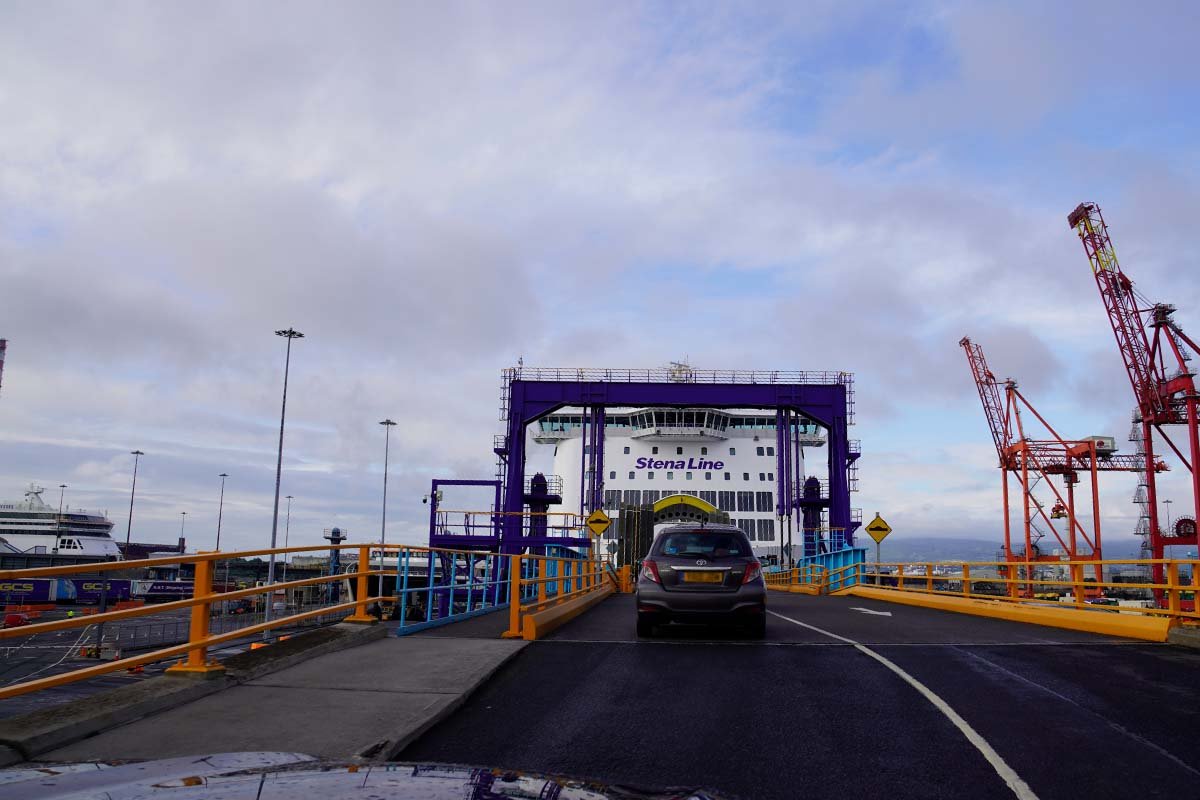
We chose the Dublin Swift for our outward journey because we wanted to experience the fastest ferry between Holyhead and Dublin. Boarding with the car was straightforward and the vehicle deck felt spacious and easy to navigate.
What first stood out on the passenger deck was the cleanliness. The interior looked modern and everything was spotless during our trip. There were several seating areas, a shop and places to get something to eat or drink, including Café Lafayette.
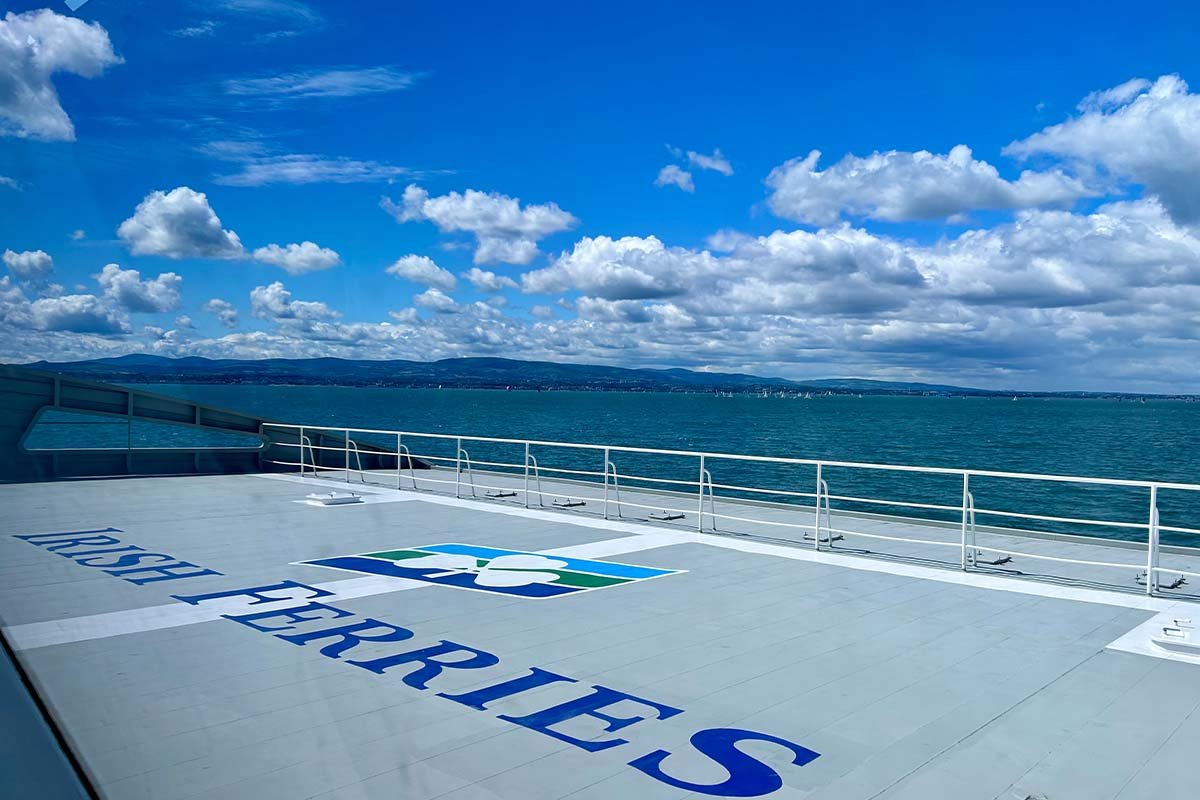
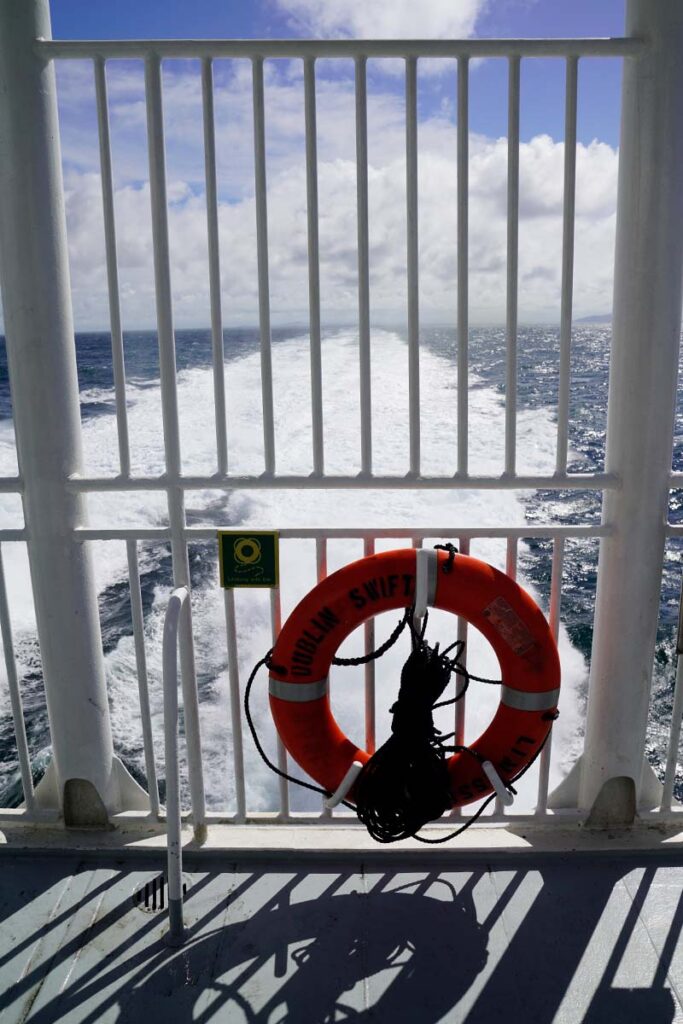
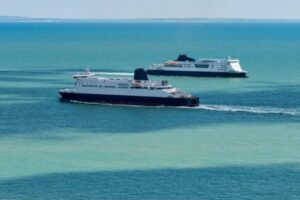
At the back of the catamaran is a small outdoor area enclosed by a cage-like structure. It is not comparable to the open decks on a large conventional ferry, but it gave us somewhere to step outside, get some fresh air and watch other ferries passing.
How did the fast ferry feel at sea?
The Dublin Swift moved more than the conventional ferry we used on the return. That did not make it an unpleasant crossing for us, but the difference was noticeable. If you are particularly sensitive to seasickness or the forecast is unsettled, the larger ferries are worth considering even though the crossing takes longer.
The fast ferry is best understood as a time-saving option. It gets you across quickly and has enough facilities for the journey, but it does not provide the same amount of space or the steadier feel of a large conventional ship.
Was Club Class worth it?
We added Club Class to our booking. At the time of our 2024 journey, it cost us around £18 per person. Treat that as a record of what we paid rather than a current price, as upgrade rates can change.
The upgrade included priority vehicle boarding, a quieter lounge at the front of the ship, drinks, snacks and good forward-facing views. The lounge was popular, including with families, and it was not empty. Even so, it made the short crossing feel calmer and more comfortable.
The food selection reminded us more of a simple hotel breakfast than a full restaurant buffet. For a journey of just over two hours, we found it convenient and would book the lounge again.
Holyhead ferry terminal and boarding by car
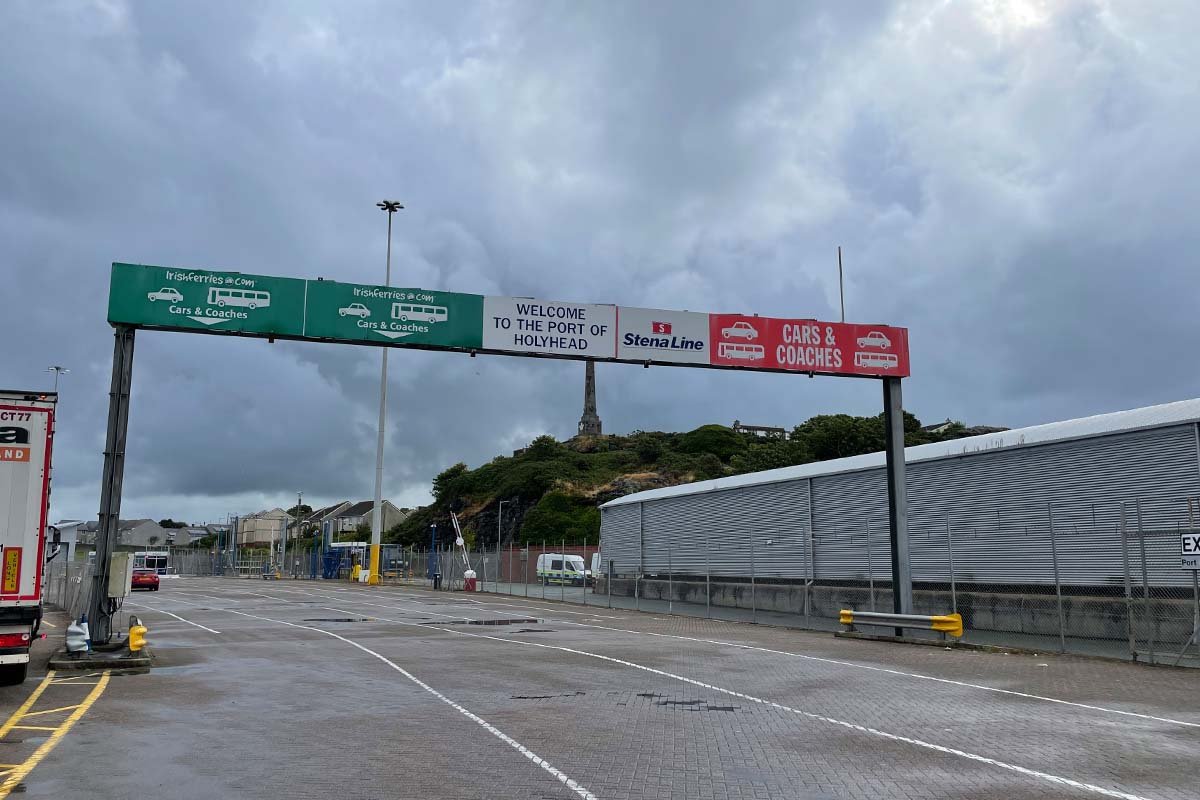
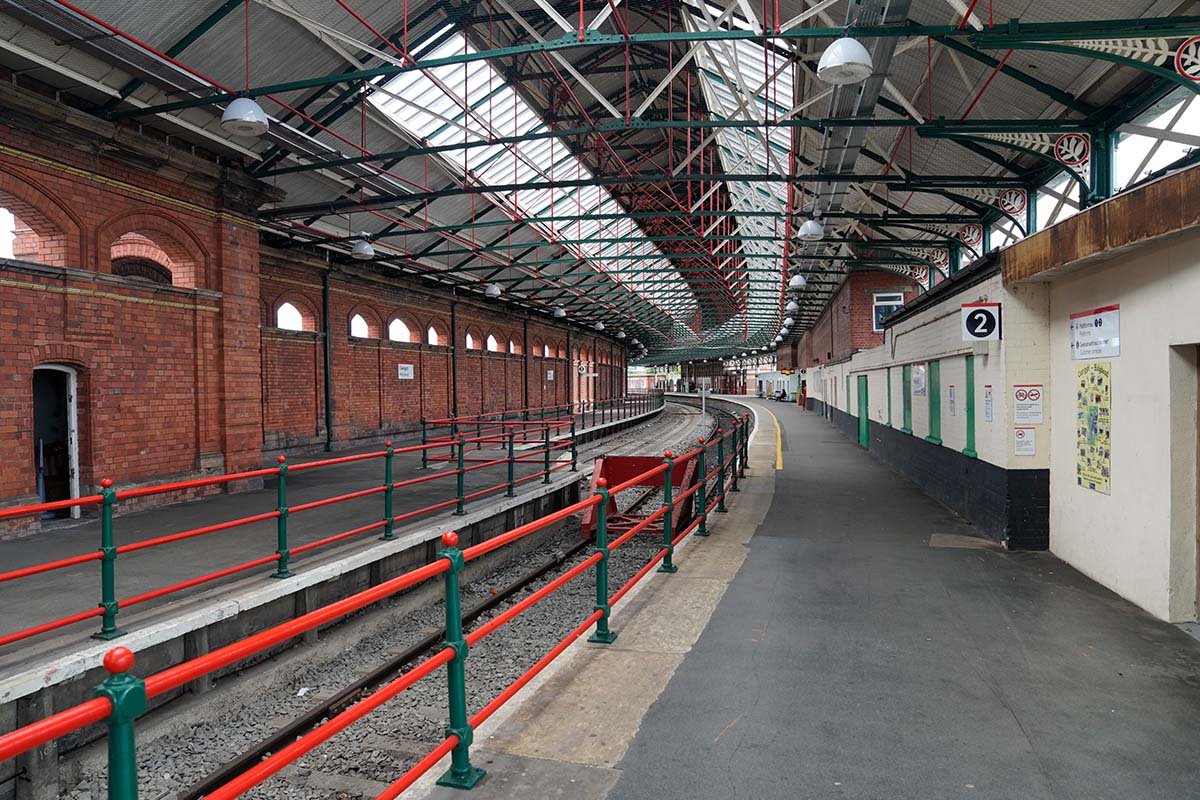
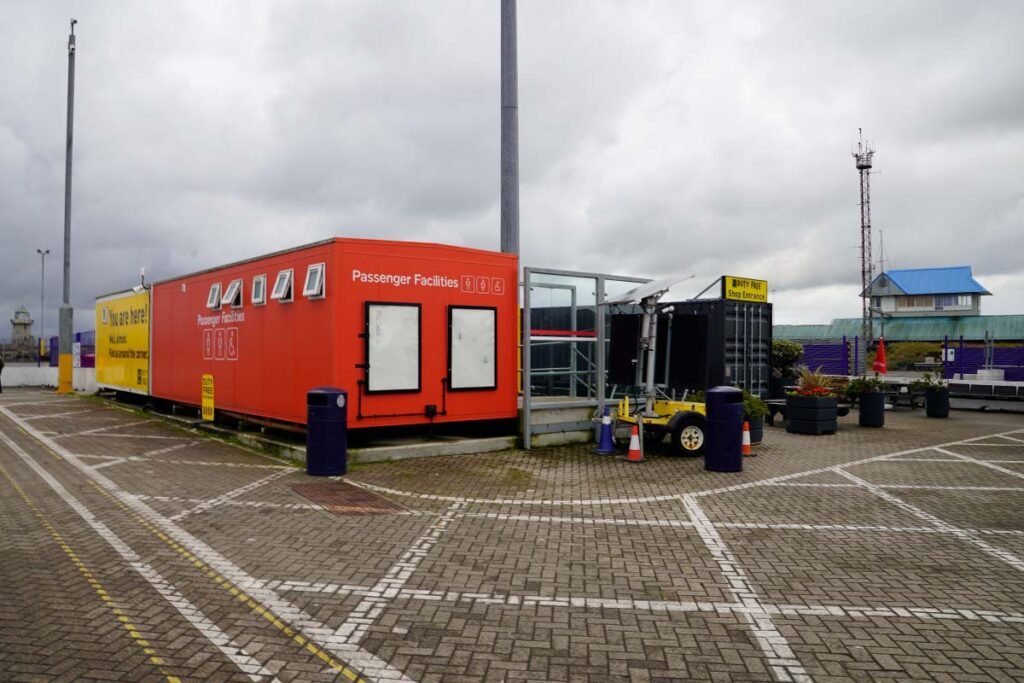
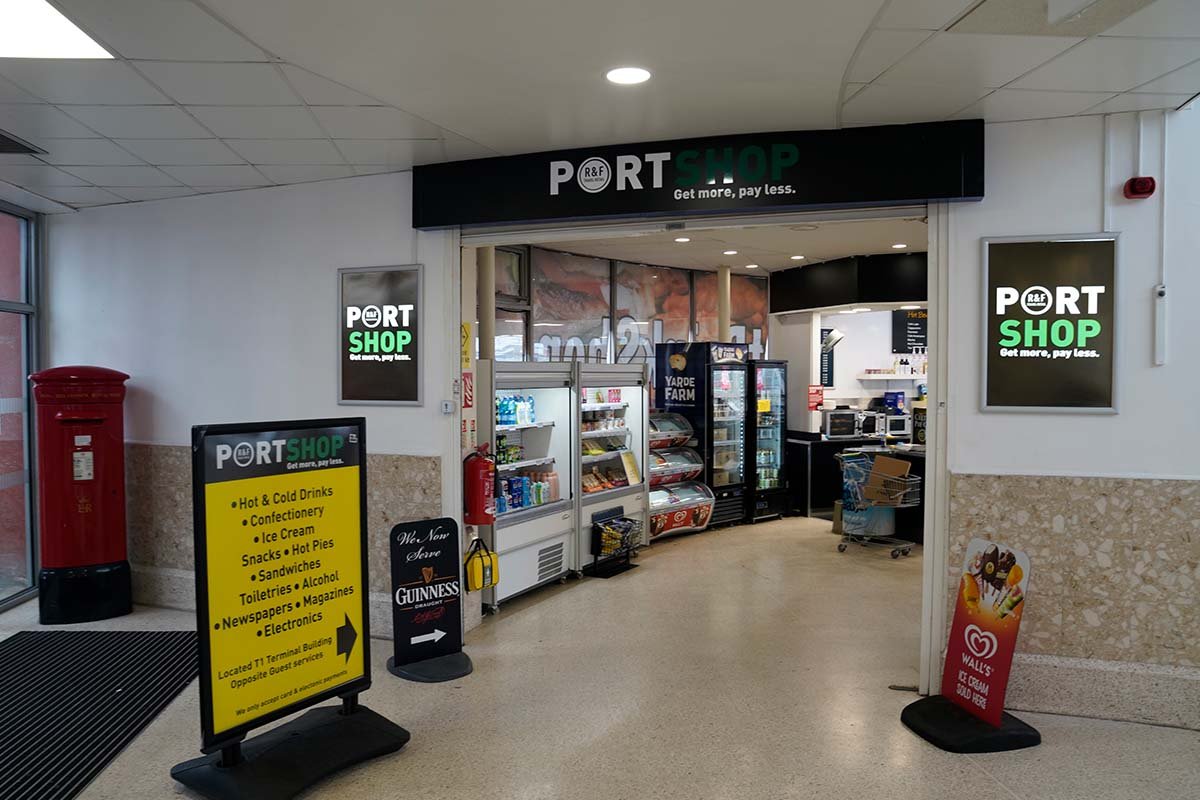
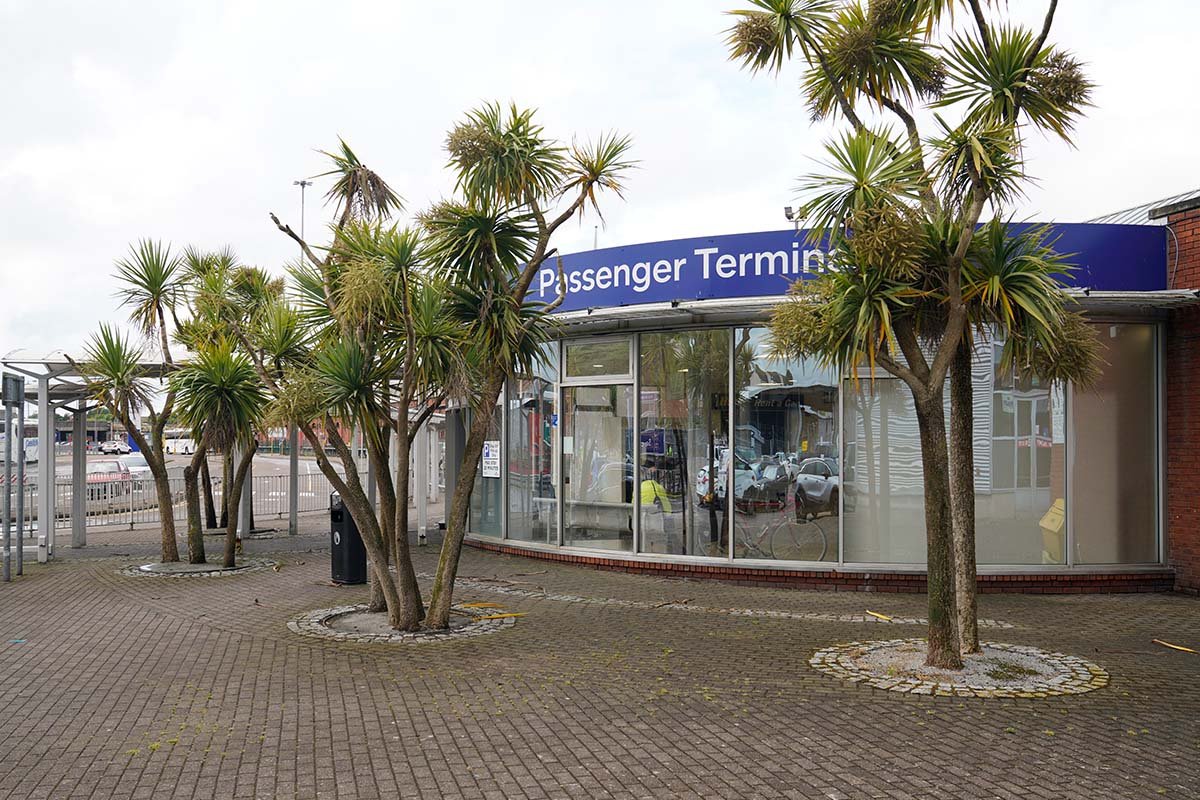
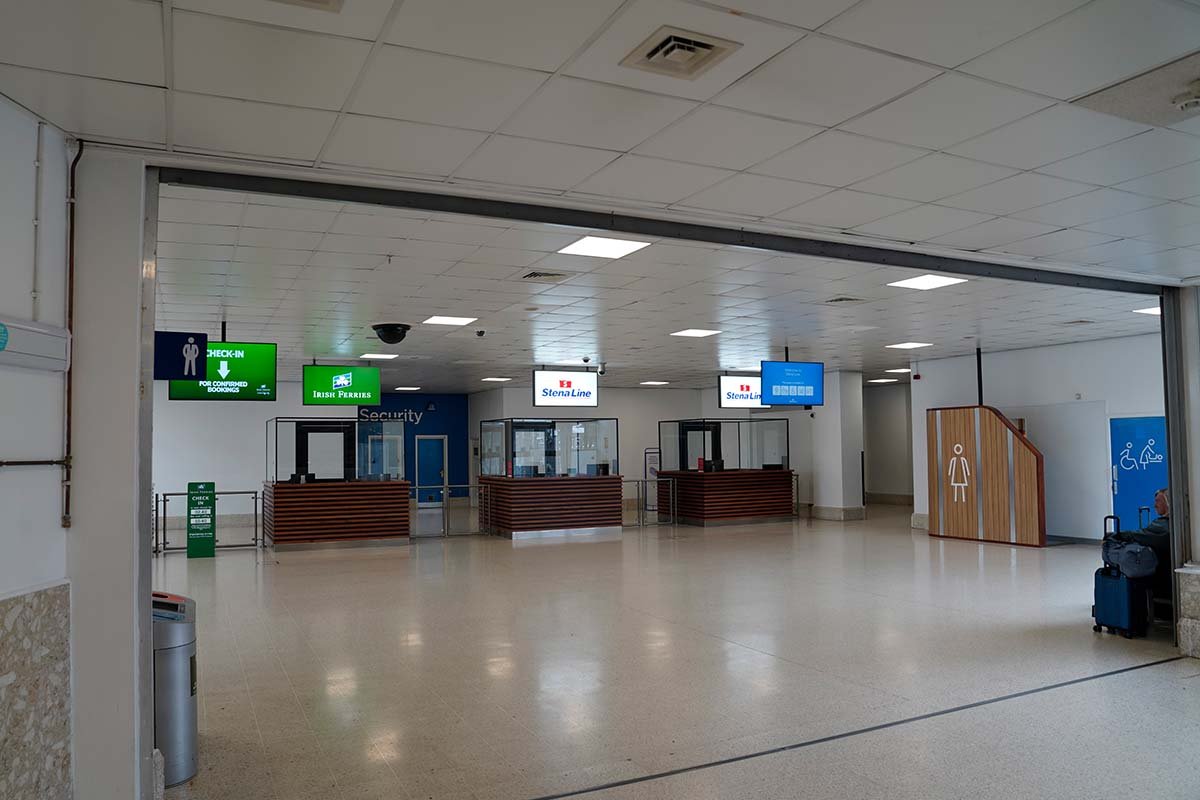
Holyhead is a compact ferry port with the railway station beside the passenger terminal. The terminal building had the basic facilities we needed before boarding, including ticket desks, toilets and limited shopping and refreshment options.
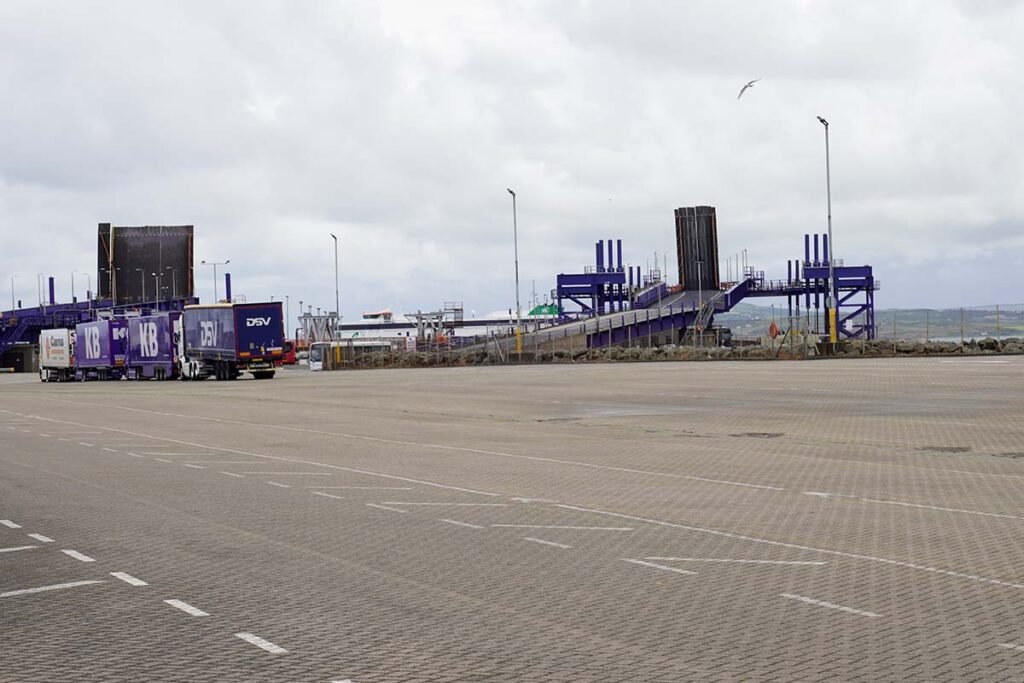
During our journey, we drove to the operator check-in, received a coloured hanger for the car mirror and followed the lanes towards the security and boarding area. Vehicles and documents were checked before we entered the waiting lanes.
Once the Dublin Swift was ready, staff directed the cars onto the ferry. The process felt more straightforward than at some larger international ports we have used, but that does not mean you should arrive late. Allow time for traffic on Anglesey, check-in, document checks and possible queues.
Holyhead is one of the more practical UK ferry ports for foot passengers because the railway station is beside the terminal. Rail & Sail tickets may combine the British rail journey and ferry, depending on the operator and itinerary.
Foot-passenger boarding does not work exactly like boarding a train. Follow the check-in time on your booking and allow time for the transfer from the terminal to the ship.
Returning from Dublin on Stena Estrid
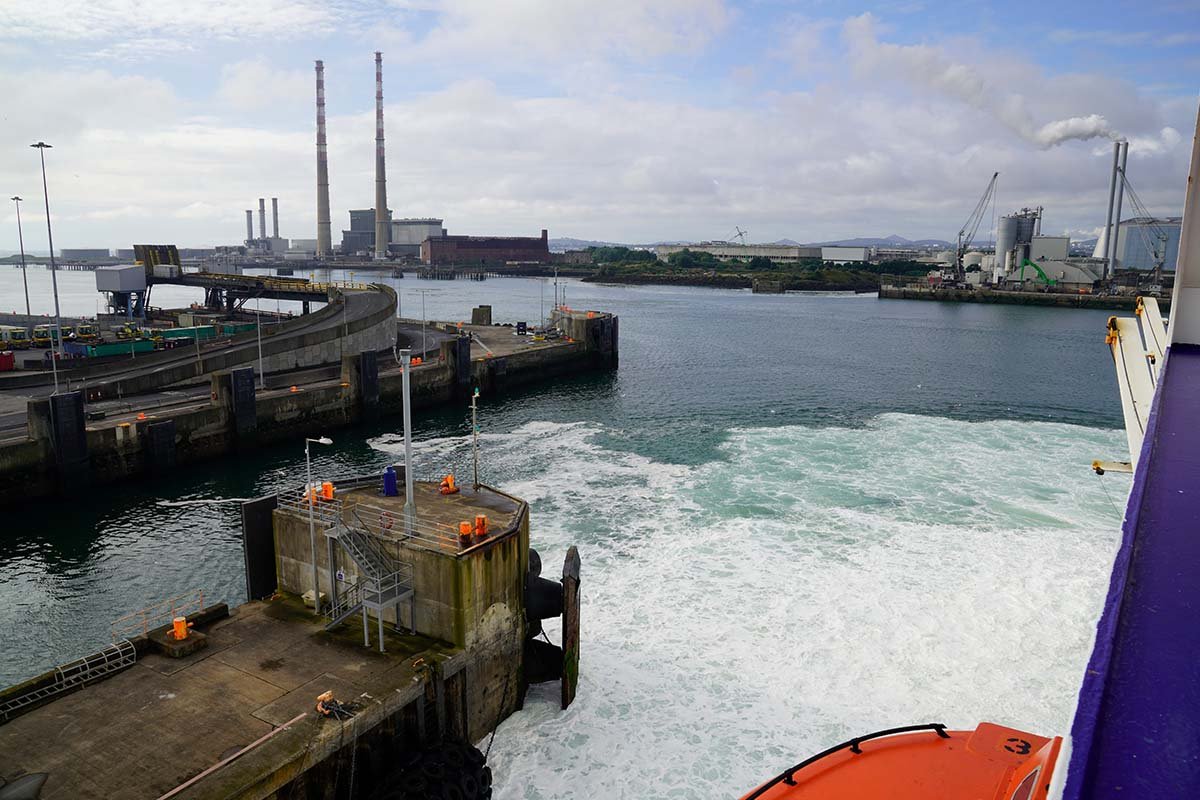
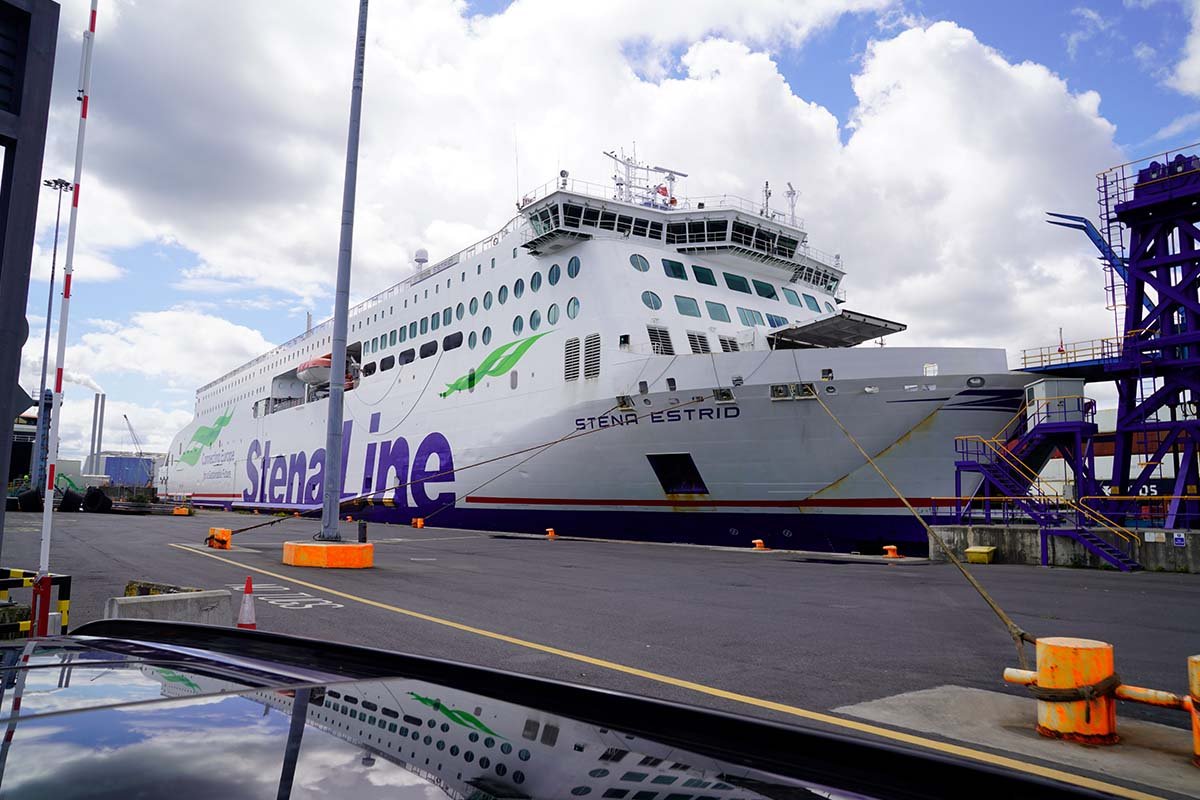
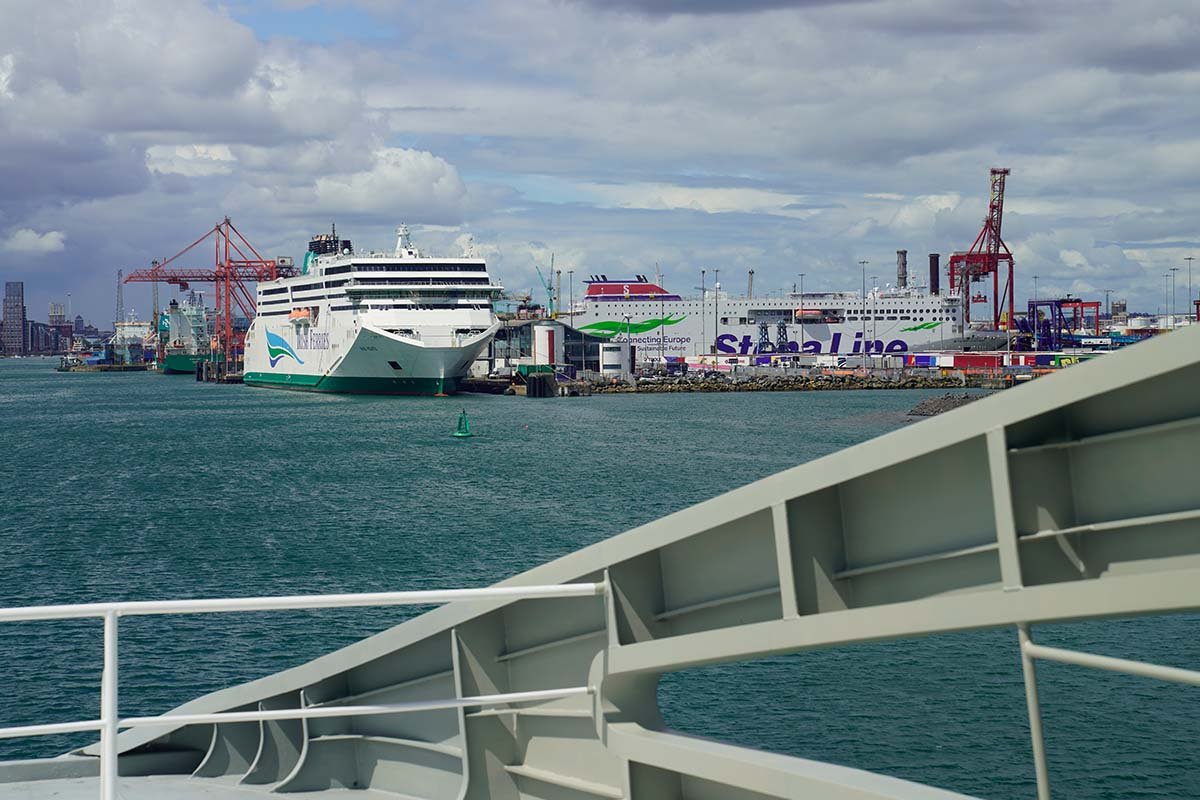
For the return journey, we travelled from Dublin to Holyhead with Stena Line on Stena Estrid. Dublin Port is much larger and busier than Holyhead, with several passenger and freight services using different parts of the port.
Follow the signs and booking information for your operator rather than navigating only to Dublin Port in general. Allow extra time for the final approach, particularly during busy periods, roadworks or congestion around the port.
The difference from the Dublin Swift was immediately noticeable. Stena Estrid had more room to walk around, more passenger space and the calmer feel of a large conventional ferry. The crossing took longer, but it felt less hurried.
That comparison changed our verdict on the route. We would choose the fast ferry when the departure time works well and speed is the priority. We would choose a conventional ferry when travelling in unsettled conditions, when we want more space or when the journey itself is part of the trip.
What to know before booking Holyhead-Dublin
- The fastest ferry is not available on every departure: choose by actual ship and timetable rather than assuming every Irish Ferries sailing uses Dublin Swift.
- Conventional ferries take longer but offer more space: they are generally the better fit for travellers who value onboard facilities or a steadier feel.
- Foot passengers can use the route: Holyhead railway station is beside the terminal, making this one of the more practical ferry routes to Ireland without a car.
- Enter the correct vehicle dimensions: roof boxes, bike racks, trailers and camper height can affect the fare and vehicle lane.
- Check pet arrangements before booking: kennels, pet-friendly cabins and vehicle rules differ by operator and ship.
- Keep essentials out of the car: vehicle decks are normally closed during the crossing.
From 28 September 2026, all passengers travelling between Holyhead and Dublin with Irish Ferries or Stena Line must present a valid passport before boarding. An Irish passport card is accepted where specified by the operator. The requirement applies to adults and children.
Driving licences and other forms of photographic ID will no longer be accepted as substitutes on this route. Check the latest operator requirements before travelling, particularly if your booking was made before the change was announced.
For related practical guidance, see our articles about travelling with pets, choosing a seat when you are worried about seasickness and taking children on a ferry.
Holyhead to Dublin ferry times and timetable
Holyhead-Dublin is one of the busiest routes on the Irish Sea, with multiple daily departures across Irish Ferries and Stena Line. However, there is no single fixed timetable that applies throughout the year.
| Service type | Indicative crossing | Timetable point |
|---|---|---|
| Dublin Swift | Approximately 2h15 | Runs on selected Irish Ferries schedules. Check that the fast ferry is shown for your specific date and departure. |
| Irish Ferries conventional ship | Approximately 3h25 to 3h30 | Regular sailings, with the exact vessel and time varying by date. |
| Stena Line conventional ship | Approximately 3h15 | Multiple departures may operate, with vessel allocation subject to the live schedule. |
Check live availability rather than relying on an old timetable image or a departure time found in search results. Fast-ferry sailings can be changed or replaced because of weather or operational circumstances.
How much does the Holyhead-Dublin ferry cost?
Fares depend on the travel date, operator, departure time, passenger numbers, vehicle dimensions and any upgrades. There is no consistently cheapest operator.
Compare like for like: the same date, similar departure time, the correct vehicle size and any lounge or flexible-ticket upgrade you would realistically book. Historical prices on this page describe what we paid or saw at the time, not a guaranteed current fare.
Current alternatives to Holyhead-Dublin
You may still find references to temporary Fishguard-Dublin or Liverpool-Dublin passenger sailings. These were used during the Holyhead disruption after Storm Darragh in winter 2024 to 2025 and should not be treated as normal passenger routes.
The permanent alternatives are:
- Fishguard-Rosslare with Stena Line;
- Pembroke-Rosslare with Irish Ferries;
- Liverpool-Belfast with Stena Line if North West England or Northern Ireland suits the journey better.
For a regional comparison, see ferries from Wales to Ireland. For every corridor, use the main UK-Ireland ferry guide.
Holyhead and Dublin port information
Holyhead ferry terminal
Irish Ferries and Stena Line both operate from Holyhead Port. The railway station is beside the ferry terminal and the port is reached by road via the A55 across Anglesey.
Use the terminal and check-in information supplied by your operator. Port arrangements can change, so avoid relying solely on an old address or map pin saved from a previous journey.
Dublin Port
Dublin Port is a large working port with separate operator areas and substantial freight traffic. Follow the signs for Irish Ferries or Stena Line and check the terminal information on your booking.
The port is outside the main city centre. If you are travelling as a foot passenger, check the current bus or transfer arrangements before departure rather than assuming you can walk comfortably from the terminal into central Dublin.
Our final Holyhead-Dublin verdict
Choose Dublin Swift if saving time is the priority, the fast ferry is scheduled on your date and you are comfortable travelling on a smaller vessel that may feel livelier at sea.
Choose a conventional Irish Ferries or Stena Line ferry if you prefer more passenger space, additional facilities or a steadier-feeling crossing. Compare the actual ship, time and fare rather than choosing only by operator.
Choose Fishguard-Rosslare or Pembroke-Rosslare if you are travelling from South Wales or South West England and your final destination is in southern Ireland rather than Dublin.
For our own journey, the fast ferry worked well on the way out and the larger *Stena Estrid* was a comfortable return. Having tested both, we would decide by weather, departure time, price and who we were travelling with rather than always choosing the quickest option.
Practical Holyhead-Dublin questions
How long is the ferry from Holyhead to Dublin?
The Dublin Swift fast ferry takes approximately 2 hours and 15 minutes. Conventional ferries normally take around 3 hours and 15 minutes to 3 hours and 30 minutes. Add separate time for check-in, document checks, boarding and disembarkation.
Which ferry companies operate the route?
Irish Ferries and Stena Line operate Holyhead-Dublin. Irish Ferries offers both fast and conventional ferries, while Stena Line operates larger conventional ships.
Is Dublin Swift worth booking?
It is worth considering when speed matters. We liked the efficient crossing and would book Club Class again, but travellers who are sensitive to movement may prefer a larger conventional ferry.
Can I travel as a foot passenger?
Yes. Holyhead railway station is beside the terminal, making this a practical route without a car. Check the operator’s current foot-passenger check-in and transfer arrangements.
Is there still a Fishguard-Dublin ferry?
No regular passenger service currently operates between Fishguard and Dublin. The standard Stena Line route from Fishguard is to Rosslare.
Is there a Liverpool-Dublin passenger ferry?
There is no regular tourist passenger service. Read our Liverpool-Dublin route update for the current alternatives.