


How to get to Dublin by ferry
The main ferry route to Dublin from Great Britain is Holyhead-Dublin. It runs throughout the year, is served by Irish Ferries and Stena Line, and gives you a choice between the faster Dublin Swift and larger conventional ferries.
There are also direct sailings to Dublin from Cherbourg in France and, on selected seasonal dates, from Douglas on the Isle of Man. If you are starting in Scotland, northern England or South Wales, sailing to Belfast or Rosslare and driving to Dublin can be more practical than travelling across Britain to Holyhead.
- Best direct route from Great Britain: Holyhead-Dublin
- Fastest scheduled crossing: approximately 2 hours 15 minutes on the Dublin Swift
- Operators from Holyhead: Irish Ferries and Stena Line
- Direct route from mainland Europe: Cherbourg-Dublin with Irish Ferries
- Seasonal island connection: Douglas-Dublin on selected dates
- Useful indirect alternatives: Belfast or Rosslare, followed by an onward drive of approximately two hours
Planning a wider trip? See our complete comparison of ferries from the UK to Ireland. For detailed ship and operator advice, go directly to our Holyhead-Dublin route guide.
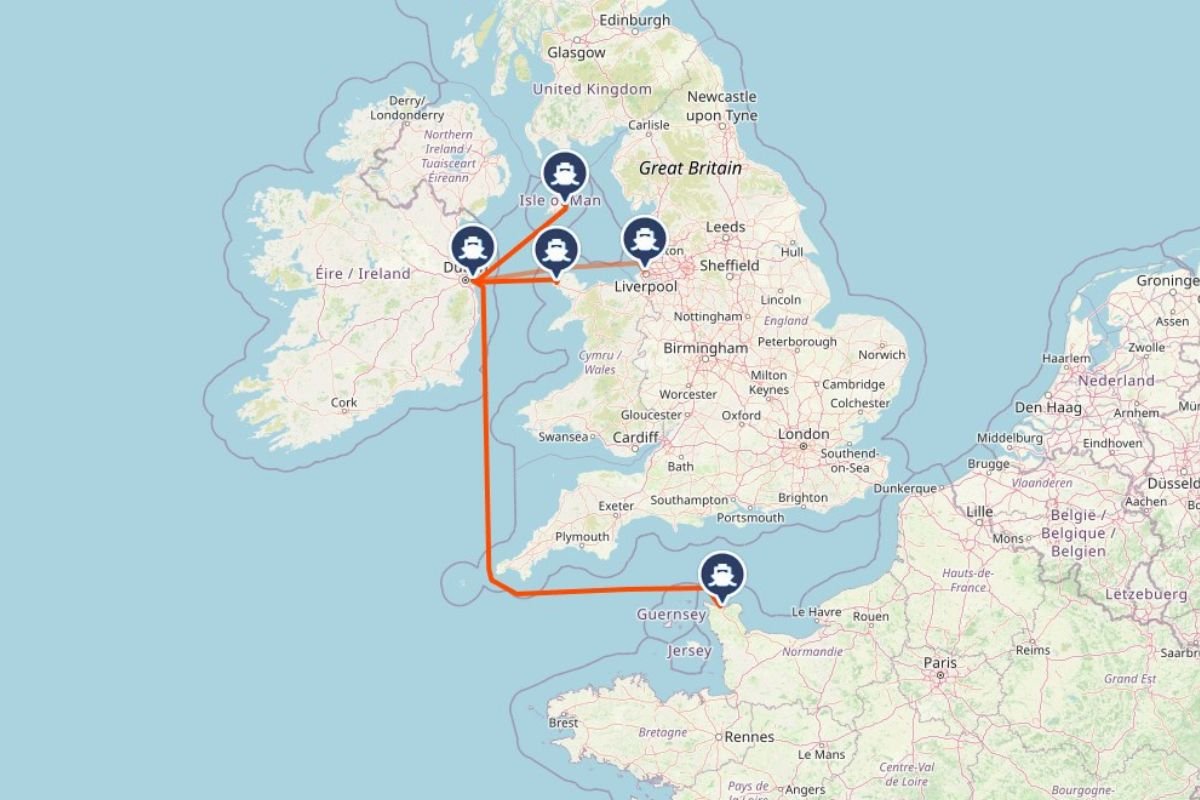
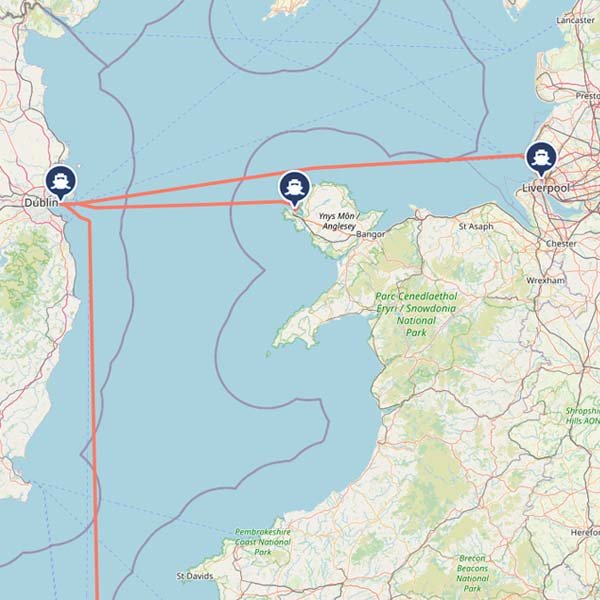
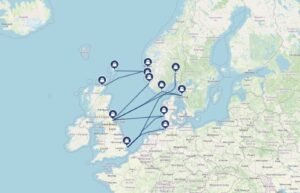
Map of direct ferry routes to Dublin
The map shows the principal direct passenger routes into Dublin. Timetables vary by season, particularly on the Douglas-Dublin connection, so use it as a route overview rather than as a live sailing schedule.
Direct ferries to Dublin compared
There are three direct passenger connections to Dublin, but they serve very different journeys. For most travellers from England or Wales, Holyhead is the clear first choice.
| Route | Operator | Typical crossing | Service | Best for |
|---|---|---|---|---|
| Holyhead-Dublin | Irish Ferries and Stena Line | About 2h15 to 3h30 | Regular, year-round | Most journeys from England and Wales |
| Cherbourg-Dublin | Irish Ferries | Approximately 18 to 21 hours | Regular but timetable varies | Driving from France or mainland Europe |
| Douglas-Dublin | Isle of Man Steam Packet Company | Approximately 3 hours | Limited and seasonal | Combining Dublin with the Isle of Man |
Timetable note: crossing times and sailing frequency vary by date, weather and vessel. The fast ferry is also more operationally sensitive than the larger conventional ships.
Is there a ferry to Dublin from Liverpool or Scotland?
Liverpool to Dublin
There is currently no regular direct passenger ferry from Liverpool or Birkenhead to Dublin. Stena Line operates a dedicated freight route between Birkenhead and Dublin, but this should not be treated as a normal bookable passenger service.
For passengers starting around Liverpool or north-west England, the practical choices are usually:
- drive or travel by train to Holyhead and take the direct ferry to Dublin;
- take the Liverpool-Belfast ferry and continue to Dublin by road;
- compare both complete journeys rather than looking only at the time spent at sea.
Read our dedicated update on the Liverpool or Birkenhead to Dublin ferry situation.
Scotland to Dublin
There is also no direct passenger ferry from Scotland to Dublin. From western Scotland, the usual alternative is to sail from Cairnryan to Belfast or Larne and then drive south. Belfast to Dublin takes roughly two hours by car in normal traffic.
This can be considerably more sensible than driving from Scotland to Holyhead. Compare the complete journey, including the drive to the departure port and the onward journey in Ireland.
See the available ferries to Belfast for the Scottish and northern English alternatives.
Holyhead-Dublin: the main ferry route from the UK
Holyhead-Dublin is the most useful direct route for most travellers from England and Wales. Holyhead is on Anglesey in North Wales and has road and rail connections towards Chester, the Midlands and the rest of England.
Two operators compete on the route:
- Irish Ferries operates the fast Dublin Swift alongside larger ships such as Ulysses and James Joyce.
- Stena Line operates large conventional ferries, with the ship used depending on the sailing and operational schedule.
The Dublin Swift is the fastest option, with a scheduled crossing of approximately 2 hours 15 minutes. Conventional ferries generally take around 3 hours 15 minutes to 3 hours 30 minutes. The larger ships provide more space and will usually feel steadier when conditions on the Irish Sea are lively.
Our experience on Holyhead-Dublin
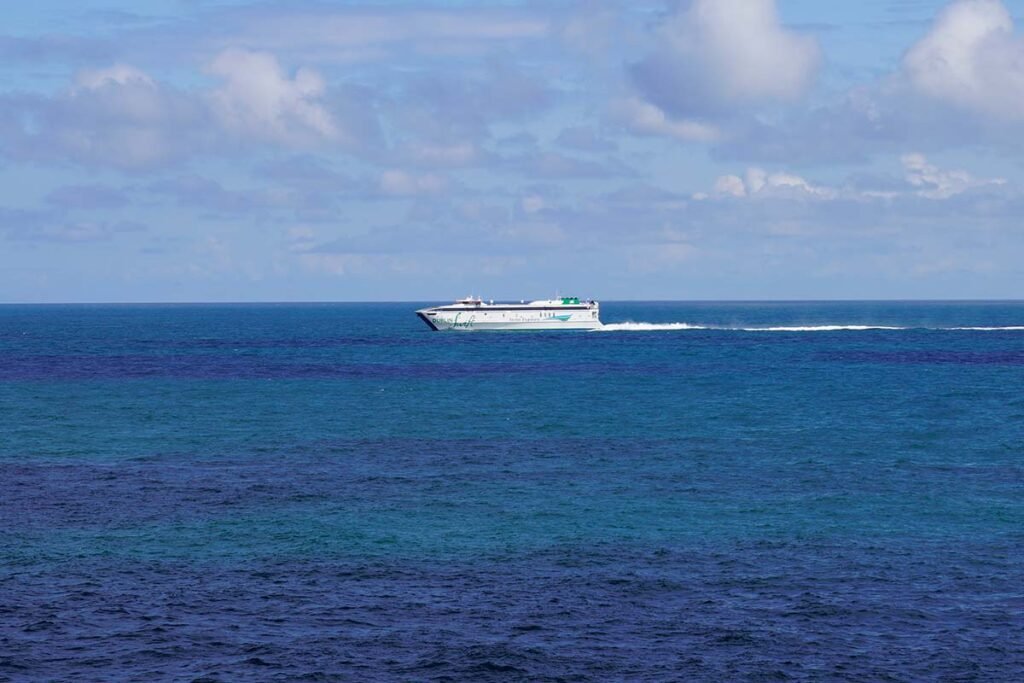
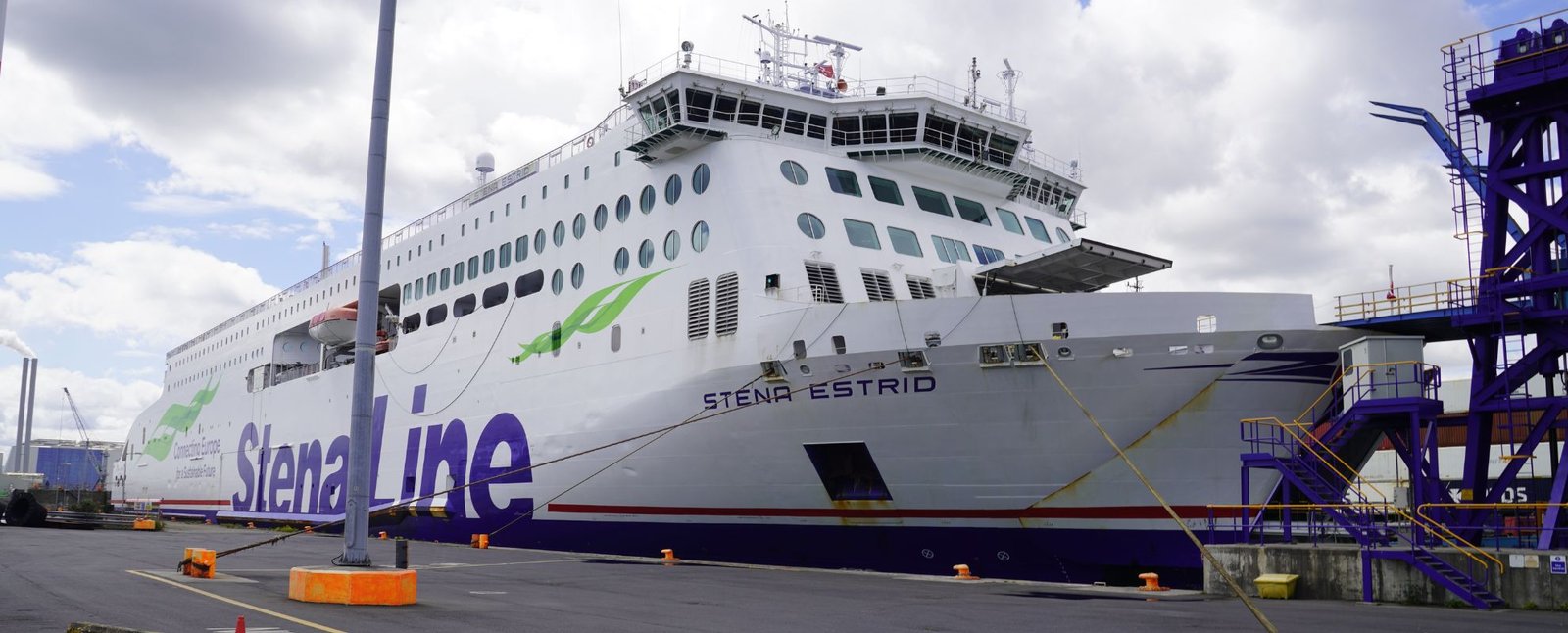
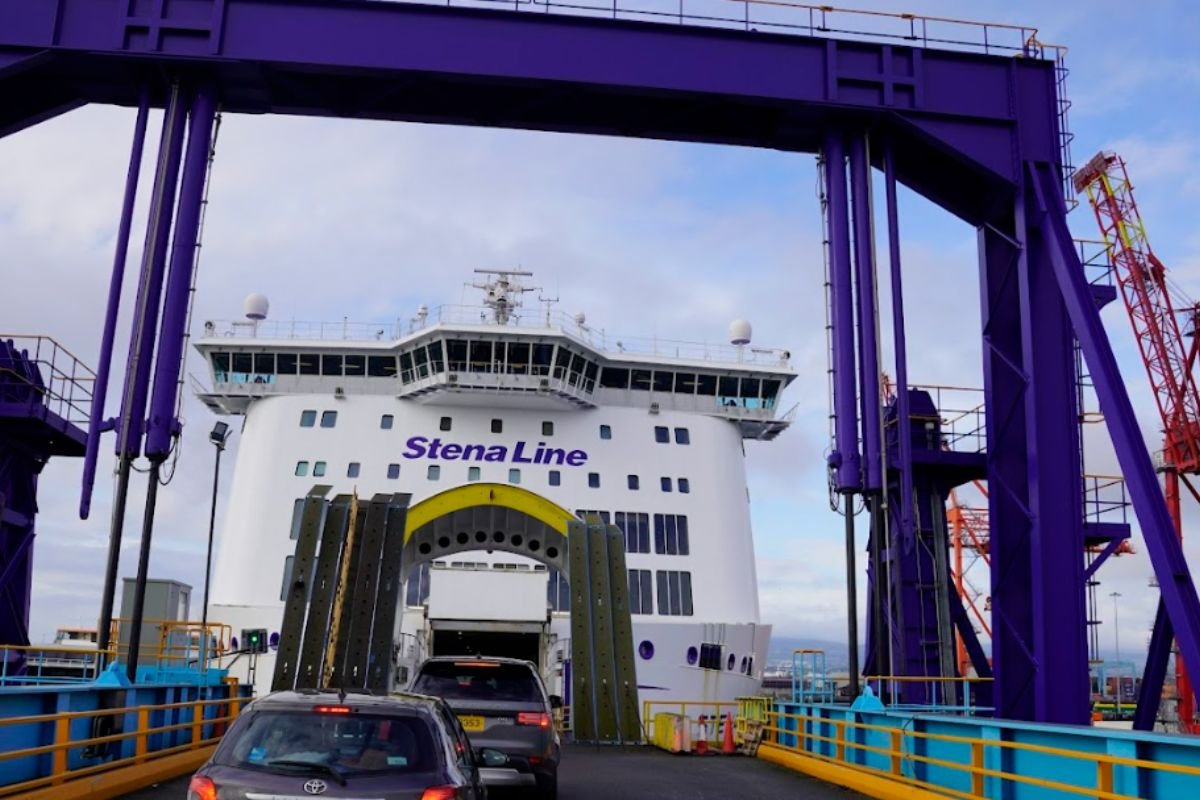
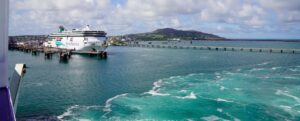
We sailed from Holyhead to Dublin in 2024 on the Dublin Swift and returned on Stena Line’s Stena Estrid. The difference between the two crossings was useful: the catamaran was noticeably quicker, while the conventional ferry felt more spacious and settled.
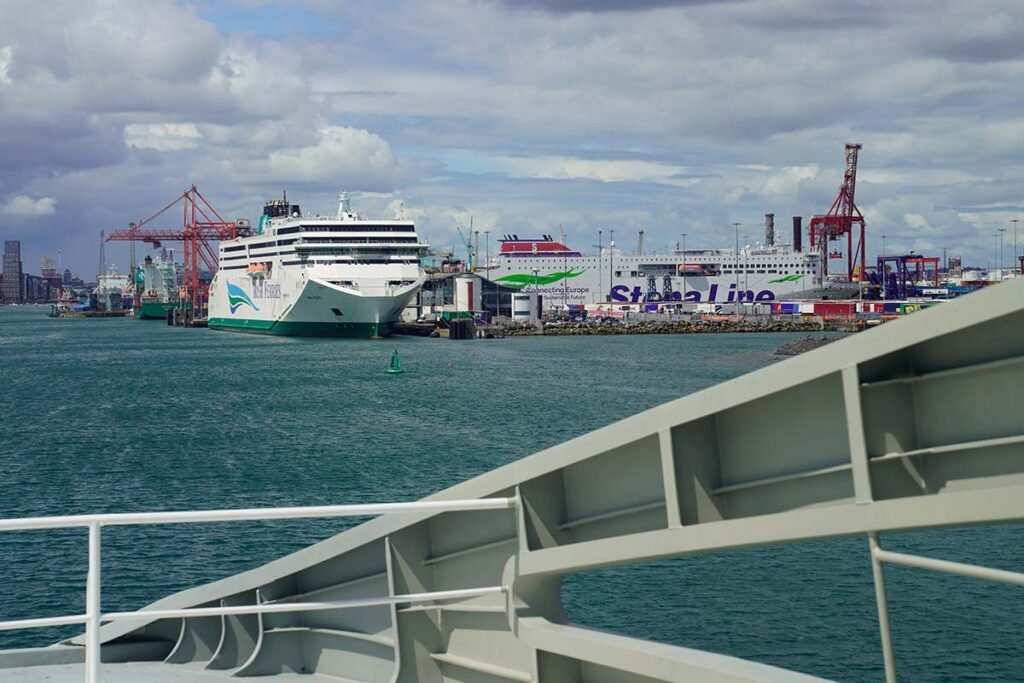
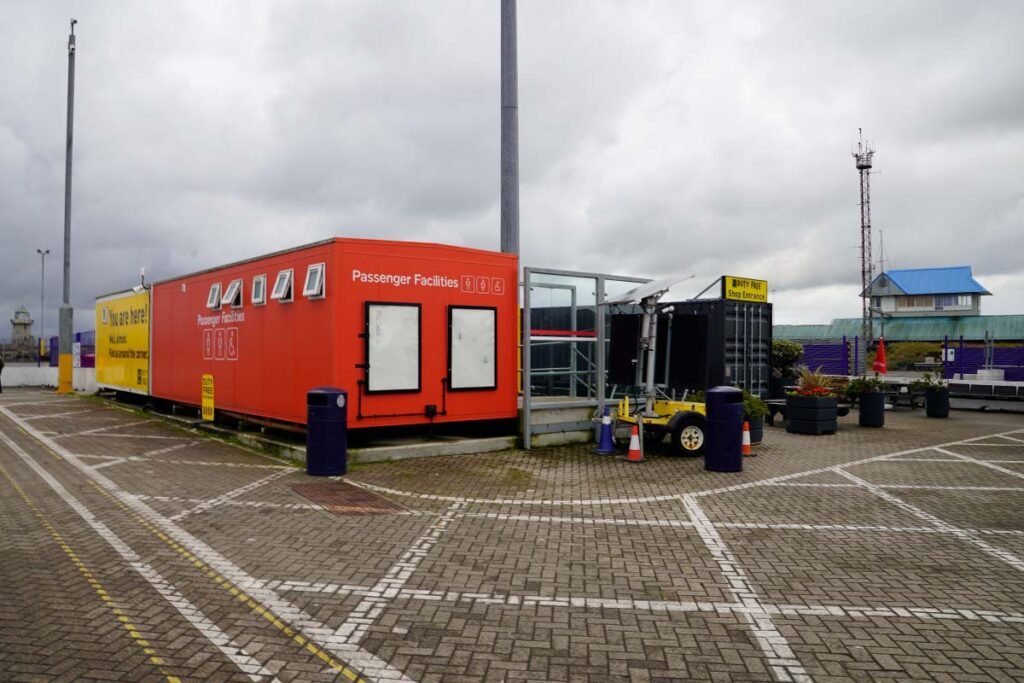
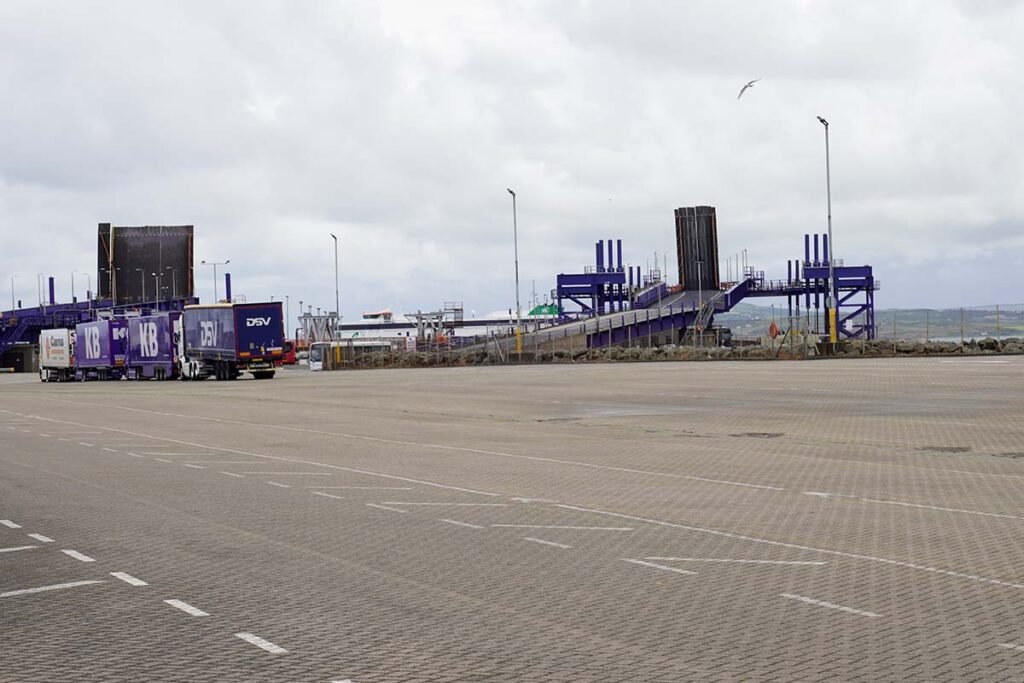
Holyhead’s ferry terminal felt small and straightforward, and its position beside the railway station makes the route particularly useful for foot passengers. Dublin Port was much larger and busier, so it is worth planning how you will travel from the terminal into the city before arrival.
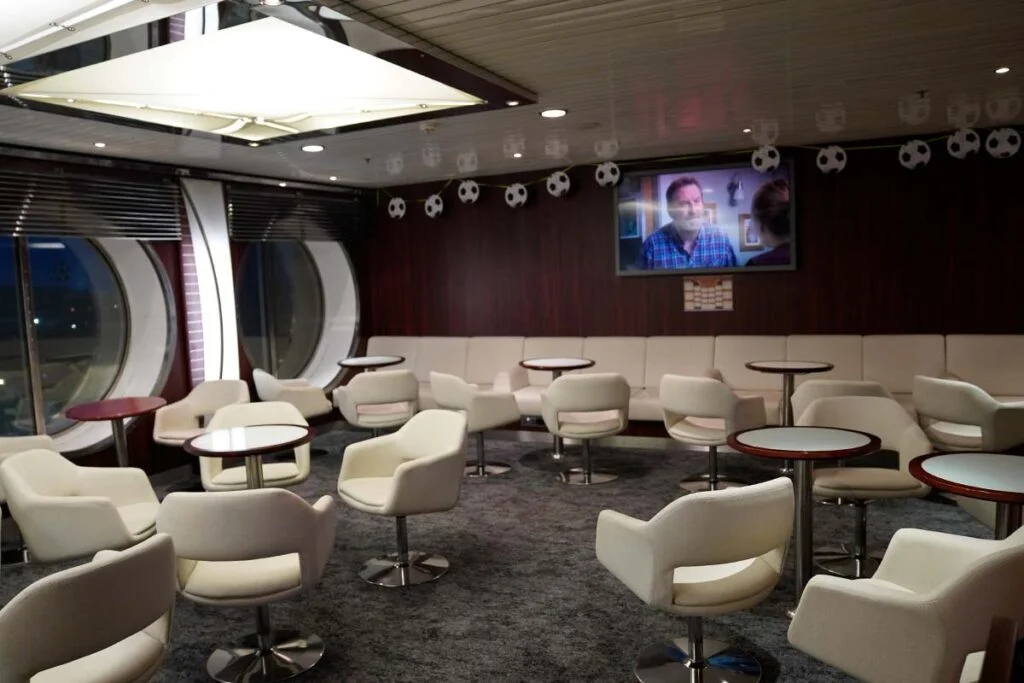
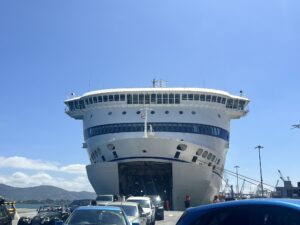
On the Dublin Swift, we found the interior spotless and the car deck surprisingly spacious. There was more movement than on the larger ferry, but the optional Club Class lounge gave us a calmer place to sit with the children.
Read our complete first-hand Dublin Swift crossing report, including photographs from the terminal, car deck, lounges and arrival in Dublin.
For ship comparisons, check-in guidance and advice on choosing between the fast and conventional ferries, continue to our detailed Holyhead to Dublin ferry guide.
Journey from Holyhead to Dublin on the Fast Dublin Swift Catamaran Ferry
Douglas-Dublin ferry from the Isle of Man
The Isle of Man Steam Packet Company operates selected sailings between Douglas and Dublin. This is primarily useful if you want to combine the Isle of Man with Ireland rather than travel directly from Great Britain to Dublin.
The crossing generally takes around three hours, but the service is limited and seasonal. It is important to build your itinerary around the actual timetable rather than assume that the route operates every day or every week.
Check both the outward and return sailing before booking accommodation. A limited timetable means that one available crossing does not guarantee a convenient return journey.
Cherbourg-Dublin ferry from France
Irish Ferries operates the direct Cherbourg-Dublin route. It is the most direct ferry option for travellers driving from northern France or mainland Europe who specifically want to arrive in Dublin.
The overnight crossing normally takes approximately 18 to 21 hours, depending on the sailing. Current vessels include W.B. Yeats and Isle of Inisheer. Because this is an overnight journey, include the cost of a cabin when comparing it with shorter crossings to Rosslare.
- Choose Dublin if the capital, eastern Ireland or Northern Ireland is your main destination.
- Compare Rosslare if you are heading towards Wexford, Waterford, Cork or southern Ireland.
- Book a cabin if you want to arrive rested enough for an onward drive.
- Compare the complete fare, including accommodation, meals and driving, rather than the headline ticket price alone.
See our complete overview of ferries from France to Ireland before deciding which Irish arrival port works best.
What are the ferries to Dublin like?
The experience depends heavily on the route and ship. Holyhead-Dublin can be a relatively short daytime crossing, while Cherbourg-Dublin is an overnight journey where your cabin becomes a much more important part of the trip.
- Conventional ferries: more space, outdoor decks, restaurants, shops and a steadier feel in rough conditions.
- Dublin Swift: the quickest crossing, with cafés, seating areas, a shop and optional Club Class, but less outdoor space and potentially more movement.
- Overnight ferries from France: cabins, restaurants, bars and lounges designed for a much longer journey.
- Travelling with children: larger ships provide more space to move around, while a lounge or cabin can make the journey calmer.
If you are sensitive to movement, see our guide to the best seats on a ferry for avoiding seasickness. Families can also use our first-hand guide to travelling comfortably with children on a ferry.
Alternative ferry routes for reaching Dublin
A ferry does not have to arrive in Dublin to be the best route to Dublin. Depending on where you start, arriving in Belfast or Rosslare can reduce the amount of driving required before the crossing.
| Starting region | Alternative crossing | Onward journey | When it makes sense |
|---|---|---|---|
| Scotland | Cairnryan-Belfast or Cairnryan-Larne | Approximately 2 hours by car | Usually avoids the long drive to Holyhead |
| North-west England | Liverpool-Belfast | Approximately 2 hours by car | Useful if a longer crossing is preferable to extra driving |
| South Wales | Fishguard-Rosslare or Pembroke-Rosslare | Approximately 2 hours by car | Often better from South Wales and South West England |
| Western France | Ferry to Rosslare or Cork | Varies by port | Useful as part of a wider Irish road trip |
Driving times are approximate and can be longer during peak traffic or around Dublin.
Which ferry to Dublin should you choose?
- From most of England or North Wales: start with Holyhead-Dublin. Compare Irish Ferries and Stena Line using the same travel dates.
- If speed matters most: check the Dublin Swift, but compare its departure time with the conventional ferries. A faster crossing is not necessarily a faster complete journey.
- If you prefer a steadier ship: choose one of the larger conventional ferries.
- From South Wales or South West England: compare Rosslare routes before driving north to Holyhead.
- From Scotland: travel through Belfast or Larne unless your wider itinerary makes Holyhead worthwhile.
- From north-west England: compare Holyhead-Dublin with Liverpool-Belfast and the onward drive.
- From France: compare direct Cherbourg-Dublin with ferries arriving at Rosslare.
- As a foot passenger: Holyhead is usually the easiest departure port because the railway station and ferry terminal are connected.
For most UK travellers whose destination is Dublin, start by comparing the Holyhead sailings. Only choose Belfast or Rosslare when the alternative port materially reduces the drive on the British side or fits a wider road trip better.
Arriving at Dublin Ferry Port
Dublin Port is approximately two miles from the city centre, but it is a large working port and not somewhere most passengers will want to leave on foot. Check the transfer arrangements for your operator before travelling.
Arriving with a car
The port connects conveniently with the Dublin Port Tunnel, M50 and M1. This makes it relatively easy to continue towards Dublin Airport, Belfast or the motorway network without driving through the city centre.
If you use the barrier-free M50 toll, your registration number is recorded automatically. Check the current eFlow payment instructions and deadline, particularly if you are driving a UK-registered or hired vehicle.
Arriving as a foot passenger
Do not assume that you can walk directly from the ferry berth into central Dublin. Operator transfer buses and other port transport arrangements can vary by sailing, so check how you will reach the city before departure.
Taking a bicycle
Both the booking procedure and check-in arrangements can differ for cyclists. Book the bicycle correctly rather than adding yourself as an ordinary foot passenger, and allow enough time to follow the vehicle boarding instructions at the port.
Compare ferry times and prices to Dublin
Use the booking module to compare current departure times, fares and availability. Search with the same passenger and vehicle details for each operator so that you are comparing like for like.
Fares vary by sailing time, travel date, vehicle size, passenger numbers and any cabin or lounge added. The cheapest ticket is not always the cheapest complete journey once fuel, motorway driving and overnight accommodation are included.
Passport, check-in and practical travel information
From 28 September 2026, passengers travelling with Stena Line or Irish Ferries between Great Britain and the Republic of Ireland must present a valid passport at check-in. This includes children. Alternative forms of photographic identification will no longer be accepted on the affected Holyhead-Dublin, Fishguard-Rosslare and Pembroke-Rosslare routes.
Identification rules for Northern Ireland and Isle of Man routes differ. Always check the requirements for your exact route and operator before travelling.
Check-in
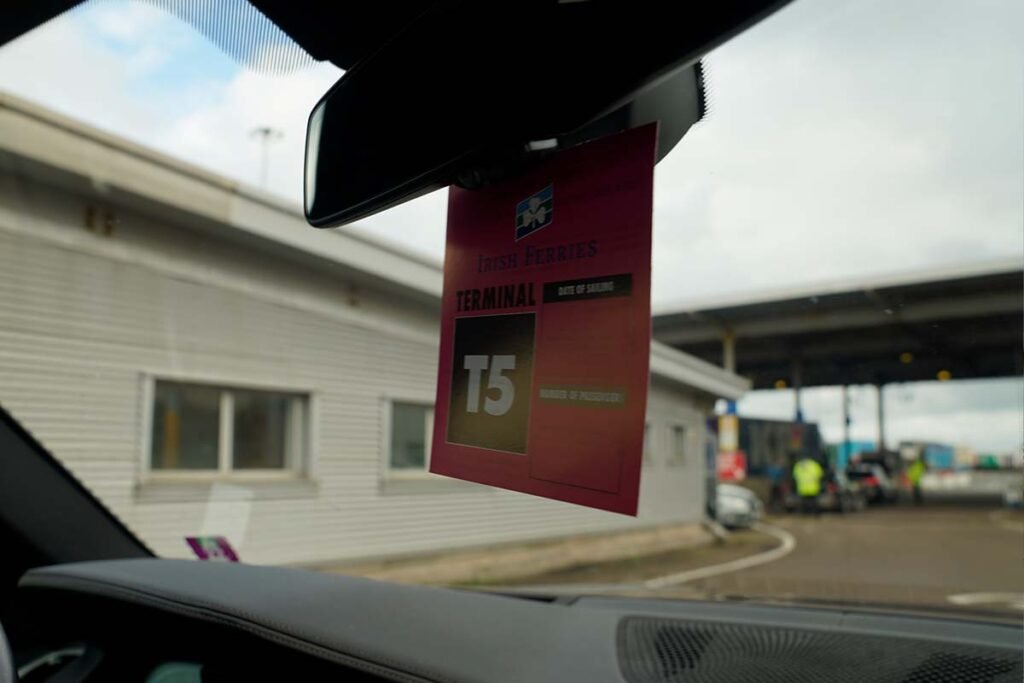
Check-in deadlines depend on the operator, route and whether you are travelling with a vehicle, bicycle or as a foot passenger. Use the deadline on your booking confirmation and leave additional time during school holidays and busy weekends.
Driving in Ireland
Ireland drives on the left, as in the UK. Bring your driving licence, valid insurance and the vehicle documents required for your journey. If the vehicle is hired, leased or borrowed, check whether you need additional authorisation to take it abroad.
Luggage
Travelling by ferry makes it easier to bring luggage, bicycles and family equipment, particularly when travelling with a car. Keep everything needed during the crossing in a separate bag because vehicle decks are normally closed while the ship is at sea.
Mobile data at sea
Download maps, tickets and entertainment before boarding. Phones can connect to maritime networks while at sea, which may cost considerably more than ordinary UK or EU roaming.
Travelling with children
Bring snacks, downloaded entertainment and a change of clothes in your hand luggage. On the longer Cherbourg crossing, a cabin makes a substantial difference to how rested everyone feels on arrival.
Travelling with a dog
Pet facilities vary by ship. Depending on the sailing, options may include kennels, pet lounges, pet-friendly cabins or remaining in the vehicle. Check the exact ship and sailing before booking and read our guide to taking a dog on a ferry.
Our verdict on the best ferry to Dublin
Holyhead-Dublin is the best starting point for most ferry journeys from Great Britain to Dublin. It offers the widest choice of departures, two competing operators and both fast and conventional ships.
However, it is not automatically the best route from every part of the UK. From Scotland, Belfast or Larne will usually be more logical. From South Wales, Rosslare deserves comparison. From north-west England, Liverpool-Belfast may save driving even though the ferry itself takes longer.
Our advice is to compare the complete journey from your front door to your final destination. Crossing time matters, but so do departure times, port access, onward driving and whether you will arrive rested.
Continue with the Holyhead-Dublin route guide, see our Dublin Swift experience, or compare every major ferry from the UK to Ireland.


Do i need a UK visa in order to travel to Holyhead?
Hi Sujith,
You can read all about passports and international travel documents here:
https://ferrygogo.com/international-ferry-travel-id-requirements/