

What is the best ferry route to Ireland when you are driving from the Netherlands, Belgium, Germany or France? You have two fundamentally different options: take one long ferry directly from France to Ireland, or use two ferries and drive across Great Britain.
The direct ferry is normally the simpler journey. You check in once, avoid British motorway traffic and spend the night in a cabin. Travelling via Britain gives you more routes and shorter individual crossings, but also adds a substantial drive, a second check-in and the risk of missing a separately booked connection.
This page compares routes that start in mainland Europe. If you are starting in England, Scotland or Wales, use our separate guide to ferries from the UK to Ireland.
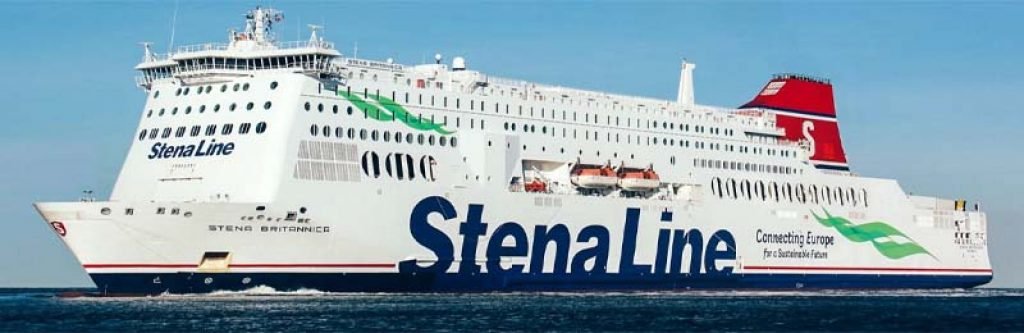
Direct ferry or two crossings via Britain?
A direct sailing from France can take most of a day, but that does not necessarily make it the slowest complete journey. A landbridge itinerary includes two check-ins, two periods of disembarkation and usually three to seven hours of driving across Britain.
The better comparison is therefore not simply the time spent at sea. Compare the complete journey from home to your first destination in Ireland, including cabins, road distances, rest stops and the connection between the two ferries.
| Option | Main advantage | Main compromise | Usually best for |
|---|---|---|---|
| Direct from France | One ferry and no drive across Britain | A long crossing, normally requiring a cabin | France, Belgium and southern Ireland |
| Central landbridge | A logical two-ferry corridor towards Dublin | Two bookings and a drive across Britain | The Netherlands or western Germany to Dublin |
| Northern landbridge | Avoids driving south towards Holyhead | Two crossings and a Scottish road leg | Northern Europe to Northern Ireland |
| Channel landbridge | Frequent first crossings and greater flexibility | The most driving in Britain | Travellers avoiding a long first ferry |
The three main routes from Europe to Ireland
1. Direct from France to Ireland
Drive to Boulogne-sur-Mer, Dunkirk, Cherbourg or Roscoff and take one ferry directly to Cork, Rosslare or Dublin. This normally provides the simplest itinerary from France and Belgium and can also work well from the southern Netherlands or western Germany.
2. Central landbridge via Hull and Holyhead
Take the overnight Rotterdam-Hull ferry, drive across northern England and North Wales, and continue from Holyhead to Dublin. This is often the most geographically logical landbridge for travellers from the Netherlands heading to Dublin or eastern Ireland.
3. Northern landbridge via Newcastle and Cairnryan
Take the overnight IJmuiden-Newcastle ferry, drive to Cairnryan and sail to Belfast or Larne. This is usually the strongest option from northern Europe when Northern Ireland or the northern half of Ireland is your destination.
Landbridge routes compared
The driving times below are approximate and exclude stops, congestion, disembarkation and ferry check-in. Use them to compare the shape of the journeys, not to plan a tight connection.
| First crossing | British road leg | Second crossing | Best for |
|---|---|---|---|
| Rotterdam-Hull | Hull to Holyhead: approximately 4.5 to 5.5 hours | Holyhead-Dublin | Dublin and eastern Ireland |
| Hook of Holland-Harwich | Harwich to Holyhead: approximately 6 to 7 hours | Holyhead-Dublin | Travellers prioritising the Harwich sailing or Rail & Sail |
| IJmuiden-Newcastle | Newcastle to Cairnryan: approximately 3 to 3.5 hours | Cairnryan-Belfast or Larne | Northern Ireland |
| Calais or Dunkirk-Dover | Dover to South Wales: approximately 5 to 6 hours | Fishguard or Pembroke-Rosslare | South-east Ireland with shorter individual crossings |
Connection note: driving times can increase considerably around Birmingham, London, Manchester and during holiday periods. Always calculate from scheduled disembarkation to the second ferry’s check-in deadline.
Best ferry route from the Netherlands to Ireland
There is no direct ferry from the Netherlands to Ireland. You can either drive to northern France for a direct sailing or use one of the three Netherlands-Britain ferries as the first part of a landbridge.
For Dublin and eastern Ireland
The most logical two-ferry combination will often be:
- Rotterdam-Hull
- Drive from Hull across northern England and North Wales
- Holyhead-Dublin
Rotterdam-Hull places you considerably farther north and west than Hook of Holland-Harwich, reducing the remaining British drive. The overnight crossing also lets you start the road leg in the morning after sleeping in a cabin.
Hook of Holland-Harwich remains worth comparing if its departure port, price or sailing time works better for you. The trade-off is the longer drive from Harwich to Holyhead. We would not choose between these routes based only on the distance to the Dutch departure port.
For Belfast and Northern Ireland
From the northern and central Netherlands, the most logical combination is often:
- IJmuiden-Newcastle
- Drive from Newcastle to Cairnryan
- Cairnryan-Belfast or Cairnryan-Larne
This route avoids travelling south to Holyhead and then driving north again after arriving in Ireland. It is especially useful for Belfast, the Causeway Coast, Donegal and the northern part of the island.
When should you drive to France instead?
A direct ferry from northern France becomes particularly attractive when your destination is Cork, Kerry, Wexford or Waterford. The drive to Boulogne-sur-Mer or Dunkirk may be longer than the drive to a Dutch ferry port, but it removes the complete British landbridge from the itinerary.
Best ferry route from Belgium to Ireland
Belgium is well placed for the direct routes from northern France. Boulogne-sur-Mer and Dunkirk are relatively easy to reach from Belgium and now provide direct connections to both Cork and Rosslare.
Boulogne-sur-Mer-Cork is especially interesting because Boulogne is in northern France, relatively close to Belgium. Dunkirk-Rosslare remains the more logical of the two when your destination is south-east Ireland rather than Cork or Kerry.
Best ferry route from Germany to Ireland
The right route from Germany depends heavily on where you start. Travellers from western Germany can use the Dutch ferry ports or continue towards northern France. From northern Germany, IJmuiden-Newcastle is better positioned for a journey towards Belfast. From southern Germany, driving through France for a direct ferry can be more efficient than making a large diversion through the Netherlands and Britain.
- Western Germany to Dublin: compare Rotterdam-Hull plus Holyhead-Dublin with Cherbourg-Dublin.
- Northern Germany to Northern Ireland: compare IJmuiden-Newcastle plus Cairnryan-Belfast or Larne.
- Southern Germany to Ireland: the direct routes from France will often produce a simpler overall journey.
- Germany to southern Ireland: compare Boulogne-sur-Mer-Cork, Roscoff-Cork and the routes to Rosslare.
Direct ferries from France to Ireland
France has the only direct passenger ferries between mainland Europe and Ireland. The best French departure port is not necessarily the closest one. Choose it primarily by where the ferry arrives in Ireland.
| Route | Operator | Best for | Route character |
|---|---|---|---|
| Boulogne-sur-Mer-Cork | Hibernia Line | Cork, Kerry and south-west Ireland | Year-round northern France connection launched in 2026 |
| Dunkirk-Rosslare | DFDS | Belgium, the Netherlands and south-east Ireland | Long crossing with cabin and meals included in the passenger product |
| Cherbourg-Dublin | Irish Ferries | Dublin, eastern Ireland and onward travel north | Direct overnight arrival in the Irish capital |
| Cherbourg-Rosslare | Stena Line and Brittany Ferries | Wexford, Waterford and the south | Choice varies by date and seasonal timetable |
| Roscoff-Cork | Brittany Ferries | Cork, Kerry and western France | Seasonal route from Brittany |
| Roscoff-Rosslare | Brittany Ferries | South-east Ireland from Brittany | Seasonal timetable |
Timetable note: France-Ireland services do not all operate every day or throughout the entire year. Operators, vessels, crossing times and frequencies can change between seasons. Check both the outward and return timetable for your actual travel dates.
See our dedicated comparison of ferries from France to Ireland for detailed route and operator information.
Boulogne-sur-Mer-Cork: a new option from northern France
Hibernia Line launched the direct passenger and vehicle ferry between Boulogne-sur-Mer and Ringaskiddy in Cork Harbour in June 2026. The route is scheduled to operate throughout the year, with several sailings per week in each direction.
This materially changes the route choice from Belgium, the Netherlands and parts of western Germany. Boulogne-sur-Mer is considerably farther north than Roscoff, while Cork provides direct access to southern and south-west Ireland without driving across Britain or across Ireland from Dublin.
- Choose it for: Cork, Kerry, Kinsale, West Cork and the southern Wild Atlantic Way.
- Compare it with: Dunkirk-Rosslare when travelling to Wexford, Waterford or eastern Ireland.
- Allow for: a long overnight crossing where cabin choice has a meaningful effect on comfort.
- Check carefully: the arrival day and time before arranging accommodation or a long onward drive.
Which Irish arrival port should you choose?
The arrival port can make a larger difference than the nominal ferry duration. Ireland is not enormous, but choosing the wrong coast can add several hours of unnecessary driving.
| Your destination | Most useful arrival | Routes to compare first |
|---|---|---|
| Dublin and eastern Ireland | Dublin | Cherbourg-Dublin or the landbridge via Holyhead |
| Belfast and Northern Ireland | Belfast or Larne | IJmuiden-Newcastle plus Cairnryan-Belfast or Larne |
| Wexford and Waterford | Rosslare | Dunkirk-Rosslare, Cherbourg-Rosslare or South Wales-Rosslare |
| Cork and Kerry | Cork | Boulogne-sur-Mer-Cork or Roscoff-Cork |
| Galway and western Ireland | Depends on starting route | Dublin, Rosslare and Cork based on total driving time |
| Donegal and north-west Ireland | Belfast or Larne | Northern landbridge via Newcastle and Cairnryan |
We tested important parts of the landbridge
What our crossings showed us
FerryGoGo has travelled overnight between the Netherlands and Britain and tested Holyhead-Dublin in both directions. These experiences showed us that a landbridge is not simply two ferry durations added together.
After an overnight crossing, the British road leg becomes an important part of the decision. A comfortable cabin helps, but you still need enough time for disembarkation, driving, breaks and check-in for the second ferry.
On Holyhead-Dublin we used the fast Dublin Swift to Ireland and returned on a larger conventional Stena Line ferry. The fast catamaran reduced the crossing time, while the conventional ship provided more space and felt more settled. After several hours behind the wheel, comfort can matter as much as the nominal sailing time.
We have also travelled on the overnight Netherlands-Britain routes to Harwich, Hull and Newcastle. Of these three British arrival ports, Hull is geographically the most useful for continuing towards Holyhead, while Newcastle is the clear northern choice for Cairnryan and Belfast.
How much connection time do you need?
Some operators offer landbridge products that combine two crossings in one fare. These can provide a simpler booking process, but you should still check the conditions covering delays and missed sailings. A combined fare does not make British traffic disappear.
Can you use LeShuttle instead of the first ferry?
Yes. If you want to minimise the first period at sea, you can take LeShuttle between Calais and Folkestone and then drive to a ferry port in Wales or Scotland. There is no bridge or tunnel between Great Britain and Ireland, so the second ferry remains necessary.
LeShuttle is most relevant when frequent departures and a short Channel crossing matter more than limiting the amount of driving. Folkestone still leaves a long road journey to Holyhead, Fishguard or Pembroke, so it is rarely the least tiring route from mainland Europe.
Direct ferry or landbridge with children?
With children, the direct ferry has one major advantage: once you have boarded, you can settle into your cabin and stop managing check-ins and motorway breaks. The compromise is spending much longer aboard one ship.
The landbridge divides the sailing time into shorter sections, but the British drive can make the day feel longer than expected. If you choose this route, keep food, drinks, a change of clothes and entertainment accessible rather than leaving everything in the main luggage on the vehicle deck.
Taking a camper, caravan or motorhome to Ireland
All the principal routes on this page carry vehicles, but the fare can change significantly with vehicle length and height. Enter the complete dimensions of a camper or a car and caravan accurately when comparing prices.
A direct sailing can be especially attractive with a larger vehicle because it removes a full day of British motorway driving. On the other hand, a landbridge can provide more sailing dates and departure-port choice. Check whether meals, a cabin and any electrical connection or pet facility are included or charged separately.
Practical planning before you book
- Compare complete fares: include cabins, meals, fuel, tolls and any hotel required between the crossings.
- Check both directions: a convenient outward sailing does not guarantee an equally useful return journey.
- Keep overnight items accessible: vehicle decks are normally closed while the ferry is at sea.
- Check identification requirements: rules can differ between mainland Europe, Great Britain, Northern Ireland and the Republic of Ireland.
- Remember the speed units: the Republic of Ireland uses kilometres per hour, while Great Britain and Northern Ireland use miles per hour.
- Download your documents: keep tickets, booking references and route information available offline.
- Check mobile roaming: phones can connect to expensive maritime networks while at sea.
Our verdict on the best ferry route to Ireland from Europe
From France or Belgium, we would compare the direct ferries first. Boulogne-sur-Mer-Cork is a particularly useful new option for southern Ireland, Dunkirk-Rosslare works well for the south-east and Cherbourg-Dublin provides the direct route to the capital.
From the Netherlands or western Germany, the choice is closer. Rotterdam-Hull followed by Holyhead-Dublin is the strongest central landbridge towards Dublin. IJmuiden-Newcastle followed by Cairnryan-Belfast or Larne is the logical northern route. For Cork, Kerry or south-east Ireland, driving to France for one direct sailing may still be considerably simpler.
Do not choose solely by the shortest ferry crossing. Compare the entire journey from home to your destination in Ireland, including two check-ins, British driving, cabin comfort and the amount of recovery time you will need after arriving.
Get our latest ferry guides, route updates and travel tips in your Google feed. Add FerryGoGo as a preferred source in Google, and follow us in Discover when Google shows the option.





If I am right, there are only 22 sailings from Liverpool’s port a week. So I was surprised to see it listed as going to Ireland. I guess this is a short trip, so it makes sense. I don’t suppose they are very frequent, though.
Hi Stanley,
If you look at the port of Liverpool: There are about 10 – ferry departures per day leaving port for Ireland. The biggest routes are at this moment: Liverpool-Belfast and Liverpool-Dublin.