Brittany Ferries can genuinely ‘shine’ onboard – but only if you pick the right setup for your sailing. This guide helps you choose between (1) a seat, lounge or cabin on a day crossing, (2) the best cabin type for an overnight sailing, and (3) upgrades (lounges, food options, pre-book dining) that actually add value.
We’ve sailed with Brittany Ferries a few times now, including a daytime crossing on the Saint-Malo route and an overnight sailing on another trip. Same operator, completely different feel onboard, and the ‘best choice’ (seat vs lounge vs cabin) changes more than most people expect.
What we’ve learned: it’s rarely about booking the fanciest option. It’s about booking the option that gives you your own spot for the crossing: naps, quiet, a proper sleep, or simply somewhere to breathe when the ship gets busy.
If you want the full trip feel, these are our two crossing reports:
- Portsmouth ⇄ Cherbourg on Santoña (our experience)
- Saint-Malo ⇄ Portsmouth (our experience + visuals)
The quick decision (our 3 rules):
- Day crossing + kids (naps) → check the price of a discounted day cabin first.
- Overnight → a cabin is the smart default if you want proper sleep.
- Long drive / tight timings → Flexi is often ‘stress insurance’, and a cabin can help you arrive more rested.
Short on time? Start with the route table below, then scroll to ‘Day vs night’ and ‘Ticket types: Standard vs Flexi’ for the practical decision points.
Quick picks per route: Smart default booking (plus the upgrade we’d actually consider)
If you just want the ‘tell me what to book’ answer, start here. These are the most common sensible picks for the routes we’ve sailed ourselves, plus a handful of the most popular Brittany Ferries crossings from the UK to France and Spain.
Saint-Malo (especially with kids): even when it’s a day sailing, we’d still actively check the price of a day cabin. On our Saint-Malo daytime crossing, we didn’t book one – and we regretted it afterwards. That ‘private base’ isn’t luxury, it’s options (nap time, reset button, your own bathroom).
How to read the table: think of ‘Smart default booking’ as the no-regrets option for most people, then look at the ‘Best upgrade’ column only if you’ll genuinely use it.
| Route | Typical crossing | Most people should book | Best upgrade (kids / comfort) | Dogs | Ticket type tip |
|---|---|---|---|---|---|
| Portsmouth ⇄ Cherbourg | Short / day | Free seating | Discounted day cabin if available (nap + own bathroom) or lounge on busy sailings | If travelling with a dog, prioritise pet-friendly cabin when offered (sells out first) | Standard if plans are fixed; Flexi if you’ve got a long drive to port or tight timings |
| Poole ⇄ Cherbourg | Short / day | Free seating | Lounge if you want a calmer corner; day cabin only if heavily discounted | Pet options can be limited on peak dates: book around pet availability | Standard is usually fine; Flexi if you might miss check-in due to traffic |
| Portsmouth ⇄ Caen (Ouistreham) | Medium / often overnight | Standard cabin (inside) on overnight sailings | Outside cabin if you want daylight; Club cabin if you’re sensitive to sleep quality | Pet-friendly cabin first choice; check kennel rules if no pet cabins left | Flexi is often worth it for families (delays happen) |
| Portsmouth ⇄ Saint-Malo | Day or overnight (varies) | Day: free seating • Overnight: Standard cabin | With kids, a day cabin is often a genuinely useful upgrade (nap/reset/bathroom) - even on day sailings | Pet-friendly cabins sell out early on this route, book early for peak dates | If you’re travelling in school holidays, Flexi can be the ‘stress insurance’ option |
| Portsmouth ⇄ Le Havre | Medium / often overnight | Standard cabin (inside) | Outside cabin for a nicer wake-up; consider Club on longer sailings | Plan around pet cabin availability first | Flexi if you’ve got hotels booked around arrival/departure times |
| Plymouth ⇄ Roscoff | Medium / day or overnight | Day: free seating • Overnight: Standard cabin | Lounge on busy day sailings; discounted day cabin can be a big win with toddlers | Pet-friendly cabin (best) or kennel options depending on ship | Standard if stable; Flexi if you’re coming from far away / tight changeover days |
| Portsmouth ⇄ Santander | Long / overnight (Spain) | Cabin (Standard as baseline) | Club cabin if you’ll feel the comfort bump; pre-book meals to simplify the crossing | Pet options are limited: book early and double-check route rules | Flexi is sensible if any delay would disrupt accommodation or return plans |
| Plymouth ⇄ Santander | Long / overnight (Spain) | Cabin (Standard as baseline) | Outside cabin for daylight; Club/Commodore for ‘holiday starts onboard’ comfort | Book around pet availability first (peak dates go quickly) | Flexi recommended for road-trip style itineraries (lots of moving parts) |
| Portsmouth ⇄ Bilbao | Very long / multi-night (Spain) | Cabin is non-negotiable for most people | Club/Commodore if budget allows; plan food (pre-book where possible) + bring a ‘sleep routine’ | Check pet cabin/kennel rules carefully and book early | Flexi makes sense if a shift in timing would cost serious money elsewhere |
Table takeaway: for short day crossings, free seating is usually fine; for overnight sailings, treat a cabin as the default. If you’re travelling with kids (naps) or a dog (pet cabins), availability often decides your ‘best’ option.
Day vs night: the simple decision (seat, lounge, or cabin?)
Start with one question: day crossing or overnight? Then choose your onboard ‘base’. Here’s the quick, real-life version:
- Day crossing (roughly 4–8 hours): free seating is usually fine. Upgrade only if you’ll genuinely use it (naps, work calls, you hate busy areas, you want a guaranteed corner).
- Overnight: book a cabin as the default if you want proper sleep. Recliners can be OK, but arriving rested is a different experience.
- Travelling with a dog: aim for a pet-friendly cabin first (they sell out quickly). If none are left, check kennel rules per route/ship.
- Families: if your kids still nap, a cabin can be the best ‘calm button’ even by day, not for luxury, but for options when the ship gets busy. On routes like Portsmouth ⇄ Saint-Malo, this can genuinely be the smartest upgrade.
- Quick packing tip: grab everything you’ll need from the car (and a jumper) before you sail – you usually can’t return to the car deck mid-crossing, and air-con can feel chilly onboard.
Accommodation overview (official Brittany Ferries page)
Cabin categories and lounge options vary by ship. For the latest availability on your sailing, use Brittany Ferries’ accommodation overview alongside the booking pages:
Brittany Ferries accommodation overview →
Cabin types on Brittany Ferries (what you get + who it suits)
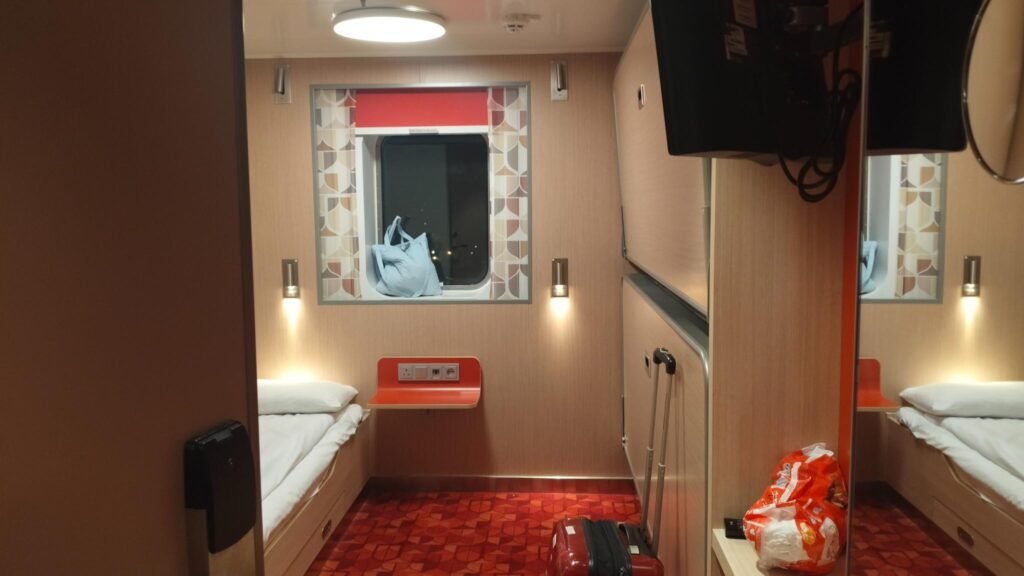
This is the bit you’ll come back to when you’re actually booking. Cabin names vary by ship, but the ladder is usually the same: Standard → Standard Plus (where offered) → Club → Commodore. Add accessible/pet-friendly variants where needed, and treat lounge seating as a comfort add-on for day sailings.
Note: cabin layouts and inclusions can vary by ship and route. Use the logic below, then double-check the exact option wording when you book.
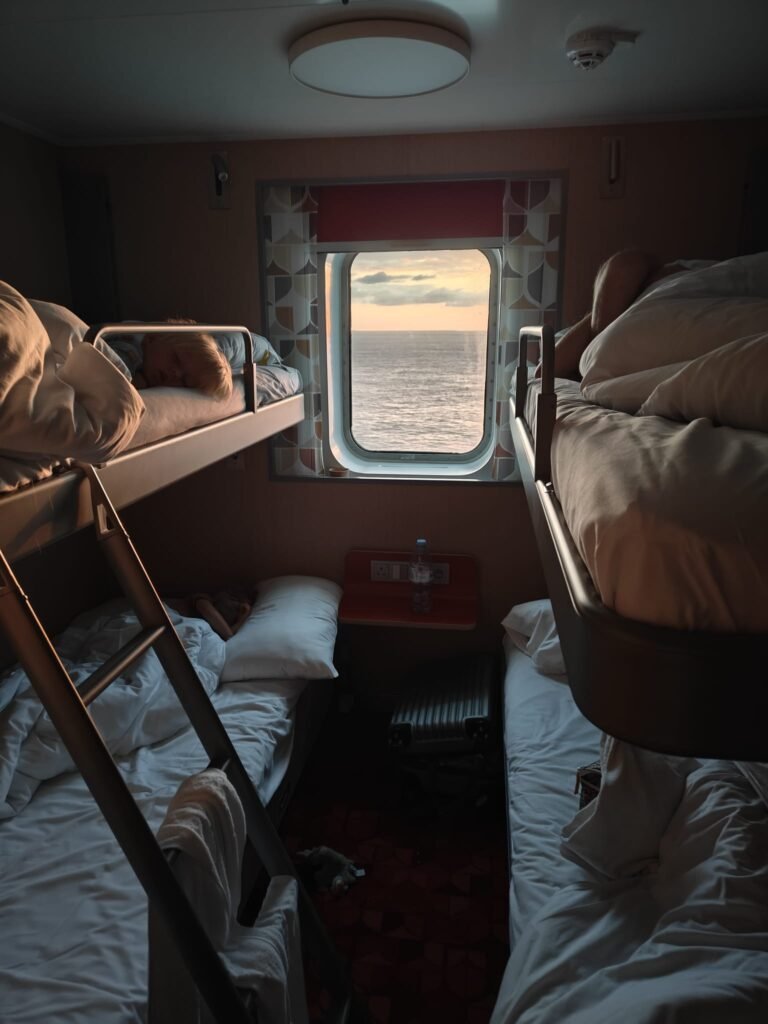
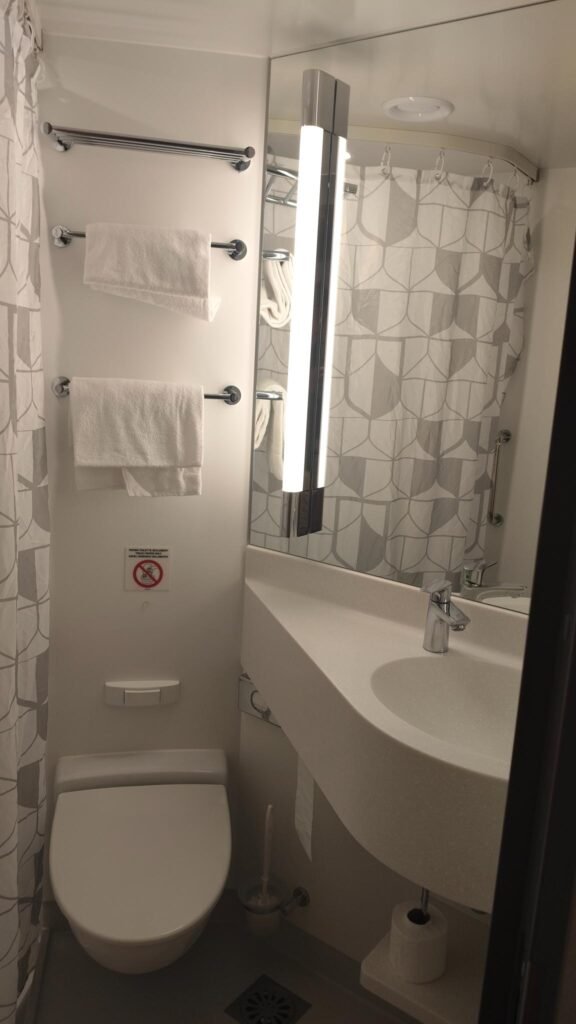
1) Standard cabin (inside)
What you get: private en-suite (shower/WC) plus beds/berths (layout varies), basic storage and the essentials.
Why people book it: overnight, it’s the difference between ‘we slept’ and ‘we survived’. By day, it’s mainly about privacy, naps, and your own bathroom – especially with kids.
- Pros: best value; proper sleep; your own base onboard.
- Cons: no sea view; can feel tight at 4 berths.
2) Standard cabin (outside / sea view)
What you get: as Standard, plus a window/sea view. If you like daylight (or you’ll spend time in the cabin), this is the upgrade people rarely regret.
- Pros: brighter; nicer wake-up; more ‘holiday feel’.
- Cons: costs more; can sell out earlier.
3) Standard Plus cabin
What you get: a slightly upgraded Standard category (where offered), a comfort bump without going fully premium.
- Pros: often a strong value upgrade on longer crossings.
- Cons: not available on every ship/route.
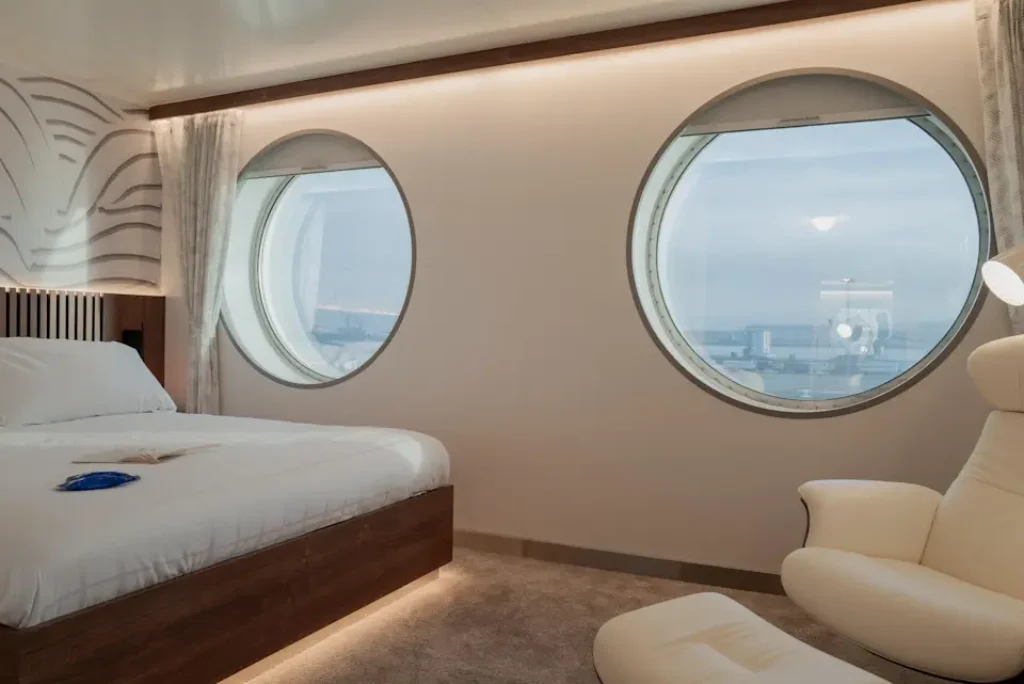
4) Club cabin
What you get: a more premium, ‘hotel-like’ finish (details vary). If you care about sleep quality, this is where the crossing starts feeling like part of the trip, not just transport.
- Pros: nicer feel; better overnight comfort; good for longer routes.
- Cons: pricier; limited availability.
5) Commodore categories/suites
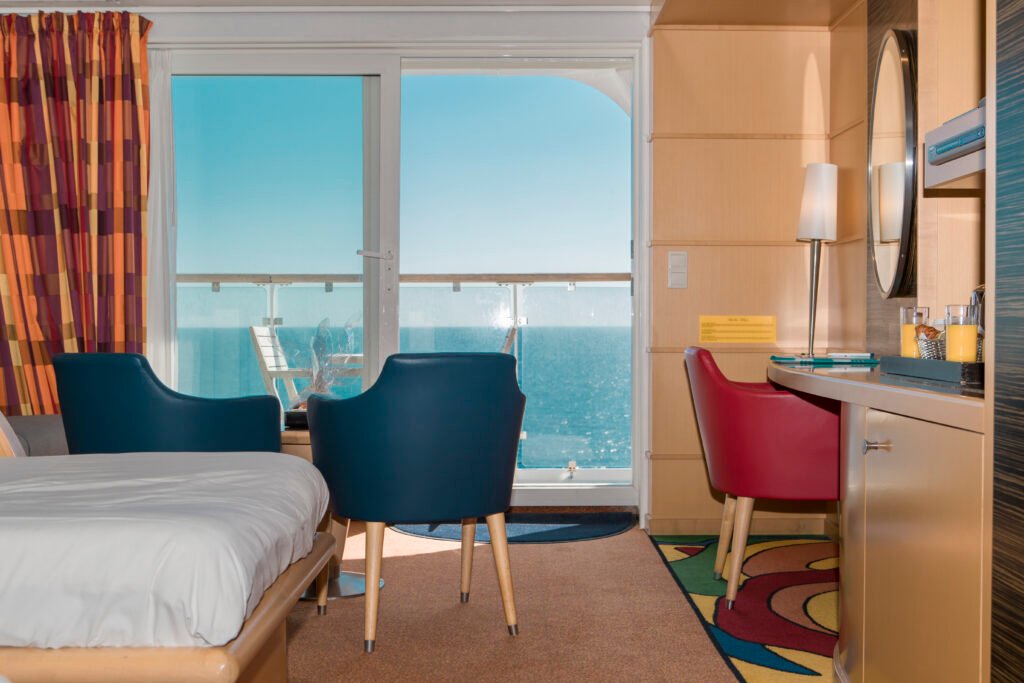
What you get: top-end cabins/suites with extra comfort and (on some ships) more space and service touches. On long routes (Spain crossings especially), it can feel like a ‘floating hotel night’.
- Pros: maximum comfort; special-occasion worthy; very relaxing on long crossings.
- Cons: premium pricing; limited inventory – book early if you want one.
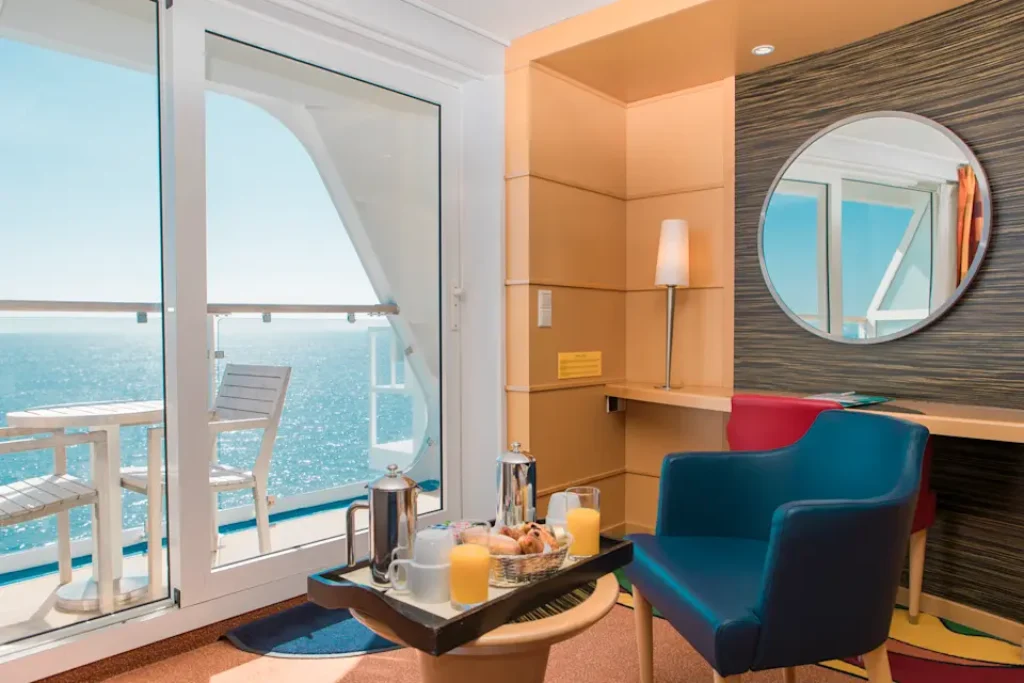
6) Accessible cabins
What you get: an adapted en-suite and layout designed for reduced mobility. These are limited, so if you need one, book early and check the location (lifts/decks) for your sailing.
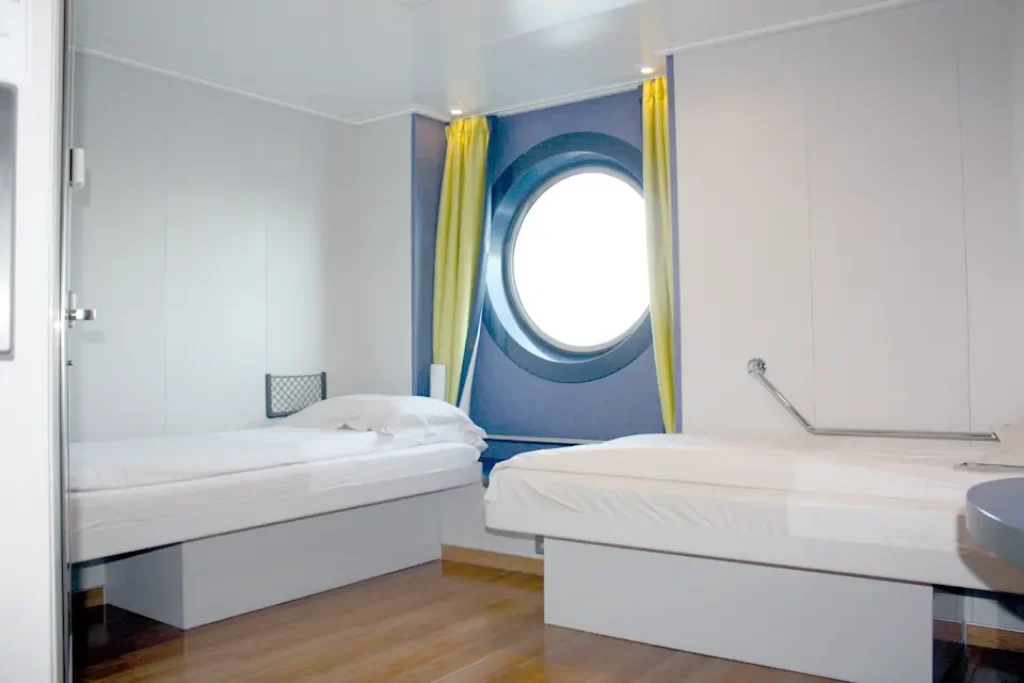
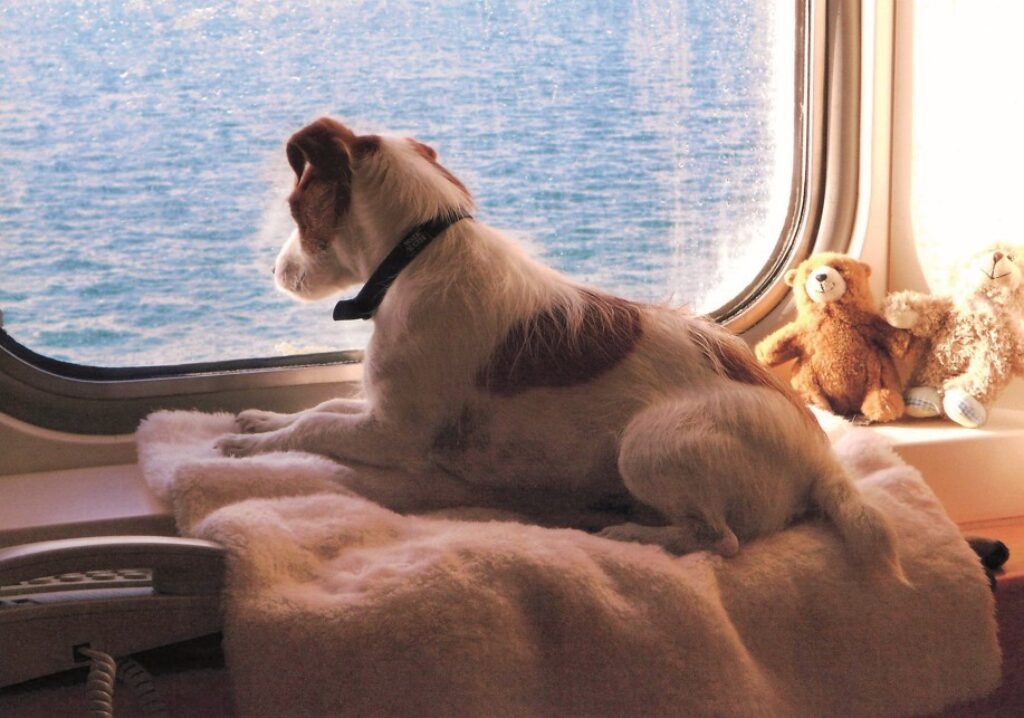
7) Pet-friendly cabins and kennels
What to expect: either a pet-friendly cabin (pets stay with you) or, where available, a kennel facility. In school holidays and busy summer dates, pet options can sell out early, so build the booking around pet availability first.
- Pros: calmer for pets and owners; realistic ‘no-plane’ travel.
- Cons: limited supply; rules vary per ship/route.
8) Reserved lounge seating/lounge access
On a day crossing, lounge access can be a solid middle ground: you get a calmer area and better seating without paying for a cabin. Whether it’s worth it depends on your sailing (busy vs quiet) and how much you value having a guaranteed corner.
Planning a crossing with Stena Line instead (Harwich ⇄ Hook of Holland)? We did a proper tour on board Stena Britannica and put together a dedicated guide covering the cabin options, ticket types, and the upgrades that actually make a difference on this route – so you can book the right setup without overpaying.
Read: Stena Line Harwich ⇄ Hook of Holland – cabins, tickets & upgrades →
Is a cabin worth it on a daytime crossing?
For a short day crossing, most travellers do absolutely fine with free seating. You’ll usually find somewhere comfortable, especially if you board on time and don’t mind moving around a bit.
A reserved seat (or lounge-style seating) isn’t a ‘must’. It’s mainly a comfort choice if you want a quieter corner, you’re working onboard, or you simply don’t want to hunt for seats at peak moments.
Our rule: if a day cabin is discounted, it’s often the best-value upgrade for families. You’re not paying to stay in the cabin all day – you’re paying for options: nap time, privacy, your own bathroom, and a breather when the ship feels busy.
What this table is for: a quick ‘ship vibe’ guide – which Brittany Ferries ships feel more cabin-forward (good value for day cabins) versus more seat-forward (where lounge/reserved seating usually makes more sense).
| Ship | Accommodation highlight | Best for |
|---|---|---|
| Saint-Malo | Modern ‘cabin-forward’ ship; strong cabin focus | Day crossings where you want a private base; families who value cabins |
| Salamanca | Wide cabin range (Standard/Plus/Club/Commodore) + recliners (ship/route-dependent) | Longer crossings where cabin comfort matters |
| Santoña | Sister-ship style accommodation to Salamanca (ship/route-dependent) | Longer crossings; overnight comfort |
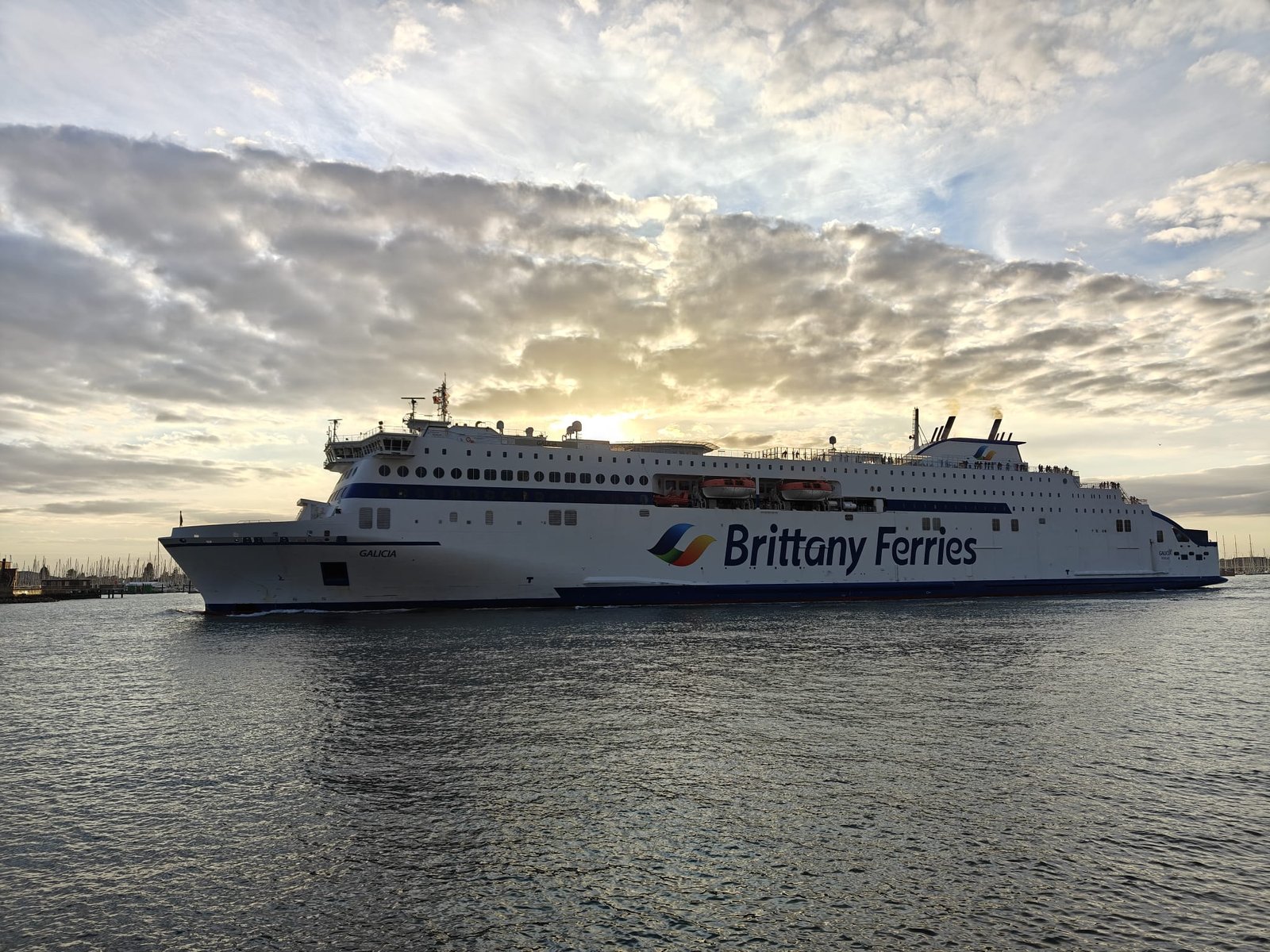
| Galicia | Cabin-heavy ship; often positioned with lounge options (ship/route-dependent) | Long routes and anyone who likes a lounge upgrade |
| Guillaume de Normandie | Modern sleep concepts (e.g. ‘couchettes-plus’) and club/lounge areas (ship/route-dependent) | Overnight Channel crossings where sleep quality is the priority |
| Mont St Michel | Strong mix of cabins and a large number of reclining seats | Comfortable day crossings + solid overnight options |
| Armorique | Balanced classic set-up: cabins + recliners | Short-to-mid Channel crossings |
| Pont-Aven | Large cruise-ferry feel with lots of cabins | Long routes (e.g. Spain) where the ship is part of the holiday |
| Barfleur | More seat-heavy set-up with lounge options (ship/route-dependent) | Shorter crossings where a cabin isn’t essential |
| Commodore Clipper | Smaller ship with limited cabin inventory | If you need a cabin: book early |
| Cotentin | Freight-focused ship with cabins for passengers (ship/route-dependent) | Transport-first crossings where a practical cabin is enough |
| Voyager (high-speed) | Seat-only experience (no cabins) | Fast day crossings; plan comfort via seating/layers |
Table takeaway: on the more cabin-forward ships, a discounted day cabin can be a genuine comfort win (especially with kids); on seat-forward set-ups and high-speed sailings, plan your comfort around seating and layers instead.
Ticket types: Standard vs Flexi (when it’s actually worth it)
Ticket conditions vary by sailing, but the practical choice is usually simple: go Standard if your plans are stable, and Flexi if your trip has lots of moving parts (kids, long drive to port, hotel timings, work schedules, or anything that could delay you). (Always read the fare rules shown at checkout: they can differ per sailing.)
Our real Flexi moment: the clutch in Portsmouth
This is exactly why we’re happy to pay for flexibility on family trips. Our car’s clutch broke while driving on board. We were just about able to limp the car into its spot on the car deck, but driving off in Portsmouth was impossible. The car had to be pushed off the ship and ended up staying in the port area for a couple of days until we could get a slot at Mr Clutch in Portsmouth (who genuinely saved the trip and got us back on the road).
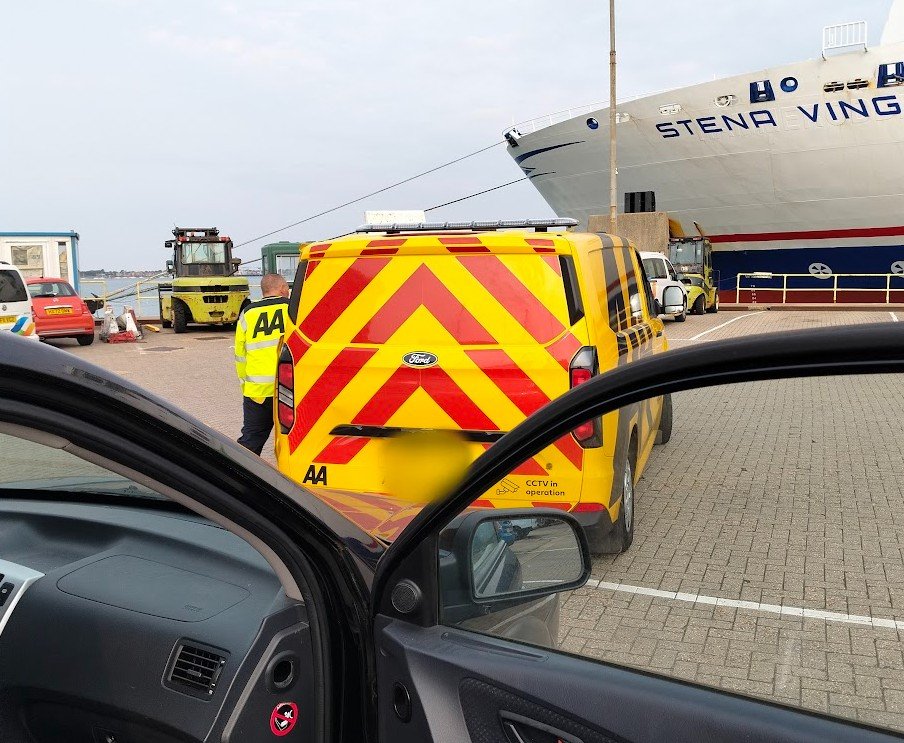
We left a proper review afterwards, with the details, here:
On the ferry to Portsmouth our clutch literally gave out while boarding. After eventually getting assistance from the AA, we were towed to Mr Clutch. Although we had initially been told the repair could take up to two weeks, the team at Mr Clutch went above and beyond to make sure our car was ready within just 2–3 days, in time for our return trip to the Netherlands. Friendly, helpful staff and genuinely great service.
Read our full review on Google Maps →Huge thanks to Brittany Ferries and especially the DOMS team in Portsmouth for helping us when our car broke down right after arrival. Calm, practical support when we really needed it – they helped coordinate the situation on the ground and made a stressful moment feel manageable. Exactly the kind of human help you remember on a family trip.
Read our full review on Google Maps →The big takeaway: if one unexpected issue could force you to reshuffle timings, hotels, or even your return plan, Flexi isn’t ‘paying extra’ – it’s buying yourself room to breathe.
Upgrades + food: what we’d pay for (and what we’d skip)
Not every add-on changes your comfort. These are the ones that most often do, and the situations where they make sense:
- Discounted day cabin (day crossings): best when kids nap, you want privacy, or you want your own bathroom onboard.
- Lounge access (day crossings): worth it when you want a calmer area and a guaranteed seat, especially on busy sailings.
- Cabin category upgrades (overnight/long routes): worth it if you’ll actually notice it (sleep quality, longer crossing, special occasion).
- Pre-book meals/dining (where offered): a simple win for families and overnights. You’ll eat on board anyway, and it removes the ‘what do we do for dinner?’ hassle.
Food & drink: when pre-booking saves money
If you’re doing a longer crossing or travelling as a family, food on board can add up quickly. Pre-booking can be good value and makes the crossing feel smoother.
- Best value: families (meals + drinks are near-guaranteed).
- Also good: overnights (dinner + a simple breakfast rhythm).
- Long routes: when meals are part of the day plan on board.
A few onboard tips we don’t see mentioned enough
Everything on board is usually well organised; prices are reasonable, there’s plenty for kids, and food is well catered. But here are a few practical tips that can make the crossing smoother (the sort of stuff you only learn after a couple of sailings).
- Download entertainment before you sail: podcasts, series, kids’ shows, maps. You’ll hit international waters quickly and data can get expensive. Onboard Wi-Fi is fine for messages, but it’s rarely good enough for streaming unless you pay for a higher tier.
- Card is fine, but a bit of cash helps: you can pay by card for arcade and onboard bits, but having some cash is handy for small tips (entertainment team, servers, etc.).
- If you’ve booked a cabin: towels and bedding are provided, and the tap water is drinkable. Obvious to some, but useful to know when packing.
- Baby carrier = a secret weapon: for younger kids, it’s often the easiest way to help them settle (and it saves you carrying a sleepy child back to the cabin).
- Passport check: don’t rely on a driving licence. For UK–EU crossings you’ll need a passport in most cases.
If there’s something specific you’d like to know that we haven’t covered, drop it in the comments: we’ll happily help.
Families (incl. 5 people) + travelling with a dog
Family of 5: what can you book?
It’s doable, but you need a plan. Many cabins are 2–4 berths, so families of five usually choose one of these setups:
- Two cabins (2-berth + 3-berth / 4-berth): best for overnights. Everyone gets a proper bed, and bedtime is calmer.
- 4-berth cabin + free seating for the 5th person: common on day crossings (or short nights). A reserved seat is optional if you want extra quiet.
- 5/6-berth family cabin (when available): easiest routine (everyone together), but limited inventory.
- Parents in a nicer cabin + kids in Standard: a good compromise if parents really value sleep, without upgrading everyone.
Travelling with a dog: pet cabin or kennels?
If you can get a pet-friendly cabin, it’s usually the calmest option (for you and the dog). If pet cabins are sold out, check kennel availability and route rules: they vary by ship and sailing.
Booking checklist (don’t miss these)
- Decide day vs night first: it determines everything else.
- Kids nap? Check for a discounted day cabin first, it can make the crossing dramatically easier.
- Family of 5: plan two cabins (best for overnights) or a 4-berth cabin + free seating for the 5th person on day trips (reserved seating is optional).
- Pets: pet cabins can sell out early on peak dates, book around pet availability.
- Bring what you need from the car (plus a jumper): you usually can’t return to the car deck mid-crossing, and air-con can feel chilly, especially for kids.
- Roaming: switch off mobile data at sea unless you’ve planned Wi-Fi.
- Food plan: if you’ll eat on board anyway, pre-booking removes a lot of decision stress.
- Ticket type: if a change would hurt (time/money/stress), consider Flexi.
FAQ: Brittany Ferries cabins, tickets and upgrades
Not always. For a couple travelling light, free seating is often enough. With toddlers, or if you want privacy, a discounted day cabin can make the crossing dramatically easier.
If you want proper sleep, a cabin is the sensible default. Reclining seats exist on some ships/routes, but arriving rested is a different experience.
Sometimes (if the ship offers 5/6-berth cabins), but often you’ll need two cabins. On day crossings a common workaround is a 4-berth cabin plus free seating for the 5th person (reserved seating is optional if you want extra quiet).
Day crossings: a discounted day cabin is often the biggest comfort win for families; otherwise lounge access can be a calmer option on busy sailings. Overnight: spend on the cabin category you’ll actually feel. For families, pre-booking meals can remove a lot of stress.
Pet-friendly cabin if you can get it (calmer for everyone). If sold out, check kennel availability and route rules.
Usually not. Once you’ve parked on the car deck, access is typically restricted for safety reasons. Our tip: grab everything you’ll want for the crossing before you leave the car – layers (jumpers for the kids), snacks, chargers, entertainment, and anything you might need for a nap.
Once you reach international waters, mobile data can become expensive (roaming at sea). Onboard Wi-Fi is usually fine for messages and light browsing, but it’s rarely good enough for streaming unless you pay for a higher tier. Best move: download films/series/podcasts for the kids (and yourself) before you sail.


Jan Willem van Tilburg is co-founder of FerryGoGo and focuses on ferry market research, editorial strategy and practical travel content. His work covers ferry fares, route comparisons and first-hand travel guides based on real crossings. Jan Willem has sailed routes including Saint-Malo to Portsmouth, Portsmouth to Cherbourg, Newcastle to Amsterdam and Harwich to Hook of Holland himself, helping keep FerryGoGo’s guides grounded in real traveller experience.