A week in England, a ferry to Spain and the drive home through France: it sounded like a good family road trip. The Plymouth-Santander crossing turned out to be one of its best parts.
In late July 2026, I (Jochem, one of FerryGoGo’s co-founders) made that trip with my partner and our three young children. We sailed from Hook of Holland to Harwich, spent a week in England and Cornwall, and then boarded Brittany Ferries’ Pont-Aven from Plymouth to Santander. After Spain, we visited friends in France on the way home.
We had heard how beautiful Cornwall was and wanted to see it for ourselves. Plymouth itself didn’t particularly win us over, but we loved the surrounding area. By the time we reached the ferry port, the children were ready for a change from the car and we were ready to see what twenty hours aboard would be like.
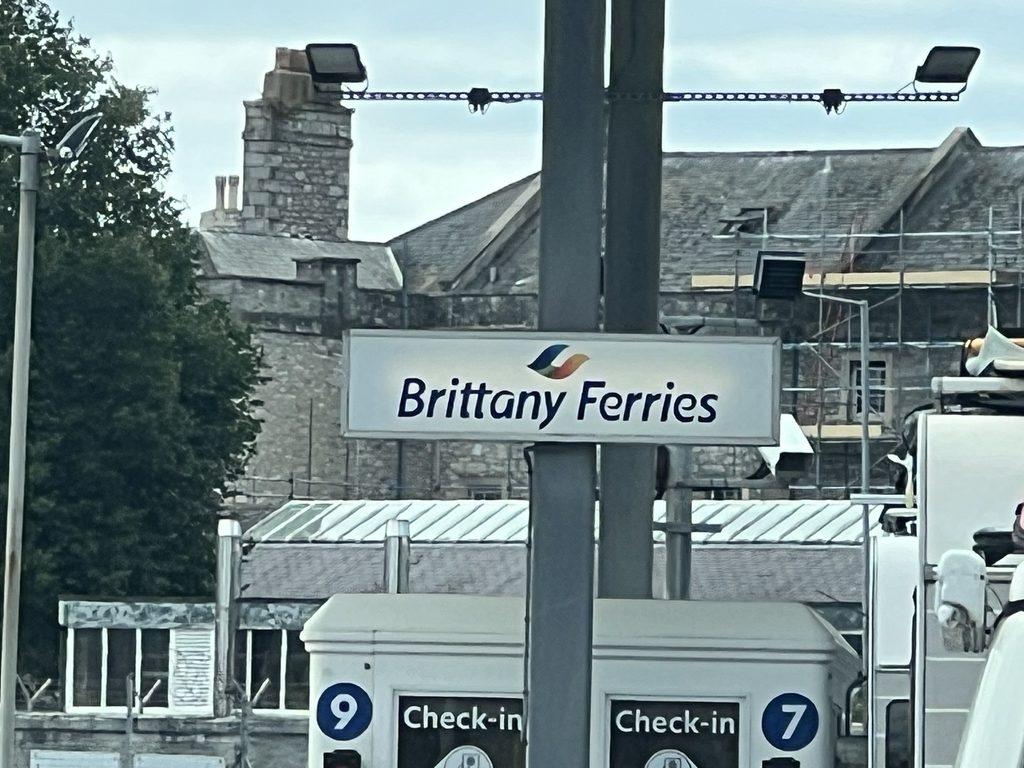
Why we chose Plymouth
We began with the Hook of Holland-Harwich ferry and spent the next week exploring England. Plymouth was at the end of that week, close to the part of Cornwall we wanted to see.
After our week in England, Plymouth was a natural departure point. We could drive there from Cornwall and let Pont-Aven carry us to northern Spain, instead of doubling back across England and driving south through France. That saved a lot of time behind the wheel and gave us a proper break in the middle of the road trip.
The route choice would be different if we’d started near London. Portsmouth might have saved us a substantial drive across England. I’ll compare the two ports later, but for our itinerary Plymouth was in the right place.
Plymouth-Santander is the shortest direct UK-Spain ferry crossing, taking roughly 20 to 22 hours depending on the sailing. We would spend one night at sea and arrive in Spain the next day.
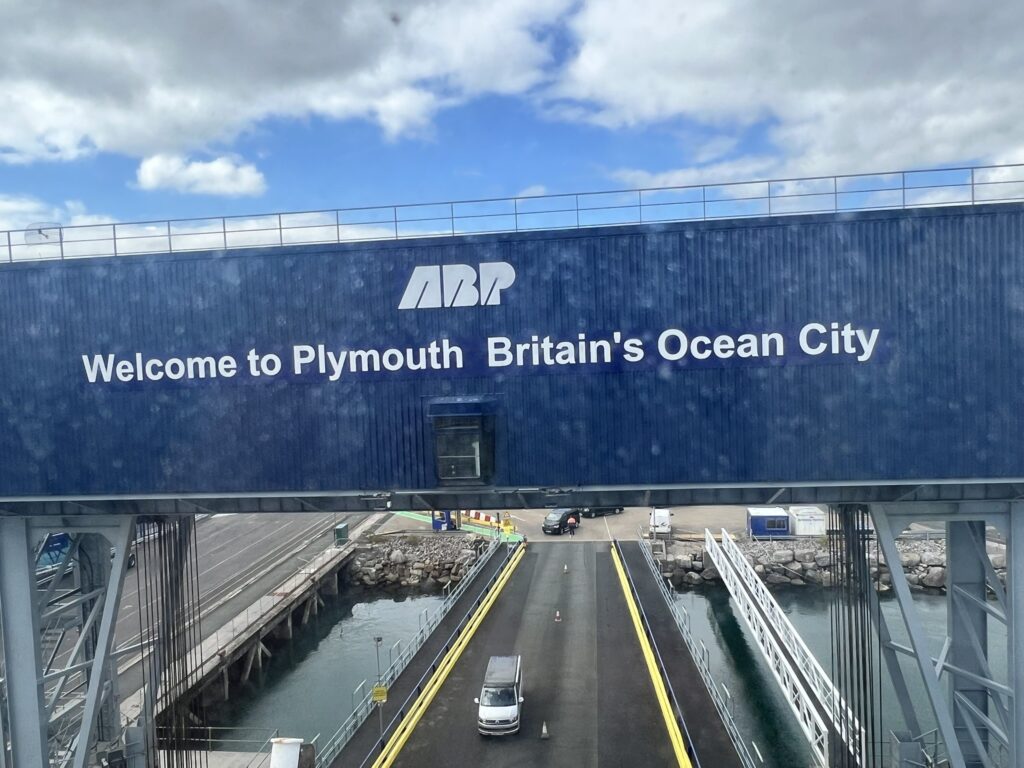
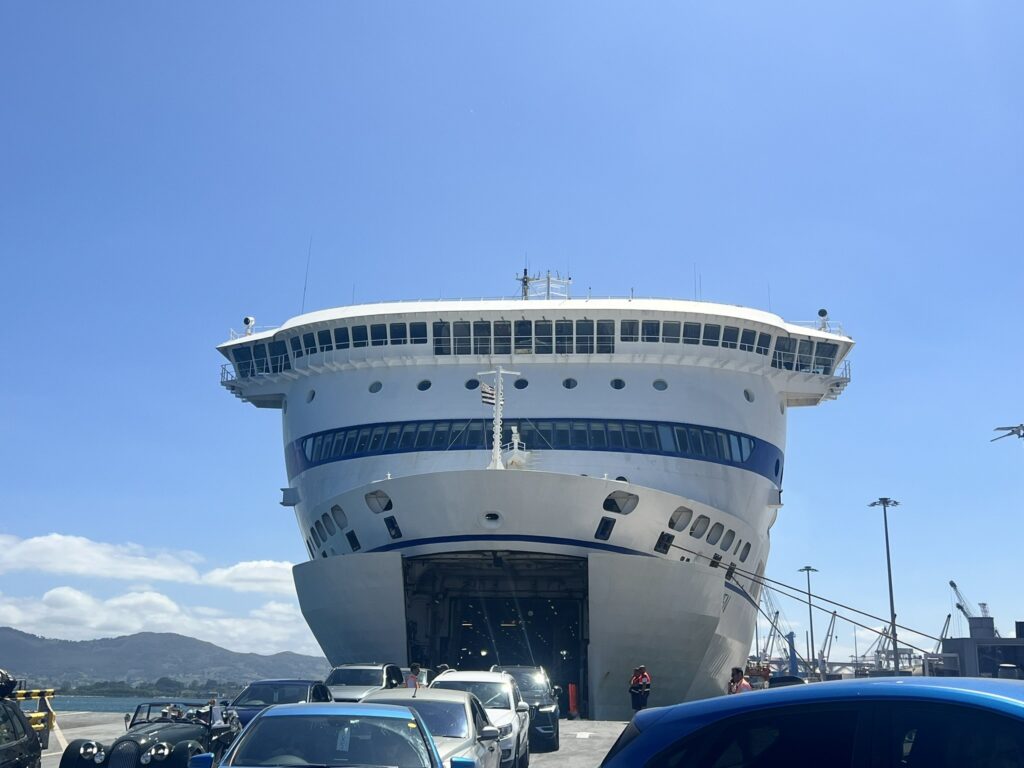
Checking in and boarding in Plymouth
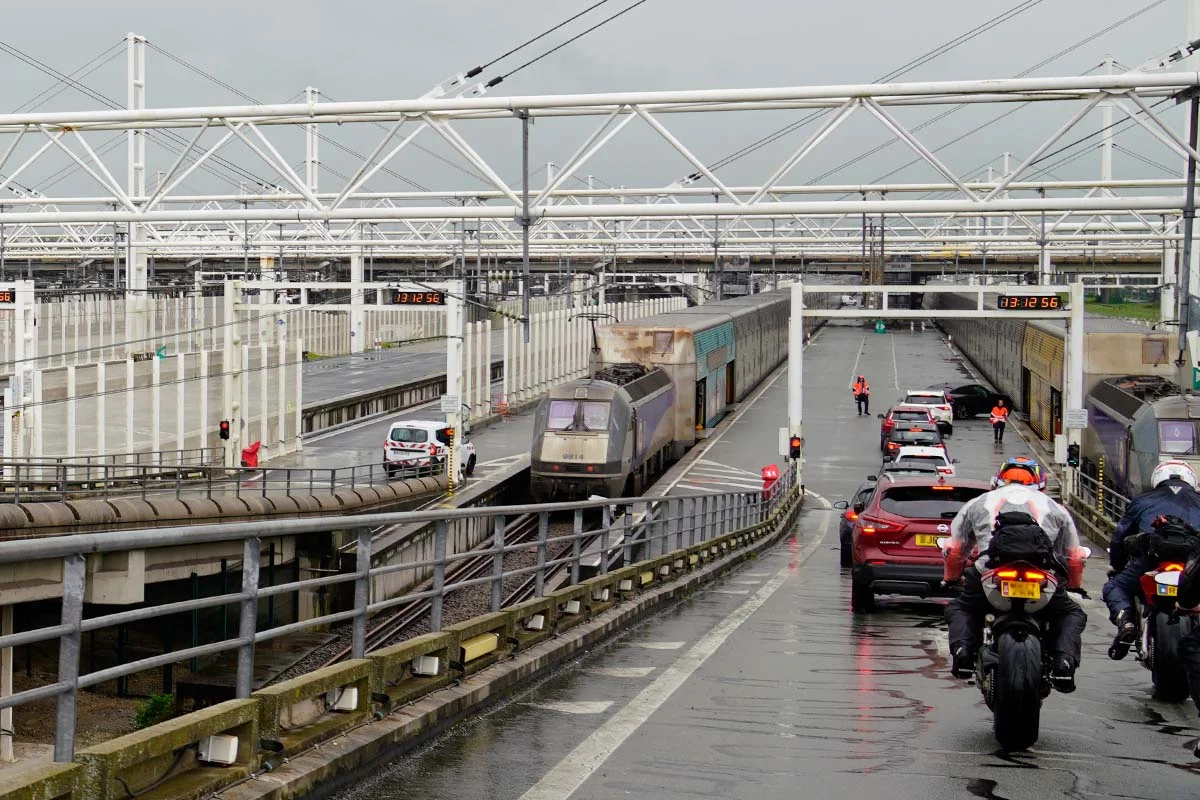
We reached Plymouth in good time, but then spent a long while waiting in the car before we could board. With three young children, that part of the journey required more patience than I had expected. Keep drinks, snacks and something for the children to do within reach while you wait.
The waiting lanes gave us plenty to look at. We didn’t spot any other Dutch travellers; most passengers around us seemed to be British. There were expensive-looking cars and quite a few dogs. Some English passengers we spoke to were taking their cars to tour Spain, including people travelling with their dog. We didn’t bring one ourselves.
Once boarding started, we parked the car and headed upstairs. The separate bag we’d packed for the night was useful almost immediately.
Five of us in a four-berth Commodore cabin
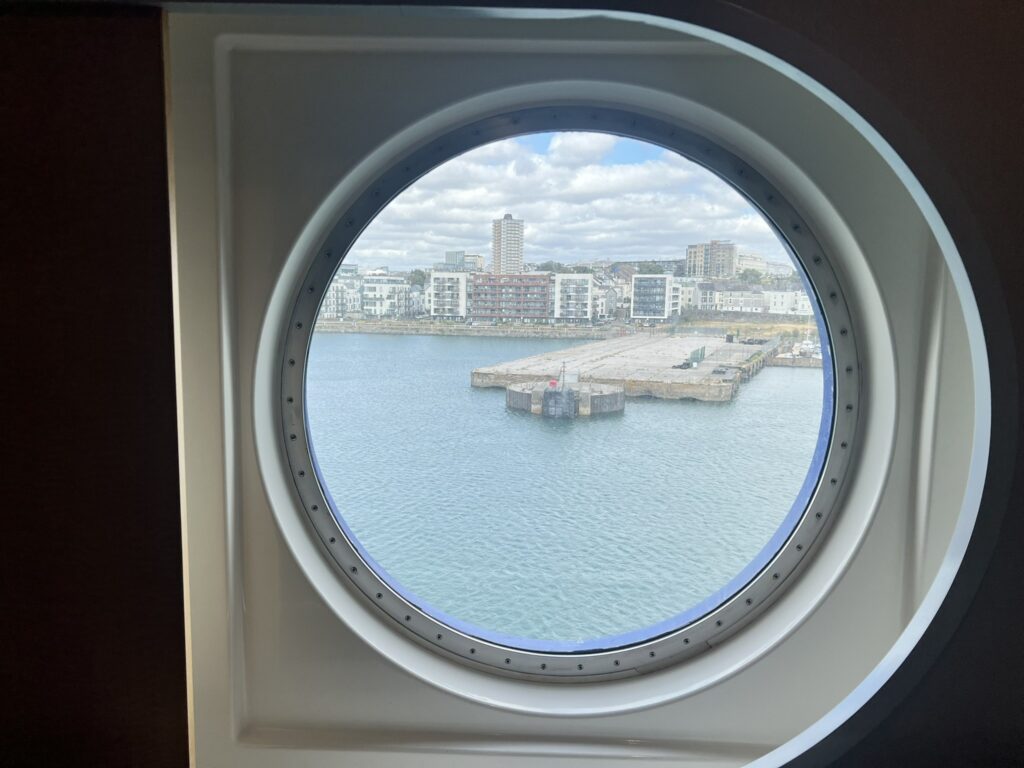
We booked a four-berth Commodore cabin on Pont-Aven. It has its own balcony, and it felt almost like a suite to us. There were five of us, but our youngest was still small enough for a baby cot, so we could all stay together. If you’re planning something similar, check the cot age limit and permitted occupancy when you book. Brittany Ferries lists its cots for children up to 24 months.
I rarely give a ferry cabin much thought on a short crossing. Here, with three young children and a night at sea, it mattered enormously. The Commodore cabin was fantastic: proper beds, our own bathroom, room to sit and that private balcony. It feels almost excessive to praise a ferry cabin so much, but we really did love it.
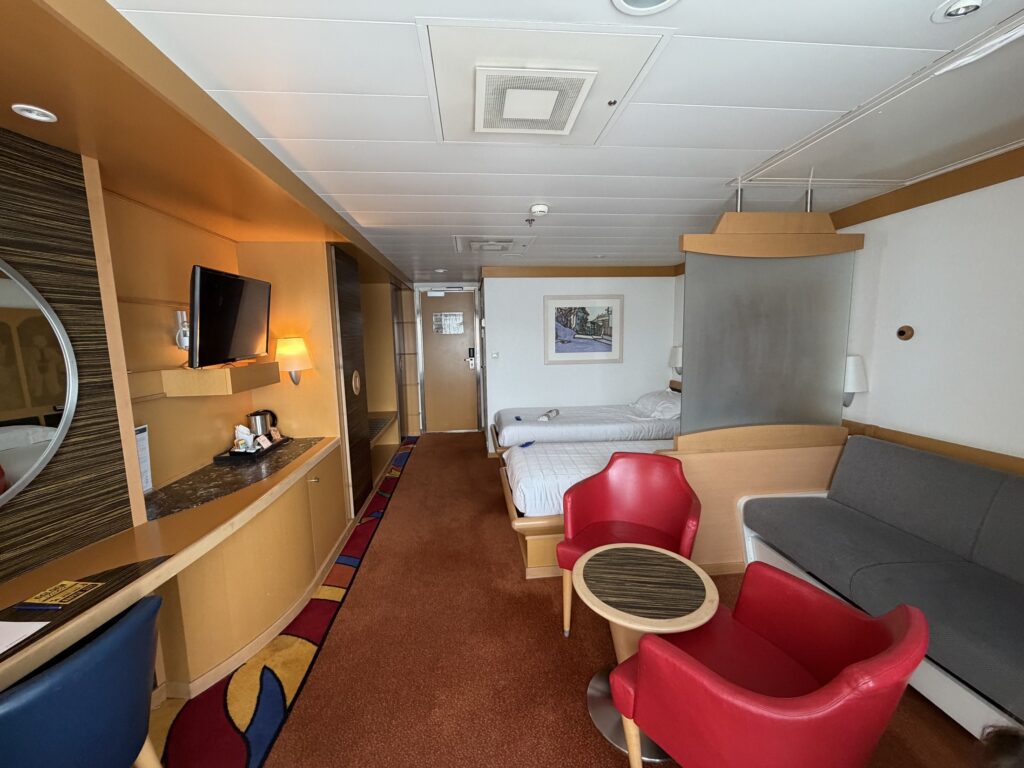
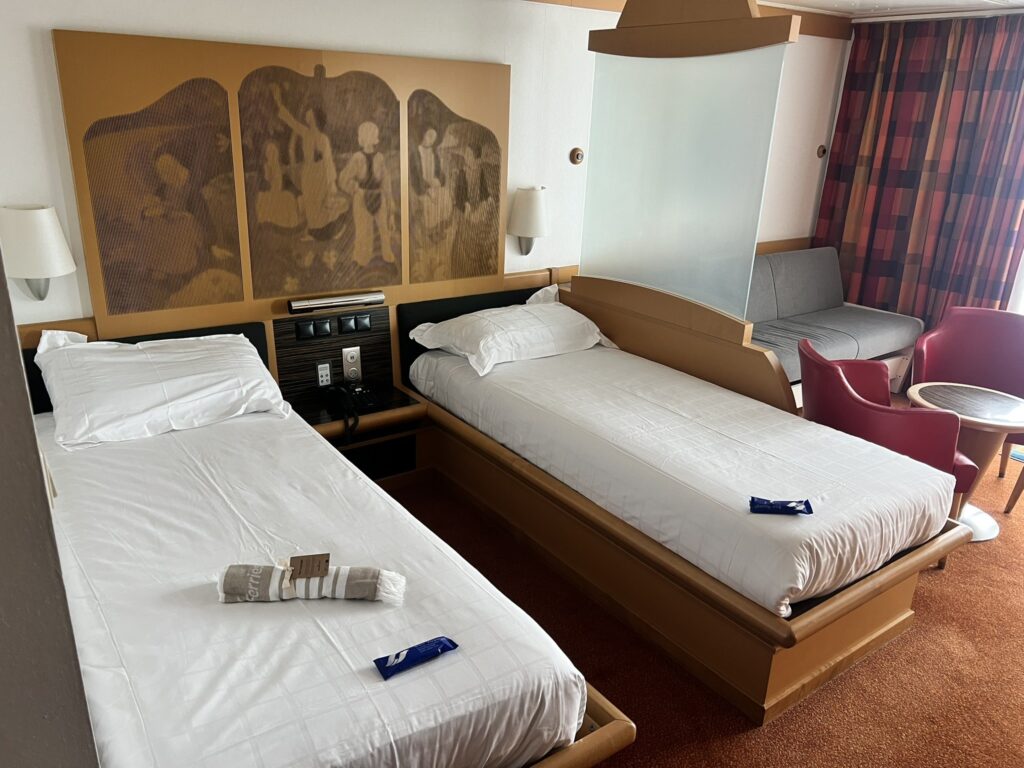
We did have one slightly stupid moment after arriving. We couldn’t work out where one of the beds was. There was some counting of children and beds before we realised another berth folded out. Obvious once you know.
With our booking we also had access to a lounge where we could get coffee and tea and sit somewhere quieter. I didn’t find it particularly special. The cabin, the balcony and everything else on board made much more of an impression, so I wouldn’t book for the lounge alone.
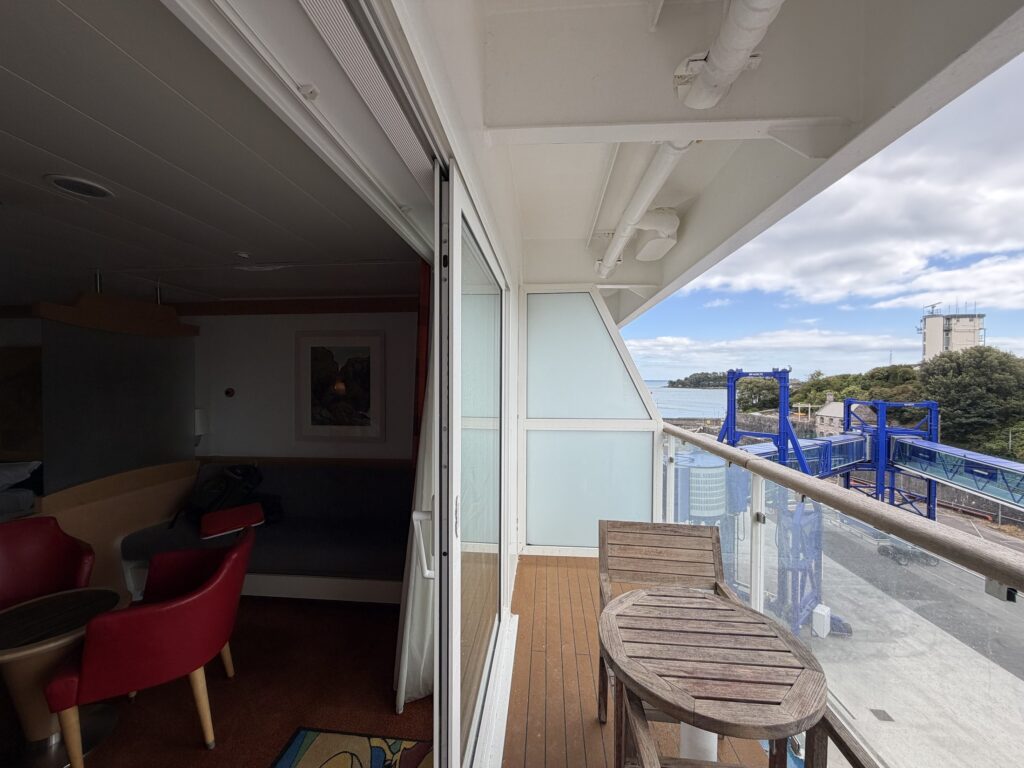
If you are deciding whether an upgrade is worth it, our Brittany Ferries cabin guide compares the main options.
What did we pay?
We booked in 2025, almost a year before our late July 2026 crossing, to secure the Commodore cabin and a fare we were happy with. The one-way booking cost roughly €1,000 for the five of us, our car and the cabin.
I wouldn’t treat €1,000 as a target price. Fares change with the date, demand, vehicle and accommodation. But I find a price a real family paid more useful than a theoretical ‘from’ fare, so that’s what our crossing cost us.
Pont-Aven with three young children
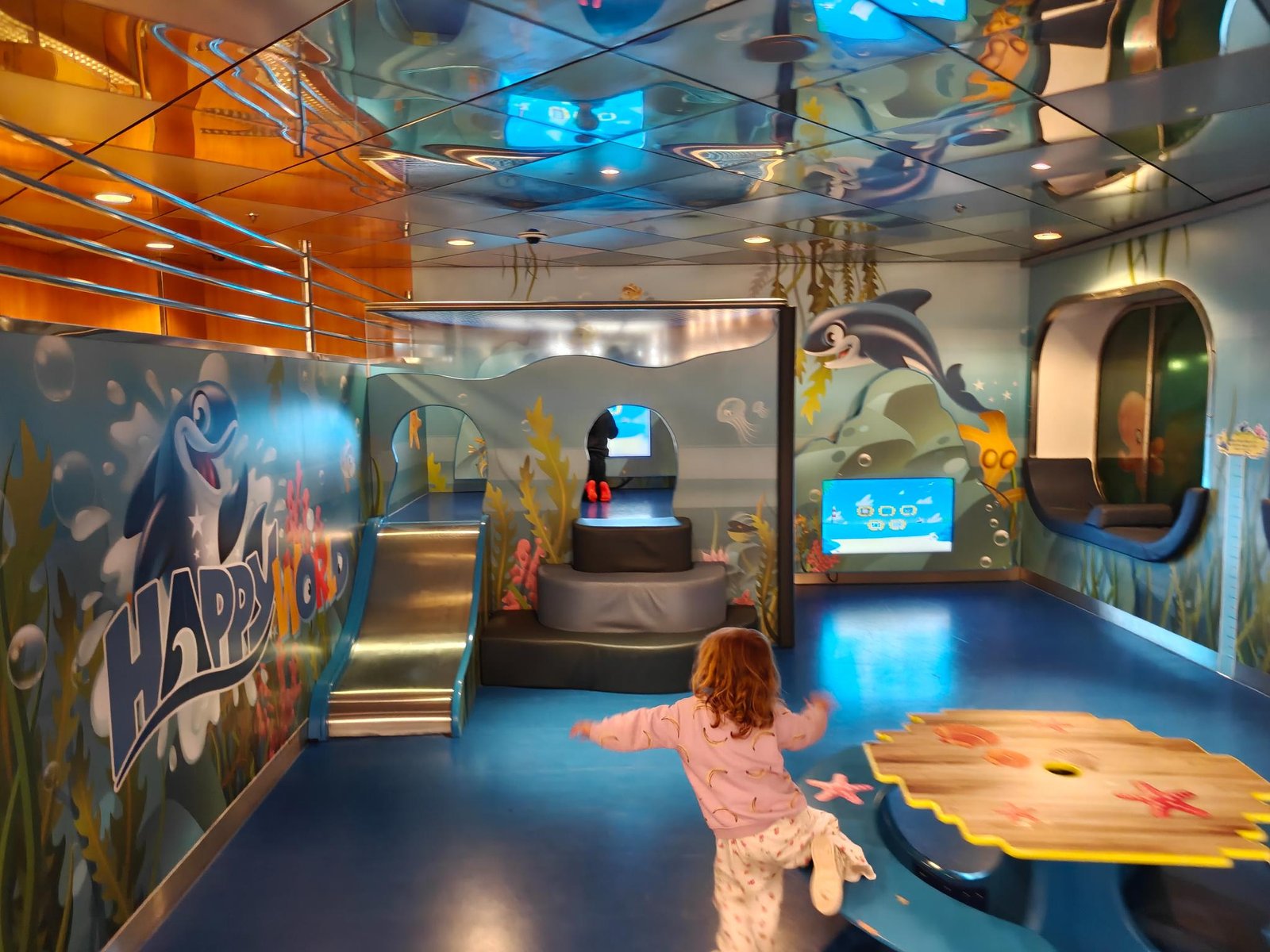
Around twenty hours aboard a ferry sounds long with three young children. In practice, the children loved the ship from the moment we stepped aboard. Even the lifts were exciting, and the mood around us felt cheerful without being frantic.
The arcade was discovered almost immediately. I couldn’t tell you how the children knew where it was. We’d barely settled into the cabin and they already seemed to have mapped out the entertainment.
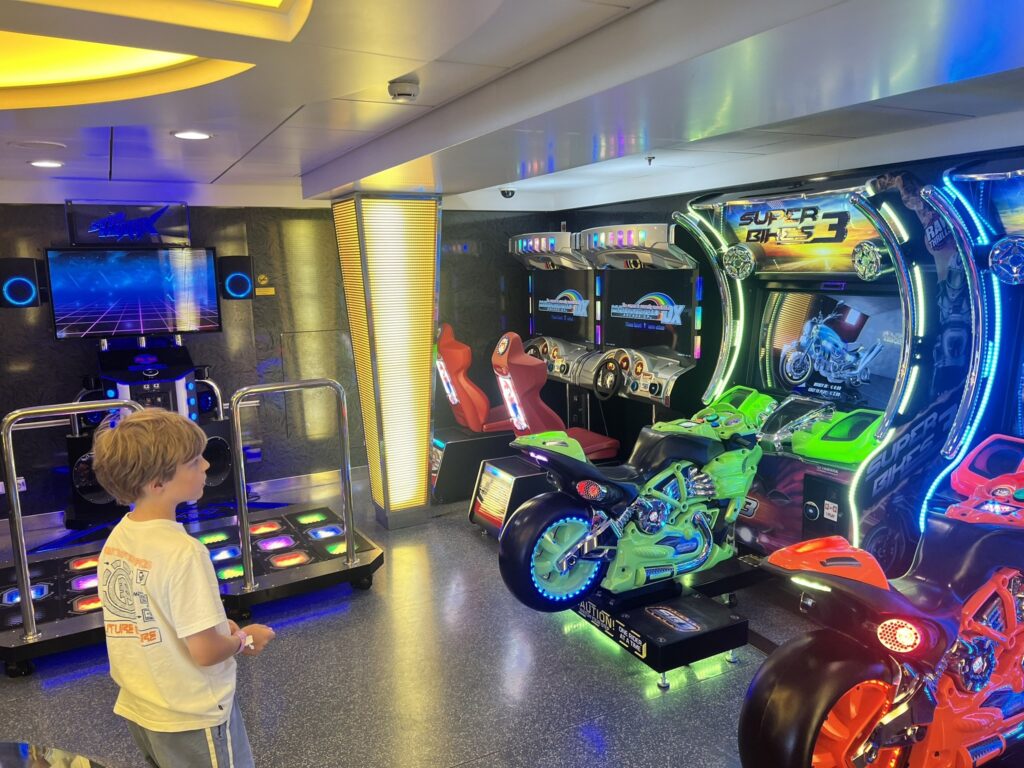
The other big success was the swimming pool. It’s not a water park, and I wouldn’t choose the crossing for the pool alone, but it broke up the journey brilliantly for our family.
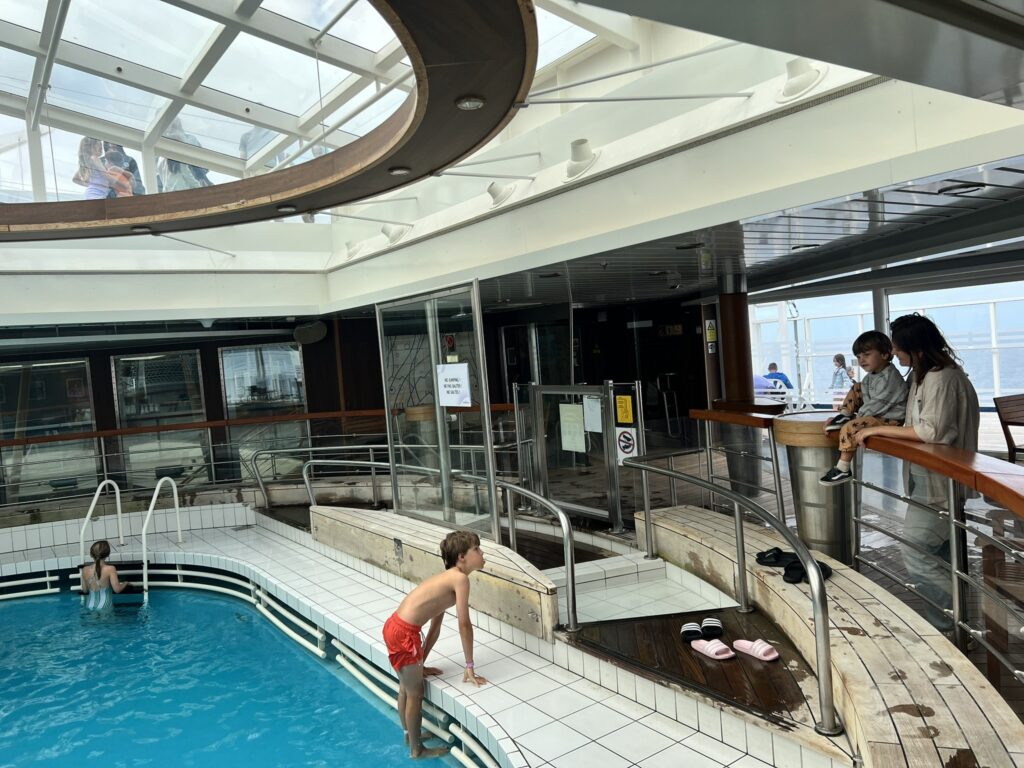
Pool access can depend on the sailing and conditions, so don’t count on it without checking. If it is available, put swimming things in the overnight bag rather than underneath several suitcases in the car.
Dinner at Le Flora
We had dinner at Le Flora, the à la carte restaurant on board. It was a wonderful place to sit and we enjoyed our meal and the evening there. The bars and other restaurants also felt inviting, but Le Flora is the one I remember best.
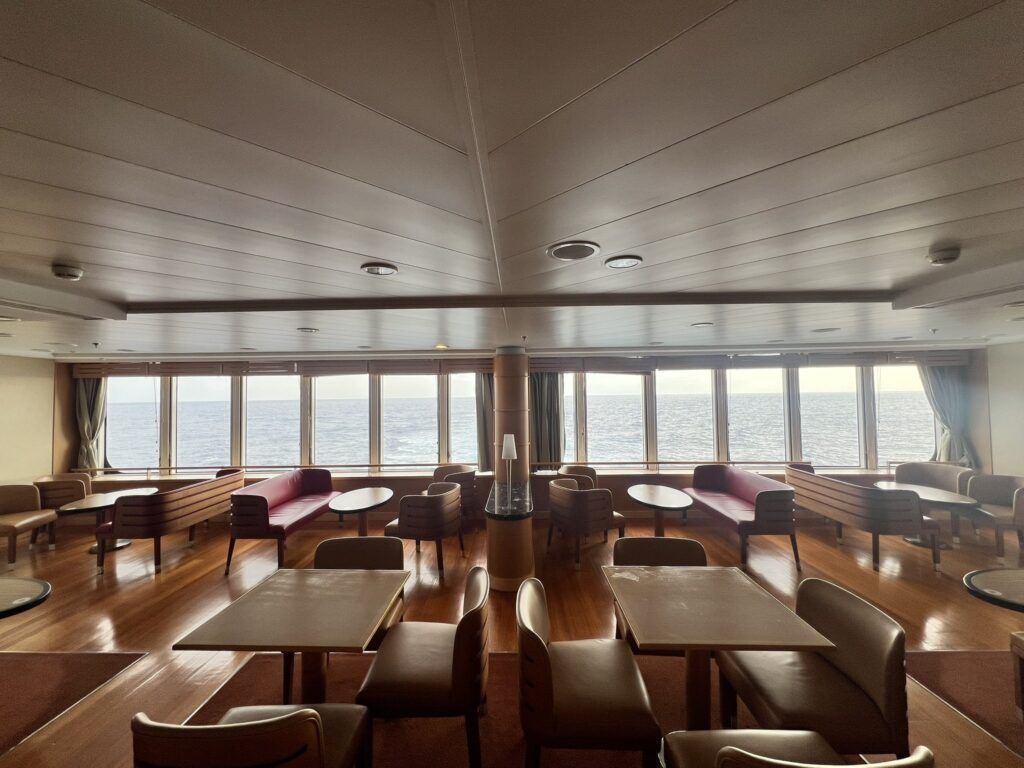
Dining peacefully with three young children was somewhat less successful than the food. Ours came close to taking the restaurant apart, so apologies to the staff who looked after us. It was still one of the best evenings of the trip.
And then there is the Bay of Biscay
Biscay has a reputation for rough seas, so we wondered beforehand how everyone would cope. On our crossing there were barely any waves and nobody felt seasick. We noticed the ship moving a little more in the evening, but even then it was mild. We all slept well, though sleeping on a ship takes a little getting used to.
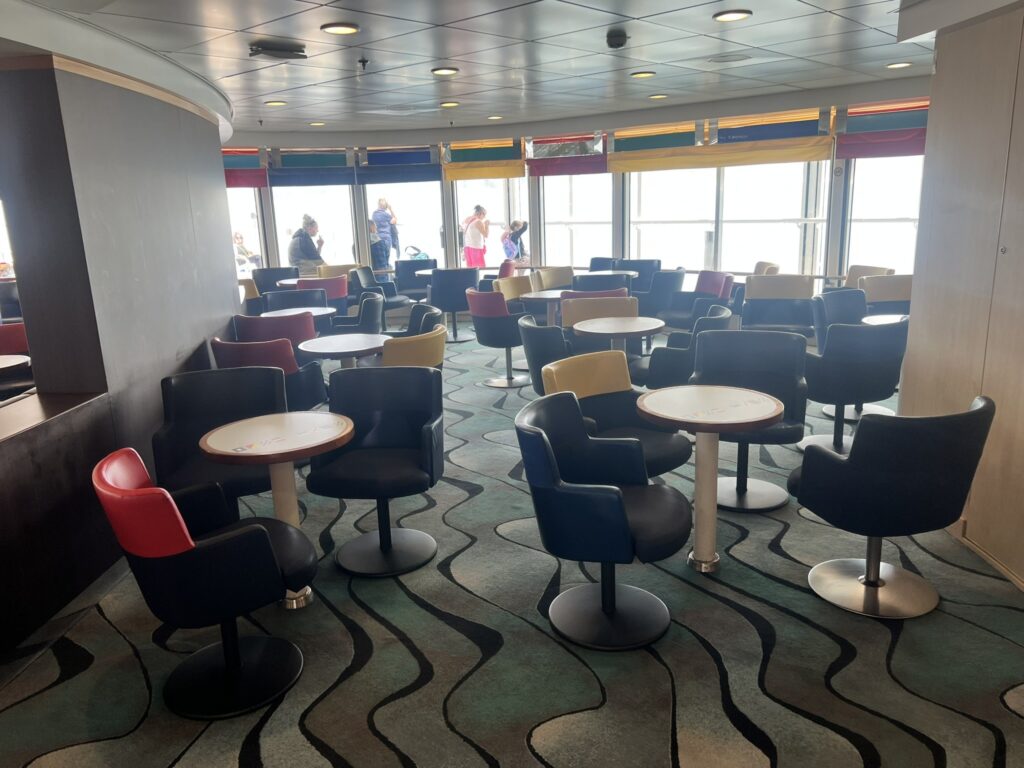
Our calm crossing doesn’t tell you what Biscay will be doing on yours. In higher waves, I imagine we would have felt the ship moving much more. If that worries you, think about where you sleep before booking; our seasickness guide explains why cabin location can matter.
Keeping an eye out for wildlife
We didn’t see whales or dolphins this time, unfortunately, although we did follow one of the ORCA wildlife sessions on board and spent a fair amount of time scanning the sea afterwards. Once somebody has explained what might be out there, you look at the horizon rather more carefully.
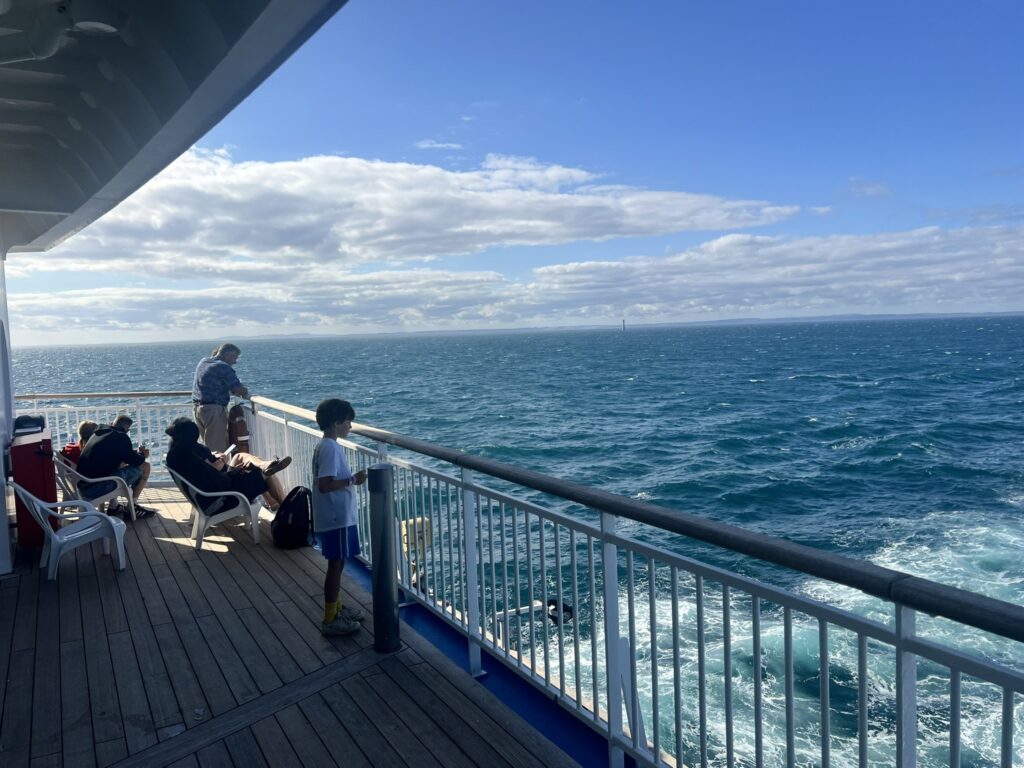
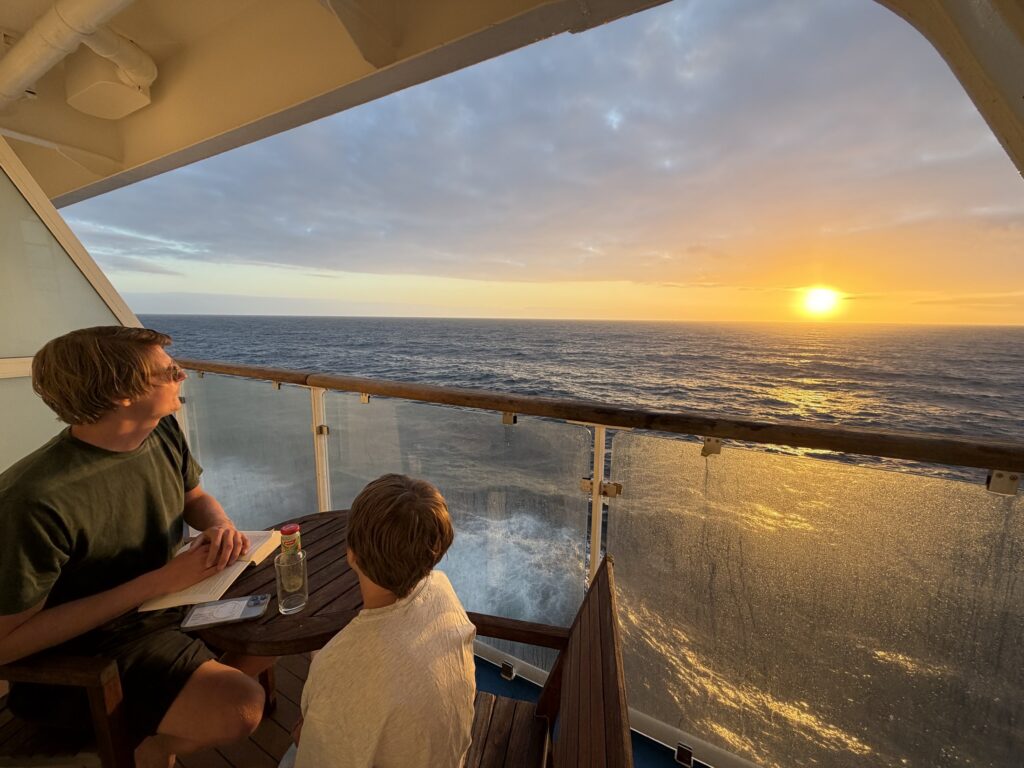
One of my favourite things about the crossing was that there was no constant pressure to be entertained. There are restaurants, bars, the arcade and the pool, but you can also just sit somewhere and look at the sea for a while, and sometimes that’s exactly what you need.
One night at sea
After dinner we got the children settled in the cabin and slept comfortably while the ship carried on towards Spain. My guess is that it was around 70 per cent full. That felt about right to us: lively, but with room to find a quiet seat. It’s only my impression, not an official figure.
I’d happily drive through France on another holiday, but for this part of the trip it was lovely to travel without anyone needing to take a turn at the wheel.
Waking up and realising you’re nearly in Spain
The next morning we returned to Le Flora for a substantial breakfast, and the children went swimming again. Meanwhile the ship kept moving towards Spain. We didn’t need to pack up a hotel room or start another day on the motorway.
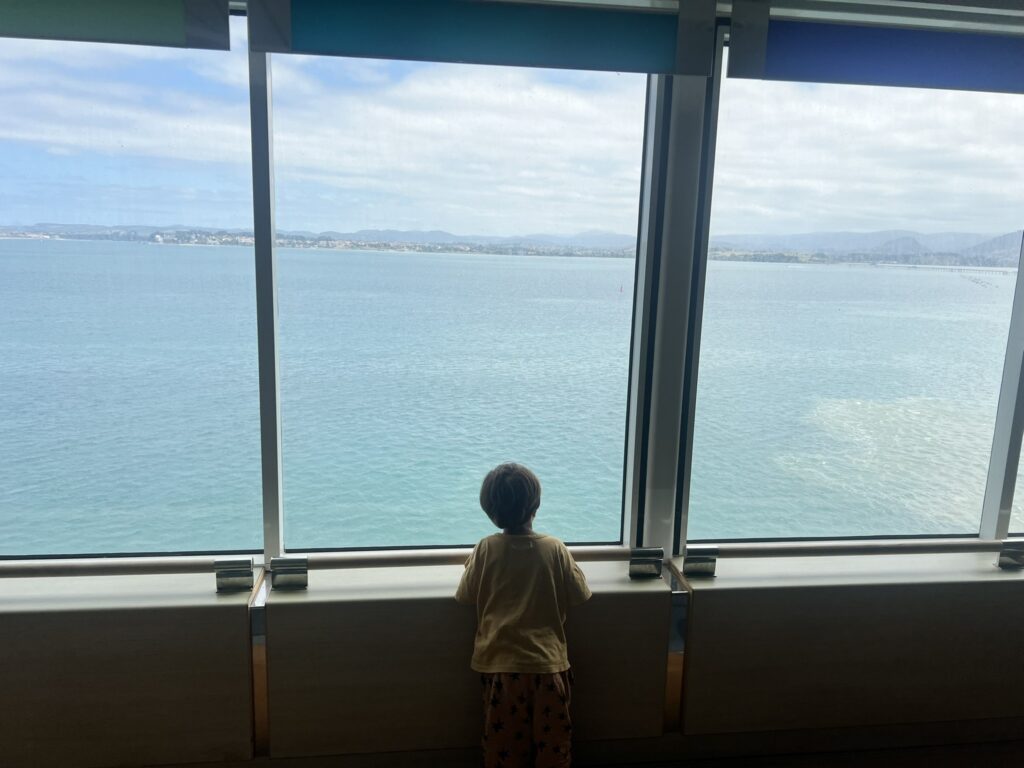
Having our own car made the rest of the road trip easier too. Everything we’d packed for three children was already with us, ready for Spain and the drive through France.
Arriving in Santander: allow time for the checks
Eventually the Spanish coast appeared and everyone migrated towards the windows and outside decks. It was worth being out there for the approach. The wait after arrival, however, was much longer than we expected.
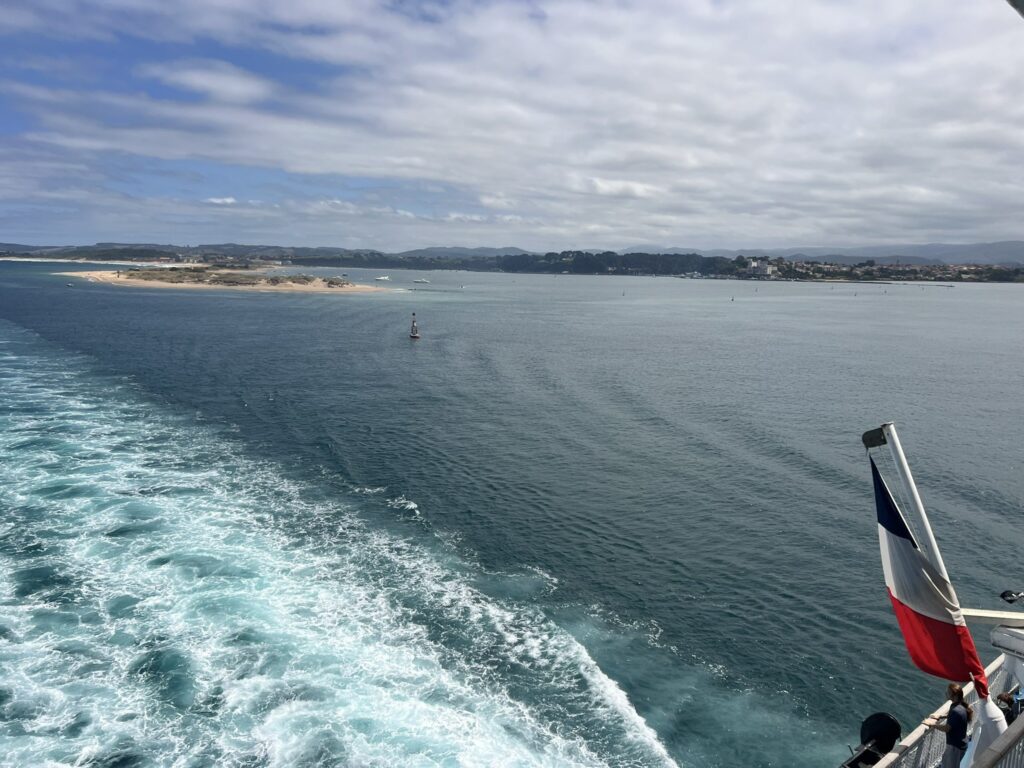
After the ship arrived we spent quite a while waiting to get through the Spanish checks. In Plymouth we’d been given a Europe sticker for the car and told it would help at the other end. We didn’t notice any benefit from it in the queue. Perhaps it served a purpose we couldn’t see, but from our position the process felt slow and could surely have been quicker.
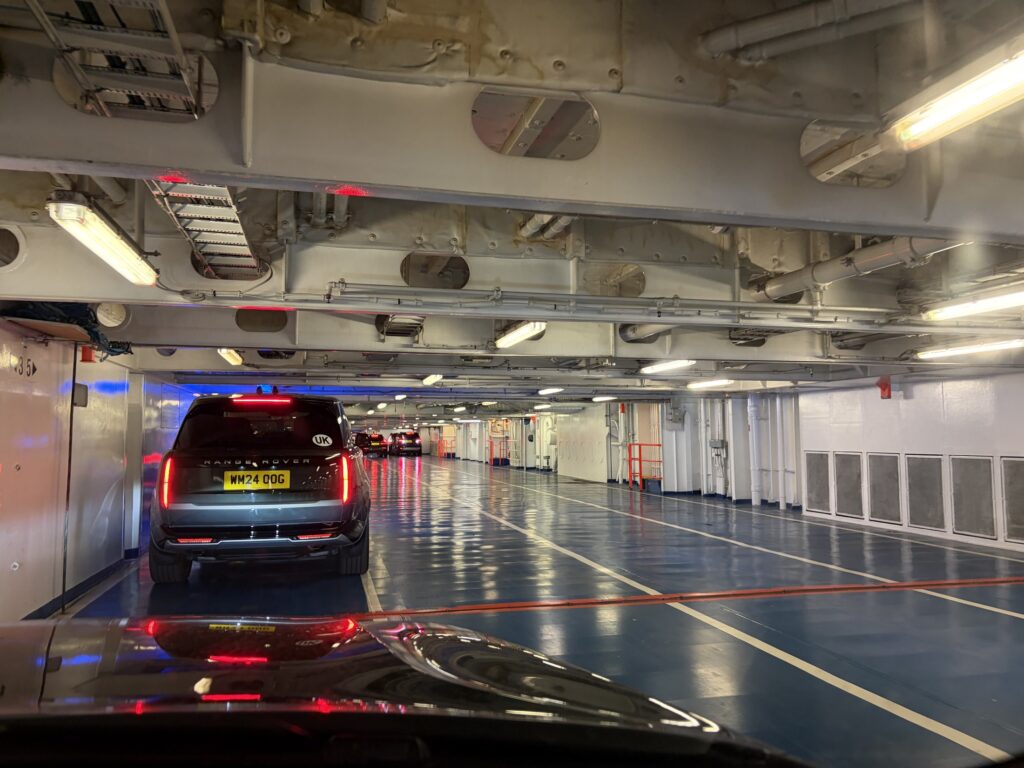
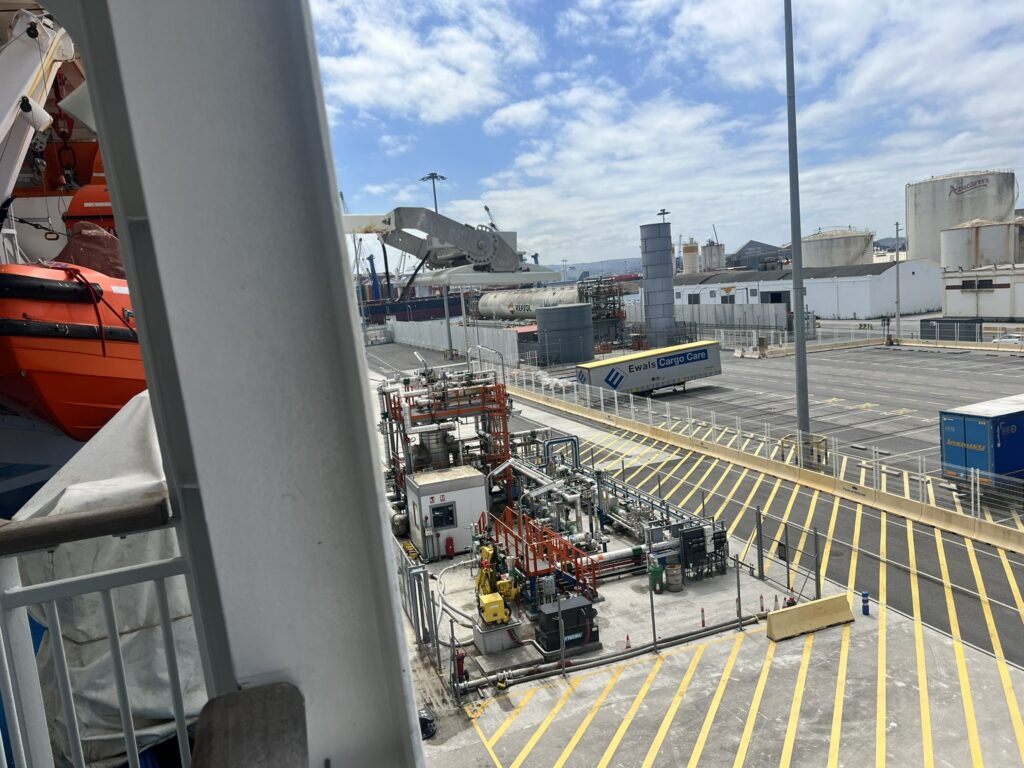
Eventually we cleared the port and could start the Spanish part of our road trip. Santander’s terminal is close to the city, which is handy once you’re through. If you’re planning a long drive straight after the crossing, leave room for checks and queues rather than treating the published arrival time as the time you’ll be on the road.

Plymouth or Portsmouth for Spain?
I wouldn’t choose between Plymouth and Portsmouth on sailing time alone. Plymouth-Santander generally takes around 20 to 22 hours, with one night aboard. Portsmouth crossings take longer and, depending on the sailing, may involve a second night at sea.
Portsmouth is easier to reach from London, the South East and Harwich. If you’re starting there, driving all the way to Plymouth simply to spend less time at sea may not save you time overall. Cornwall was already part of our holiday, so Plymouth required no such detour.
Which port would I choose?
- Already in Devon or Cornwall? Plymouth fitted our trip and gave us the shorter crossing.
- Starting near London, the South East or Harwich? Compare Portsmouth before driving all the way to Plymouth.
- Heading east from the Spanish port? Check the drive from Bilbao as well as Santander.
Would we take Plymouth to Santander again?
Yes, if it fitted our itinerary as well as it did this time. The cabin and balcony were wonderful, the children loved the pool and arcade, and we had a very enjoyable evening at Le Flora. The calm sea helped. I don’t get this enthusiastic about every ferry, but this crossing was perhaps the highlight of our holiday.
The long waits in Plymouth and Santander were frustrating, and a rougher sea might have changed how we felt. But on this sailing, Pont-Aven gave us far more than a convenient way to reach Spain. It made the journey itself one of the memories we’ll keep.
What I would plan for next time
If you are choosing a route rather than reading about this crossing, our UK to Spain ferry guide compares Plymouth-Santander with the Portsmouth departures, including where you will drive after arriving in Spain.
Get our latest ferry guides, route updates and travel tips in your Google feed. Add FerryGoGo as a preferred source in Google, and follow us in Discover when Google shows the option.