Eurotunnel is the common name for the Channel Tunnel crossing between England and France, but travellers actually use one of two different services.
Travelling with a car, motorbike, van, camper or motorhome? Use LeShuttle between Folkestone and Calais.
Travelling without a vehicle? Use Eurostar from London to destinations including Lille, Paris and Brussels.
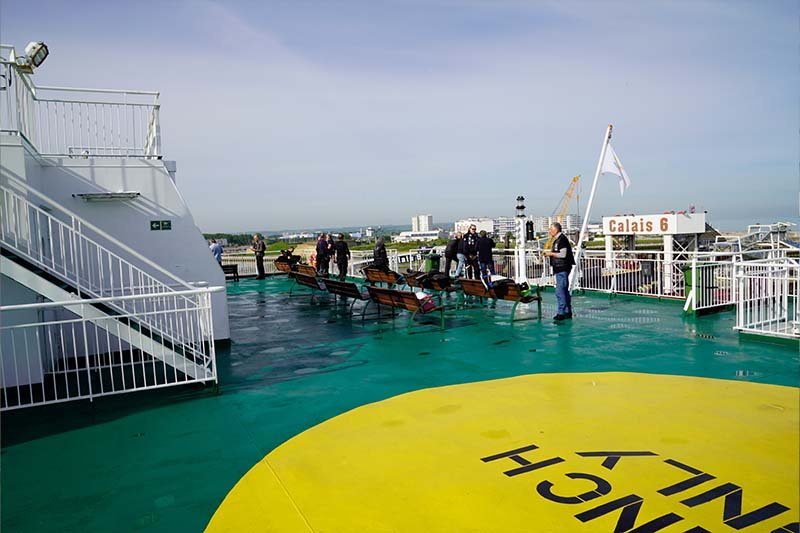
Want a break from driving or a different arrival port? Compare the tunnel with a ferry to France.
LeShuttle is generally the fastest way to cross the Channel with your own vehicle. The train journey takes around 35 minutes, although check-in, border controls, waiting and boarding still form part of the total crossing time.
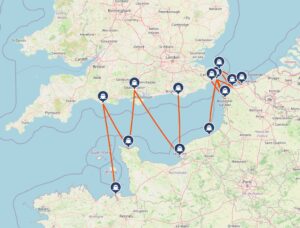
A ferry takes longer but gives you a proper break from the car. You can walk around, get something to eat and spend part of the journey outside. A ferry from Portsmouth, Newhaven, Poole or Plymouth can also bring you closer to destinations in Normandy, Brittany and western France.
The two passenger services use the same Channel Tunnel but serve different journeys.
LeShuttle: a short terminal-to-terminal vehicle crossing between Folkestone and Calais.
Eurostar: a city-to-city passenger train from London through the tunnel to mainland Europe.
The Folkestone terminal connects with the M20 in Kent. After arriving near Calais, drivers can continue towards northern France, Belgium, the Netherlands and other European destinations.
Eurostar is different because its journey starts and finishes at passenger railway stations. It is usually the relevant tunnel option for a city break without a car.
We tested LeShuttle and the ferries
FerryGoGo tested LeShuttle as part of our wider Dover-Calais comparison. On the same corridor, we also travelled with P&O Ferries, DFDS and Irish Ferries.
LeShuttle was clearly the speed-led option in our test. Boarding with the car was straightforward and the tunnel journey itself was over quickly. However, it did not provide the same break from driving as a ferry, and the fare during our comparison was higher than the ferry alternatives.
Our choice would therefore depend on the journey:
Choose LeShuttle when crossing speed and getting back on the road are the priorities.
Choose a ferry when you want to walk around, eat, get some fresh air or simply have a break from the car.
Compare both when price matters, as fares depend heavily on the date and departure time.
Looking for more Channel Tunnel detail?
Chunnel.co.uk is our specialist guide to the tunnel itself, including its history, infrastructure, vehicle service and practical travel information.
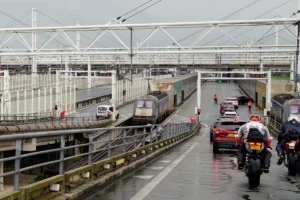
LeShuttle is the Channel Tunnel service for travellers taking a vehicle between Folkestone and Calais. You check in at the terminal, pass through the relevant border controls, wait for your allocated departure and then drive onto a specially designed train.
Book the correct vehicle: include roof boxes, trailers, bicycles and your vehicle’s correct height where requested.
Arrive within your allocated check-in window: use the time stated in your booking confirmation.
Complete border controls: keep passports and booking information accessible.
Wait for your departure: the terminal displays your boarding allocation.
Drive onto the train: follow the staff and lane instructions.
Cross the Channel: the train journey takes around 35 minutes.
Drive off in France: from the Calais terminal you can continue directly towards the French motorway network.
Luggage remains in the vehicle, which makes the service convenient for families, campers and travellers carrying a lot of equipment. The trade-off is that the crossing is functional rather than scenic. There is no open deck or conventional ferry experience.
Our LeShuttle review shows the terminal, waiting lanes, boarding and train journey. That article owns the detailed step-by-step experience, so this hub only needs the essential process.
Le Shuttle in short
Feature
Detail
Travel time
~35 minutes
Check-in time
60 minutes before departure
Departure points
Folkestone ↔ Calais
Ticket type
Vehicle only (no foot passengers)
From price
~£100 (varies seasonally)
Eurostar: the tunnel option without a vehicle
Eurostar is the relevant Channel Tunnel service if you are travelling without a car. It operates passenger trains from London St Pancras to European destinations including Paris, Lille and Brussels.
Unlike LeShuttle, Eurostar is a city-to-city rail service. You cannot take your car on Eurostar, and foot passengers cannot normally book LeShuttle as an alternative.
Eurostar is usually the stronger option for a city break or onward journey by rail. A ferry may suit travellers carrying more luggage, travelling with a bicycle or wanting to depart from somewhere other than London, but this depends on the route and operator.
The names are related, but they do not all mean exactly the same thing:
Channel Tunnel: the rail tunnel beneath the English Channel.
Chunnel: an informal name created from “Channel” and “Tunnel”.
Eurotunnel: the name many travellers still use for the tunnel and vehicle crossing.
LeShuttle: the passenger vehicle service between Folkestone and Calais.
Eurostar: the international passenger train using the tunnel between London and mainland Europe.
The tunnel is approximately 50 km or 31 miles long. Both LeShuttle and Eurostar use it, but their terminals, ticketing and passenger arrangements are completely different.
Fact
Detail
Opened
1994
Length
31.35 mi / 50.45 km
Depth
115 metres below sea level
Tunnels
2 for trains + 1 for maintenance
Connects
Folkestone (UK) to Calais (FR)
Eurotunnel prices and availability
LeShuttle prices vary by travel date, departure time, demand, ticket flexibility and vehicle type. A roof box, trailer, campervan or motorhome can also affect the booking category.
Do not assume that either LeShuttle or the ferry is always cheaper. Compare the available departures for the same passengers, vehicle and travel window. If price is the deciding factor, use our dedicated cheapest Channel crossing comparison.
The booking module can be used to compare LeShuttle with ferry crossings to France. Select Folkestone-Calais for the vehicle train and compare it with Dover-Calais and Dover-Dunkirk for the same date.
Frequently asked questions
Is Eurotunnel the same as LeShuttle?
Eurotunnel is the name many people use for the Channel Tunnel crossing. LeShuttle is the passenger service that carries cars and other vehicles through the tunnel between Folkestone and Calais.
Can I take my car through the Channel Tunnel?
Yes. Cars, motorbikes, vans, campers and motorhomes use LeShuttle. Enter the correct vehicle type and dimensions when booking.
Can foot passengers travel on LeShuttle?
LeShuttle is not a normal foot-passenger train. Travellers without a vehicle generally use Eurostar or a ferry service that accepts foot passengers.
How long does LeShuttle take?
The train journey through the tunnel takes around 35 minutes. The complete crossing also includes check-in, border controls, waiting and boarding.
Is LeShuttle faster than the ferry?
The tunnel journey is normally faster than a Dover-Calais ferry crossing. However, compare the complete journey, including travel to the terminal, check-in and onward driving.
Is LeShuttle cheaper than the ferry?
Not consistently. Prices vary by date, time and availability. Ferries were cheaper during our own comparison, but that does not mean they will be cheaper for every journey.
Can I take my dog through the Channel Tunnel?
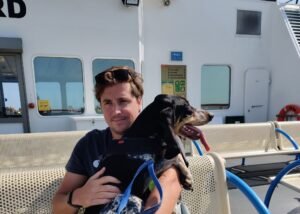
Yes, pets can travel with their owners on LeShuttle, subject to the required documentation and check-in procedure. Check the current rules before booking.
What is the difference between LeShuttle and Eurostar?
LeShuttle carries vehicles between Folkestone and Calais. Eurostar carries passengers by train from London to mainland European cities.