


✓ Plan and book your perfect crossing – simple, fast, and reliable

Ferries to Dublin

These are among the most popular ferry crossings to Dublin
3 Hours
67 miles
Up to 10 times per day
From: £36.00
Fast Ferry
2h 15 mins.
67 miles
Up to 10 times per day
From: £36.00

Travel to Dublin by ferry

Load up the car, roll on board and let the ferry do the miles across the Irish Sea.

Taking the ferry to Dublin is one of the most relaxed ways to start a trip to Ireland. Instead of queues at security and baggage limits, you simply drive or take the train to Holyhead and sail straight across the Irish Sea.

From Holyhead you can choose between Irish Ferries and Stena Line, with fast ferries, larger cruise-style ships, lounges, cabins and departures spread throughout the day. From the Isle of Man there is a seasonal ferry from Douglas to Dublin, and from mainland Europe you can sail directly from Cherbourg in France.

In short: 🇬🇧 UK & Europe to Dublin by ferry

  • There are three main passenger routes that sail directly to Dublin: Holyhead ⇄ Dublin (Wales), Douglas ⇄ Dublin (Isle of Man, seasonal) and Cherbourg ⇄ Dublin (France).
  • The Holyhead – Dublin route is by far the most popular, with both Irish Ferries and Stena Line operating several sailings a day.
  • Crossing times start from about 2 hours 15 minutes on the fast ferry and around 3–3½ hours on the larger ships.
  • Depending on where you start, you can also sail to Rosslare or Belfast and drive to Dublin in roughly two hours. It’s a flexible way to get yourself, your car, camper, or bikes into Ireland without airport stress.

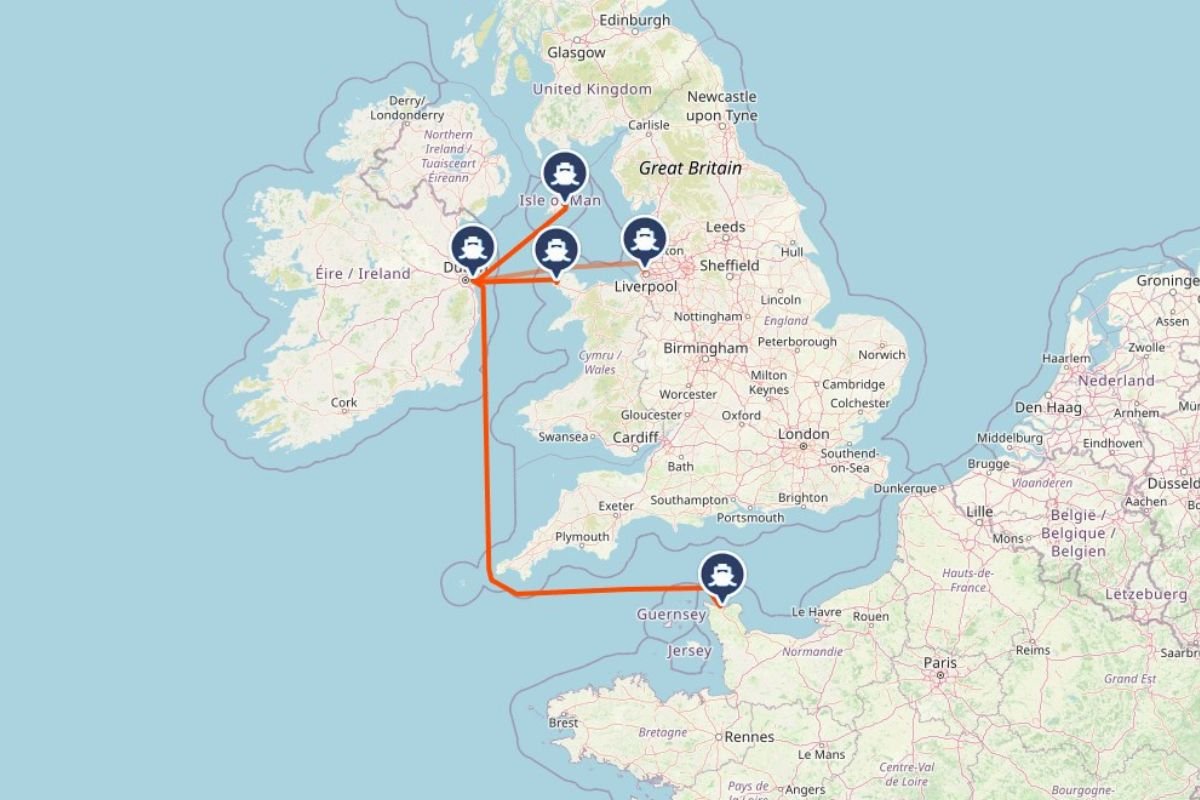
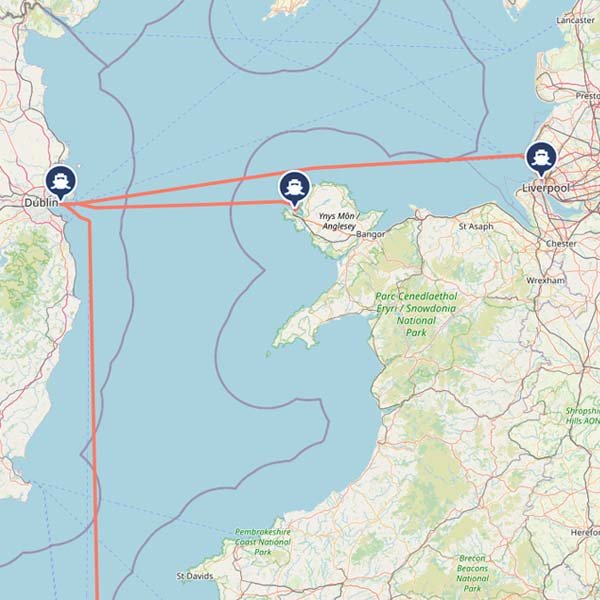
Map: ferry routes and crossings to Dublin

Dublin-Douglas

Ireland ⇔ Isle of Man
2h 54 mins.
Once per week
93 miles
From: £23.00

Holyhead-Dublin Stena Line

Wales ⇔ Ireland
3 Hours
Up to 10 times per day
67 miles
From: £36.00

Cherbourg-Dublin

France ⇔ Ireland
19 Hours
Up to 5 times per week
324 miles
From: £156.00
Fast Ferry
Irish Ferries

Holyhead-Dublin Irish

Wales ⇔ Ireland
2h 15 mins.
Up to 10 times per day
67 miles
From: £36.00

About the direct crossings to Dublin

Above you've found the main direct ferry routes to Dublin. On Ferrygogo we visualise these on our route maps and in the route cards on this page, but in short:

  • Holyhead ⇄ Dublin (Wales ⇄ Ireland)
    Operated by both Stena Line and Irish Ferries. Crossing times from around 2h15 (fast ferry) to about 3h15–3h25 on standard ships. Across both operators, you’ll often see up to 10 daily sailings in peak periods.
  • Douglas ⇄ Dublin (Isle of Man ⇄ Ireland)
    Operated by the Steam Packet Company. A seasonal crossing of roughly 2h55–3h, usually once a week or on selected days. Great if you want to combine the Isle of Man and Dublin in one trip.
  • Cherbourg ⇄ Dublin (France ⇄ Ireland)
    Operated by Irish Ferries. A long, direct crossing of around 19–20 hours, up to several times a week. Ideal if you’re driving from mainland Europe and want to arrive straight in Dublin.
RouteOperatorRegionCrossing timeFrequencyDistance (miles)From price
Holyhead ⇄ DublinStena LineWales ⇄ Ireland3 hoursUp to 10 times per day67£36.00
Holyhead ⇄ Dublin (fast ferry)Irish FerriesWales ⇄ Ireland2h 15 minsUp to 10 times per day67£36.00
Douglas ⇄ DublinSteam Packet CompanyIreland ⇄ Isle of Man2h 54 minsOnce per week (seasonal)93£23.00
Cherbourg ⇄ DublinIrish FerriesFrance ⇄ Ireland19 hoursUp to 5 times per week324£156.00

Ferry from Wales to Dublin

Wales is the natural springboard to Dublin by ferry. At the moment there is one core route from Wales directly to Dublin:

  • Holyhead ⇄ Dublin – the main route described above, with Irish Ferries and Stena Line sharing the line and offering a mix of fast and standard ferries.

From South Wales there is also the Fishguard ⇄ Rosslare ferry. Rosslare is roughly a 2-hour drive from Dublin, so this can be a smart alternative if you’re heading for a wider Irish road trip or if Holyhead is especially busy.

3 Hours
67 miles
Up to 10 times per day
From: £36.00
Fast Ferry
2h 15 mins.
67 miles
Up to 10 times per day
From: £36.00

Holyhead ⇄ Dublin: the main route

The Holyhead – Dublin route is the classic way to sail into Ireland’s capital. Two big players share the route:

  • Irish Ferries – with the fast ferry Dublin Swift and larger cruise-style ships such as Ulysses and James Joyce.
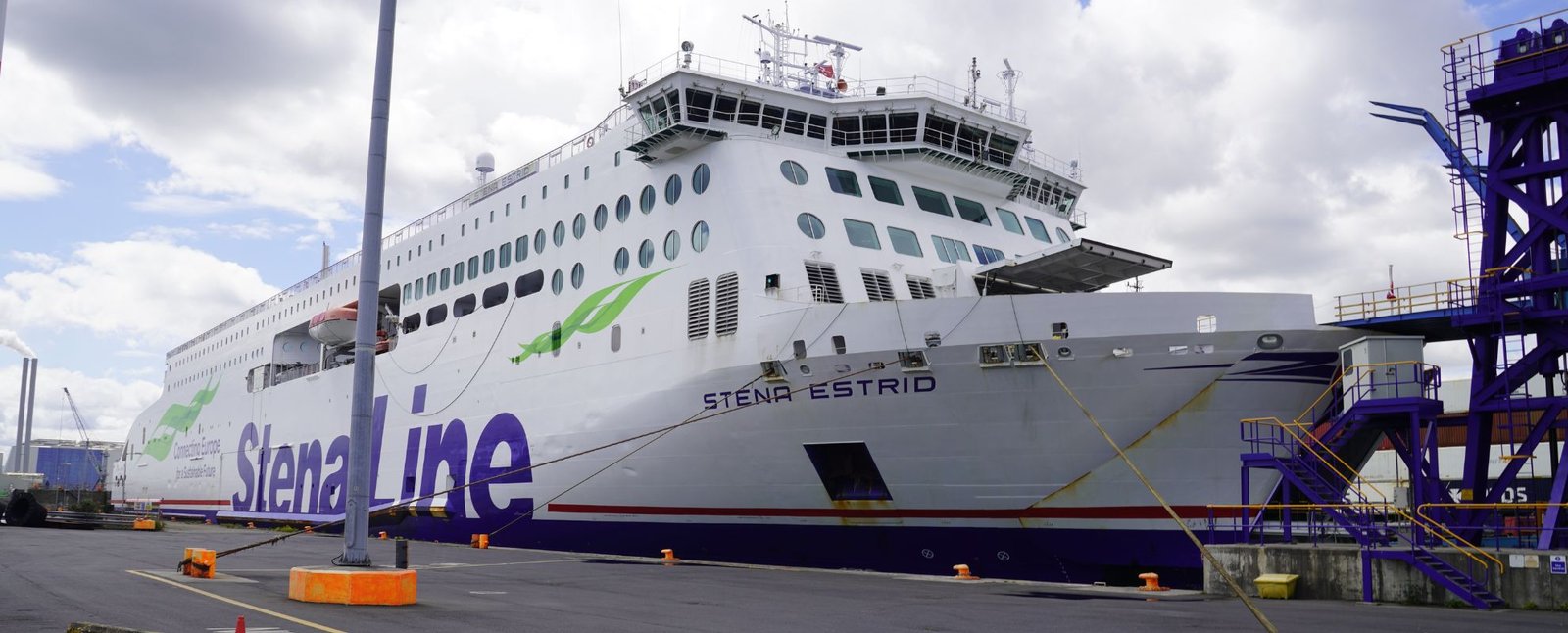
  • Stena Line – with modern superferries like Stena Estrid and Stena Adventurer.

Depending on the ship, the journey takes between 2 hours 15 minutes on the fast ferry and roughly 3–3½ hours on the larger vessels. Across both operators, there are typically multiple departures per day in each direction, so you can usually find a time that fits your plans.

Our experience on the crossings between Holyhead and Dublin

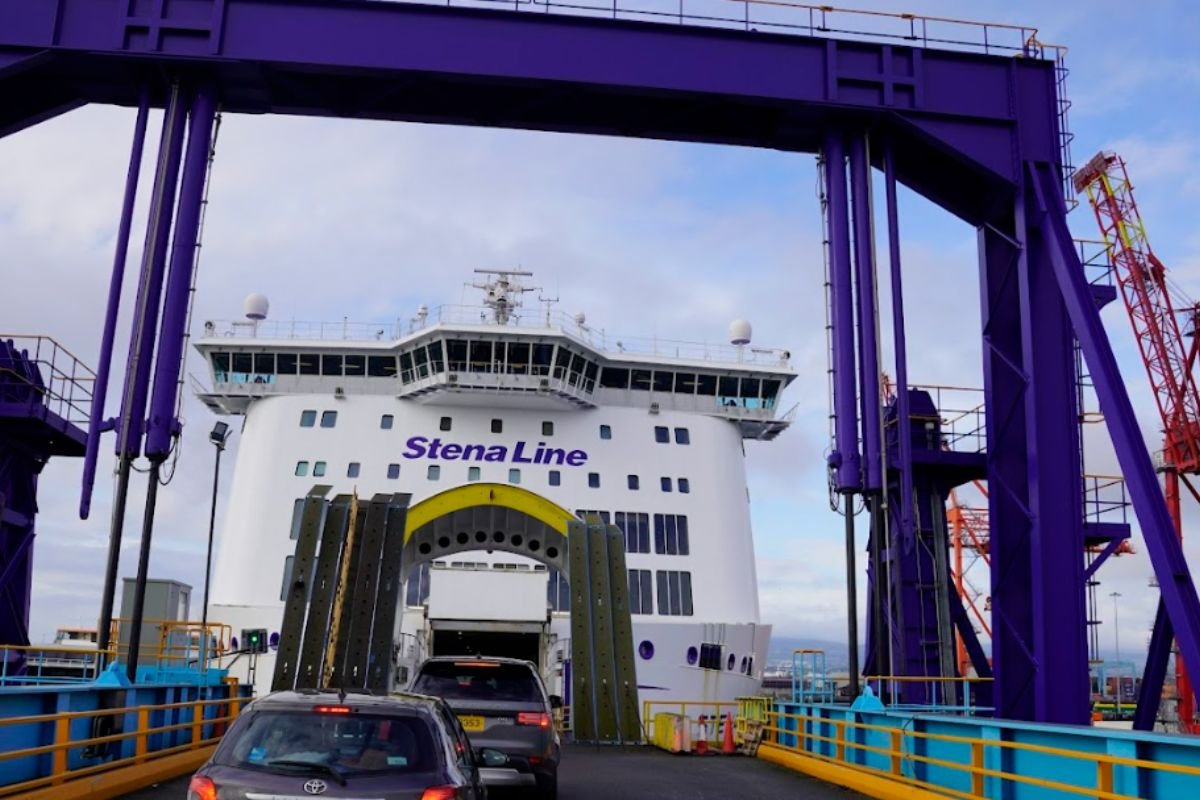
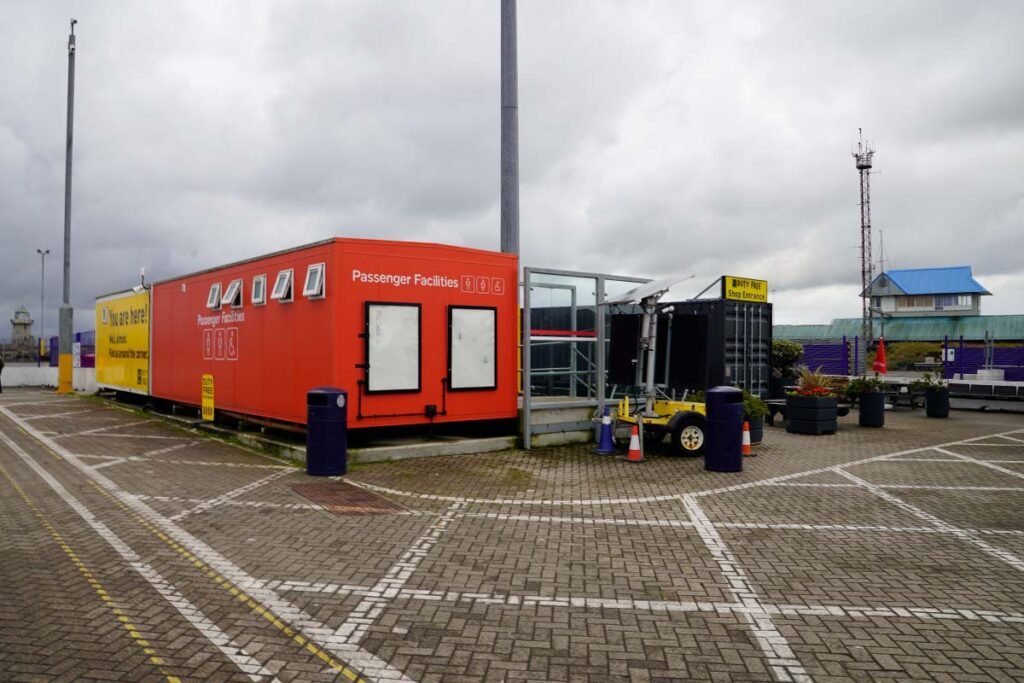
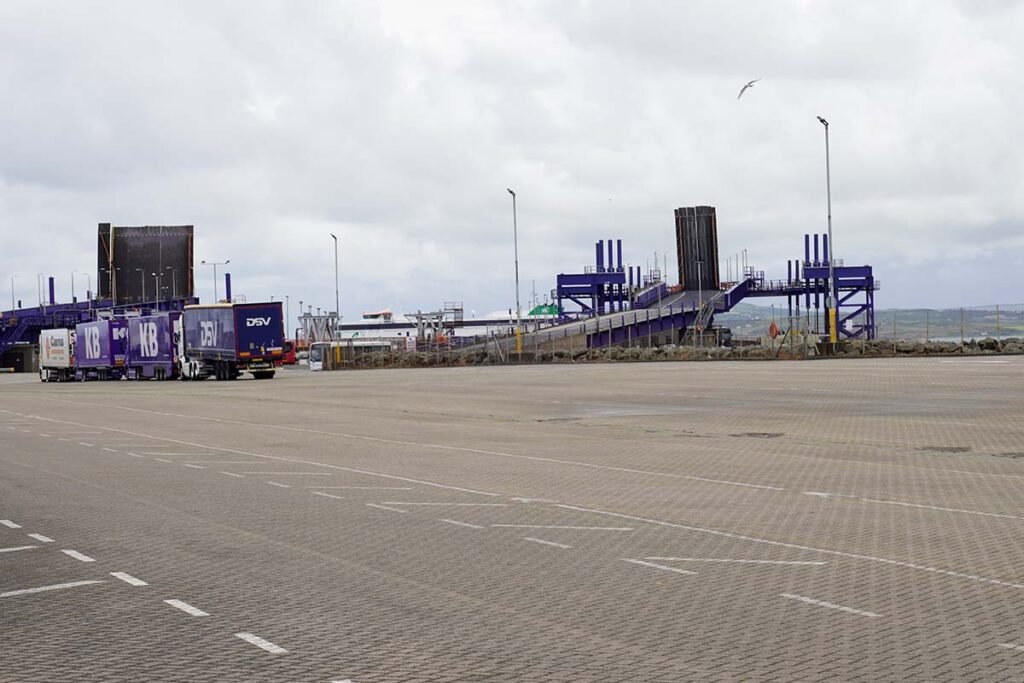
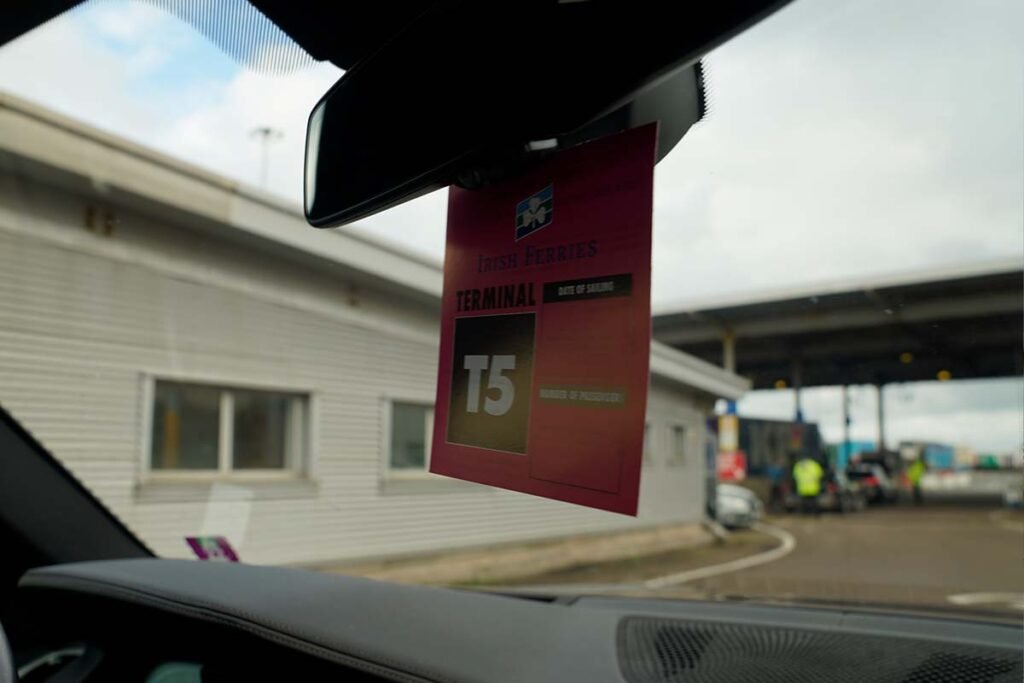
We’ve sailed from Holyhead to Dublin ourselves, including on the fast Dublin Swift catamaran. What stood out for us:

  • A surprisingly relaxed boarding process (especially by car) compared to airports.
  • Plenty of indoor seating and access to the outside deck for a quick blast of sea air.
  • Food courts and buffets that are perfectly fine for a few hours at sea.
  • The option to upgrade to a quiet or premium lounge if you want to work, nap or escape the crowds.

Want the full story? Check our travel report on the fast ferry from Holyhead to Dublin in the blog section on Ferrygogo.

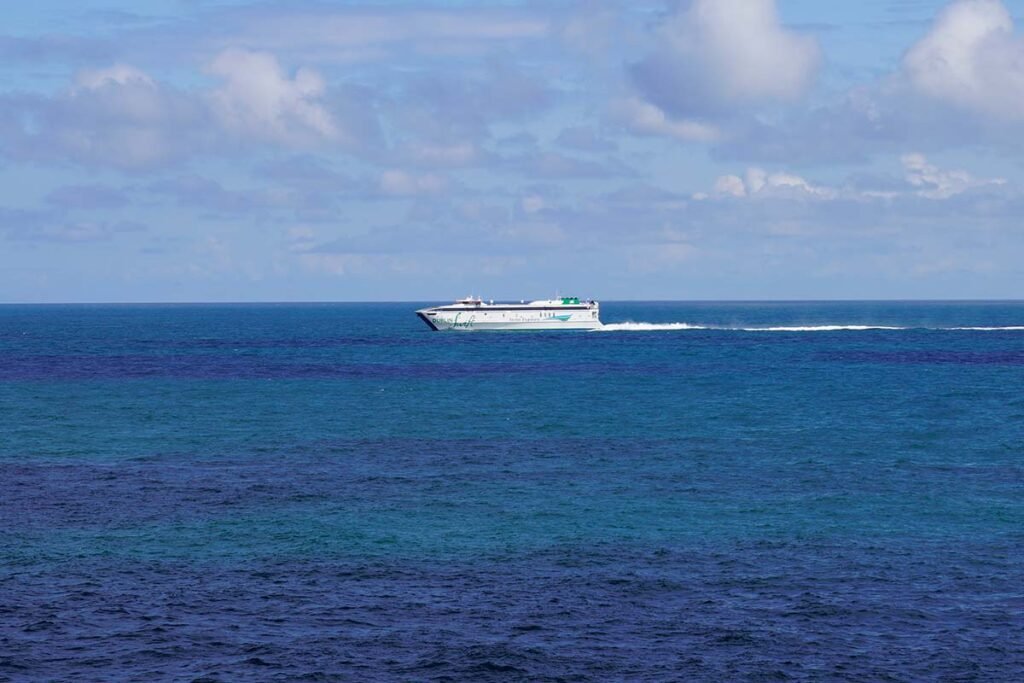
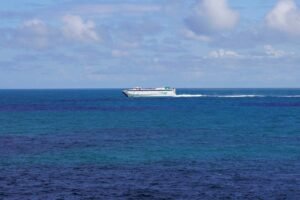
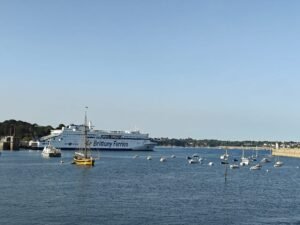
1 Dublin Swift ferry at the Irish Sea

Journey from Holyhead to Dublin on the Fast Dublin Swift Catamaran Ferry

We booked the ferry from Holyhead to Dublin departing from Wales. We wanted to try this popular route because several operators run different types of vessels on it. Plus, it was a great opportunity to explore the Irish capital. We chose ...

Ferry from France to Dublin

If you’re coming from mainland Europe, your direct option is the Cherbourg ⇄ Dublin ferry with Irish Ferries. This long crossing (about 19–20 hours) is perfect if you:

19 Hours
324 miles
Up to 5 times per week
From: £156.00

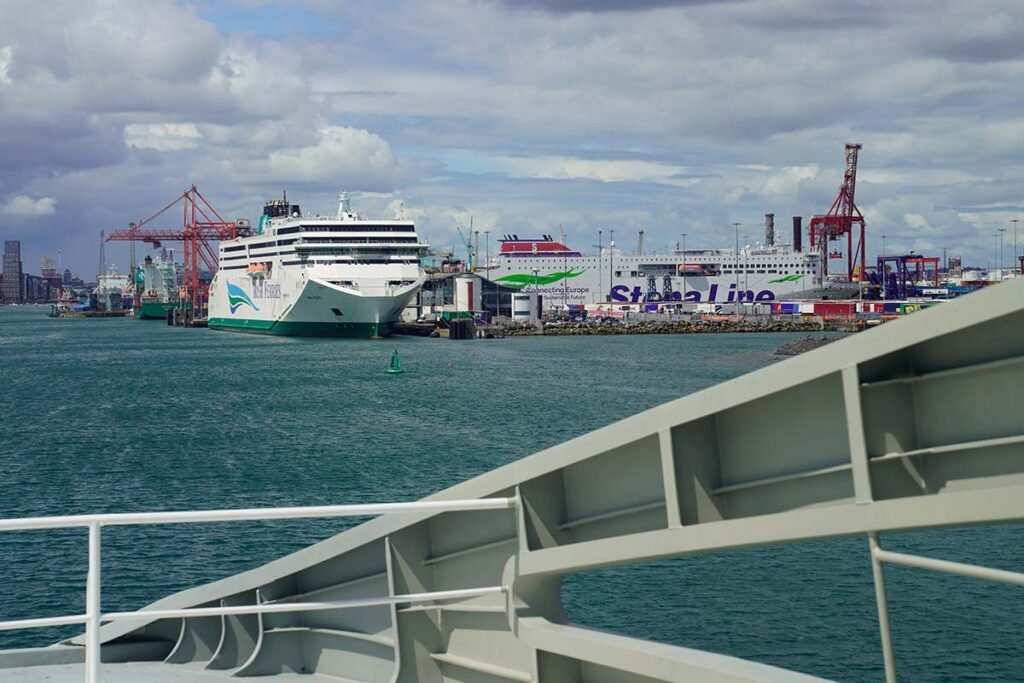
On board and the crossings visualised

On this page you’ll find a ferry map of routes to Dublin plus photos from our own crossings. Expect on most ships:

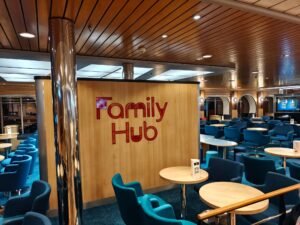
  • Large seating lounges, sometimes with quiet zones and family areas.
  • Cafés, bars and buffets for snacks and meals.
  • Shops with travel essentials and duty free (route dependent).
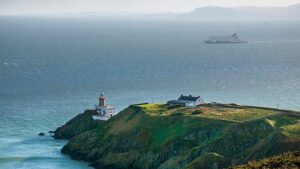
  • Outdoor decks for sea views of Anglesey, the Irish Sea and Dublin Bay.
  • On some routes, cabins and premium lounges for extra comfort.

On board and the crossings visualized

Alternative ferry routes if Holyhead – Dublin doesn’t fit

Holyhead – Dublin doesn’t suit your timings or you’d like a different itinerary? There are several indirect options that still work very well for trips to Dublin:

  • Rosslare: sail to Rosslare and drive to Dublin in around 2 hours. Good options are available from Wales, England, France, and even Spain to Ireland.
  • Belfast: sail into Belfast and drive down to Dublin in roughly 2 hours. This opens up routes from Scotland (Cairnryan), northern England, and even the Isle of Man.
  • Cork: ferries like Roscoff ⇄ Cork are great if you’re combining the south of Ireland with a later visit to Dublin.

These routes let you sail from places like Scotland, Southern Wales, France and Spain and then simply continue by car to Dublin.

Cairnryan-Belfast

Scotland ⇔ Northern Ireland
2h 15 mins.
Up to 6 times per day
44 miles
From: £115.00

Roscoff-Cork

France ⇔ Ireland
14 Hours
Up to 2 times per week
312 miles
From: £140.00

Cairnryan-Larne

Scotland ⇔ Northern Ireland
2 Hours
Up to 6 times per day
33 miles
From: £100.00

Rosslare-Dunkirk

France ⇔ Ireland
24 hours
Up to 5 times per week
383 miles
From: £400.00

Which ferry to Dublin should I pick?

At the end of the day, picking the right ferry to Dublin mostly comes down to where you start and how you like to travel.

  • Starting from England or Wales (by car)?
    Go for Holyhead ⇄ Dublin. Choose between Irish Ferries and Stena Line based on departure times, prices and whether you want the fast ferry or a larger, more spacious ship.
  • Travelling by train?
    Holyhead is the logical choice thanks to the direct rail link. Just make sure you leave enough buffer between train arrival and ferry check-in.
  • Combining islands?
    Planning a loop via the Isle of Man and Ireland? Then the seasonal Douglas ⇄ Dublin route is your friend – plan dates around the timetable.
  • Coming from mainland Europe?
    Decide whether you want to sail directly to Dublin with Cherbourg ⇄ Dublin, or to Rosslare or Cork and then enjoy a road trip to the capital.

Dublin-Douglas

Ireland ⇔ Isle of Man
2h 54 mins.
Once per week
93 miles
From: £23.00

Holyhead-Dublin Stena Line

Wales ⇔ Ireland
3 Hours
Up to 10 times per day
67 miles
From: £36.00

Cherbourg-Dublin

France ⇔ Ireland
19 Hours
Up to 5 times per week
324 miles
From: £156.00
Fast Ferry
Irish Ferries

Holyhead-Dublin Irish

Wales ⇔ Ireland
2h 15 mins.
Up to 10 times per day
67 miles
From: £36.00

Note on Liverpool ⇄ Dublin: there used to be a dedicated passenger route from Liverpool to Dublin. That sailing was discontinued in 2023. Stena Line has since introduced a primarily freight-focused Birkenhead ⇄ Dublin service, which has occasionally carried passengers as a temporary alternative. Treat this as an extra option to check in special situations, rather than a core, year-round passenger route.

Note on Fishguard ⇄ Dublin: during disruptions at Holyhead, operators have used Fishguard as an alternative port for some sailings to Ireland. Under normal circumstances, Fishguard is linked with Rosslare, not Dublin. Always check the latest timetables if you’re hoping for a direct Fishguard–Dublin option.

Ferry schedule/timetable

Prices and availability for this crossing.

To explore and compare ferry crossings to and from Dublin including schedules and prices, you can use the booking module below. This tool allows you to plan your journey and secure your tickets efficiently.

Additional information for UK & French travellers to Dublin

When travelling by ferry to Dublin from the UK or France, a few practical things are worth keeping in mind:

  • Travel documents: UK & Irish travellers: within the Common Travel Area you technically don’t need a passport, but ferry companies do require valid photo ID – a passport is the safest and easiest option.
    French/EU travellers: You must show a valid passport or national ID card, as Ireland is outside the Schengen area.
  • Currency: Ireland uses the euro (€). Cards are widely accepted, but having a little cash is handy for tolls, parking, and smaller places outside Dublin.
  • Driving & roads: Ireland drives on the left-hand side of the road (same as the UK, the opposite of France). Around Dublin, you may encounter toll roads, including the M50 ring road and the Dublin Port Tunnel.
    The M50 has no toll booths – your number plate is recorded, and you must pay online (eFlow) via app or in a Payzone outlet by 8 pm the next day to avoid penalties.
  • Car & insurance: UK drivers no longer need a green card for Ireland or the EU, but you do need valid vehicle insurance, a full driving licence, and ideally your V5C (logbook). French drivers should carry the usual car documents used for EU trips.
  • Wi-Fi, roaming & entertainment: On board, Wi-Fi can be slow or require a paid subscription, and roaming at sea may switch to expensive maritime networks. Download series, films, playlists, and offline maps before you travel.
  • Travelling with kids: On longer crossings (especially Cherbourg ⇄ Dublin), a cabin or quiet lounge is worth it – kids can sleep, play, and arrive much happier.
  • Time difference: Ireland and the UK are in the same time zone. Travelling from France, you’ll gain one hour when you arrive in Ireland.
2 Comments
  1. Do i need a UK visa in order to travel to Holyhead?

Leave a reply

Ferrygogo UK
Logo