



✓ Plan and book your perfect crossing – simple, fast, and reliable | Explore Ferrygogo worldwide 🌐

Ferry to Sweden from the UK

15h 30 mins.
243 miles
Once per day
From: £95.00

Ferry to Sweden from the UK: no direct ferry, but several good routes

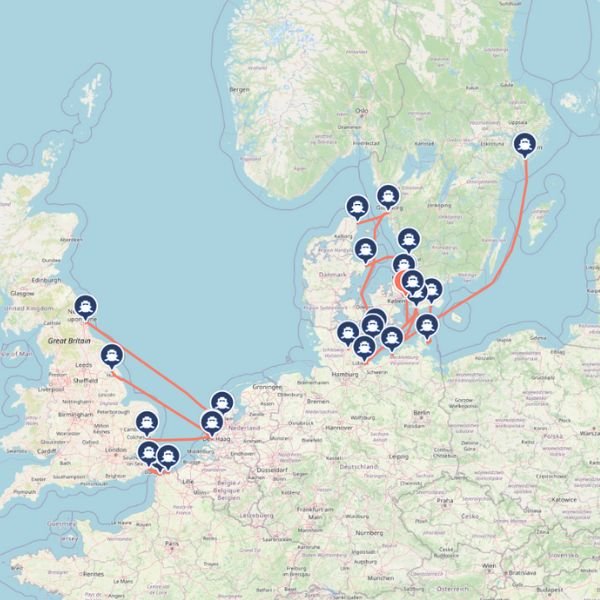
There is currently no direct ferry from the UK to Sweden. In practice, you first cross from the UK to either the Netherlands or France, then continue by car through Germany or Denmark before entering Sweden by ferry or bridge. The route map gives you a quick overview of how the main corridors connect.

The best route depends on the full journey, not just the ferry crossing. Where do you start in the UK? Are you heading for Gothenburg, Malmö, Stockholm or somewhere further north? Would you rather drive through the night, sleep on board, or break the journey with a hotel?

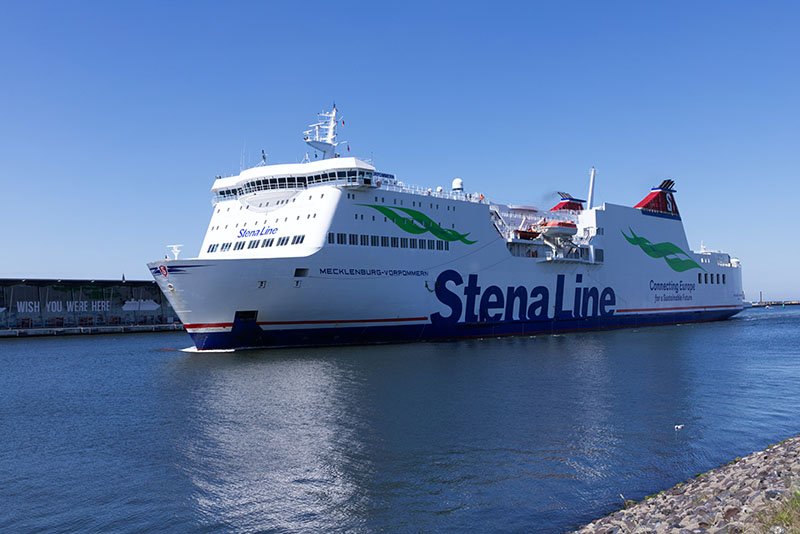
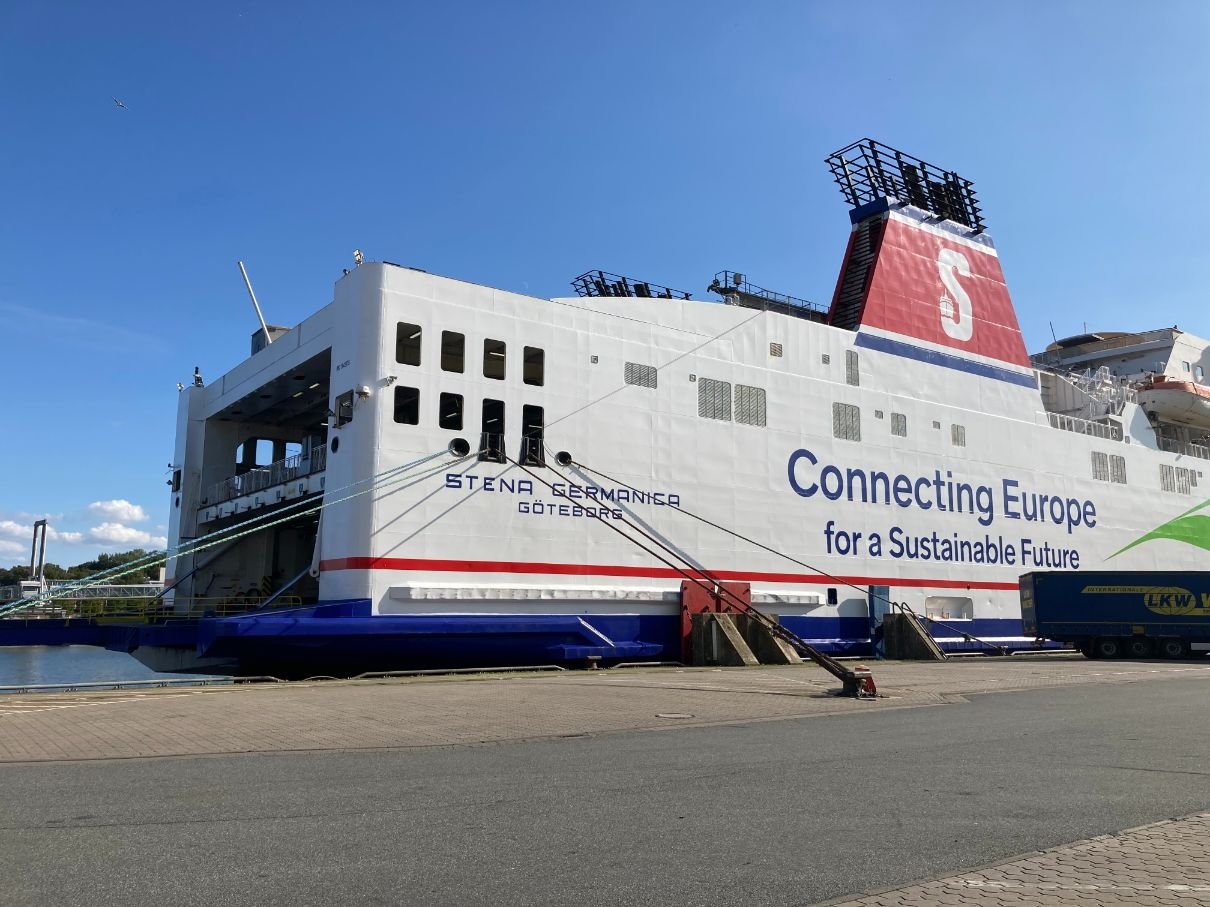
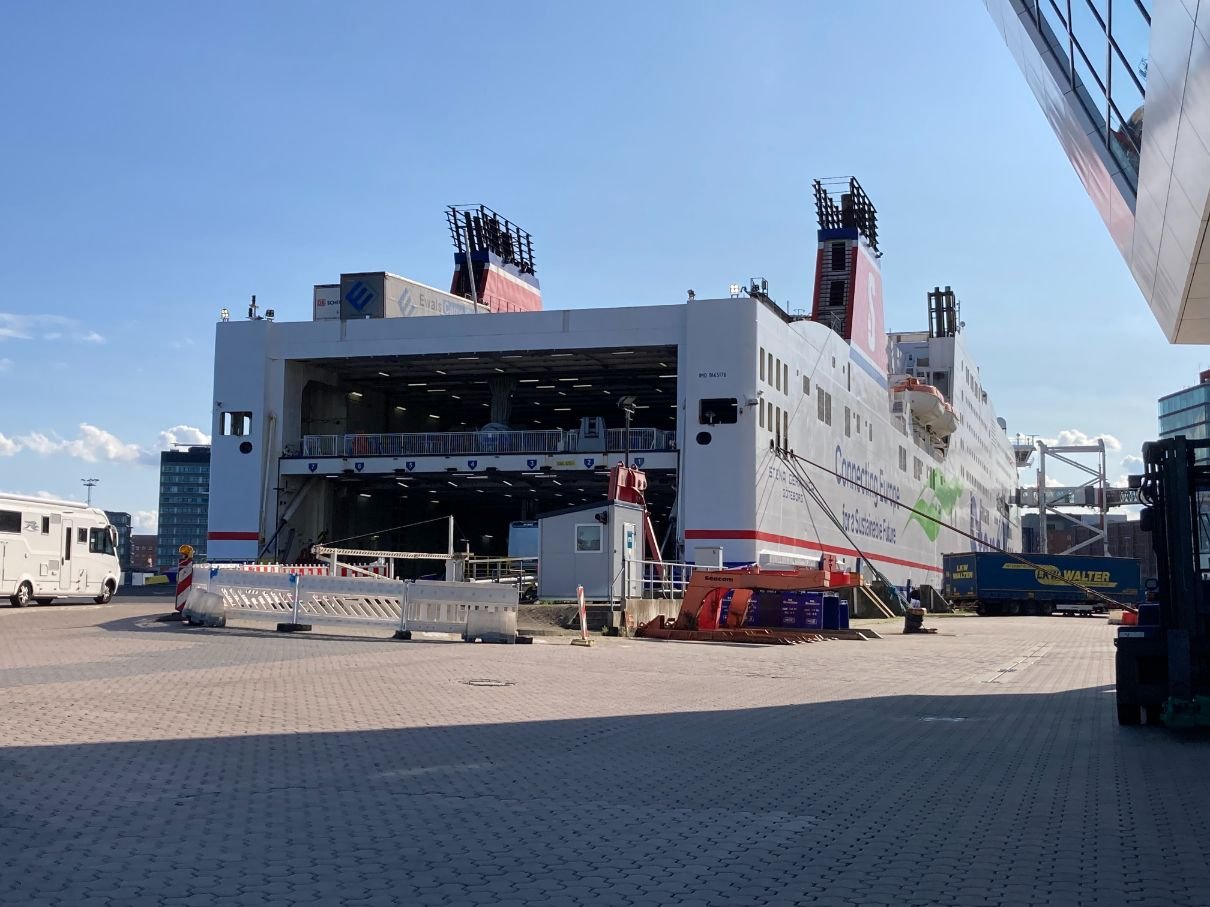
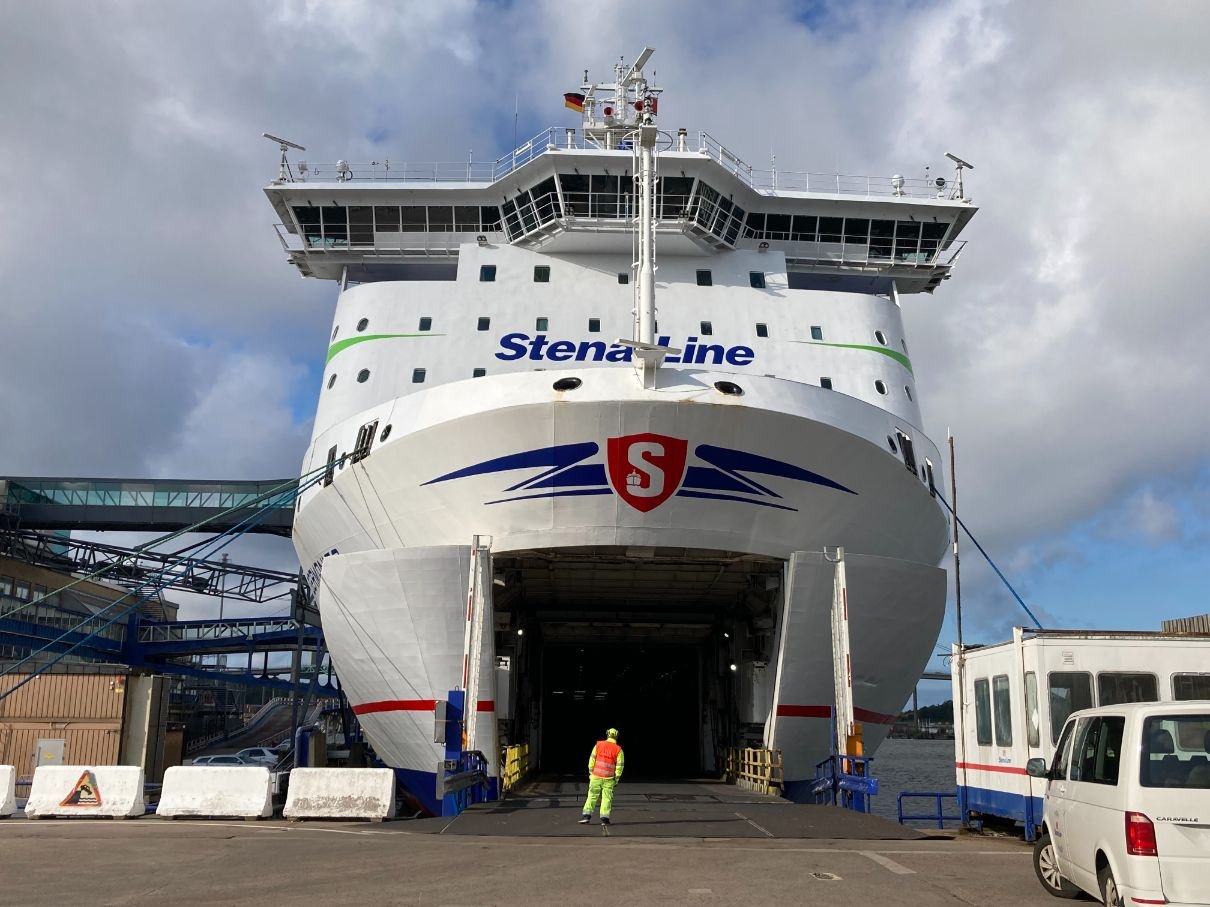
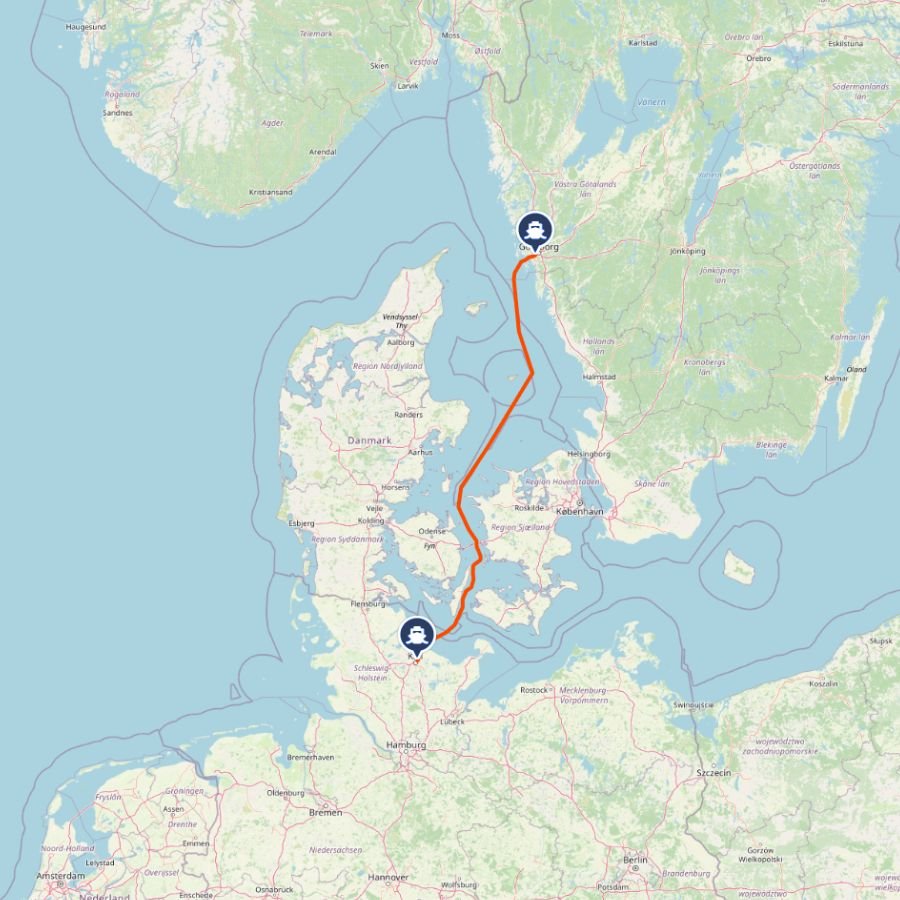
For Gothenburg and western Sweden, the most comfortable route is often a UK–Netherlands ferry followed by the overnight Kiel–Gothenburg ferry. For Malmö and southern Sweden, driving through Denmark and taking the Puttgarden–Rødby ferry with either the Øresund Bridge or the short Helsingør–Helsingborg ferry usually makes more sense.

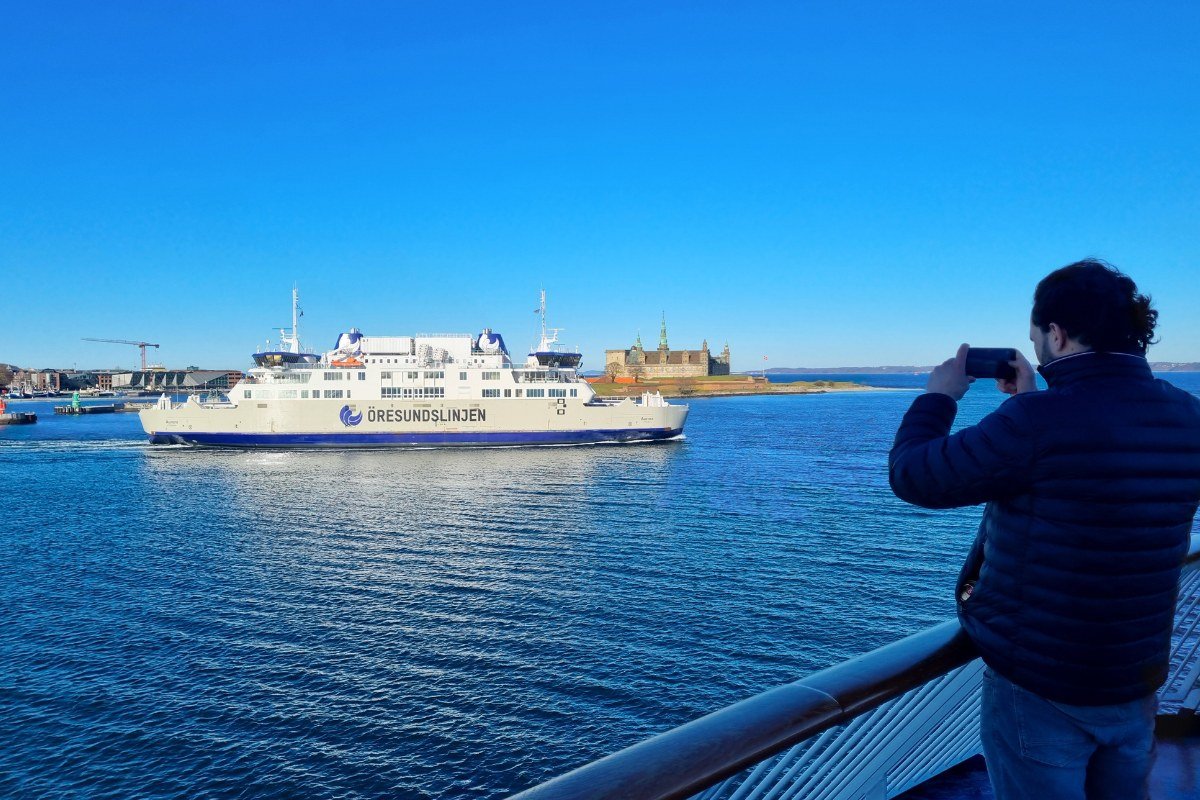
The Denmark to Sweden crossings, tested not just listed. We have not yet sailed Kiel–Gothenburg ourselves, but we have done the via-Denmark route in one Denmark–Sweden loop: Puttgarden–Rødby, the Helsingør–Helsingborg ferry and the Øresund Bridge. We know how the waits, combi-tickets and route choice actually work out.
FerryGoGo verdict: do not choose only by crossing time. For Sweden, the better route is usually the one with the best balance between ferry time, sleep, driving distance and arrival time.

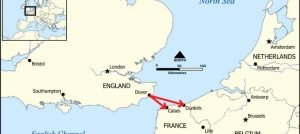
Map: ferry routes from the UK to Sweden

Driving to Sweden from the UK by ferry

Most UK travellers reaching Sweden by ferry do it as a road trip. The ferry is only one part of the route: you also need to think about the drive across the Netherlands or France, Germany, Denmark and then Sweden itself.

The simplest way to plan the trip is to choose one of three corridors:

Worth knowing: the route with the fewest ferry hours is not always the easiest. A night ferry can replace a hotel stop, reduce driving fatigue and make the trip feel more like the start of a holiday.

Which UK to Sweden route should you choose?

There is no single best ferry route to Sweden. The right choice depends on your destination in Sweden and how you want to balance driving, ferry time and overnight stops.

Best for Route to consider Why this route works
Gothenburg and west Sweden UK to the Netherlands, then Kiel–Gothenburg The strongest comfort route. The overnight ferry from Kiel removes a long drive through Denmark and lets you arrive in Gothenburg rested.
Malmö and southern Sweden UK to France or the Netherlands, then Puttgarden–Rødby and the Øresund Bridge The most direct road-trip corridor into southern Sweden. It works especially well if Copenhagen is part of the journey.
Helsingborg and the Swedish west coast Puttgarden–Rødby, then Helsingør–Helsingborg The short Denmark–Sweden ferry can be more logical than the bridge if you are continuing north of Malmö.
Stockholm and east Sweden Enter Sweden via Gothenburg or Malmö, then continue across Sweden Stockholm is still a long onward drive. Choose Gothenburg for comfort, or Malmö / southern Sweden if you prefer a more road-heavy route.
Families with children Harwich–Hook, Hull–Rotterdam or Newcastle–Amsterdam, then a second ferry or bridge A cabin, meal and proper sleep on board can be worth more than saving a little time on paper.
South East England Dover–Calais, Dover–Dunkirk or LeShuttle This gets you onto the Continent quickly, but leaves more driving afterwards through France, Belgium, Germany and Denmark.
Northern England and Scotland Newcastle–Amsterdam, then Germany / Denmark / Sweden You avoid driving south before the first ferry. The longer crossing does useful work while you sleep.

Tip: compare the route as a full journey. Fuel, tolls, hotel stops, tiredness and arrival time can change which option is really best.

1 ferry adventure denmark sweden

Our ferry adventure: the shortcut to Denmark and Sweden!

What started as a quick trip to Copenhagen became a proper FerryGoGo route test. We wanted to try the main ways of crossing between Germany, Denmark and Sweden: the Puttgarden–Rødby ferry, the Øresund Bridge, the Helsingør–Helsingborg ferry ...

Ferries to Sweden in short

Step 1: Getting from the UK to Europe / the Continent

You first need to reach the European mainland. The main choices are the direct crossings to the Netherlands or the short routes from Dover to France.

For South East England, Dover–Calais, Dover–Dunkirk or LeShuttle can be the quickest first step. The trade-off is that you still have a long drive afterwards through France, Belgium, Germany and Denmark.

For many Sweden trips, the Netherlands is the more comfortable first leg. Harwich–Hook of Holland, Hull–Rotterdam and Newcastle–Amsterdam can all make sense, depending on where you start in the UK.

Popular

1h 30 mins.
26 miles
Up to 35 times per day
From: £80.00
Popular

11h 30 mins.
237 miles
Once per day
From: £250.00
Popular

6h 30 mins.
125 miles
Up to 2 times per day
From: £210.00
Popular

17 hours
368 miles
Once per day
From: £175.00
2 Hours
47 miles
Up to 8 times per day
From: £81.00

First UK crossings we would compare before driving to Sweden

The first ferry from the UK shapes the rest of the journey. A short Channel crossing may be fastest on paper, but a longer North Sea ferry can leave you better rested before the long drive through Germany and Denmark.

Step 2: From the Netherlands or France to Germany or Denmark

After the first crossing, the next decision is whether you drive towards Kiel and the longer Germany–Sweden ferries, or towards Denmark and the shorter ferry/bridge route into southern Sweden.

Approximate driving times vary by traffic and season, but the route pattern is simple: the Netherlands works well for Kiel and northern Germany, while France can work if you are starting from the South East and want the fastest first crossing.

  • From Rotterdam / Hook of Holland / IJmuiden to Kiel: usually a long but manageable mainland drive.
  • From Dunkirk or Calais to Kiel: a longer road-heavy option, but convenient if Dover is your natural UK departure point.
  • From northern Germany to Copenhagen and Malmö: easiest via Puttgarden–Rødby and the Øresund Bridge.

Option 1: via Germany to Sweden

The Germany route is the most logical choice if you want to enter Sweden by ferry from Kiel, Travemünde, Rostock or Sassnitz. It is especially strong for Gothenburg and western Sweden, because the Kiel–Gothenburg night ferry lets you sleep through the final stretch into Sweden.

This option works best if you are happy to drive across the Netherlands or northern Germany before boarding your second ferry. It can feel more relaxed than driving all the way through Denmark, especially if you choose an overnight ferry with a cabin.

Best fit: Gothenburg, west Sweden, families, campervans and travellers who prefer a comfortable ferry leg over a longer road-heavy route.
Popular
6 Hours
100 miles
Up to 3 times per day
From: £46.00
15h 30 mins.
243 miles
Once per day
From: £95.00
7h 30mins.
137 miles
Up to 4 times per day
From: £46.00
9 hours
143 miles
Up to 3 times per day
From: £30.00

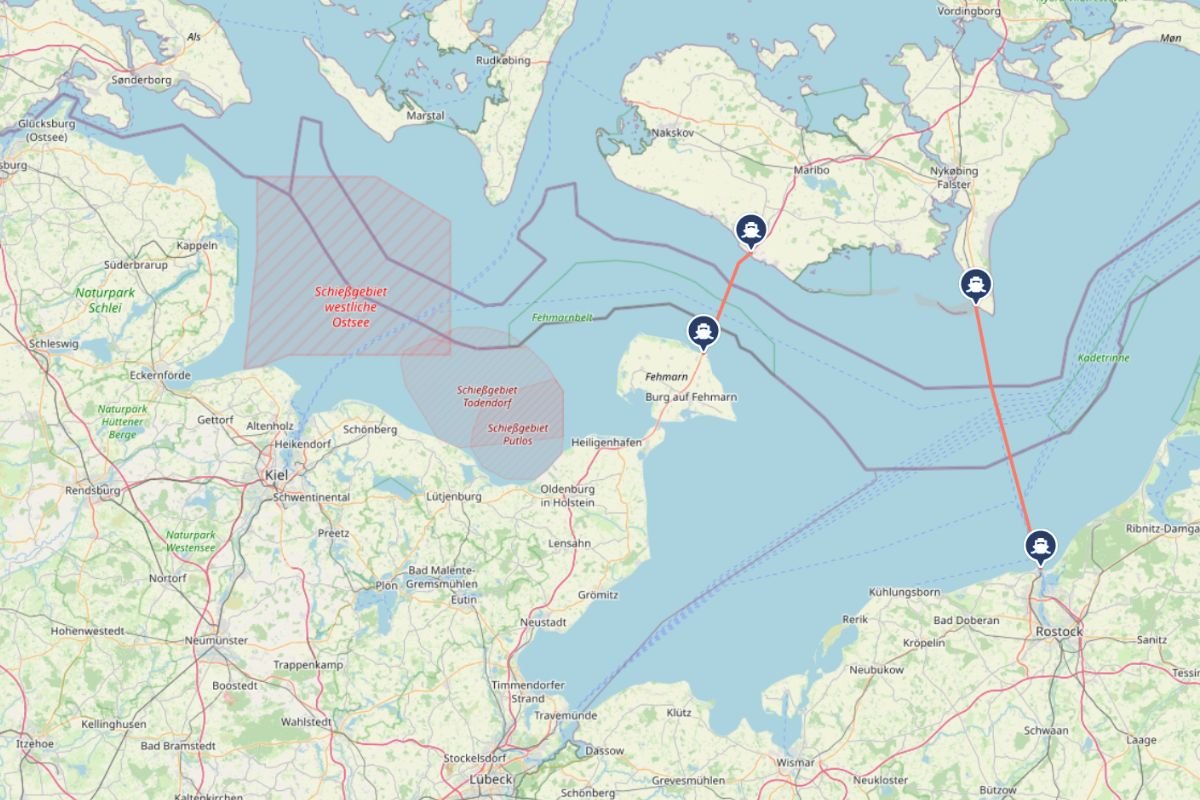
Option 2: via Denmark, Puttgarden–Rødby and the Øresund Bridge

For Malmö and southern Sweden, the most direct route is usually the driving shortcut through Germany and Denmark:

UK to France or the Netherlands → Puttgarden–Rødby → Copenhagen → Øresund Bridge → Malmö.

This route keeps the ferry sections short. You use the Puttgarden–Rødby ferry as a shortcut from Germany into Denmark, then continue past Copenhagen and cross into Sweden by bridge.

Route tested, not just listed. We tested this Germany–Denmark–Sweden shortcut ourselves, including the Puttgarden–Rødby ferry, the Øresund Bridge and the Helsingør–Helsingborg ferry.

Our main lesson from this route: the short crossings are not just small route details. They break up the journey and make the long drive from the UK feel more manageable.

Practical takeaway: ticket flexibility matters on this route. On a long drive from the UK, it helps if your ferry or bridge ticket gives you some room when you arrive earlier or later than planned.
Popular
45 mins.
11 miles
continuous
From: £52.00
Popular
20 Minutes
2 miles
continuous
From: £33.00
19 minutes
5 Miles
continuous
From: £63.00

Option 3: from Denmark to Sweden by ferry

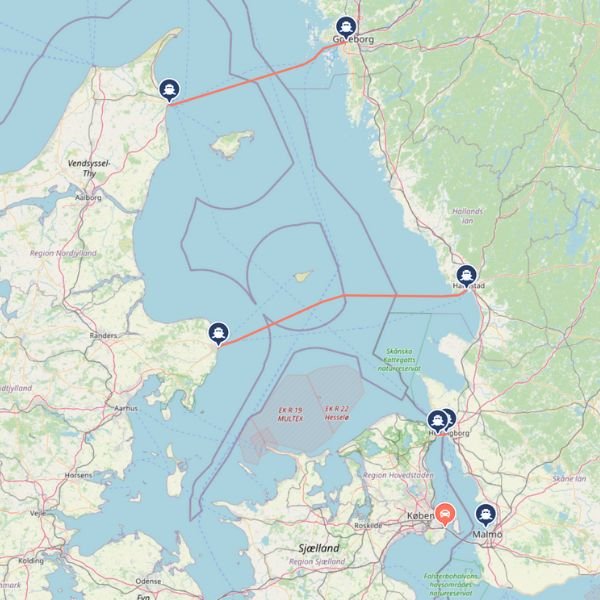
If you drive through Denmark, you do not have to use the Øresund Bridge. Several short ferry routes connect Denmark and Sweden, and they can be useful depending on where you need to go next.

The most relevant Denmark–Sweden crossings for UK road trips are:

  • Helsingør–Helsingborg: best if you are heading towards Helsingborg, Gothenburg or further north along the west coast.
  • Frederikshavn–Gothenburg: useful if your route through Denmark takes you further north before entering Sweden.
  • Grenaa–Halmstad: another west-coast option, depending on your onward route in Sweden.

For Malmö, the Øresund Bridge is usually the simplest choice. For Helsingborg and the Swedish west coast, the ferry can be the more natural fit.

4h 30 mins.
79 miles
Up to 2 times per day
From: £63.00
19 minutes
5 Miles
continuous
From: £63.00
3h 15 mins
57 miles
Up to 7 times per day
From: £63.00
1h 20mins.
42 miles
Up to 7 times per day
From: £13.00
Popular
20 Minutes
2 miles
continuous
From: £33.00

Ferry to Stockholm from the UK: what is the best route?

There is no direct ferry from the UK to Stockholm. If Stockholm is your final destination, you still need to choose where you enter Sweden: via Gothenburg in the west, or via Malmö and southern Sweden.

For comfort, we would consider the Netherlands and Kiel–Gothenburg route first. You arrive in Sweden rested, then continue across the country towards Stockholm.

For a more direct road-trip route, you can travel via France or the Netherlands, cross Germany and Denmark, then enter Sweden via the Øresund Bridge near Malmö. This keeps the ferry sections shorter, but usually means more driving.

Our advice: for Stockholm, do not only ask ‘which ferry gets me closest?’ Ask how tired you want to be when you arrive in Sweden. The more comfortable route may be the better holiday route, even if it is not the shortest line on the map.

Best way to travel to Sweden from the UK

If we had to choose one comfortable route for UK travellers heading to Sweden, we would usually start with a ferry to the Netherlands and then take the Kiel–Gothenburg night ferry. This is especially strong for Gothenburg, western Sweden and families who want to avoid a punishing drive through Germany and Denmark.

That said, the best route changes by destination. For Malmö and southern Sweden, the Puttgarden–Rødby ferry plus the Øresund Bridge is usually the more direct shortcut. For Helsingborg and the Swedish west coast, the Helsingør–Helsingborg ferry can be a better fit than the bridge.

Our top 3 UK to Sweden route choices

  1. Most comfortable overall: UK to the Netherlands, then Kiel–Gothenburg. Best for Gothenburg, western Sweden, families, campervans and travellers who prefer less driving and more rest.
  2. Best shortcut to southern Sweden: UK to France or the Netherlands, then Puttgarden–Rødby and the Øresund Bridge. Best for Malmö, Skåne, Copenhagen stopovers and travellers who want the most direct road-trip corridor.
  3. Best ferry alternative into Sweden: Puttgarden–Rødby, then Helsingør–Helsingborg. Best for Helsingborg, the Swedish west coast and travellers who prefer a short ferry break instead of staying on the bridge route.
For families: we would often choose a longer ferry and a shorter drive over the route with the absolute shortest crossing time. A night ferry can turn travel time into sleep time, which is often worth more than saving a small amount of time on paper.

On board and maps 

Prices and availability for Sweden routes

You can use the booking module to check current ferry prices and availability. There is no direct UK–Sweden ferry, so compare the first UK crossing and the second Scandinavia leg separately.

For Sweden, the routes to compare most often are Kiel–Gothenburg, Puttgarden–Rødby, the Øresund Bridge and the Denmark–Sweden ferries.

Practical tips before booking your ferry route to Sweden

  • Compare the full journey, not just the ferry price. A cheaper short crossing can still mean more fuel, tolls, hotel costs and tired driving.
  • Use night ferries strategically. Harwich–Hook, Hull–Rotterdam, Newcastle–Amsterdam and Kiel–Gothenburg can all turn travel time into rest time.
  • Book cabins early in school holidays. Family cabins, pet cabins and better cabin types can sell out on popular overnight routes.
  • Pack a small overnight bag before boarding. On longer ferries, you usually cannot return freely to the car deck during the crossing.
  • Check ticket flexibility on short crossings. On a long drive to Sweden, delays happen. A flexible ticket can be useful on routes such as Puttgarden–Rødby or Helsingør–Helsingborg.
  • Think about arrival time. Arriving in the Netherlands, Germany or Sweden in the morning can make the next driving leg much easier.
  • Download entertainment before sailing. Wi-Fi at sea can be limited or expensive, especially on longer crossings.
  • Remember you will drive on the right. The first few minutes after leaving the ferry or train on the Continent can feel strange if you are used to UK roads.
FerryGoGo tip: for Sweden, the most relaxing route is often not the one with the fewest crossings. It is the route with the best balance between ferry time, sleep, driving distance and arrival time.

Useful next reads

We will be happy to hear your thoughts

Leave a reply

Ferrygogo UK
Logo