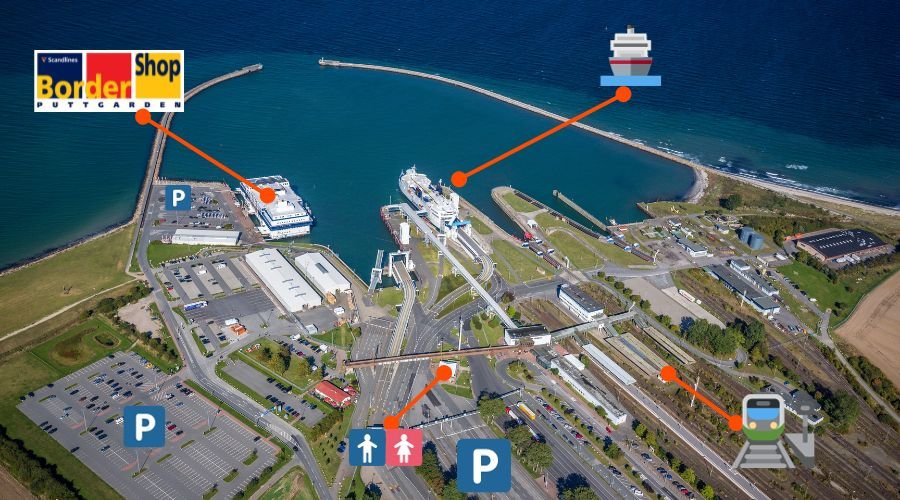
Puttgarden–Rødby: a useful shortcut to Copenhagen and Sweden
The Puttgarden–Rødby ferry is a short crossing, but it can make a big difference to the way your journey feels. For many travellers driving from Germany towards Copenhagen, southern Sweden or further into Scandinavia, it works as a practical shortcut: drive up through Germany, cross to Denmark by ferry, then continue towards Copenhagen, the Øresund Bridge or the Helsingør–Helsingborg ferry.
This is not a route you choose for a long onboard experience. You choose it because it breaks up the drive, cuts out a longer road detour and gives you more flexibility when planning the Denmark–Sweden part of the journey. It can also be combined with bridge and ferry options further north, depending on whether you are heading for Malmö, Helsingborg, Gothenburg or beyond.
On this page we look at how the Puttgarden–Rødby crossing works, when it makes sense, and how it compares with driving-only alternatives. The important question is not just how long the ferry takes, but whether it makes your total route quicker, easier or more comfortable.
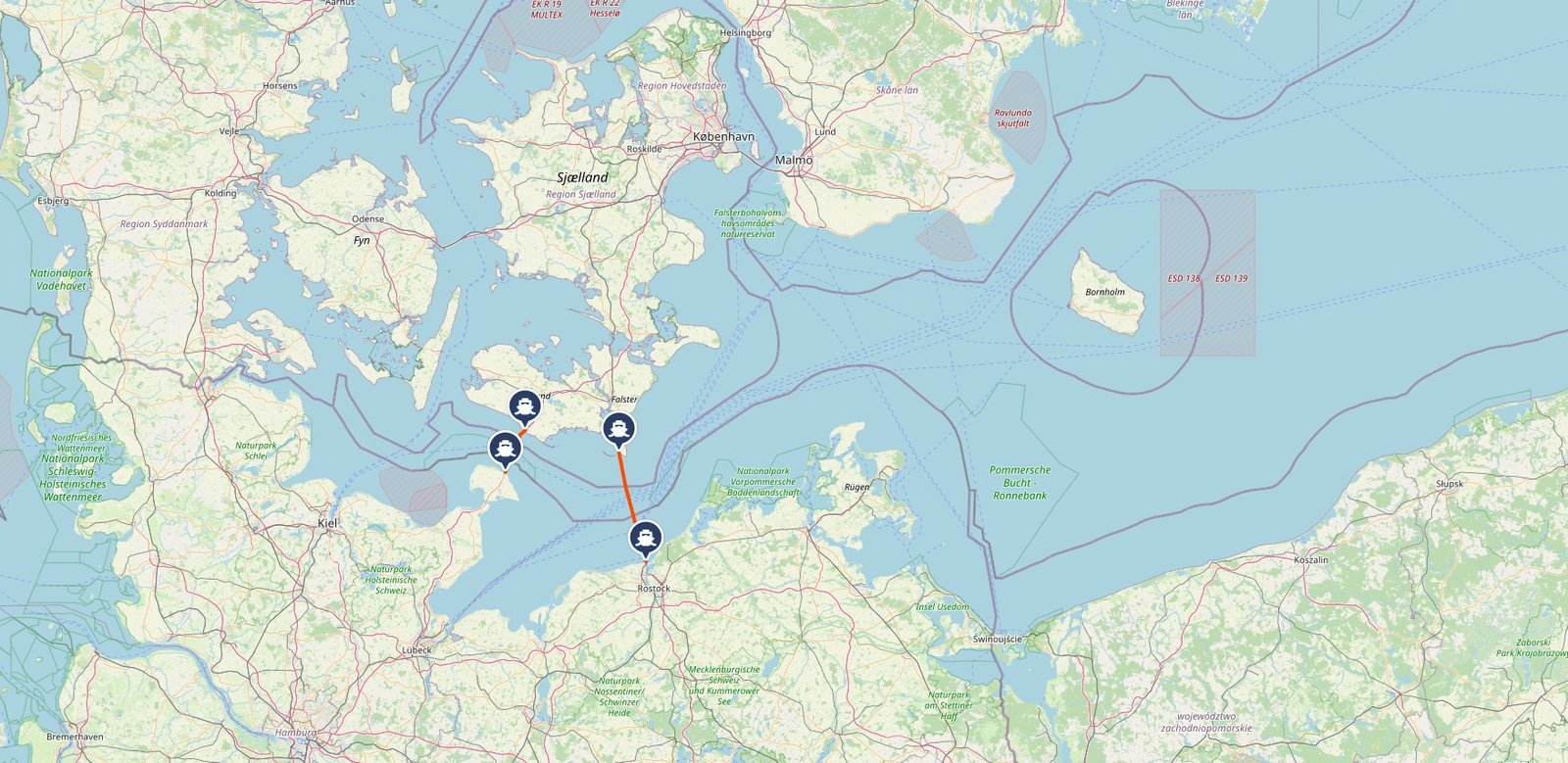
Map: ferry routes Puttgarden-Rodby and Rostock-Gedser
You can zoom in and out and view the routes in the ports within our map. You can see both the route from Puttgarden to Rødby and the route from Rostock to Gedser.
About the Puttgarden–Rødby ferry
The Puttgarden–Rødby ferry is best understood as a shortcut in a longer road journey. The crossing itself is short, but it changes the route: instead of driving all the way through Jutland and across Denmark’s road bridges, you cross from northern Germany to the Danish islands and continue towards Copenhagen, the Øresund Bridge or the Helsingør–Helsingborg ferry.
That is why this route is especially useful for drivers heading to Copenhagen, southern Sweden or further into Scandinavia. It is not a ferry you choose for a long onboard experience. You choose it because it breaks up the drive, saves road miles and gives you a more direct line towards Zealand, Copenhagen and Sweden.
If you are continuing to Sweden, Puttgarden–Rødby can be combined with either the Øresund Bridge towards Malmö or the Helsingør–Helsingborg ferry further north. The right choice depends on where you want to enter Sweden: Malmö and southern Sweden usually point towards the bridge, while Helsingborg, Gothenburg and the west coast can make the northern ferry more logical.
The crossing in brief
- Route: Puttgarden in Germany to Rødby in Denmark
- Operator: Scandlines
- Typical crossing time: around 45 minutes
- Best for: Copenhagen, Zealand, southern Sweden and road trips further into Scandinavia
- Main alternative: Rostock–Gedser, especially if your route through Germany points further east
Puttgarden–Rødby or Rostock–Gedser?
The two main Scandlines ferry routes between Germany and Denmark serve slightly different journeys. Puttgarden–Rødby is usually the cleaner shortcut if you are driving up through western or central Germany towards Copenhagen. Rostock–Gedser can make more sense if you are coming from eastern Germany, Berlin, Poland or a route that naturally brings you towards Rostock.
The difference is also in the feel of the crossing. Puttgarden–Rødby is a quick hop: useful, efficient and over before you know it. Rostock–Gedser gives you more time on board, so it can feel like a more substantial break before the next stretch of driving.
When Puttgarden–Rødby makes sense
- You want the most direct ferry shortcut towards Copenhagen. Rødby puts you on the Danish island route towards Zealand and the capital.
- You are heading onwards to Sweden. From Denmark you can continue via the Øresund Bridge or the Helsingør–Helsingborg ferry.
- You prefer to break up a long drive. Even a short ferry crossing gives you time to get out of the car, stretch your legs and reset.
- You are travelling with children, a camper or a caravan. The short crossing can make the road trip feel less relentless, but make sure you book the correct vehicle length.
- You are comparing ferry and bridge combinations. In this region, the best route is often not just one ferry or one bridge, but the right combination for your final destination.
Our advice: compare the whole journey, not just the ferry time. Look at your drive to Puttgarden, the crossing to Rødby, the road to Copenhagen and your onward route into Sweden. That full-route view is usually where Puttgarden–Rødby starts to make sense.
Sailing Schedule for Puttgarden-Rødby Ferry
The Puttgarden-Rødby ferry is one of Europe’s most popular crossings, operating day and night with departures every 30 minutes. Ferries leave:
- Quarter past the hour
- Quarter to the hour
Sailing time and check-In
- Sailing Duration: The crossing between Germany and Denmark takes only 45 minutes.
- Check-In: You can check in until 15 minutes before departure. However, arriving earlier is recommended for a smoother and more comfortable trip.
How to purchase tickets
Tickets for the Scandlines Puttgarden–Rødby ferry can be bought in three ways:
- Online: The most convenient and cost-effective option.
- By Phone: An additional fee of £13 applies.
- At the port: Also incurs a £13 surcharge.
For the best price and convenience, book your tickets online.
Combination tickets for travellers to Sweden
If you’re continuing to Sweden, you can reserve combination tickets for:
- The Helsingborg–Helsingør ferry crossing.
- The Øresund Bridge.
The Øresund Bridge is the fastest option for reaching Malmö, Sweden. Costs vary depending on your vehicle and travel party. You can compare prices by entering your details in the Scandlines booking module.
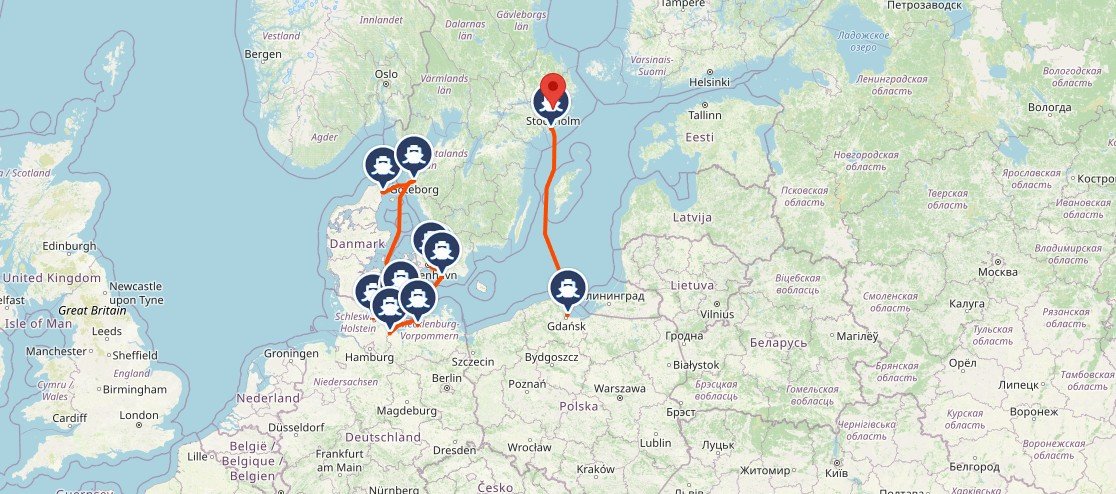
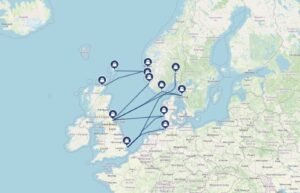
Relevant crossings to combine with Puttgarden-Rodby plus alternatives in this ferry map.
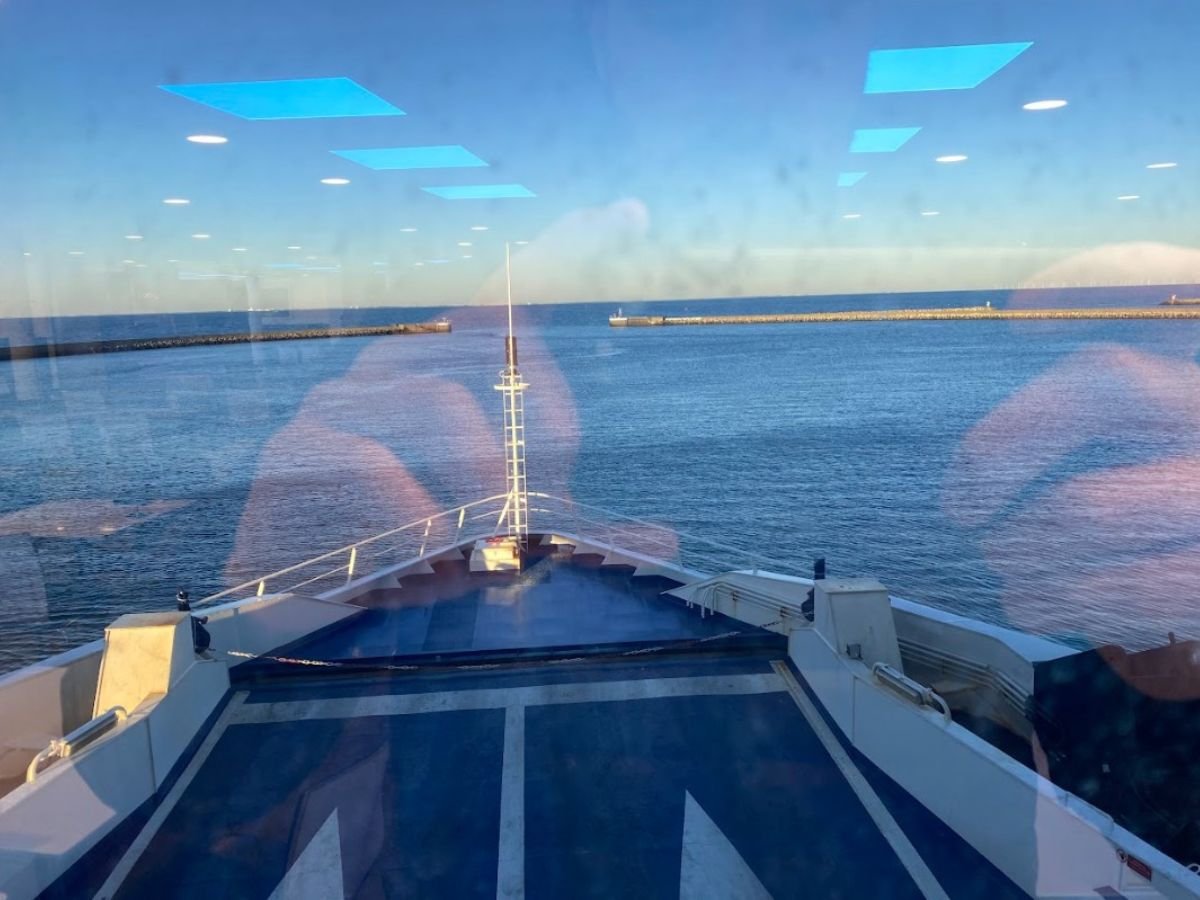
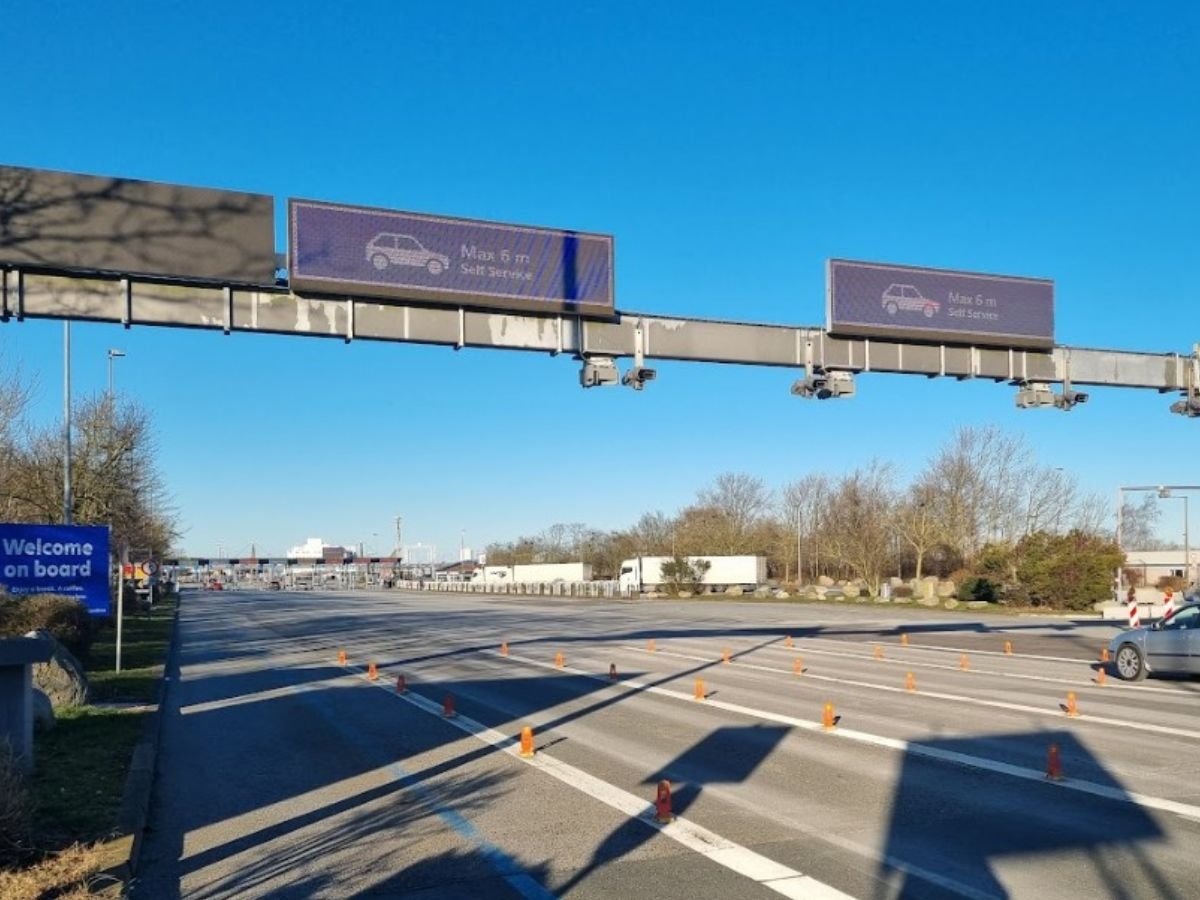
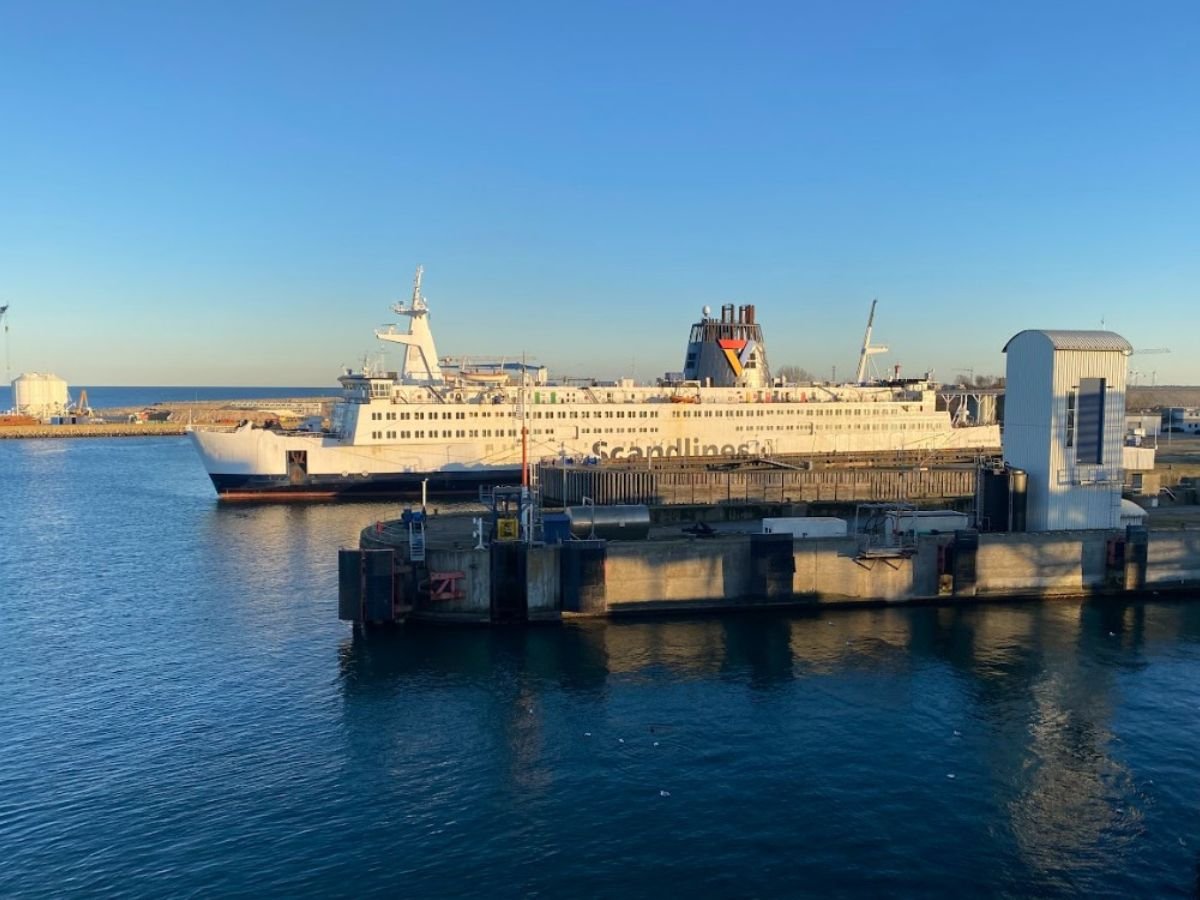
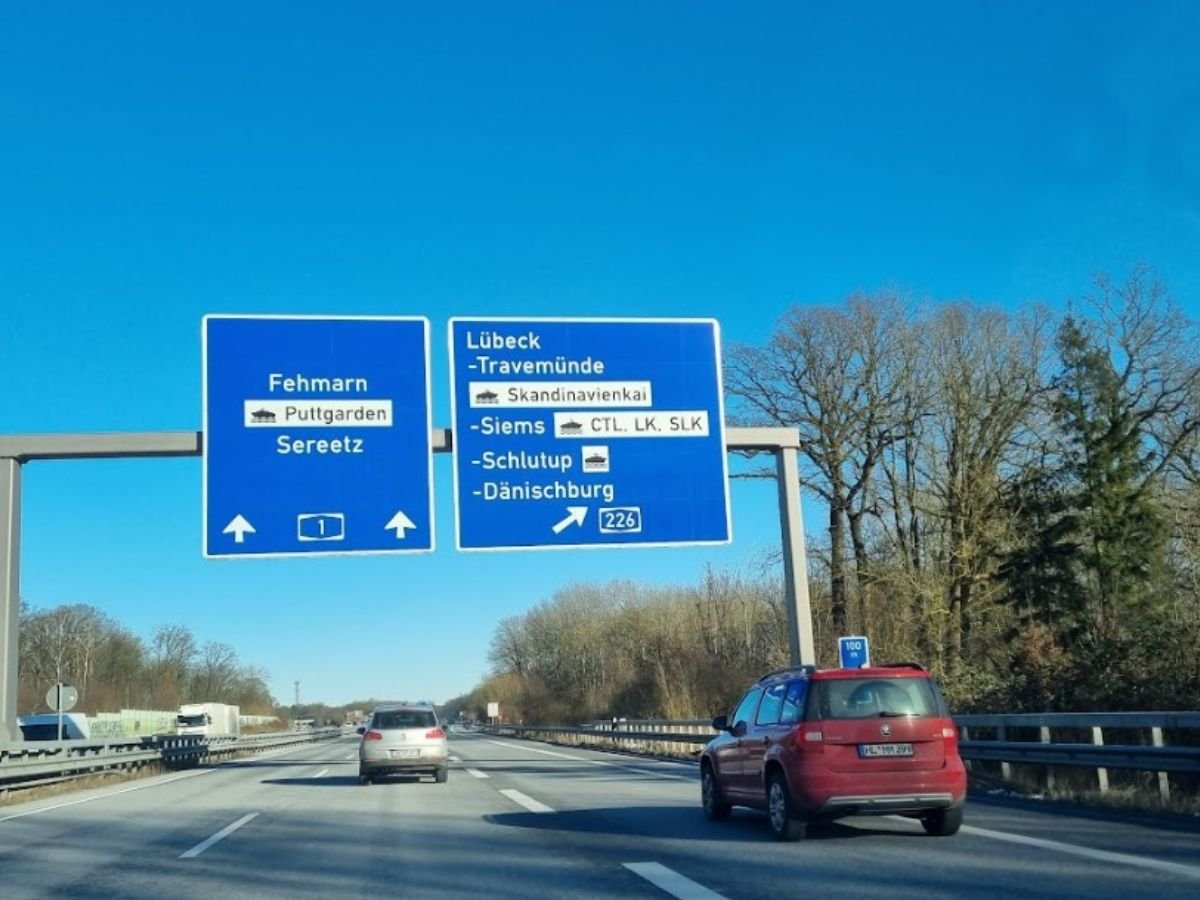
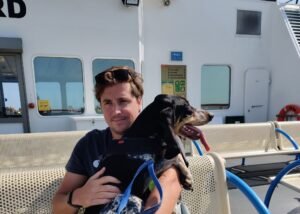
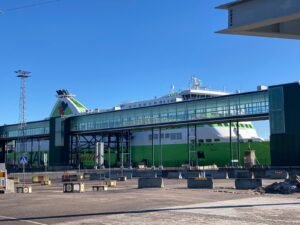
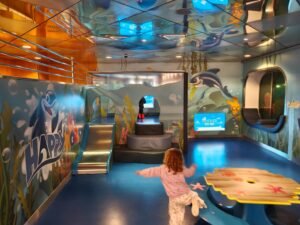
Our own experience while sailing on the Puttgarden to Rodby route
Our ferry adventure: the shortcut to Denmark and Sweden!
On board and route maps
Additional Information
When travelling on ferries between to Denmark (via France, the Netherlands, or Germany), here are a few important things to keep in mind:
- Bring your passport: Since Brexit, a driver’s licence or ID card is no longer sufficient for travel to Denmark.
- Download entertainment in advance: For longer crossings, it’s a good idea to download movies or series beforehand, as Wi-Fi on board can be expensive, and roaming in international waters can incur high costs.
- Travelling with young children on a night ferry? We’ve got helpful tips for travelling with kids to ensure a smooth journey.
- Driving in Europe: After disembarking, remember to drive on the right-hand side of the road. It may feel unfamiliar at first, but you’ll quickly adjust.
- Seasickness: Concerned about seasickness? Check out our tips to help prevent it during your crossing.
Luggage & Pets
On most ferries, there are no strict limits on the amount of luggage you can bring. Pets are welcome, but additional fees apply, and they must stay in designated kennels during the crossing. When travelling to Denmark, pets must meet specific entry requirements, including vaccinations and a pet passport. You can find specific regulations per country and ferry company policies in this post.