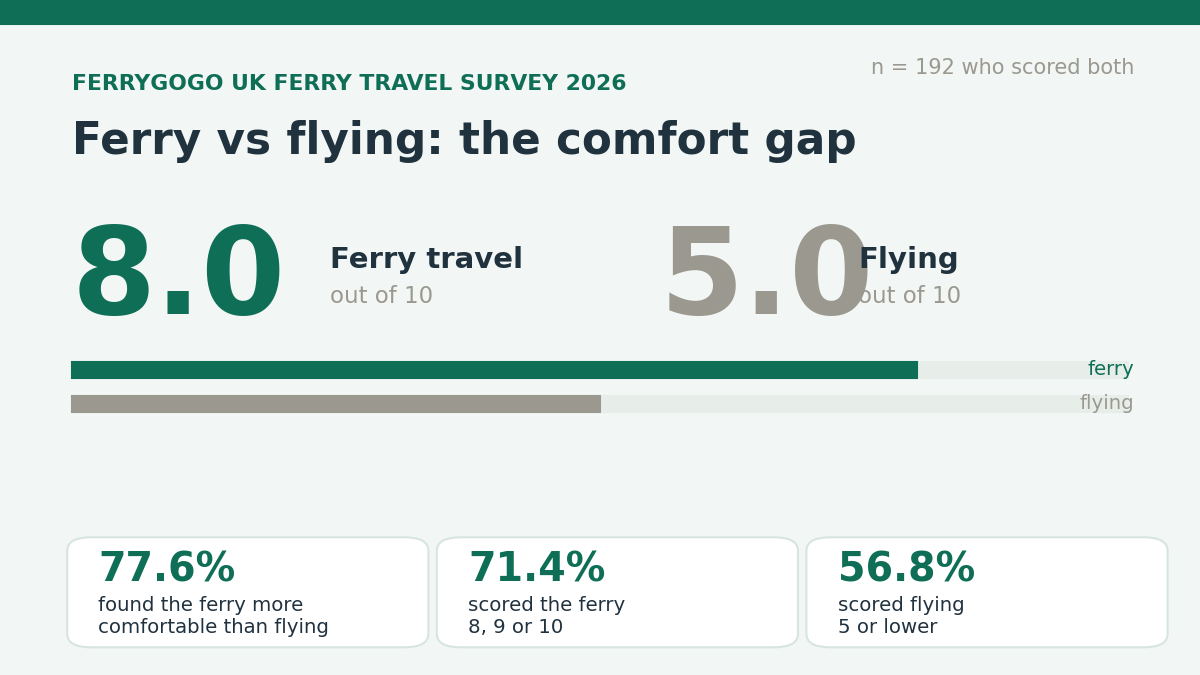
Flying is usually faster. We are not going to pretend otherwise. But on comfort, the ferry wins by a surprisingly wide margin in Ferrygogo’s 2026 UK ferry travel survey: 8.0 out of 10 for the ferry, against 5.0 for flying.
That is one of the clearest findings from our 2026 UK ferry survey, completed by 197 ferry-interested travellers, 192 of whom scored both ferry and flying. And travellers know exactly why they like the ferry: more space, fresh air, the freedom to move around, a cabin on longer routes and, above all, the ability to bring the car, the luggage, the dog, the bikes or the campervan.
Anyone who has done the early airport routine knows the feeling: alarm too early, bags slightly too heavy, security trays, boarding queues, cramped seats and then another queue at the other end. Flying is efficient, but it is not always relaxing.
A clear comfort gap
The averages only tell part of the story. Look at how the scores are spread and the gap becomes obvious: ferry answers bunch up at 8, 9 and 10, while flying sits lower and more scattered across the middle of the scale.
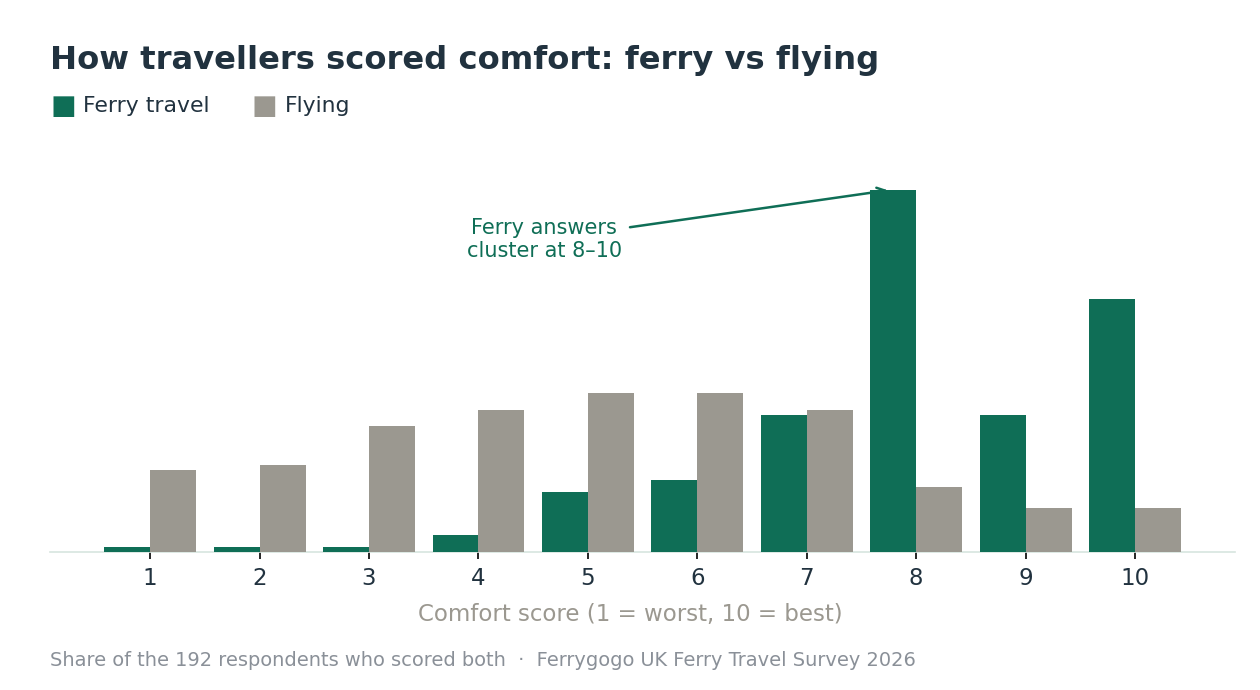
That spread matters. Averages can hide a lot, but here the pattern is clear: ferry comfort scores are concentrated at the top end, while flying scores are much more mixed and often much lower.
It suggests the ferry is not only chosen because people dislike flying or happen to live near a port. For many travellers, it is simply the more comfortable way to go.
Why ferries feel more comfortable
The biggest difference is space. On a ferry you are not fixed in one seat for the whole journey. You can walk around, go outside, get food, sit in a lounge or head back to your cabin. On longer crossings it feels less like a transfer and more like the first part of the trip.
That matters most for families, and for anyone travelling with a dog, bikes, camping gear or a campervan. A ferry carries the awkward parts of a real holiday: the roof box, the dog bed, the walking boots, the food bags and the extra luggage that becomes expensive or stressful when flying.
| Flying | Ferry travel |
|---|---|
| Usually faster from airport to airport | Often calmer from door to destination, especially with a car |
| Luggage rules, security trays and boarding queues | Car packed at home, luggage stays with the vehicle |
| Mostly fixed in one seat | Space to walk around, sit together, go outside or use a cabin |
| Arrival often means transfers or car hire | Drive off with your own car, campervan, bikes or dog already with you |
So ferry comfort is not really about the seat or the cabin. It is about the whole journey feeling less restricted. Not every crossing is perfect, some ports are clunky and some onboard food is more functional than memorable, but even then the ferry gives you something flying rarely does: space, control, and your own stuff travelling with you.
We get that from our own trips too. We still fly when it makes sense, and sometimes the plane is simply the right answer. But for many European trips, especially with a car, children, a dog or too much luggage, the ferry can feel like the calmer and more grown-up choice.
The car changes the journey
The comfort result connects to the ferry’s biggest practical advantage: bringing your own vehicle.
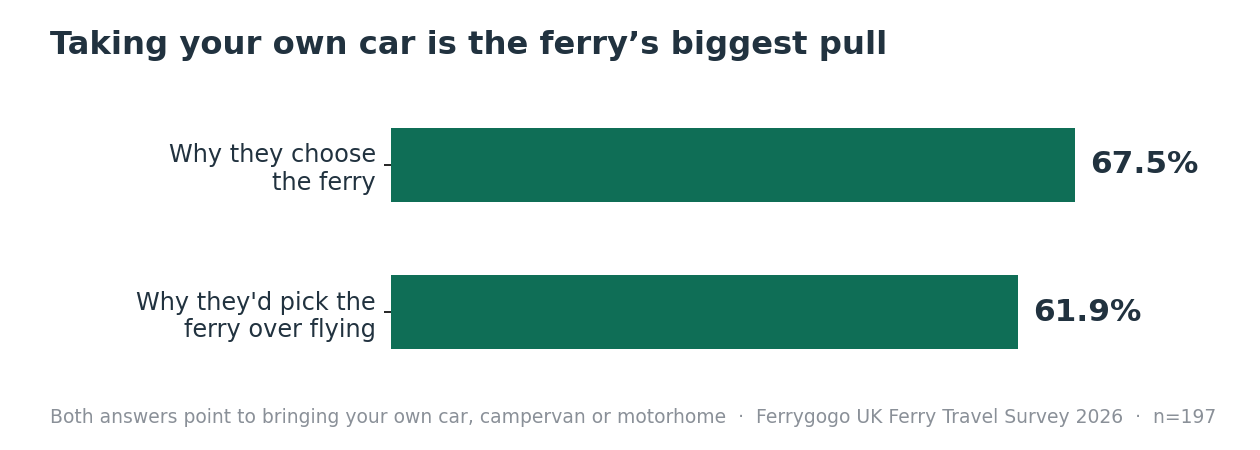
This is where the ferry and the plane are not really selling the same thing. A flight gets you from one airport to another. A ferry can carry the holiday with you: pack the car at home, skip the luggage limits and the hire-car desk, and drive off the other end ready for the rest of the trip.
That changes the whole feel of the journey. You are not travelling light because the airline tells you to. You are travelling with your own car, your own luggage and your own plan. The most comfortable option is not always the fastest one. Sometimes the better journey is the one that gives you more control.
Overnight ferries widen the gap
The comfort difference gets bigger still on overnight crossings, which travellers prefer over day sailings by roughly three to one.
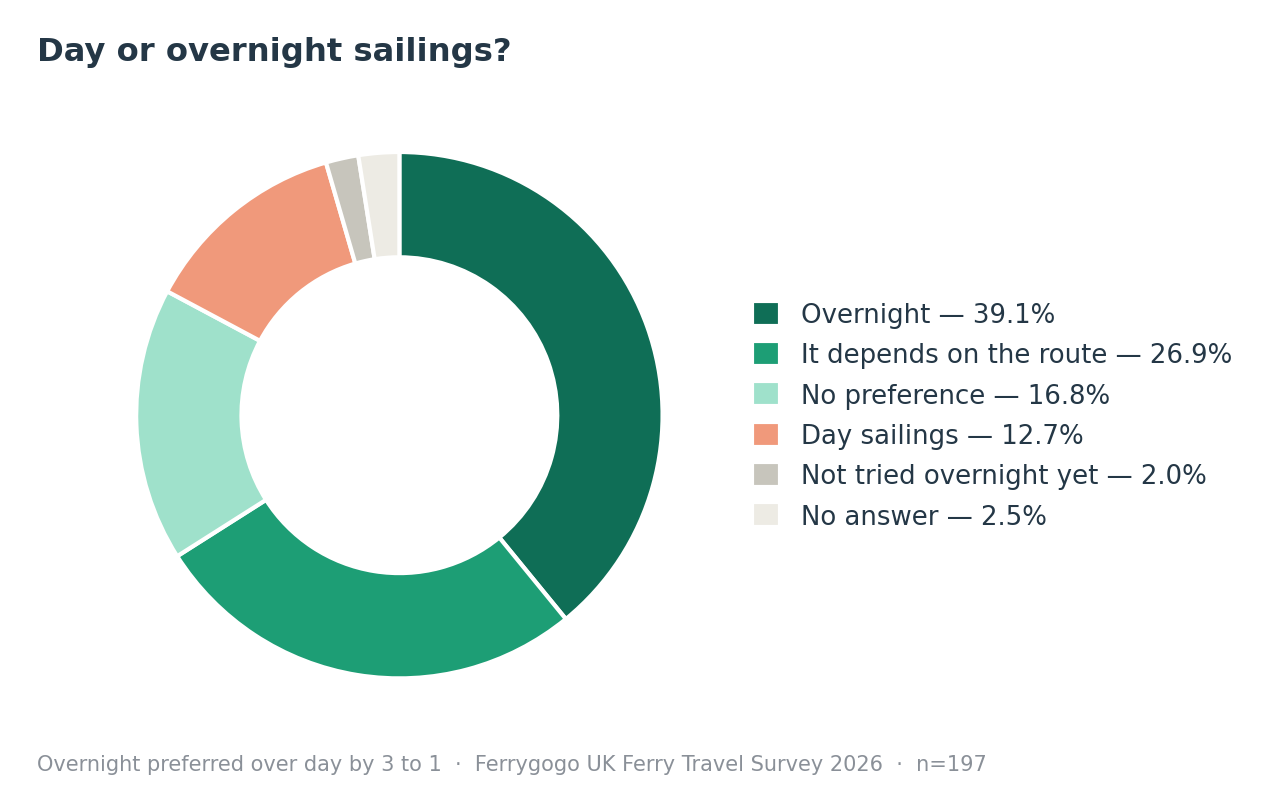
A long crossing looks slow if you judge it by sailing time alone. But add dinner onboard, a cabin, a night’s sleep and a useful morning arrival, and the maths changes. The value of a cabin is not really the bed. It is that the ship keeps moving while you stop. You sleep, the ferry does the work, and the next morning you are already somewhere useful.
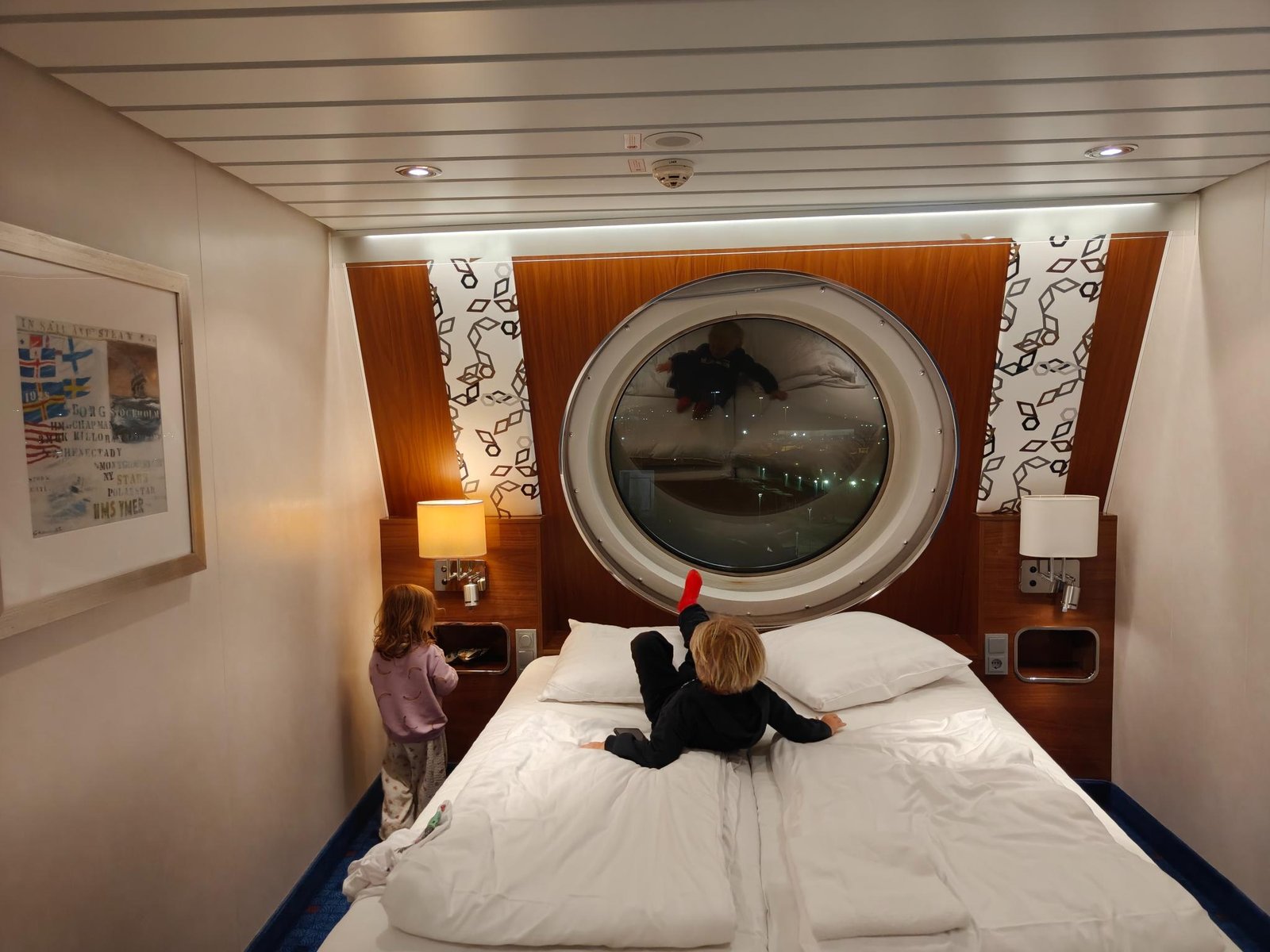
We felt this ourselves on the Harwich to Hook of Holland overnight Rail & Sail route. We took it after a long journey back from Asia with the kids, and after hours in aircraft seats the ferry felt like the opposite kind of travel: more space, fewer airport moments, a cabin, breakfast and a much calmer arrival in Hook of Holland.
Not glamorous in a five-star-hotel way, but exactly what a good night ferry should be: board, put the bags down, get some sleep, wake up in the Netherlands. No airport sprint, no luggage carousel, no ‘where is the hire-car desk?’ moment.
A good night ferry does not need to be luxurious. It just needs to let you sleep, keep moving, and save you a messy travel day.
Flying is faster, the ferry is calmer
None of this is anti-flying. For short breaks, long distances or destinations far from a port, the plane is often the fastest and most sensible choice, and we still fly when it makes sense. But the comfort scores explain why so many ferry travellers choose the sea when the route allows.
Ferry travel is usually slower, yet it can feel more human: room to move, space to sit together, a proper meal, fresh air and the car packed with everything you need. For a lot of people, that is worth more than saving a few hours.
Comfort is also a route question
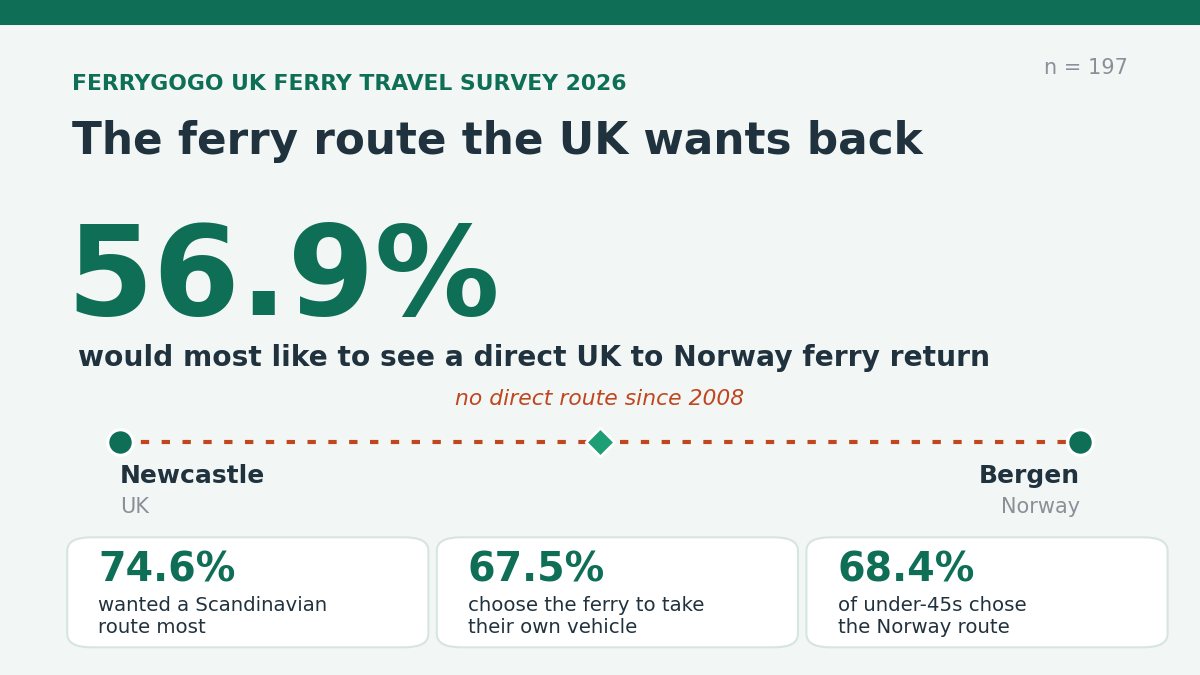
Comfort is not only about the ship. It is about whether the whole journey works, and that comes back to routes. In the full survey, the biggest barrier to ferrying more often was not price but the lack of direct routes, and the crossing people most wanted back was a direct ferry to Norway.
A direct overnight crossing can cut out driving, remove a hotel stop and make the arrival useful. A missing route does the opposite: more driving, more planning, more transfers, and a trip that feels harder than it needs to be. That is why comfort and route choice belong together. The ferry works best when the crossing makes the whole journey easier.
What this tells us
The comfort gap between ferry and flying is not just a nice extra finding. It helps explain why ferry routes still matter. For many travellers the ferry is not only a way to cross water. It is a way to travel with more space, more flexibility and more control: the car, the dog, the bikes, the luggage, a cabin and a proper night’s sleep. On the right route, the crossing becomes part of the holiday instead of a stressful stage before it begins.
That is how the ferry can beat flying for comfort, even when it loses on speed.
Read the full survey
This article is part of Ferrygogo’s UK Ferry Travel Survey 2026 series. You can read the main research piece here: UK ferry travellers want direct Scandinavia routes back.
Survey note
This article is based on Ferrygogo’s 2026 UK ferry travel survey, completed by 197 respondents between 4 and 31 May 2026. The comfort comparison is based on the 192 people who scored both ferry travel and flying. The survey was self-selected and answered by Ferrygogo readers and ferry-interested travellers, so the results should be read as a signal from people already interested in ferry travel rather than a representative poll of the whole UK population.
Get our latest ferry guides, route updates and travel tips in your Google feed. Add FerryGoGo as a preferred source in Google, and follow us in Discover when Google shows the option.