The Helsinki to Tallinn ferry is one of Europe’s easiest capital-to-capital crossings: frequent departures, short sailing times, and terminals that keep you close to both city centres. It’s perfect for a day trip, a city break, or as a quick hop on a longer Baltic/Scandinavia itinerary.
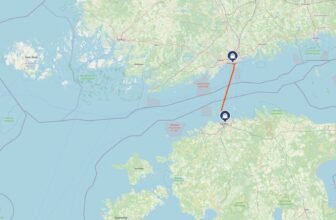
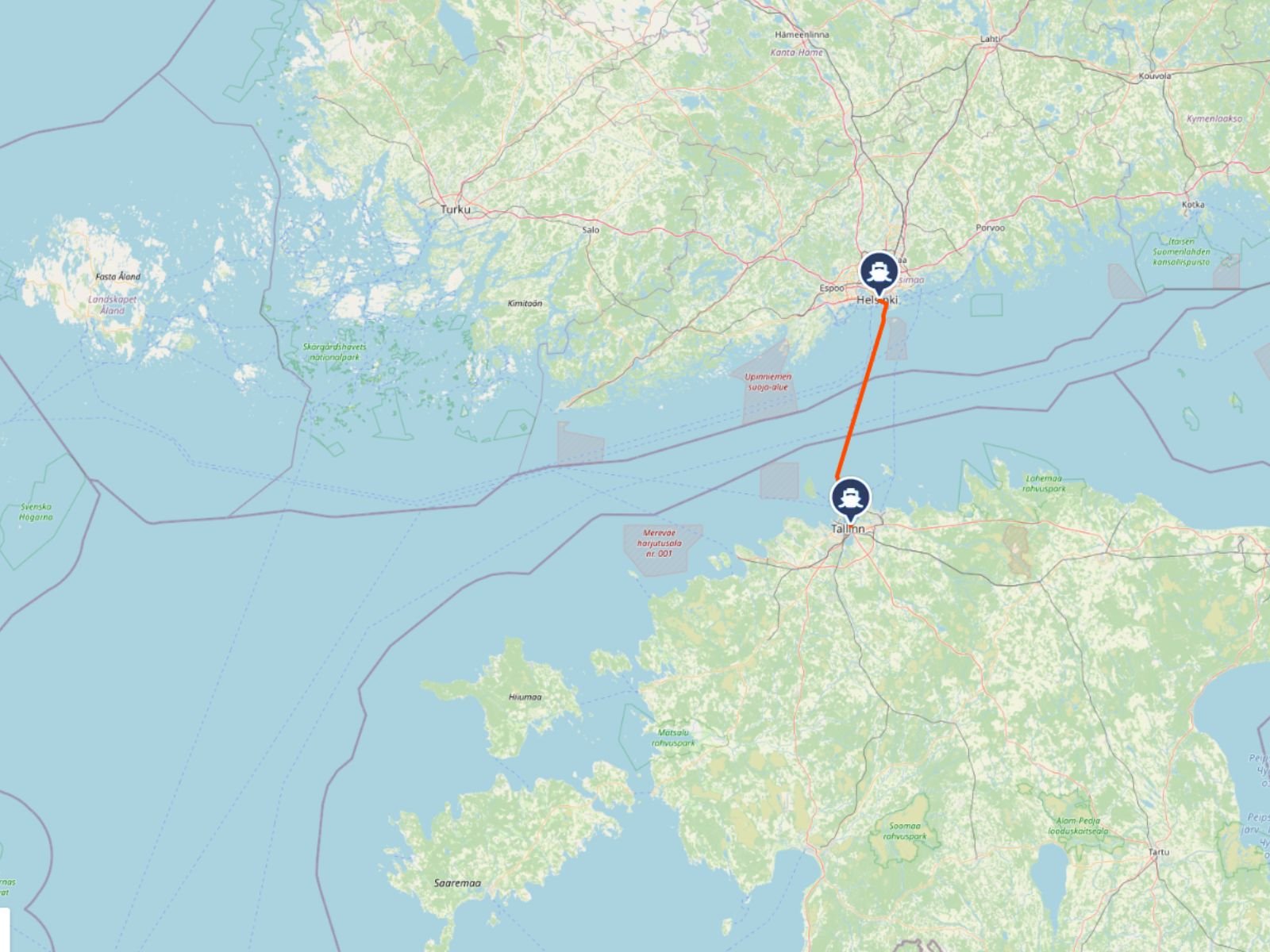
Map: ferry route from Finland to Estonia
Helsinki terminals: West Terminal 2 (West Harbour) and Katajanokka Terminal
Tallinn terminals: Terminal A and Terminal D
Quick facts: Helsinki to Tallinn by ferry
Crossing time: typically around 2-2.5 hours (varies by operator and sailing).
Main operators: Tallink Silja Line, Viking Line, and Eckerö Line.
Best for: foot passengers, cars/campers, and flexible ‘out early, back late’ day trips.
Terminal check: Helsinki and Tallinn have multiple passenger terminalsL always follow the terminal shown on your booking confirmation.
About the crossings between Helsinki and Tallinn (both directions)
The map shows the route for the Helsinki ⇄ Tallinn ferry in both directions: Helsinki to Tallinn and Tallinn to Helsinki. This is the main passenger ferry link between Finland and Estonia, with sailings running frequently throughout the day, year-round.
It’s a quick capital-to-capital hop: ideal for a day trip, a city break, or as part of a longer Baltic/Scandinavia itinerary. Because both cities have multiple passenger terminals, it’s worth double-checking the exact departure terminal on your ticket before you set off.
On this page you’ll find our complete guide to ferries between Finland and Estonia: operators, terminals, check-in tips, vehicle travel and alternative routes.
Operators, terminals and what to expect
All three operators run modern ships with cafés/restaurants, shops and plenty of indoor seating. The real differences are which terminal you need, how frequent the sailings are, and whether you want a quick shuttle-style hop or a more ‘cruise-ferry’ feel.
Operator
Typical crossing
Helsinki terminal (common)
Tallinn terminal (common)
Key boarding notes
Tallink Silja Line
Often ~2 hours (varies)
West Terminal 2
Terminal D
High frequency. Boarding closes before departure, so don't cut it fine.
Viking Line
Often ~2h30 (varies)
Katajanokka
Terminal A
More 'ferry vibe'. Arrive early at busy times, especially with kids or luggage.
Eckerö Line
Often ~2h15–2h45 (varies)
West Terminal 2
Terminal A
Great with vehicles. Vehicle check-in usually closes earlier than foot passenger cut-offs.
Which operator feels best onboard?
If you like a fast, frequent ‘shuttle’ crossing with lounges, Tallink often fits best. If you prefer a more classic ferry vibe and the option of cabins on some sailings, Viking Line is a strong pick. If you want a straightforward, good-value crossing that works well with vehicles, Eckerö Line is usually the most relaxed choice.
Small but important: terminals and ship assignments can change. Treat the table as a helpful guide, but always follow your booking confirmation on the day.
Terminals: quick sanity check
Helsinki: West Terminal 2 (West Harbour) is common for Tallinn services; Katajanokka is used for some sailings (notably Viking Line).
Tallinn: most services use Terminal A or Terminal D. Both are close to the centre, but you don’t want to arrive at the wrong one with luggage.
How to get to the terminals
Helsinki – West Terminal 2 (West Harbour)
Tram/bus: well-connected to central Helsinki; public transport is usually the easiest option.
Taxi: straightforward from the centre; allow extra time during rush hour.
Driving/parking: follow port signage for vehicle check-in lanes; short-stay parking is available near the terminal.
Helsinki – Katajanokka Terminal
Tram/bus: easy to reach from central Helsinki; good option if you are staying near the harbour/centre.
Taxi: quick hop from most central hotels.
Driving/parking: clear signage to the terminal area; arrive early if you are dropping off passengers.
Tallinn – Terminal A
On foot: walkable to the city centre and Old Town for many travellers (great for a day trip).
Taxi/rides: easy for luggage or families; short rides to central Tallinn are common.
Driving/parking: follow harbour signage; vehicle lanes can queue at peak times.
Tallinn – Terminal D
On foot: also close to central Tallinn; allow a bit more time if you are walking with luggage.
Taxi/rides: the easiest option if you are tight on time.
Driving/parking: arrive early for vehicle check-in during busy sailings.
Ferrygogo sanity check: always follow the terminal shown on your booking confirmation – assignments can change by sailing and season.
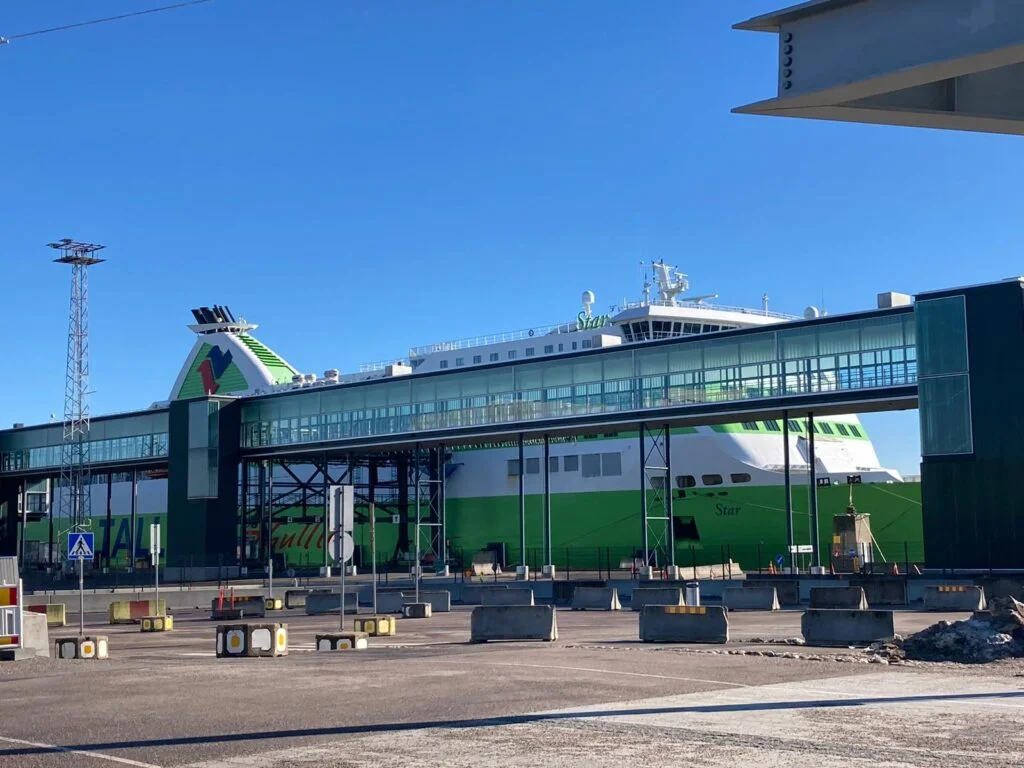
A visual impression: map, boarding & onboard the ferries
Ferries Tallinn – Helsinki (Estonia-Finland)
Check-in & boarding: treat it like a flight schedule
This route is frequent and efficient, but that also means gates close before departure. The easiest way to ruin a good day trip is arriving ‘just in time’.
Foot passengers: aim to be at the terminal about 60 minutes before departure (earlier on peak weekends and holidays).
Vehicles: arrive earlier than foot passengers. Vehicle check-in can close well before departure time.
Family tip: add buffer time. Toilets, snacks, tickets, buggies and bags always take longer than you think.
Exact cut-offs vary by operator and ticket type, but these are safe ‘arrive by’ targets for a smooth start. Always confirm the official cut-off times during booking.
Operator
Foot passengers: arrive by
Vehicles: arrive by
Peak weekends/holidays
Tallink Silja Line
45-60 minutes before departure
90 minutes before departure
Allow 90+ minutes (foot) / 2 hours (vehicles)
Viking Line
60 minutes before departure
90-120 minutes before departure
Allow 90+ minutes (foot) / 2 hours (vehicles)
Eckerö Line
60 minutes before departure
90-120 minutes before departure
Allow 90+ minutes (foot) / 2 hours (vehicles)
Why we push this: gates close before departure. Arriving ‘just in time’ is the easiest way to miss your sailing.
Tickets, vehicles and onboard comfort
Think airline-style pricing: time of day, weekday vs weekend, and season make a big difference. If you need a vehicle space, booking ahead is usually worth it.
Best value: off-peak weekday sailings are often the sweet spot.
Day trip tickets: when available, same-day returns can be excellent value for Tallinn.
Vehicles: book early for campers, roof boxes, trailers and larger vehicles.
Driving onboard (the one rule people miss)
Driving onboard is easy, but there is one detail that catches first-timers out: the car deck is usually closed during the voyage. Take everything you need upstairs before you leave the vehicle (meds, snacks, baby bag, chargers, laptop).
Most ferries: no access to the car deck during the crossing (safety rules).
Sometimes (ship-dependent): some sailings offer a paid garage option that may allow access during the trip. If you need this, check during booking.
Before you leave the car deck (quick checklist)
Travel documents (and booking reference)
Meds and anything you cannot replace easily
Chargers and a power bank
Kids bag (snacks, wipes, entertainment, spare layer)
Jacket/extra layer (decks can feel chilly, even in summer)
Why it matters: the car deck is usually closed during the crossing, so assume you cannot pop back to the car.
Onboard: what it feels like
easy to grab a hot meal or a coffee
comfortable enough to work for a couple of hours (bring a charger)
good for families: you can walk around, stretch legs, and reset before arriving
Wi-Fi and mobile signal
Onboard Wi-Fi: usually available, often with free/basic and paid/faster tiers depending on ship.
Mobile data: signal can dip mid-sea and roaming depends on your plan. If you need reliable connectivity, use Wi-Fi and plan for short gaps.
Good to know (UK travellers): expect occasional signal dips mid-sea. Wi-Fi is your backup if you need to stay connected
Day trip: what’s realistic?
If you go early and return late, you’ll typically get 5-8 hours in Tallinn on a same-day return. Tallinn’s Old Town is close to the passenger harbour, so you can be sightseeing quickly without complicated transfers.
Day trip playbook + other routes
If you want a simple ‘works every time’ day trip plan:
Go early to maximise time in Tallinn.
Travel light so terminals and walking transfers stay easy.
Return late for a full day without a hotel.
If you’re building a longer itinerary, these alternatives can be useful:
Travemünde ⇄ Helsinki: a direct Germany–Finland route (long crossing) if you want to skip the long drive.
Stockholm ⇄ Helsinki: a scenic overnight-style crossing if you’re combining Sweden and Finland.
Sweden/Åland style routing: a calmer multi-leg option for road trippers who prefer breaking the journey up.
Quick practical notes: both Finland and Estonia use the euro, and Helsinki and Tallinn are in the same time zone (no clock maths needed). Price snapshot: at the start of 2026, you could often find foot-passenger tickets from around €30 per person on selected sailings – but prices move with demand (time of day, weekday vs weekend, and summer peaks).
Pets are usually allowed, but you’ll typically need to reserve pet travel in advance and follow ship rules on where pets can stay onboard.
If you’re travelling with a vehicle, remember the car deck is usually closed during the crossing, so keep a small ‘crossing bag’ with essentials. Connectivity can dip mid-sea, so if you need to stay online, treat onboard Wi-Fi as your backup and expect short mobile signal gaps.
UK passport notes
Schengen 90/180: UK passport holders can stay up to 90 days in any 180-day period across Schengen (Finland and Estonia are both Schengen).
EES: biometric entry/exit registration is being introduced at Schengen external borders. If your trip starts with a flight from the UK, build in extra airport time during busy weeks.
ETIAS: a travel authorisation is planned for visa-free travellers (including Brits), expected to start later in 2026.
Helsinki ⇄ Tallinn: quick questions
How long is the ferry between Helsinki and Tallinn? Most sailings are scheduled around 2–2.5 hours, depending on the operator and ship.
Which terminal do I need in Helsinki? It depends on the operator. West Terminal 2 is common for Tallinn services (notably Tallink and Eckerö), while Katajanokka is used for some sailings (notably Viking Line). Always follow your booking confirmation.
Which terminal do I arrive at in Tallinn? Most services use Terminal A or Terminal D. Check your ticket, as terminal assignments can change.
How early should I arrive? Aim to be at the terminal about 60 minutes before departure as a foot passenger, and earlier if you’re travelling with a vehicle, with kids, or during peak weekends and holidays.
Can I access my car during the crossing? Usually not. The car deck is typically closed during the voyage for safety reasons. On some sailings there may be a paid garage option that allows access, but you should assume you cannot return to your vehicle unless your ticket explicitly says so.
Will my mobile data work onboard? Signal can dip mid-sea and roaming depends on your plan. If you need reliable connectivity, use the ship’s Wi-Fi (if available) and plan for short gaps in coverage.
Is this route good for a day trip? Yes: it’s one of Europe’s easiest capital-to-capital day trips. Go early, return late, and you can spend a proper day in Tallinn without booking a hotel.
Is the ferry in both directions? Yes: sailings run Helsinki → Tallinn and Tallinn → Helsinki, typically many times per day.