Estonia is one of the easiest Baltic countries to reach by ferry, especially if you’re heading for Tallinn or continuing onward by car through the Baltics. The fastest and most popular route is Helsinki ⇄ Tallinn (short, frequent, capital-to-capital), but you can also sail from Sweden via Stockholm ⇄ Tallinn or Kapellskär ⇄ Paldiski for a straightforward road-trip route.
Best starting point for most travellers: Helsinki ⇄ Tallinn. If you’re new to Baltic ferries, this is the easiest crossing to get right.
In short: ferries to Estonia
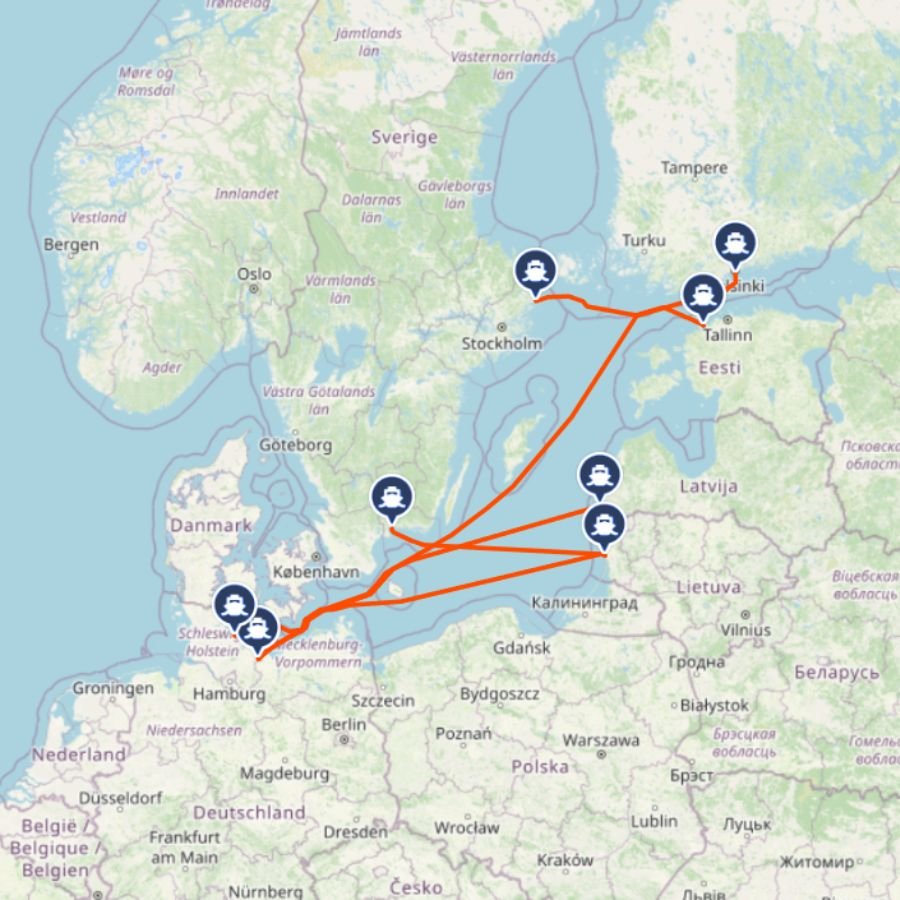
The map below shows the main routes to Estonia. The key link is Helsinki ⇄ Tallinn in both directions – fast, frequent, and ideal for day trips. From Sweden you can sail Stockholm ⇄ Tallinn for a longer, more ‘mini-cruise’ style crossing, or choose Kapellskär ⇄ Paldiski for a practical option that often suits cars and campers.
Price snapshot: at the start of 2026, foot-passenger tickets on the Helsinki–Tallinn route could often be found from around €30 per person on selected sailings (prices vary by day, time and season).
Ferry map: Ferries to Estonia
Finnlines, Viking Line, and Tallink Silja are the most active ferry companies on the crossings to Estonia. Ferries to Estonia leave from Stockholm, Helsinki, the Aland Islands, and Kapellskar (Sweden).
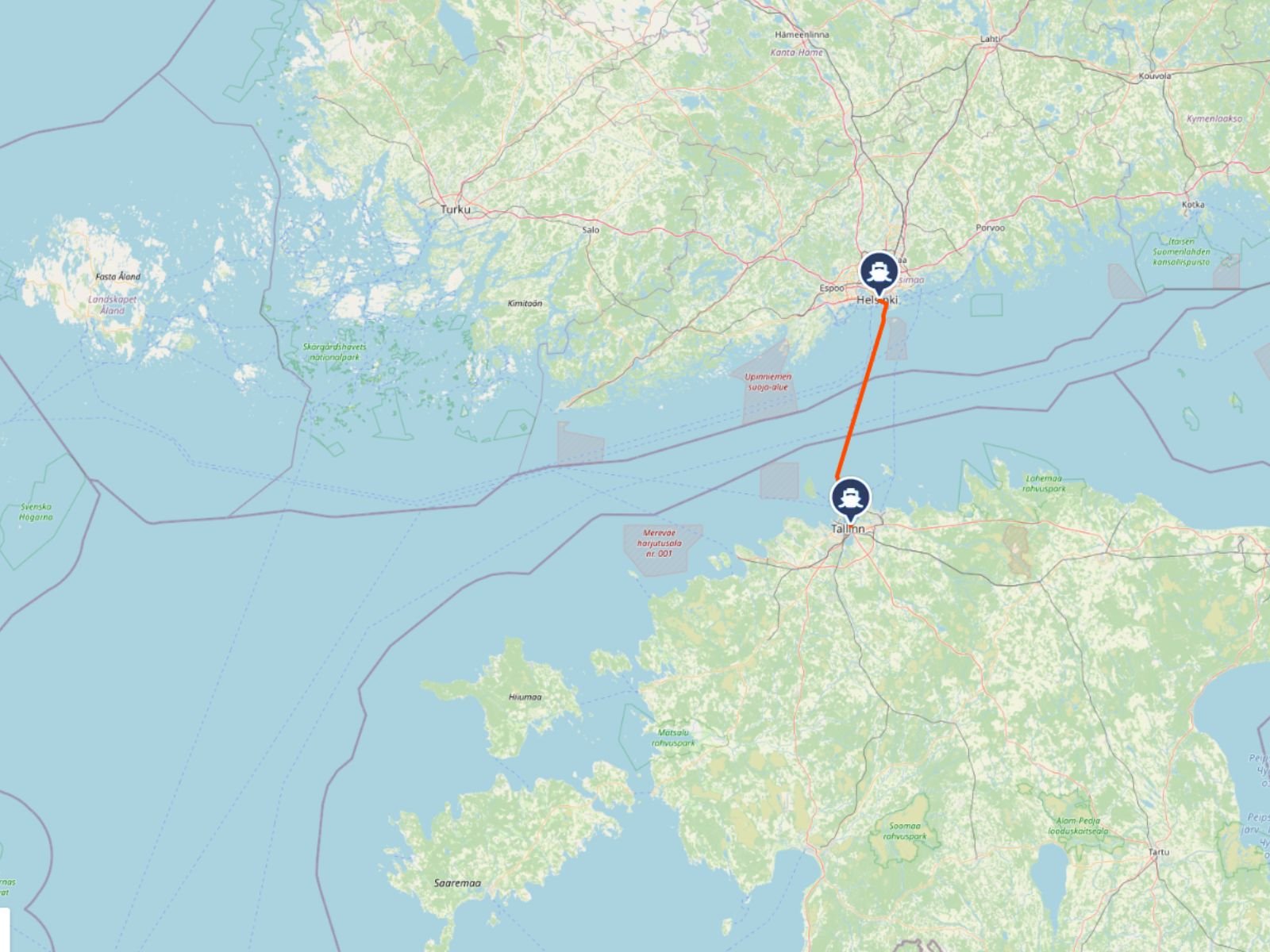
The crossing from Tallinn to Helsinki is the fastest and shortest, 2 hours over 80 km. If you sail from Sweden to Estonia, your travel time will be around 16 hours while crossing over 370 km.
From Finland to Estonia: Helsinki ⇄ Tallinn (the main route)
If you’re looking for the fastest and most frequent way to reach Estonia by ferry, this is it. The Helsinki ⇄ Tallinn crossing links two capitals and runs all day, year-round – which makes it ideal for day trips, city breaks, and travellers continuing into the Baltics.
Deep dive: we’ve built a complete route guide with terminals, check-in timing, vehicle tips, onboard comfort and a day-trip playbook here: Helsinki ⇄ Tallinn ferries (full guide).
Why this route is so popular
Short crossing: typically around 2–2.5 hours depending on operator and sailing.
Loads of departures: easy to plan your day, even last-minute (though prices can rise).
Great with a vehicle: simple drive-on/drive-off, perfect for Baltic road trips.
Terminals matter (quick sanity check)
Both cities have multiple passenger terminals. Always follow the terminal shown on your booking confirmation.
Helsinki terminals: West Terminal 2 (West Harbour) and Katajanokka Terminal
Tallinn terminals: Terminal A and Terminal D
Day trip tip (Helsinki ⇄ Tallinn)
If you go early and return late, you’ll typically get 5–8 hours in Tallinn on a same-day return. Tallinn’s Old Town is close to the passenger harbour, so you can be sightseeing quickly without complicated transfers.
Which operator feels best onboard?
If you like a fast, frequent ‘shuttle’ crossing with lounges, Tallink often fits best. If you prefer a more classic ferry vibe and the option of cabins on some sailings, Viking Line is a strong pick. If you want a straightforward, good-value crossing that works well with vehicles, Eckerö Line is usually the most relaxed choice.
The Stockholm–Tallinn route is a classic way to reach Estonia from Sweden. It’s a longer crossing, but it can feel more like a proper ferry journey, a good fit if you want to travel overnight-style, enjoy onboard time, or combine Sweden and Estonia in one trip.
If you’re travelling with a car or campervan, Kapellskär–Paldiski is a very practical choice. It often suits road trips because it can be simpler than heading into central Stockholm, and it lines up nicely with driving routes through Sweden.
From Germany to Estonia (no direct passenger ferry)
There are no common direct passenger ferries from Germany to Estonia. If you want a straightforward ‘ferry-heavy’ itinerary, a popular approach is to travel to Sweden first, then continue to Estonia from Stockholm (or Kapellskär) to Tallinn/Paldiski.
Two easy ‘building block’ options
Germany ⇄ , Sweden, first, then Sweden ⇄ , Estonia (Stockholm–Tallinn or Kapellskär–Paldiski).
Or travel to Helsinki first and take the fast Helsinki-Tallinn crossing.
From the UK, most travellers reach Estonia by flying into Tallinn for a city break. If you’re doing a longer European trip with a car or campervan, Estonia often becomes part of a wider Baltic itinerary, with Sweden or Finland as your ferry stepping stone into Estonia.
Fast and simple: fly to Tallinn and explore Estonia without a vehicle.
Road trip via Sweden: travel across Europe to Sweden, then ferry to Estonia via Stockholm–Tallinn or Kapellskär–Paldiski.
Road trip via Finland: travel to Helsinki, then take the fast Helsinki–Tallinn crossing into Estonia.
Booking tips: prices, vehicles, and peak season
Ferry prices to Estonia move with demand. If you’re travelling in summer, on weekends, or with a vehicle, booking ahead is usually the best way to keep costs down.
Book early in peak season: vehicle spaces sell out first (especially campers and trailers).
Best value: off-peak weekday sailings often offer the best combination of price and availability.
Vehicle sizes: enter the correct height/length (roof box, bike rack, trailer, camper height) to avoid check-in issues.
Check-in timing (don’t cut it close)
Foot passengers: aim to arrive around 60 minutes before departure (earlier on peak weekends and holidays).
Vehicles: arrive earlier than foot passengers. Vehicle check-in can close well before departure time.
Family tip: add buffer time. Toilets, snacks, tickets, buggies, and bags always take longer than you think.
Travelling with a car: one important detail
On most ferries, the car deck is closed during the crossing. Bring a small ‘crossing bag’ with essentials (documents, meds, chargers, snacks), so you don’t need to return to the vehicle mid-voyage.
Additional information
Quick practical notes: Estonia use the euro. Pets are usually allowed, but you’ll typically need to reserve pet travel in advance and follow ship rules on where pets can stay onboard. Connectivity can dip mid-sea, so if you need to stay online, treat onboard Wi-Fi as your backup and expect short mobile signal gaps.
Quick questions: ferries to Estonia
What is the fastest ferry to Estonia? Usually Helsinki-Tallinn, with short crossings and very frequent sailings.
Can I travel to Estonia by ferry from Sweden? Yes. The main options are Stockholm ⇄ , Tallinn and Kapellskär ⇄ , Paldiski.
Are there direct ferries from Germany to Estonia? There are no common direct passenger ferries from Germany to Estonia. Many travellers combine Germany ⇄ Sweden first, then continue Sweden ⇄ Estonia.
Is the Helsinki–Tallinn ferry in both directions? Yes – sailings run Helsinki → Tallinn and Tallinn → Helsinki throughout the day.
On board, route maps & visual impression of the trip
Ferries Tallinn – Helsinki (Estonia-Finland)
Ferry routes Estonia Latvia Lithuania
Useful for travellers to Estonia, Latvia and Lithuania: the Baltics