Ferry to Ireland from the UK: which route should you choose?
There are six main ferry routes between Great Britain and the island of Ireland. The best crossing is not automatically the one from your nearest port. It depends on where you start, whether you are heading for Dublin, southern Ireland or Northern Ireland, and how you want to divide the journey between driving and time at sea.
For most travellers from England and the Midlands heading to Dublin, Holyhead-Dublin is the first route to compare. Travellers from South Wales and South West England can also sail from Fishguard or Pembroke to Rosslare, while Liverpool and Cairnryan are usually more logical for Northern Ireland.
These are the shortest crossings between Great Britain and the island of Ireland.
Travelling with a car or camper? Compare the complete journey rather than the crossing time alone. A longer sailing can still be quicker overall if it saves several hours of driving.
Tested by FerryGoGo
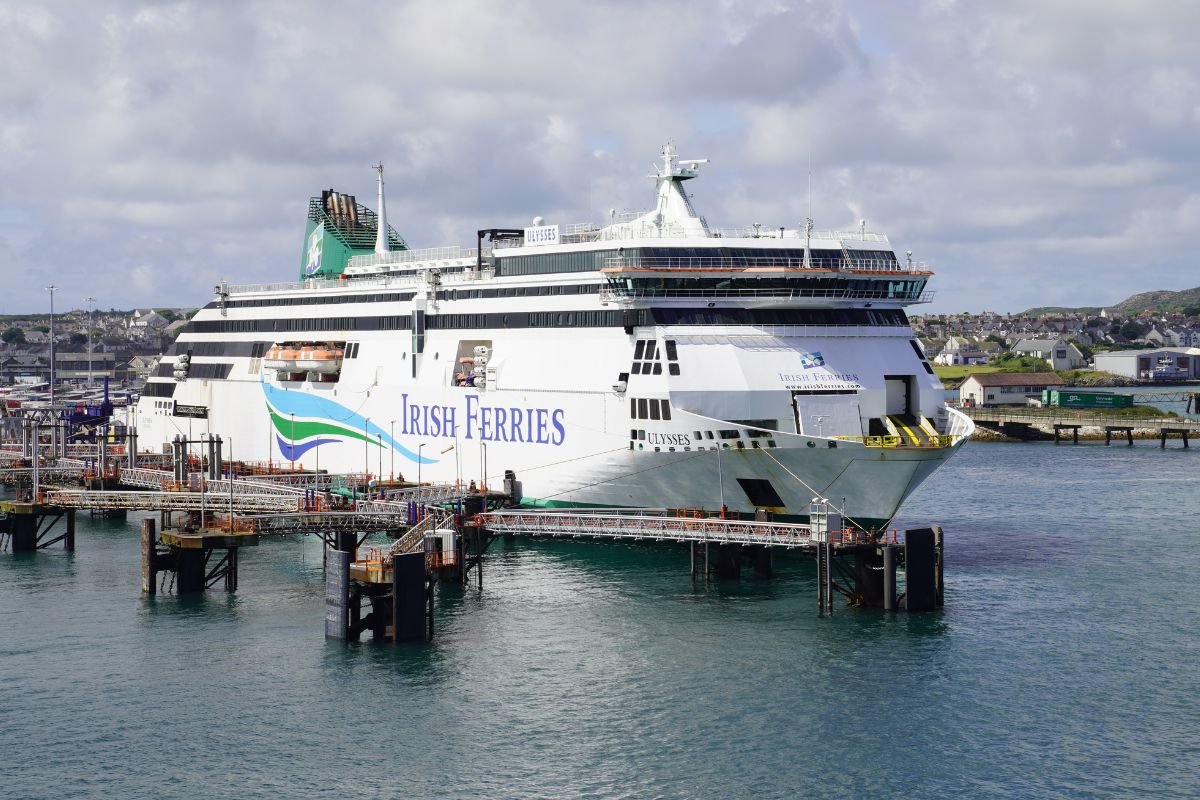
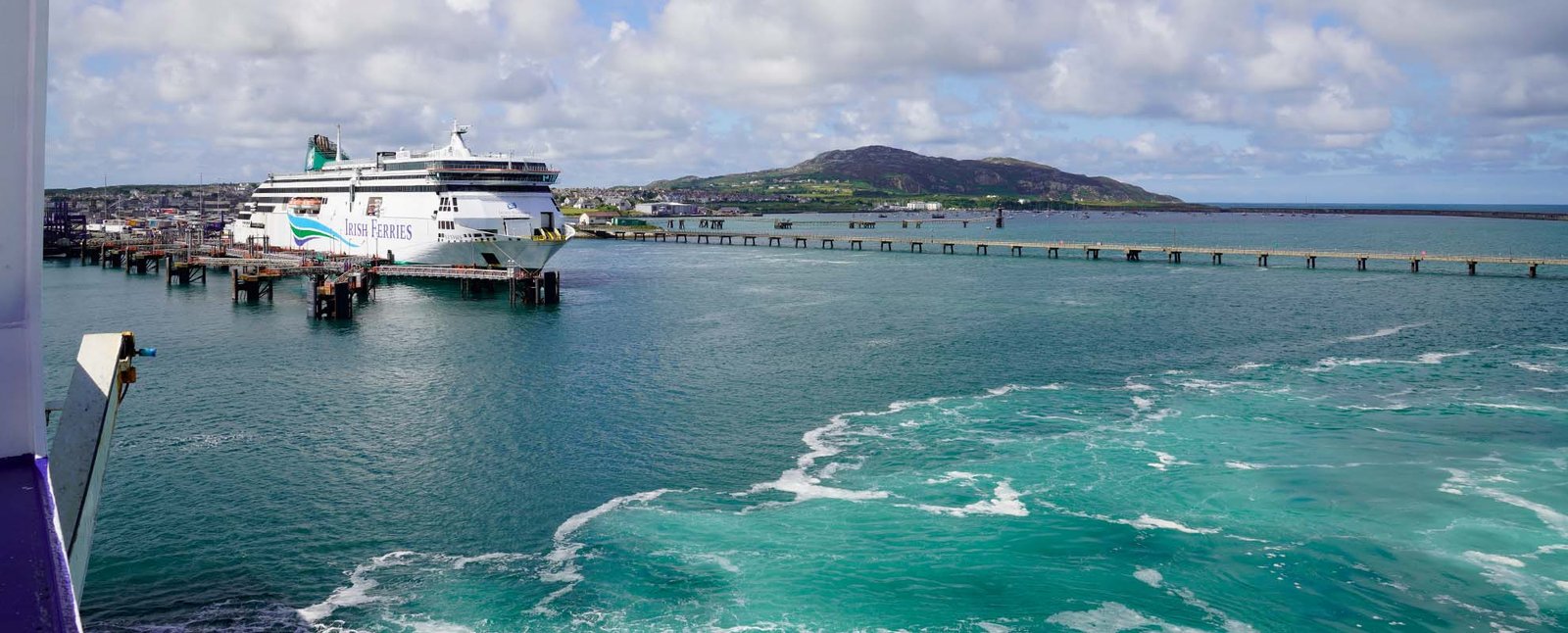
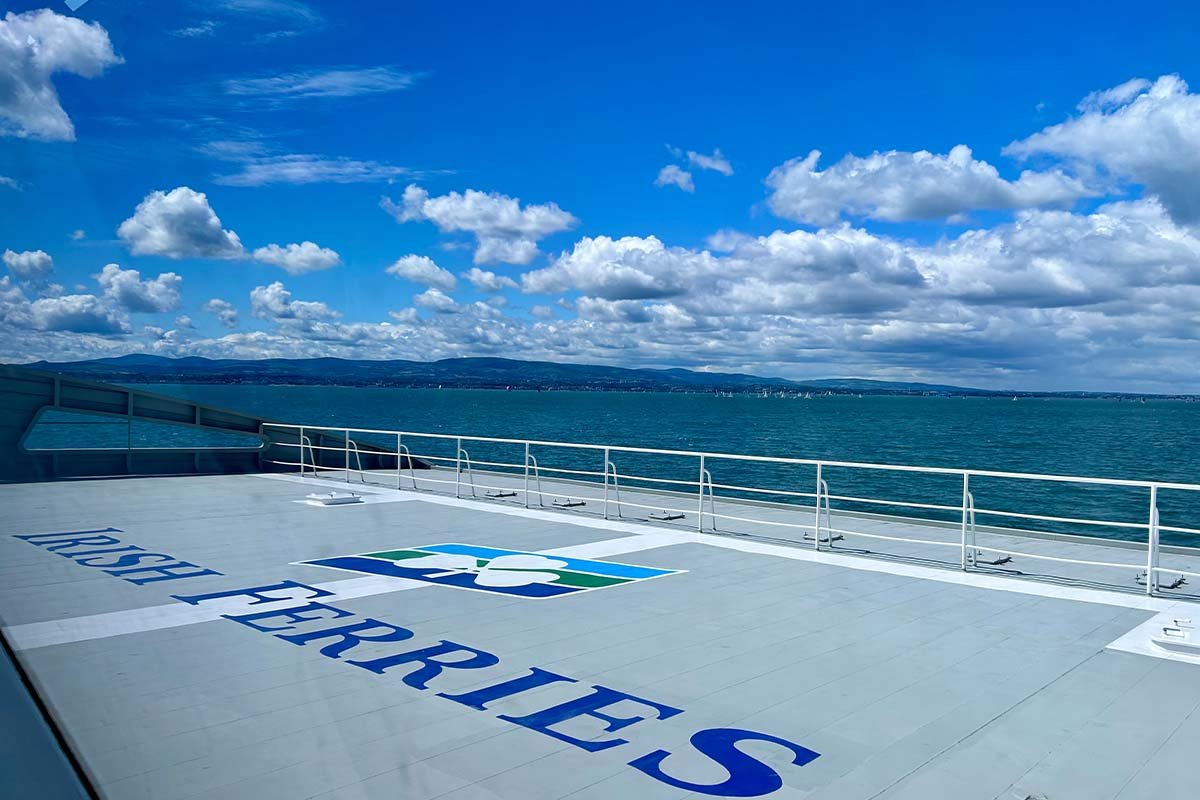
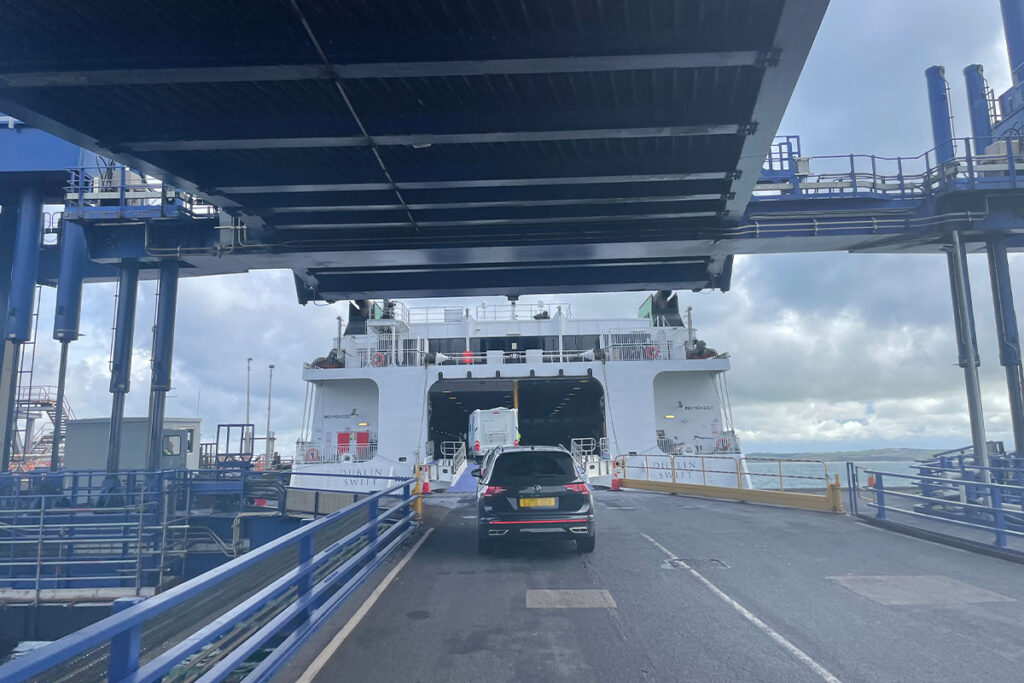
We sailed from Holyhead to Dublin on the fast Dublin Swift with Irish Ferries and returned on the larger Stena Estrid. This gave us a useful side-by-side impression of a fast ferry and a conventional Irish Sea crossing.
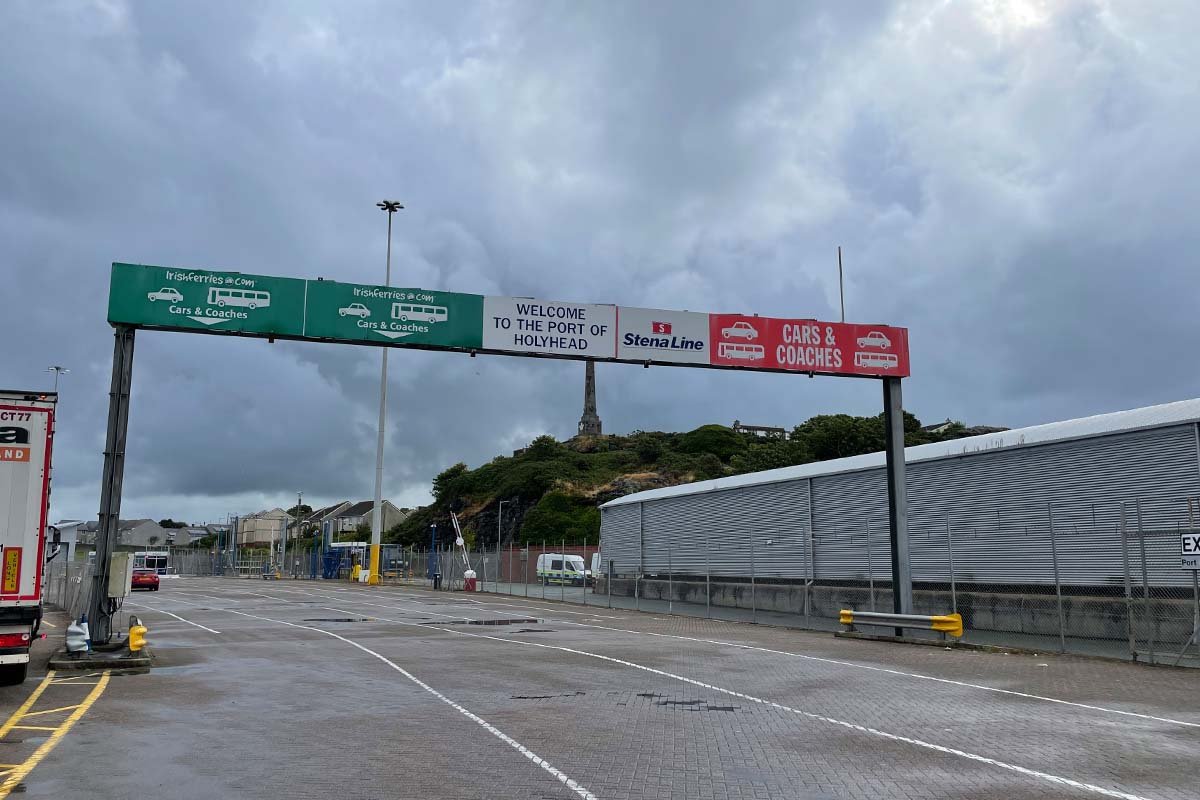
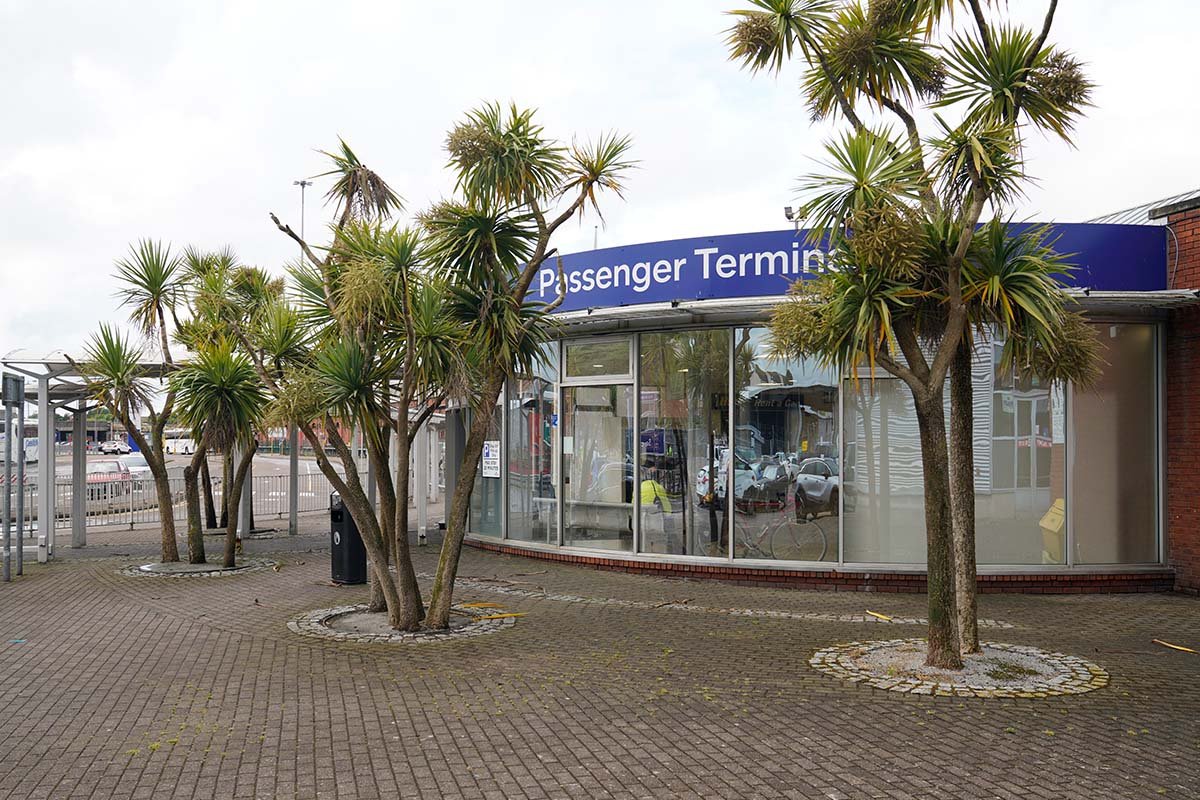
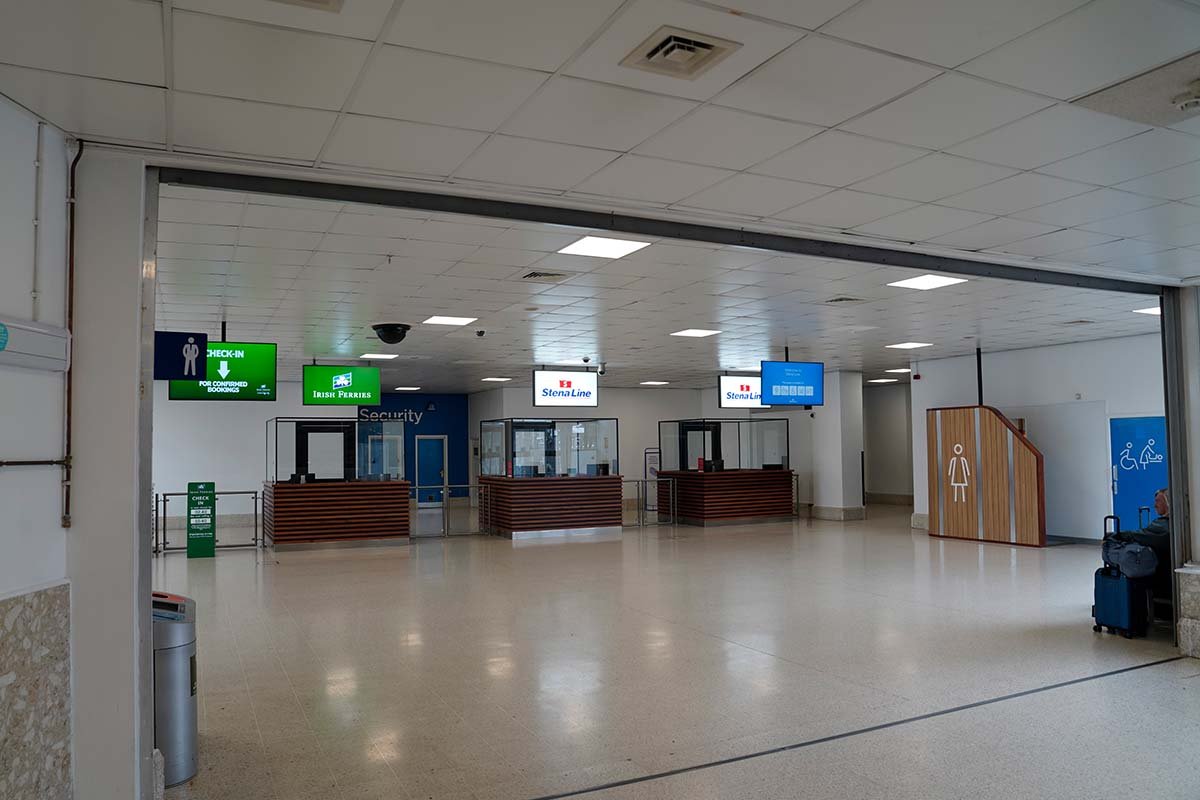
Holyhead has a small, straightforward passenger terminal beside the railway station. The fast ferry gets you across quickly, while the larger conventional ferry gives you more room to walk around and settle into the journey.
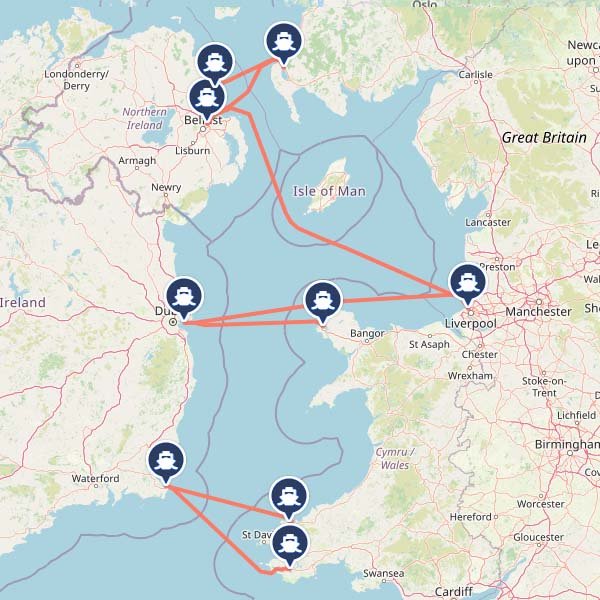
The main ferry corridors connect ports in Wales, England and Scotland with Dublin, Rosslare, Belfast and Larne. Crossing times vary from about two hours on the shortest North Channel routes to around eight hours between Liverpool and Belfast.
Route
Operator
Typical crossing
Best suited to
Holyhead-Dublin
Irish Ferries and Stena Line
From approximately 2h15 on selected fast sailings, with conventional ferries taking longer
Dublin, central Ireland and many journeys from England and the Midlands
Fishguard-Rosslare
Stena Line
Approximately 3h30 to 4 hours
South Wales, Wexford and southern Ireland
Pembroke-Rosslare
Irish Ferries
Approximately 4 hours
South Wales, South West England and southern Ireland
Liverpool-Belfast
Stena Line
Approximately 8 hours
North West England, the Midlands and Northern Ireland
Cairnryan-Belfast
Stena Line
Approximately 2h15
Scotland, Belfast and Northern Ireland
Cairnryan-Larne
P&O Ferries
Approximately 2 hours
The shortest crossing from Scotland and journeys towards the Causeway Coast
Crossing times and timetables can change by sailing, season and vessel. Always check the selected departure before booking.
Ferries from Wales to Ireland
Wales has the widest choice of ferry routes to the Republic of Ireland. Holyhead serves Dublin, while Fishguard and Pembroke connect with Rosslare in the south-east.
Holyhead-Dublin: the main route to Dublin
Holyhead-Dublin is usually the first route to compare if you are travelling from northern England, the Midlands or North Wales to Dublin. Irish Ferries and Stena Line both operate the route, which gives you more choice of sailing time and ship type than on most Irish Sea crossings.
Selected Irish Ferries departures use the fast Dublin Swift. The conventional ferries take longer but are larger, with more space to move around. From our own crossing, we would not choose on sailing time alone: price, weather, departure time and the type of ship can all make the slower sailing the more comfortable option.
Fishguard or Pembroke to Rosslare
If you are heading for Wexford, Waterford, Cork, Kerry or another destination in southern Ireland, Rosslare can be more logical than Dublin. Stena Line sails from Fishguard and Irish Ferries sails from Pembroke.
Which Welsh port works best largely depends on your approach through Wales and the sailing times available on your travel date. Our separate Wales-Ireland ferry guide compares all three Welsh corridors in more detail.
Ferry from Liverpool to Ireland and Northern Ireland
The regular passenger ferry from Liverpool is the Stena Line service from Birkenhead to Belfast. The crossing takes around eight hours, making it very different from the short routes across the North Channel or from Wales.
For travellers from North West England, Yorkshire and parts of the Midlands, the longer sailing can still make sense. You avoid driving to Holyhead or Cairnryan and arrive directly in Belfast, from where Dublin is roughly a two-hour drive in normal conditions.
Day and overnight departures may be available. On an overnight journey, a cabin can turn the crossing into useful sleeping time rather than eight hours spent looking for somewhere comfortable to sit.
Can you take a passenger ferry from Liverpool to Dublin?
There is currently no regular Liverpool-Dublin ferry for leisure passengers. Freight services and temporary sailings can make this route appear in search results, but tourists should normally compare Holyhead-Dublin or sail from Liverpool to Belfast instead.
Cairnryan is the main Scottish ferry port for Northern Ireland. From here you can sail to Belfast with Stena Line or to Larne with P&O Ferries.
Cairnryan-Belfast: approximately 2h15, arriving close to Belfast and the main roads towards Dublin and the rest of Northern Ireland.
Cairnryan-Larne: approximately 2 hours, making it the shortest regular crossing between Great Britain and the island of Ireland.
Belfast is usually the more obvious arrival port for the city itself or an onward drive towards Dublin. Larne can work particularly well for the Antrim Coast and the north-east of Northern Ireland. Compare the whole route, including the drive to Cairnryan and the onward journey after arrival.
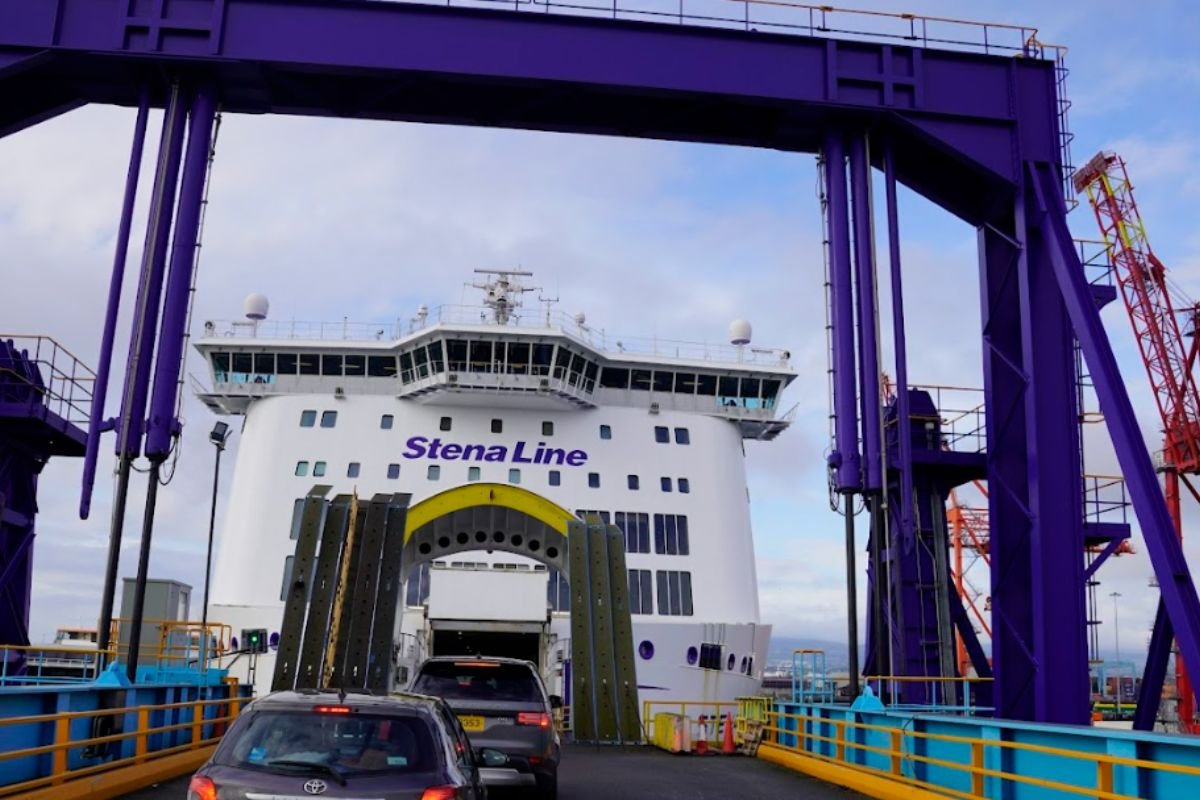
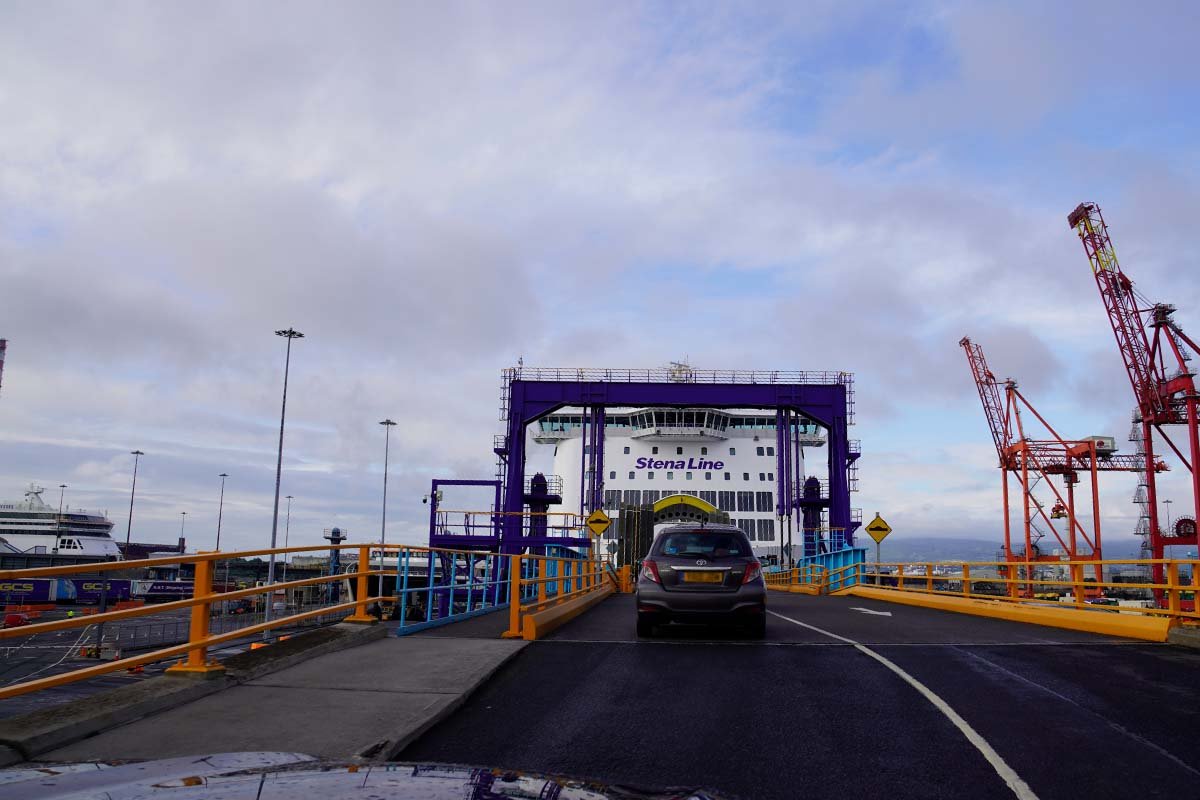
We travelled from Holyhead to Dublin with Irish Ferries on the fast Dublin Swift and returned with Stena Line on the conventional Stena Estrid. The most useful comparison was not simply Irish Ferries versus Stena Line, but fast ferry versus larger conventional ship.
The Dublin Swift made the crossing feel compact and efficient. The journey was short enough that we did not need a cabin, and there were cafés, seating areas and outside space for a break during the crossing. On the return journey, the larger Stena Estrid felt more like a traditional ferry: more space to walk around, more places to sit and a calmer sense of being properly at sea.
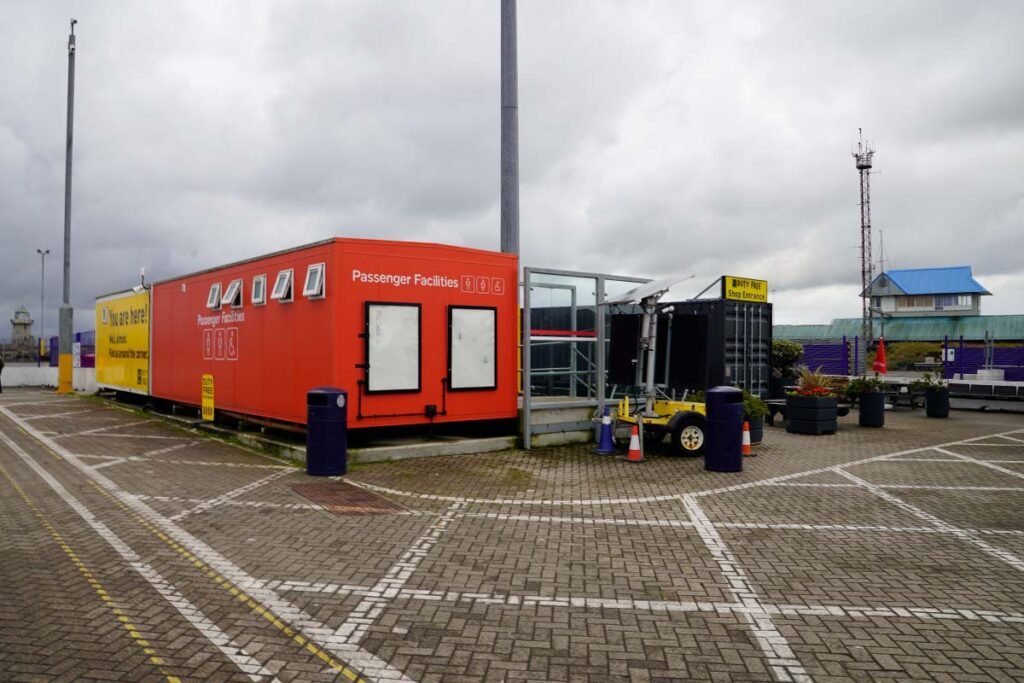
Holyhead’s passenger terminal is small and straightforward. The railway station is beside the port, which makes this one of the more useful Irish Sea routes for passengers travelling without a car. Foot passengers are transferred between parts of the terminal and ship as part of the boarding process, so it is still important to arrive before the operator’s stated check-in deadline.
What we took from the trip is that the quickest advertised crossing is not automatically the best departure. The fast ferry is attractive when time matters, but the larger ship may be more comfortable in less settled weather or when you want more space for children to move around.
Dublin is the obvious arrival point for the capital and central Ireland, but it is not automatically the best port for every journey.
Choose Dublin for Dublin itself, central Ireland and many journeys towards Galway or the west.
Choose Rosslare for Wexford, Waterford, Cork, Kilkenny and road trips through southern Ireland.
Choose Belfast for Belfast, the Causeway Coast and journeys from Liverpool or western Scotland.
Choose Larne for the Antrim Coast and the shortest sailing from Cairnryan.
Is there a ferry from the UK to Cork?
There is no regular direct passenger ferry from Great Britain to Cork. For Cork and the south-west, Fishguard-Rosslare or Pembroke-Rosslare are usually the routes to compare first. From Rosslare, continue by road towards Cork.
Could Belfast be an alternative for Dublin?
Yes, particularly if you start in Scotland or North West England. Belfast and Dublin are connected by a straightforward cross-border road journey. This can make Liverpool-Belfast or Cairnryan-Belfast a practical alternative when Holyhead sailings do not suit your plans.
Combining Ireland with the Isle of Man
Seasonal Isle of Man Steam Packet sailings may connect Douglas with Dublin, Belfast or Larne. These are useful for a multi-island trip, but they are not substitutes for the main year-round routes from Great Britain. Check the timetable carefully before building a journey around them.
Travelling by car, camper or as a foot passenger
Taking a car or camper to Ireland
Taking your own vehicle gives you much more freedom after arrival, particularly outside Dublin and Belfast. Ferry fares usually depend on the route, travel date, vehicle dimensions, number of passengers and whether you add a cabin or lounge.
When comparing prices, include the drive to the UK port, fuel, possible accommodation and the onward distance in Ireland. A cheap crossing can become the more expensive choice if it adds several hours of driving on both sides.
Travelling without a car
Holyhead-Dublin is one of the most practical routes for foot passengers because Holyhead railway station is beside the ferry terminal. Rail & Sail tickets can combine a British rail journey with the ferry, although availability and booking arrangements depend on the operator and itinerary.
Foot passengers can also use selected Stena Line services on Liverpool-Belfast, Cairnryan-Belfast and Fishguard-Rosslare. Port access varies considerably, so check how you will travel from the arrival terminal into Dublin, Belfast, Rosslare or your final destination before booking.
How early should you arrive?
Check-in deadlines differ by operator, route and passenger type. Use the time on your booking confirmation rather than relying on one general rule for every Irish Sea ferry. Give yourself additional time for traffic, passport checks and boarding, especially during school holidays and on busy weekend departures.
Passport and travel documents for Ireland ferries
Important change from 28 September 2026
From 28 September 2026, all passengers travelling with Stena Line or Irish Ferries between Great Britain and the Republic of Ireland must present a valid passport before boarding. Irish passport cards are accepted where specified by the operator. The requirement also applies to children.
This covers Holyhead-Dublin, Fishguard-Rosslare and Pembroke-Rosslare in both directions. Driving licences and other forms of photographic ID will no longer be accepted by these operators on the affected routes.
Routes between Great Britain and Northern Ireland have different identification arrangements. Always check the current operator requirements for your exact route before travelling.
If you are taking a vehicle, also bring your driving licence, insurance information and any vehicle documents requested for your journey. Requirements can differ for hired, leased or borrowed vehicles.
Ferry prices from the UK to Ireland
There is no single cheapest ferry route for every journey. Fares depend on the route, sailing time, travel date, vehicle size, number of passengers and whether you add a cabin, lounge or flexible ticket.
For a fair comparison, price the complete journey on the same dates. A cheaper crossing can become the more expensive option once you include extra fuel, a hotel or several additional hours of driving.
Travelling with a car: compare the total fare for the vehicle and every passenger.
Camper or caravan: enter the exact dimensions and any trailer or rear-mounted equipment.
Foot passenger: also compare Rail & Sail tickets and the cost of reaching the port.
Longer crossing: include the price of a cabin or lounge if you would realistically book one.
Use the booking module to check current sailings, prices and availability for your dates. Timetables and fares change, so the figures shown during booking are more useful than a fixed example price.
Practical tips for the crossing
Travelling with children
The shorter Irish Sea routes are manageable with children in ordinary seating, but it still helps to bring downloaded entertainment, snacks and a change of clothes. On longer or overnight sailings, a cabin gives children somewhere quiet to sleep and means you arrive better rested for the onward drive.
The Irish Sea can be lively in poor weather. Larger conventional ferries will often feel steadier than a fast catamaran. If you are sensitive to motion, choose a seat near the centre of the ship, look towards the horizon and check our guide to the best ferry seats for seasickness.
Luggage and mobile roaming
One of the main advantages of travelling with a car is the amount of luggage you can bring, subject to the vehicle and operator conditions. Keep anything you need during the crossing in a separate bag because vehicle decks are normally closed while the ship is at sea.
Switch off mobile data or check your roaming settings before departure. Phones can connect to maritime networks at sea, which may be much more expensive than normal UK or EU roaming. Download maps and entertainment before boarding.
Taking a dog or other pet
Pet rules depend on whether you are travelling to the Republic of Ireland or Northern Ireland, as well as the operator and route. Kennels, pet lounges, pet-friendly cabins and remaining in the vehicle are not available on every ship.
Great Britain residents taking a dog, cat or ferret to Northern Ireland generally need a free Northern Ireland Pet Travel Document, and the animal must be microchipped. Different animal-health requirements apply when travelling to the Republic of Ireland.
Read our full guide to taking a dog on a ferry and check the current government and operator rules before booking.
Our verdict: the best ferry to Ireland depends on the complete journey
Choose Holyhead-Dublin if Dublin or central Ireland is your destination and you are travelling from North Wales, much of England or the Midlands. This is also the route with the widest choice between operators and ship types.
Choose Fishguard or Pembroke to Rosslare if you are travelling from South Wales or South West England and heading towards Wexford, Waterford, Cork, Kerry or southern Ireland.
Choose Liverpool-Belfast if you are travelling from North West England or prefer a longer crossing with less driving. Belfast can also work as an alternative route to Dublin.
Choose Cairnryan-Belfast or Cairnryan-Larne if you are starting in Scotland. These are the shortest crossings and the logical gateways to Northern Ireland.
Whichever route looks best on the map, compare the journey from your front door to your final destination. That is usually more useful than comparing crossing times or headline fares in isolation.
Thanks for your question. It depends a bit on the route and the specific boat. With Stena Line for example you can book a pet cabin. And the rules are different per ferry.
On Stena Adventurer (Holyhead – Dublin) and on Stena Nordica (Fishguard – Rosslare), pets must remain in their cabins for the duration of the crossing. All pet owners must clean up after their pets both in the cabins and on the decks. For example: Pets travelling on Stena Edda (Liverpool – Belfast), Stena Embla (Liverpool – Belfast), Stena Estrid (Holyhead – Dublin), Stena Horizon (Cherbourg – Rosslare) and Stena Vision (Cherbourg – Rosslare) can get fresh air, exercise and toilet breaks in a dedicated area on the outside deck. Pets must remain on a non-retractable lead. You can also book pet friendly cabins. For Irish Ferries you can find more about the rules on this page for the route from Pembroke to Rosslare.



















Do any ferry crossings between England and Ireland allow dogs onto the decks with their owners rather than having to stay in the car or a kennel?
Hi Sue,
Thanks for your question. It depends a bit on the route and the specific boat. With Stena Line for example you can book a pet cabin. And the rules are different per ferry.
On Stena Adventurer (Holyhead – Dublin) and on Stena Nordica (Fishguard – Rosslare), pets must remain in their cabins for the duration of the crossing. All pet owners must clean up after their pets both in the cabins and on the decks. For example: Pets travelling on Stena Edda (Liverpool – Belfast), Stena Embla (Liverpool – Belfast), Stena Estrid (Holyhead – Dublin), Stena Horizon (Cherbourg – Rosslare) and Stena Vision (Cherbourg – Rosslare) can get fresh air, exercise and toilet breaks in a dedicated area on the outside deck. Pets must remain on a non-retractable lead. You can also book pet friendly cabins. For Irish Ferries you can find more about the rules on this page for the route from Pembroke to Rosslare.
https://www.irishferries.com/uk-en/frequently-asked-questions/top-10-faqs/pets-ireland-britain-routes/
Long story short: you can travel by ferry from the UK to Ireland while walking the dog with for example Stena Line on the route from Holyhead to Dublin and Fishguard to Rosslare and Liverpool Belfast.
Hope this helps.
There’s a map of a ferry from Campbeltown to Ballycastle but I can find nothing about that route like dates? times?
Hi Bev,
More details on the Campbeltown to Ballycastle ferries (Port Ellen) can be found at Kintyre Express: https://kintyreexpress.com/tickets/
Let me know if this works!
Happy travels