Updated: 2 November 2026
Since April 2026 the EU’s Entry/Exit System (EES) is fully in force: British travellers are registered on their first trip into the Schengen area, and checked against that record every time after. For ferry passengers the most practical question is not whether you are checked, but where. At Dover and Folkestone the French check happens in England, before you board. On almost every other route it happens after the crossing, when you arrive in France, Spain or the Netherlands. That changes where you queue, and how a delay affects your day.
Where your EES check happens, port by port
| From | Where your EES check happens | What happens now with a car (autumn 2026) | What it means for you |
|---|---|---|---|
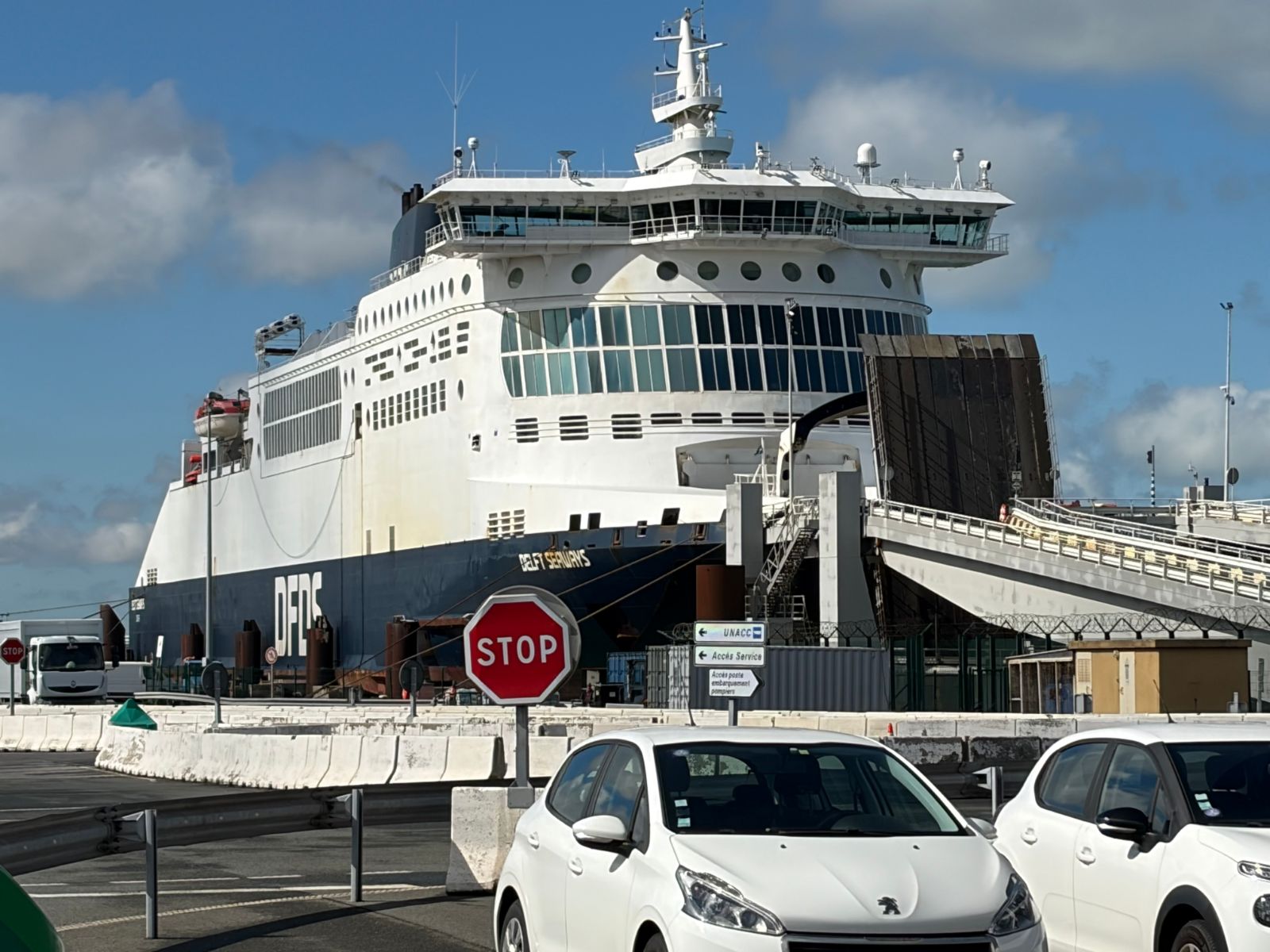
| Dover to Calais or Dunkirk | In Dover, before you board (French police) | Cars: border officers create your EES record by hand, without fingerprints or a photo yet. The 84 kiosks in the new Western Docks building are not in use. | The queue sits between you and your ferry. On the May 2026 half-term peak, waits reached about 4.5 hours. |
| Folkestone (LeShuttle) | In Folkestone, before you board (French police) | You stay in the car; the officer creates the record. LeShuttle says its kiosks are ready but no biometric capture took place over the summer. | As at Dover, the check comes before the crossing. |
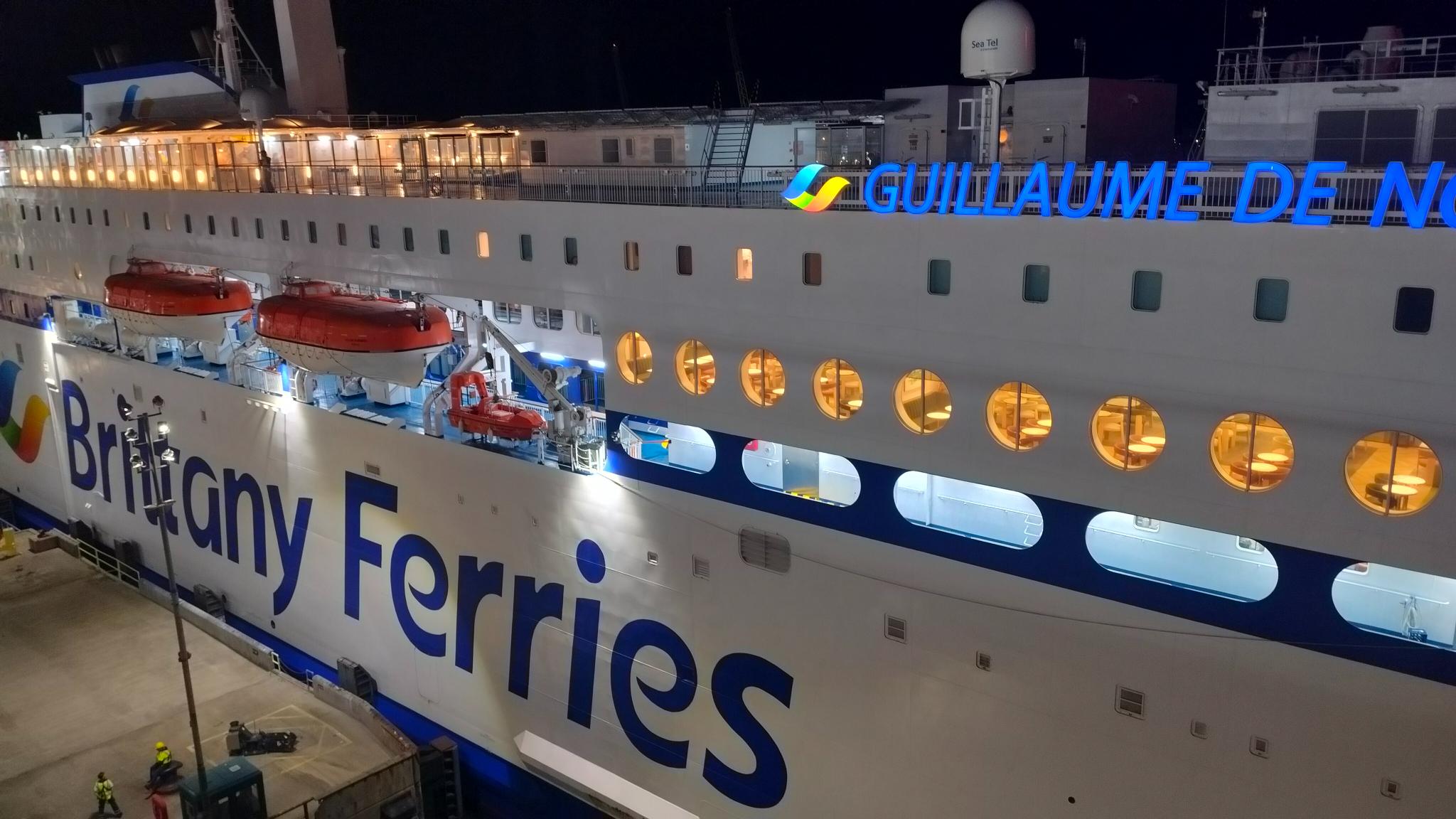
| Portsmouth, Plymouth and Poole to France or Spain | On arrival in Caen, Saint-Malo, Cherbourg, Roscoff, Santander or Bilbao | Cars: officers with tablets in the arrival lanes; foot passengers can use kiosks. Brittany Ferries reported that border times on arrival rose sharply in 2026. | No border queue in the UK, but you may wait after a long crossing before you leave the port. |
| Newhaven to Dieppe | On arrival in Dieppe | Dieppe uses tablets for cars. | Check after the crossing; no recent queue reports found. |
| Harwich, Hull and Newcastle to the Netherlands | On arrival at Hook of Holland, Rotterdam or IJmuiden (Dutch Marechaussee) | Counter checks, with kiosks only for pre-registration where they exist. Stena reported delays on arrival at Hook of Holland and has expanded the vehicle lanes there from five to eight. | The check comes after an overnight or day crossing; allow time before onward plans. |
| UK to Jersey or Guernsey | No EES check | The Channel Islands are not in the Schengen area. | Only if you continue to France, for example via Cherbourg or Saint-Malo, does EES apply. |
Status based on the sources listed at the bottom of this article, the most recent from mid-September 2026. We found no reports covering October half-term.
Map: where you are checked
Red: checked in England, before you board Blue: checked on arrival Green: no EES (Channel Islands)
Click a port to see where you are checked, with booking links for that port; click a route for the route guide. The map shows the main UK routes to Schengen countries and the Channel Islands; Irish Sea routes are not affected by EES.
Before or after the crossing: why it matters
At Dover and Folkestone the border check is part of getting onto the ferry or train. A slow border means a queue in Kent, and the risk that you miss your booked departure. The Port of Dover advises arriving no more than two hours before your sailing; arriving earlier only adds to the queue. Our guide to Dover queues and the alternatives has more tips for peak days.
On the western Channel and North Sea routes the check moves to the other side. You board without a border queue in the UK, but you may wait in the arrival lanes in Caen, Saint-Malo or Hook of Holland. Brittany Ferries’ president said in September 2026 that passengers should not have to wait an extra three hours to leave the port after a nine-hour crossing, which shows how long it could take on busy days. Choosing a longer route moves the check; it does not remove it.
For most people the right route still depends on where you are going. Heading for Calais, Belgium or Germany, Dover to Calais or Dover to Dunkirk is usually the logical choice outside peak days. For Normandy and Brittany, Portsmouth to Caen, Portsmouth to Saint-Malo and Plymouth to Roscoff land you closer. For the Netherlands and Germany, compare Harwich to Hook of Holland, Hull to Rotterdam and Newcastle to Amsterdam. Which of these routes you can already book for next summer, and the current early-booking deals, is in our overview of summer 2027 ferry timetables.
The way home
EES also records when you leave the Schengen area. That happens on the continental side before you board: in Calais, Coquelles or Dunkirk for Dover and LeShuttle, and in the French, Spanish or Dutch port for the other routes. The UK government advises allowing extra time when you leave. At Calais the plan is that car passengers stay in the vehicle while an officer reads the passport with a tablet.
Who needs to register, and what it costs
- British citizens on a short stay are registered, children included. Children under 12 are photographed but do not give fingerprints.
- Exempt are, among others, British citizens with a Withdrawal Agreement residence document and dual nationals travelling on their EU passport.
- The record lasts three years, or until your passport expires. With a new passport you are registered again.
- It is free. The Port of Dover warns that any request for payment is a scam.
- The EU app for pre-registration, Travel to Europe, cannot be used for Dover to France.
For the full background on EES and the separate ETIAS travel authorisation, see our explainer: Do UK travellers need a visa for Europe?
What could change next
The formal transition period for biometric checks ended on 6 September 2026, but France, the Netherlands and several other countries continue to limit biometric capture. The French interior ministry has said flexibility is allowed until the end of 2026. When fingerprints and photos for car passengers do start at Dover and LeShuttle, the kiosks in Dover and Folkestone should come into use. Before you travel, check the latest advice from your ferry operator and the Port of Dover.
FAQ: EES at the ferry ports
Where is the EES check for the Dover ferry?
In Dover, before you board. French border police carry out the check at the Port of Dover. In autumn 2026 car passengers have their record created by hand, without fingerprints or a photo yet.
Where is the EES check on the Portsmouth ferry?
On arrival in France or Spain, for example in Caen, Saint-Malo, Cherbourg, Santander or Bilbao. There is no EES check in Portsmouth itself.
Do I need EES to go to Jersey or Guernsey?
No. The Channel Islands are not in the Schengen area. EES only applies if you continue from the islands to France.
Do children need fingerprints for EES?
No. Children under 12 are photographed but do not give fingerprints.
Sources
- European Commission, Entry/Exit System (10 April 2026)
- GOV.UK, British travellers told to expect checks under the EU’s Entry/Exit System (12 October 2025) and France entry requirements
- Port of Dover, EES FAQ; LeShuttle, Entry/Exit System
- Brittany Ferries newsroom, new Schengen border controls (9 October 2025)
- Koninklijke Marechaussee, EES
- Connexion, reports of 31 July, 7 September and 13 September 2026
- PA Media via the Gazette (14 July 2026); Rodi Hoek van Holland (14 July 2026)
Get our latest ferry guides, route updates and travel tips in your Google feed. Add FerryGoGo as a preferred source in Google, and follow us in Discover when Google shows the option.