
 Jan Willem van Tilburg
Ferrygogo’s UK Ferry Travel Survey 2026 suggests that ferry-interested travellers are not only being held back by price. The bigger frustration is simpler: for many trips, the ferry route people want does not exist.
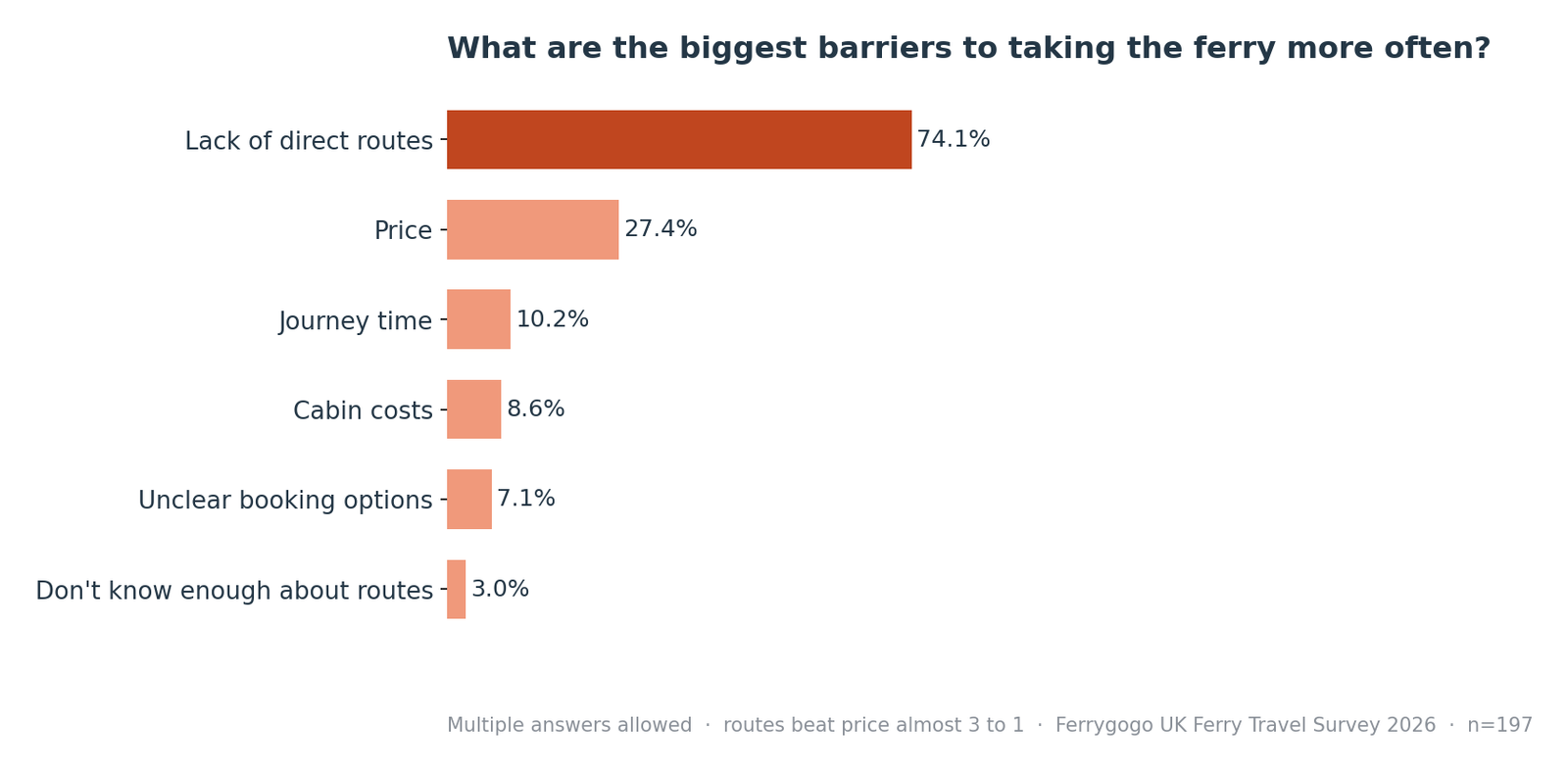
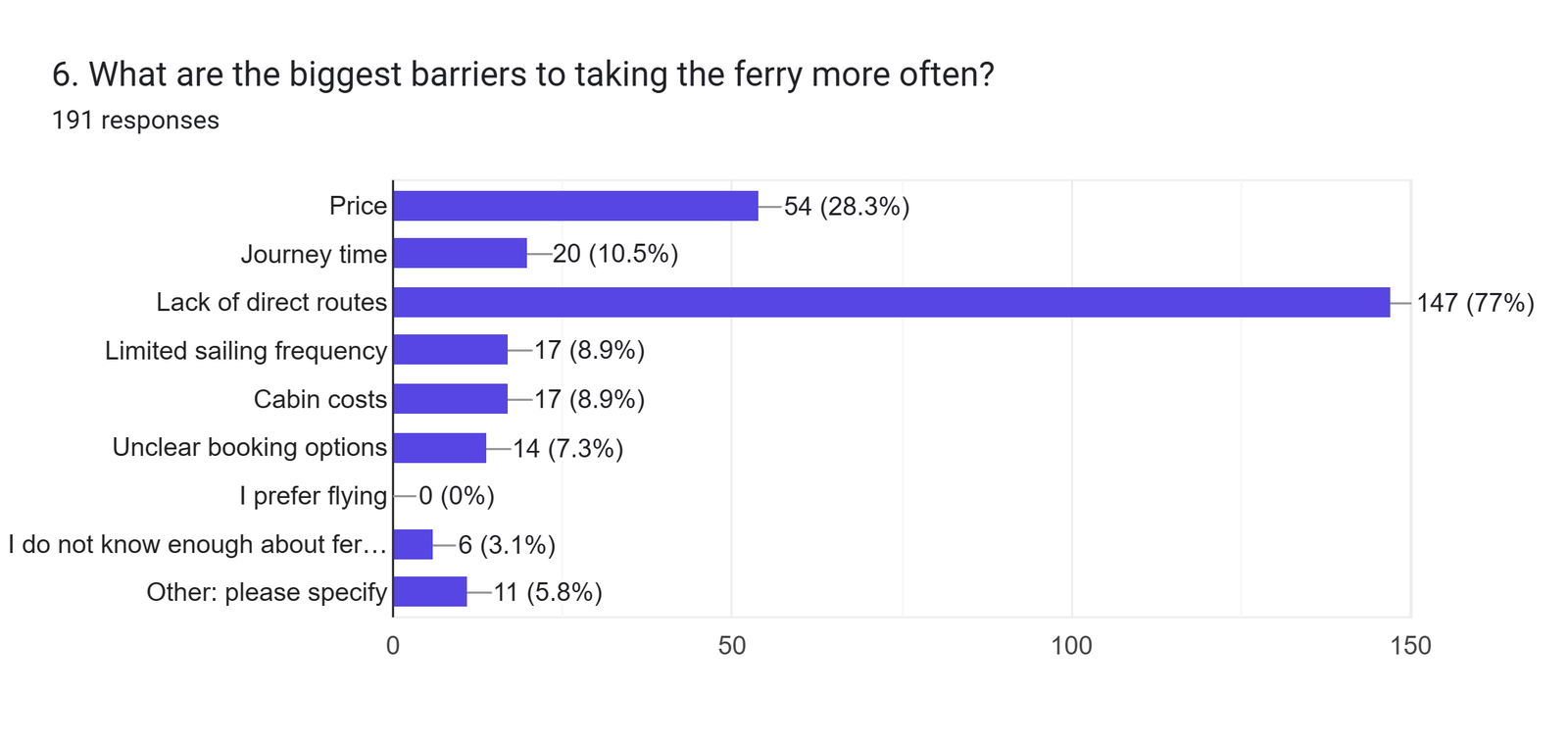
The survey was completed by 197 ferry-interested travellers between 4 and 31 May 2026. When we asked what gets in the way of taking the ferry more often, the answer was clear. 74.1% of respondents named lack of direct routes as one of the biggest barriers to ferry travel. Price came a long way behind at 27.4%.
That does not mean fares, cabins or summer availability are unimportant. They clearly matter. But the survey points to a deeper issue in the UK ferry network: travellers are route-sensitive, not just price-sensitive. A ferry can only compete with flying or long-distance driving if it takes people somewhere useful.
The short version:
UK ferry travellers are not simply asking for cheaper crossings. They want direct routes that make the whole journey easier: less driving, better overnight options, the ability to take their own car or campervan, and a calmer alternative to flying.
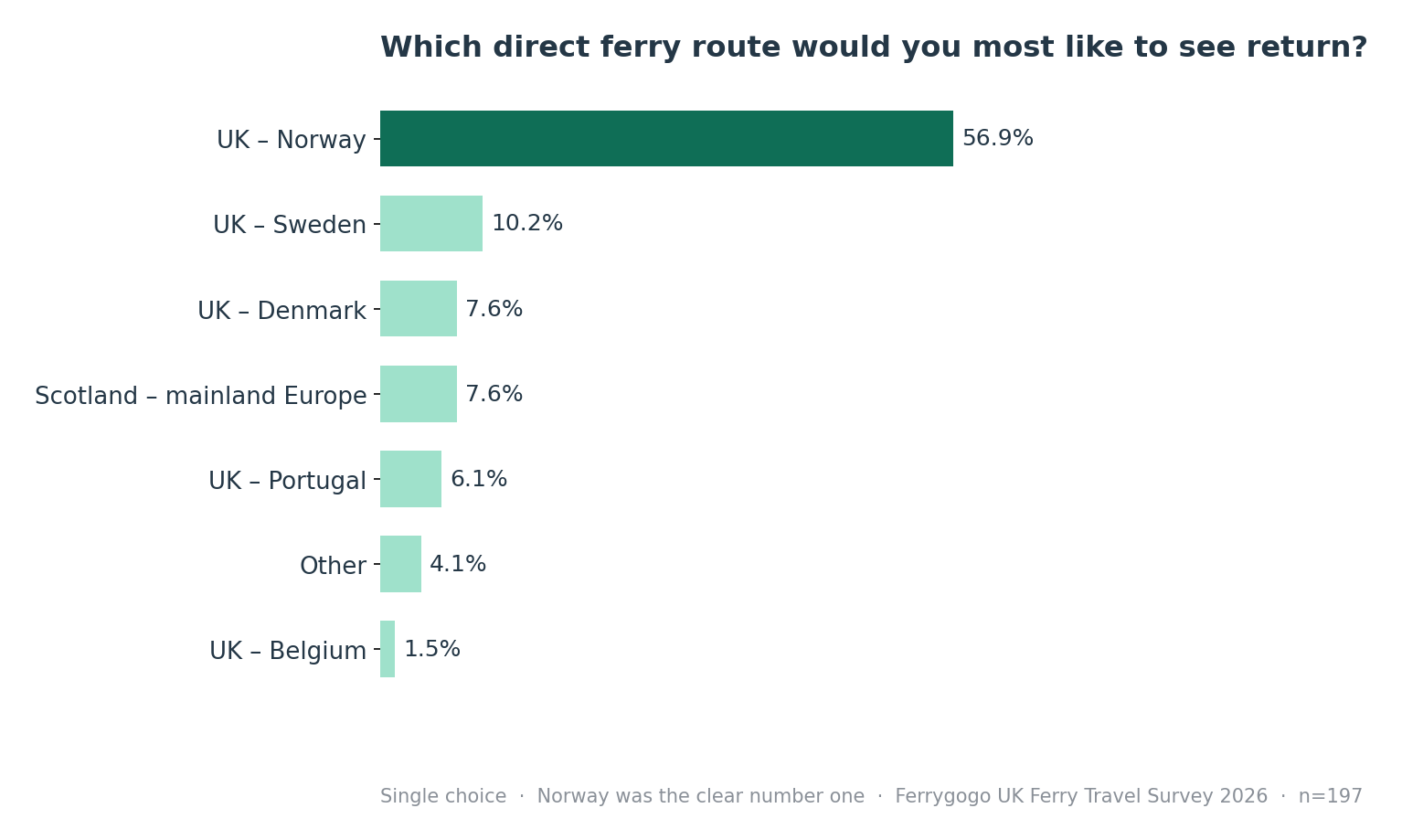
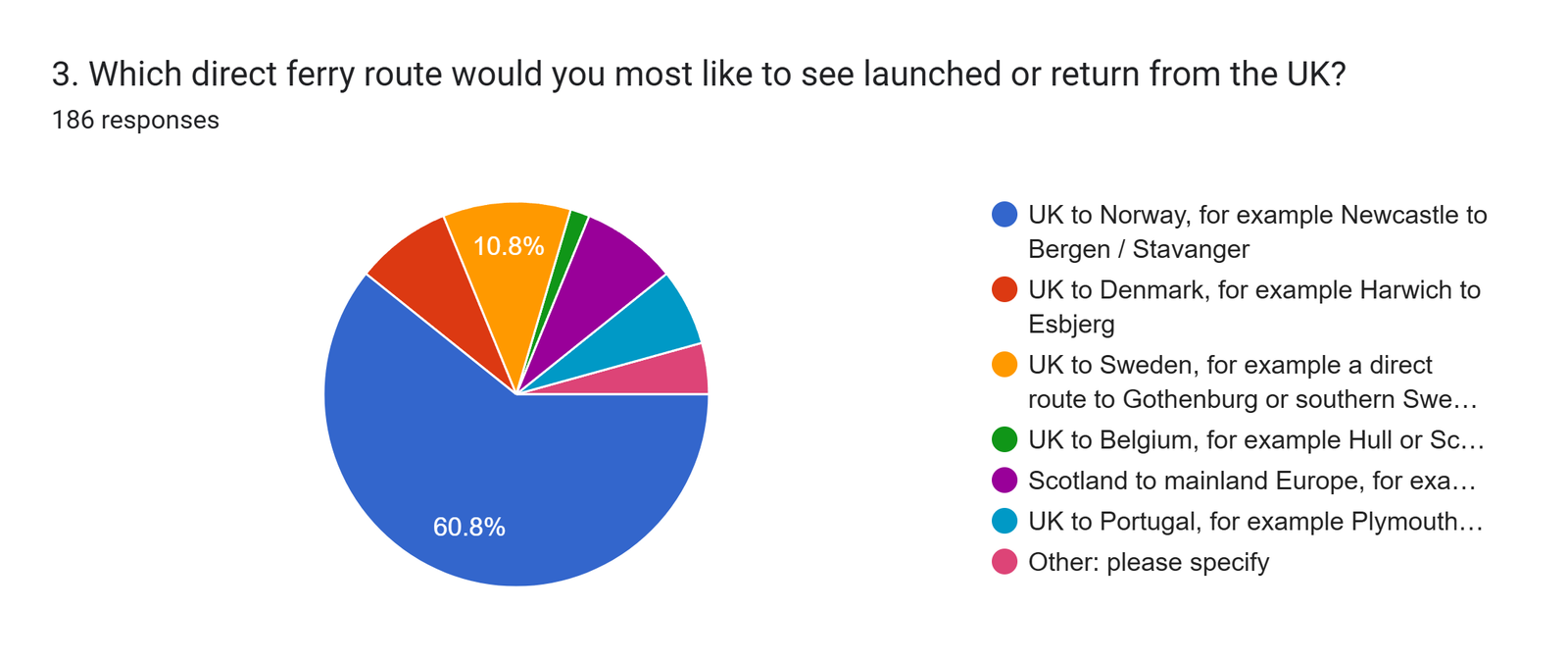
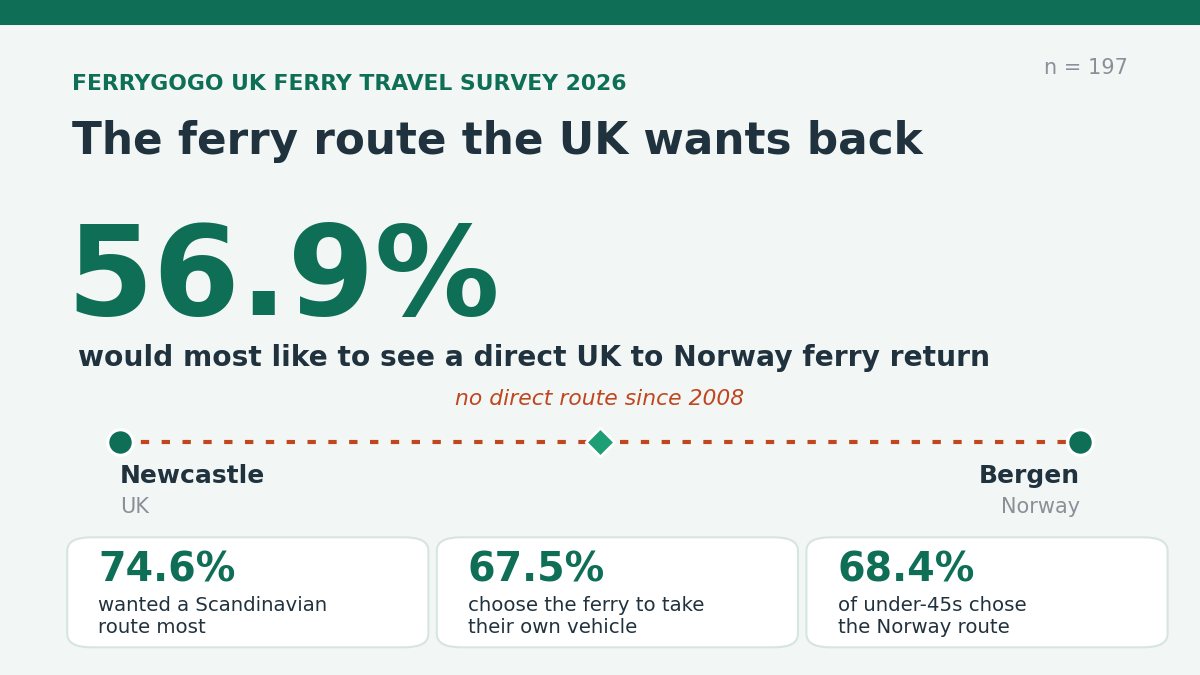
The route wishlist makes that even clearer. When respondents were asked which direct ferry route they would most like to see launched or return, 56.9% chose a UK to Norway route, such as Newcastle to Bergen or Stavanger. More broadly, 74.6% chose a Scandinavian route: Norway, Sweden or Denmark.
Norway is the standout result, but it is not the whole story. The wider message is that ferry demand depends on routes that make sense from door to destination. A good ferry route is not just a sea crossing. It can be a road-trip link, a campervan link, a dog-friendly link, a no-fly option and an overnight break in one.
Key findings from the UK Ferry Travel Survey 2026
- 74.1% said lack of direct routes is one of the biggest barriers to taking more ferry trips, compared with 27.4% who named price.
- 56.9% said the direct route they would most like to see launched or return is UK to Norway.
- 74.6% chose a Scandinavian route as their most-wanted direct crossing: Norway, Sweden or Denmark.
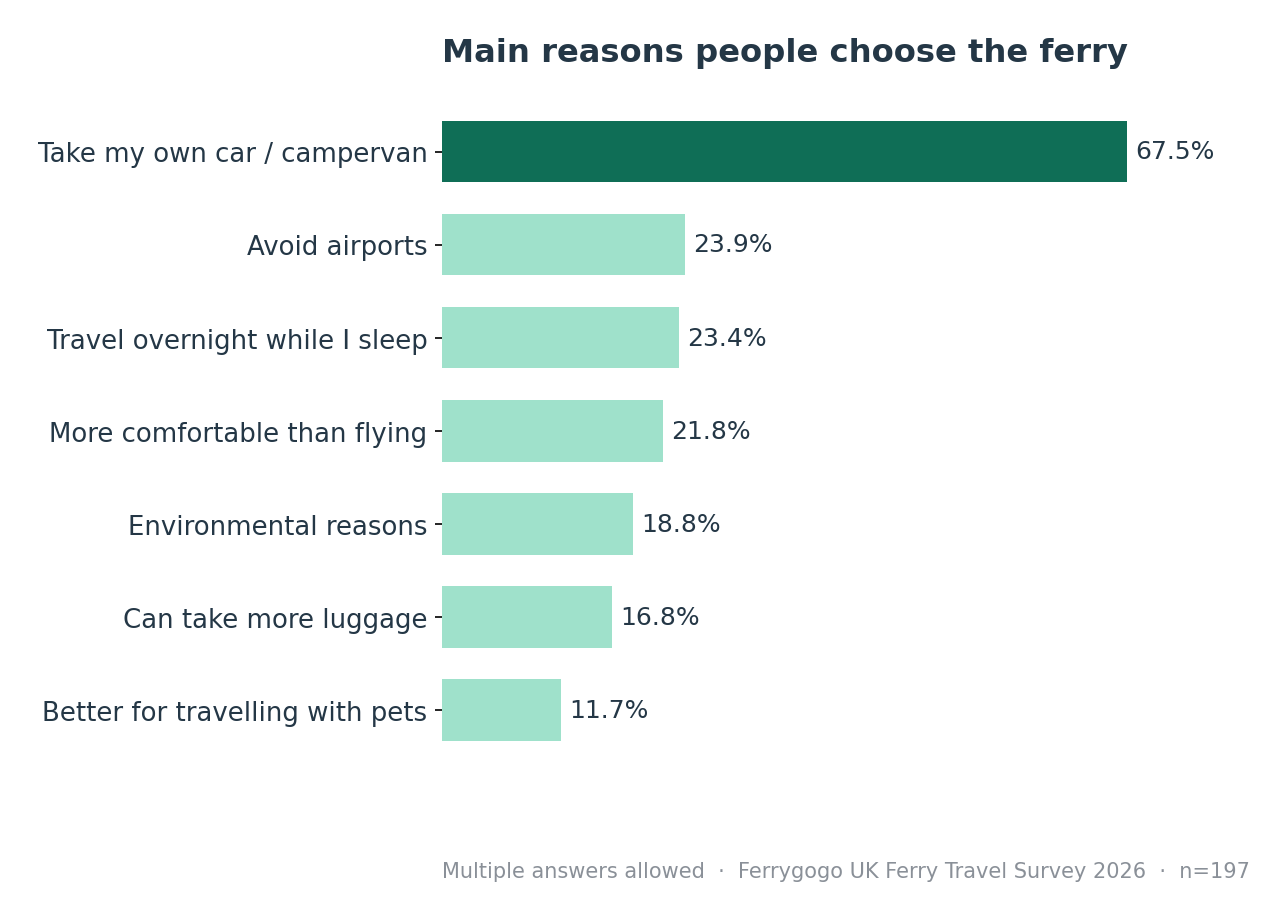
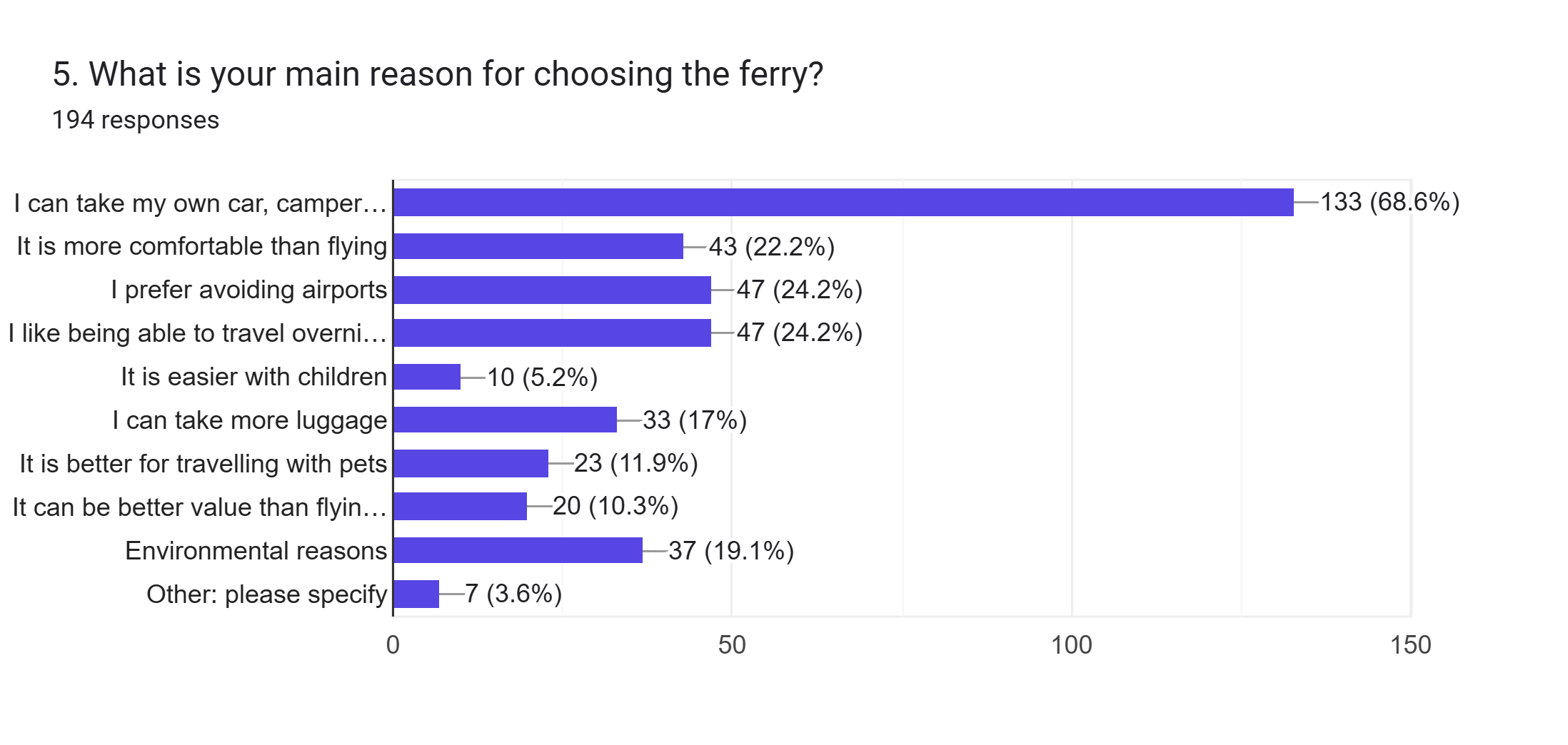
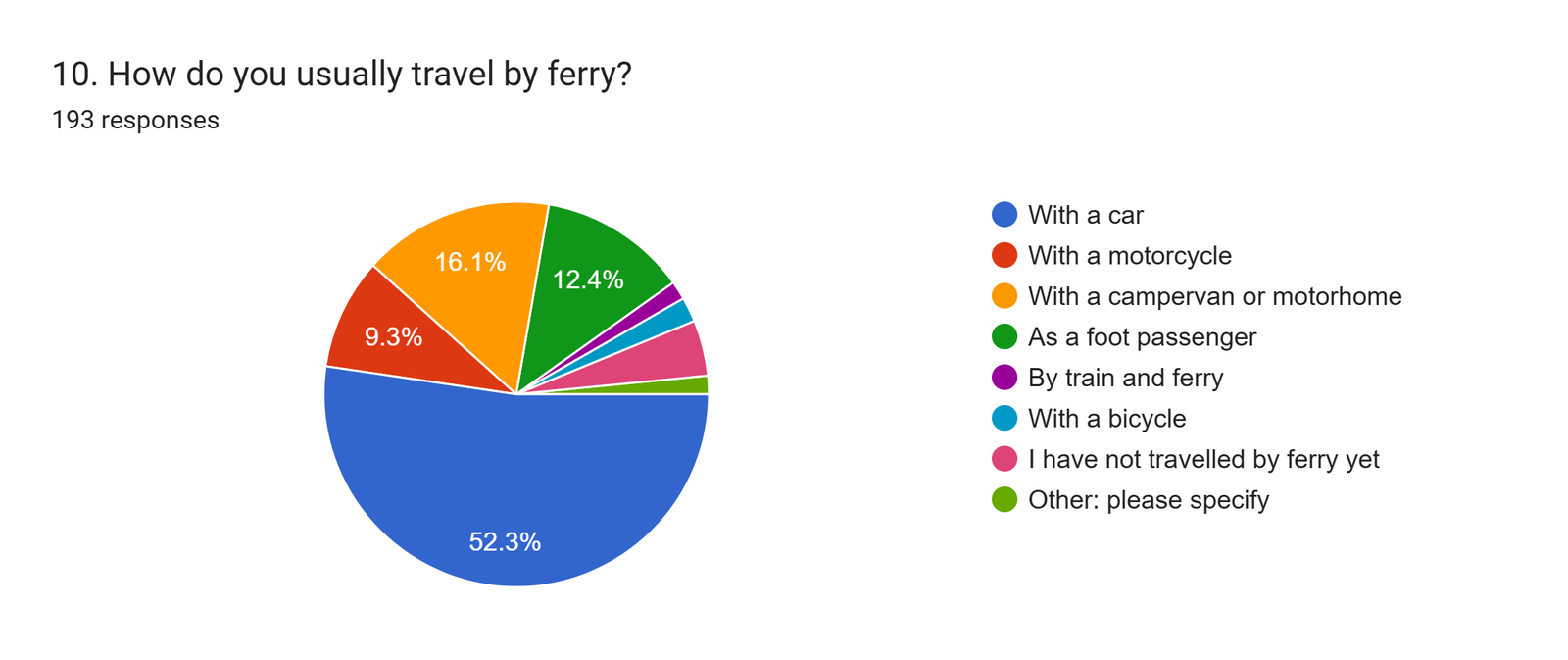
- 67.5% choose ferries because they can take their own car, campervan or motorhome.
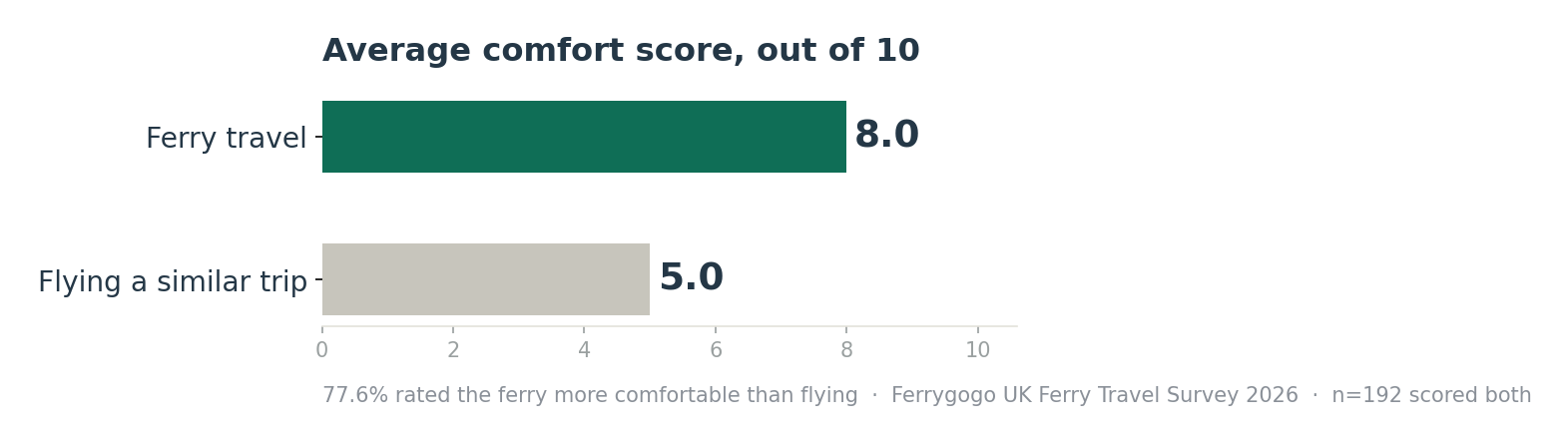
- Ferry travel scored an average comfort rating of 8.0 out of 10, compared with 5.0 out of 10 for flying on a similar trip.
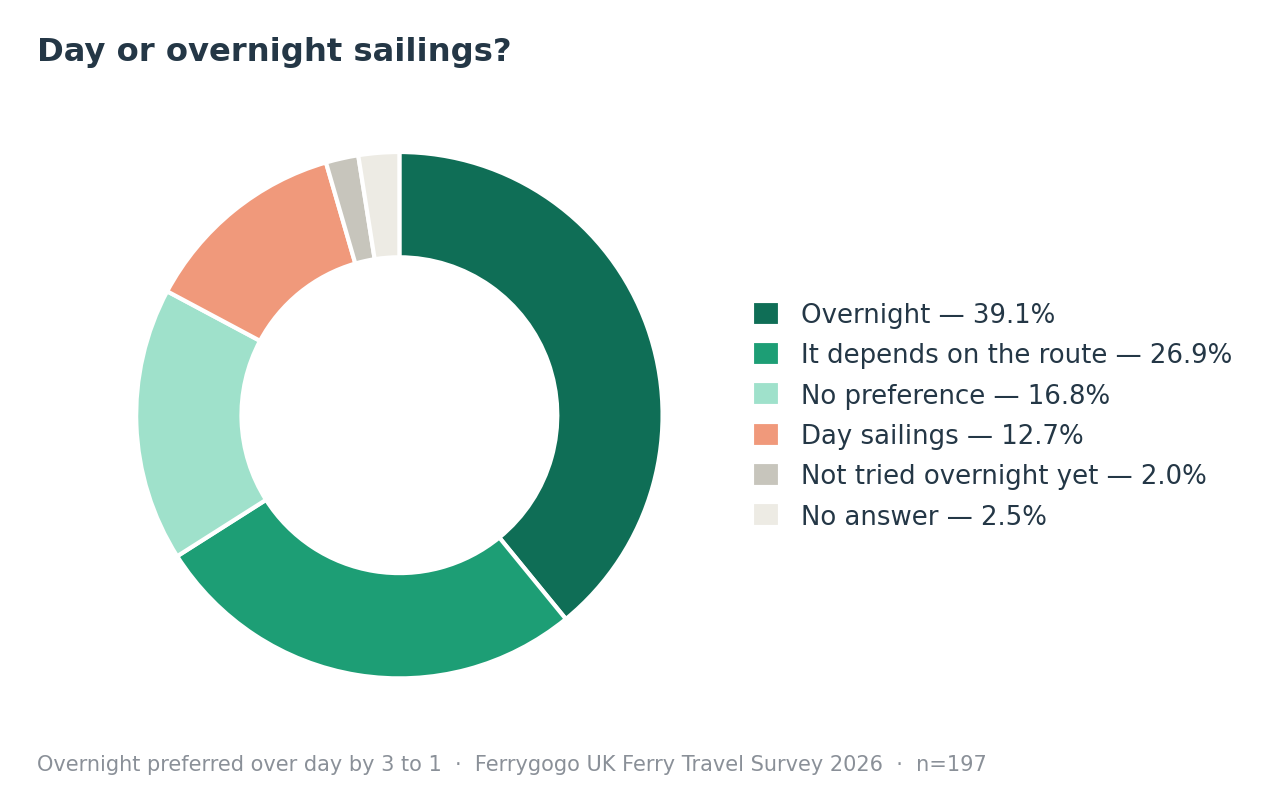
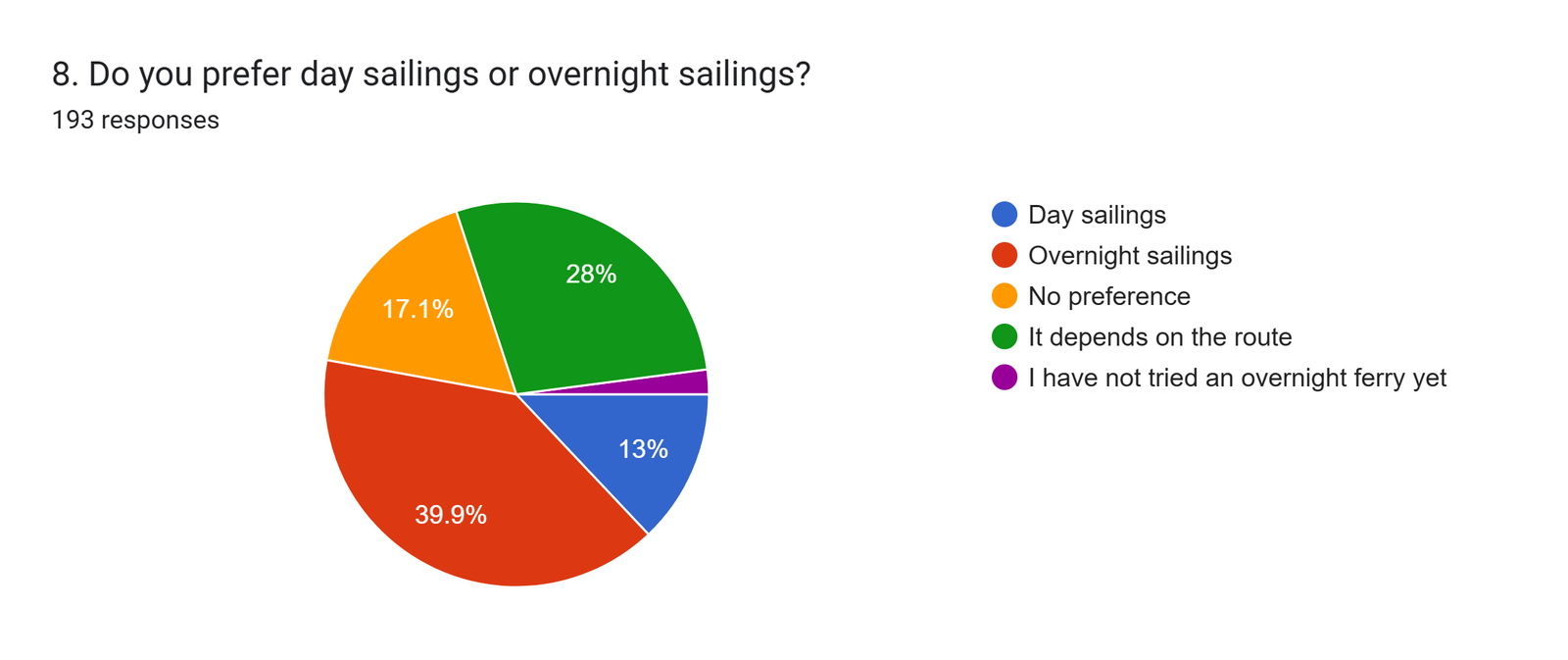
- 39.1% prefer overnight sailings, while only 12.7% clearly prefer day sailings.
Four signals from the survey
1. The route gap
The biggest barrier is not price, but missing direct routes.
2. The road-trip advantage
The car, campervan, dog and luggage still make ferries hard to replace.
3. The comfort gap
Ferries scored 8.0 out of 10 for comfort, compared with 5.0 for flying.
4. The overnight effect
A good night ferry can replace a hotel night and make the journey feel easier.
Missing direct routes matter more than price
The strongest survey result was the gap between route availability and price. Nearly three times as many respondents selected lack of direct routes as selected price.
This is important because a ferry route is not just a line on a map. For many travellers, it shapes the whole journey. The right crossing can reduce driving time, remove the need for an extra hotel stop, make travelling with children or a dog easier, and turn a long journey into something calmer.
The opposite is also true. If the direct ferry has disappeared, travellers may not simply choose another ferry. They may fly, drive a much longer route, or give up on the idea altogether. That is why missing routes are such a useful signal. The issue is not only whether people like ferries. It is whether the current network lets them use ferries in a practical way.
That also explains why price, while still important, did not dominate the survey. A cheaper fare does not solve the problem if the ferry arrives in the wrong place, forces too much onward driving, or turns a simple holiday plan into a complicated route puzzle.
The routes travellers want: Scandinavia stands out
When respondents were asked which direct ferry route they would most like to see launched or return, Scandinavia dominated the results. UK to Norway was the clear number one, chosen by 56.9% of respondents. UK to Sweden and UK to Denmark were smaller individually, but together with Norway they show a wider pattern: ferry-interested travellers still see Scandinavia as a natural ferry destination from the UK.
This fits what we see across Ferrygogo. Questions about ferries from the UK to Norway, Sweden and Denmark often come from travellers who do not necessarily dislike the current alternatives. They just know that the journey would make more sense with a direct sea link.
At the moment, a UK traveller heading to Norway by ferry usually needs to cross first to the Netherlands or France, drive through northern Europe, and then continue from Germany or Denmark. That can still be a brilliant road trip, but it is not the same as boarding in the UK, sleeping onboard and arriving directly in Scandinavia.
We have covered the Norway result in more detail in our supporting article: The UK wants its Norway ferry back. This main survey page looks at the wider ferry travel pattern behind that result.
Norway is the sharpest example of the route gap
Although this survey is about UK ferry travel more broadly, the Norway result is too strong to ignore. More than half of respondents chose UK to Norway as the direct route they would most like to see launched or return.
That result makes sense. Norway is close enough to feel like a natural ferry destination, far enough away for an overnight crossing to be useful, and awkward enough by current ferry routes to make the lack of a direct service obvious. On a map, the missing link is easy to understand.
It is worth being clear about the audience. This was a self-selected survey of Ferrygogo readers and ferry-interested travellers, not a representative poll of the whole UK population. But for a long-distance ferry route, that audience matters. These are exactly the kind of people who already think about cars, cabins, dogs, campervans, route planning and overnight crossings when choosing how to travel.
So the Norway result is best read as the clearest example of the wider issue. When a route fits the way people want to travel, demand can remain visible long after the crossing itself has disappeared.
Taking the car is still the ferry’s biggest practical advantage
Another clear message from the survey is that ferry travel is not simply a slower version of flying.
Flights sell a seat from one airport to another. A ferry can carry the car, the campervan, the dog, the roof box, the bikes, the camping gear and the awkward luggage that makes a holiday work.
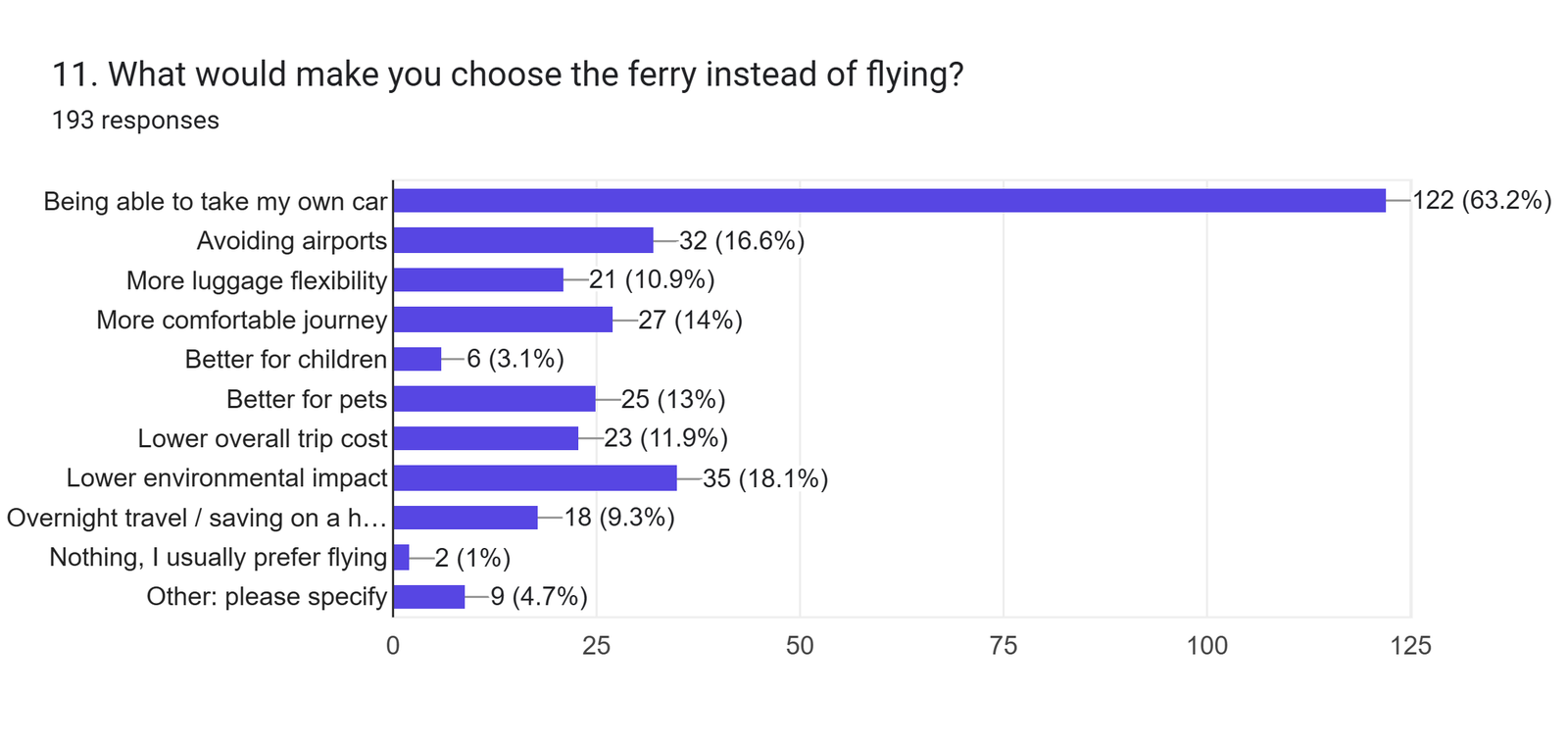
That is reflected in the results. 67.5% of respondents said being able to take their own car, campervan or motorhome is one of the main reasons they choose the ferry. When asked what would make them choose the ferry instead of flying, the most common answer was again the car, chosen by 61.9%.
This is the ferry’s real advantage. It is not always the fastest way to travel, but for the right trip it can be the most useful. A family heading to France, Spain, Ireland, the Netherlands or Scandinavia is often not just looking for the cheapest crossing. They are trying to build a journey that works from the front door to the final destination.
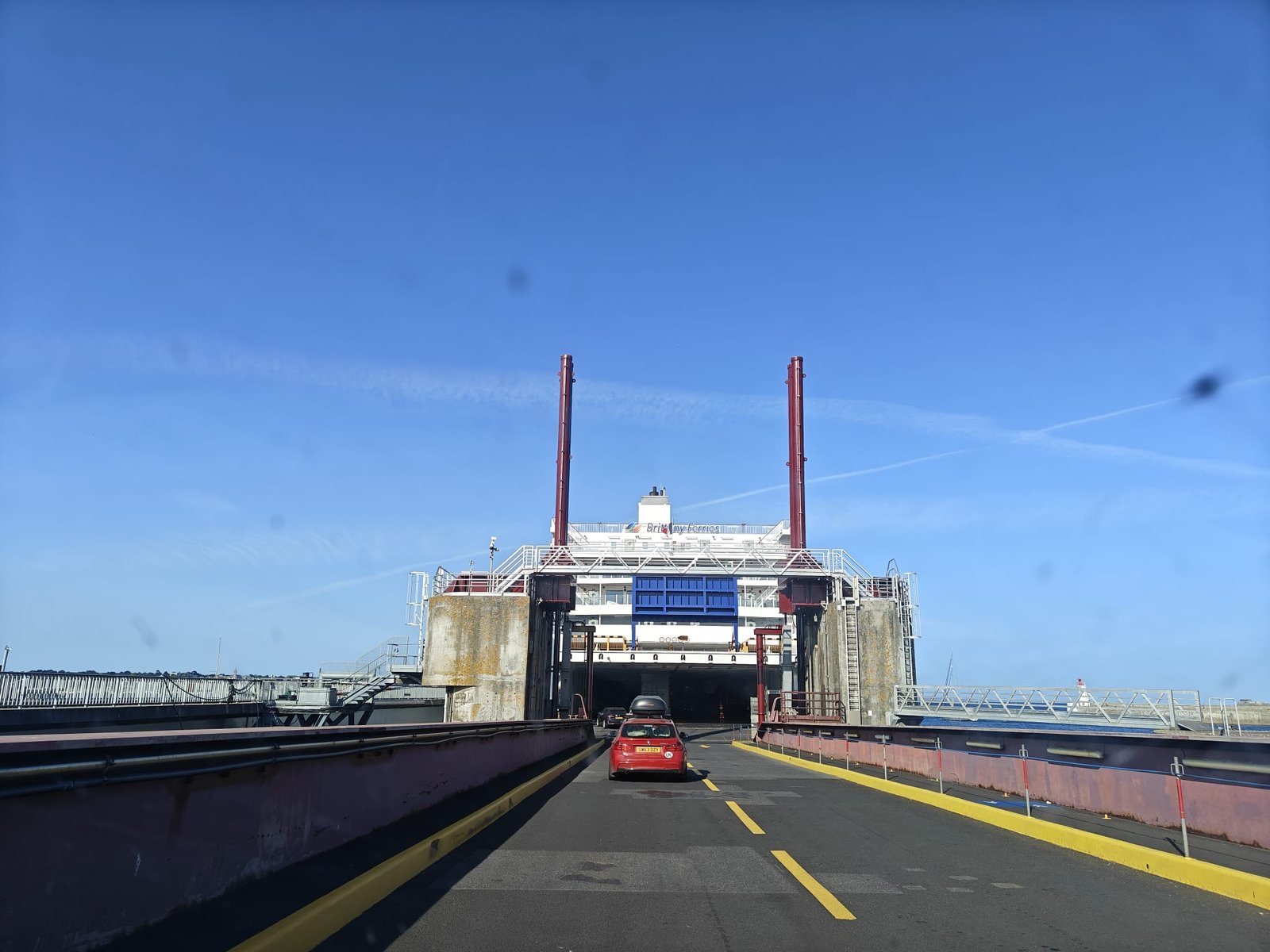
It is also why the best ferry route from the UK is not always the shortest crossing. A longer ferry can still be the better choice if it saves driving on the other side, avoids an extra overnight stop or gives the trip a calmer rhythm.
Ferries score much higher than flying for comfort
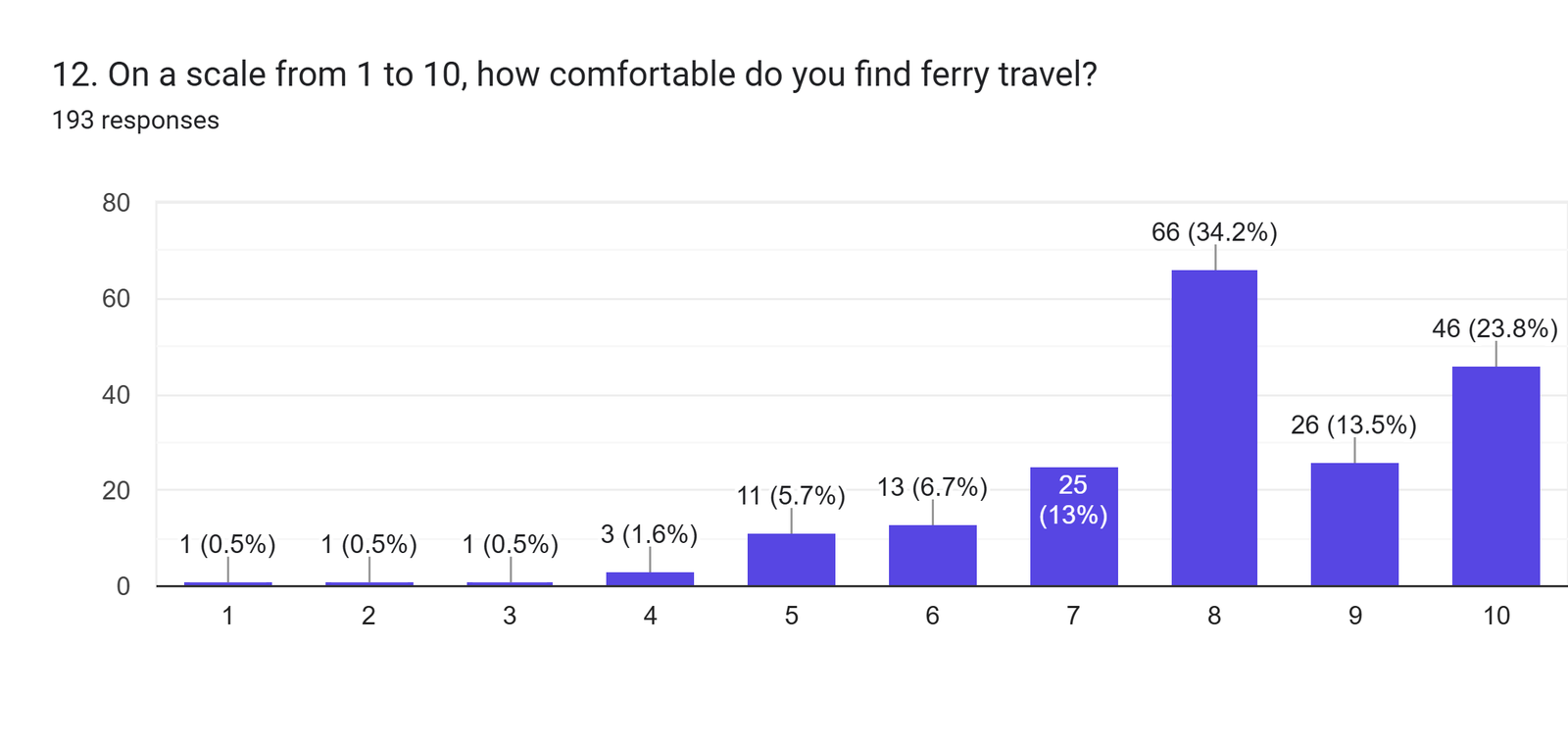
The comfort result was one of the most striking findings in the survey. Respondents gave ferry travel an average comfort score of 8.0 out of 10. Flying for a similar trip scored an average of 5.0 out of 10.
In total, 77.6% of respondents rated ferry travel as more comfortable than flying. 71.4% gave the ferry a comfort score of 8, 9 or 10, while 56.8% rated flying 5 out of 10 or lower.
That does not mean ferries are always the right answer. For some trips, flying is faster, cheaper or simply more practical. But the survey shows that ferry travellers value the onboard experience differently. Space, fresh air, cabins, restaurants, lounges, the freedom to move around and the ability to keep your own vehicle all change the trip.
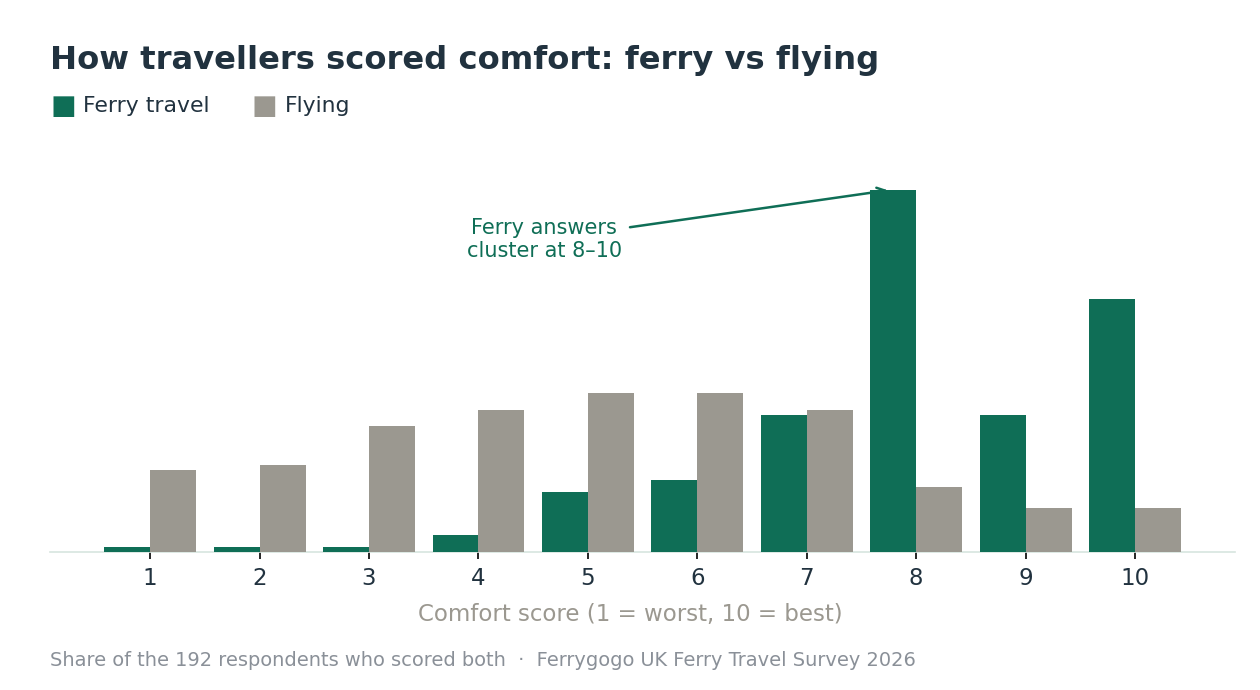
How the scores fall: more than three quarters of respondents (77.6%) rated the ferry more comfortable than flying.
For many travellers, the ferry is not just a way to reach the destination. It is the part of the journey that makes the rest of the holiday feel easier.
Overnight sailings are still part of the appeal
The survey also shows that overnight ferries still have a strong appeal. 39.1% of respondents said they prefer overnight sailings, compared with only 12.7% who clearly prefer day sailings. A further 26.9% said it depends on the route.
This matters because long ferry routes are often judged too simply. If you only look at sailing time, a long crossing looks slow. But if the ferry includes a cabin, dinner onboard, a night’s sleep and a useful morning arrival, the calculation changes.
A night ferry can replace a hotel night, break up the drive and make the journey feel far less rushed. That is why long-distance ferry routes can still make sense, even when flying is faster on paper.
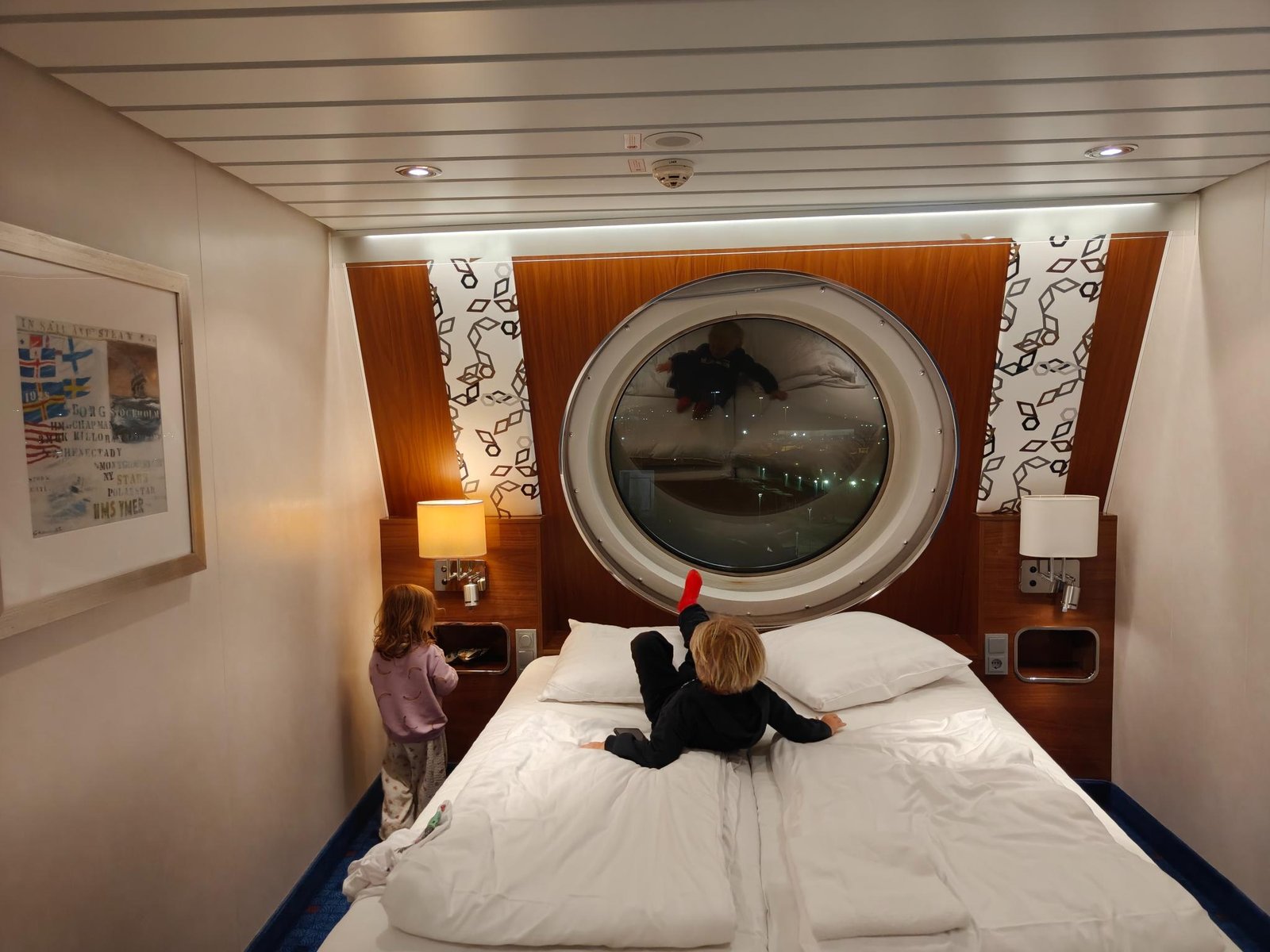
That is exactly what we found on the Harwich to Hook of Holland overnight Rail & Sail route: your holiday can start onboard. You eat, sleep, wake up closer to where you want to be, and avoid turning the first day of the trip into a recovery day.
When a ferry route disappears, travellers do not just lose a crossing. They lose a way of travelling.
What travellers weigh up when they book
We also asked what matters most when people book a ferry. Price led, but it did not dominate. 34.0% chose lowest price, closely followed by 27.9% who said arriving close to their final destination and 22.8% who valued comfortable cabins. Good food and facilities (19.3%) and a convenient departure time (18.3%) were not far behind.
That is a useful corrective to the idea that ferry travellers simply chase the cheapest crossing. Even at the moment of booking, people are weighing up the whole journey: where the ferry lands, how comfortable the night will be, whether the timing works and how much stress the route removes.
The cheapest fare and the right fare are not always the same thing.
What ferry travellers want more help with
Finally, we asked what Ferrygogo could improve or add to help people plan ferry trips. The most common answers were clearer route comparisons and easier booking links or route options, both chosen by 20.8%. More ferry price examples followed at 16.2%, and better maps of ferry routes and ports at 15.2%.
That feedback matches the wider survey story. Ferry travellers are not only looking for inspiration. They want to understand which route makes sense, what it roughly costs, where the ports are, how the timings work and what the trade-offs are.
In other words: ferry travel needs better route explanation, not just booking boxes.
How to read these results
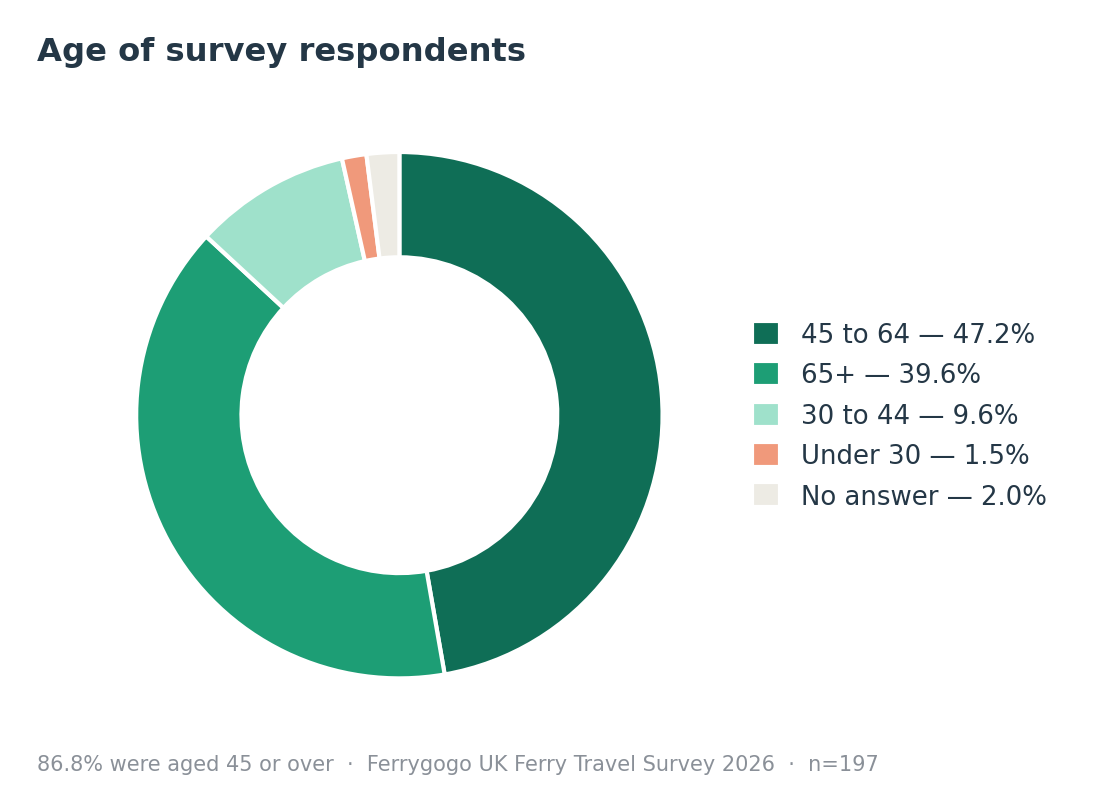
The survey audience was clearly older and ferry-interested, and that is important context. 86.8% of respondents were aged 45 or over, with the largest group aged 45 to 64, followed by 65+. So this should not be read as a perfect snapshot of the whole UK population. It is better understood as a survey of Ferrygogo readers and ferry-interested travellers.
That older audience may partly explain the strong interest in routes that used to exist. But the results should not be dismissed as nostalgia. The reasons people gave for choosing ferries were practical: taking a car, travelling with more luggage, avoiding airport stress, using cabins, and making the journey feel more comfortable.
Those reasons are not old-fashioned. They fit modern travel habits too: road trips, campervans, dogs, slower travel, family holidays and a growing wish to avoid the most stressful parts of flying where possible.
Some travellers have drifted away from ferries
There is one more group worth noticing. 32 respondents said they used to travel by ferry but had not done so recently, and another 23 had never travelled by ferry from the UK at all. Together, that is more than a quarter of the survey.
That lines up with the main story. When a route disappears, becomes hard to compare or feels awkward to plan, people do not always switch to a different ferry. Some simply stop using ferries for that kind of trip.
The lapsed travellers are a useful reminder that ferry demand is not only about winning new fans. It is also about making the network, the information and the booking path clear enough that people who already like ferries come back.
What this tells us about UK ferry travel
The clearest message from the survey is that ferry demand is not mainly about cheaper fares. Travellers want better route choices, clearer planning and crossings that make the whole journey work.
The strongest route gap is Scandinavia, especially Norway. The strongest practical reason to take the ferry is the ability to bring your own vehicle. And the strongest emotional advantage is comfort: more space, less airport stress and the feeling that the journey itself can be part of the holiday.
That combination is why the missing-route result matters so much. A ferry route is strongest when it solves several travel problems at once: where to start, where to arrive, how much to drive, whether to bring the car, whether to sleep onboard, and whether the journey feels like part of the trip rather than something to endure.
The best ferry routes are the ones that make the whole journey easier: a sensible departure port, a useful arrival port, enough space onboard, a fair price and good timing. When those routes exist, ferries can offer something flying rarely does: a slower but more complete way to travel.
More stories from the Ferrygogo UK Ferry Travel Survey 2026
This article is the main research piece from Ferrygogo’s UK Ferry Travel Survey 2026. We are also publishing focused follow-up stories based on the same data:
Related Ferrygogo guides
- Best ferry routes from the UK
- Ferry to Norway from the UK
- Ferry to Sweden from the UK
- Ferry to Denmark from the UK
- Historic ferry crossings from the UK to Scandinavia
- First-hand ferry reviews
Survey note
This survey was completed by 197 respondents between 4 and 31 May 2026. It was a self-selected survey of Ferrygogo readers and ferry-interested travellers. Where percentages are given for individual questions, they are calculated as a share of all 197 respondents unless stated otherwise; the comfort comparison is based on the 192 people who scored both ferry and flying. Some questions allowed more than one answer, so those figures do not add up to 100%. The results should be read as a signal from people already interested in ferry travel, rather than as a representative poll of the whole UK population.
Survey charts for media use
Editors and journalists are welcome to use the survey charts below when covering Ferrygogo’s UK Ferry Travel Survey 2026. Please credit: Ferrygogo UK Ferry Travel Survey 2026.
Note: these are exported Google Forms visuals and show percentages based on the number of responses to each individual question. In the article above, most percentages are calculated as a share of all 197 survey respondents unless stated otherwise.
Press and media use
These findings are available for editorial use with credit to FerryGoGo. Journalists, editors and travel writers can use the figures, charts and route findings from the FerryGoGo UK Ferry Travel Survey 2026.
- Survey: FerryGoGo UK Ferry Travel Survey 2026
- Sample: 197 ferry-interested UK travellers
- Fieldwork: May 2026
- Credit line: Source: FerryGoGo UK Ferry Travel Survey 2026
Media contact:
Jan Willem van Tilburg, FerryGoGo
jw@ferrygogo.com
Get our latest ferry guides, route updates and travel tips in your Google feed. Add FerryGoGo as a preferred source in Google, and follow us in Discover when Google shows the option.









My main complaint about ferry travel from the UK, is the lack of service for foot passengers on some routes. Only P&O provide for foot passengers from Dover – Calais. Stena seem to offer best consideration for foot passengers. There are a lot of us out there.
Travel by ferry in the rest of Europe does not seem to be a problem.
Great survey and good to see the issue of direct connections missing is brought to light. However, basing this on less than 200 respondents it is likely the results are not representative. For example we have a FB group of 3000+ people who are interested in the Harwich to Esbjerg route being reopened!
Harwich or Newcastle to Hirtshals in Denmark (which already has multiple connections onward to Norway – and existing connections to Gothenburg in Sweden via Frederikshavn)…