Ferry to Sicily: fastest, easiest and best routes to compare
You can reach Sicily by ferry from mainland Italy, Malta and Sardinia. The quickest crossing is Villa San Giovanni to Messina, the classic short hop across the Strait of Messina. If you are starting further north, longer ferries from Genoa, Civitavecchia, Naples or Salerno can reduce the amount of driving before you reach the island.
This guide helps you compare the main ways to sail to Sicily: the fast Strait of Messina crossing, longer mainland Italy routes, and island-to-island ferries from Malta and Sardinia.
Ferries to Sicily in short
Fastest ferry: Villa San Giovanni to Messina, usually around 20 minutes.
Most frequent short crossing: the Strait of Messina ferries run day and night, with very frequent departures.
Best from northern Italy: Genoa to Palermo, a long crossing that can save a major drive south.
Best from Rome or central Italy: Civitavecchia to Palermo or Termini Imerese, depending on the timetable.
Best from Naples or Campania: Naples to Palermo, Naples to Termini Imerese or Salerno to Messina.
Best island combination: Malta to Sicily or Sardinia to Sicily.
Best advice: compare the ferry with your full driving route, not just the sailing time.
Our straightforward top picks
If you only need to cross to Sicily: choose Villa San Giovanni to Messina. It is the shortest and most frequent option.
If you are driving from northern Italy: compare Genoa to Palermo. It is a long sailing, but it can replace many hours on the motorway.
If you are starting around Rome: look at Civitavecchia to Palermo or Civitavecchia to Termini Imerese. These routes can work well if you want to avoid driving all the way south.
If you are travelling from Naples or the Campania area: compare Naples to Palermo, Naples to Termini Imerese and Salerno to Messina.
If you want a two-island trip: the Malta to Sicily and Sardinia to Sicily ferries are the routes to check first.
Map: ferry routes to Sicily
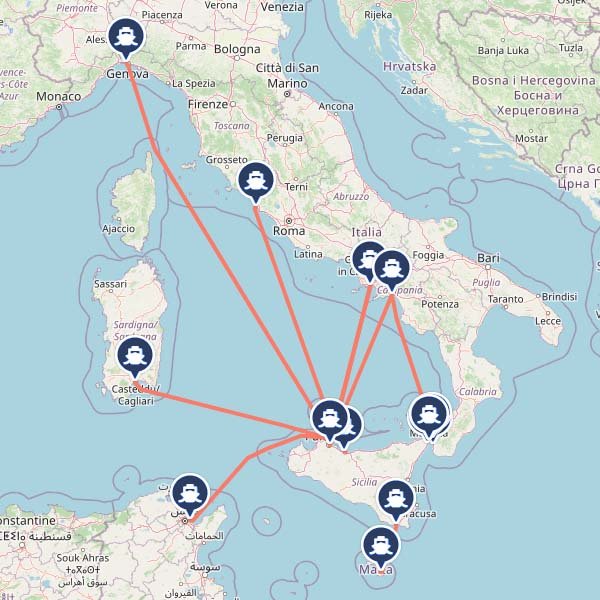
The map shows every way onto the island. Even if you fly in, the ferries matter: the crossings to Malta and Sardinia turn a Sicily holiday into a two-island trip.
Ferry from Sicily to mainland Italy: the same routes, the other way round
Heading back from Sicily to the Italian mainland? Good news: every route on this page also sails in the opposite direction. The choice works exactly the same way, just reversed. Where on the mainland do you need to be, and how much driving do you want to do?
For most travellers, the answer is simple. If you are driving and heading south or central Italy, take the short ferry from Messina to Villa San Giovanni and join the motorway in Calabria. If you are heading to Rome, Tuscany or northern Italy, a long ferry from Palermo can save you a very long day behind the wheel.
From Sicily
To mainland Italy
Crossing time
Best for
Messina
Villa San Giovanni (Calabria)
About 20 minutes
Drivers heading anywhere in southern Italy. Very frequent, day and night.
Messina
Salerno (Amalfi Coast)
About 9 hours
Skipping the long drive through Calabria towards Naples and the Amalfi Coast.
Palermo
Naples
About 10 to 11 hours
Overnight to Naples and Campania.
Palermo / Termini Imerese
Civitavecchia (Rome)
About 14 to 15 hours
Rome, Lazio and Tuscany.
Palermo
Genoa
About 20 hours
Northern Italy, and drivers heading back towards France, Switzerland or the UK.
Crossing times are typical and vary by operator, ship and season. Always check the live timetable before you book.
From the mainland the ferries leave along Italy’s west coast: Genoa and Civitavecchia (Rome) to Palermo, Salerno and Villa San Giovanni to Messina. Genoa and Civitavecchia are overnight sailings with cabins, which is how most drivers from the north arrive rested rather than wrung out by the autostrada.
Crossing the Strait of Messina: what to expect
The Strait of Messina is one of the shortest and busiest ferry crossings in Europe. At its narrowest point, Sicily and Calabria are only a few kilometres apart. There is still no bridge, so the ferry is the road.
By car or motorhome: use Villa San Giovanni to Messina. Ferries run day and night, and at quiet times you can often simply drive up and take the next sailing. In July and August, and on summer weekends, queues can build up. Booking ahead then saves time.
On foot: besides the car ferries, fast passenger boats also cross the Strait, including from Reggio Calabria to Messina. Handy if you arrive by train or plane in Reggio.
By train: Sicily is one of the few places in Europe where some long-distance trains still cross the sea on a ferry. The carriages are shunted on board at Villa San Giovanni and roll off again in Messina. A wonderful experience if you are not in a hurry.
Our tip
Compare the whole journey, not just the sailing time. The 20-minute Messina crossing looks unbeatable, but if you are driving from Rome or further north, you still face many hours on the motorway through Calabria. An overnight ferry to or from Palermo costs more, but you arrive rested, with a day of driving saved.
Our verdict: which ferry to or from Sicily?
Just crossing, in the south: Villa San Giovanni to Messina. Fast, frequent, no need to plan much.
Naples, Amalfi Coast or Campania: compare Salerno to Messina and Naples to Palermo with driving through Calabria.
Rome or central Italy: Civitavecchia to Palermo is usually the most relaxed option.
Northern Italy or driving from the UK: Genoa to Palermo. Long, but it replaces well over 1,000 km of driving.
Island hopping: combine Sicily with Malta or Sardinia.
Ferry routes from mainland Italy to Sicily
Villa San Giovanni to Messina: the short hop from the toe of Calabria, 20 to 30 minutes, ferries all day and night. For the north-east of the island and anyone already in the south.
Salerno to Messina: about 8 to 10 hours from Campania, skipping the drive through Calabria.
Genoa to Palermo: the long one, about 20 to 21 hours, with cabins, restaurants and lounges; the route for northern Italy and for drivers from the UK.
Civitavecchia (Rome) to Palermo: around 14 to 15 hours, overnight, cabins available, the natural choice from central Italy.
Ferry from Malta to Sicily
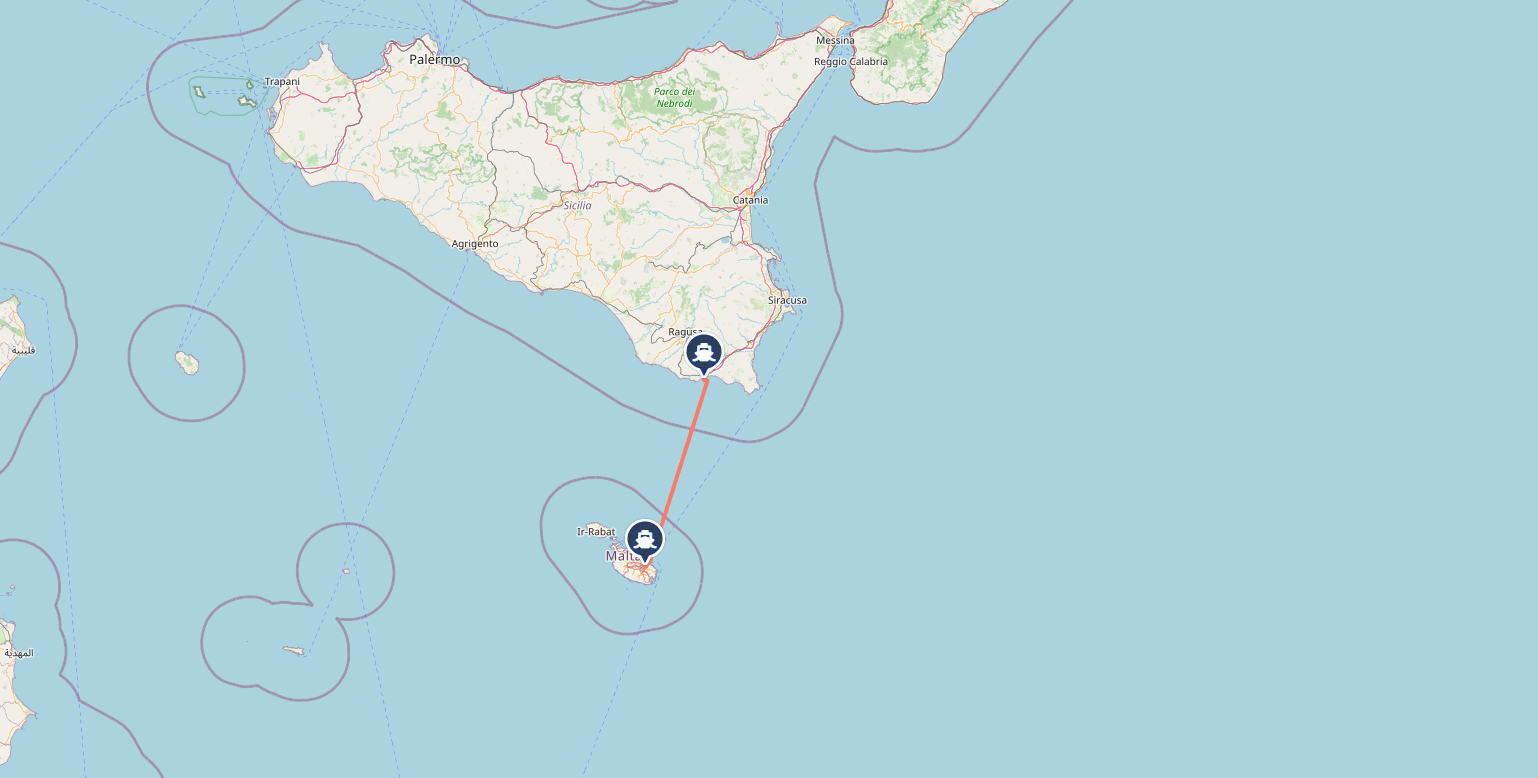
The Malta to Sicily ferry takes 1 hour 45 minutes, short enough for a day trip and the easy way to combine the two islands. Plan it yourself or take one of the ready-made excursions; our Malta to Sicily ferry guide has the details.
Cagliari to Palermo links the two big Italian islands in about 11 hours, one of the Mediterranean’s more unusual crossings and the obvious bridge for a Sardinia and Sicily road trip. More routes to Sardinia in our ferry to Sardinia guide.
Enter your ports and dates below for live sailing times and fares to and from Sicily, with the alternatives shown alongside.
FAQ: ferries to and from Sicily
How do I get from Sicily to mainland Italy by ferry? The quickest way is Messina to Villa San Giovanni, a crossing of about 20 minutes that runs day and night. For longer journeys, there are ferries from Messina to Salerno and from Palermo to Naples, Civitavecchia (Rome) and Genoa.
How long is the ferry from Sicily to Italy? Across the Strait of Messina, about 20 minutes. Longer crossings take roughly 9 hours (Messina to Salerno), 10 to 11 hours (Palermo to Naples), 14 to 15 hours (Palermo to Civitavecchia) and about 20 hours (Palermo to Genoa).
Do I need to book the Messina ferry in advance? Usually not outside peak season, as the ferries run very frequently. In July, August and on busy summer weekends, booking ahead can save you a wait at the port.
Is there a bridge to Sicily? No. There are long-standing plans for a bridge over the Strait of Messina, but for now the ferry is the only way to cross with a car or on foot.
Can you take the train to Sicily? Yes. Some long-distance trains from mainland Italy are loaded onto a ferry at Villa San Giovanni and continue in Sicily from Messina.